You clean the cobwebs off your front entrance in the morning and find fresh ones by the weekend. It is not bad luck. It is a structural problem with how your home’s exterior is maintained. Spiders do not randomly choose a house. They settle where food is plentiful, surfaces are undisturbed, and lighting draws in the insects they eat. Without a professional approach that combines spider spray, thorough cobweb removal, and targeted exterior cleaning, you are treating symptoms instead of the source. This guide breaks down exactly why pests colonize home exteriors, what professional exterior cleaning actually does about it, and how to stop the cycle for good.
Table of Contents
- Quick Takeaways
- Why Spiders Target Your Home Exterior
- The Real Problem with DIY Cobweb Removal
- What Professional Spider Spray Actually Does
- Exterior Cleaning as Pest Prevention
- Spider Webs, Egg Sacs, and What to Look For
- Comparing Your Pest Removal Options
- Frequently Asked Questions
- References
Quick Takeaways
| Key Insight | Explanation |
|---|---|
| Spiders follow insects, not just shelter | Outdoor lights attract flying insects at night. Spiders build webs near those lights because the food comes to them. Removing webs without addressing lighting is a short-term fix. |
| Eaves and soffits are the highest-risk zones | Overhangs protect webs from wind and rain, keeping them intact for weeks. Eaves also trap warmth, making them attractive to stinging insects and spiders year-round. |
| Professional spider spray is a surface treatment, not a fumigation | Residual spider spray is applied to exterior surfaces and deters web-building for weeks without requiring any chemical access to the interior of your home. |
| Clogged gutters directly increase pest activity | Leaf-filled gutters hold moisture, which attracts insects. More insects mean more spiders. Regular gutter cleaning removes one of the main food-source triggers. |
| Egg sacs are a bigger problem than visible webs | A single egg sac can contain dozens to hundreds of eggs. Crushing them manually can scatter spiderlings. Professional removal eliminates the next generation, not just the current one. |
| Power washing alone does not prevent reinfestation | Pressure washing removes existing webs and nests effectively, but spiders return quickly without a follow-up residual treatment to make surfaces inhospitable. |
| Window frames and screen gaps are common entry points | Spiders active near windows often move inside through gaps between the screen and the frame. Exterior cobweb removal around windows reduces the chance of indoor infestation. |
Why Spiders Target Your Home Exterior
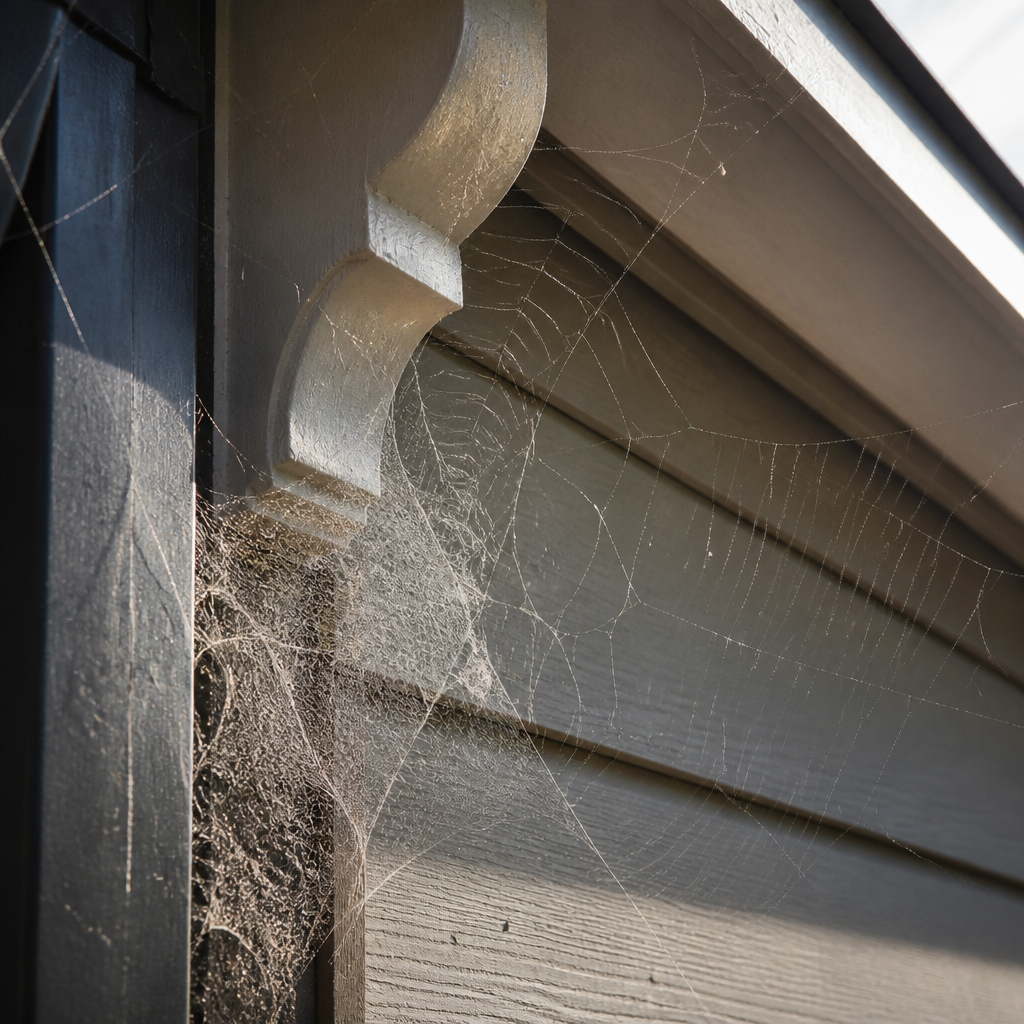
Spiders are not attracted to your home. They are attracted to your home’s insects. The distinction matters because it changes what you need to do about them. Outdoor lighting draws moths, mosquitoes, and beetles at night. Spiders position themselves near those lights because the prey reliably arrives. Eaves, porch ceilings, and window frames become prime web-building territory because they are sheltered, structurally stable, and close to a food source.
The physical structure of your home makes the problem worse. Eaves and soffits are sheltered from wind and rain, which keeps webs intact for weeks rather than days. The overhang creates a protected pocket where egg sacs can develop undisturbed. Gaps and cracks in soffits, fascia, or roofline trim create sheltered voids that also attract stinging insects, which in turn draw more spiders.
Clogged gutters compound the issue. Gutters filled with leaves and standing moisture attract a wide range of insects. Those insects create a reliable food supply directly under your roofline, which is exactly where spiders want to build. Regular gutter cleaning is not just about water drainage. It cuts off a significant source of pest activity.
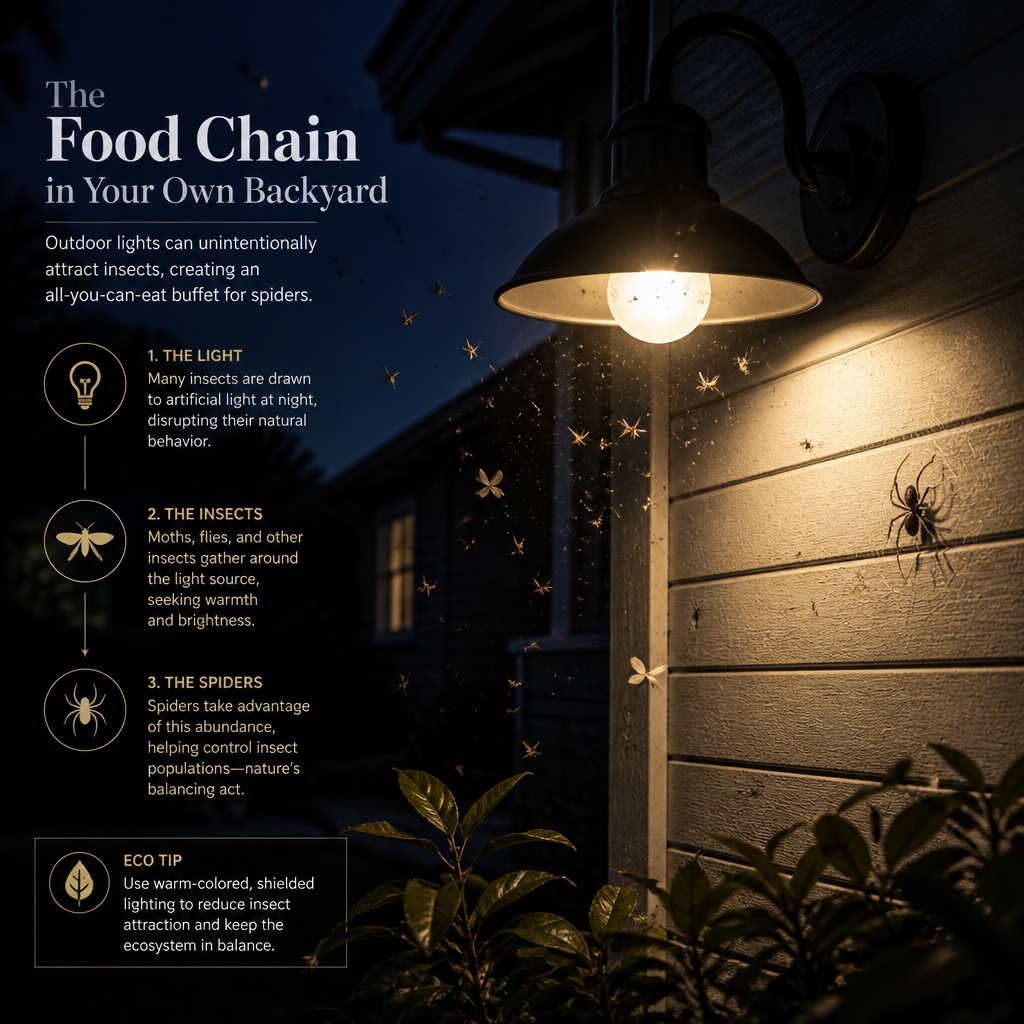
Pro tip: If you have exterior lights that run all night near entry points, switch to motion-activated fixtures. Reducing the hours of illumination cuts the insect draw and makes your home’s perimeter significantly less appealing to web-building spiders.
The Real Problem with DIY Cobweb Removal
Sweeping cobwebs off your siding or eaves with a broom handles the visible problem for about three to five days. The spider either rebuilds in the same spot or relocates a few feet away. This happens because the web removal does nothing to change the conditions that made that location attractive in the first place. The insects are still there. The shelter is still there. The surface is still undisturbed.
Why DIY Spider Sprays Fall Short on Exteriors
Consumer spider sprays are not ineffective, but they are rarely applied correctly on exteriors. Most homeowners spray visible surfaces and skip the undersides of eaves, the backs of shutters, the gaps around utility line entry points, and the spaces between window frames and screens. These are exactly the areas where spiders establish themselves. A partial application creates a patchy deterrent that spiders route around within a week.
There is also the height problem. A significant portion of web-building activity happens two to three storeys up, under roofline eaves and around upper-floor window frames. Getting consistent coverage at that height with a consumer product is not practical and carries real fall risk. A professional team with the right equipment covers the full vertical envelope of your home, not just the easy-to-reach sections.
Egg Sacs: The Mistake That Makes Things Worse
Many homeowners spot a spider egg sac and immediately try to crush or sweep it away. Crushing an egg sac can release dozens of spiderlings that scatter before you can deal with them. Vacuuming is slightly better, but unless the vacuum has a sealed bag, some eggs survive and can hatch inside the machine. The correct approach involves careful physical removal followed by a residual treatment to the surface. This is a case where professional pest removal prevents a small problem from becoming a much larger one.
What Professional Spider Spray Actually Does
Professional spider spray is a residual surface treatment, not a fumigation. It is applied to the exterior surfaces of your home, including eaves, soffits, window frames, entry points, and any area where web-building has been observed. The product bonds to the surface and remains active for several weeks, making those surfaces inhospitable for web construction. Spiders that contact the treated surface are deterred from staying.
This is meaningfully different from what pest extermination implies. There is no chemical access to the interior of the home. No residents need to leave the property. The treatment is targeted at exterior surfaces only, and the goal is deterrence over time rather than instant elimination. Reapplication every four to eight weeks through peak season maintains coverage.
Removing a web without treating the surface is like mopping a floor without fixing the leak. The problem returns on the same schedule unless you change the underlying conditions.
Performance Window Cleaning offers spider spraying as part of their home detailing service. The treatment is applied after physical cobweb removal, so the surface is clean before the residual product goes on. This sequence matters. Applying spider spray over an existing web or layer of organic debris reduces how well it bonds to the surface and shortens how long it stays effective.
Pro tip: Book spider spraying at the beginning of spring rather than waiting until you see heavy web activity. Early-season treatment prevents spiders from establishing territory on your home’s exterior before populations peak in summer.
Exterior Cleaning as Pest Prevention
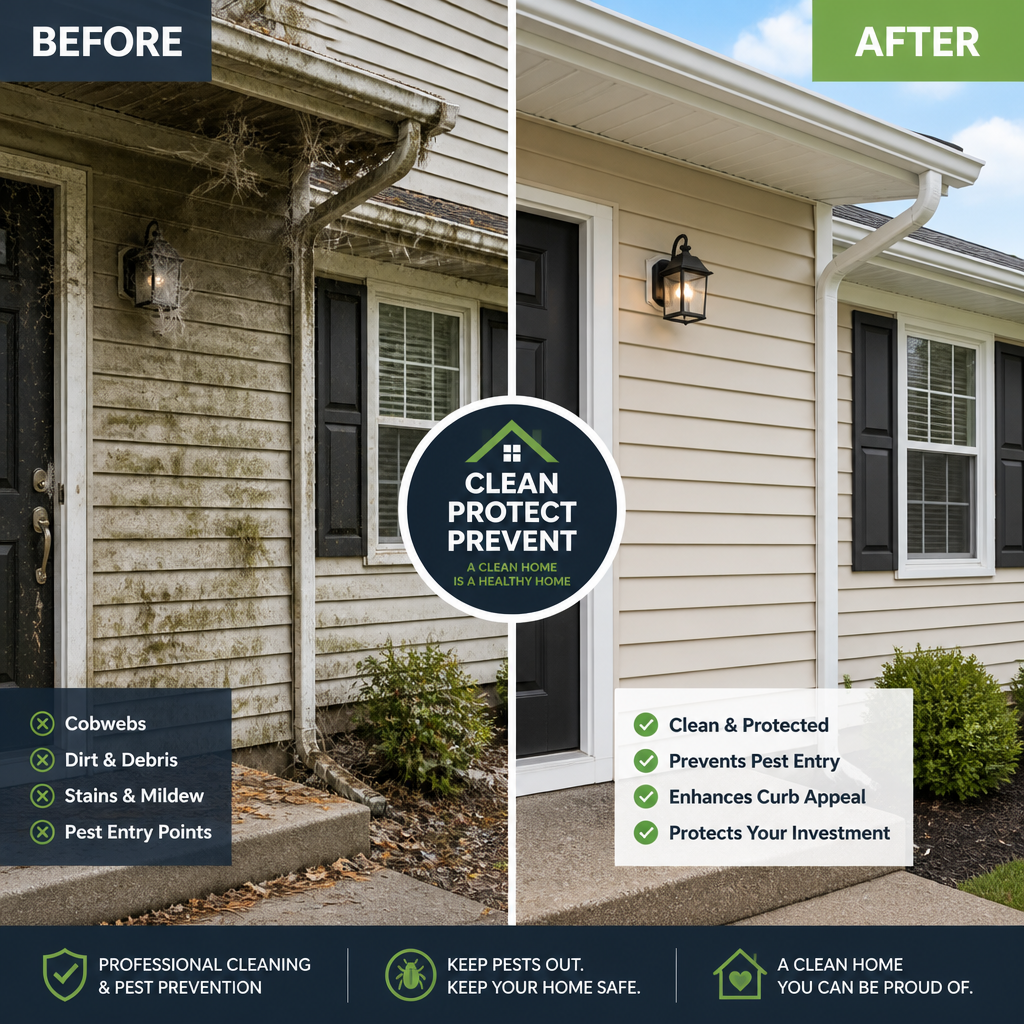
Professional exterior cleaning does more for pest control than most homeowners expect. Pressure washing and soft washing do not just improve curb appeal. When professionally applied, they physically remove spider webs, wasp nests, egg sacs, and the accumulated organic debris that shelters and feeds insects. This is not incidental. It is one of the primary functional benefits of regular exterior maintenance.
Power Washing and Soft Washing: Different Tools for Different Surfaces
Pressure washing works well for concrete, brick, and painted surfaces where the force will not cause damage. The water pressure eliminates visible nests, webs, and egg sacs and dislodges insects and larvae from exterior crevices. Soft washing uses lower pressure combined with cleaning solutions and is the correct choice for vinyl siding, wood trim, and painted eaves where high pressure would cause damage or force water behind panels. Both methods remove the dirt buildup, algae, and organic matter that insects use as cover.
Hand-washing of siding and eaves, as offered by Performance Window Cleaning, reaches the areas that pressure washing misses. The underside of eaves, the tops of window frames, the recessed sections of decorative trim. These sheltered surfaces are where spiders prefer to build because they rarely get disturbed. A thorough hand-wash removes all of that accumulated debris and sets the surface up correctly for a spider spray application.
Window Cleaning’s Role in Reducing Spider Activity
Exterior webs anchored to shutters or nearby landscaping are a sign that spiders are active close to the structure and may move inside over time. Regular cleaning of exterior window frames, screen edges, and the gaps between glass and frame removes both the webs and the insects that accumulate in those spaces. Spiders follow prey. Removing the insects from your window frames removes one of the main reasons spiders stay close to entry points.
Interior and exterior window cleaning, as part of a scheduled maintenance program, also gives a professional the opportunity to flag new web activity, egg sacs, or evidence of insect nesting near windows before these become larger infestations. That kind of early identification is difficult to get from a once-a-year inspection.
Spider Webs, Egg Sacs, and What to Look For
Most homeowners notice the webs spanning door frames or hanging from porch ceilings. Those are the easy ones. The more concerning activity happens in spots that do not catch the eye. Under eaves in the corner sections. On the underside of deck boards. Behind exterior light fixtures. In the gap where utility lines or pipes enter the wall. These are the locations where spiders establish themselves for weeks or months before anyone notices.
Recognizing Spider Egg Sacs Before They Hatch
Spider egg sacs outdoors typically appear in sheltered areas such as beneath porch furniture, around light fixtures, under eaves, or in garden sheds. They may also attach to fences, patio railings, or the undersides of deck boards. Once spiderlings emerge, they disperse quickly, making infestations much harder to control. Routine inspection of these areas, as part of a scheduled exterior cleaning visit, catches egg sacs before they hatch.
Finding egg sacs is a signal that spiders are actively reproducing on your property. Each sac can contain a significant number of eggs, and if left untreated, the emergence of spiderlings from multiple sacs can sharply increase the spider population around your home in a matter of days. This is exactly the kind of situation where professional pest removal is more effective than any DIY response.
Wasp Nests and Other Pest Structures
Eaves and soffits attract more than spiders. Stinging insects take advantage of gaps, corners, and protected voids under rooflines, building nests in places that often go unnoticed until they grow to full size. A nest discovered in late summer is mature and aggressively defended. A nest identified early in the season is small and far easier to remove safely. Regular exterior cleaning provides the visibility to catch these early. Performance Window Cleaning includes pest removal as part of their exterior service scope, which means your home gets inspected for all of these conditions, not just the obvious cobwebs.
Comparing Your Pest Removal Options
Understanding the trade-offs between the three main approaches to exterior pest removal helps you make the right call for your situation. No single method handles every problem, but professional exterior cleaning with spider spray comes closest to a complete solution for ongoing prevention.
| Approach | What It Handles | Limitations |
|---|---|---|
| DIY Cobweb Removal (broom or hose) | Removes visible webs from accessible areas. Fast and low-cost. | No residual deterrent. Spiders rebuild within days. Does not reach high eaves, backs of shutters, or upper window frames. Egg sacs often missed or disturbed incorrectly. |
| Consumer Spider Spray | Provides short-term deterrence on treated surfaces. Available at most hardware stores. | Coverage is typically incomplete. Hard to apply correctly at height. Reapplication is frequent and inconsistent. Does not address insect food sources that attract spiders. |
| Professional Exterior Cleaning with Spider Spray (such as Performance Window Cleaning) | Physical removal of webs, egg sacs, and nests across the full exterior. Residual spider spray applied to clean surfaces. Gutter cleaning removes insect food sources. Window and siding cleaning eliminates insect habitat near entry points. | Higher upfront cost than DIY. Requires scheduling. Reapplication through the season is recommended for sustained coverage. |
Frequently Asked Questions
How often should I schedule professional spider spray treatment?
For most Canadian homes, the high-activity period runs from late spring through early fall. A treatment at the start of the season prevents spiders from establishing territory early. A follow-up application in mid-summer maintains coverage through peak activity. Properties with heavy tree coverage or outdoor lighting near entry points benefit from a third application. Performance Window Cleaning can advise on the right schedule for your specific property after an initial assessment.
Is professional spider spray safe for children and pets?
Professional residual spider sprays applied to exterior surfaces are designed for outdoor use and are applied after residents and pets have moved away from the treated area. Once the product has dried on the surface, the area is safe for normal use. No interior access is required. If you have specific sensitivities or concerns, ask your service provider which product they use and review the safety data sheet before the treatment.
Does pressure washing really get rid of spiders?
Pressure washing physically removes existing webs, egg sacs, wasp nests, and visible pest structures from exterior surfaces. It also washes away accumulated debris and organic matter that insects use as shelter, which reduces the food supply that attracts spiders. However, pressure washing alone does not leave a residual deterrent. Spiders will return to clean, undisturbed surfaces within a few days unless a spider spray treatment follows the wash. The combination of both is what produces lasting results.
What is the difference between cobweb removal and bug extermination?
Cobweb removal is the physical clearing of webs and related debris from exterior surfaces. Bug extermination refers to the active treatment and elimination of insect populations, often involving licensed pesticide application for specific species. Professional exterior cleaning with spider spray sits between these two. It removes the physical webs and applies a surface deterrent, but it is not the same as a licensed pest extermination program targeting a specific species infestation. For severe infestations, particularly with stinging insects or venomous spiders, a licensed pest control professional should be consulted.
Why do spiders keep coming back to the same spots on my home?
Spiders return to the same locations because the conditions that made those spots attractive have not changed. Sheltered eaves that stay dry, nearby lighting that draws insects, undisturbed surface texture that anchors webs. Removing the web does not remove any of these factors. A lasting solution requires changing the conditions: cleaning the surface thoroughly, applying a residual treatment that discourages re-establishment, reducing insect attractants like all-night exterior lighting, and maintaining clear gutters that do not create insect habitat under your roofline.
Can I combine gutter cleaning with spider spray treatment in one service visit?
Yes, and this is actually the most efficient approach. Gutter cleaning removes the leaf debris that holds moisture and attracts insects, which directly reduces the food supply for spiders along your roofline. When gutter cleaning, exterior cobweb removal, and spider spray are done in the same visit, each service reinforces the others. Performance Window Cleaning offers these services as part of customized cleaning packages, so you can combine them in a single scheduled visit rather than managing multiple contractors.
If you have had to deal with persistent cobwebs, wasp nests, or spider activity on your home’s exterior, we would like to hear what approach worked or did not work for you. Leave a comment below and share your experience.
We would love your feedback and any insights you would share with others. What perspective would you add?
References
- Understanding eaves and roofline pests: why spiders, wasps, and insects target home overhangs
- Why spiders gather around windows and how exterior web clearing reduces entry risk
- How pressure washing and soft washing remove pest structures from home exteriors
- How to identify spider egg sacs on home exteriors and why DIY removal can make infestations worse
- Complete guide to keeping spiders off your home exterior and addressing the root causes of reinfestation