
Every October we get the same question from homeowners across Oakville, Burlington, Hamilton, and St. Catharines: is spider spraying before winter worth the money, or is it a quick way to kill a few spiders that will be back in a week? The honest answer is that the treatment does one specific job well, and it does not do the job most people expect. Understanding that difference will tell you whether a spider spraying Ontario visit is the right move for your house this fall.
Table of Contents
- Quick Takeaways
- What Spider Spraying Actually Does
- Why Spiders Move Indoors in Fall
- Exclusion and Sealing the Exterior
- Spider Web Removal in Fall
- Comparing Fall Spider Control Options
- Safety, Pets, and Pollinators
- What to Expect From a Fall Visit
- Frequently Asked Questions
- References
Quick Takeaways
| Key Insight | Explanation |
|---|---|
| A spray treats surfaces, not the whole house | Exterior spider spraying puts a product on the foundation, door frames, eaves, and window edges where spiders walk and build. It does not clean the interior or remove spiders already living inside walls. |
| Timing matters more than the product name | Application in late September or October, before the first hard freeze, catches spiders moving toward sheltered spots. A spray applied in midwinter, or on a wet surface, is mostly wasted. |
| Webs are a symptom, not the source | Removing webs and egg sacs gives you an immediate visible improvement, but spiders rebuild quickly if the perimeter is left untreated and the lights and entry points stay the same. |
| Sealing gaps matters as much as spraying | Gaps around window frames, dryer vents, cable lines, and garage door thresholds let spiders in no matter how well the outside is treated. |
| Ask for the label and the dry time | Know the active ingredient, the re-entry time, and whether the product is used near vegetable beds, ponds, or pet areas before the technician starts. |
| Expect results to build over weeks | A noticeable drop in spiders near doors and windows over the following weeks is realistic. A house with no spiders by the next morning is not a realistic outcome for any exterior treatment. |
What Spider Spraying Actually Does
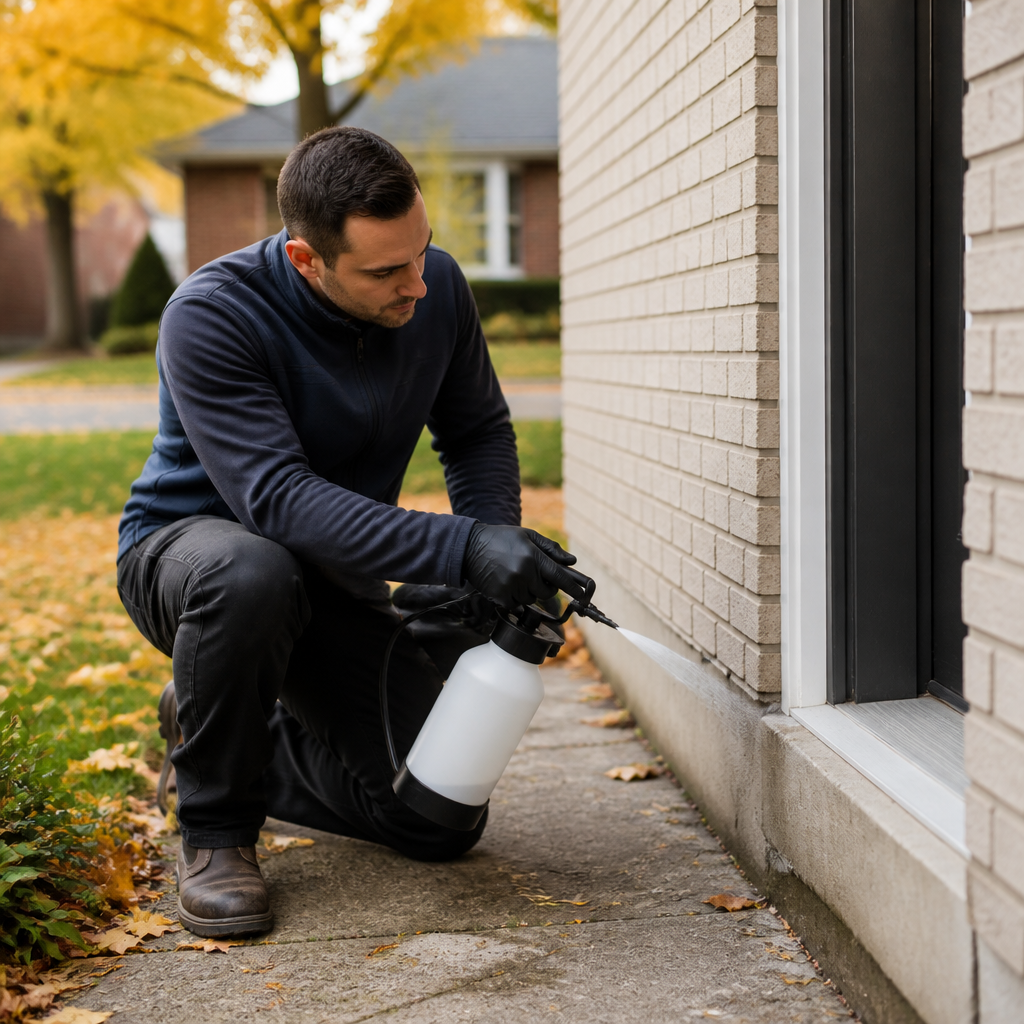
A fall spider treatment is a perimeter application. A technician applies a product along the foundation, around doors and window frames, under eaves, and into the cracks where spiders hide. The goal is to create a band of treated surface that spiders cross on their way toward the house.
The residual barrier
The key word is residual. Once the spray dries, it stays on the surface and continues to affect any spider that walks across it. That is why a product applied to a dry, sheltered foundation performs far better than the same product sprayed on a wet, windy afternoon.
A perimeter treatment is only as good as the surfaces it touches. If the spray never reaches the spot where a spider crosses into the house, it is not doing much.
What the treatment does not do
Spraying does not kill spiders already sitting inside wall voids, storage boxes, or the back of a closet. It also does not stop a spider from crawling through a gap that nobody noticed. Anyone who promises a complete, permanent result from exterior work alone is overselling the service.
The treatment also leaves existing webs in place unless the technician removes them separately. A web that was built before the spray will often still be there the following week, so the two jobs are different and should be understood that way.
Pro tip: Ask the technician to walk the perimeter with you and point out where the product goes. A good visit ends with you knowing which doors, vents, corners, and garage edges received treatment.
Why Spiders Move Indoors in Fall
Most spiders that end up in a home in October did not decide to move in for the winter. Their outdoor habitat became less hospitable as the nights cooled, and the house simply offered better shelter. Understanding that shift explains why timing and location matter so much.
Temperature and shelter
As the weather turns, leaf litter piles against the foundation, mulch stays damp, and sheltered gaps near the ground become more attractive. Window wells, the space under decks, and the area behind downspouts are common spots we see spiders settle in before they try to get inside.
In practice, the spiders most people notice in the fall are not new arrivals. They are residents that were already living in the yard and have shifted closer to the walls where it is warmer and more protected.
Light and the insects it attracts
Outdoor lights draw moths, flies, and other small insects after dark, and those insects are food for spiders. A porch light left on all night can turn a quiet entryway into a busy hunting ground. Switching to warmer bulbs, using motion sensors, or turning lights off earlier reduces that draw.
Light management will not solve a spider problem on its own. It does lower the number of reasons spiders have to gather at your doors, which makes any spray or sealing work last longer.
Exclusion and Sealing the Exterior
Spraying and sealing work together. A product on the foundation helps, but a gap at the top of a window frame gives spiders a way in that never touches the treated band. Exclusion is the unglamorous part of the job, and it is where a lot of the lasting improvement comes from.
Gaps around frames and penetrations
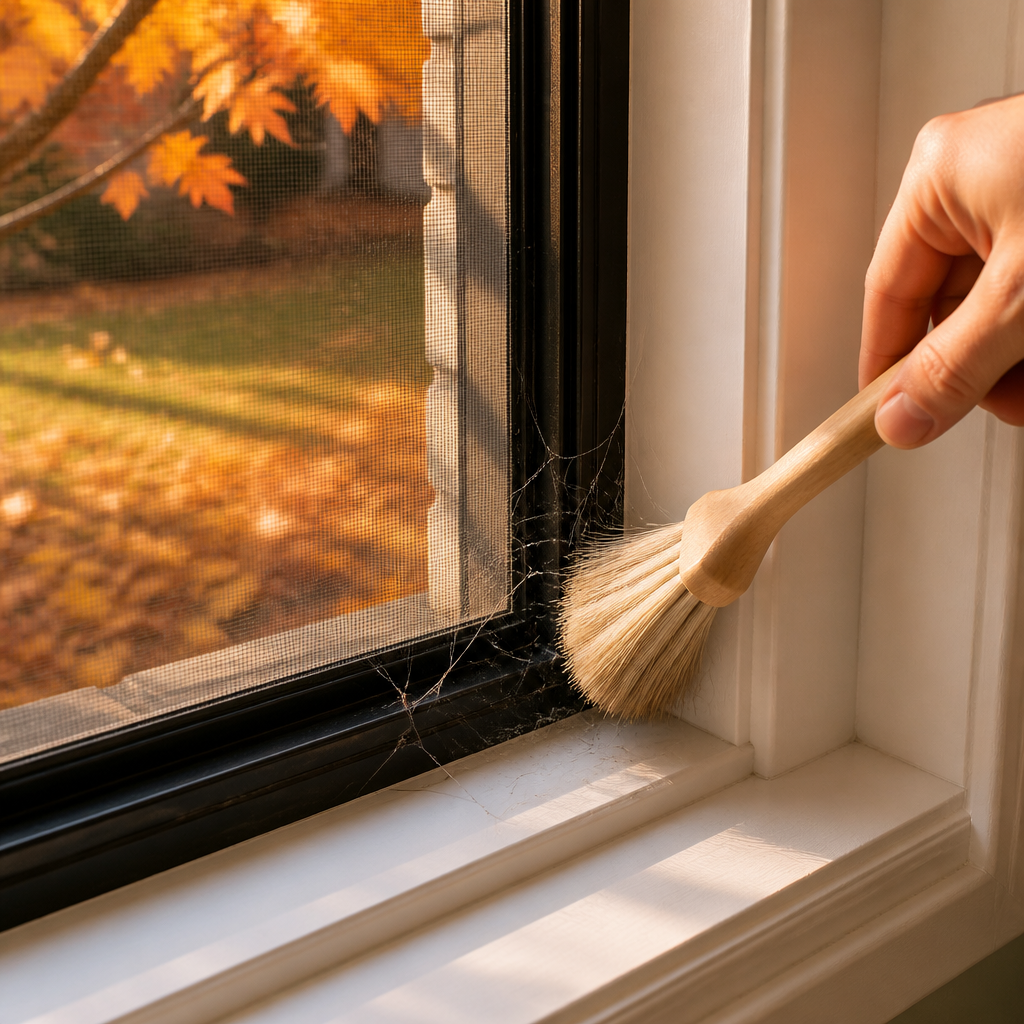
The most common entry points are small and easy to miss. Look for gaps where window frames meet siding, where dryer vents and hose bibs pass through the wall, and where cable or phone lines enter the house. Flexible exterior caulk in these spots closes the gap without creating a new problem.
Check these areas every spring and fall. Caulk shrinks, weather cracks it, and a joint that was sealed three years ago may be open again.
Door sweeps and garage thresholds
Garage doors are often the largest gap on the house. A worn or missing bottom seal lets spiders, insects, and moisture in, and a garage that stays dim and sheltered is a perfect place for webs to build. Replacing a cracked door sweep is inexpensive and noticeably reduces traffic.
The same logic applies to the threshold of every exterior door. If you can see daylight under the door, a spider can use the gap too.
Spider Web Removal in Fall
Web removal is the fastest visible result, and it is also the most misunderstood. Sweeping a web off a porch corner makes the entryway look cleaner right away, but it does not change the conditions that brought the spider there. Still, removing webs and egg sacs is a useful habit, especially before the weather turns cold.
Why webs come back
A spider that loses its web will often build another within a day or two, sometimes in the same spot. Webs return fastest where there is steady light, a steady insect supply, and a sheltered corner. That is why web removal without any change to the surroundings tends to be a short-term fix.
For a lasting result, combine regular web removal with a treated perimeter and a review of your lighting. Each step covers a weakness the others leave open.
Egg sacs and vacuuming
Egg sacs matter more than the adult spiders in one important way. A sac left in a corner can release a new group of spiders weeks later, so it is worth removing them whenever you see them. Vacuuming is often more effective than sweeping because it picks up the sac and the loose silk in one pass.
Empty the canister or change the bag right away and seal the contents in a bag before putting it in the trash. Otherwise you may simply move the spiders from the porch to the garage.
Pro tip: Work from the top of a wall down. Webs and sacs fall onto the surfaces below, and clearing the high corners first saves you from cleaning the same spot twice.
Comparing Fall Spider Control Options
A complete fall plan usually combines several approaches. Orkin’s spider treatment guidance describes a mix of chemical insecticides, exclusion, and removal of webs in resting sites and existing environments, which matches what we see work in practice. The table below compares the main options side by side so you can see what each one actually changes.
| Approach | What It Actually Changes | Where It Falls Short |
|---|---|---|
| Perimeter residual spray | Puts a lasting product on the surfaces spiders cross on their way to the house, reducing the number that reach doors and windows. | Does not touch spiders already indoors, webs already built, or gaps the technician does not seal. |
| Hand web and egg sac removal | Gives an immediate, visible improvement and removes the sacs that would otherwise hatch later. | Spiders rebuild quickly if the outside conditions and entry points stay the same. |
| Exclusion and sealing | Closes the gaps spiders use to enter, making every other method work better over time. | Requires ongoing checks, since caulk and door sweeps wear out and open new paths. |
Safety, Pets, and Pollinators
Any pesticide application around a home deserves a careful conversation about who and what will be near the treated surfaces. A good technician should explain the product, the dry time, and the areas that need extra attention. Your job is to tell them about the pets, children, gardens, and water features on your property before the work starts.
The CDC’s guidance on preventing mosquito bites makes a related point about personal protection: use EPA-registered insect repellents on skin and clothing, and control mosquitoes both indoors and outdoors. A perimeter spider treatment is a different product for a different target, so do not assume that a repellent label or a spray label tells you how the other will behave.
Pets and children
Keep pets and children off treated surfaces until the product has dried according to the label. Dry time depends on weather, so a damp, cool evening can take longer than you expect. If a product dries on a porch where a dog sleeps, the dog will be walking through it.
Wash hands after handling exterior surfaces that have been treated, and keep toys and outdoor furniture off the band until it is fully dry.
Gardens, ponds, and pollinators
Spray drift and runoff are the real concerns for gardens. Vegetable beds, herb plantings, ponds, and rain barrels should be protected or excluded from the application area. Plants in bloom attract pollinators, and a responsible technician will avoid spraying flowering plants near the house.
Pro tip: Before the visit, make a list of anything edible, any open water, and any beehive or pollinator bed within a few metres of the foundation, and show it to the technician. A few minutes of planning avoids the most common complaints after a treatment.
What to Expect From a Fall Visit
The best time for a fall treatment is before the first hard frost, while the ground is still dry enough for product to bond and while spiders are still moving toward shelter. Booking late in the season means you may be fighting cold, wet weather and a shorter working window. Early booking gives the treatment time to do its job before the coldest weeks arrive.
Working around the weather
Rain within hours of an application can wash product off the surface, so a technician who ignores the forecast is not doing the job properly. If a rain event is forecast soon after the visit, ask whether the crew will return or whether the treatment can be scheduled for a drier window. This is also the stage where you should confirm the exact re-treatment plan.
Preparing the property
Clear leaf piles and debris from the foundation, move firewood away from the walls, and trim plants that touch the siding. Close gates and make sure the crew can reach the garage and back entry without moving items that will block access. A prepared property lets the technician spend time on the surfaces that matter.
After the visit, keep your own maintenance going. Check door sweeps, look over window frames, and clear webs as they appear. The treatment works best as one part of a routine that continues through the season.
Frequently Asked Questions
Does spider spraying before winter remove spiders that are already inside my house?
No. An exterior perimeter treatment targets spiders that are outside and crossing the treated surfaces. Spiders already inside walls, storage areas, or closets are not reached by a spray applied to the outside of the foundation.
When is the best time for spider spraying in Ontario?
Late September through October is generally the right window, before the first hard frost and while the surfaces are dry enough for the product to bond. Booking too late in the year makes it harder to get a clean, dry application.
Will removing webs by hand solve my spider problem?
Removing webs and egg sacs gives you an immediate improvement and helps prevent new spiders from hatching, but spiders often rebuild quickly. Web removal works best when combined with sealing gaps and reviewing outdoor lighting.
Is spider spraying safe for pets and vegetable gardens?
It can be, when the product is applied and dried according to the label and the technician takes care to avoid drift onto edible plants, ponds, and pollinator beds. Keep pets and children off treated surfaces until the product has fully dried, and tell your technician about any gardens before the work starts.
How do I keep spiders from coming back after the treatment?
Seal the gaps around window frames, dryer vents, and garage doors, replace worn door sweeps, reduce outdoor lighting where possible, and clear webs and egg sacs regularly. Treatment and maintenance work best together, and a routine check each spring and fall keeps the results in place.
Have you had a fall spider treatment on your property, or handled spider problems yourself? Share what worked, what did not, and what you noticed in the weeks that followed, because your experience helps other homeowners decide what to expect.
References
- Pest control company guidance on spider treatment, exclusion, and web removal
- Fall tips for reducing spider activity around the home
- Guide to long-term spider web removal and prevention strategies
- CDC guidance on preventing mosquito bites with repellents and protective clothing