
Most homeowners wait until water is pouring over the sides of their gutters before calling a professional. By that point, the damage is already underway. The truth is that gutter cleaning signs show up long before a visible overflow, and missing them costs far more than a routine service call. According to the Insurance Information Institute, water damage is one of the most common and costly homeowner insurance claims in North America. Clogged gutters are a leading contributor. This guide covers the ten warning signs that your eavestrough maintenance has been put off too long, and what to do about each one.
Table of Contents
- Quick Takeaways
- Sign 1: Water Spilling Over the Sides
- Sign 2: Sagging or Pulling Gutters
- Sign 3: Visible Plant Growth in the Gutter Channel
- Sign 4: Pest Activity Around Your Roofline
- Sign 5: Staining on Your Siding or Fascia
- Sign 6: Basement or Foundation Water Intrusion
- Sign 7: Eroded or Displaced Landscaping Below Gutters
- Sign 8: Ice Dams in Winter
- Sign 9: No Water Flowing from Downspouts During Rain
- Sign 10: It Has Been More Than a Year Since the Last Cleaning
- DIY vs. Professional Gutter Cleaning: A Direct Comparison
- Frequently Asked Questions
- References
Quick Takeaways
| Key Insight | Explanation |
|---|---|
| Overflow is a late-stage symptom | Visible water spilling over gutters means the blockage is already severe. Earlier signs like staining and sagging appear weeks before overflow. |
| Clogged gutters attract pests | Standing water and decomposing debris create ideal nesting conditions for mosquitoes, birds, squirrels, and wasps. |
| Foundation damage is the costliest outcome | Water redirected toward the foundation due to clogged eavestroughs can cost tens of thousands in structural repairs. |
| Ice dams are a winter gutter problem | Debris-blocked gutters prevent proper drainage in fall, setting the stage for ice dam formation that damages roofing and interiors. |
| Annual cleaning is a minimum, not a guideline | Homes surrounded by deciduous trees often need cleaning twice per year: once after spring growth and once after fall leaf drop. |
| Plant growth in gutters signals serious neglect | If you can see weeds or seedlings sprouting from your gutters, enough organic matter has accumulated to support root systems. This is well past the maintenance window. |
| Staining on siding indicates chronic overflow | Dark vertical streaks below gutter joints point to recurring overflow, which is almost always caused by partial or full blockages in the channel. |
Sign 1: Water Spilling Over the Sides
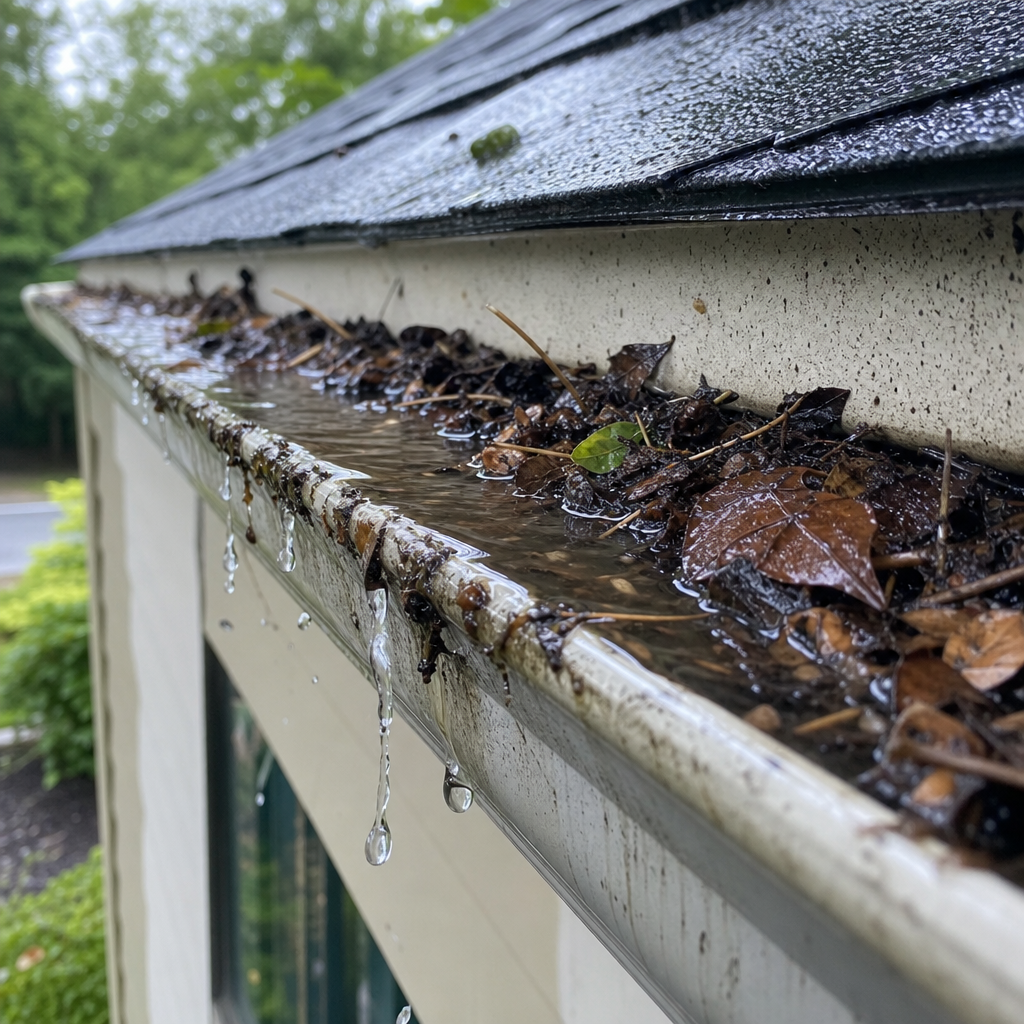
This is the sign most people recognize, but it is not the first one that appears. When gutters overflow during rainfall, the channel is blocked enough that water has nowhere to travel. The debris dam is usually located near a downspout opening or at a low point where leaves and sediment have compacted over time.
In practice, a single overflow event during a heavy rainstorm may not seem urgent. But chronic overflow redirects hundreds of litres of water directly against your home’s foundation, siding, and window frames with every rain event. That accumulation adds up fast.
If you are watching water cascade over your gutters like a waterfall, a professional cleaning is not optional at this stage. It is damage control.
Sign 2: Sagging or Pulling Gutters
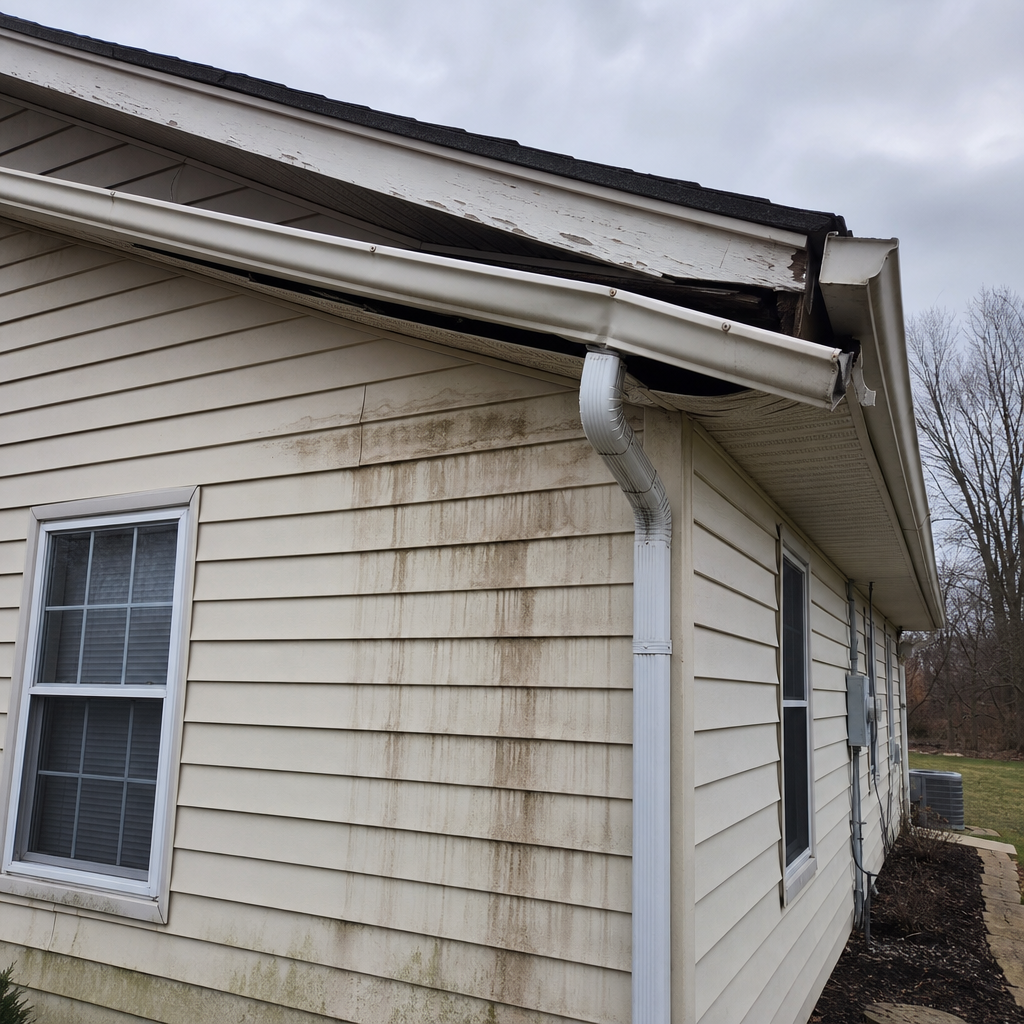
A single metre of debris-filled gutter can weigh over 90 kilograms when saturated with standing water and compacted organic material. Gutters are not designed to hold that load. When they sag or pull away from the fascia board, the weight of accumulated debris is almost always the cause.
What sagging actually tells you about your eavestrough maintenance
Sagging is a structural warning. The hangers and spikes that secure gutters to the fascia are under stress, and in many cases the fascia board itself has begun to rot from prolonged moisture exposure. Cleaning the gutters at this point is necessary, but you may also need a technician to re-secure or replace sections of the system.
A common mistake is assuming sagging gutters just need to be rehung. Without removing the debris causing the stress and inspecting the fascia behind them, the same problem recurs within a season.
Pro tip: Walk the perimeter of your home after a rainstorm and look at the gutter line from ground level. Any section that dips below the roofline slope is carrying weight it should not be carrying.
Sign 3: Visible Plant Growth in the Gutter Channel
When you can see weeds, grass, or tree seedlings growing out of your gutters, the neglect is not recent. For plant life to establish itself in a gutter channel, there must be enough accumulated soil-like organic matter, consistent moisture, and time for seeds to germinate and root. That process typically takes at least one full season of unaddressed debris buildup.
This level of blockage means water is being retained in the channel rather than draining. The gutter is functionally acting as a planter box, and the roots may already be penetrating seams and joints in the gutter material.
Homes surrounded by mature trees, particularly maples and elms common across much of Canada, are the most frequent candidates for this problem. The helicopter seeds from maples germinate aggressively in gutters and are one of the most common causes of clogged gutters with rooted debris.
Sign 4: Pest Activity Around Your Roofline
Gutters full of decomposing leaves, standing water, and soft organic material are premium real estate for pests. Mosquitoes breed in standing water that collects in blocked channels. Birds build nests in the debris. Wasps find stable, sheltered anchor points for their nests. Squirrels use clogged gutters as a step-up point to access roof voids.
Spider webs along the eaves: a direct gutter cleaning sign
An often-overlooked indicator is a surge in spider webs along the eaves and around window frames adjacent to gutters. Spiders follow their prey, and if insect populations are elevated around your roofline due to standing water in the gutters, spider activity follows. This is something the team at Performance Window Cleaning encounters regularly during exterior home detailing work.
Pest removal services like spider spraying are a short-term fix if the underlying cause, which is the clogged eavestrough providing habitat, is not addressed. A professional gutter cleaning removes the nesting and breeding environment entirely.
Pro tip: If you have had pest treatments applied to your eaves or roofline more than once in a 12-month period without lasting results, check your gutters before scheduling another spray. The problem is almost certainly environmental, not just population-based.
Sign 5: Staining on Your Siding or Fascia
Dark vertical streaks running down the siding below your gutters, or discolouration along the fascia board directly behind the gutter, are reliable indicators of chronic overflow or leaking joints. This staining is caused by water carrying tannins, algae, and fine debris as it runs down surfaces it should never be touching.
The staining itself is a cosmetic problem that professional exterior cleaning can address. But it is the symptom pointing to the real issue: your gutters have been overflowing consistently enough to leave a permanent watermark trail on your home’s exterior. That level of repetition means the blockage has been in place for multiple rainstorm cycles.
Fascia staining is more serious because it often indicates that the wood behind the gutter is absorbing moisture with every rainfall. Rotted fascia eventually requires replacement, and the cost is substantially higher than a gutter cleaning service would have been at the first sign of trouble.
Sign 6: Basement or Foundation Water Intrusion
This is the sign that turns a maintenance conversation into a repair emergency. When gutters overflow or downspouts discharge too close to the foundation, water pools against the base of the home. Over time, hydrostatic pressure pushes that moisture through foundation walls and into the basement.
The connection between clogged gutters and basement flooding is direct and well-documented. The National Association of Home Builders in the United States has noted that most basement water intrusion problems originate from inadequate surface drainage, with gutter failure being a primary cause. Canadian homes face the same dynamics.
If you are seeing efflorescence (white mineral deposits) on basement walls, damp spots near the perimeter, or actual water entry during or after rainfall, look at your gutters and downspout discharge points before assuming the problem is a failing foundation. In many cases, restoring proper eavestrough function resolves the issue without any structural intervention.
Sign 7: Eroded or Displaced Landscaping Below Gutters
Mulch washed away, soil channels carved into garden beds, or gravel scattered across pathways directly below gutter lines are all physical evidence of uncontrolled water discharge. When gutters overflow, they release concentrated streams of water rather than the controlled, distributed flow that downspouts are designed to deliver.
This water erosion gradually strips away the grading around your home’s perimeter. Proper grading slopes away from the foundation, and erosion caused by overflowing gutters can reverse that slope over time, funneling water back toward the home rather than away from it.
The data consistently shows that landscape erosion around the foundation perimeter is a compounding problem. Each rain event worsens the grade, increases the erosion, and directs more water toward the structure. Addressing the gutters stops the cycle at its source.
Sign 8: Ice Dams in Winter
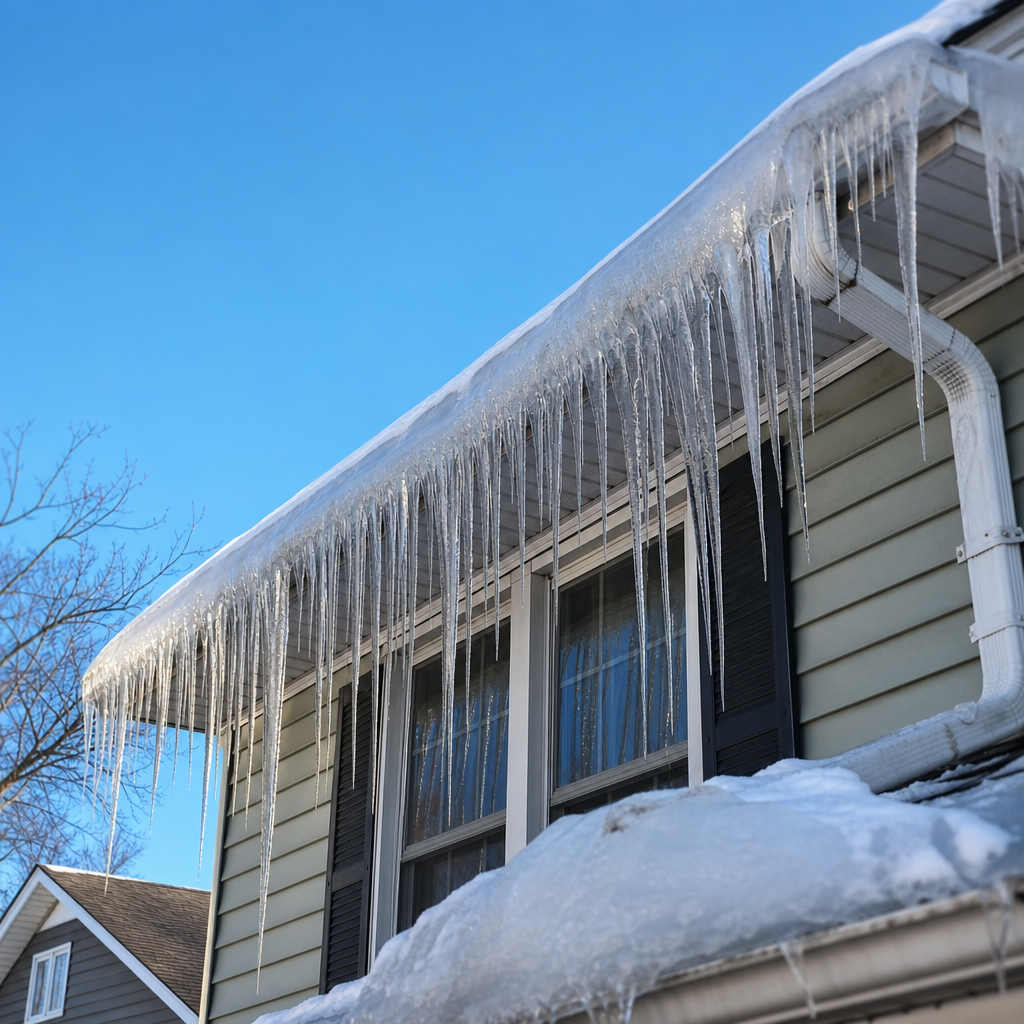
Ice dams form at the roof edge when heat escaping from the attic melts snow on the upper roof, and that meltwater refreezes when it reaches the cold overhang or gutter line. Gutters blocked with debris from the previous fall season dramatically worsen this process because they hold standing water that freezes into a solid mass, adding weight and preventing any drainage as temperatures fluctuate.
Why fall eavestrough maintenance prevents winter ice damage
A clean, clear gutter channel allows meltwater to move through the system and discharge away from the home even during freeze-thaw cycles. A blocked gutter turns that meltwater into a growing ice formation that backs up under shingles, forces moisture into the roof deck, and eventually causes interior ceiling damage.
In Canada, where freeze-thaw cycles are a seasonal reality, eavestrough maintenance completed in late October or early November is one of the most effective preventive measures against ice dam formation. It is not optional for homes with mature trees dropping leaves late in the season.
Sign 9: No Water Flowing from Downspouts During Rain
This one requires observation, but it is one of the clearest gutter cleaning signs available. Stand near your downspouts during a moderate rainstorm. Water should be flowing steadily within the first few minutes of rain. If you hear nothing and see no discharge, the system is blocked somewhere between the gutter channel and the downspout outlet.
Complete downspout blockages are often caused by debris that has compacted into the elbow joint where the gutter meets the vertical downspout pipe. This is a specific area that DIY cleaning attempts frequently miss because it is difficult to access without the right tools and technique.
A professional gutter cleaning service flushes the entire system, including the downspout, with pressurized water after removing debris, confirming that flow is fully restored from channel to ground-level discharge point.
Sign 10: It Has Been More Than a Year Since the Last Cleaning
This is the sign that requires no ladder, no rainstorm, and no inspection. If you cannot remember the last time your gutters were professionally cleaned, or if it has definitively been longer than 12 months, the cleaning is overdue regardless of what the gutters look like from the ground.
Gutter inspections from street level are notoriously unreliable. A gutter can appear fine from below while carrying a full channel of compacted debris just out of sightline. The debris itself may be holding in place rather than overflowing because it has dried and hardened into a semi-solid mass that absorbs the first portion of rainfall before eventually saturating and allowing overflow.
For homes with significant tree coverage, the standard recommendation from most exterior home maintenance professionals is cleaning twice per year: once in late spring after seed and flower debris has settled, and once in late fall after leaf drop is complete. One annual cleaning is a minimum for low-tree properties, not a universal recommendation.
DIY vs. Professional Gutter Cleaning: A Direct Comparison
“Clogged gutters are the number one cause of basement water problems. Most basement leaks are caused by gutters that are full of debris.” – Bob Vila, home improvement authority and author on residential maintenance best practices.
Homeowners frequently debate whether to handle gutter cleaning themselves or hire a professional service. The comparison below addresses the most important practical variables, not abstract preference.
| Factor | DIY Gutter Cleaning | Professional Service (e.g., Performance Window Cleaning) |
|---|---|---|
| Safety | High risk: ladder falls are among the most common home injury causes. Single-story work is manageable; two-story and above is genuinely dangerous without training. | Professionals use stabilized ladders, harness systems, and have insurance. Risk transfers away from the homeowner entirely. |
| Thoroughness | Most DIY attempts clear visible debris from the channel but miss downspout blockages, compacted debris at joints, and debris behind gutter guards. | Full-system flush including downspouts, identification of damaged sections, and visual inspection of fascia and gutter seams. |
| Time and equipment | Requires ladder, gloves, bucket or tarp, and garden hose. Typically takes 2 to 4 hours for an average home with limited tree coverage. | Faster execution due to commercial-grade tools. Includes cleanup of debris at ground level. No equipment purchase required. |
| Damage identification | Homeowners often miss early signs of fascia rot, gutter separation, or failing hangers during cleaning. | Trained technicians flag repair needs during service, preventing small issues from becoming expensive structural problems. |
| Cost | Minimal direct cost but high opportunity cost and meaningful safety risk. Missed damage detection can lead to repair bills that dwarf the cost of professional service. | Clear service fee with bundling options for window cleaning, power washing, and pest removal in a single visit. |
The case for professional service is strongest for homes with two or more storeys, significant tree coverage, or any of the signs listed above already present. For a single-storey home with minimal nearby trees and no active signs of blockage, a careful DIY cleaning in spring can be reasonable maintenance between professional visits.
Frequently Asked Questions
How often should gutters be professionally cleaned?
For most Canadian homes, twice per year is the practical standard: once in late spring after pollen and seed debris has fallen, and once in late fall after leaves have dropped. Homes with heavy tree coverage or homes near pine trees (which shed needles year-round) may need three cleanings per year. One annual cleaning is a minimum, not a target.
What happens if clogged gutters are left untreated for multiple years?
The consequences escalate with time. In the short term, you get overflow staining and landscape erosion. Within one to two years of neglect, fascia rot, foundation water intrusion, and pest infestations become realistic outcomes. Beyond two years, you risk structural damage to the roof deck from ice damming and moisture retention, along with potential foundation cracking from chronic hydrostatic pressure. The repair costs at that stage are measured in thousands, not hundreds, of dollars.
Can I tell if my gutters are clogged without getting on a ladder?
Yes, with reasonable accuracy. Watch for water overflowing during rain, check the soil and landscaping directly below gutters for erosion patterns, look for staining streaks on the siding below gutter lines, and observe whether water is discharging from downspouts during rainfall. You can also use binoculars from ground level to check for visible plant growth or debris buildup at gutter level. These ground-level checks are not a substitute for a proper inspection, but they will confirm whether action is needed.
Do gutter guards eliminate the need for cleaning?
No. Gutter guards reduce the frequency of cleaning required, particularly for large leaf debris, but they do not eliminate the need. Fine debris including pine needles, seeds, shingle granules, and pollen passes through or accumulates on top of most guard systems. Downspouts can still become blocked. Guards also require their own maintenance to remain effective. Homes with gutter guards should still be inspected annually and cleaned when flow restriction is detected.
Is there a best season to schedule professional gutter cleaning?
Late fall, specifically after the majority of deciduous leaves have dropped in your area (typically late October through November in most of Canada), is the highest-priority cleaning window. This ensures gutters are clear heading into winter, reducing ice dam risk and preventing spring runoff from encountering a blocked system. Late spring is the second priority window, clearing seed and pollen debris before summer rainfall arrives.
How does gutter cleaning relate to window cleaning or exterior home maintenance?
They are directly connected. Overflowing gutters stain window frames and glass surfaces. Pest activity driven by clogged gutters results in spider webs on windows and around entrances. Many professional exterior cleaning companies, including Performance Window Cleaning, offer combined service packages that address gutters, windows, siding, and pest deterrence in a single visit, which is more efficient and typically produces better whole-home results than booking each service separately.
What gutter cleaning sign finally convinced you to book a professional service, and did you catch it early enough to avoid any real damage? Share your experience below.
References
- U.S. Environmental Protection Agency guidance on stormwater management and residential drainage systems
- National Association of Home Builders resources on home maintenance schedules and water intrusion prevention
- Forbes Home advisor coverage of exterior home maintenance costs and return on investment for preventive care
- Statista data on homeowner insurance claims related to water damage and property maintenance in North America
- Natural Resources Canada guidance on building envelope maintenance and moisture control in Canadian climates