Your driveway takes more abuse than almost any other surface on your property. Oil stains, tire marks, algae growth, and embedded grime build up season after season, and by summer, that accumulation is impossible to ignore. Driveway power washing is not just about appearances. It directly protects your investment, prevents safety hazards, and can add measurable curb appeal to your home. If you have been putting off pressure washing your driveway because it seems like a weekend DIY project, this article will show you exactly why a professional service delivers results that a rented machine simply cannot match.
Table of Contents
- Quick Takeaways
- Reason 1: Stubborn Stains and Embedded Grime That DIY Machines Cannot Remove
- Reason 2: Algae, Mold, and Mildew Pose Real Slip Hazards
- Reason 3: Summer Heat Accelerates Surface Damage
- Reason 4: Curb Appeal Directly Affects Property Value
- Reason 5: Professional Equipment and Expertise Protect Your Surface
- DIY vs. Professional Power Washing: A Direct Comparison
- Frequently Asked Questions
- References
Quick Takeaways
| Key Insight | Explanation |
|---|---|
| Oil stains require pre-treatment | Standard pressure washing alone will not lift embedded oil. Professional crews apply degreasers before washing to fully extract the stain. |
| Algae and mold make driveways dangerous | Wet algae on concrete or asphalt is as slippery as ice. Summer humidity accelerates growth, making removal a safety priority. |
| Concrete driveways degrade faster without cleaning | Organic buildup traps moisture, which accelerates freeze-thaw cracking. Summer cleaning removes the material before fall damage sets in. |
| Wrong PSI destroys surfaces | Consumer pressure washers often apply too much or too little pressure. Professional machines are calibrated to the surface type to prevent etching or pitting. |
| Curb appeal has a documented financial return | Real estate research shows curb appeal improvements can increase perceived home value by 5 to 11 percent. A clean driveway is one of the most visible factors. |
| Summer is the ideal timing for driveway washing | Warm temperatures allow surfaces to dry completely, which is necessary before any sealing or protective coating is applied after cleaning. |
| Bundling services saves time and money | Combining driveway power washing with gutter cleaning or window cleaning in a single visit reduces mobilization costs and keeps exterior maintenance on schedule. |
Reason 1: Stubborn Stains and Embedded Grime That DIY Machines Cannot Remove
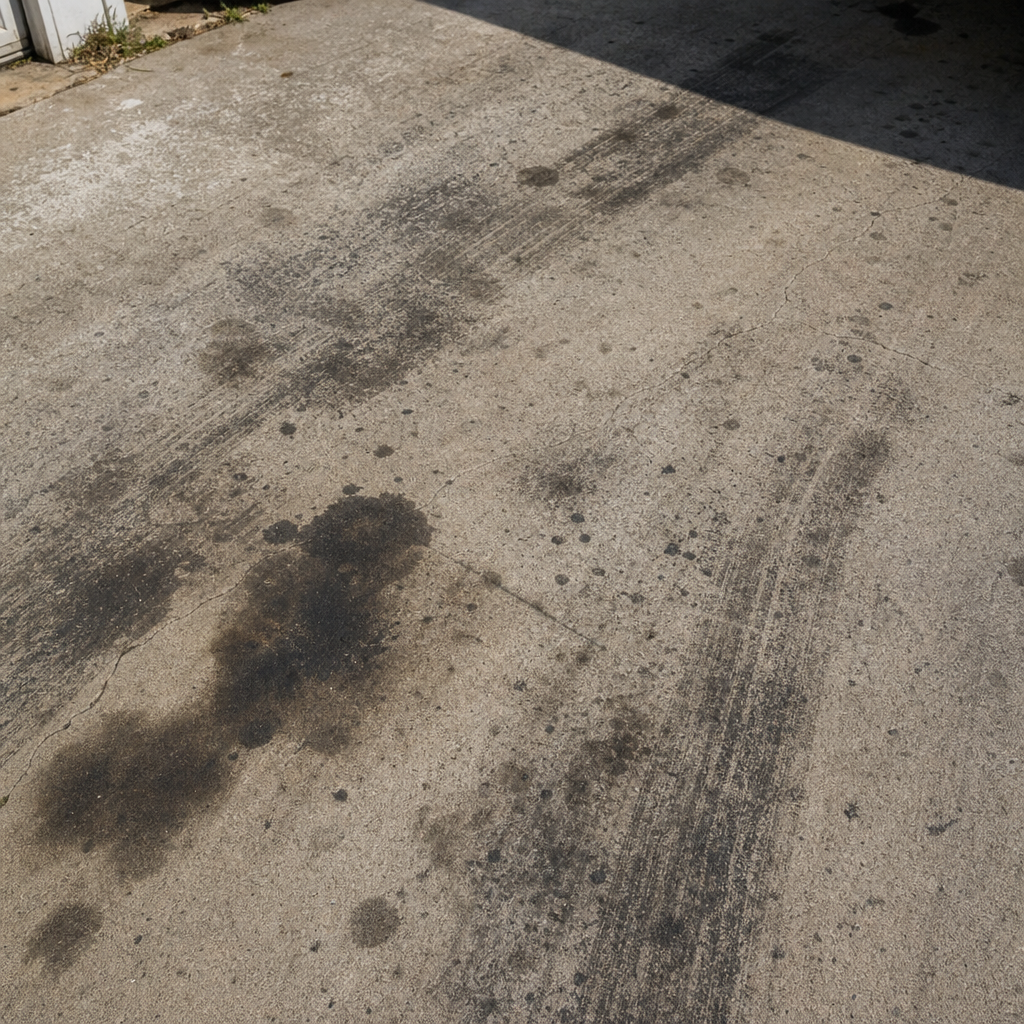
A concrete or asphalt driveway is porous. Every drop of motor oil, every rust streak from a garden tool, and every leaf tannin stain that sits on the surface long enough gets absorbed into that porous structure. Once embedded, these stains are chemically bonded to the material, not just sitting on top of it.
In practice, a consumer-grade pressure washer running at 1,500 to 2,000 PSI with plain water will redistribute surface dirt and lighten some staining, but it will not extract embedded contamination. Professional driveway power washing combines high-output equipment, typically 3,000 to 4,000 PSI with commercial-grade hot or cold water systems, with pre-treatment chemicals specifically formulated for oil, rust, and organic matter.
Why Pre-Treatment Changes Everything
The most common mistake homeowners make when renting a pressure washer is skipping the pre-treatment step. Applying a degreaser or alkaline cleaner to an oil stain and allowing 10 to 15 minutes of dwell time breaks the chemical bond between the oil and the concrete. The pressure wash then flushes out the loosened material cleanly. Without that step, you are just spraying water over a sealed stain.
At Performance Window Cleaning, crews arrive with the appropriate cleaning agents matched to your specific driveway material and stain type. That professional assessment before the machine even starts is what separates a genuinely clean driveway from one that just looks wet for an hour.
Pro tip: If your driveway has rust stains from fertilizer or metal equipment, tell your cleaning crew before the job starts. Rust requires an oxalic acid-based treatment, which is different from the degreasers used for oil. Using the wrong product will not remove rust and may darken the stain further.
Reason 2: Algae, Mold, and Mildew Pose Real Slip Hazards
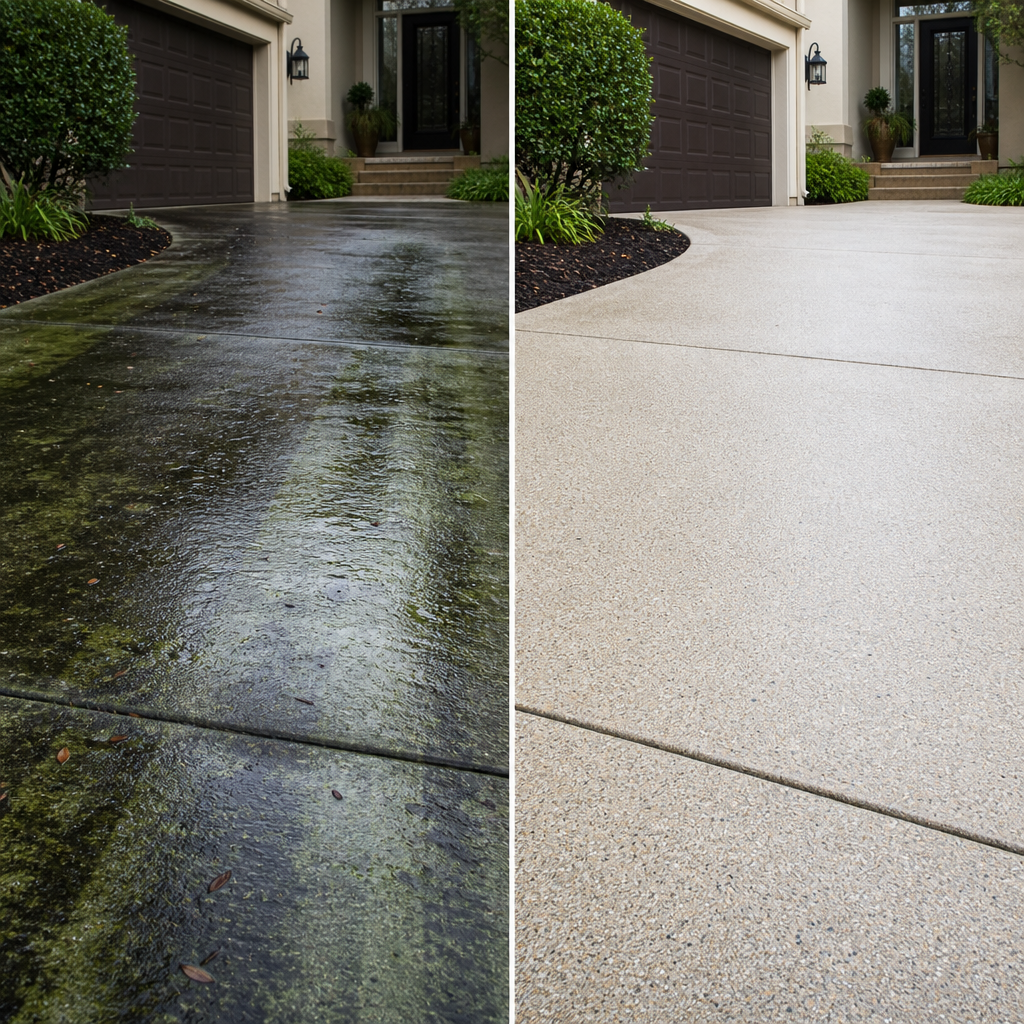
Algae growth on driveways is not just an aesthetic problem. A thin film of green or black algae on a wet concrete surface creates a coefficient of friction close to ice. According to the National Floor Safety Institute, slips and falls are the leading cause of emergency room visits in the United States, and outdoor surfaces are a significant contributor to those incidents.
Summer humidity creates ideal conditions for algae and mold to thrive. Shaded sections of your driveway, areas near downspouts, and spots where water pools after rain are particularly vulnerable. By late summer, growth that started as a faint discoloration in spring can cover large surface areas.
The Difference Between Cleaning and Sanitizing
Pressure washing removes visible algae growth. But without a biocide or algaecide applied during or after the wash, regrowth occurs within weeks. Professional exterior cleaning services apply post-wash treatments that inhibit regrowth for months, extending the time between service visits and keeping the surface safe throughout the season.
This matters especially for homeowners with children or elderly family members who use the driveway regularly. It also matters for commercial property owners and property managers where liability for a slip-and-fall incident is a real financial risk.
“Cleaning without sanitizing is like mopping a floor without using any cleaner. You move the problem around but you do not eliminate it.” – Position consistently held by professional exterior cleaning practitioners with over a decade of field experience.
Reason 3: Summer Heat Accelerates Surface Damage
Most homeowners think of winter as the season that damages driveways. Freeze-thaw cycles do cause cracking and spalling. But summer heat creates its own category of damage, particularly when organic debris and chemical contamination are present on the surface.
Motor oil that sits on asphalt during a hot summer softens the binder that holds asphalt together. UV radiation breaks down the surface sealant on both asphalt and concrete. Fertilizer residue and road salt tracked in from winter, if not flushed before summer, continues to chemically erode the concrete surface as temperatures rise. Pressure washing your driveway in early summer removes these damaging materials before they compound over the hottest months.
Why Timing the Wash Before Peak Heat Matters
The optimal window for driveway power washing is late spring to early summer, before surface temperatures regularly exceed 30 degrees Celsius. Cleaning in this window allows the surface to dry completely and opens the possibility of applying a protective sealer, which bonds best to a clean, moderately warm surface rather than an overheated one.
Waiting until late August or September means the surface has already absorbed a full season of UV and chemical damage. You can still clean it, and you should, but you lose the preventive window where cleaning and sealing together would have blocked that damage from occurring.
Pro tip: If your driveway was sealed two or more summers ago, schedule a professional power wash and inspection this summer. A cleaning crew can identify early-stage cracking or surface erosion that, if sealed now, costs a fraction of what a resurfacing job will cost in three years.

Reason 4: Curb Appeal Directly Affects Property Value
The driveway is one of the first things a visitor, a prospective buyer, or a neighbor sees when they approach your home. A stained, cracked, or algae-covered driveway signals neglect, regardless of how well-maintained the interior of your home is. The exterior sets the expectation for everything that follows.
Research from the National Association of Realtors consistently shows that curb appeal improvements generate some of the highest returns of any home improvement category. A clean driveway, combined with clean windows and freshly washed siding, contributes to the kind of first impression that can reduce days on market and support a stronger asking price.
The Summer Selling Season Makes This Urgent
Summer is peak real estate season in most Canadian markets. If you are listing a home or preparing a rental property for the market, the cost of a professional exterior cleaning package including driveway power washing, window cleaning, and gutter cleaning is a practical investment with a documented return. Real estate agents consistently report that homes with clean, well-maintained exteriors receive more showing requests and fewer low-ball offers.
For homeowners with no immediate plans to sell, a clean exterior still matters. Neighborhood aesthetics affect property values across the block. Maintaining your home’s exterior is part of being a responsible property owner and it pays off in the long run when you do decide to sell or refinance.
Performance Window Cleaning has been serving residential and commercial clients since 2008 and offers pressure washing packages that can be combined with window cleaning, gutter cleaning, and home detailing services in a single visit, which is the most efficient way to address your entire exterior before the summer selling window closes.
Reason 5: Professional Equipment and Expertise Protect Your Surface
This is the reason most homeowners underestimate. Pressure washing done incorrectly causes permanent surface damage. Applying too much pressure to a concrete driveway with surface cracks can widen those cracks. Holding a nozzle too close to an asphalt driveway can strip the surface aggregate. Using the wrong nozzle angle on pavers can dislodge the joint sand that holds them together.
Professional exterior cleaning crews train on surface types and equipment calibration. They know that a 25-degree nozzle is appropriate for general concrete cleaning while a 15-degree nozzle is reserved for tough stains on robust surfaces. They know that softer materials like older asphalt or painted concrete require lower PSI and wider fan patterns to prevent etching.
Surface Matching Is Not Guesswork
A professional assessment of your driveway before washing identifies the material, the condition, any pre-existing cracks or damage, and the type of staining present. That information determines the equipment settings, cleaning agents, and technique used. It is a calibrated process, not a one-size-fits-all spray-down.
Consumer pressure washers typically top out at 2,000 PSI and lack the heated water option that breaks down grease and biofilm more effectively. They also lack the surface cleaner attachments that professionals use, which are spinning bar nozzles that clean in even, overlapping passes and eliminate the streaky “tiger stripe” pattern that single-nozzle washing leaves behind on concrete.
DIY vs. Professional Power Washing: A Direct Comparison
Homeowners often weigh the cost of hiring a professional against the cost of renting equipment and doing it themselves. The comparison looks straightforward on the surface but becomes less favorable for DIY once you factor in time, consumables, risk, and result quality.
| Factor | DIY Rental Approach | Professional Service (e.g., Performance Window Cleaning) |
|---|---|---|
| Equipment PSI | 1,500 to 2,000 PSI, cold water only | 3,000 to 4,000 PSI, hot or cold water options |
| Pre-treatment chemicals | Consumer degreasers, often insufficient | Commercial-grade, surface-matched formulas |
| Time required | 4 to 6 hours including pickup, washing, and return | 1 to 2 hours on-site, no logistics burden for homeowner |
| Risk of surface damage | High without experience, etching and streaking are common | Low, crew trained in PSI calibration per surface type |
| Stain removal effectiveness | Partial on embedded oil, rust, and algae | Full removal with correct pre-treatment and post-treatment |
| Post-wash treatment | Rarely applied, consumer not always aware it is needed | Algaecide or sealer recommendations included in assessment |
The data consistently shows that homeowners who attempt pressure washing without prior experience report dissatisfaction with results at a significantly higher rate than those who hire professionals. The primary complaints are streaking, incomplete stain removal, and in some cases, surface damage that requires repair.
For a typical residential driveway, the cost difference between a rental approach and a professional service is smaller than most homeowners expect, particularly when you account for cleaning agent costs, time invested, and the likelihood of needing a re-clean or repair within the same season.
Frequently Asked Questions
How often should a driveway be professionally power washed?
For most residential driveways, once per year is the standard recommendation. High-traffic driveways, those near trees, or those exposed to frequent oil drips from vehicles may benefit from twice-yearly cleaning. Summer is the best scheduling window because warm temperatures allow complete drying and make sealing possible immediately after washing.
Will pressure washing crack or damage my concrete driveway?
Pressure washing performed at the correct PSI and with the correct nozzle will not damage structurally sound concrete. A professional crew will inspect the surface before washing and reduce pressure settings around any pre-existing cracks. Where significant cracking is present, they may recommend addressing the structural issue before washing to avoid forcing water into the cracks under pressure.
Can power washing remove old oil stains from asphalt?
Yes, with the right pre-treatment. Old oil stains on asphalt require an alkaline degreaser applied with sufficient dwell time before the pressure wash. Without that chemical pre-treatment, even high-PSI washing will not fully extract an embedded stain. Professional crews carry appropriate degreasers as part of their standard equipment and know how long to let them work before washing.
Is summer home cleaning the right time to seal the driveway after washing?
Summer is the ideal time to seal a concrete or asphalt driveway immediately after a professional wash. Surface temperatures between 10 and 30 degrees Celsius allow sealer to penetrate and cure correctly. The driveway must be completely dry before sealer application, which summer conditions facilitate. Sealing within 24 to 48 hours of a thorough cleaning delivers the best protection against next season’s damage.
Can I combine driveway power washing with other exterior cleaning services?
Yes, and doing so is the most cost-effective approach. Scheduling driveway power washing alongside window cleaning, gutter cleaning, or house washing means a single crew mobilization covers your entire exterior in one visit. Performance Window Cleaning offers customized exterior maintenance packages that combine these services. Bundling typically reduces the per-service cost and ensures your full exterior gets consistent attention before peak summer use.
What should I do to prepare my driveway before the cleaning crew arrives?
Move all vehicles off the driveway. Remove any portable items like flower pots, garden hoses, doormats, or recreational equipment. If you have a downspout that drains onto the driveway, let the crew know its location so they can factor runoff into their cleaning direction. No other preparation is required. The crew will bring all equipment, water supply connections, and cleaning agents.
How long does a professional driveway power wash take to dry?
Under summer conditions with moderate sun and low humidity, a concrete driveway typically dries to foot traffic within 30 to 60 minutes of washing completion. Full cure dry, appropriate for sealer application, takes 24 hours. Asphalt driveways dry faster in warm temperatures but should not have vehicles parked on freshly cleaned surfaces for at least two hours to avoid tracking residual cleaning agents onto the surface.
Have you had your driveway professionally power washed before, or are you considering it for the first time this summer? Share your experience or questions below.
References
- Statista: Statistics and market data on home improvement spending and residential maintenance trends
- U.S. Environmental Protection Agency: Guidance on outdoor water use, surface runoff, and responsible pressure washing practices
- Forbes: Research and reporting on curb appeal, home value improvement, and real estate return on investment
- National Floor Safety Institute: Data and standards on slip and fall prevention on outdoor and indoor surfaces
- National Association of Realtors: Reports on curb appeal impact, home staging, and exterior improvement returns for home sellers