
Most homeowners do not notice how much grime, algae, and seasonal buildup accumulates on their home’s exterior until it has already done its damage. By the time fall arrives, dirt from a full summer of heat, rain, and UV exposure is baked into your siding, your windows are coated in a film that no quick wipe will fix, and your gutters are primed to overflow with the first major leaf drop. Catching the exterior home cleaning signs early, before cooler weather locks stains in and moisture problems set in, is the difference between a one-day cleaning visit and a costly repair. Here is how to know when your home is telling you it needs attention.
Table of Contents
- Quick Takeaways
- Sign 1: Visible Algae, Dark Streaks, or Discoloration on Siding
- Sign 2: Gutters Sagging, Overflowing, or Visibly Stained
- Sign 3: Windows With a Persistent Film or Heavy Mineral Spotting
- Sign 4: Spider Webs and Pest Buildup Around Eaves and Entrances
- Sign 5: The Whole Exterior Just Looks Flat and Dull
- DIY vs. Professional Exterior Cleaning: A Direct Comparison
- Frequently Asked Questions
- References
Quick Takeaways
| Key Insight | Explanation |
|---|---|
| Algae and mold on siding trap moisture | What looks like a cosmetic stain is actively holding water against your siding, accelerating rot and material degradation if left past fall. |
| Clogged gutters cause more than overflow | Debris buildup leads to fascia rot, foundation moisture, and basement flooding. Cleaning before heavy leaf drop is far easier than cleaning after. |
| Mineral spotting on windows does not rinse off | Hard water deposits and oxidized grime bond to glass over time. A professional hand-wash reaches the etching stage before it becomes permanent. |
| Spider webs around eaves signal a larger pest presence | Visible webs at entrances and overhangs are the surface sign of a nesting cycle that gets worse heading into cooler months. |
| A dull, flat exterior is not just about looks | Chalky surfaces and grey-toned siding indicate UV and grime damage that a professional clean can halt before winter moisture compounds it. |
| Fall is the worst time to let stains set | Cooler, damp weather locks organic stains into porous surfaces. Cleaning before the season change prevents stains that would otherwise last all winter. |
| Professional home detailing covers more than windows | A full exterior detail from a provider like Performance Window Cleaning includes siding hand-wash, eaves, gutters, and pest removal, not just glass. |
Sign 1: Visible Algae, Dark Streaks, or Discoloration on Siding
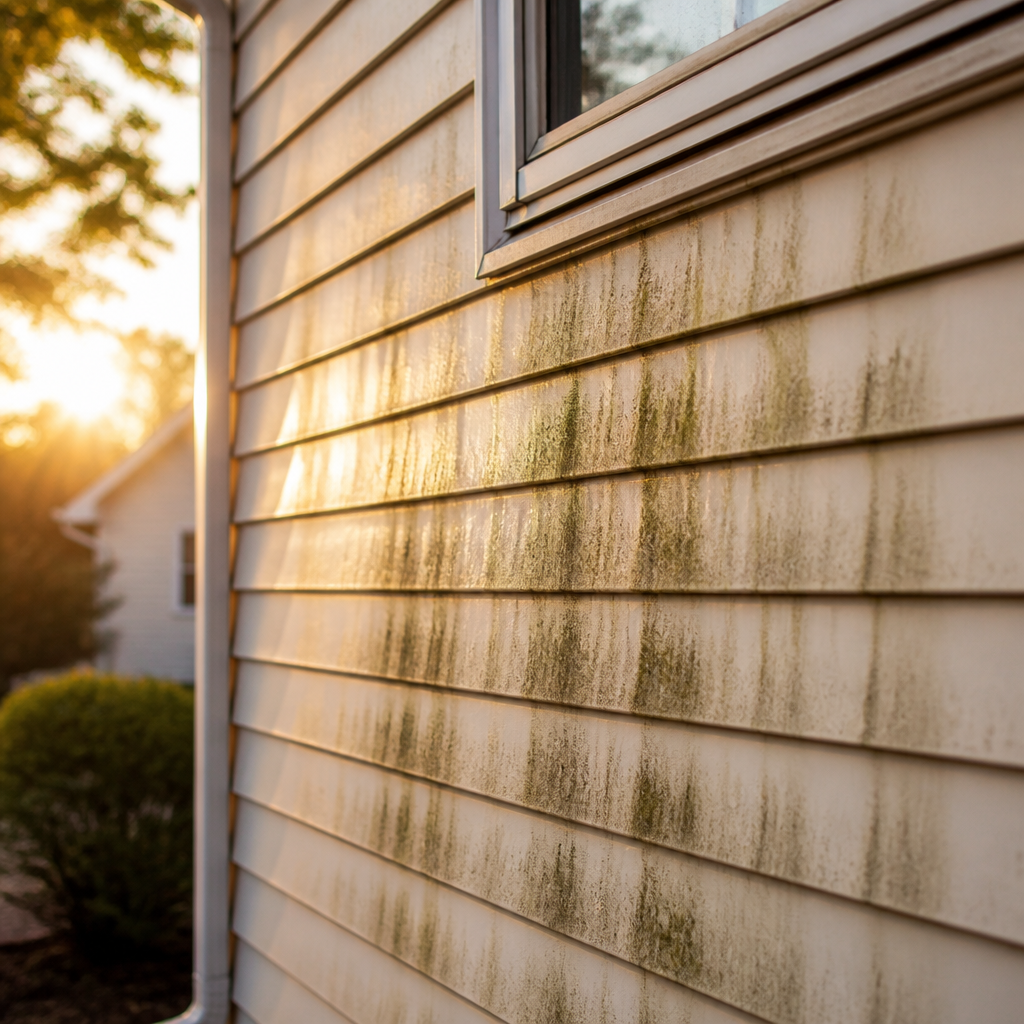
Green patches, black streaking, and uneven discoloration on your siding are not a paint problem. They are a biology problem. Algae, mold, and mildew thrive in damp, shaded areas and they spread across siding surfaces well before you can see them clearly from the curb.
The structural concern is real. Algae can trap moisture against your siding, potentially causing mold growth, wood rot, and other structural problems. What starts as a cosmetic nuisance becomes a reason to replace siding panels if left unaddressed through a wet fall and winter.
The timing matters specifically before fall because treating algae at the source helps surfaces stay clean longer, and a correct, gentle mix cleans the siding and reduces the chance that new growth will take hold in the cooler, damper months ahead.
Pro tip: Pro tip: Look along the north-facing and shaded walls first. These stay damp longest after rain and are always the first surfaces to show algae and mildew. If those walls are already discolored heading into August, you are past due for a professional wash.
A common mistake homeowners make is reaching for a pressure washer on their own. High-pressure spray can force water behind siding panels and damage painted or wood surfaces. Professional soft-washing uses controlled chemistry that targets organic growth without abusing the surface material underneath.
Sign 2: Gutters Sagging, Overflowing, or Visibly Stained
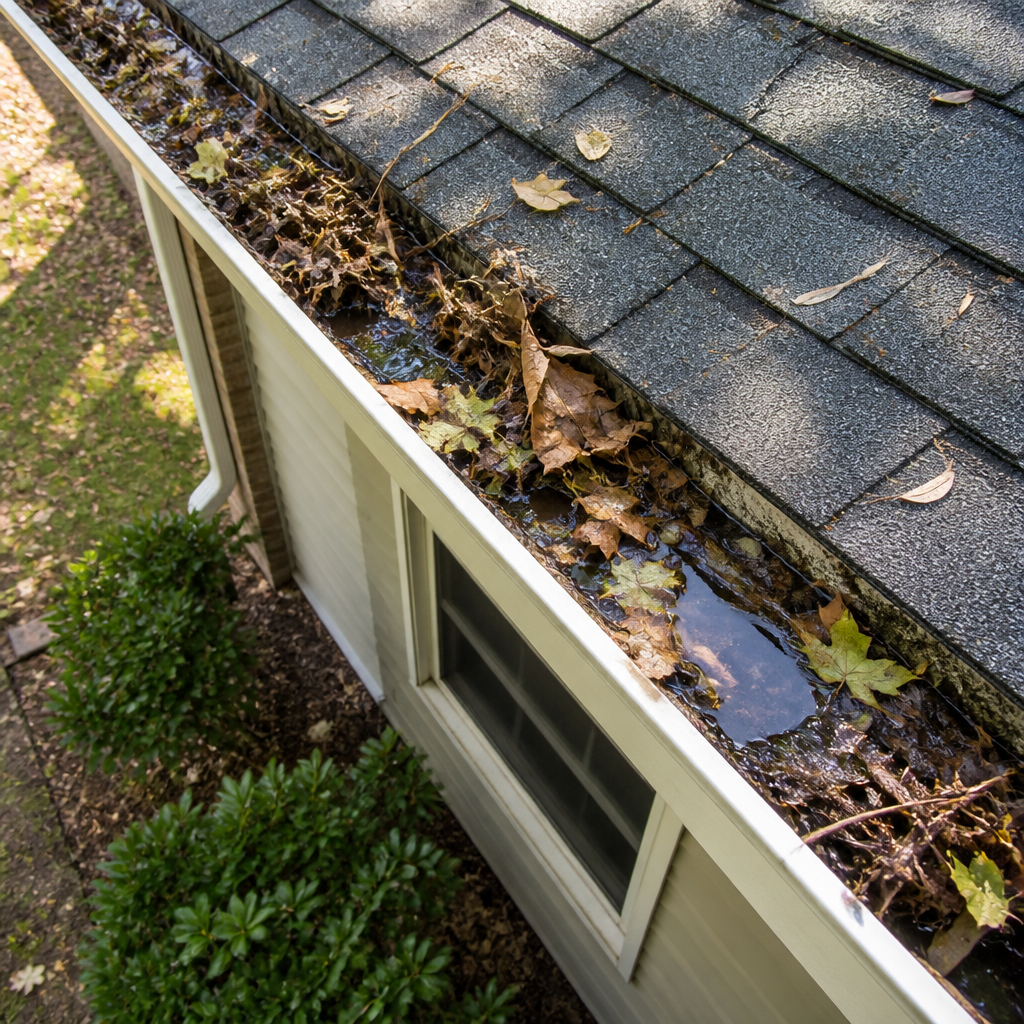
Gutters do not announce failure quietly. The signs show up on the outside of your home long before a gutter actually collapses. Typical indicators include water spilling over the sides of gutters during rainfall, sagging gutters, or water stains on your home’s exterior walls.
Organic debris is the primary driver of clogs. According to a 2025 This Old House survey of 1,000 homeowners, the most common types of debris found in gutters are leaves (reported by nearly 85% of respondents), followed by dirt or dust (about 44%), insect debris such as spider webs and dead bugs (roughly 41%), pine needles (about 31%), and pine cones (nearly 25%).
Why Cleaning Before Leaf Drop Makes Sense
Most homeowners think of gutter cleaning as an after-fall task. That is backwards. Cleaning your gutters before the major leaf drop means they are clear and flowing properly when the volume of debris peaks. Trying to clear a gutter that is already packed with wet, composted leaves and a summer’s worth of built-up debris is a far bigger job than clearing one with a moderate load.
When your gutters become clogged, water is unable to properly divert away from your home. Instead, the water will spill over the edge of your gutters, which can lead to basement flooding, as clogged gutters lead to overflow and pooling of water around your foundation.
Beyond the structural risk, stained exterior gutter faces are also worth addressing before fall. Professional exterior cleaning can brighten the outside of gutters while protecting seals and joints, and clearing those streaks before fall leaf drop keeps new stains from locking in during cooler, damp weather.
A gutter that is half-blocked heading into fall is not half the problem of a fully blocked one. Wet, compressed debris doubles its volume and doubles the repair risk. Clear it before the season changes, not after.
Pro tip: If you see water stains running down the exterior wall below your gutters, that staining is telling you the overflow has been happening for more than one storm. Schedule a gutter clean and a siding wash together to address both signs in one visit.
Sign 3: Windows With a Persistent Film or Heavy Mineral Spotting
Dirty windows are the most visible exterior cleaning sign because you notice them from inside your home every morning. But the specific type of dirty matters when it comes to timing and method.
The Difference Between Surface Grime and Mineral Etching
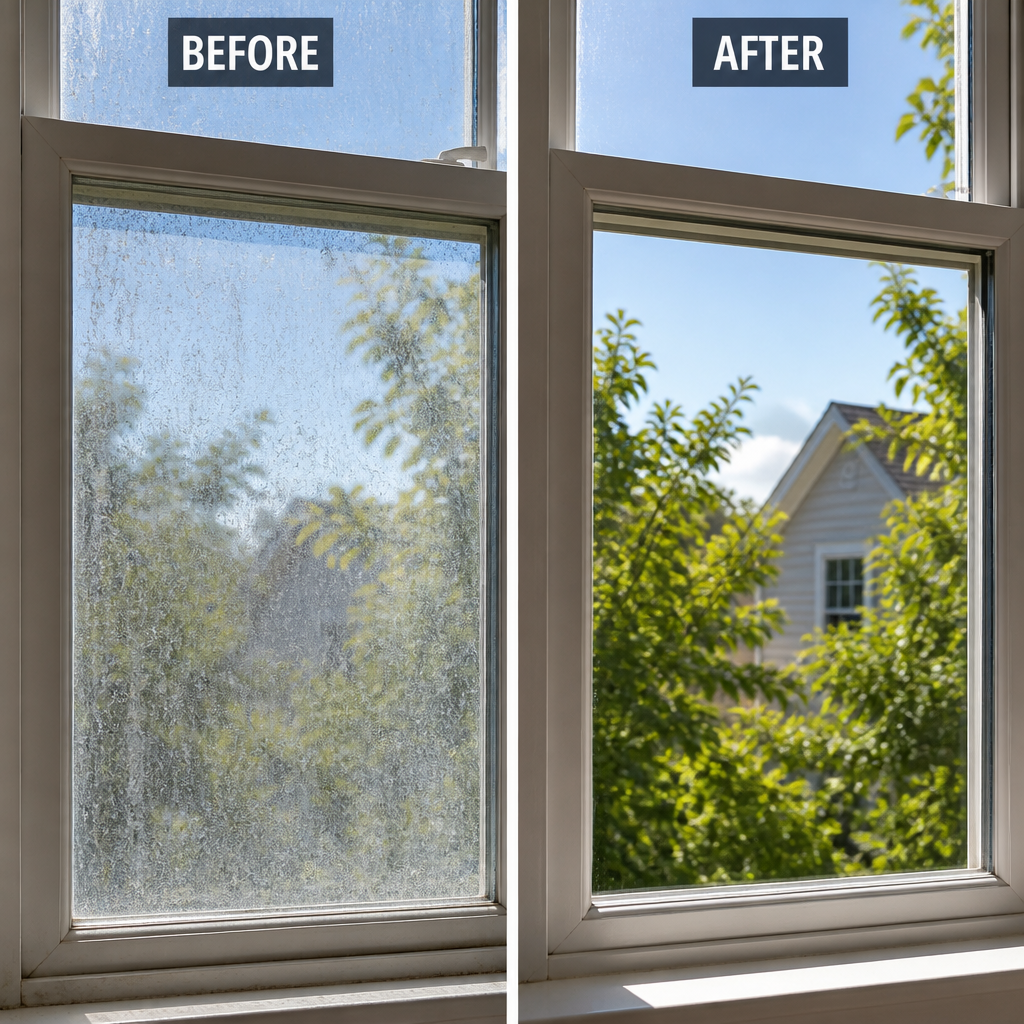
Surface grime from pollen, dust, and rain splash rinses off with a proper clean at any point of the season. Mineral spotting, however, is a different problem. Hard water deposits and oxidized runoff bond to glass chemically over time. Left through a full summer of heat and UV exposure and then another wet fall on top, those spots can etch into the glass surface and become permanent without professional-grade removal.
A film coating windows also reduces the natural light entering your home noticeably, which matters more as the days shorten heading into fall. Professionally hand-washed windows, cleaned with the right tools and technique on both interior and exterior surfaces, eliminate that film completely in a way that spray bottles and squeegees from a hardware store simply cannot match.
At Performance Window Cleaning, window cleaning is the core of what we do, and we have been doing it since 2008. We know the difference between glass that needs a standard clean and glass that needs specialist treatment to reverse mineral damage before it becomes irreversible.
Sign 4: Spider Webs and Pest Buildup Around Eaves and Entrances
If you are walking through webs every time you approach your front door, or if you look up at your eaves and see heavy webbing, insect nests, or mud dauber formations, those are exterior cleaning signs that go beyond aesthetics. They signal an active nesting cycle that intensifies as temperatures drop in fall.
Why Pest Buildup Worsens Heading Into Fall
Spiders and wasps become more aggressive about establishing nests as cooler weather approaches. Eaves, overhangs, window frames, and light fixtures are the preferred locations because they offer shelter from wind and rain. A professional exterior clean that includes pest removal and spider spraying breaks the cycle before it peaks.
Insect debris such as spider webs and dead bugs are among the most common types of debris found accumulating in gutters and around exterior structures, and that debris creates ideal conditions for new pests to settle in.
Performance Window Cleaning includes spider spraying and pest removal as part of our home detailing services. Treating overhangs, soffits, and entry points properly before the fall nesting rush saves you from dealing with established infestations that are much harder to clear once they are settled in for winter.
Pro tip: Check under window sills, around outdoor light fixtures, and along porch ceilings. Heavy webbing in those spots in late summer is a reliable signal that the pest pressure will get noticeably worse in September and October without intervention.
Sign 5: The Whole Exterior Just Looks Flat and Dull
Sometimes there is no single dramatic sign. The house just looks tired. Siding that used to have a sharp, clean color looks grey. Trim looks chalky. The front walkway looks dark even after a rain. This is a cumulative sign of a full season of UV exposure and grime buildup, and it is easy to dismiss as “it just needs painting.”
In most cases, it does not need painting. It needs a professional exterior clean.
Dirt and UV exposure can make paint and vinyl look tired months before you planned to repaint or replace anything. A professional house wash lifts the film that makes colors dull, and many homeowners are surprised by how much brighter trim, brick accents, and even stone look after a careful clean.
What a Full Professional Home Detailing Actually Covers
A proper professional home detailing package is not just a pressure wash and a rinse. At Performance Window Cleaning, our exterior service includes hand-washing of siding, eaves, and entrances, plus window cleaning, gutter cleaning, and pest removal all as part of a coordinated visit. The result is the complete reset that a single-service visit cannot provide.
The value of completing this before fall specifically is that a clean exterior heading into the wet season starts the cooler months without accumulated organic material to trap moisture against your surfaces. Left alone, organic growth traps more moisture and dirt, which can lead to staining and a dingy look that only gets worse through fall and winter.
DIY vs. Professional Exterior Cleaning: A Direct Comparison
The honest answer is that some exterior cleaning tasks are reasonable for an attentive homeowner to handle. Others are not. This table breaks down where the line sits for the five signs covered above.
| Cleaning Task | DIY Approach | Professional Service |
|---|---|---|
| Algae and mold on siding | Store-bought cleaners and a scrub brush can remove surface growth temporarily, but regrowth returns quickly without proper treatment chemistry. High-pressure DIY spraying risks forcing water behind panels. | Soft-wash process uses professional-grade solutions that target growth at the root and reduce regrowth timelines significantly. Safe for all common siding materials. |
| Gutter cleaning | Manageable for a single-storey home with a stable ladder and the right scoop. Risk increases significantly for multi-storey homes, steep rooflines, or gutters with heavy compacted debris. | Faster, safer, and paired with a post-clean inspection for early signs of damage. Professionals clear downspouts fully, which DIY often misses. |
| Window cleaning (exterior film and mineral spots) | Basic surface dust comes off with a squeegee and water. Mineral etching and hard water spotting do not respond to standard cleaning products available to consumers. | Professional hand-washing with the correct solution removes mineral deposits without scratching glass. Covers both interior and exterior in one visit. |
| Spider and pest removal from eaves | A broom can knock down visible webs. It does not treat the surface or deter reinfestation. Wasp nests require proper safety equipment and handling. | Professional spider spraying treats surfaces at entry points and overhangs, breaking the nesting cycle rather than just clearing what is visible. |
| Full exterior dull/flat appearance reset | Not achievable with consumer equipment in a single session. Multiple partial treatments rarely produce the uniform result a full professional wash delivers. | A complete home detailing visit addresses every surface systematically, restoring the uniform clean look that individual spot treatments cannot replicate. |
Frequently Asked Questions
How often should I schedule professional exterior home cleaning?
Once a year is the practical baseline for most residential properties, and scheduling that annual visit before fall is the smartest timing. If your property is surrounded by trees, has north-facing shaded walls, or is in an area with heavy pollen seasons, twice a year may be worthwhile. The pre-fall timing specifically matters because it clears summer accumulation before wet weather can lock stains into porous surfaces and before leaf drop overloads gutters that are already partially blocked.
Can I tell the difference between algae and mildew on my siding by looking at it?
In practice, the distinction matters less than the action it calls for. Green or brown patches on siding are typically algae. Black streaking, especially under eaves and along trim lines, is usually mold or mildew. Both trap moisture against your siding and both require professional-grade treatment to remove properly. The cleaning approach for a professional service covers both, so you do not need to diagnose which one you have before making the call.
Is power washing safe on all exterior siding types?
No, and this is where DIY approaches cause the most unintended damage. High-pressure spray is appropriate for concrete, brick, and certain hard surfaces. On vinyl, painted wood, Hardie board, and older stucco, it can force water into seams, strip paint, and break surface seals. A professional soft-wash process adjusts the pressure and chemical mix for each surface type, which is why it produces a clean result without damaging what is underneath.
What is the best time of year for professional home detailing before fall?
Late summer, roughly from mid-August through September, hits the ideal window for most homeowners. The bulk of summer pollen and UV exposure has accumulated by then, but the major leaf drop has not yet started. Cleaning in this window clears the season’s grime before fall moisture can set it, and it leaves gutters open and clear heading into the heaviest debris period of the year. Booking early in that window is smart because professional cleaning schedules fill quickly as the season approaches.
Does exterior cleaning actually improve property value?
It does, and the effect is not subtle. A visibly clean exterior communicates that a property has been maintained, which matters to real estate agents, potential buyers, and property managers. Beyond the subjective curb appeal improvement, removing organic growth and cleaning sealed surfaces extends the lifespan of siding, gutters, and trim, reducing the capital cost of replacement over time. Regular professional cleaning is one of the few maintenance expenses that pays for itself visibly.
What does Performance Window Cleaning include in a full exterior service?
Performance Window Cleaning offers comprehensive exterior maintenance packages that include professional window cleaning (interior and exterior), gutter and eavestrough cleaning, power washing, hand-washing of siding, eaves, and entrances, and pest removal including spider spraying. Services can be customized into packages based on your property’s specific needs and scheduled with flexible timing. The company has been operating since 2008 and serves both residential homeowners and commercial clients, including property managers and real estate professionals across the region.
Have you noticed any of these exterior cleaning signs on your own home this summer? Share what you are seeing in the comments, or let us know which sign surprised you most.
References
- Five signs your home needs professional house washing before fall, including siding and gutter indicators
- How to remove and prevent algae on house siding: expert maintenance tips
- How to keep gutters clear: signs of blockage and seasonal maintenance guidance
- Six clear signs your gutters are clogged and what to do about them
- Signs your home’s exterior needs professional cleaning and why soft washing works