
Most homeowners invest in annual window cleaning and then forget entirely about the glass surfaces that take the hardest daily abuse: balcony railings, sliding glass doors, and exterior glass panels. These surfaces accumulate road grime, bird droppings, hard water deposits, and oxidized aluminum residue at a far faster rate than standard windows. Skipping proper balcony glass cleaning does not just look bad; it accelerates glass degradation and corrodes door frames. At Performance Window Cleaning, we have been servicing these overlooked surfaces since 2008, and the neglect we encounter is consistent enough to warrant a direct, practical guide.
Table of Contents
- Quick Takeaways
- Why Balcony Glass Gets Neglected
- The Real Damage Buildup Causes
- Glass Door Cleaning: What Actually Works
- Tools and Products Worth Using
- Comparison of Cleaning Approaches
- When to Call a Professional Window Cleaning Service
- Frequently Asked Questions
- References
Quick Takeaways
| Key Insight | Explanation |
|---|---|
| Balcony glass degrades faster than interior windows | Direct exposure to UV, rain, bird droppings, and wind-driven debris etches glass surfaces far more aggressively than interior conditions. |
| Hard water stains become permanent if left too long | Mineral deposits from irrigation overspray or rain runoff bond chemically with glass within weeks, making DIY removal ineffective after a certain point. |
| Sliding glass door tracks harbor hidden grime | Debris and mold in door tracks accelerate frame corrosion and prevent proper sealing, leading to drafts and higher energy costs. |
| Frequency matters as much as method | Cleaning balcony glass twice per year prevents cumulative buildup that requires aggressive chemical treatment to remove. |
| Spider webs and nests trap moisture against glass | Organic debris left on glass frames creates sustained moisture contact, accelerating seal degradation and frame staining. |
| Standard squeegee technique fails on textured glass | Frosted or patterned glass panels require microfiber detailing, not a rubber blade, to avoid streaking and residue retention. |
| Professional window cleaning service covers more than panes | A quality service cleans frames, sills, tracks, and screens, addressing the full system, not just the glass itself. |
Why Balcony Glass Gets Neglected
The honest answer is access and assumption. Most homeowners assume that rain rinses their balcony glass naturally, and that outdoor surfaces require less attention than interior ones. Both assumptions are wrong. Rain without pressure does not dissolve mineral deposits, organic staining, or oxidized residue. It just redistributes them.
Balcony glass panels and sliding doors also sit in a zone that homeowners rarely clean themselves because it requires working close to railings, leaning out, or dealing with water that runs onto a balcony floor they then have to dry. The inconvenience becomes a reason to skip it entirely, season after season.
In practice, the balcony and ground-level glass doors are the first surfaces visitors and passersby notice. A clean house with grimy balcony glass reads as poorly maintained, regardless of how pristine the interior windows are.
The Real Damage Buildup Causes
Glass is not as inert as it looks. Over time, the buildup on balcony glass and exterior sliding doors creates real structural and aesthetic problems that go beyond surface grime.
Hard Water Etching
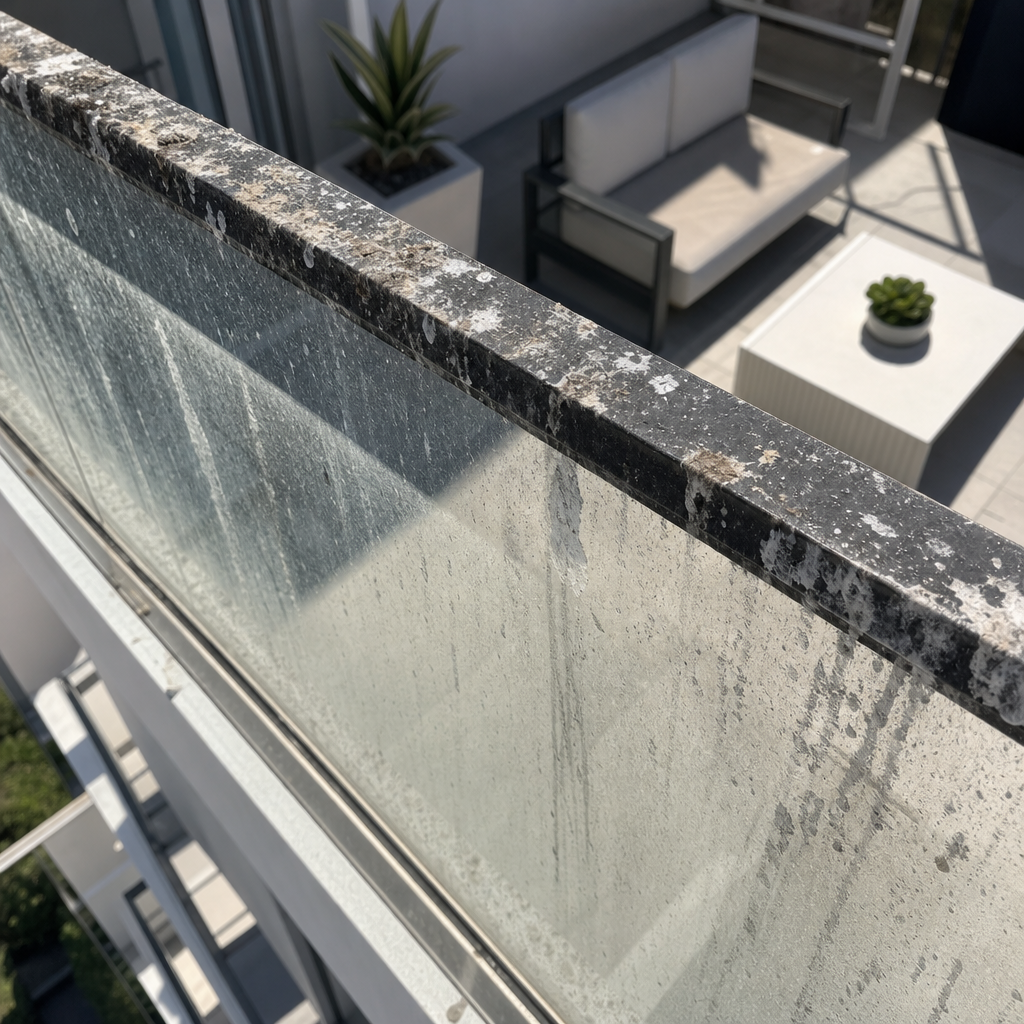
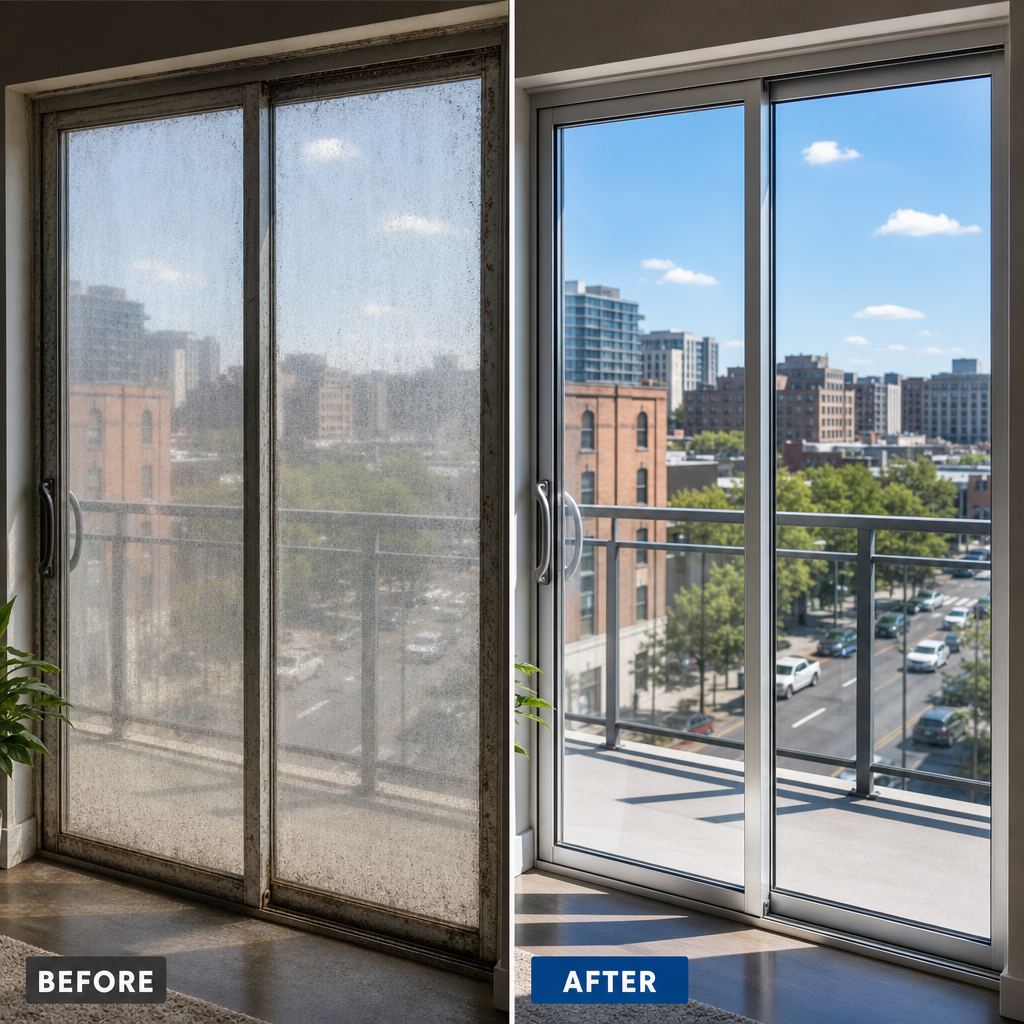
Hard water deposits, specifically calcium and magnesium carbonate, bond to glass at a molecular level. Once this etching occurs, the glass surface is permanently compromised unless professionally treated with a cerium oxide compound or similar abrasive polish. The data consistently shows that surfaces left untreated for more than two seasons develop permanent cloudiness that no household cleaner can reverse.
Irrigation systems are a primary culprit for ground-level glass doors. If your home’s sprinklers hit the lower panel of a sliding door, you are accelerating mineral deposition with every watering cycle.
Frame Corrosion and Seal Failure
Aluminum and vinyl frames around balcony glass and sliding doors are vulnerable to long-term moisture exposure when organic material, bird droppings, and grime trap water against the frame surface. A common mistake is cleaning the glass but ignoring the frame and track. The track on a sliding door is one of the most grime-dense areas in any home’s exterior, and it directly affects how well the door seals and operates.
At Performance Window Cleaning, frame cleaning is a standard part of every exterior glass service, precisely because leaving the frame dirty negates the value of cleaning the glass above it.
UV Amplification Through Dirty Glass
Dirty glass does not block UV radiation effectively. Mineral and organic deposits on glass panels can create localized heat concentration points that accelerate seal degradation and, in some cases, cause micro-cracking in the glass itself over years of thermal cycling. This is particularly relevant for large sliding glass doors that face south or west.
Glass Door Cleaning: What Actually Works
Glass door cleaning requires a different approach depending on whether you are dealing with light surface grime, hard water deposits, or oxidized frame buildup. Using the wrong method wastes time and risks scratching the glass.
The Correct Sequence for Sliding Glass Doors
Start with the track. Use a stiff-bristle detailing brush to loosen compacted debris from the track channel before applying any water. Spraying water into a dry, debris-filled track turns dust into abrasive slurry that scratches the door’s rolling mechanism. Clear the dry debris first, then wet-clean the track with a mild degreaser.
Move to the frame next, wiping down the aluminum or vinyl surround with a microfiber cloth and a diluted all-purpose cleaner. Only after the frame is clean should you address the glass itself. This sequence prevents dirty frame runoff from contaminating glass you have already cleaned.
Addressing the Glass Panel Itself
For standard grime, a professional-grade squeegee with a clean rubber blade and a soap solution made from low-residue window cleaning concentrate produces streak-free results. The blade technique matters: pull in overlapping horizontal strokes, wiping the blade between each pass. Circular wiping motions, which most homeowners default to, redistribute residue rather than removing it.
For hard water deposits, do not start with a squeegee. Apply a hard water remover or white vinegar solution, allow it to dwell for three to five minutes, then agitate with a non-scratch scrubbing pad before rinsing. Attempting to squeegee over active mineral deposits without a dwell period simply pushes the deposits around.
Pro tip: Use a separate clean squeegee rubber for balcony glass and ground-level doors than you use for upper-story windows. Track and door glass tends to be grittier, and a compromised rubber blade transferred upward will scratch upper window glass.
Balcony Glass Railing Panels
Tempered glass railing panels accumulate a specific combination of oxidized aluminum from the railing hardware, airborne grease from nearby cooking areas, and bird droppings. The oxidized aluminum residue is grey and streaky and does not respond to standard glass cleaner. It requires a mild acid-based cleaner or an aluminum-safe oxidation remover applied directly before the standard cleaning sequence.
Never use abrasive pads on tempered railing glass. Tempered glass has a softer outer surface than annealed glass and scratches more readily. Microfiber cloths and non-scratch scrubbing sponges are the only safe agitators.

Tools and Products Worth Using
The quality of results on balcony and door glass correlates directly with tool quality. Consumer-grade products leave residue, streak, and require multiple passes that increase the risk of glass scratching.
Professional Squeegees vs. Consumer Versions
A professional squeegee uses a replaceable rubber channel blade and a brass or stainless steel channel that maintains consistent blade pressure across the full width. Consumer squeegees use soft plastic channels that flex under pressure, creating uneven contact and leaving streak lines. For any glass panel wider than 30 centimeters, a professional-grade tool is not optional; it is the difference between a clean result and one that looks worse than before.
Microfiber Cloths and Their Limits
Microfiber cloths are excellent for frame wiping, detailing around gaskets, and polishing small glass sections. They are not the right tool for cleaning large glass door panels or wide balcony glass, because they hold and redeposit grime after saturation. Use microfiber for detail work and a squeegee for the primary glass surface.
Cleaning Solutions That Perform
Professional window cleaning concentrate diluted to the correct ratio outperforms every consumer spray product on the market. The reason is simple: consumer sprays contain fragrance agents, propellants, and surfactants designed to feel satisfying to use, not to produce a streak-free finish on glass. For hard water, a dedicated hard water stain remover with a citric or oxalic acid base is the correct product. Vinegar works for light deposits but is insufficient for established mineral buildup.
Pro tip: Add two to three drops of dish soap to your window cleaning solution when working on balcony glass that has accumulated cooking grease. The added surfactant helps lift and emulsify grease that standard window cleaner alone cannot cut through.
Comparison of Cleaning Approaches
There are three distinct approaches homeowners and property managers use for balcony glass and glass door maintenance. Each has a different cost, effectiveness ceiling, and appropriate use case.
| Approach | Best For | Key Limitation |
|---|---|---|
| DIY with consumer products | Light surface dust and fingerprints on interior-facing glass surfaces | Cannot address hard water etching, oxidized aluminum, or track buildup effectively; risk of glass scratching with improper tools |
| DIY with professional-grade tools and concentrates | Homeowners who clean regularly (every 4-6 weeks) to prevent cumulative buildup | Requires investment in correct tools and technique; does not address access issues on upper balconies or multi-story properties |
| Professional window cleaning service | Established buildup removal, hard water treatment, full-system cleaning including frames, tracks, screens, and seals | Higher upfront cost per visit; requires scheduling, though flexible packages from services like Performance Window Cleaning reduce this friction |
“Glass maintenance is a system, not a single action. Cleaning the pane while ignoring the frame, track, and screen is like washing a car but skipping the tires and windows. The result is always incomplete.” — Performance Window Cleaning field operations, based on 15 years of residential exterior cleaning experience.
When to Call a Professional Window Cleaning Service
There are clear thresholds beyond which DIY balcony glass and door glass cleaning produces poor results or creates safety risks. Knowing where those thresholds are saves homeowners from wasted effort and potential damage.
Hard Water Deposits That DIY Cannot Remove
If you can feel raised texture on the glass when you run a fingertip across it, the mineral deposits have etched into the glass surface. This requires professional treatment with polishing compounds. Continued DIY scrubbing at this stage risks micro-scratching the glass, making the problem worse and more expensive to resolve.
A professional window cleaning service has access to cerium oxide polishing compounds and the buffing equipment to restore etched glass without replacement. This treatment is not available in consumer retail channels and requires trained application to avoid further damage.
Upper Balconies and Access Challenges
Working near balcony railings with water, wet tools, and extension equipment is a legitimate safety risk. Professional window cleaners are trained and equipped for work-at-height scenarios that homeowners should not attempt. This is especially relevant for second-story or higher balcony glass panels, or for homes where the ground slopes away beneath the balcony.
Performance Window Cleaning handles balcony glass at height as a standard service, with equipment and protocols designed for safe exterior access on residential properties. Scheduling a combined service that includes window cleaning, gutter cleaning, and exterior hand-washing of siding means a single visit addresses multiple high-access tasks at once, which is both efficient and cost-effective for property owners.
Pest and Spider Presence
Balcony spaces are prime areas for spider web accumulation and wasp nest establishment. These are not just cosmetic issues. Spider webs trap moisture and debris against glass and frames, and wasp nests attached to glass panels or door frames require careful removal before any cleaning work can proceed. Performance Window Cleaning offers pest removal and spider spraying as part of its exterior maintenance services, which makes it practical to address the biological buildup alongside the glass cleaning rather than treating them as separate tasks.
A common mistake homeowners make is spraying down spider webs with a garden hose, which disperses the organic material across the glass surface and into door tracks rather than removing it cleanly. Dry removal using a brush or vacuum before any wet cleaning is the correct method.
Frequently Asked Questions
How often should balcony glass be professionally cleaned?
Twice per year is the minimum for most Canadian residential properties, typically in spring after winter salt and grime accumulation and in fall before the wet season sets in. Properties near construction zones, busy roads, or with active irrigation systems that contact the glass may need quarterly cleaning to prevent permanent mineral etching.
Can I use a pressure washer on sliding glass doors and balcony panels?
No, not directly. Pressure washing at standard residential settings can force water into door seals, damage the gasket around the glass, and in older installations can crack single-pane glass or stress the frame joints of tempered railing panels. Power washing is appropriate for surrounding surfaces like concrete balcony floors, siding, and railings, but the glass panels themselves require controlled hand-washing or low-pressure rinsing only.
What causes the white hazy film on my sliding glass door that won’t come off?
That haze is almost always hard water mineral deposits, specifically calcium carbonate, from irrigation overspray, condensation cycling, or rain runoff from a concrete overhang. If standard glass cleaner does not remove it, the deposits have bonded to the glass surface and require a purpose-made hard water stain remover or professional treatment. The longer this film is left, the deeper the bonding and the harder the removal process becomes.
Do I need to clean the tracks of my sliding glass door during every cleaning?
Yes. The track accumulates grime, dead insects, and organic debris that eventually compacts into an abrasive layer. This debris gets pushed into the door’s rolling mechanism with every operation, degrading the rollers and making the door progressively harder to open. Cleaning the track is not optional maintenance; it directly extends the operational life of the door hardware and prevents the compacted debris from scratching the door panel base during operation.
Is there a difference between cleaning interior and exterior sliding glass door panels?
Yes, significantly. The interior face of a sliding glass door accumulates fingerprints, indoor dust, cooking grease vapour, and pet smudges, all of which respond well to standard glass cleaner and microfiber technique. The exterior face faces UV radiation, hard water, bird droppings, oxidized frame residue, and airborne particulate, which require heavier-duty solutions, proper dwell time for stain removers, and more aggressive agitation tools. They should always be cleaned as separate surfaces with separate cloths and solutions.
How does professional balcony glass cleaning differ from what I can do myself?
Professional cleaning addresses the full system, not just the glass pane. That means frame wiping, track cleaning, screen removal and washing, hard water treatment where needed, and pest removal if required. Professionals also use commercial-grade concentrates, channel squeegees, and soft water or de-ionized water in some applications, which leave no mineral residue. The result is not just cleaner glass; it is a maintained system that lasts longer between service visits.
If you have dealt with stubborn balcony glass buildup or found a method that works particularly well for your sliding doors, share your experience in the comments. We read every one and it helps other homeowners facing the same challenges.
We would love your feedback and any insights you would share with others. What perspective would you add?
References
- United States Environmental Protection Agency, resources on water quality and mineral content affecting household surfaces
- National Research Council Canada, building science guidance on window and glazing system maintenance
- Forbes Home, reporting on residential property maintenance costs and professional service value
- Statista, data and market research on the home cleaning and exterior maintenance industry
- Canada Mortgage and Housing Corporation, homeowner maintenance guidance for exterior building components including windows and doors