
Most Ontario homeowners file exterior cleaning under spring chores, but late October is when much of the damage you see in April gets started. Leaves packed into eavestroughs hold water against the fascia, spider egg sacs settle into window frames, and summer grime on siding and screens dries into a film that is harder to lift once the cold arrives. Here is how to make the most of exterior cleaning late October Ontario homes need before the freeze, what to prioritize, and what to skip. Late-season calendars fill faster than most people expect, so decide this week.
Table of Contents
- Quick Takeaways
- Why Late October Still Matters for Exterior Work
- Gutters and Eavestroughs Before the Freeze
- Windows, Screens and Tracks Before Winter
- Power Washing Driveways, Decks and Walkways
- Spider Webs and Egg Sacs Before Winter
- Ticks and Mosquitoes Before Winter
- Home Detailing for Siding, Entrances and Doors
- How to Book Your Last Cleaning of the Year
- Frequently Asked Questions
- References
Quick Takeaways
| Key Insight | Explanation |
|---|---|
| Book eavestroughs first | Gutters are the job most likely to be skipped and the one that causes the most water damage over winter. Schedule it after most leaves have dropped. |
| Finish before the first hard freeze | Once temperatures stay below freezing, power washing becomes a safety risk and some exterior jobs stop being practical. |
| Treat spiders at the entry points | Spiders move toward warm walls, eaves and window frames in fall. Treating those spots in late October cuts down on indoor webs in winter. |
| Inspect cracks before any pressure | Water forced into a crack that freezes will widen it. Check driveways, walkways and deck boards before the crew starts the wand. |
| Drain exterior water lines | Hoses and exterior faucets should be drained before the first cold snap. Do this before the crew arrives, not after. |
| Clean glass and sills together | Grit and moisture on sills and tracks wear seals and frames. Clean them before you check caulk and weatherstripping. |
| Ask for a weather plan in writing | A provider should be able to reorder the visit if a dry day does not come. A vague answer usually means the power washing gets squeezed in at the end. |
Why Late October Still Matters for Exterior Work
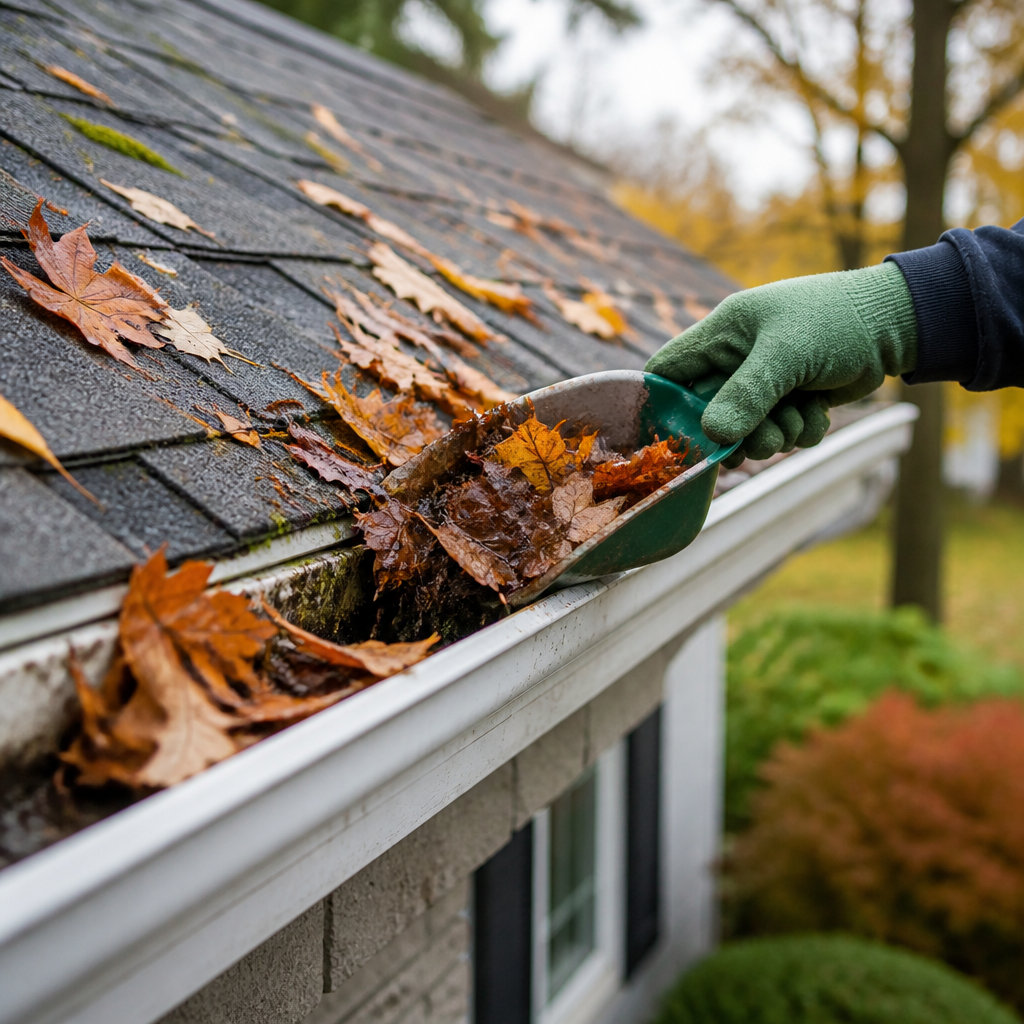
The stretch between leaf drop and the first hard freeze is short, and it is the most useful window for exterior work in Ontario. Townebank’s fall maintenance guidance says gutters should be cleared after most leaves have come down and again before the first hard freeze, so the timing is not a guess. A home that goes into winter with packed eavestroughs holds water at the roof edge, and when that water freezes, it pushes up under shingles and backs into soffits.
In practice, the cost difference is large. A gutter clean in October is a routine visit. The same blockage discovered in February can mean ice damage at the fascia, stained soffits, or water sitting against the foundation. Make It Right’s fall checklist also puts drainage away from the foundation near the top of its list, which shows where the priorities belong.
What Late October Gets You That November Often Does Not
Late October usually offers a run of cooler, drier days that suit power washing and window work. By November, the forecast is less reliable, and a single wet week can push a full exterior visit into spring. In our experience, bookings tighten once the clocks change, and a job that could have been done in one visit gets split across two.
Where Homeowners Go Wrong With Timing
A common mistake is waiting for the first snow to decide. By then, the leaves are down, the gutters are full, and the crews who could have handled the work on a dry afternoon are booked out. Make the decision by the end of October, even if the visit itself lands on the first dry week of November.
Pro tip: Ask whether gutters, windows and spider treatment can be done on one visit. Setting up ladders and equipment once costs less than paying for three separate trips.
Gutters and Eavestroughs Before the Freeze
Eavestroughs are the job homeowners skip most often, and the one that causes the most damage when it is missed. Leaves, seed pods and grit collect at the corners and at the joints where the downspout meets the trough. Once the weather turns, that debris freezes into a dam that stops water from leaving the roof edge.
Why Eavestrough Cleaning Comes First
Among exterior jobs, gutters have the most direct link to water damage. The fall checklist from Make It Right lists cleaning gutters and downspouts near the top, alongside a check that water drains away from the foundation. The two steps are connected, because a clean gutter that dumps water against the foundation still causes trouble.
What a Proper Gutter Cleaning Visit Includes
A proper visit clears the troughs by hand rather than blowing debris into the next corner. Downspouts should be cleared at the elbows and flushed with water to confirm the flow. Crews should also check hangers and seams, because a sagging section will hold water even after a thorough cleaning.
Downspout Discharge Is the Detail Most People Miss
Where the water comes out matters as much as whether it flows. A downspout that empties onto a patio, into a window well or against the side of the foundation is working against you. Extensions that carry water a safe distance from the house cost little and prevent the pooling that shows up as basement moisture in spring.
Pro tip: After cleaning, run a hose into the top of each downspout. If water backs up at a joint, you have a blockage or a sag that should be fixed before the first snowfall.
Windows, Screens and Tracks Before Winter
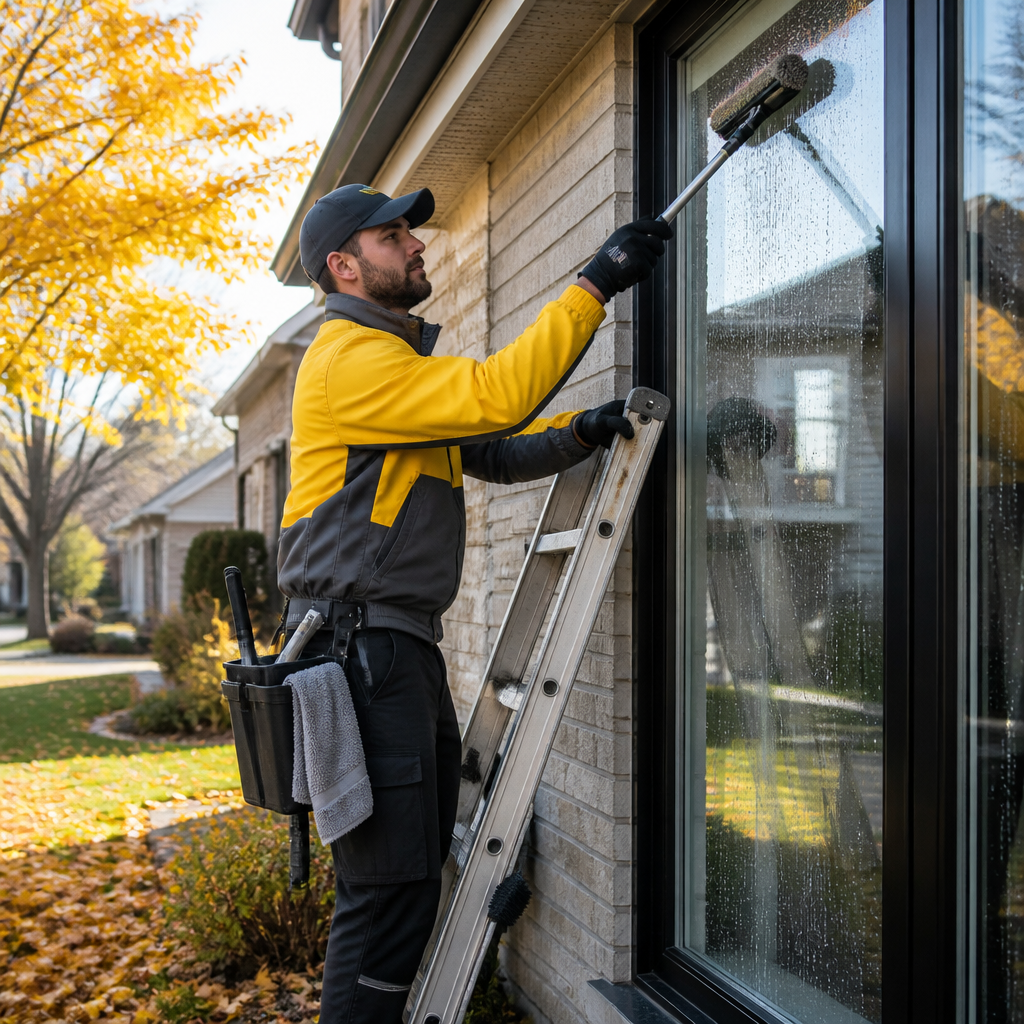
Window cleaning in late October is less about appearance and more about what sits on the glass and sills. Summer pollen, tree sap and dust mix with fall rain into a film that bonds to the surface. When temperatures drop, that film stays put and hides early signs of seal and frame wear that you want to catch before winter.
Why the Sill and Track Matter as Much as the Glass
Grit left in the track of a sliding window acts like sandpaper every time the sash moves. Dirt on a sill traps moisture against the frame, which is where caulk and weatherstripping begin to break down. Cleaning the sill and track while the window is open takes little extra time, and it gives you a clear look at the caulk line.
Dirty glass is rarely the real problem. The grit and moisture left on sills and tracks are what wear down seals and frames over a winter.
Screens, Tracks and Interior Glass
Screens collect the most fall debris, and they are easy to overlook because they look fine from the ground. Removing them for a proper wash is faster than scrubbing them in place, and it lets the crew rinse the frame at the same time. Interior glass belongs on the same booking, since the same dust and film often sits on the inside of the same panes.
Power Washing Driveways, Decks and Walkways
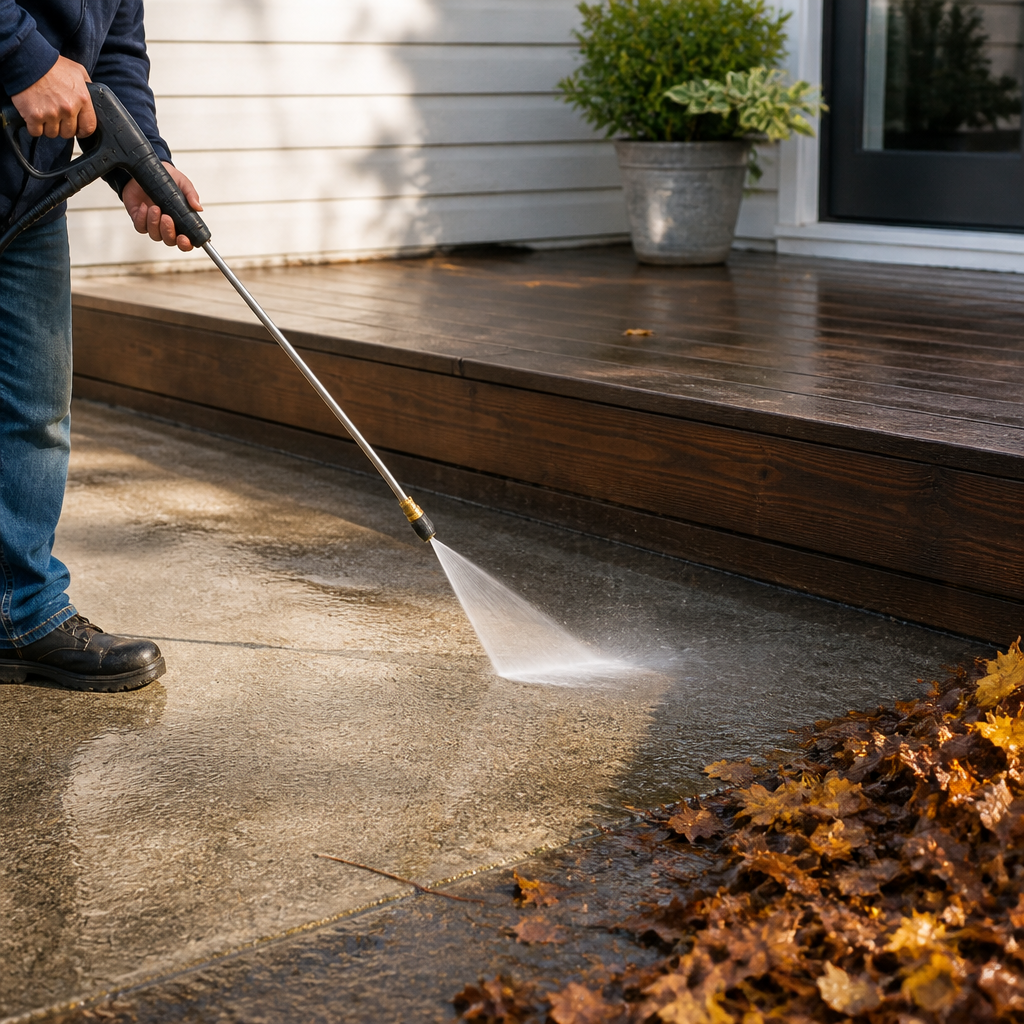
Power washing is the job most affected by the calendar. Water that sits on a driveway or deck and then freezes can lift surface material and leave a slick patch that is worse than the dirt you started with. The timing of power washing is a weather decision first and a scheduling decision second.
Set the Temperature Limit First
The rule is simple: power wash only on dry days when the surface and the air are above freezing, with a forecast that stays that way long enough for the surface to dry. A cold, damp afternoon can turn a clean walkway into a hazard by evening. If the forecast turns, move the job to the next dry window instead of rushing it.
Cracks, Decks and Stairs Need a Check First
Before any pressure goes on a driveway or walkway, look for cracks. Water pushed into a crack that later freezes can widen it over the winter, which is why Make It Right’s checklist calls for repairing cracks in driveways and walkways. Decks, porches, stairs and handrails deserve the same attention, because loose boards and wobbly rails are safety problems, not cosmetic ones.
Choose a Low Pressure Setting on Older Surfaces
Older concrete, weathered wood and painted trim can be damaged by high pressure. Lower pressure is the safer default on decks and older wood, with higher settings reserved for stubborn concrete. Ask any crew what pressure they plan to use and why. A good answer starts with the surface.
Spider Webs and Egg Sacs Before Winter
Spiders do not disappear in fall. They relocate. As nights cool, they move toward warm walls, eaves and window frames, and many lay egg sacs in sheltered corners before they die back. The webs you see in late October are often the start of a much larger problem by spring.
Why Late October Is the Right Time for Spider Control
Treating entrances and eaves before the cold settles in targets insects and spiders as they look for shelter, instead of after they have already moved indoors. A treatment done in late fall is preventive. Waiting until you see webs inside the front door turns the same job into a cleanup.
Egg Sacs, Corners and Overlooked Spots
Egg sacs are easy to miss because they blend into siding and window trim. Garage door tracks, porch light fixtures and the gaps under soffits are common hiding spots. A visual check before treatment matters, since spraying the wrong surface wastes product and leaves the real nesting site untouched.
Pro tip: Ask for a walk around the house before treatment starts. Pointing out problem corners, such as the garage door and the porch light, makes the visit faster and the results easier to see.
Ticks and Mosquitoes Before Winter
Fall pest work gets less attention than spring, and that is a mistake for homes with wooded lots or tall grass near the back fence. Tick activity does not end when the leaves start to fall, and many homeowners only think about ticks after a walk through the late-season yard. A targeted treatment along the property edges can reduce what gets carried back to the door.
Where Ticks Are Most Likely to Wait
Ticks favour leaf litter, tall grass and the edges where lawn meets woods or brush. A treatment that stops at the patio misses the zone where they actually wait. Pet runs, garden beds against fences and firewood piles are worth mentioning when you book, so the crew can focus there.
Mosquito Control Is Still a Fall Question
Mosquitoes slow down as temperatures drop, but a yard with standing water in old planters, eavestrough pools and low spots still gives them a place to breed. Clearing eavestroughs and draining containers is inexpensive control, and it pairs naturally with the gutter visit. A treatment alone cannot fix standing water.
Home Detailing for Siding, Entrances and Doors
Home detailing is the least urgent item on the list, but it is the one that makes a house look cared for when the snow arrives. Siding, front entrances and doors pick up road grime, pollen and splashed mud that is easier to remove in October than after a winter of salt and slush. Hand washing is the right method for most of these surfaces.
Hand Washing Siding Protects the Finish
Siding and trim respond better to hand washing with a soft brush than to high-pressure blasting. Hand washing lets the crew work around light fixtures, vents and older paint, where a direct spray can drive water behind the cladding. The result is a clean surface without the risk of stripping the finish.
Entrances and Doors Need Attention Before Salt Season
Front steps, door thresholds and the surfaces around entry doors take the most foot traffic and the most salt once winter starts. Cleaning them before the first freeze removes the grit that salt would otherwise grind into the finish. Door seals and weatherstripping are worth a look while the crew is nearby, since Make It Right’s checklist includes both in its pre-winter inspection.
How to Book Your Last Cleaning of the Year
Booking the last exterior cleaning of the year is mostly about sequence. Start with the jobs that depend on drainage and dry weather, then fit the rest around the forecast. Book the visit as a bundle, confirm the weather plan in writing, and leave room for one reschedule.
Confirm the Weather Plan Before You Pay
Ask what the company does if a dry day does not come. A good provider will reorder the visit so gutters and windows happen first, and power washing waits for the next dry, above-freezing day. A vague answer usually means power washing will be squeezed in at the end of a cold afternoon.
Prep Your Property Before the Crew Arrives
Move patio furniture, close windows you do not want wet, and clear the area below downspouts. Turn off and drain exterior hoses and faucets before temperatures drop below freezing, as Townebank’s fall guidance advises. A hose left attached can freeze and split a fitting before you notice anything is wrong.
Comparing Your Booking Options
Not every home needs the full package. The table below compares three common approaches and what each one tends to leave behind.
| Approach | Best for | Watch out for |
|---|---|---|
| Full exterior visit (gutters, windows, power washing, spider treatment) | Homes entering winter with a backlog of maintenance | Power washing depends on a dry, above-freezing day, so the visit may need to be split |
| Gutters and windows only | Homes with heavy leaf loads and a limited budget | Power washing and spider control often slide to spring, after webs and grime have set |
| DIY with a ladder and garden hose | Single-storey homes with easy roof-edge access | Ladder falls are the biggest risk, and a hose cannot confirm downspout discharge or find a hidden blockage |
Frequently Asked Questions
Is late October too late to book exterior cleaning in Ontario?
It is usually not too late. Late October still works well for gutters, windows and spider treatment. Power washing is the only job that needs a dry, above-freezing forecast, so it may be scheduled for a separate day.
Should I clean gutters before or after the leaves drop?
Clean them after most of the leaves have fallen, then check again before the first hard freeze. Cleaning too early means more debris arrives after the visit, while waiting until after freeze-up makes the job harder and riskier.
Can you power wash in late October?
Yes, on dry days when the surface and the air are above freezing. Water left on a driveway, deck or walkway can freeze overnight, so a forecast with a cold snap should push the job to a later date.
Do I still need spider control in the fall?
Yes. Treating entrances, eaves and window frames in late October targets spiders and insects as they look for shelter. It is far easier to prevent indoor webs than to clean them up after they have spread through the winter.
Do I still need window cleaning if I cleaned in spring?
Usually yes. Fall rain, leaves and tree sap leave a film on glass and sills, and grit left in the tracks can wear the sash. Cleaning before winter also gives you a clear view of the caulk and weatherstripping.
Does gutter cleaning include checking the downspouts?
It should. A proper visit clears the downspouts at the elbows, flushes them to confirm flow, and checks where the water discharges. A downspout that empties against the foundation can cause as much trouble as a clogged gutter.
Tell us about your own late-season exterior cleaning, including whether the weather or the booking calendar caused the biggest headache.
We would love your feedback and any insights you would share with others. What perspective would you add?