
Most homeowners think of clogged gutters as a minor nuisance, something to deal with eventually. The reality is far more serious. Clogged gutters dangers range from cracked foundations and flooded basements to rotting fascia boards and pest infestations that spread inside your walls. The Insurance Bureau of Canada estimates that water damage is one of the top causes of home insurance claims in the country, and a significant portion of those claims trace back to drainage failures that start at the roofline. If you have not had your eavestroughs inspected or cleaned this season, you are likely sitting on a problem that is getting worse by the week.
Table of Contents
- Quick Takeaways
- What Actually Happens When Gutters Clog
- Foundation Damage: The Biggest Risk Nobody Talks About
- Eavestrough Flooding and Basement Water Damage
- Roof and Fascia Rot: A Slow-Moving Disaster
- Pest Infestations That Start at the Gutter
- Landscape and Driveway Erosion
- Gutter Cleaning Importance: A Comparison of Approaches
- Frequently Asked Questions
- References
Quick Takeaways
| Key Insight | Explanation |
|---|---|
| Clogged gutters can destroy foundations | Overflowing water pools around the base of your home, saturating soil and causing foundation cracks that cost tens of thousands of dollars to repair. |
| Eavestrough flooding is a leading cause of basement water damage | When downspouts back up, water is redirected toward your home rather than away from it, entering through window wells, cracks, and basement walls. |
| Fascia boards rot silently for months | Standing water in clogged gutters keeps fascia and soffit wood perpetually damp, leading to rot that spreads into roof decking before you notice it. |
| Debris-filled gutters are prime pest habitat | Decomposing leaves, standing water, and organic matter attract mosquitoes, wasps, carpenter ants, and rodents that can move into your attic or walls. |
| Twice-yearly cleaning is the minimum standard | Spring and fall cleanings clear post-winter debris and autumn leaf accumulation. Homes near large trees may need three or four cleanings per year. |
| Ice dams in winter start with blocked gutters | Debris trapped in gutters prevents meltwater from draining, which refreezes, backs up under shingles, and causes interior ceiling water stains. |
| Professional cleaning costs far less than the damage it prevents | A professional eavestrough cleaning typically costs a fraction of one foundation repair, basement waterproofing job, or roof replacement. |
What Actually Happens When Gutters Clog
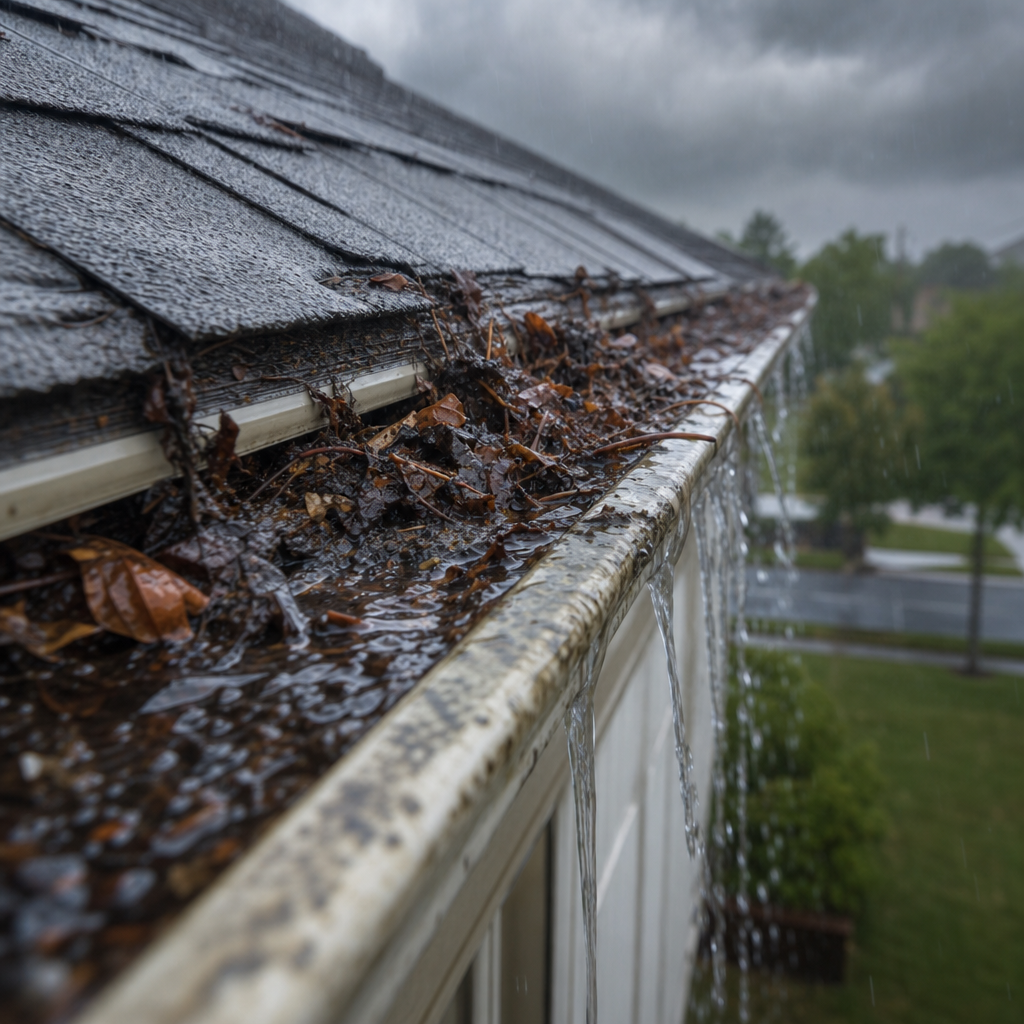
When leaves, pine needles, shingle grit, and dirt accumulate in your eavestroughs, they do not just sit there quietly. They hold moisture against the metal or vinyl trough material, accelerating corrosion. They block downspout openings so that even a moderate rainfall overwhelms the system. And they create a soggy, decomposing mass that adds weight to gutter hangers, pulling them away from the fascia board and causing sections to sag or detach entirely.
In practice, a gutter that looks partially blocked will allow light rain to drain but fail completely during a heavy downpour, which is exactly when you need it most. The overflow does not distribute evenly across the roofline. It concentrates at the lowest point of each sagging section, dumping water directly against your siding and foundation in a single concentrated stream rather than dispersing it through a downspout and away from the structure.
Pro tip: After any rainfall over 20mm, walk the perimeter of your home and look for wet soil directly against the foundation or waterfall-like staining on siding. Both are early warning signs of a gutter system that is no longer doing its job.
Foundation Damage: The Biggest Risk Nobody Talks About
Foundation repair is one of the most expensive problems a homeowner can face. Estimates from Canadian contractors regularly place the cost of underpinning or waterproofing a compromised foundation between $10,000 and $80,000 depending on severity. The disturbing part is that most of this damage is entirely preventable, and clogged gutters dangers are the root cause in a large number of cases.
How water saturates and shifts soil around your foundation
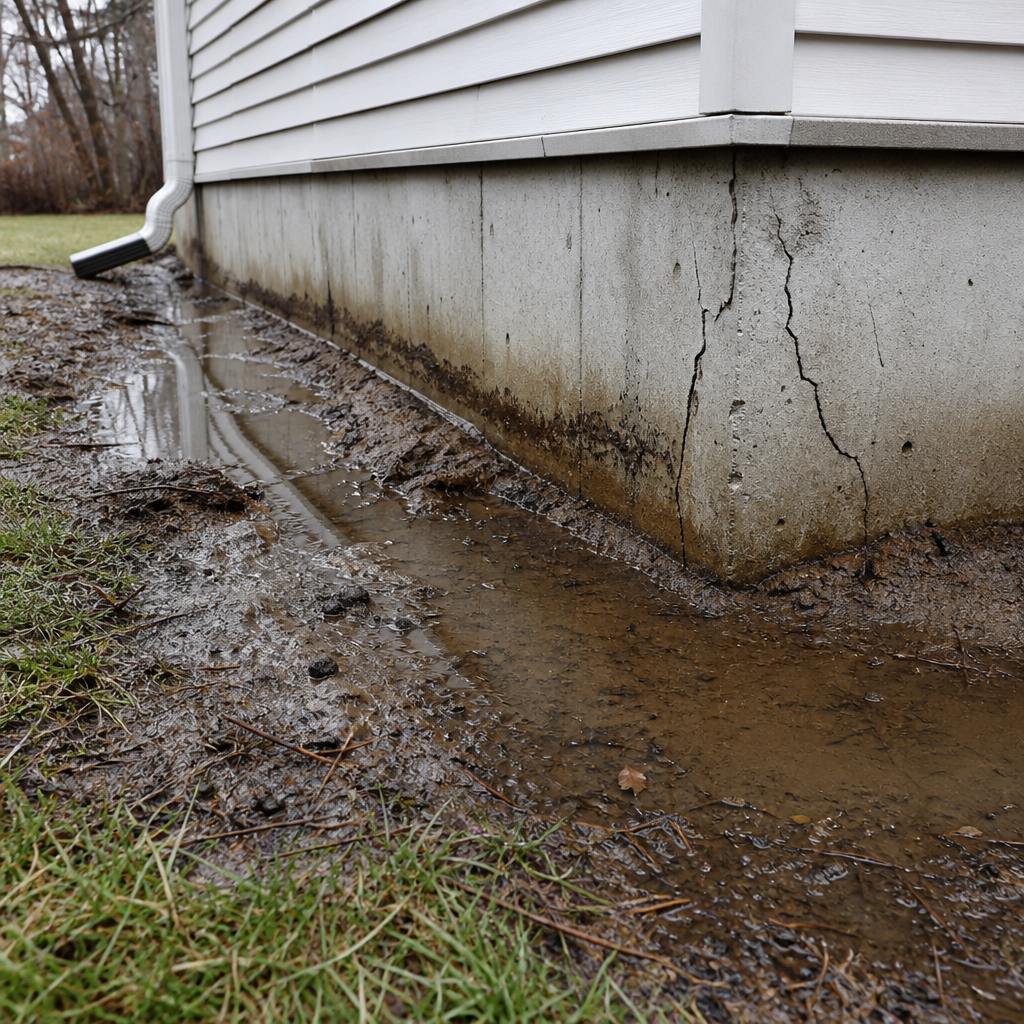
When gutters overflow, water falls in concentrated streams around your home’s perimeter. That water saturates the backfill soil that was placed around your foundation during construction. Unlike undisturbed soil, backfill is loose and drains poorly, so it holds water longer and exerts what engineers call hydrostatic pressure against your foundation walls. Over time, that pressure causes bowing, horizontal cracking, and eventual water infiltration through the wall itself.
Freeze-thaw cycles in Canadian winters make this worse. Saturated soil expands when it freezes, pushing against the foundation with tremendous force, then contracts when it thaws. A few seasons of this cycle alongside chronically overflowing gutters can compromise structural integrity in ways that are not visible until significant damage has already occurred.
Signs your foundation is already affected
Look for stair-step cracks in brick mortar, horizontal cracks in poured concrete walls, or doors and windows that no longer close properly. None of these problems fix themselves. They compound. And almost every foundation specialist who inspects them will ask the same first question: how are your gutters and downspout drainage?
“Water is the number one enemy of any building structure. The overwhelming majority of foundation and basement problems we see are directly connected to poor surface drainage and failed gutter systems. Fix the drainage first, or you are just treating symptoms.” – A licensed structural engineer speaking at a home inspection industry workshop on water damage prevention.
Eavestrough Flooding and Basement Water Damage
Eavestrough flooding is not always dramatic. It does not always mean water pouring visibly over the gutter edge in a waterfall. Often it is subtler: a small overflow that redirects water toward window wells, a downspout that backs up and drains at the base of the wall rather than three to five feet away from the foundation, or gutter joints that leak because debris has pushed standing water against the seals for months.
The path water takes into your basement
Water entering a basement almost never comes through the floor. It enters through the top of the foundation wall or through cracks in the upper portion of the wall, right at the point where the wall meets the backfilled soil outside. This is precisely where eavestrough overflow concentrates its damage. Once water finds a crack or a porous section of concrete block, it follows that path every time it rains, depositing minerals, eroding the mortar, and gradually widening the entry point.
The Insurance Bureau of Canada reports that overland flooding and water damage now surpass fire as the leading cause of property insurance claims in many provinces. A meaningful percentage of those claims involve homes where drainage infrastructure, including gutters and downspouts, was not functioning correctly. The gutter cleaning importance is not abstract, it is financial and structural.
Pro tip: Downspout extensions should direct water at least 1.8 metres (six feet) away from your foundation. If your downspouts terminate flush against the wall or underground without a functioning drainage tile, your basement is at elevated risk regardless of how clean your gutters are.
Roof and Fascia Rot: A Slow-Moving Disaster
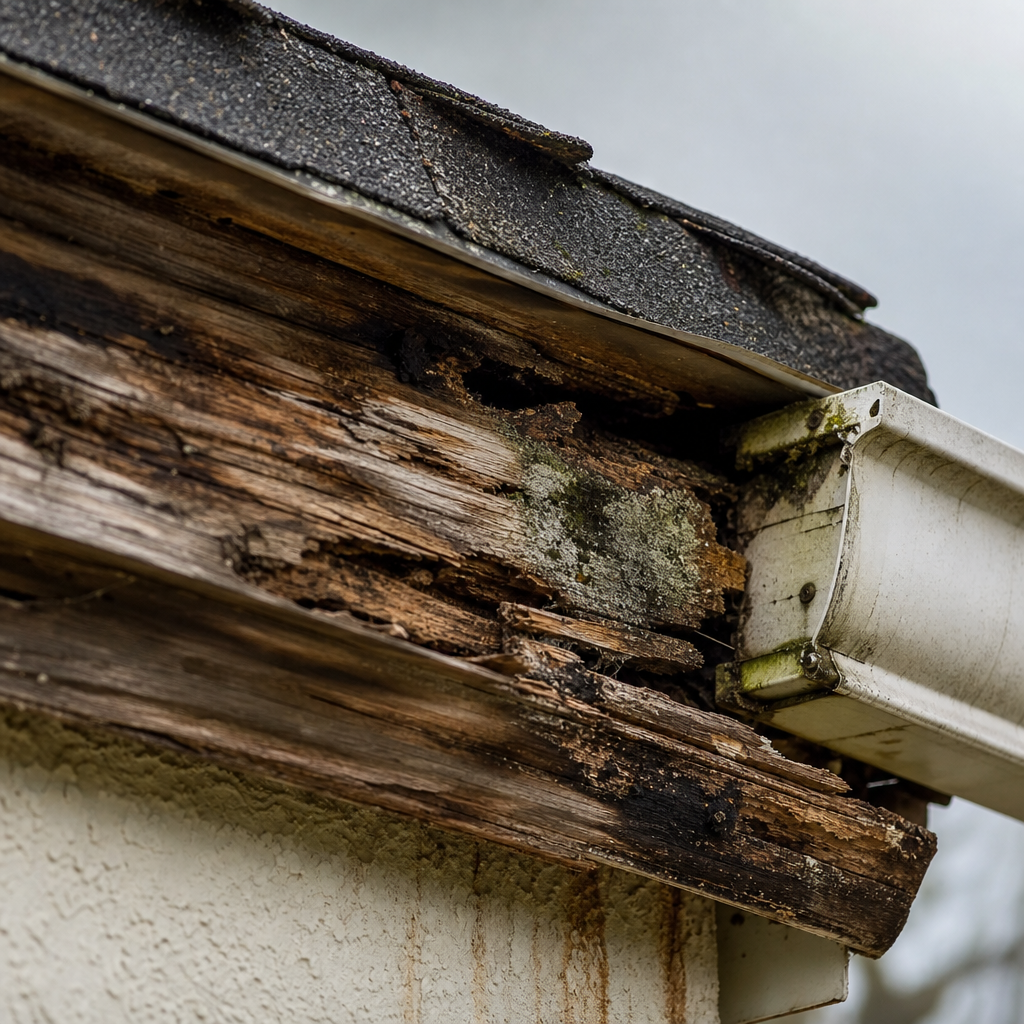
Your gutters are attached to the fascia board, which is the horizontal wooden trim running along the roofline. When gutters fill with debris and hold standing water, that water is in constant contact with the fascia. Wood and persistent moisture are a destructive combination. The fascia softens, then rots, and the rot spreads upward into the soffit and eventually into the roof decking itself.
A common mistake homeowners make is assuming a small section of discoloured or softened fascia is a cosmetic issue. In practice, by the time rot is visible from the ground, it has usually penetrated several inches into the board and may have already reached structural roof members. Replacing a section of fascia costs a few hundred dollars. Replacing roof decking and shingles over a large area costs several thousand. The difference is catching the problem before it escalates, which means cleaning your eavestroughs before water has months to sit in them.
Winter ice dams and their connection to blocked gutters
In Canadian winters, clogged gutters create the conditions for ice dams. Meltwater from the warm upper roof flows down toward the eaves, hits the cold, debris-blocked gutter, and refreezes. The ice dam grows as more water cycles through, and eventually meltwater has nowhere to go except backward under the shingles. This is how interior ceiling stains appear without any visible roof damage from the outside. The leak does not look like a roof problem. It looks like a mystery, until a professional points to the gutters as the source.
Pest Infestations That Start at the Gutter
Decomposing organic matter plus standing water equals ideal pest habitat. Mosquitoes require as little as a bottle cap of standing water to breed. A gutter full of wet leaves can support hundreds of mosquito larvae. But the pest problem does not stop at mosquitoes. Carpenter ants, which cause structural wood damage comparable to termites in Canadian climates, are strongly attracted to the combination of moisture and rotting wood that clogged gutters reliably produce.
Wasps regularly build nests inside gutter sections where debris provides shelter and insulation. Rodents, including mice and squirrels, use clogged gutters and sagging sections as access ramps to the roofline, where they chew through soffit venting and enter attic spaces. Once inside, they cause insulation damage, chew electrical wiring, and leave contamination that requires professional remediation.
At Performance Window Cleaning, the team has seen firsthand how homes that have gone two or more seasons without eavestrough cleaning often require spider spraying and pest removal as a companion service. The gutters are not just a water problem. They are an ecosystem that, left unchecked, becomes an invitation for every pest that thrives in damp, sheltered environments.
Landscape and Driveway Erosion
Gutter overflow concentrates water discharge at specific points along your home’s perimeter. In landscaped areas, this erodes topsoil, drowns shallow-rooted plants, and carves channels through garden beds. Over multiple seasons, mulch washes away entirely, leaving bare soil that either cakes hard in summer or turns to mud in spring. Replacing eroded landscaping and mulch adds up quickly, especially around mature plantings.
On paved surfaces, concentrated overflow accelerates surface deterioration. Asphalt driveways and concrete walkways that sit near downspout-adjacent or overflow-prone areas suffer accelerated cracking because the water infiltrates the substrate, softening the base and causing settling. In Canadian climates, any water that penetrates pavement before a freeze cycle expands and breaks the surface from within. This is a direct, measurable cost of neglected eavestrough maintenance.
Gutter Cleaning Importance: A Comparison of Approaches
Not every approach to addressing the gutter cleaning importance question delivers the same level of protection. Understanding the differences helps homeowners make an informed decision rather than simply doing what is most convenient.
| Approach | What It Covers | Limitations and Risks |
|---|---|---|
| DIY gutter cleaning with a ladder | Removes visible debris from accessible sections; low cost per session | High fall risk on two-storey or steep-roofline homes; downspout blockages are frequently missed; no inspection of hangers, seals, or fascia condition |
| Gutter guards or leaf filters installed by homeowner | Reduces frequency of full cleanings; keeps larger debris out of the trough | Fine debris, shingle grit, and seeds still enter and accumulate; guards themselves need periodic cleaning; can trap ice in winter and worsen ice dam conditions |
| Professional eavestrough cleaning service (e.g., Performance Window Cleaning) | Clears all debris including downspouts; inspects hangers, seals, and fascia; identifies early signs of rot, pest activity, or improper drainage; completed safely with proper equipment | Higher per-visit cost than DIY, offset by comprehensive inspection and damage prevention across the full system |
The data consistently shows that homes receiving annual or semi-annual professional eavestrough service have significantly lower rates of foundation and basement water damage claims compared to homes where gutter maintenance is deferred or handled sporadically. A professional visit does more than remove leaves. It is an inspection of a system that protects every other part of your property.
Frequently Asked Questions
How often should I have my gutters professionally cleaned?
The minimum standard for most Canadian homes is twice per year: once in late spring after tree pollination and seed dispersal, and once in late fall after leaf drop is complete. Homes surrounded by pine trees, large maples, or near wooded areas should plan for three to four cleanings annually. Waiting until you see visible overflow is waiting too long.
What are the first signs that my gutters are causing damage to my home?
The earliest visible signs include damp soil directly against your foundation after rain, water staining on siding directly below gutter lines, paint peeling on fascia boards, and gutters visibly pulling away from the roofline. Inside the home, watch for basement wall efflorescence (white mineral deposits), musty odors, or water stains on basement walls near the ceiling line.
Can clogged gutters really cause foundation damage, or is that an exaggeration?
It is not an exaggeration. Foundation damage from poor surface drainage and gutter overflow is one of the most well-documented causes of structural home damage in Canada. The mechanism is direct: water that should be carried away from the home instead saturates the backfill soil against the foundation. Hydrostatic pressure from that saturated soil causes wall bowing and cracking. This is not a fringe scenario. It is a routine finding in home inspection reports.
What is eavestrough flooding and how is it different from regular gutter overflow?
Eavestrough flooding refers specifically to the condition where a blocked or overwhelmed gutter system fails to route water away from the structure, causing pooling at the foundation, water entry into basement window wells, or surface flooding along the home’s perimeter. Regular overflow is water spilling over the front edge of a gutter. Eavestrough flooding describes the full downstream consequence of that failure, including where the water ends up and what it damages.
How do clogged gutters lead to pest problems?
Clogged gutters create three conditions that pests find ideal: standing water for breeding (mosquitoes, certain beetles), moist decomposing organic matter for nesting (carpenter ants, earwigs), and sheltered access points near the roofline for rodents and wasps. Once pests establish themselves in the gutter line, they frequently migrate into the soffit, attic, or wall cavities. Removing the organic debris and standing water is the first line of defense.
Is professional gutter cleaning worth the cost compared to doing it myself?
For single-storey homes with simple rooflines, a confident homeowner with the right ladder and safety equipment can handle basic cleaning. For two-storey homes, homes with steep pitches, older homes where fascia condition needs evaluation, or any property where downspout blockages are a recurring issue, professional service is clearly the better investment. The risk of a fall injury alone justifies professional involvement, before considering the inspection value a trained technician provides.
Do gutter guards eliminate the need for eavestrough cleaning?
No. Gutter guards reduce the frequency of cleaning but do not eliminate the need for it. Fine debris including shingle granules, seed pods, and moss spores pass through or accumulate on most guard systems. Downspouts can still block. The guards themselves can become clogged. Homes with gutter guards still require inspection and periodic cleaning. Any company telling you otherwise is oversimplifying the system’s maintenance requirements.
If you have had an experience with gutter damage or eavestrough flooding that surprised you, share what happened and what you did to fix it. Your story might help another homeowner catch the problem earlier.
References
- Environment and Climate Change Canada: national climate data and precipitation statistics relevant to home drainage planning
- Insurance Bureau of Canada: property damage claims data and guidance on water damage prevention for Canadian homeowners
- United States Environmental Protection Agency: guidance on stormwater management, residential drainage, and foundation water protection
- Forbes Home: cost estimates and expert guidance on foundation repair, water damage remediation, and home maintenance priorities
- Statista: statistical data on home insurance claims, water damage frequency, and residential property maintenance spending