
Every October, we get the same call. A homeowner in Mississauga looks at the front of the house, notices the coach lights have gone cloudy and the entrance looks tired, and asks whether it is too late to do anything before winter. It is not too late, but the window is narrowing. Summer grime, pollen, and insect residue have settled onto the glass, the door, and the fixture housings, and October is when those marks show up most clearly. Neighbours, agents, and buyers all see the entrance first. This guide covers coach light cleaning, entrance cleaning, and the fall tasks that decide how your home looks from the street.
Table of Contents
- Quick Takeaways
- Why October Decides Curb Appeal
- Coach Light Cleaning: What the Job Involves
- Entrance Cleaning for Mississauga Homes
- Exterior Detailing and Power Washing in Fall
- Fall Cleaning Methods Compared
- Gutters and Eavestroughs Before Winter
- Spiders, Webs and Other October Pests
- Scheduling Your October Visit
- Frequently Asked Questions
- References
Quick Takeaways
| Key Insight | Explanation |
|---|---|
| Switch off coach lights before cleaning | Turn the fixture off at the wall and let it cool. Wet glass near a warm bulb or live wiring is a bad combination, and a dry fixture shows streaks more clearly. |
| Use dish soap, not pressure, on fixtures | Pressure forces water past gaskets and can crack older acrylic panels. Hand washing with mild soap gives a better result on lanterns and hardware. |
| Clean the entrance before the gutters | Door glass, hardware, and steps are seen every day. Gutters matter most once most of the leaves have dropped. |
| Keep water off the door seal | Wash the door face by hand and keep water away from the threshold and the lower edge of the door, where soaking invites swelling and rot. |
| Finish power washing before the first hard frost | Water left on driveways and walkways can freeze. Cooler fall days also give you a longer, more even clean with less streaking than hot summer weather. |
| Clear eavestroughs in one pass, late in the month | Cleaning too early means a second ladder trip once more leaves fall. A single clean after most leaves drop prevents winter overflow at the eave line. |
| Remove webs and check egg sacs on the same visit | Webs cluster around lit fixtures. Removing them alongside the coach light cleaning avoids a second trip and keeps the corners from refilling in a week. |
Why October Decides Curb Appeal
Most homeowners think of spring as the season for exterior cleaning and summer as the time to enjoy the results. October is different. Leaves come down, the sun sits lower, and the front of the house gets a few weeks of clear, unforgiving light before snow hides everything.

In practice, the marks that build up over summer stand out most in fall. Pollen film, road spray, and insect residue that you stopped noticing in July show up on the glass beside the door and on the lantern above it. Once the trees are bare, the front elevation is also more exposed to the street than it was during the leafy months.
A common mistake is treating fall as a maintenance-free stretch. Grime left on fixtures and entrances sits on finishes all winter, and haze on lens glass is harder to lift in spring. Doing the work in October takes less time than doing it twice, and it means the entrance looks deliberate when a neighbour or agent walks up to it.
The timing also works in your favour for scheduling. Cool, dry days are common in October, which makes it easier to work on ladders, let surfaces dry, and finish a job without rushing. Spring crews often face the same grime plus a winter of salt and road spray, so the job takes longer and costs more.
Coach Light Cleaning: What the Job Involves
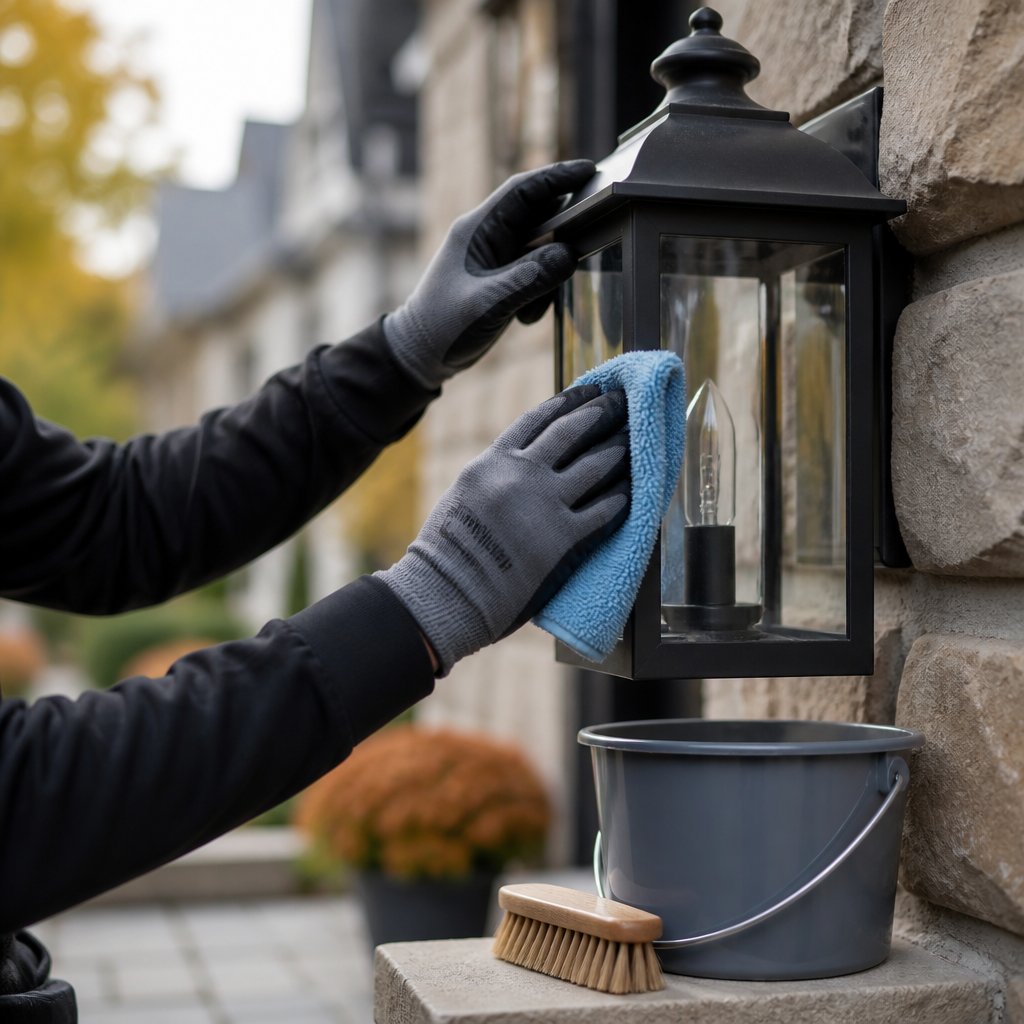
A coach light is the wall-mounted lantern beside many front doors across Mississauga, usually with glass or acrylic panels and a metal frame. It looks simple, but it collects dust, insects, and water spots on both sides of the lens, and the frame traps grime in every seam. A proper clean takes longer than most people expect, and the results are worth the time.
Cleaning the glass and lens
Switch the fixture off at the wall and let it cool before you touch it. A cool, dry fixture is the only safe place to start. Remove the bulb if the design allows, and take the lantern apart only if the manufacturer’s instructions make that easy.
Wash the panels with warm water and a few drops of mild dish soap, then rinse with clean water. Use a soft microfiber cloth in long, even strokes, and dry the panel with a second cloth so it does not streak. Acrylic scratches easily, so avoid paper towels, scouring pads, and any cleaner with ammonia or abrasive grit.
Dead bugs are the hardest part of the job. They collect in the bottom of the lantern where water pools, and a damp cloth just smears them around. Lift them out with a soft brush or a cotton swab before you wipe the glass.
Handling the housing, hardware and finish
The metal frame needs the same care as the glass. Brass, bronze, and powder-coated aluminum all look good when cleaned with a damp cloth and mild soap, but they dull quickly under harsh chemical cleaners. Dry the frame fully, because water trapped in the seams can run down the wall and leave marks under the fixture.
Check the gasket where the lantern meets the wall plate. If it is cracked or soft, water will get inside and fog the glass over winter, and that is a repair job rather than a cleaning job. Tighten loose screws while the fixture is open, and note any panel that is clouded or yellowed beyond cleaning, because it may need replacing before the first freeze.
Pro tip: Look at the fixture again the next morning, from the sidewalk, after the first cool night. Dew shows every streak you missed, and it is much faster to fix the spot right away than to schedule a return visit.
Entrance Cleaning for Mississauga Homes
The entrance is the most-used part of the exterior and the most-photographed part, whether the photo is taken by a neighbour or a listing agent. A tidy door, clean glass, and clear steps tell visitors the house is cared for before they see anything else. Entrance cleaning covers more than the door slab, so plan for the full surround.
Door, glass and hardware
Start high and work down. Wash the door face and any sidelight or transom glass with the same mild soap solution used on the fixture, then rinse and dry. Hardware, including the handle, deadbolt plate, mail slot, and doorbell button, collects fingerprints and hand oils, so wipe it with a cloth dampened in soapy water and dry it straight away.
Storm doors need their own pass. Clean the tracks and the bottom sweep, because grit that sits there wears the door every time it opens. Keep water away from the threshold seal and the lower edge of the door, since soaking those areas in fall invites swelling and rot.
Visitors judge a home’s upkeep from the first few steps they take, long before they see the living room.
Steps, threshold and walkway edges
Steps and the walkway leading to them catch leaves, sand, and moss that make surfaces slippery once the weather turns. Sweep first, then wash with a low-pressure rinse or a hand brush. Pay attention to the edges where the step meets the grass or the wall, because that is where dirt builds up and where the clean lines of the entrance either show or disappear.
The threshold deserves a second look. Wipe the sill and the mat area, and remove mud or road grit before it hardens. A clean threshold is one of the quickest visual wins in the whole job, and it takes very little time.
Exterior Detailing and Power Washing in Fall
Fall is a good window for power washing in Ontario, but only if you schedule around the weather rather than the calendar. Cooler days mean the surface stays wet long enough for the cleaner to work, and water evaporates less quickly than it does in peak summer heat, which reduces streaking. The real constraint is temperature. Once nights drop toward freezing, any water left on flatwork can turn to ice, so the job has to be finished early enough in the season.
Why fall suits power washing
Driveways, walkways, and patio stones show summer’s oil drips, tire marks, and algae most clearly in October. Cleaning them before fallen leaves break down on the surface prevents dark stains that are hard to lift later. Decks are a different case, because wood needs time to dry before any sealer goes on, so plan the wash early enough for the boards to dry on a mild day.
Clean the siding in the same visit. Painted siding picks up road spray and tree sap over the summer, and those marks are easier to see once the trees are bare and the house sits in plain view from the street.
Pressure settings that protect siding and paint
Pressure is where most damage happens. A wide fan tip held a safe distance from painted wood or vinyl cleans without stripping paint, while a narrow tip at close range cuts into wood and pushes water behind the siding. Test a hidden corner first, and keep the wand moving so the spray never sits on one spot.
Never aim the wand at window seals, light fixture housings, or the gap under an entrance door. Water forced into those areas causes fogging, leaks, and rot that does not show until spring. Hand wash those spots with soapy water instead.
Pro tip: Work from the top of the house down, and do the driveway last. Runoff from the siding will dirty clean concrete if the driveway is done first, and finishing with flatwork lets you rinse away the splatter at the end.
Fall Cleaning Methods Compared
Most of the mistakes we see come from using the wrong method on the right surface. Three approaches cover most of a typical fall visit, and each has a clear place. The table below sets them side by side.
| Method | Best for | Where it goes wrong |
|---|---|---|
| Hand washing with dish soap and a soft cloth | Coach light lenses, door glass, brass and painted fixtures, hardware | Dry wiping leaves a film, and abrasive pads scratch acrylic and coated metal. |
| Low-pressure soft wash | Siding, painted trim, entrance surrounds, and lightly soiled stone | Too much pressure chips paint, lifts wood fibres, and forces water into seals. |
| Standard pressure wash | Concrete driveways, walkways, and bare pavers | Aimed at a window, door, or fixture, it strips the finish and cracks older glass. |
The short version is simple. Use hand methods on anything with glass, a fine finish, or a seal, and reserve pressure for hard surfaces that can take it. When in doubt, go lower and slower, because you can always add a second pass but you cannot undo a chipped finish.
Gutters and Eavestroughs Before Winter
In Ontario, eavestroughs and gutters do their most important work in the weeks after the leaves come down. Wet, matted leaves sit in the trough and hold water against the fascia, and a clogged run can overflow onto the walkway and freeze there. Clearing them in late fall is one of the cheapest ways to prevent water damage over winter.
Timing the gutter clean
Wait until most of the leaves have dropped, which usually happens later in the month for many tree species, so you clean once rather than twice. Going up too early means the same ladder trip is needed again within days. Going too late risks a wet, cold trough that is slow and unpleasant to clear.
Scoop debris out by hand where possible, then flush the run with a hose to confirm water flows toward the downspout. Check the joints for sagging or separated seams while the trough is empty, because a repair is easier to judge without leaves in the way.
What to look for at the downspouts
Downspouts are the most overlooked part of the job. A downspout that empties too close to the foundation or onto a walkway will soak the same spot all winter. Make sure each one has an extension or splash block that carries water well away from the house.
Look for staining on the siding beneath each downspout, since it shows where water has been overflowing. Those marks often point to a loose joint or a section that has lost its slope.
Spiders, Webs and Other October Pests
Lit entrances attract insects at night, and insects draw spiders. That is why a coach light can be covered in webs by the end of the season, even when the rest of the house looks clean. Bug and web removal fits naturally into the same visit, and it works far better when the glass and fixtures are already being cleaned.
Why webs gather around entrances
Webs build in the corners where the fixture meets the wall, under the eaves above the door, and in the gaps around the storm door. Egg sacs often hide in these spots as the weather cools. Removing the web alone leaves the sac behind, so check the corners before you wipe them down.
Spider spraying is most useful when it is timed to the season and aimed at the surfaces where pests rest, not sprayed loosely across the whole front of the house. Ask any provider what they will treat, where, and whether the glass and lantern will be cleaned on the same visit.
Tick and mosquito control in fall
Many homeowners stop thinking about ticks and mosquitoes once the weather turns, but ticks stay active on mild autumn days, and leaf litter and tall grass at the edges of a yard are their usual habitat. Tick and mosquito control is part of our bug removal work, and it is most useful along the lawn perimeter, fence lines, and shaded beds close to the house.
Control works best when the yard is cleared of leaf piles and long grass first. Treating a yard full of wet leaves wastes product and gives a false sense of security.
Scheduling Your October Visit
The best October visit follows a clear order, and the order matters more than the speed of any single task. Start with what is closest to the street and most visible, then move to the heavier jobs that depend on the weather. This keeps the entrance looking finished even if the rest of the job runs into a weather delay.

Order of work on one visit
A workable sequence is coach lights and entrance glass first, then spider and web removal, then siding and entrance surrounds, then driveways and walkways, and finally gutters. Doing the glass first keeps dust and water spotting from being undone by later work. Doing the gutters last keeps falling debris off surfaces you have just cleaned.
Booking window for late October
Late October fills up quickly once the leaves drop and homeowners start thinking about winter, so book earlier than you think. If your schedule is flexible, aim for a mild, dry stretch and avoid a power wash the day before a hard frost. Surfaces need a dry day to be sealed or inspected, and a rushed job often leaves streaks you have to fix later.
Frequently Asked Questions
How often should coach lights be cleaned in Mississauga?
Once a year in the fall is a sensible baseline for most homes. Fixtures under large trees, near a busy driveway, or close to a sprinkler head may need an extra clean in spring.
Can I pressure wash my coach light or front door?
Avoid it. The force can push water past gaskets, crack older acrylic panels, and strip the finish from metal. Hand washing with mild soap is safer and gives a better result on these parts.
What is the difference between entrance cleaning and a full exterior wash?
Entrance cleaning focuses on the door, glass, hardware, threshold, steps, and walkway edges that people see up close. A full exterior wash covers siding, soffits, and flatwork across the whole house. Many homeowners book both in one visit.
When should I clean gutters in the fall?
Wait until most of the leaves are down, then clean once. Cleaning too early means a second trip, and cleaning after a hard freeze is slow and unpleasant.
Why do spider webs come back so fast around the front door?
Lights attract insects, and insects draw spiders to the same corners. Removing webs without checking for egg sacs or treating the resting spots means they often return within a few weeks.
Is fall or spring better for exterior cleaning in Ontario?
Fall has the edge for entrances because the work sets you up for winter. Spring cleaning often has to deal with a winter’s worth of grime that has already set on surfaces, which makes the job longer and less satisfying.
Have you noticed how much a clean coach light changes the look of your street, and what did you find when you cleaned your own entrance this fall?