
Most homeowners spend real money on landscaping, paint touch-ups, and power washing, then completely overlook the coach lights flanking their front door. That is a mistake. A cloudy, cobweb-caked fixture undercuts every other improvement you make to your home’s exterior. Coach light cleaning is one of the fastest ways to shift a property’s curb appeal from tired to polished, and it is consistently under-prioritized. At Performance Window Cleaning, we treat exterior fixture cleaning as a core part of every home detailing service, not an afterthought, because the details are exactly what visitors, buyers, and neighbors notice first.
Table of Contents
- Quick Takeaways
- Why Coach Lights Get Neglected and What It Costs You
- What Actually Accumulates on Exterior Fixtures
- The Right Approach to Coach Light Cleaning
- Comparison of Exterior Fixture Cleaning Methods
- Where Exterior Fixture Cleaning Fits in a Home Detailing Service
- What Professionals Do Differently
- Frequently Asked Questions
- References
Quick Takeaways
| Key Insight | Explanation |
|---|---|
| Coach lights are a first-impression focal point | Flanking your front entry, they are among the first fixtures visitors see. Grime and oxidation on the lens or housing telegraphs neglect before anyone rings the bell. |
| Bug casings and spider webs trap moisture | Dead insects and webbing act like a sponge against the fixture housing, accelerating oxidation and staining the surrounding siding. |
| Wrong cleaning products permanently etch glass lenses | Ammonia-based cleaners and abrasive pads scratch coated glass and strip powder-coat finishes. The damage is irreversible without replacement. |
| Pressure washing alone is insufficient | High-pressure water drives grime into fixture seams and can crack aging glass panels. Hand-cleaning is the only safe method for coach lights. |
| Frequency matters more than intensity | Cleaning fixtures twice a year prevents the hard mineral deposits and oxidation layers that require aggressive, risky methods to remove. |
| Exterior fixture cleaning protects property value | According to the National Association of Realtors, curb appeal improvements return as much as 100 percent of their cost at resale. Fixtures are part of that equation. |
| Bundling fixture cleaning with window cleaning is efficient | Scheduling both services together eliminates redundant set-up costs and ensures a visually consistent result across all glass and metal surfaces. |
Why Coach Lights Get Neglected and What It Costs You
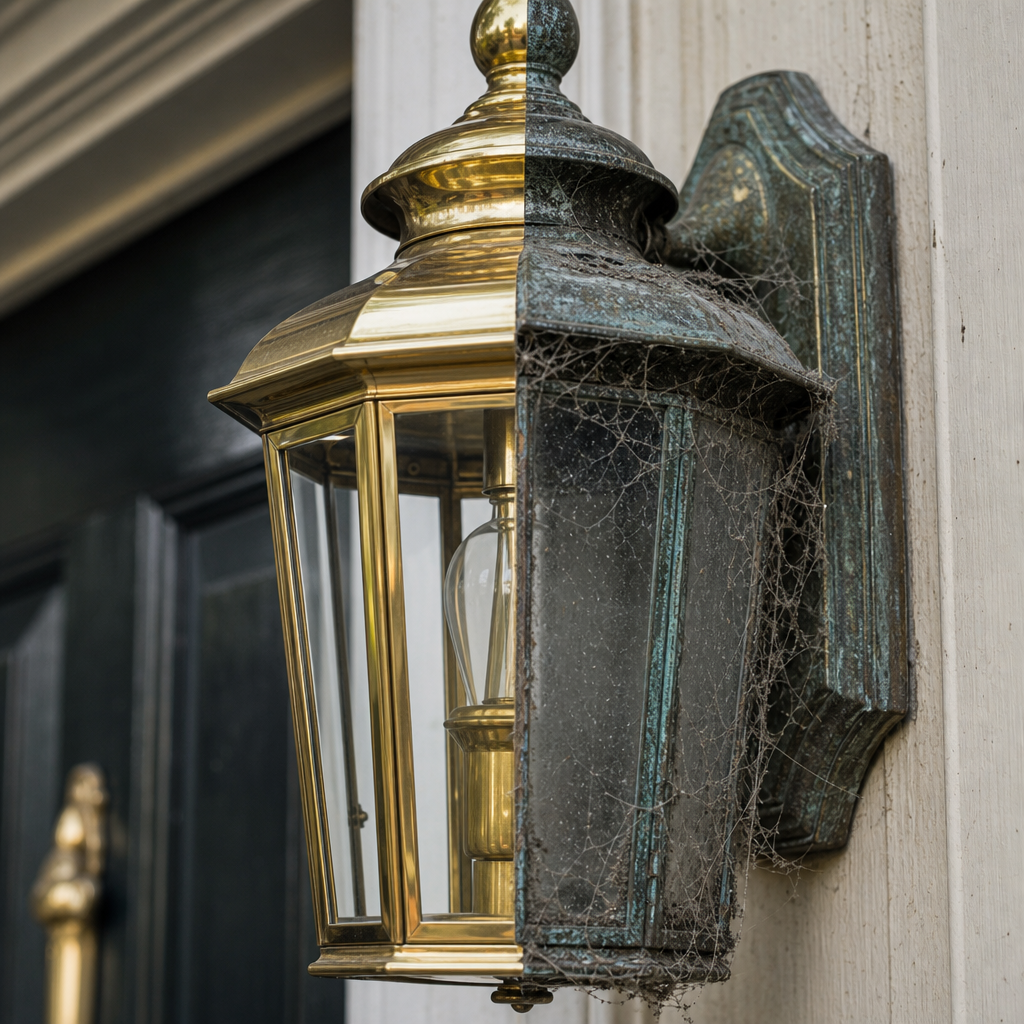
The reason coach lights rarely make a homeowner’s cleaning checklist is simple: they sit above eye level, look acceptable from a distance, and require a ladder or careful stepping stool to reach properly. People stop noticing gradual accumulation, which is exactly how a fixture goes from slightly dusty to visibly oxidized and webbed over the course of one or two seasons.
The cost is not just aesthetic. Fixtures that hold standing moisture against siding or stucco create conditions for mildew. Sockets that accumulate insect debris can trap heat and shorten bulb life. And in a real estate context, a grimy coach light is the kind of detail that triggers a buyer to start mentally cataloguing what else has been ignored, even when the rest of the property is immaculate.
Pro tip: Walk your home’s exterior after dark with a flashlight pointed at the fixture housings, not the bulbs. The raking light reveals oxidation, mineral deposits, and webbing that flat daylight hides completely.

What Actually Accumulates on Exterior Fixtures
In practice, exterior fixtures collect a layered mix of contaminants that each require a different approach to remove safely. Understanding what you are dealing with determines whether a simple wipe-down is sufficient or whether professional cleaning is the right call.
Oxidation on Metal Housings
Brass, bronze, and black-powder-coat finishes all oxidize when exposed to UV and moisture cycling over months and years. The result is a chalky or faded surface that makes even new glass lenses look dull by contrast. Oxidation cannot be rinsed off. It requires a metal-safe, pH-neutral cleaner and a non-abrasive applicator. Rubbing with anything coarser than a microfiber cloth removes the protective lacquer coating, accelerating the problem.
Calcium and Mineral Deposits on Glass Panels
Sprinkler systems are the primary culprit here. Mineral-heavy water hits the fixture repeatedly, evaporates, and leaves a calcium film that scatters light and makes the glass appear permanently frosted. A common mistake is trying to scrape these deposits with a razor blade, which works on flat window glass but risks cracking the thinner, angled panels used in coach light fixtures. The correct method uses a diluted white vinegar solution or a dedicated calcium remover applied with dwell time before gentle agitation.
Spider Webs and Insect Casings
Coach lights are warm, elevated, and lit at night, making them ideal habitat for spiders and moths. The webbing and casing material bonds to the housing finish when left long enough, and dry-brushing it off can drag grit across the surface, leaving micro-scratches. Dampening the web material first, then using a soft detailing brush to lift it away, prevents surface damage. This is exactly the kind of step that separates a professional home detailing service from a quick spray-and-wipe.
“First impressions happen in seconds, and the fixtures flanking an entry door carry disproportionate visual weight relative to their size. Clean hardware communicates that the entire property is cared for.” – National Association of Realtors, Home Staging and Curb Appeal Guidance
The Right Approach to Coach Light Cleaning
The sequence matters as much as the products. Getting the order wrong, for example cleaning the glass before removing webbing, deposits grit directly onto the lens during the wiping stage.
Step One: Dry Debris Removal First
Start with a soft-bristle detailing brush or a clean, dry microfiber to sweep loose debris away from the housing and glass seams. Work from the top of the fixture downward so loosened material does not fall onto already-cleaned surfaces below. This step alone removes the majority of the abrasive particle risk that causes scratching during wet cleaning.
Step Two: Wet Clean the Glass Panels
Apply a non-ammonia glass cleaner or a diluted dish soap solution to the lens panels. For mineral deposits, apply the solution and allow it to sit for 60 to 90 seconds before agitating with a soft cloth. The dwell time does the work. Scrubbing immediately without dwell time multiplies the force needed to remove the deposit, which multiplies the scratch risk.
Step Three: Address the Housing Finish
Metal housings should be cleaned with a product matched to the finish. Lacquered brass needs a mild soap solution only. Matte black powder coat tolerates a slightly stronger cleaner but is vulnerable to any abrasive. After cleaning, a thin coat of car wax applied to the housing, not the glass, creates a barrier against future oxidation and makes the next cleaning faster.
Step Four: Inspect Seals and Mounting Hardware
While you are at the fixture, check the caulk bead where the back plate meets the siding. Cracked or missing caulk is how moisture and insects enter the wall cavity behind the fixture. Catching this during a cleaning visit costs almost nothing to address. Missing it costs potentially hundreds in moisture damage repair later.
Pro tip: Apply a light coat of car paste wax to the exterior glass panels of your coach lights after cleaning. It repels mineral deposits from irrigation and rain, cutting your next cleaning time significantly.
Comparison of Exterior Fixture Cleaning Methods
Not all approaches to coach light and exterior fixture cleaning are equally effective or equally safe. The table below compares three common methods based on the criteria that matter most for real results.
| Method | Surface Safety | Effectiveness on Heavy Buildup |
|---|---|---|
| Pressure washing (general exterior rinse) | High risk. Forces water into seams, can crack aging glass panels, strips powder coat at close range. | Low. Removes loose debris only. Does not address mineral deposits, oxidation, or bonded webbing. |
| DIY spray-and-wipe with household cleaner | Moderate risk. Most household cleaners contain ammonia or bleach that degrades metal finishes over time. | Moderate. Works on light dust and recent webbing. Ineffective on established calcium deposits or oxidation. |
| Professional hand-cleaning with detailing products | Low risk. Matched products, correct applicators, and proper technique protect all finish types. | High. Dwell-time chemistry and specialist tools address every contaminant layer without surface damage. |
Where Exterior Fixture Cleaning Fits in a Home Detailing Service
A genuine home detailing service treats a property the way an auto detailer treats a vehicle: every surface, every component, every transition point between materials. Exterior fixture cleaning is not a standalone luxury, it is a logical part of a complete exterior maintenance cycle.
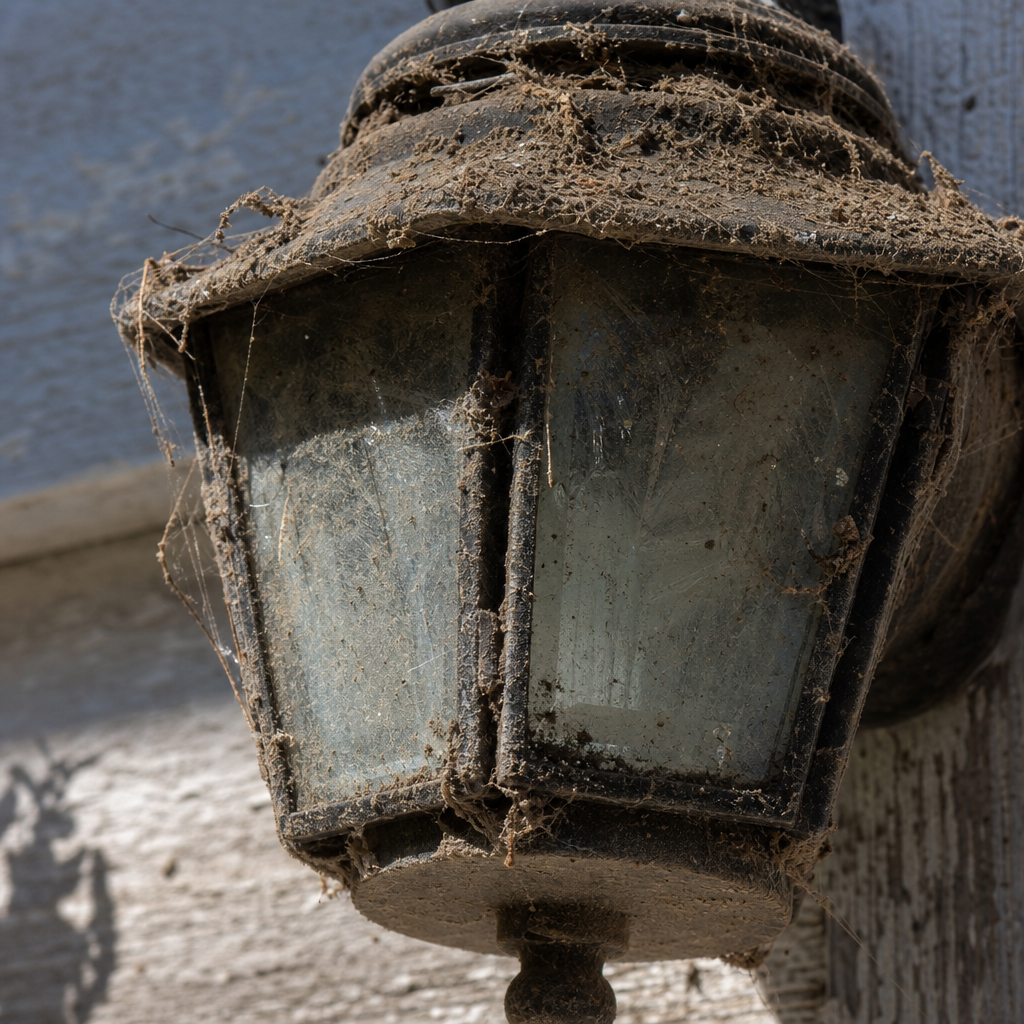
At Performance Window Cleaning, coach light and fixture cleaning is included as part of our broader home detailing packages, which also cover hand-washing of siding, eaves, and entrances, professional window cleaning, gutter and eavestrough cleaning, and spider spraying. The reason this combination works is that each service affects the others. Gutters that overflow deposit mineral staining on fixtures below them. Spiders that are not treated return to fixtures within weeks. Siding that is hand-washed without addressing the fixtures above leaves a visible contrast that undermines the whole result.
Property managers and real estate agents in particular benefit from bundled exterior detailing because the visual outcome is consistent. A property where windows are clean but fixtures are grey and webbed signals inconsistency, which is the last impression you want to leave on a prospective tenant or buyer.
What Professionals Do Differently
The difference between a professional exterior cleaning visit and a homeowner working through a Saturday afternoon is not effort. Most homeowners who try to clean their own fixtures are working hard. The difference is product knowledge, tool selection, and the ability to read a surface for what it actually needs.
Reading the Finish Before Choosing a Product
Professionals identify the fixture finish before selecting any cleaner. A lacquered brass coach light and a matte black aluminum fixture sitting side by side on the same property require completely different chemistry. Using the wrong product on either one does damage that only becomes visible weeks later, when the finish starts to lift or the colour shifts. This is exactly where DIY attempts go wrong, not at the scrubbing stage, but at the product selection stage.
Protecting Surrounding Surfaces
The cleaning agents used to remove calcium from glass or oxidation from metal are not neutral to every surface they might contact. A professional service drapes the siding and surrounding trim before applying any chemistry to a fixture. This step takes sixty seconds and prevents the kind of streaking or lightening on painted surfaces that turns a cleaning job into a paint repair job.
Consistent Scheduling Prevents Compounding Buildup
The data consistently shows that twice-yearly exterior cleaning prevents the accumulation layers that require aggressive remediation. A fixture cleaned in spring and fall never develops the hard calcium scale or deep oxidation that a fixture neglected for three years presents. The spring visit removes winter road salt aerosol, moisture staining, and overwintering insect deposits. The fall visit clears summer insect activity and prepares surfaces for cold and wet conditions.
Performance Window Cleaning offers flexible scheduling and customized packages specifically because this kind of regular maintenance calendar is how properties stay in genuinely good condition, rather than cycling between neglect and expensive catch-up cleaning.
Frequently Asked Questions
How often should coach lights be professionally cleaned?
Twice a year is the practical standard for most Canadian residential properties. Spring cleaning addresses winter accumulation, including road salt aerosol and insect debris from overwintering pests. Fall cleaning removes summer insect and spider activity and prepares the fixture for cold, wet conditions. Properties near irrigation systems or with heavy tree coverage may benefit from three visits annually.
Can I use a pressure washer on my coach lights?
No. Pressure washing is not appropriate for coach lights or any enclosed exterior fixture. The water pressure forces moisture into the fixture housing through seams and the back plate, creating interior corrosion and potentially damaging electrical components. It also risks cracking the glass panels, which are thinner than standard window glass. Hand-cleaning is the only method that is both effective and safe for these fixtures.
What causes the white film on coach light glass panels?
The white film is almost always calcium and mineral deposits left by irrigation sprinkler overspray or hard water rain splash. The water evaporates and leaves the mineral content behind. Over multiple wetting and drying cycles, the deposits build into a film that scatters light and makes the glass look frosted. A diluted white vinegar solution or a dedicated calcium remover applied with adequate dwell time removes this effectively without scratching the glass.
Is exterior fixture cleaning included in window cleaning services?
It depends entirely on the company. At Performance Window Cleaning, coach light and exterior fixture cleaning is included as part of our home detailing packages, which bundle window cleaning with siding washing, gutter cleaning, and spider treatment. Standalone window cleaning visits focus on the glass. If you want fixtures addressed, confirm with your service provider before booking so expectations are clear on both sides.
What is the risk of cleaning my coach lights myself?
The primary risks are product damage to the finish, scratching the glass with abrasive materials, and physical risk from working at height on a ladder without secure footing. Beyond safety, using ammonia-based household cleaners on lacquered metal finishes strips the protective coating, which accelerates oxidation and cannot be reversed without refinishing or replacing the fixture. If you are unsure of the finish type or the right product to use, a professional visit costs far less than fixture replacement.
Does spider spraying help keep fixtures cleaner longer?
Yes, meaningfully so. Spider populations return to warm, lit fixtures quickly without treatment. A professional spider spraying service applied around eaves, entry points, and fixtures creates a residual barrier that reduces recolonization between cleaning visits. Performance Window Cleaning includes spider spraying as part of exterior detailing packages precisely because the combination, clean surfaces plus active pest deterrent, produces results that hold longer than cleaning alone.
Have you noticed your coach lights making more of a difference than expected after a proper cleaning, or do you have a stubborn mineral deposit situation you have been unsure how to handle? Share your experience below.
References
- National Association of Realtors research on curb appeal and home sale value
- U.S. Environmental Protection Agency guidance on safe exterior cleaning product use
- National Fire Protection Association standards for outdoor electrical fixture safety
- Forbes coverage of home maintenance investments and property value returns
- Statista data on home improvement spending trends and exterior maintenance services