
Storefront glass in Burlington looks fine in September and then, somewhere around the first week of November, it starts to look tired. Road salt film creeps up from the curb, slush throws grit onto the lower panes, and by the time the clocks change the windows are dim enough that customers notice before they notice the merchandise. Good commercial window cleaning in Burlington is not a spring job with a winter pause. In practice, the months between November and early spring are when glass takes the most damage and when a storefront most needs to look cared for. This guide covers what actually builds up, when to clean, and how to plan a schedule that holds through the dark months.
Table of Contents
- Quick Takeaways
- Why November Is When Storefront Glass Gets Ignored
- Salt, Slush, and Grime on Burlington Storefront Glass
- Scheduling Storefront Cleans Around November Weather
- Interior and Exterior Glass Need Different Attention
- Gutters, Entrances, and Walkways Affect the Glass
- Comparing Three Winter Cleaning Approaches
- What to Ask a Provider Before Booking
- Frequently Asked Questions
- References
Quick Takeaways
| Key Insight | Explanation |
|---|---|
| Road salt film is the main culprit | Salt spray bonds to glass within weeks, and the lower panes near the curb show it first. Book the first exterior clean before heavy salt season, not after streaks appear. |
| Clean on mild afternoons | Glass that freezes mid-clean leaves streaks and haze. Plan exterior work for the warmest part of the day, and move the job to the next mild spell if needed. |
| Interior glass gets dirtier than owners think | Fingerprints, door-frame grime, and heating-season film build up inside. Add an interior pass to every exterior visit. |
| Entrances are part of the window job | Door glass, thresholds, and the walk-up area make the first impression and create the slip risk. Pair them with the glass visit. |
| Blocked gutters streak the glass below | An overflowing eavestrough sends water and debris down the wall. Clear gutters before cleaning windows, or the streaks return after one visit. |
| Lock in a recurring schedule | One clean in November rarely carries a storefront to spring. Set a fixed interval and review it after the first hard snowfall. |
Why November Is When Storefront Glass Gets Ignored
Most storefront owners clean their windows when they open in spring, then again before a big event if they remember. The gap between those two moments is where the damage happens. In Burlington, the shift from a mild fall to a salty winter is quick, and glass is often dirtier by mid-November than the owner expects.
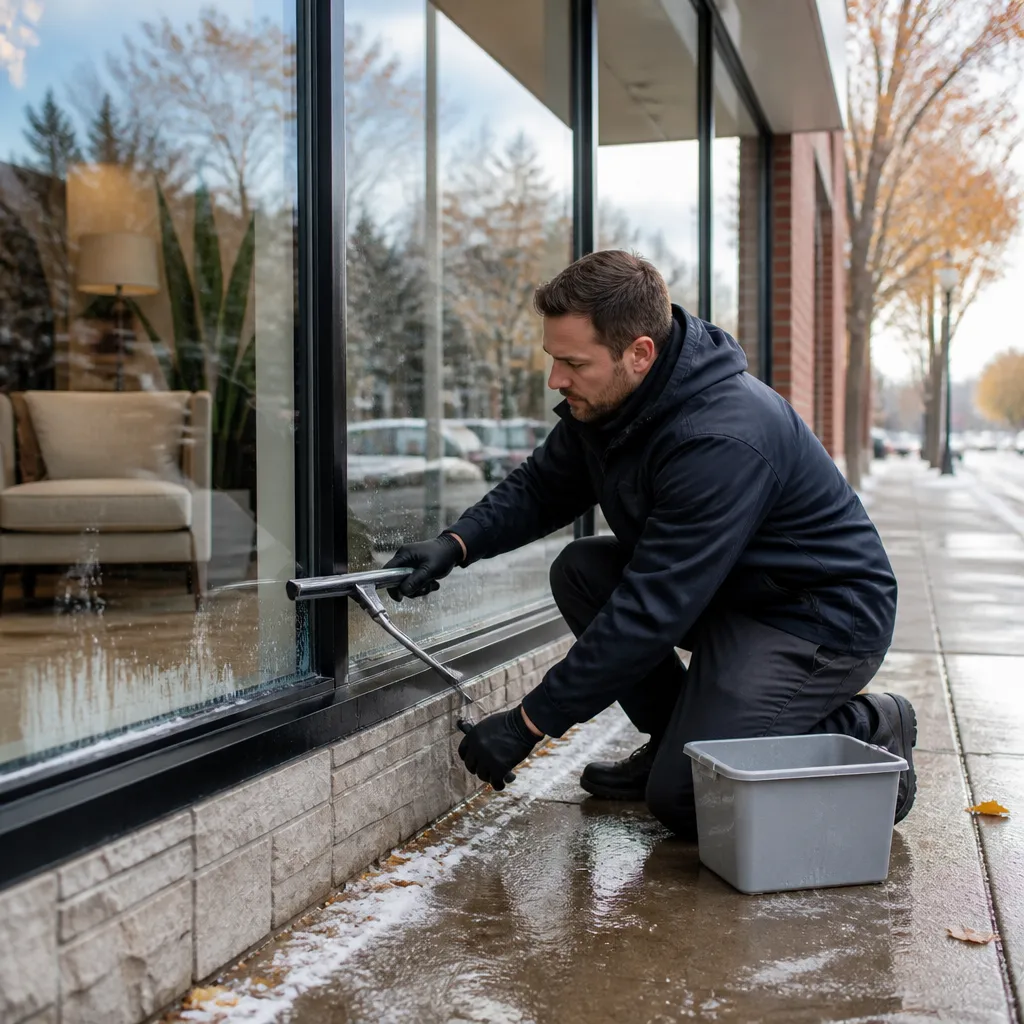
A window cleaning forum thread asks a question that comes up often: why does the trade treat winter as a pause? The original poster, a new cleaner, pointed out that windows still get dirty and still need cleaning. His suspicion was that many cleaners simply dislike working in the cold. From the storefront side, that habit costs the owner more than it saves the cleaner.
A storefront that looks neglected in November tells people walking past something about the business before they ever see what is on the shelves.
Why Customers Judge Storefronts From the Sidewalk
Shoppers decide whether to step inside from the sidewalk, and in the dark months that judgment happens faster. Short afternoons mean the interior lights do more of the work, and a dim, streaked pane makes a bright room look tired. A clean exterior lets the displays, the signage, and the lit interior do their job.
In practice, the owners who notice the difference first are restaurants and boutiques with large street-facing glass. A cafe with a film of salt across its front windows will often hear about it from regulars before it hears about it from its own staff.
The Cost of Waiting Until Spring
Winter grime does not sit still. Mineral residue from road salt and slush, combined with repeated thawing and refreezing, can leave spots and haze that a standard squeegee pass will not lift. Once that happens, the job shifts from routine cleaning to restoration, which takes longer and costs more.
A common mistake is treating a missed November clean as a small problem. A storefront that goes from October to April without a proper exterior clean usually needs a heavier, slower job in spring, so the owner pays for the wait twice.
Salt, Slush, and Grime on Burlington Storefront Glass
Not all winter dirt is the same, and the mix on a storefront depends on its position, its traffic, and how close it sits to the curb. Knowing which contaminant is on which pane tells you where to focus and how often the glass needs attention. Three problems show up on nearly every commercial frontage in the winter.
Road Salt Spray on Lower Panes
Passing vehicles throw salt spray upward, so the bottom third of a storefront window usually shows the first film. The residue is fine and sticky, and it catches more grime as it dries. On a busy street, the lower corners of each pane often look cloudy while the upper glass still seems clean.
The fix is not more pressure. Salt residue responds best to a thorough rinse, then a cleaning solution suited to mineral deposits, then a squeegee pass with a clean blade. Pushing hard on dry, gritty glass only scratches the surface and leaves lines that catch the light.
Slush Splash and Grit at the Base
Slush carries sand and grit that settles along the sill and the base of the frame. When it dries, it acts like fine sandpaper every time someone wipes it. Owners who wipe the glass themselves with a dry cloth often make the haze worse.
Sills and the lower frame should be rinsed first and cleaned separately from the glass. This keeps grit from being dragged across the pane during the squeegee pass, which is the most common cause of fine scratches on storefront glass in winter.
Exhaust, Dust, and the Film Nobody Sees
Traffic exhaust and dust form a thin, oily film that makes glass look hazy in low sun. It is easy to miss from inside the store because the interior surface looks fine. Standing outside at street level in late afternoon shows it clearly.
Pro tip: Walk the frontage at the same hour customers do, usually late afternoon, and look at the glass with the sun low. Mark the panes that show haze before booking the clean, so the crew knows where the problem sits.
Scheduling Storefront Cleans Around November Weather
Timing matters more in November than at any other point in the year. The goal is to clean exterior glass on days when the temperature is safely above freezing, the surface is dry, and the glass can be rinsed and squeegeed without freezing mid-pass. A schedule built around the forecast will beat a fixed date on the calendar every time.
In practice, the best window in a Burlington winter is usually late morning to early afternoon, when the sun has had time to warm the glass. Cleaning at dawn on a frosty morning means working on cold glass, and the solution can start to set before the squeegee reaches the bottom of the pane.
Picking the Right Window on a Mild Day
Mild spells in November are common, and they are the days to book. A two or three day stretch above freezing gives the crew enough time to clean a full frontage, and the glass has time to dry without ice forming along the frame. A flexible date with a provider who will move you to a mild day beats a fixed appointment that may land in a cold snap.
Avoid cleaning right before a forecast drop below freezing. Water left in the frame, the sill, and the door tracks can freeze overnight and leave a crust that is harder to remove the next day.
Cleaning Around Opening Hours
Storefront work has to fit around customers, deliveries, and staff. The cleanest approach is a morning visit before the doors open for exterior glass, with interior glass done during a quiet period. Many owners prefer early starts so the frontage looks clear for the first customers.
If the crew needs interior access, agree on that in writing. Glass near tills, display cases, and door handles takes more care than exterior glass, and staff should know to keep those areas clear while the work is underway.
Pro tip: Ask for the forecast window when you book, not just a date. A provider who can move the job to the next mild day will give you a cleaner result than one who works through a cold snap to keep the appointment.
Interior and Exterior Glass Need Different Attention
Many storefront owners think of window cleaning as a single job, but the inside and outside of the glass collect different dirt and need different methods. Treating them as one pass usually leaves the interior streaked and the exterior only half done. Separate scopes make the result easier to check.
A good provider will look at both sides and tell you what each one needs. If the quote only says “windows,” ask whether it covers interior glass, sills, tracks, and screens, because those items are often left off by mistake.
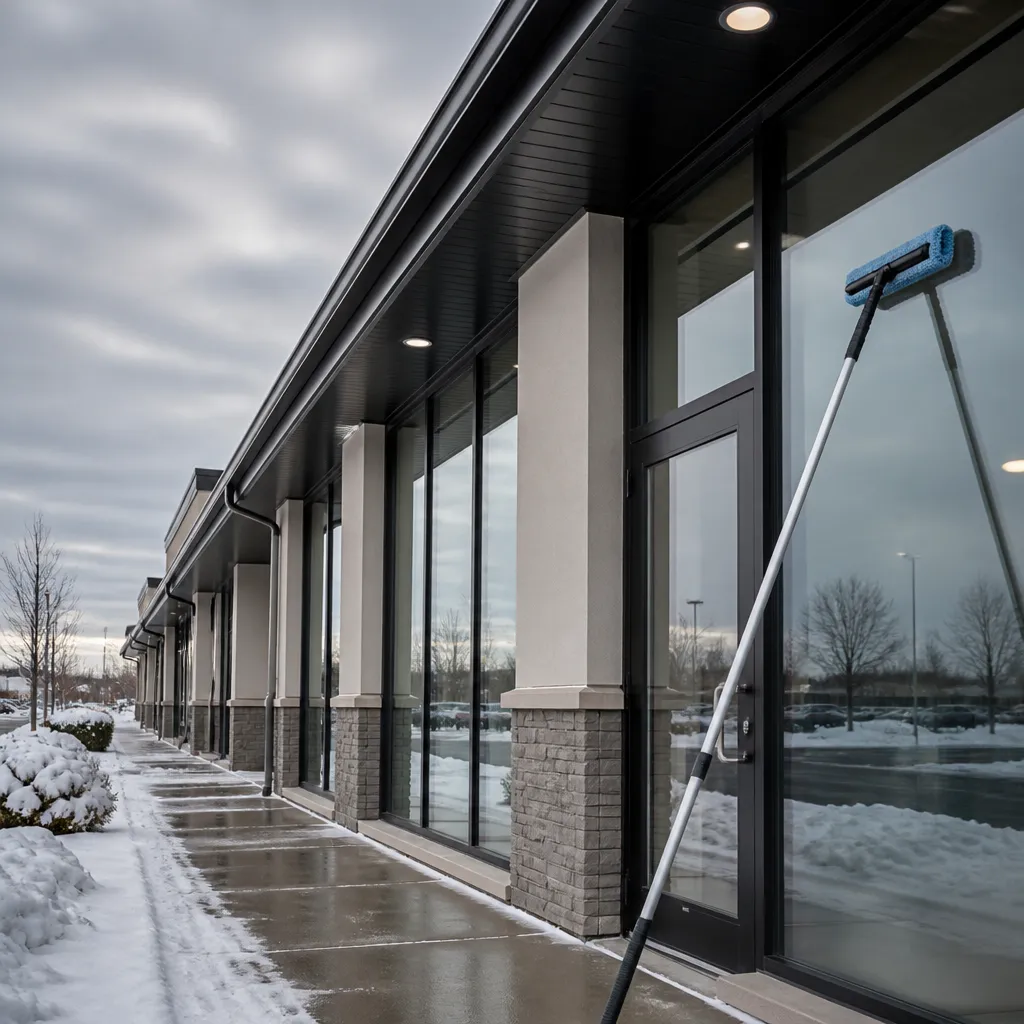
Exterior Glass and Screens
Exterior glass carries the salt, grit, and traffic film described above. Screens, where a storefront has them, collect dust and insects, and they can make the glass behind look dull even when it is clean. Remove and rinse screens separately, and check them for damage before reinstalling.
Exterior work should always start with a rinse to lift loose grit. Going straight to a squeegee on dry glass is how fine scratches form, especially on the lower panes near the sidewalk.
Interior Glass Near Doors and Displays
Interior glass gets fingerprints, breath haze, and dust from heating systems. Near doors, the glass around handles and push bars gets the most contact. In a retail space, display cases and shelving can trap dust on the glass behind them.
The interior pass should use a fresh microfiber cloth and a solution safe for window coatings and any tinted film. Ask whether your glass has tint or coatings before the crew starts, because some household cleaners leave a haze on film.
Sills, Tracks, and Where Grit Collects
Window tracks and sills hold grit that the glass pass never reaches. In winter, that grit mixes with wet slush and turns into a paste that jams sliding units and leaves a dark line along the base of the frame. A quick brush and vacuum of the track, followed by a rinse, stops the paste from forming.
Leaving tracks until spring is one of the most common ways storefront sliding doors start to stick. Include tracks in the schedule, even if they only get a quick pass on each visit.
Gutters, Entrances, and Walkways Affect the Glass
Storefront glass rarely gets dirty in isolation. Blocked gutters, splashing from downspouts, and salt-covered walkways all send grime onto the windows, and the entrance is where the first impression is made. A cleaning plan that ignores the surrounding exterior will keep losing ground.
Eavestrough cleaning, entrance washing, and walkway work are often booked as separate jobs. In practice, scheduling them on the same visit saves time and makes sure the glass is cleaned after the water and debris that could re-soil it are dealt with.
Eavestrough Overflow Streaks the Glass Below
A blocked eavestrough overflows during a thaw or heavy rain and runs down the wall, often right across the window below. The water carries leaf debris, sediment, and dirt that leave long streaks on the glass and sill. Cleaning the glass before the gutters are cleared means the streaks come right back.
Clear the eavestrough in late fall, then clean the windows. If you see overflow streaks on a storefront after a thaw, the gutter needs attention before the next visit.
Entrances, Thresholds, and Ice Risk
The entrance is the most visited part of the frontage and the place where salt, slush, and meltwater collect. Door glass, frames, and thresholds need the same attention as the main panes, and the mat and step area should be kept clear of residue.
Salt residue on entrance surfaces can also create a slip risk. Rinsing thresholds and entry steps after salting, and keeping the area clear, is good practice for any business with customers using the door.
Power Washing Walkways Before Salt Sets
Power washing walkways, steps, and the apron in front of a storefront works best before the first hard freeze, when the surface is clean enough to rinse easily. Once salt and freeze cycles have bonded to the surface, the work takes longer and may not restore the original finish.
Power washing should not be done when the temperature is below freezing. Water left on walkways can turn to ice, which is a safety problem for everyone who uses the property.
Comparing Three Winter Cleaning Approaches
Storefront owners generally choose between three approaches. Each suits a different level of salt exposure, budget, and tolerance for visible dirt. The table below sets out where each one works best and what it costs you to choose it.
| Approach | Best For | Main Tradeoff |
|---|---|---|
| One pre-winter exterior clean | Storefronts with light street exposure and owners who accept some visible grime | Glass looks good for a few weeks, then salt and slush build up again |
| Monthly exterior and interior service | Busy street frontages, restaurants, and retail with heavy foot traffic | Higher total cost, but results stay consistent and damage is caught early |
| Glass, gutter, and entrance package | Properties where eavestrough overflow and walkway salt reach the storefront | Harder to schedule because several tasks share one visit, so a weather delay affects all of them |
The package option often makes the most sense for property managers with several street-facing units, because one visit covers the glass and the grime sources that feed it. Single-storefront owners usually do better with monthly glass service and an annual gutter check.
Before choosing, count the street-facing glass, note how close the frontage sits to the curb, and check whether gutters overflow onto it. Those three facts usually point to the right option faster than a price comparison does.
What to Ask a Provider Before Booking
Commercial window cleaning in Burlington is a service where the plan behind the quote matters more than the number on it. The right provider can explain how they will handle salt residue, what happens on a day that is too cold to clean, and how they will document the result. Asking these questions before you sign tells you more than a low price.
The owners who regret their choice usually did not ask about the schedule. They assumed a clean in November would hold until spring, and they found out otherwise in March.
Questions That Reveal Real Experience
Ask what solutions and tools the crew uses in cold weather, and how they keep water from freezing on the glass. Ask how they handle tinted film and coatings, and what happens if a pane shows damage after cleaning. Vague answers about “professional results” are a warning sign.
Ask how they plan around forecast drops below freezing. A provider who has worked through a Burlington winter will have a clear answer, and it will usually involve moving the job rather than rushing it.
Access, Hours, and Insurance
Confirm who will have access to the building, when the crew arrives, and who handles keys or alarm codes. For a storefront, the crew should work outside opening hours or agree on a clear plan with staff. Ask for proof of liability insurance before work begins, and keep a copy on file.
Write down any areas that are off limits, such as back rooms or private offices. A simple written scope prevents disputes about what was cleaned and what was not.

Writing the Schedule Into the Agreement
A winter schedule should include dates or intervals, the scope of each visit, and a rule for weather delays. Without a delay clause, a cold snap can wipe out a planned visit and leave the storefront uncleaned for another month. Agree on a make-up date when the schedule is signed.
Put the schedule in the agreement, not just in an email. Owners who treat the schedule as a flexible suggestion often find the cleaning stops after the first busy month.
Pro tip: Ask for a photo record of the frontage before and after each visit. It gives you proof of the work, shows which areas need attention, and makes it easy to compare results across the winter.
Frequently Asked Questions
How often should a storefront in Burlington be cleaned through the winter?
For most street-facing storefronts, monthly exterior cleaning from November through March keeps salt and grime from building into a film that needs restoration. Properties close to heavy traffic or salted walkways may need more frequent visits during the worst weeks.
Can windows be cleaned when the temperature is below freezing?
Cleaning on very cold days is risky because water freezes on the glass, the frame, and the sill. The safer approach is to wait for a mild spell above freezing, which is why a flexible schedule works better than a fixed date.
Should interior glass be cleaned in winter as well?
Yes, and it is often more visible than people expect. Heating systems, breath haze, and fingerprints around doors and displays build up through the season, so an interior pass with each exterior visit keeps the storefront looking consistent.
Is power washing a storefront entrance safe in November?
It can be, but only when temperatures are above freezing and the surface can dry before the next cold night. Water left on steps and walkways can turn to ice, so the work should be scheduled with the forecast in mind.
Do gutters really affect storefront glass?
They do. An overflowing eavestrough sends water, sediment, and leaf debris down the wall and across the glass below. Clearing the gutters before cleaning the windows prevents the same streaks from returning after one visit.
What should a property manager ask before signing a winter cleaning schedule?
Ask how the provider handles cold-weather days, what the make-up policy is for weather delays, and how building access is arranged. Get the scope in writing, including interior glass, sills, tracks, and entrances, so the contract matches what the property needs.
If you manage or own a storefront in Burlington, tell us how your glass looked after last winter and which part of the frontage gave you the most trouble.