
If your deck still looks grey-green and speckled with tannin stains after the last maple and oak leaves came down, you are not behind schedule. Many Hamilton homeowners assume exterior cleaning is finished once the leaves are raked, but late autumn is one of the most useful windows for deck power washing Hamilton homes. The summer furniture is usually off, every board is reachable, and a clean deck gets a proper drying period before winter. Here is how we approach the job, what to skip, and where people go wrong.
Table of Contents
- Quick Takeaways
- Why November Still Makes Sense in Hamilton
- Why Leaf Season Leaves Decks Stained
- Clearing the Deck Before You Wash
- Choosing Pressure and Cleaner for Wood Decks
- Comparing Three Ways to Clean a Deck
- Drying and Sealing Before the First Hard Frost
- Mistakes That Shorten Deck Life
- Frequently Asked Questions
- References
Quick Takeaways
| Key Insight | Explanation |
|---|---|
| Book a wash for a dry window in late autumn | Late autumn bookings avoid the spring rush and give the deck time to dry before frost arrives. |
| Clear debris from between the boards first | Leaves packed into joints hold moisture against the framing, so sweep and scrape before any water touches the surface. |
| Use a wide tip at low pressure | High pressure lifts wood fibres, which leaves a fuzzy surface that holds water and dirt. |
| Choose an oxygenated cleaner over bleach | Oxygenated cleaners lift tannin and mildew with less risk of drying out softwood or leaving residue. |
| Test the boards for softness before washing | If a board dents under pressure or looks splintered, repair it before cleaning, not after. |
| Do not seal until the wood is fully dry | Moisture trapped under a coating causes peeling within a season, so wait for clear days and a temperature the product allows. |
Why November Still Makes Sense in Hamilton
Most people think of spring as the deck season, and for a full restoration job that is partly true. But the late autumn window has real advantages for a wood deck in this part of Ontario. Once the leaves have fallen, the boards are no longer sitting under a canopy that keeps them damp, and you can see exactly where the wood has greyed, stained, or lifted.
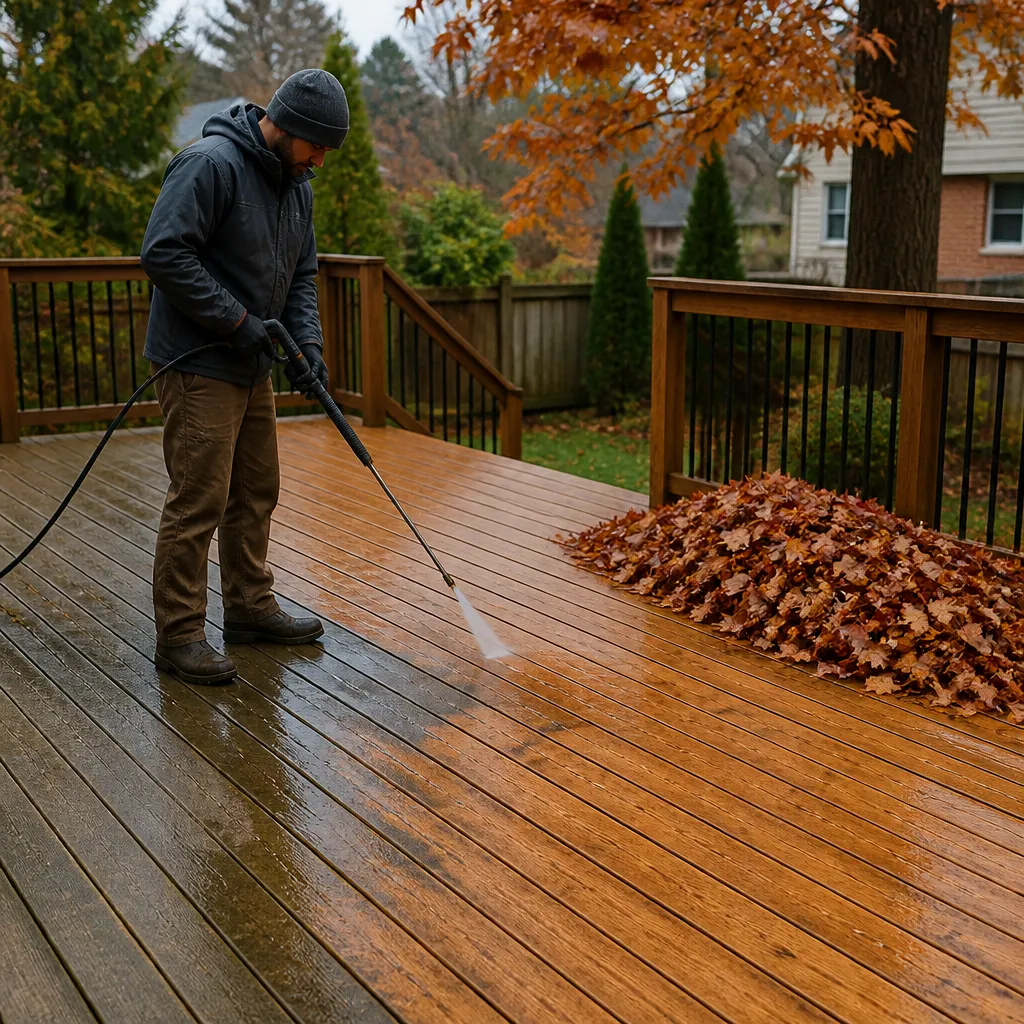
In practice, the best November days are the ones with a few hours of sun and no rain in the forecast. Hamilton autumns tend to swing between mild afternoons and cold, damp nights, so the smart move is to schedule the wash around a dry stretch of weather rather than a fixed date. A deck that is washed on a dry afternoon and given two clear days to dry is in far better shape than one rushed into a cold, wet week.
The second advantage is timing. Spring fills up quickly for exterior cleaning, and homeowners who wait until May often find the weather window they wanted has already gone. Booking in the back half of autumn means a cleaner deck before snow arrives and fewer rushed jobs squeezed between other properties. You also get a clear look at the damage that winter would otherwise hide.
Cleaning before freeze-up matters for the wood itself. Debris that sits against boards for weeks can darken the surface and encourage mildew in shaded spots, and once those stains set into the grain they take much more work to remove. A deck that goes into winter clean is easier to assess, easier to repair, and easier to restore in spring.
Why Leaf Season Leaves Decks Stained
Leaf season does more than cover a deck in debris. It leaves behind several different kinds of marks, and each one needs a different response. Understanding which problem you are dealing with is the first step toward a wash that actually works.
How Tannin Stains Form on Wood
Oak and maple leaves release tannins as they break down, and those compounds darken wood much like tea stains a cup. When leaves sit on a deck in damp weather, tannin soaks into the grain and turns boards a dull brown or near black, especially along the edges where water collects.
These stains look like dirt, but a quick hose-down often does not lift them. That is why many decks look worse after a casual rinse than they did before. The tannin is still in the fibres, and it will reappear as soon as the surface gets wet again.
Mildew and Grey Weathering in the Shade
The shaded corners under railings and along the house wall are where moisture lingers longest. Mildew shows up as green or black speckling, while weathered wood turns silver-grey once its surface has been exposed to sun and rain for a full season. Cleaning removes the dirt and the growth, but it cannot bring back colour that sunlight has already taken, so set expectations before you book.
Why Debris Between Boards Causes Trouble
Leaves, needles, and seed pods wedge between deck boards and hold water against the framing below. A common deck maintenance guide, the Home Depot article on maintaining a wood deck, recommends sweeping loose dirt and leaves off the surface and sliding a putty knife between the boards to clear the gaps. We agree with that order of work, and the material between the boards is the part most homeowners skip.
The stain you see after leaf season is usually the smallest problem. What the leaves did to the grain and the drainage underneath is what decides how the deck looks next spring.
Clearing the Deck Before You Wash
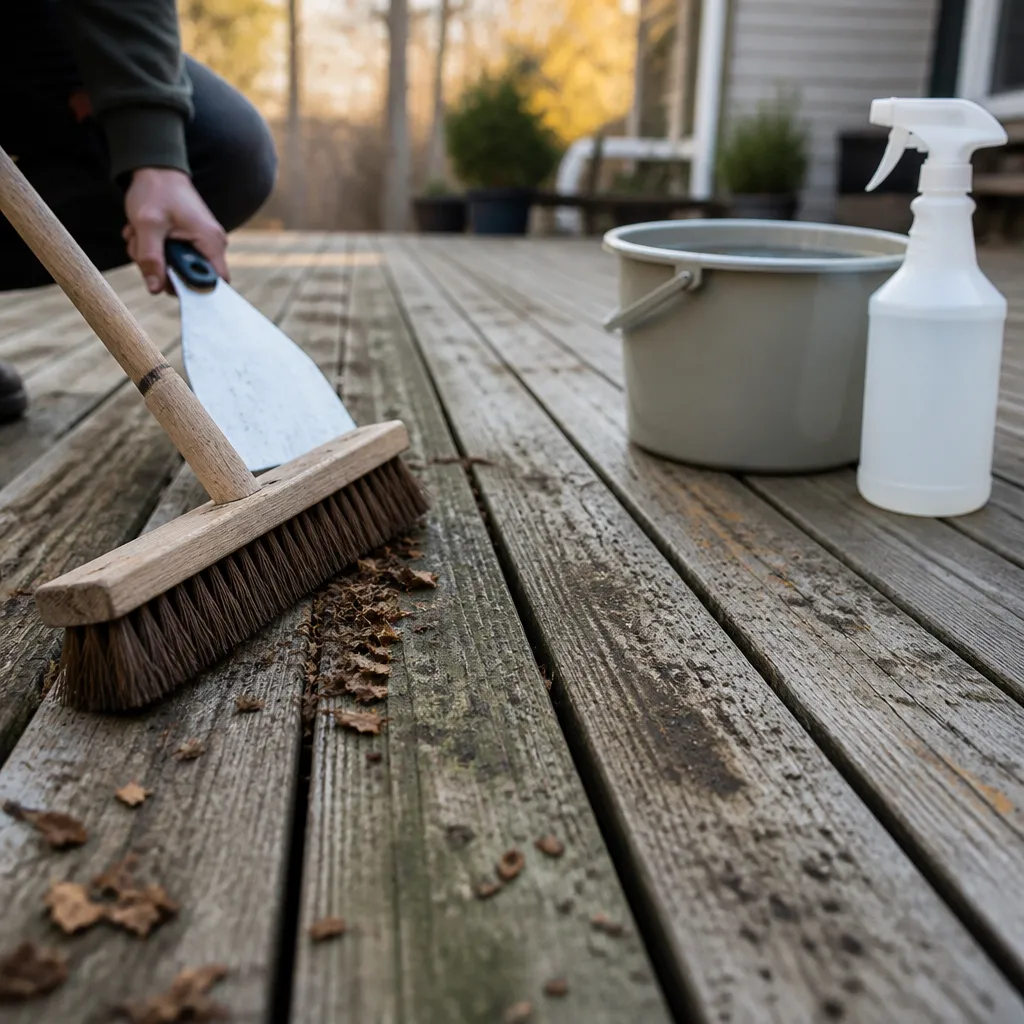
Clearing is the step that decides whether the wash works at all. We start by moving furniture, planters, grills, and outdoor mats off the deck, then sweep the entire surface with a stiff push broom. Hosing debris off the edge only pushes it into the gaps and onto the garden bed below, where it will rot against the foundation.
Getting Packed Debris Out of the Joints
A putty knife or flat scraper works well on compacted leaves between boards. Work along the grain rather than across it, and avoid levering so hard that you chip the board edges. Wood decks often collect a layer of packed needles and seed pods in the joints that a broom will not reach, so plan on spending real time here.
Pro tip: Check the gap where the deck meets the house, often called the ledger. Leaves and wet debris collect there and keep the rim area damp longer than anywhere else on the deck, so it deserves a careful scrape before any water goes on.
Spotting Problems Before the Water Hits
Walk the deck and press on the boards with your weight. Soft spots, popped nails or screws, and cracked boards are much easier to see once the surface is clear. If a board flexes underfoot, a pressure wash will not fix it, and a high-pressure stream can make rot worse by blasting out the softened fibres. Mark those boards and deal with them before you clean.
Pay attention to the railing posts and stair treads as well. Those are the first places water pools after a wet week, and they are where early rot tends to show up first. A quick look now can save a repair bill in the spring.
Choosing Pressure and Cleaner for Wood Decks
Most damage to wood decks comes from the wand, not the cleaner. A high-pressure stream lifts the soft grain of softwood boards, leaving a furry surface and small channels that hold water. That is the single most common mistake we see on decks that were washed in a hurry by someone who assumed more power meant a better result.
Why Pressure Settings Matter More Than Power
On a typical wood deck we keep the nozzle wide and the stream at a gentle setting, moving steadily and holding the tip at a safe distance from the boards. The goal is to lift grime, not to strip the wood. If the grain looks fuzzy after the first pass, the pressure is too high, and you should back off before going over the same section again.
Stairs, concrete steps, and walkways attached to the deck can usually take more pressure than the boards, so they need a separate pass. Switching settings between surfaces keeps you from overcutting the wood while still getting the hard surfaces clean.
Oxygenated Cleaner Instead of Bleach
For wood, an oxygenated cleaner is usually a better choice than harsh bleach. Bleach can brighten the surface for a short time, but it can dry out the wood and leave a residue that makes a later stain or sealer look uneven. Oxygenated cleaners work on organic staining, including tannin, with less risk to the fibres. Adobe Lumber’s winter deck maintenance advice makes the same recommendation, and it is the approach we use.
Apply the cleaner, let it sit for the dwell time on the label, and agitate lightly with a soft brush on stubborn grey patches. Rinse from the top of the deck downward, working in sections so the cleaner never dries on the boards. Drying residue is one of the quiet reasons a deck looks blotchy after a good wash.
Comparing Three Ways to Clean a Deck
Three approaches come up in most late autumn jobs. Each one has a place, and picking the wrong method for the condition of your deck is where most regrets come from. The table below lays out where each one fits.
| Approach | Best Fit | Main Risk |
|---|---|---|
| Low-pressure rinse with oxygenated cleaner and a wide tip | Sound boards with tannin staining and grey weathering | Slower than a wand-only wash, and residue remains if the rinse is skipped |
| Higher-pressure wand on a close tip | Concrete steps, stone walkways, and surfaces that can take more force | Furry grain, gouged boards, and channels that hold water on softwood |
| Hand scrubbing with a soft brush and cleaner | Railings, spindles, and corners where mildew hides | Labour intensive, and it misses deep grain across a large deck |
The low-pressure rinse is our default for sound boards with tannin and grey weathering. A wide-fan tip at a gentle setting does most of the work, and the oxygenated cleaner handles the stains that the water alone cannot lift. The higher-pressure approach belongs on hard surfaces, and it should never be used on old, soft, or splintered wood where it does lasting harm.
Hand scrubbing still earns its place on railings, spindles, and the corners where mildew settles. It is slow work, but it gives you control over the spots a wand tends to miss. On a deck with a lot of railing, we often combine it with the rinse so the whole structure gets a consistent finish.
Pro tip: Wash the stairs and the deck surface in separate passes. Concrete or stone can handle more force than boards, and switching tips between surfaces stops you from accidentally cutting into the wood while you work.
Drying and Sealing Before the First Hard Frost
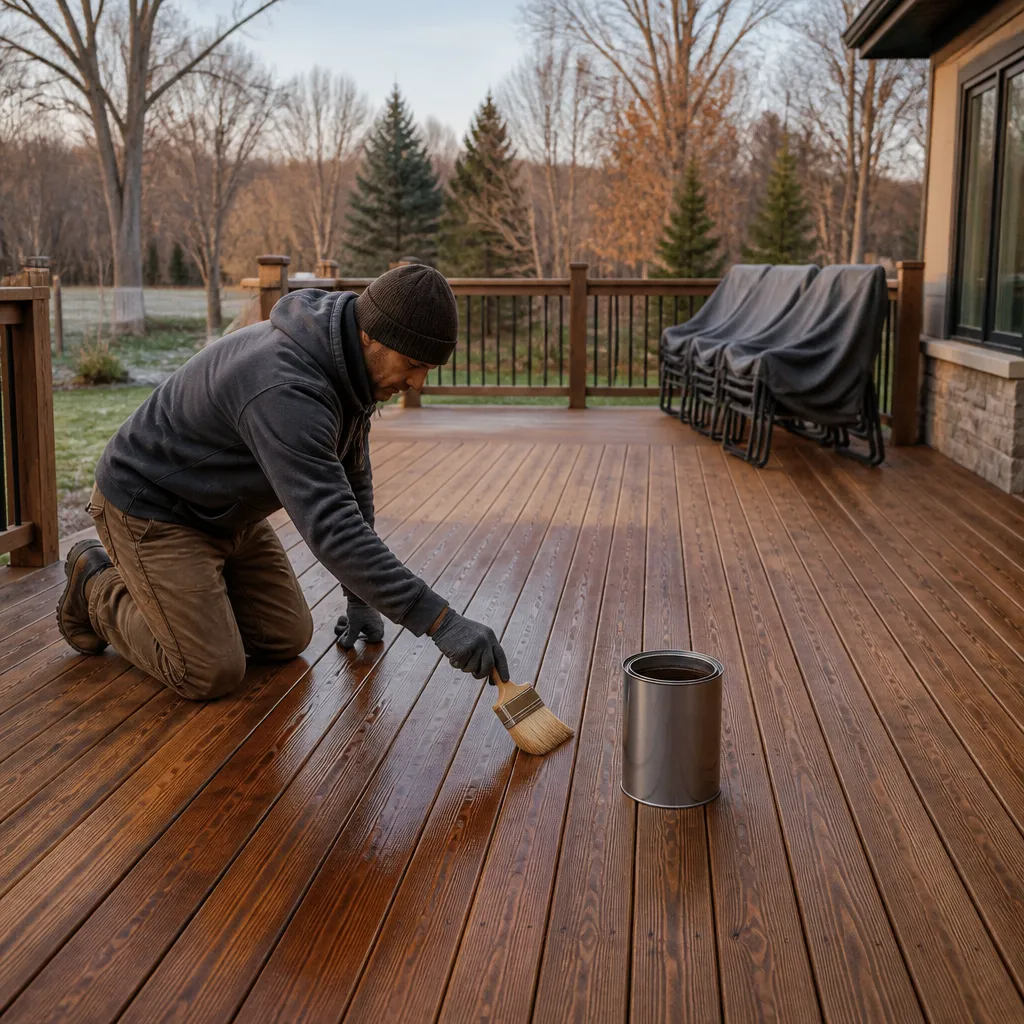
Drying is where a November wash either pays off or fails. Wood that is still damp when a stain or sealer goes on will trap moisture underneath, and the finish will peel within a season. Give the deck a full dry before any coating goes on. In practice, that means a couple of clear days, with the boards dry to the touch and no darkness when you press a hand flat on the surface.
Reading the Weather for a Dry Window
Check the forecast for two or three dry days, and be ready to postpone if rain is expected in the next day or two. Overnight temperatures matter too. Most stain and sealer labels list a minimum application temperature, and cold nights can stop a coating from curing properly even when the afternoon feels mild. The label is the rule here, not the feel of the day.
When to Seal and When to Wait
Sealing in November only makes sense when the deck is fully dry and the temperature stays within the product’s range for the job. If a hard freeze is forecast within a few days, wait for spring. A half-cured sealer is worse than none, because it holds water against the wood and will flake off under the first snow shovel.
Winter preparation advice from Real Cedar starts with the same step we use: remove all leaves, pine needles, and branches, and clear debris from between the boards. The aim is to keep the wood open to air and dry before the cold sets in. Sealing comes after that, not before.
Pro tip: Before you seal, wet a small patch of the deck with a spray bottle. If the water beads up, the surface is still too dry to be fully open to the finish. If it darkens and soaks in, the wood is ready for a test area.
Mistakes That Shorten Deck Life
Most deck damage is not dramatic. It is small, repeated errors that build up over several seasons until a board fails or a finish starts peeling in sheets. These are the mistakes that come up most often on jobs we are asked to fix.
Washing Before Freezing Temperatures
Water left on the surface overnight can freeze in the grain and the joints, and the expansion can lift fibres or open small cracks. If the forecast drops below freezing right after the wash, skip the job and reschedule. A deck that is washed too late in the day, with cold evenings ahead, is at more risk than one left alone.
Skipping the Edges and the Rim
Edges, stair nosing, and the rim where the deck meets the house are often the last areas cleaned and the first to rot. Spend extra attention there, and keep the stream angled so water runs off the boards rather than under them. Water that sits along the rim is one of the most reliable ways to start rot in framing you cannot see.
Hosing Debris Into Gutters and Garden Beds
Rinsing leaves and grime into a downspout or the bed below can clog drainage and stain the foundation. Gutters should be clear before you wash the deck. A full gutter overflows onto the boards and undoes part of the work, which is why we often recommend gutter and eavestrough cleaning on the same visit.
Pro tip: Clear the gutters first, then wash the deck. Water running off a full gutter will re-soil the boards you just cleaned, and it is easy to miss until the next rain.
Frequently Asked Questions
Is November too late to power wash a deck in Hamilton?
No, as long as you can find a dry stretch of a couple of days and the nights stay within the range your cleaner and sealer require. A late autumn wash is often more thorough than one squeezed into a busy spring schedule, and the deck has time to dry before frost.
Can I power wash a deck and seal it on the same day?
Usually not. The wood needs to dry fully after washing, which can take a day or more depending on the weather and the species of wood. Sealing the same day traps moisture under the finish and causes peeling later.
Will power washing remove grey weathering from my deck?
Washing removes dirt, mildew, and tannin stains, but it cannot undo sun damage to the wood itself. Grey weathering is largely a surface condition, so a clean and a new finish can improve the look, but the colour will not return to what the wood looked like when it was new.
Is bleach safe to use on a wood deck?
For most wood decks, we avoid bleach and use an oxygenated cleaner instead. Bleach can dry out the wood and leave residue that affects how a later stain or sealer looks, and an oxygenated cleaner handles tannin and mildew with less risk.
How do I know if my deck boards are too soft for pressure washing?
Press a screwdriver or your thumb into the board. If it dents easily, or the surface is fuzzy and splintering, the wood is too soft for a stream. Repair or replace those boards before you clean, because washing soft wood will only make the damage worse.
Should I clean the gutters before I wash the deck?
Yes. Clogged gutters overflow onto the deck and re-soil boards you have just cleaned, so clear them first and then wash the deck.
Have you washed a deck in late autumn in Hamilton, and did the boards look better when spring arrived? We would like to hear what worked for you.
References
- Step-by-step guide to clearing and cleaning a wood deck
- Winter deck preparation tips for removing debris and leaves
- Winter deck maintenance advice on oxygenated cleaners and drying
- Reasons to pressure wash before winter arrives