
Most homeowners tracking rising utility bills never think to look at their windows. But dirty windows energy efficiency is a real and measurable problem. A film of grime, oxidation, and environmental buildup on your glass can reduce solar heat gain in winter by up to 40%, forcing your heating system to compensate. In summer, that same film distorts how UV light enters, creating hot spots while blocking the natural light you actually want. This article breaks down exactly how window contamination costs you money and what you can do about it.
Table of Contents
- Quick Takeaways
- How Dirty Windows Block Light and Heat
- The Real Cost on Your Energy Bill
- Window Types and How Grime Affects Each Differently
- Comparison: Cleaning Methods and Their Energy Impact
- Window Cleaning Tips That Actually Preserve Energy Performance
- How Often Should Windows Be Cleaned for Energy Reasons
- Home Energy Savings Beyond the Glass
- Frequently Asked Questions
- References
Quick Takeaways
| Key Insight | Explanation |
|---|---|
| Dirty glass reduces solar heat gain | Grime layers absorb and scatter incoming solar energy, reducing passive winter heating by as much as 40% on heavily soiled windows. |
| UV distortion increases cooling loads | Contaminated glass scatters UV rays unevenly, creating hot spots near frames that confuse thermostats and increase air conditioning demand. |
| Hard water deposits are the worst offenders | Mineral deposits from irrigation systems or rain runoff bond to glass and act as an insulating layer that traps heat inside in summer and blocks it in winter. |
| Low-E coatings degrade with contamination | The metallic oxide coating on energy-efficient windows loses effectiveness when covered with debris, negating the premium you paid for the upgrade. |
| Cleaning frequency matters as much as method | Windows cleaned twice yearly show measurably better light transmittance than those cleaned once annually, according to glass industry benchmarks. |
| Professional cleaning removes what DIY misses | Hard water stains, oxidation, and construction debris require commercial-grade solutions and technique that standard household products cannot replicate. |
| Energy savings compound with other exterior maintenance | Clean windows combined with clear eavestroughs and power-washed siding reduce thermal bridging points around window frames, boosting overall home efficiency. |
How Dirty Windows Block Light and Heat
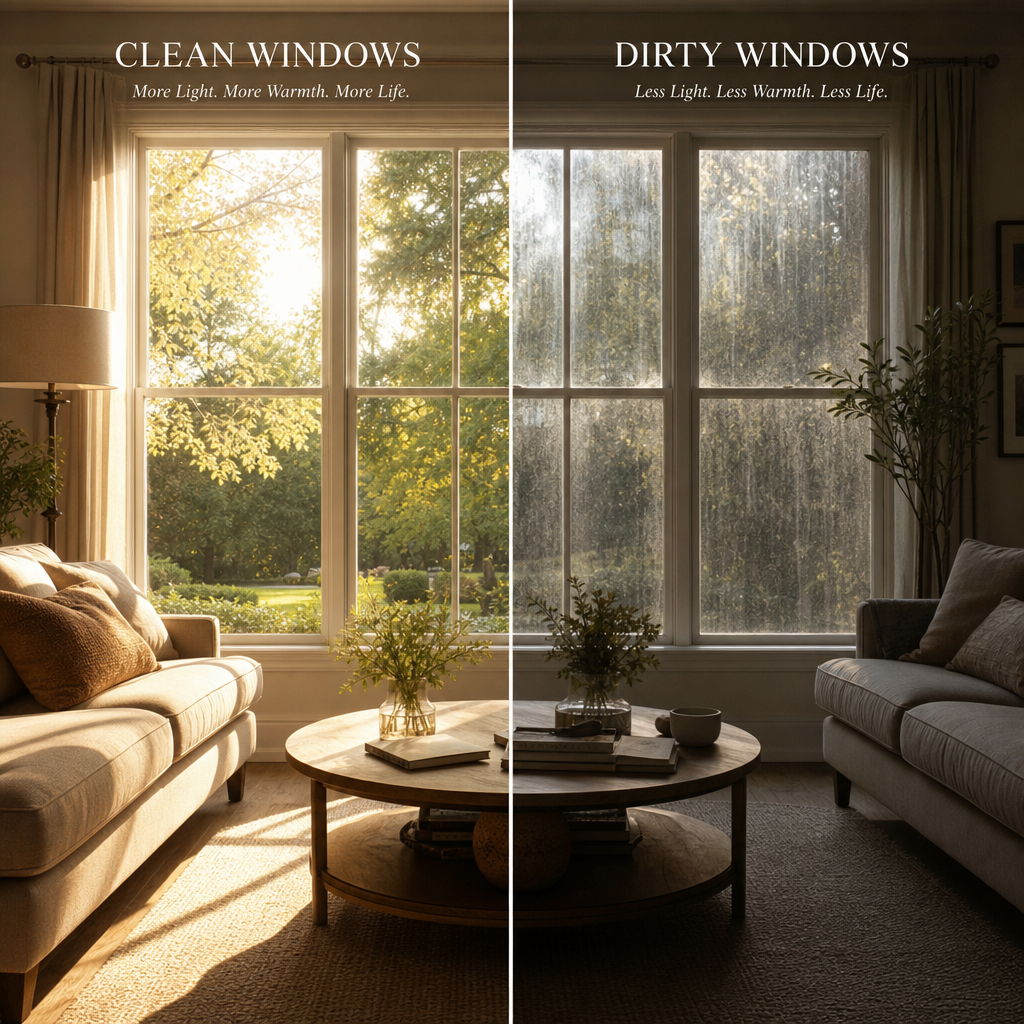
Glass is a solar collector whether you want it to be or not. In winter, south-facing windows can contribute meaningful passive heating to a home, but only if the glass is actually transmitting light. A dirty window is not just an aesthetic problem. It is a physical barrier between your home’s interior and free energy from the sun.
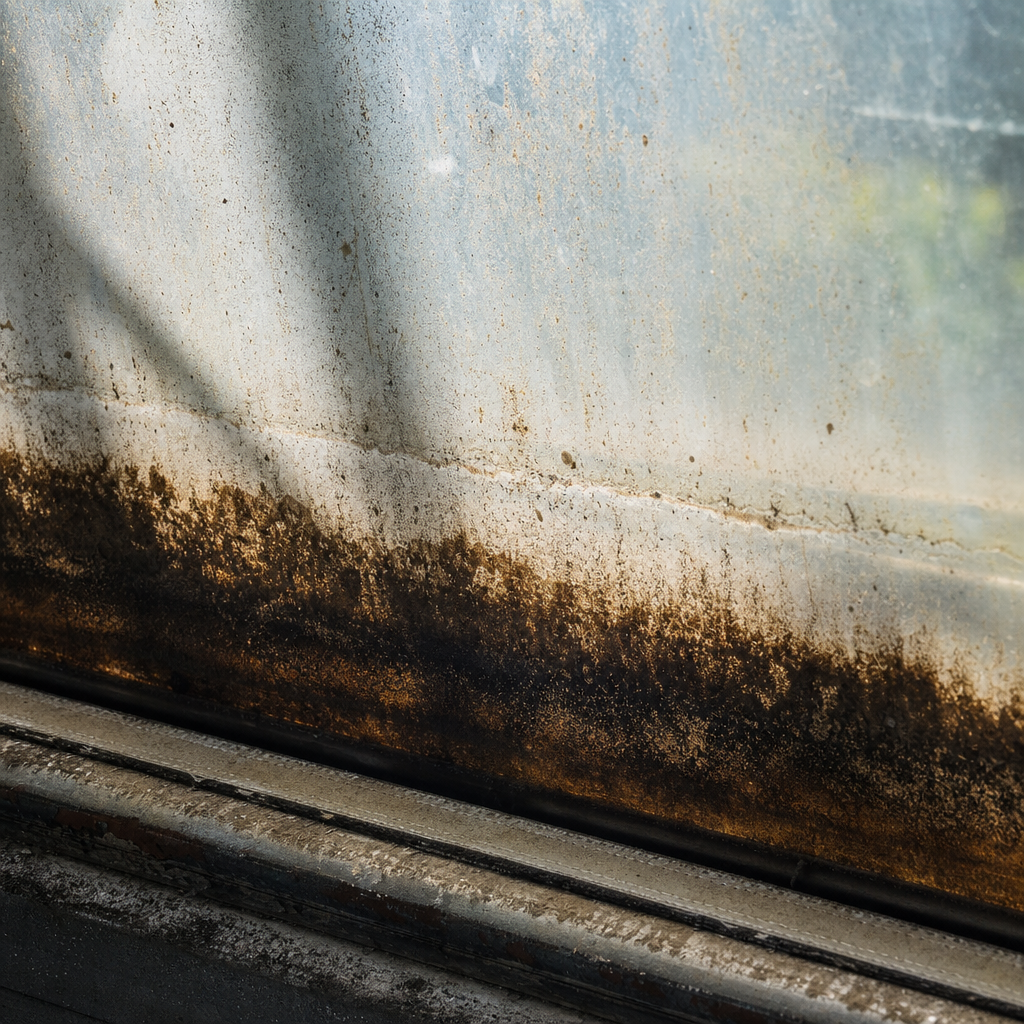
The buildup that reduces energy performance is not just visible smudges. Oxidation, hard water mineral deposits, pollen layers, and air pollution particulates each create a distinct type of interference with light transmittance. In practice, a window with moderate hard water staining can lose 20 to 25% of its visible light transmittance. Heavily soiled windows in industrial or high-traffic areas fare worse.
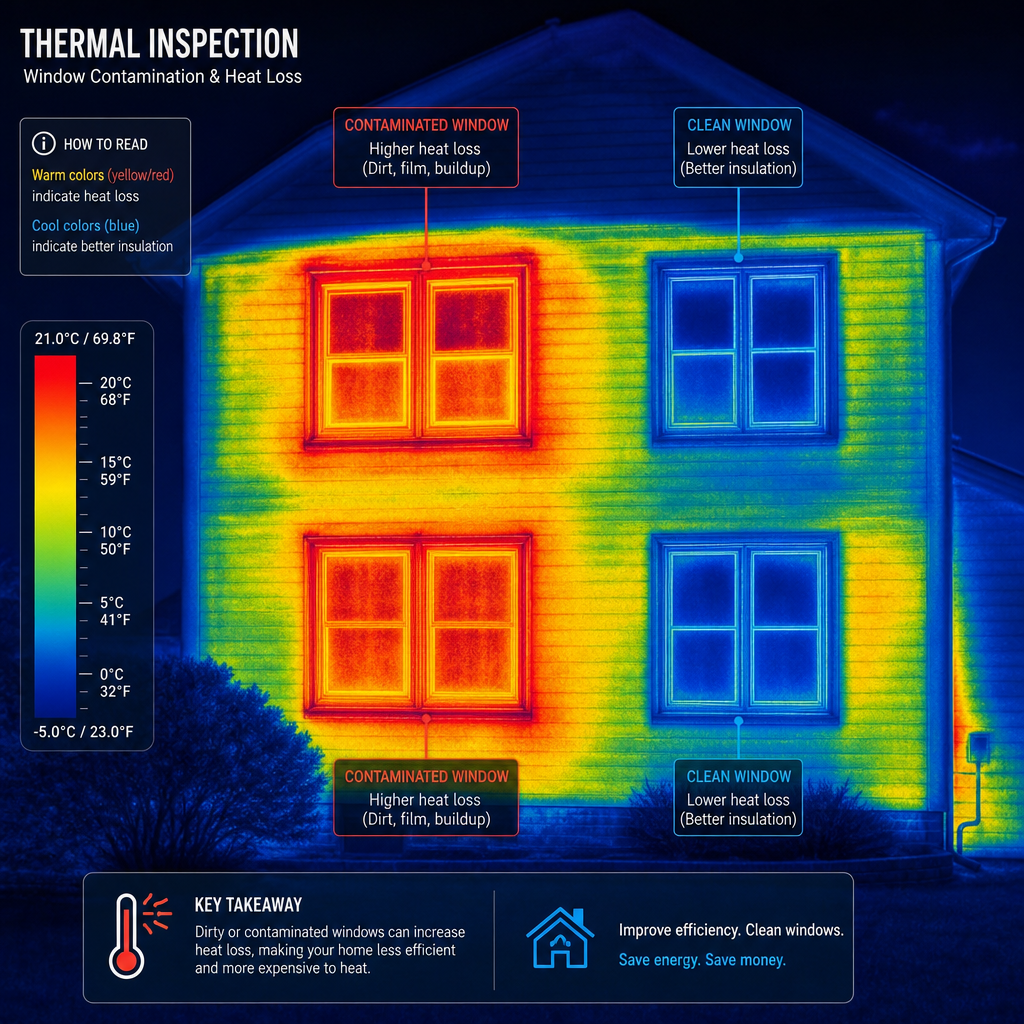
The Department of Energy notes that windows account for 25 to 30% of residential heating and cooling energy use. When those windows are compromised by contamination, that percentage only grows. Dirty glass does not just block heat passively. The particulate layer absorbs solar radiation and re-radiates it back outward, which is the opposite of what you want in cold weather.
How Pollen and Organic Debris Create Insulating Films
Pollen is a particular problem in spring and fall. It bonds electrostatically to glass and forms a fine, nearly invisible film that is genuinely difficult to remove with water alone. Over a season, this film layers with dust and airborne exhaust particles into a compound coating that scatters rather than transmits light. Scattering means energy is dispersed rather than directed into your living space.
In British Columbia and Alberta, where Performance Window Cleaning serves clients, conifer pollen and wildfire season particulates make late spring and late summer especially damaging to window performance. Homes in tree-lined neighbourhoods often see the fastest buildup rates.
Pro tip: If your indoor plants near a window are getting less light than they used to, the issue is almost always window contamination before it is seasonal change. That reduced light transmittance is the same loss your heating system is compensating for.
The Real Cost on Your Energy Bill
Quantifying exactly how much dirty windows cost per household depends on climate zone, window count, and contamination severity. But the directional data is consistent. The U.S. Department of Energy estimates that heat gain and heat loss through windows account for 25 to 30% of total residential heating and cooling energy use. Any reduction in glass performance moves that number upward.
A study from the Lawrence Berkeley National Laboratory found that window-related energy losses in the United States alone cost approximately 20 billion dollars annually. While that figure captures overall window performance including insulation gaps and frame losses, glass transmittance degradation from contamination is a non-trivial contributor that most homeowners ignore because it is gradual and invisible on a day-to-day basis.
“The energy performance of a window system is only as good as the condition of its glazing. Contamination that reduces visible light transmittance by 20% can meaningfully shift the thermal balance of a room.” – Lawrence Berkeley National Laboratory, Windows and Daylighting Group
For a typical Canadian home with 15 to 20 windows, even a 10% improvement in solar heat gain during winter months can translate to a measurable reduction in heating costs over a season. The math is not dramatic on a per-window basis. It adds up across a whole house over a winter.
Summer Cooling Costs Are Just as Affected
Summer creates a different but equally costly problem. Dirty windows scatter and diffuse UV radiation in uneven patterns, creating radiant heat buildup in specific zones near window frames. Air conditioning units sense overall room temperature averages, not localized hot zones, so they cycle more frequently without actually solving the comfort problem near those windows.
Homeowners often install heavier window coverings or run ceiling fans continuously to compensate. Both solutions cost energy and money that clean, well-performing windows would largely eliminate.
Window Types and How Grime Affects Each Differently
Not all windows respond to contamination the same way. The type of glass, coating, and frame material determines how quickly performance degrades and how difficult cleanup becomes once grime has bonded.
Low-E Coated Windows
Low-emissivity windows are specifically designed to reflect infrared radiation while allowing visible light to pass through. This coating, applied as a thin metallic oxide layer, is what justifies the higher cost of energy-efficient windows. When that coating surface is contaminated, its reflective properties are compromised at the molecular level. The coating cannot selectively filter radiation when it is covered with mineral deposits or oxidation.
A common mistake is assuming that because Low-E glass looks clean, it is performing. The deposits that most damage Low-E coatings, specifically calcium and magnesium carbonates from hard water, are often nearly invisible until they catch direct sunlight at the right angle.
Double and Triple Pane Windows
Multi-pane windows rely on the sealed gas cavity between panes for insulation. Dirty exterior glass does not directly breach that seal, but it does affect the solar radiation entering the system. In winter, reduced solar transmittance means the inner pane warms less, reducing the passive heating effect that makes double-pane windows worthwhile beyond their insulation rating.
Single Pane and Older Installations
Older homes with single-pane windows are most vulnerable to contamination-driven energy loss. There is no secondary thermal barrier. Every percentage point of light transmittance lost to grime is a direct reduction in passive solar heating and a direct increase in radiant heat loss in winter. Keeping these windows immaculate is the single most cost-effective energy intervention available short of replacement.
Pro tip: If you are not ready to replace older single-pane windows, a professional cleaning schedule twice per year is the highest-return maintenance investment available for those specific windows. Performance Window Cleaning has been handling exactly this situation for homeowners since 2008.
Comparison: Cleaning Methods and Their Energy Impact
Not all cleaning approaches restore glass to its full energy-performing condition. Below is an honest comparison of the three most common methods homeowners and property managers encounter.
| Cleaning Method | Contaminants Removed | Energy Performance Restoration |
|---|---|---|
| DIY soap and squeegee | Surface dust, loose organic debris, light smudges | Partial. Does not address hard water deposits, oxidation, or bonded mineral scale. Light transmittance improvement is limited to 5-10% in most cases. |
| Professional water-fed pole system | Purified water removes mineral deposits, organic films, pollen layers, and general grime from all frame and glass surfaces simultaneously | High. Purified water leaves no residue and restores glass to near-factory light transmittance levels. Most effective for regular maintenance schedules. |
| Professional hard water and oxidation treatment | Calcium carbonate scale, magnesium deposits, oxidation, construction film, silicone overspray | Maximum. Specifically targets the deposits that most severely degrade Low-E coatings and single-pane glass. Required for windows with visible mineral staining or post-construction cleanup. |
The data consistently shows that DIY cleaning closes roughly half the performance gap that professional cleaning closes. For homes with energy-efficient window investments, that gap matters financially.
Window Cleaning Tips That Actually Preserve Energy Performance
Most window cleaning tips online focus on streak-free results rather than energy performance. Those are not the same goal. A window can look clean and still have a mineral deposit layer that is cutting its solar transmittance by 15%.
Use Purified Water, Not Tap Water, for Final Rinse
Tap water in most Canadian municipalities contains dissolved minerals. When that water evaporates off glass, it leaves those minerals behind. Over multiple cleaning cycles using tap water, you are actually depositing the problem you are trying to remove. Purified or deionized water evaporates cleanly without leaving residue. This is why professional water-fed pole systems use purified water as the core of their process, not as a finishing step.
Clean Frames and Tracks Before the Glass
Dirt from window frames wicks onto glass during cleaning and during rain events. If you clean the glass without addressing the frame, the glass recontaminates faster. This is especially true for aluminum frames, which oxidize and deposit grey mineral streaking onto adjacent glass in wet conditions. Cleaning the frame first removes that ongoing contamination source.
Avoid Ammonia-Based Products on Tinted or Coated Glass
Ammonia degrades the adhesives in tinted film and can strip or cloud Low-E coatings over time. This is irreversible damage that permanently reduces the energy performance of the window. On coated glass, use pH-neutral cleaners only. Performance Window Cleaning uses products specifically selected to be safe on treated glass surfaces, which is one of the practical advantages of professional service over household products.
Clean in Shade, Not Direct Sunlight
Cleaning solution dries faster in direct sunlight, leaving streaks and residue before you can squeegee it off. This residue contributes to the contamination film over time. Early morning or overcast conditions produce better results. In British Columbia summers, this means scheduling exterior window cleaning for morning hours before surfaces heat up.
How Often Should Windows Be Cleaned for Energy Reasons
The glass industry benchmark for residential window cleaning is twice per year for standard environments and four times per year for properties near construction sites, busy roads, coastal salt air, or irrigation systems that spray hard water onto glass. These frequencies are not arbitrary. They reflect how quickly bonded contamination forms under various conditions.
In practice, twice-per-year professional cleaning, timed for late spring after pollen season peaks and late fall before winter heating season begins, provides the best return on investment for most Canadian homeowners. Late spring cleaning removes the pollen and spring debris that reduces summer solar filtering performance. Fall cleaning maximizes glass transmittance heading into the months when passive solar heating actually matters for your heating bill.
Properties managed by real estate agents or property managers have an additional incentive. Homes with visibly clean windows photograph better, show better, and signal maintenance diligence to buyers and tenants. The energy performance argument and the curb appeal argument point to exactly the same cleaning frequency.
Home Energy Savings Beyond the Glass
Window glass is the most direct surface affecting solar energy entry, but the broader exterior envelope of a home creates a system. Home energy savings from window cleaning are amplified when combined with other exterior maintenance that Performance Window Cleaning provides as part of its full-service exterior packages.
Eavestrough and Gutter Maintenance
Blocked gutters overflow during rain and direct water across window frames and glass. That water, especially in areas with hard municipal water or high mineral content in rainwater runoff from roofing materials, deposits a constant stream of mineral-rich water onto your windows. Regular gutter cleaning removes this ongoing contamination source and directly reduces how quickly window glass degrades between professional cleanings.
Power Washing Siding and Window Surrounds
Siding contaminated with mold, algae, and organic debris transfers particulates to adjacent window frames during rain. Power washing the exterior envelope removes these contamination reservoirs. The result is not just a cleaner-looking home. Windows stay cleaner longer between service visits, maintaining better light transmittance across a full calendar year.
Spider and Pest Removal Around Window Frames
This is a detail most homeowners overlook. Spider webs at window frames trap pollen, dust, and organic debris, and that material wicks onto glass through rain and humidity. Professional pest removal and web clearing around window frames is a practical step toward reducing between-service contamination rates. Performance Window Cleaning includes this as part of its comprehensive exterior service packages.
Frequently Asked Questions
Can dirty windows really increase my heating bill?
Yes, measurably. The U.S. Department of Energy attributes 25 to 30% of residential heating and cooling energy use to windows. When glass transmittance is reduced by contamination, passive solar heat gain in winter drops, and your heating system runs more to compensate. Heavily soiled windows can lose up to 40% of their solar heat gain capacity, which has a direct impact on fuel or electricity consumption during cold months.
What type of window contamination causes the most energy loss?
Hard water mineral deposits, specifically calcium carbonate scale, cause the most persistent and damaging reduction in light transmittance. Unlike dust or pollen, hard water deposits bond chemically to glass and cannot be removed with standard soap and water. They require acid-based or specialty mineral removal treatments. On Low-E coated glass, mineral scale can compromise the coating itself, causing permanent efficiency reduction if left long enough.
How do I know if my Low-E coating has been damaged by contamination?
Look for a hazy or iridescent appearance on the glass surface when viewed from outside in direct sunlight. Slight discoloration or cloudiness that does not resolve after standard cleaning is a sign of coating damage or severe mineral bonding. At that point, professional assessment is needed to determine whether the glass requires specialty treatment or replacement. Performance Window Cleaning can identify coating damage during a standard service visit.
Is professional window cleaning worth the cost compared to DIY for energy savings?
For homes with energy-efficient Low-E windows, the answer is clearly yes. DIY cleaning with tap water and standard soap does not remove hard water deposits or oxidation, which are the contamination types most damaging to energy performance. Professional cleaning using purified water and appropriate treatments restores full transmittance, which protects the investment in premium glazing. For standard single-pane windows, professional cleaning still outperforms DIY by removing bonded grime layers that household products cannot address.
How long after a professional cleaning do windows stay at peak energy performance?
In most residential environments, professionally cleaned windows maintain near-peak light transmittance for three to six months before contamination buildup begins to measurably affect performance. Properties near busy roads, irrigation systems, or in high-pollen areas see degradation faster. This is why a twice-yearly professional cleaning schedule, rather than annual service, provides better sustained energy performance across a full year.
Does window cleaning help with air conditioning costs in summer as well as heating in winter?
Yes, though the mechanism is different in summer. Clean glass allows even, predictable solar radiation entry, which your air conditioning system manages efficiently through its programming. Dirty glass scatters radiation unevenly, creating localized hot zones near frames that cause comfort problems without a corresponding thermostat trigger. Homeowners compensate with fans, blinds, and lower thermostat settings, all of which cost energy. Clean windows reduce that compensation-driven energy use.
What is the best time of year to schedule professional window cleaning in Canada?
Late spring and late fall are the two most strategically useful times. Late spring cleaning removes accumulated pollen and winter grime before summer heat makes window performance more critical. Late fall cleaning, ideally in October before sustained freezing temperatures arrive, maximizes glass transmittance heading into the heating season when passive solar gain has its highest value. Performance Window Cleaning offers flexible scheduling to align service visits with these optimal timing windows.
Have you noticed a difference in how warm or bright your home feels after a professional window cleaning? Share your experience below.
References
- U.S. Department of Energy official site, covering residential window energy performance, Low-E coatings, and heating and cooling efficiency data
- Lawrence Berkeley National Laboratory, home of the Windows and Daylighting Group research on glazing performance and energy loss quantification
- Natural Resources Canada, providing Canadian residential energy efficiency guidelines, window performance standards, and climate-specific energy use data
- Forbes coverage of home improvement ROI, energy efficiency upgrades, and the financial case for preventive home maintenance
- Statista data on residential energy consumption, household utility cost trends, and home maintenance spending patterns