
Ontario driveways take a beating every winter, yet most owners only look at them when the grime is obvious or a crack has already opened up. If you wait until spring, you have let a full season of freeze-thaw cycles work on a surface that was already dirty and porous. That is why driveway cleaning in Ontario is less about curb appeal and more about giving concrete or interlock a clean, dry start before the first hard frost. The job is simple in principle, but timing and pressure decide whether it protects the driveway or damages it. Here is how we approach it, and where homeowners most often get it wrong.
Table of Contents
- Quick Takeaways
- Why Timing Matters More Than Pressure
- What Freeze-Thaw Cycles Do to a Dirty Driveway
- Fall Washing Temperature and Weather Window
- Concrete, Interlock and Asphalt Need Different Handling
- Cracks, Sealant and Salt Before the First Storm
- Clearing Debris, Gutters and Overhanging Shrubs
- Frequently Asked Questions
- References
Quick Takeaways
| Key Insight | Explanation |
|---|---|
| Wash only when temperatures are consistently above 5°C | Water left in surface pores after a wash can freeze before the concrete has dried, which is how a clean driveway ends up cracked. |
| Plan for 24 to 48 hours of dry, above-freezing weather after the wash | A warm afternoon is not enough. The surface needs time to dry out, and overnight lows matter as much as the daytime high. |
| Match pressure to the surface | Concrete can generally handle 2,500 to 4,000 PSI. Interlock should be washed at 1,200 to 1,500 PSI maximum to protect the joint sand. |
| Clear debris and check gutters before the wash | Leaves and runoff from gutters can refill the driveway and freeze in low spots, undoing the work within a few cold nights. |
| Check the sealant schedule | Sealing is generally needed every 2 to 3 years. If it has been more than 3 years, or the surface looks dry and granular, seal after the wash. |
| Book before the rain window closes | Rain is the most common reason a fall wash slips into cold weather. Request a free quote or call 1-905-401-3793 early to leave room to reschedule. |
Why Timing Matters More Than Pressure
Most people assume a stronger wash is a better wash. On a driveway in the fall, the calendar matters more than the nozzle. Concrete that goes into winter dirty and damp is more likely to crack, and the repair bill for that crack is usually far higher than the cost of a well-timed wash.

The practical window is narrow. Temperatures need to be consistently above 5°C when you wash, and they need to stay that way for at least 24 to 48 hours afterward. The reason is simple: water left in surface pores after a wash can freeze before the concrete has dried out, and that freezing water is what turns a clean driveway into a damaged one.
Why a Warm Afternoon Is Not Enough
A sunny afternoon followed by a freezing night is not a safe window. Water sitting in pores overnight gets no real chance to evaporate, so the freeze arrives before the surface is dry. In practice, we check the overnight low as closely as the daytime high before we commit to a date.
Booking Ahead of the Rain
Rain is the most common reason a fall wash slips into cold weather. Booking early leaves room to move the job around a wet week. Our visiting hours are 9:00 AM to 5:00 PM Monday to Friday, with weekends by appointment, so it helps to request a date before the late-fall calendar fills up.
A driveway washed on the right day in October usually holds up better through winter than one washed on a cleaner-looking day in late November. The date matters more than the amount of effort.
Power washing a driveway typically takes 1 to 5 hours, with 1 to 3 cleaners depending on square footage and height. That schedule is easy to fit into a mild stretch of weather if you start the process early.
What Freeze-Thaw Cycles Do to a Dirty Driveway
Freeze-thaw cycles are the main way winter damages a driveway. When water gets into a crack or pore, it expands as it freezes. The thaw lets it soak a little deeper, and the next freeze pushes further. One published winter guide for concrete and asphalt driveways makes the same point: a simple crack can lead to costly repairs once water gets in and cycles through.
How Grime Holds Moisture Against the Surface
Oil spots, leaf staining, algae and road residue all hold water against the surface longer than a clean slab does. A dirty driveway can stay damp for days after rain, while a clean one dries noticeably faster. Removing that film before winter means water has less reason to sit on the slab and soak in.
Dirt is not just cosmetic. A film that keeps the surface wet is a film that keeps the freeze-thaw cycle working on the concrete.
Why Small Cracks Grow Over One Winter
A hairline crack that gets ignored in October often becomes a visible split by March. The guidance we rely on is blunt about this: cracks noticed at the start of winter only get worse as temperatures drop. Clearing the crack, cleaning it out and sealing the surface before the cold arrives keeps water from going in deeper.
Interlock brings its own version of the problem. When water freezes in the joints, it lifts pavers and loosens the sand between them. The fix is not to blast the joints harder during the wash, but to keep them intact so the pavers have something to lock into.
Fall Washing Temperature and Weather Window
A driveway wash is a weather decision first and an equipment decision second. Before you book or start the wand, check three things: the daytime high, the overnight low, and the rain forecast for the next two days. If any of those three look wrong, the job should move.
The 5°C Rule and the 24 to 48 Hour Dry Period
Our working rule is simple. Do not wash unless temperatures sit consistently above 5°C at the time of washing, and expect the surface to need at least 24 to 48 hours after that without a hard freeze. If the forecast drops below freezing before the slab has dried, we reschedule rather than gamble on it.
Shaded areas are the ones that stay wet longest. A section under an eave, beside a tall fence or along a downspout can remain damp well after the open part of the same slab has dried. Plan around the slowest-drying section, not the sunniest one.
Pro tip: Ask for a date in a stretch with at least two dry days ahead. A driveway that stays damp overnight is the one that freezes first.
Why Overnight Lows Decide the Schedule
Water still sitting in a joint at 2 AM can freeze before the surface is dry, even if the afternoon felt mild. Stop washing once overnight lows start approaching freezing. During the job, sweep runoff toward the lawn so standing water does not pool on the slab and refreeze.
In practice, this means a mild week in late October is often the best window, while a cold snap in early November can end the season for the driveway. If you are not sure whether the timing works, call before the crew is booked, not after.
Concrete, Interlock and Asphalt Need Different Handling
The most common mistake we see is one pressure setting used for the entire driveway. Concrete and interlock are both paved surfaces, but they respond very differently to a high-pressure wand. Concrete tolerates more force. Interlock does not, and a setting that cleans a slab can blow the sand out of pavers.
Concrete: Where the Higher Pressure Range Makes Sense
Concrete driveways can generally handle 2,500 to 4,000 PSI. That range is enough to lift embedded grime and oil spots, but only if the nozzle keeps moving and stays at a consistent distance. Lingering in one spot can etch the surface and leave an uneven finish that looks worse than before.
Interlock: Keep Pressure Under 1,500 PSI
Interlock pavers should be washed at 1,200 to 1,500 PSI maximum. Above that, joint sand gets flushed out, and the pavers have nothing holding them in place once ice forms underneath. Re-sanding joints in spring is a bigger job than the wash itself, and it is avoidable.
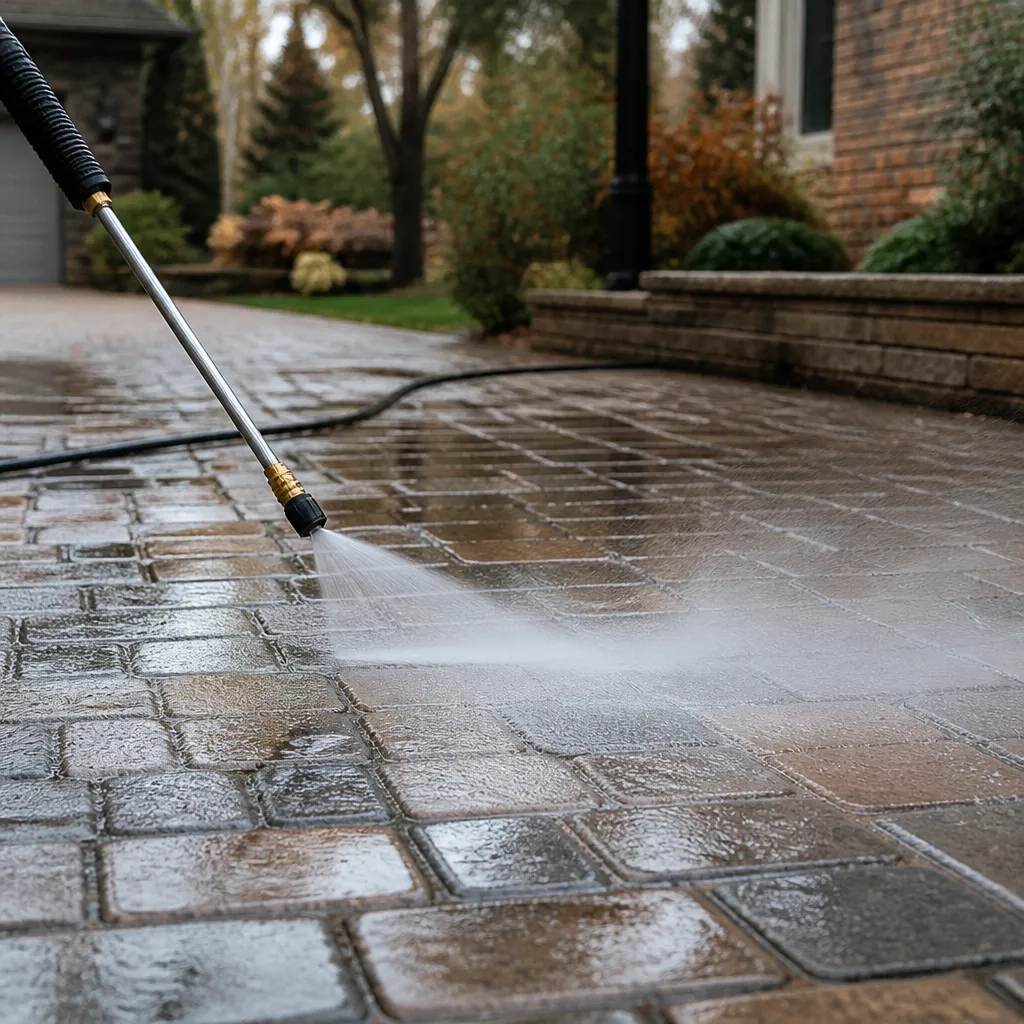
Asphalt needs a gentler approach than concrete, and the sealing schedule matters more than the pressure number. We do not publish a PSI figure for asphalt, so the safe approach is a lower setting, a moving wand and a check of the sealant condition before winter. Power washing a driveway of any type typically takes 1 to 5 hours with 1 to 3 cleaners, depending on square footage and height.
The table below summarizes how we set up each surface before the cold arrives.
| Surface | Pressure Guidance | Pre-Winter Priority |
|---|---|---|
| Concrete | 2,500 to 4,000 PSI, wand kept moving | Remove oil and grime, then inspect for cracks before sealing |
| Interlock | 1,200 to 1,500 PSI maximum | Keep joint sand full and avoid any setting that flushes it out |
| Asphalt | No PSI figure published here; use a lower setting and a moving wand | Check sealant condition, since sealing timing matters more than pressure |
Cracks, Sealant and Salt Before the First Storm
Washing shows you the damage, but it does not fix it. A clean driveway with open cracks is still vulnerable, so do the inspection between the wash and the first real snowfall. That gap is when small problems are cheapest to deal with.
Sealing Every Two to Three Years
Sealant protects the surface from moisture, freezing temperatures and chemicals. Ideally, sealing is done every 2 to 3 years depending on wear. If it has been more than 3 years since the last sealing, that is already a warning sign, and so is a surface that looks dry and granular or shows cracks that keep reappearing.
Sealing over a dirty or damp slab traps the problem underneath. Wash first, let the surface dry completely, and then seal during the mild days that remain in the season. Sealing in a rush on a wet slab is one of the quickest ways to waste the money.
Salt, Sand and Small Holes
For very small holes or cracks, a mixture of salt and sand can be used as a temporary measure. It helps keep water out during freeze-thaw cycles, but it is a stopgap, not a repair. Plan a proper fix in spring, when the weather allows materials to cure correctly.
Deicing salt is the other winter variable. Clean, sealed concrete handles it better than a porous, dirty slab, because salt works more aggressively when it sits in open cracks and surface pores. That is one more reason the wash and the seal belong in the same plan.
Clearing Debris, Gutters and Overhanging Shrubs
Before the pressure washer comes out, clear the driveway completely. Anything left on the surface, from leaves to loose gravel to garden debris, can freeze into the slab or get caught by a plow later. Large objects that sit through a long winter are one of the more avoidable sources of damage.
Gutters and Eavestroughs That Drain onto the Driveway
Water from gutters and eavestroughs is one of the most overlooked causes of driveway ice. Clear the drainage system first, or the wash simply rinses leaves back into the joints and low spots. Gutter cleaning typically takes 1 to 3 hours with 1 to 3 cleaners, depending on square footage and height.
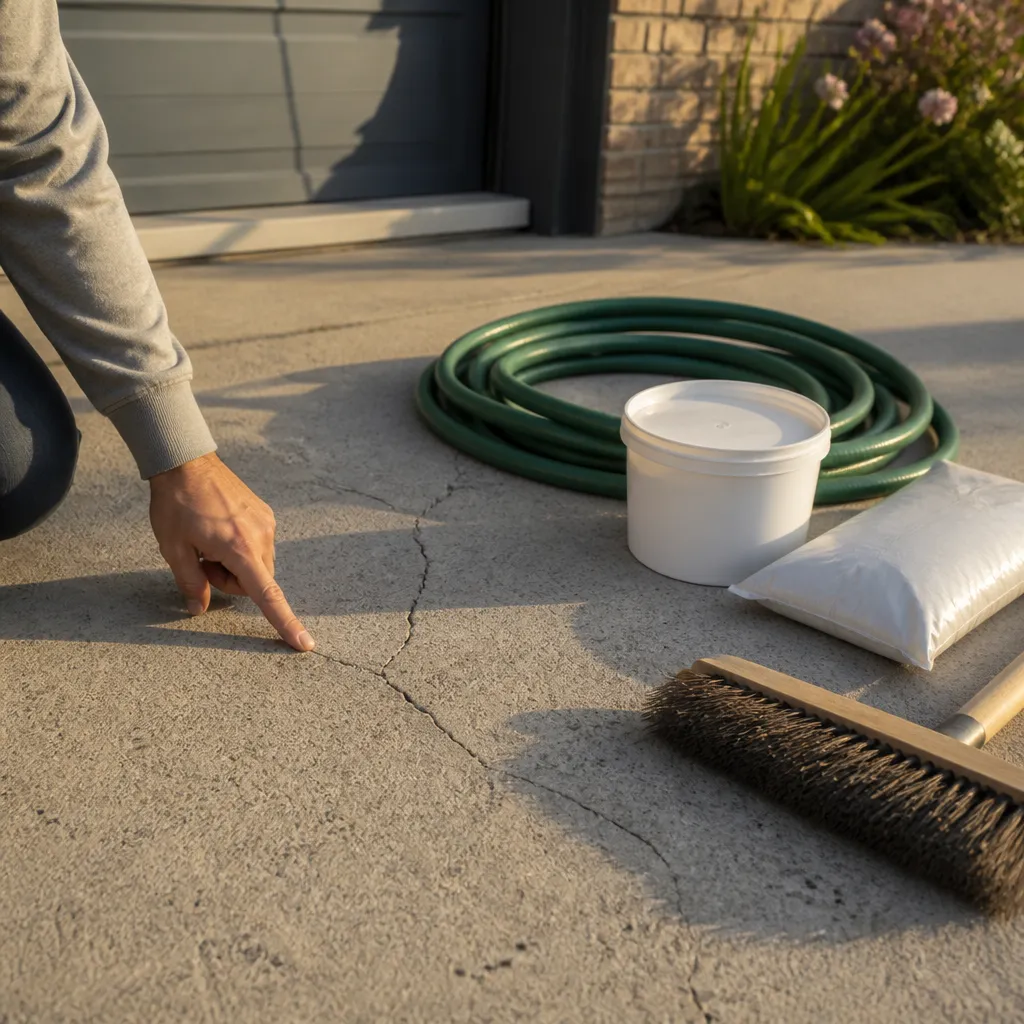
If you are already booking a home detailing visit, debris removal from eavestroughs can be included in the same appointment. Our home detailing package also covers eavestrough whitening, siding, stone and stucco cleaning, and an annual spider spray.
Overhanging Branches and Snow Load
Trim shrubs and branches that touch the driveway. Overhanging branches can drop heavy loads of snow onto the surface and cause damage, and they also drip sap and leaves that stain concrete. Pruning in the fall is far easier than repairing a chipped edge in March.
Pro tip: After the wash, walk the driveway and look for standing water in low spots. Those puddles are the first places to freeze, so sweep or squeegee them toward the lawn before the cold sets in.
Common Mistakes We See Each Fall
Three mistakes come up again and again. Homeowners wash before clearing gutters, use the same pressure on interlock and concrete, and wait for a sunny day without checking the overnight low. Each one is easy to avoid, and each one brings the job back in spring at a higher cost.
If you are in Oakville, Burlington, Mississauga, Hamilton, Niagara Falls, St. Catharines or Fenwick, call 1-905-401-3793 or use the Request a Quote form. Quotes are free, and we will check the forecast and the surface with you before setting a date.
Frequently Asked Questions
What temperature is needed to wash a driveway before winter in Ontario?
Wash only when temperatures are consistently above 5°C at the time of washing. Expect the surface to need at least 24 to 48 hours afterward without a hard freeze.
Can I use the same pressure on concrete and interlock?
No. Concrete can generally handle 2,500 to 4,000 PSI, while interlock should be washed at 1,200 to 1,500 PSI maximum to keep the joint sand in place.
How often should a driveway be sealed?
Ideally, sealing is done every 2 to 3 years depending on wear. If it has been more than 3 years since the last sealing, or the surface looks dry and granular, it is time to seal again after the wash.
How long does a driveway power wash take?
Power washing typically takes 1 to 5 hours, with 1 to 3 cleaners depending on square footage and height. Pricing is provided by estimate, so request a free quote or call 1-905-401-3793 for a figure specific to your driveway.
Is it too late to wash a driveway in late November?
It can be, if overnight lows are already approaching freezing. Only wash if you can count on daytime temperatures above 5°C and at least 24 to 48 hours without a hard freeze. Otherwise, wait for a mild spell in spring.
Should I clear the gutters before washing the driveway?
Yes. Gutter runoff and leaves left in the eavestrough can refill the driveway after the wash and freeze in low spots, which undoes much of the work.
Have you seen cracks or ice patterns on your driveway after a late-fall wash, and did a timing change make a difference through last winter?