
Most Burlington homeowners do not think about their eavestroughs until water is pouring over the edge, pooling against the foundation, or rotting out the fascia boards. By that point, what would have been a straightforward eavestrough cleaning in Burlington has turned into a repair bill that could have been avoided entirely. Fall is the highest-risk season for clogged gutters in this region, and getting ahead of it before the leaves drop is not optional if you want to protect your home’s structure. This guide covers exactly what to do, when to do it, and what to watch for.
Table of Contents
- Quick Takeaways
- Why Burlington Homes Are Especially Vulnerable
- What Happens When Eavestroughs Go Uncleaned
- The Right Cleaning Schedule for Burlington Properties
- Professional vs. DIY Eavestrough Cleaning
- What a Proper Eavestrough Cleaning Actually Includes
- Gutter Guards: Do They Actually Help?
- How Eavestrough Cleaning Connects to Other Exterior Maintenance
- Frequently Asked Questions
- References
Quick Takeaways
| Key Insight | Explanation |
|---|---|
| Clean eavestroughs at least twice per year | Spring and fall cleanings are the minimum standard recommended by eavestrough professionals. Homes near trees or exposed to heavy weather may need more frequent service. |
| Fall cleaning is the more critical appointment | Autumn leaf fall dumps the heaviest debris load of the year into gutters. Going into winter with blocked eavestroughs invites ice dams and foundation water intrusion. |
| Clogged gutters damage more than just the gutter itself | Overflow from blocked eavestroughs can rot fascia and soffit wood, erode soil around the foundation, and allow water into basements. |
| Gutter slope matters as much as cleanliness | Eavestroughs need a slope of at least one quarter inch for every ten feet to drain properly. Even a clean gutter pools water if the pitch is wrong. |
| Not every eavestrough problem requires replacement | Many issues including loose hangers, small cracks, and clogged downspouts are resolved by cleaning and minor repairs, not full replacement. |
| Downspout discharge location matters | Downspouts should direct water well away from the foundation. Even perfectly clean eavestroughs cause problems if the discharge point is too close to the house. |
| Exterior maintenance is interconnected | Scheduling eavestrough cleaning alongside power washing and siding inspection saves time and catches related problems like pest buildup and mold on fascia boards. |
Why Burlington Homes Are Especially Vulnerable
Burlington sits in a part of Ontario where late summer and fall bring a combination of heavy rainfall, high winds, and significant leaf fall from mature residential trees. That combination is a perfect storm for eavestrough blockages. Leaves, seed pods, and twigs accumulate fast, and once the channel is even partially blocked, standing water begins its work on the surrounding wood and metal.
Many Burlington neighbourhoods feature mature tree canopies that homeowners love for shade and curb appeal. Those same trees are the primary reason eavestroughs fill up faster here than on properties in more open settings. If your roof line is within dropping distance of a maple or oak, you are almost certainly dealing with more debris than the average cleaning schedule accounts for.
The freeze-thaw cycles common to this part of Ontario add another layer of risk. Water trapped in a blocked eavestrough freezes, expands, and forces itself into seams and joints. Ice dams form along the roofline and push meltwater back under shingles. That is a roof repair and an interior water damage problem, both of which trace back to a gutter that was not cleared before winter set in.
What Happens When Eavestroughs Go Uncleaned
The damage sequence from neglected eavestroughs follows a predictable pattern, and understanding it makes the urgency of gutter cleaning in Burlington much clearer. It starts small and escalates quickly once water finds a path it should not have.
Foundation and Basement Water Intrusion
When eavestroughs overflow, the excess water runs directly down the exterior wall and pools against the foundation. Over time, that constant moisture saturates the soil, increases hydrostatic pressure against foundation walls, and finds its way into basements and crawl spaces. This is not a slow, theoretical risk. Burlington homeowners with mature trees and uncleaned eavestroughs often see basement dampness appear within a single heavy-rain season.
Fascia, Soffit, and Wood Rot
The wood components directly behind and beneath the eavestrough are the first casualties of standing water. Fascia boards absorb moisture from a clogged gutter that is holding water against them. Soffit panels below trap that moisture and begin to rot from the inside out. By the time the damage is visible from the ground, the wood has usually been compromised for months. Keeping eavestroughs clear is the single most effective way to prevent this type of deterioration.
Soil Erosion Around the Home
Overflow water does not just soak into the ground. It hits the soil at speed and erodes the landscaping and grading around the perimeter of the house. Good grading slopes away from the foundation. Repeated overflow from blocked gutters reverses that slope over time by washing soil away in the wrong places and depositing it in others.
Maintaining clean eavestroughs is essential for safeguarding your home from water damage and upholding its structural integrity. Blockages, overflow, and potential water damage to your home’s foundation and interiors are all preventable with regular cleaning.
The Right Cleaning Schedule for Burlington Properties
The standard professional recommendation is a minimum of two cleanings per year: once in spring and once in fall. In practice, the fall cleaning carries more weight. Spring cleaning clears out winter debris, pine needles, and anything that accumulated during the ice melt. Fall cleaning removes the massive leaf load before the first hard freeze locks it into a dense, water-blocking mat.
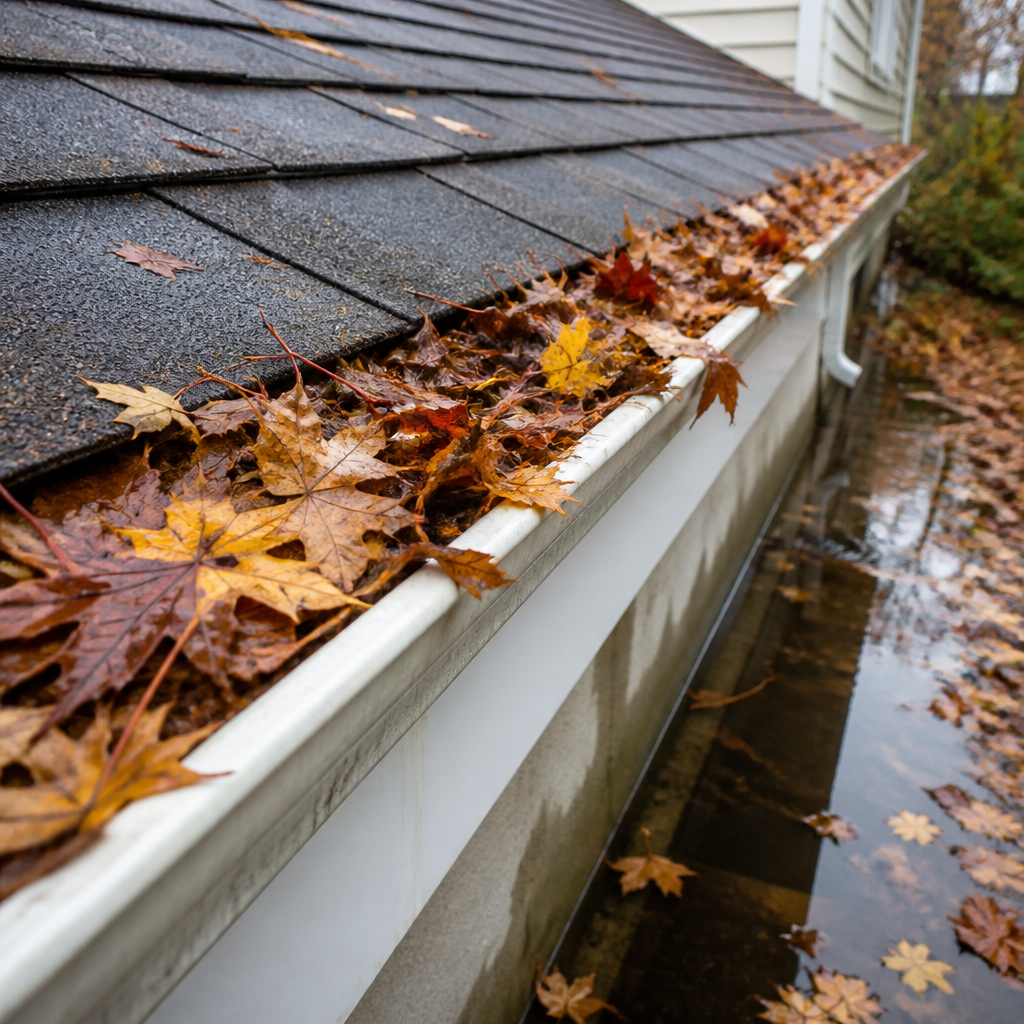
For Burlington properties surrounded by deciduous trees, two cleanings per year is often not enough. A third cleaning in mid-fall, after peak leaf drop but before freezing temperatures arrive, is a practical addition for homes where gutters visibly fill between the early fall and winter. The goal is to never let the system go into a freeze cycle with debris sitting in it.
Pro tip: Schedule your fall eavestrough cleaning for after the majority of leaves have dropped but at least three to four weeks before the ground freezes. Cleaning too early means you will still catch a second wave of leaf fall. Cleaning too late means the debris is frozen in place and the damage window has already opened.
Properties without significant tree coverage can often maintain a standard twice-yearly schedule. The honest answer is that the right frequency depends on your specific property, and any exterior cleaning professional worth hiring will give you an honest assessment after seeing the site rather than defaulting to a fixed schedule that maximizes service calls.
Professional vs. DIY Eavestrough Cleaning
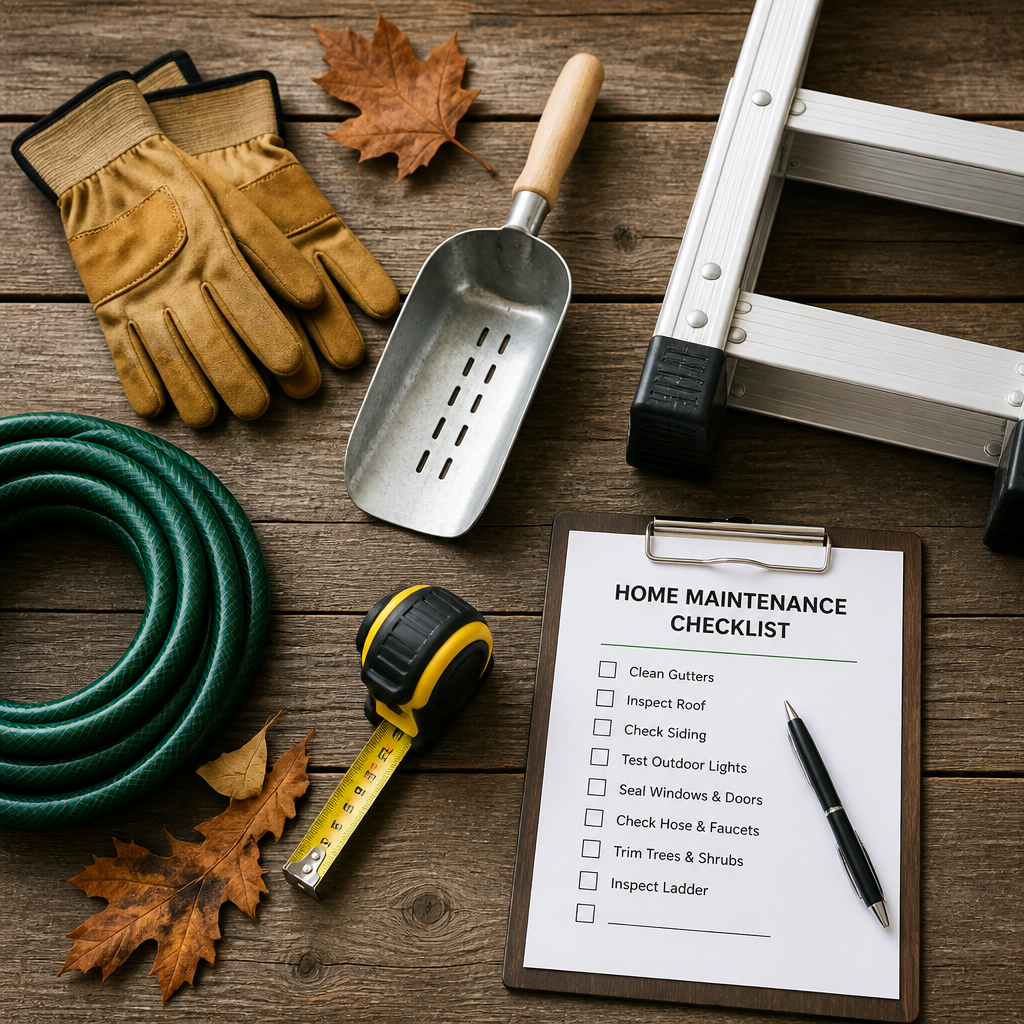
The DIY approach to eavestrough cleaning looks straightforward: a ladder, a pair of gloves, a bucket, and a garden hose. In practice, it is more complicated and more dangerous than it appears, especially on two-storey homes or properties with steep ground slopes around the perimeter.
The Real Risks of DIY Gutter Cleaning
Ladder injuries are among the most common home maintenance accidents. Working at height on an extension ladder, often on uneven ground, while reaching laterally to clear debris, is a combination that sends a significant number of homeowners to emergency rooms each year. This is not meant to scare anyone away from minor maintenance, but it is a risk that deserves honest acknowledgment before someone climbs a two-storey ladder alone.
Beyond the physical risk, DIY cleaning often misses what a professional catches. A homeowner clearing visible debris from the channel may not notice that a downspout is partially blocked at the elbow, that a hanger is pulling away from the fascia, or that the pitch has shifted and water is pooling in one section. These are the findings that prevent a cleaning call from turning into an emergency repair call six months later.
What Professional Service Adds
A professional eavestrough cleaning from a company like Performance Window Cleaning goes beyond scooping out leaves. It includes checking the condition of the system, confirming downspout flow, and flagging any issues that need attention before they become structural problems. That diagnostic element is often worth as much as the cleaning itself, particularly for older homes where the eavestrough system has not been inspected in several seasons.
Pro tip: When hiring an eavestrough cleaning company in Burlington, ask specifically whether they flush the downspouts with water at the end of the job. A company that only removes visible debris from the channel but does not verify downspout flow has not actually confirmed the system is working.
What a Proper Eavestrough Cleaning Actually Includes
A complete eavestrough cleaning service is not just removing leaves from the top of the gutter. Each step in the process serves a specific purpose, and cutting any of them short leaves the system partially compromised.
The process starts with removing all loose debris from the eavestrough channel: leaves, twigs, seed pods, granules washed from roof shingles, and any organic material that has begun to decompose and compact into a paste at the bottom. This compacted layer is often what blocks drainage even when the visible debris looks minor from the ground.
Downspout clearing is the step most often skipped in low-quality cleaning jobs. Downspouts block at the elbow joints and at the outlet screens. A garden hose run through the top of the downspout will confirm whether the channel is clear all the way to the discharge point. If water backs up, the blockage needs to be cleared before the job is complete.
After clearing, the system should be flushed with water to confirm free flow and to reveal any low spots where water is pooling instead of draining. Those low spots indicate a pitch problem, not a cleaning problem, and they need to be addressed separately.
| Approach | What It Covers | Best For |
|---|---|---|
| Basic DIY Cleaning | Manual removal of visible debris from the channel; garden hose flush if accessible | Single-storey homes with light tree coverage and a homeowner comfortable on a ladder |
| Professional Cleaning (standard) | Full debris removal, downspout clearing and flush, system inspection, and condition report | Most Burlington residential properties, especially two-storey homes and those near trees |
| Professional Cleaning with Gutter Guard Installation | Everything in standard cleaning plus installation of guards to reduce future debris accumulation | Properties with very heavy leaf fall where annual cleaning frequency is a major concern |
Gutter Guards: Do They Actually Help?
Gutter guards reduce the frequency of cleaning required, but they do not eliminate it. That is the honest answer, and any company telling you otherwise is either selling a product or has not spent enough time maintaining properties with heavy tree coverage.

What guards do well is keep the larger debris out of the channel: whole leaves, large twigs, seed clusters. What they do not prevent is the accumulation of fine organic matter, roof granules, and decomposed material that works its way through or around almost any screen design. The result is that a property with guards might need cleaning once a year instead of twice, but it still needs cleaning.
The calculation on gutter guards makes sense for Burlington homeowners who have very heavy leaf fall, find cleaning disruptive to their schedule, or have a property configuration that makes cleaning expensive. It makes less sense as a “set it and forget it” solution, because that expectation leads to deferred maintenance and the same damage problems guards were supposed to prevent.
A common mistake is installing gutter guards and then never having the eavestroughs inspected again. Guards can actually trap debris against the eavestrough channel in a way that accelerates certain types of deterioration. Have the system checked at least annually even if the guards are doing their job visually.
How Eavestrough Cleaning Connects to Other Exterior Maintenance
Exterior home maintenance is not a collection of isolated tasks. Eavestrough cleaning connects directly to the condition of your siding, fascia, soffit, windows, and the areas around your foundation. Scheduling these services together is more efficient and produces a clearer picture of your home’s overall exterior condition.
Power Washing and Siding Condition
The overflow from clogged eavestroughs leaves streaks, mold, and organic staining on siding below the roofline. Before or after an eavestrough cleaning, a power washing service removes that residue and reveals whether the siding itself has been damaged by repeated moisture exposure. Performance Window Cleaning offers both services, which makes it straightforward to combine them into a single exterior maintenance visit.
Window Cleaning and Exterior Detail
Windows near overflowing eavestroughs accumulate mineral deposits and organic streaking that standard cleaning does not always shift. Professional window cleaning scheduled alongside gutter work ensures the full exterior presents well and that any water tracking down window frames is caught early. This matters especially for Burlington homeowners preparing a property for sale or managing a commercial property where appearance is tied directly to business perception.
Spider and Pest Control Around the Roofline
Debris-filled eavestroughs are ideal habitat for spiders, wasps, and other pests. The organic matter provides nesting material and the moisture creates the conditions they prefer. Clearing the gutters removes that habitat, and combining the cleaning with a spider spraying service around the eaves and roofline addresses the pest problem at the source rather than reactively. Performance Window Cleaning includes pest removal as part of its exterior service offering, which makes this combination practical rather than a separate service call.
The broader point is that home maintenance in Burlington works best when the exterior is treated as a system. A professional who only addresses one component at a time misses interactions between systems that are often the root cause of the problem they were called to fix.
Frequently Asked Questions
How often should I have my eavestroughs cleaned in Burlington?
The minimum is twice per year: once in spring and once in fall. Homes near mature deciduous trees may need a third cleaning in mid-to-late fall after peak leaf drop. Go into winter with clean, unobstructed eavestroughs and downspouts as a non-negotiable standard.
What is the difference between an eavestrough and a gutter?
In practice, the terms are used interchangeably in Ontario. Eavestrough is the more common Canadian term. Both refer to the channel mounted along the roofline that collects rainwater and directs it to downspouts. The service and the maintenance requirements are identical regardless of which term is used.
Can blocked eavestroughs actually cause basement flooding?
Yes. When eavestroughs overflow, water runs down the exterior wall and pools against the foundation. Over time this saturates the soil, increases pressure against foundation walls, and allows water to enter basements and crawl spaces. This is one of the most direct and preventable causes of basement water intrusion in residential properties.
How do I know if my eavestroughs need cleaning or replacement?
Signs that cleaning alone will fix the problem include visible debris buildup, overflowing water during rain, and sagging caused by weight from accumulated material. Signs that replacement may be needed include rust near bolts and joints, holes, persistent leaks even after cleaning, and water flowing backward into the gutter channel during heavy rain. A professional assessment is the right way to determine which you actually need, since replacing gutters that only needed cleaning is an unnecessary expense.
Is fall eavestrough cleaning more important than spring cleaning?
In the Burlington climate, yes. Fall cleaning carries more weight because the debris load is heavier, and going into a freeze cycle with blocked eavestroughs creates ice dam risk and foundation moisture problems. Spring cleaning is still important for clearing winter residue and checking for damage caused by ice. Both are necessary, but if you can only do one, do the fall cleaning.
What should I look for when hiring an eavestrough cleaning company in Burlington?
Look for a company that clears debris from the full channel, flushes downspouts to confirm flow, and provides an honest assessment of the system’s condition. WSIB insurance coverage is important for any company sending workers onto ladders at your property. Experience with Burlington’s specific tree and weather conditions matters more than a low price point. Ask whether they will flag problems like pitch issues or damaged hangers, or whether they simply remove debris and leave.
Have you recently had your eavestroughs cleaned before fall, and did the service reveal any surprises about your home’s exterior condition? Share your experience in the comments below.