
Most homeowners who plan eavestrough cleaning in Hamilton around Thanksgiving are following the calendar, not their property. They pick a weekend in early October because the holiday feels like a natural finish line, then find wet maple leaves packed into the trough two weeks later, or they wait until a water stain appears on the siding. Canadian Thanksgiving 2026 fell on October 12, so if you are reading this the day after, that window has already closed. This guide explains why the holiday is the wrong trigger, how to read your own lot, and when to book so the job does its work before the cold arrives.
Table of Contents
- Quick Takeaways
- Why the Thanksgiving Date Trips People Up
- The Timing Most Homeowners Get Wrong
- Signs Your Eavestrough Needs Cleaning Before Winter
- Hamilton Trees, Leaves, and Your Cleaning Window
- Booking Before the Ground Freezes
- DIY vs Professional Eavestrough Cleaning
- Bundling Fall Exterior Services
- Frequently Asked Questions
- References
Quick Takeaways
| Key Insight | Explanation |
|---|---|
| Thanksgiving is a reminder, not a measurement | Canadian Thanksgiving is the second Monday of October, so the date moves each year. Your trees do not follow it, so check the trough before you book. |
| Clean after the bulk of leaf drop | A cleaning done while leaves are still falling is partly wasted. Wait until most of the canopy on your lot has released, then clean once. |
| Overflow is a late warning | If water runs over the edge, debris has usually packed into the back of the trough. Treat grit or sprouting seeds visible from the ground as the real signal. |
| Book well before the first hard frost | Once surfaces are cold and wet, ladder work slows and jobs slip into the next dry stretch, which may be after snow arrives. |
| Test the downspouts, not just the trough | A flush test shows whether water leaves the system. Downspout blockages that hold through a warm October rain can fail as soon as the weather turns. |
| Sequence fall exterior work | Clean eavestrough first, then windows, then power wash lower surfaces, so runoff does not undo finished work. |
Why the Thanksgiving Date Trips People Up
Canadian Thanksgiving falls on the second Monday of October. That makes it easy to remember, but it is a poor trigger for eavestrough cleaning because the holiday shifts from year to year while the debris on your roof follows its own schedule. In 2026 the holiday landed on October 12. In 2027 it falls on October 11, which means a clean booked by calendar habit could land a full week earlier or later than the leaves require.
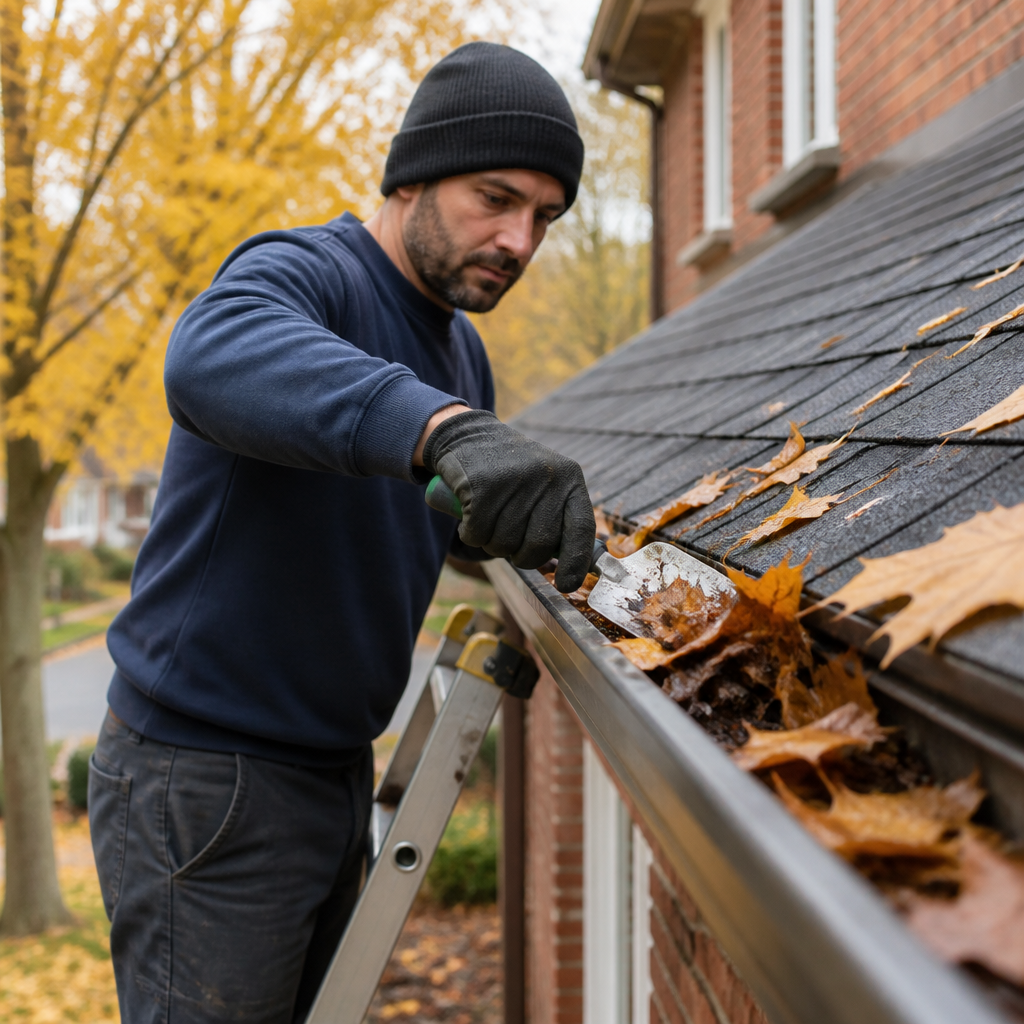
The mistake is treating the holiday as the finish line. Homeowners ask whether they can wait until after Thanksgiving, when the better question is whether the gutters are still catching leaves. A system cleaned in early October can fill again within a few weeks if nearby trees are still dropping, and that second fill is the one that causes overflow in late fall.
The calendar is a reminder, not a measurement
The holiday is useful as a prompt to look up. Once a year, walk the perimeter of your home, look at the trough from the ground, and check the downspout outlets. That five-minute check tells you more than any date on a calendar, because it shows what is actually in the system right now.
In practice, the homeowners who get the timing right are the ones who look first and book second. They do not ask a crew to come on a fixed date. They ask whether the trough is holding leaves, seed, and grit, and they schedule from that answer.
What fall maintenance guidance says and where it stops
Fall checklists generally recommend cleaning gutters in both spring and fall. Lowe’s fall home maintenance checklist notes that gutters should usually be cleaned out in the spring and the fall, and that homes with many trees may need cleaning more often. That is a baseline, not a schedule for a Hamilton lot under mature trees, which often sits outside the baseline from the start.
Pro tip: Take a photo of your trough before and after each cleaning and note the date. After two seasons you will know your property’s real cycle better than any general guide can tell you.
The Timing Most Homeowners Get Wrong
Two errors show up again and again. The first is cleaning too early, while the trees are still dropping and the trough is clear on Tuesday but full again by Friday. The second is waiting for a visible problem, usually an overflow line on the siding or water pouring off the back edge during a heavy rain. Both are avoidable with a short inspection and a realistic booking window.
Cleaning before the leaves finish falling
Early cleaning feels responsible, but it often wastes money. If the job happens before most leaves are down, the crew clears the first layer while the next wave is already on its way. The result is a trough that looks finished for a week and then starts filling again, with the homeowner paying for a clean that did not last.
The better move is to wait until the bulk of leaf drop has happened on your property, then book the clean. Look at your own trees, not your neighbour’s, because the leaves on the next lot may land on your roof, but your lot will tell you when your canopy has finished.
Waiting for overflow to tell you it is time
Overflow is a late warning. By the time water runs over the edge, debris has usually packed into the back of the trough and the first freeze and thaw cycle is already testing your fasteners and seams. Waiting for that sign turns a routine clean into a repair conversation.
A practical rule: if you can see grit, sprouting seeds, or a dark mat of wet leaves in the trough from the ground, the job is overdue. Do not wait for water to show you the problem.
The calendar tells you when to look. The trough tells you when to book.
Pro tip: After your next heavy rain, walk the foundation line and look at the fascia behind the eavestrough. Dark streaks or peeling paint under the trough mean water is leaving the system where it should not.
Signs Your Eavestrough Needs Cleaning Before Winter
Most of the warning signs appear before anything fails completely. Some are visible from the driveway, and others only show up once you know where to look. Catching them in October is far cheaper than dealing with them in January, when the same water is frozen at the edge of the roof.
Overflow marks and staining on siding
Dark vertical streaks below the trough, mud splash on the lower course of siding, and white mineral deposits on brick all suggest water is escaping the system. These marks often start at a single corner or a section where a downspout joins the trough, which is where the debris collects first.
Look at the ground beneath the eavestrough too. A worn bare patch in the soil or a line of splashed grit on the walkway means water is hitting the same spot every storm. That is a drainage problem that a clean will expose, and it is best addressed before the ground freezes.
Downspout blockages that show up after the first freeze
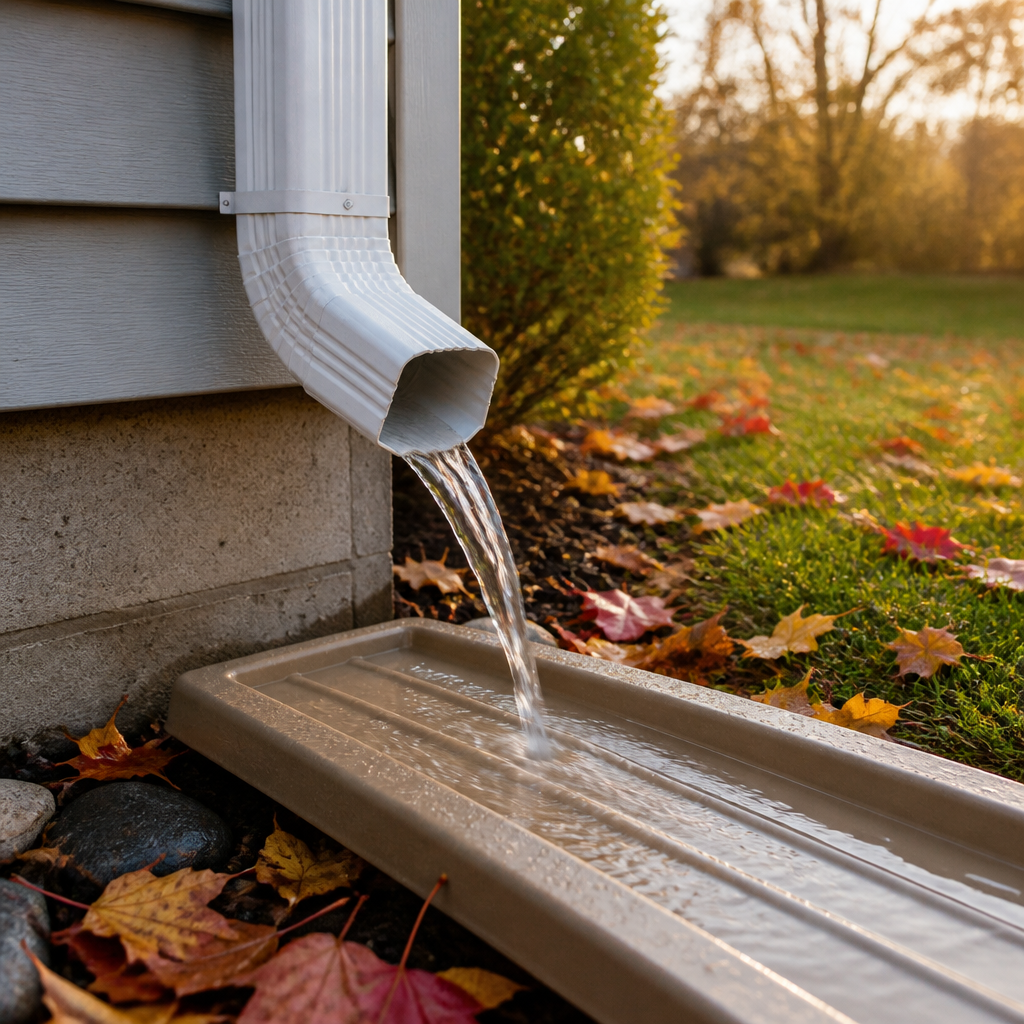
A partially blocked downspout can run fine through a warm October rain and then fail when the weather turns. Water slows where debris sits, then ice forms, and the expanding ice can push seams apart or pull brackets loose. Check the bottom elbows first, because wet leaves and shingle grit settle there and are the hardest pieces to see from above.
In practice, a flush test with a garden hose from the top of each downspout tells you whether the line is clear. If the water backs up or exits slowly at the bottom, the blockage is inside the pipe, and a clean at the trough alone will not fix it.
Hamilton Trees, Leaves, and Your Cleaning Window
The biggest variable in your timing is the tree canopy on your lot, not the holiday and not the neighbourhood. Some properties have one large maple that drops most of its leaves in a short burst. Others have a mix of species that release leaves, seed, and conifer needles over a longer stretch. Your window depends on what is overhead, so read the canopy before you read the calendar.
Homes that sit close to a wooded ravine or a large shared hedge often need a different plan from homes with a single front tree. Debris from those spaces travels across property lines on windy afternoons, and it can land in your trough long after your own trees have finished. Count the whole canopy around the roof line, not only what you planted.
Reading your own canopy
Stand under the eavestrough on a windy afternoon and look up. If branches hang within a few metres of the roof edge, plan on more frequent clearing. Pay attention to which branches are overhanging the lowest section of trough, because that is where debris builds up fastest and where overflow starts.
Do this check twice: once in early autumn and once after the first heavy wind event. Canopy debris does not arrive in a single neat drop, and a second look often reveals a section that filled after the first clean.
Seed, needle, and catkin debris that surprises people
Not all debris is leaves. Seed pods and conifer needles pack into the trough differently, and they can dam water even when the leaves have cleared. Needles in particular form a dense mat that holds moisture and slows drainage, so a leaf-focused clean can miss the real cause of overflow.
Include these in your timing decision. They often arrive after the main leaf rush, which is one reason a clean that looked finished in late October can fail in early November.
Booking Before the Ground Freezes
Late October and early November are busy, and the weather is less cooperative with each passing week. Crews are finishing other exterior work, daylight is shorter, and the first hard frost turns a routine clean into a slower, more careful job. Booking earlier than you think gives you a finished result before the season changes.
The question is not only when the crew can come. It is whether the surfaces will be dry enough, warm enough, and free of ice for the work to be safe and thorough. In this part of Ontario, that window narrows quickly once the mornings start staying below freezing.
Why late-November bookings slip
Once roof edges and ground surfaces are cold and damp, crews must work around frost on ladders and slick shingles. Schedules slip, and the job gets pushed into the next dry stretch, which may come after the first snowfall. A cleaning that was supposed to happen in November can end up waiting until spring.
A common mistake is assuming there will always be another mild week. Some autumns give you one, and some do not. Plan around the cold, not around the hope of a warm spell.
Winter clearing is a different job
Clearing ice from eavestrough requires different equipment and a different approach than fall cleaning. It is rarely a good idea to attempt it on a ladder over frozen ground. In practice, the fall clean should be treated as the final cleaning of the year, and any late-winter ice concerns are best handled by someone with the right tools and the right footing.
Pro tip: Ask for your appointment window in writing and confirm a rain backup date. A single wet week in late October can push a job into November, and a confirmed backup date keeps the work on the calendar.
DIY vs Professional Eavestrough Cleaning
Three approaches come up most often for Hamilton homeowners. Some clean the trough themselves with a scoop and a hose. Others book a professional who hand-clears the trough and runs flush tests on the downspouts. A third group adds a drainage check on top of that, looking at grade and splash patterns around the foundation. Each has a clear use case and a clear risk.
| Approach | Best For | Main Risk |
|---|---|---|
| DIY ladder cleaning with a scoop and garden hose | Single-storey homes with low, accessible eavestrough and few overhanging trees | Ladder falls, and missed downspout blockages that only show up after a freeze |
| Professional hand clearing with downspout flush testing | Two-storey homes, heavy tree cover, and any property that has already overflowed | Scheduling pressure in busy weeks, and the cost of booking a crew each season |
| Professional clean with drainage and grade check | Properties with basement water history, splash staining, or sloped grades near the foundation | Paying for extra checks on a newer home with a clean, well-graded lot that does not need them |
Where DIY works and where it fails
DIY cleaning is reasonable for a single-storey home with low, accessible eavestrough and few trees. A scoop, a bucket, and a hose are enough to clear loose leaves. The problem is that most homeowners stop at the trough and never test the downspouts, so the blockage they missed is the one that fails in January.
The bigger issue is ladder safety. Working alone on a ladder near the roof edge, especially after rain or on a windy day, is where injuries happen. If you do it yourself, work on dry days, keep the ladder on firm ground, and never lean out past the rails.
What a flush test tells you that a scoop cannot
A scoop removes what you can see. A flush test shows what you cannot. Running water from the top of each downspout reveals whether the pipe is clear, whether a seam is leaking, and whether the outlet drains freely at the bottom. It is the single most useful check for predicting a winter failure.
In practice, a flush test takes minutes and often finds problems that a visual inspection misses. It is worth requesting even if you choose to clean the trough yourself.
Bundling Fall Exterior Services
Eavestrough cleaning works best as part of a sequence. Clearing the gutters first keeps debris from washing onto freshly cleaned windows, siding, and walkways. When the work is ordered correctly, each job protects the next one, and the property looks finished at the end of the day rather than partially done.
The sequence: eavestrough, then windows, then surfaces
Clean the eavestrough first, then the exterior window glass, then power wash driveways, decks, and walkways. Runoff from the roof carries grit and organic material onto lower surfaces, so cleaning those first wastes effort. The same logic applies to window sills and screens, which should be cleaned after the roof work is done.
A common mistake is booking a power wash and an eavestrough clean on the same day in the wrong order. The result is a driveway that looks clean in the morning and dirty by evening, which is frustrating for the homeowner and avoidable with a simple plan.

Spider, web, and insect control before the cold
Spider webs, wasp nests, and insect residue collect in eavestrough corners, window tracks, and screen frames in autumn. Removing webs and treating entry points before the cold sets in reduces the amount of indoor cleaning you will do in winter. It also gives pests fewer sheltered spots to settle.
Tick and mosquito control is a different job with different timing, usually planned around the warm season. Do not mix those expectations into the fall eavestrough visit. Keep the fall visit focused on webs, residue, and the debris that the season leaves behind.
Pro tip: Bundle the eavestrough clean with a window track and screen check, since the crew is already on site. Damaged screens and clogged tracks are much easier to fix in October than after the first hard freeze.
Frequently Asked Questions
Is Thanksgiving the best time for eavestrough cleaning in Hamilton?
No. Thanksgiving is a useful reminder to inspect your property, but the date moves each year and does not reflect when your trees have finished dropping leaves. Book based on what is in the trough, not on the holiday.
How often should eavestrough be cleaned in Hamilton if I have mature trees?
The baseline advice is to clean in spring and fall, with more frequent cleaning for homes with many trees. In practice, a heavy canopy often means a check after every major wind event during autumn, plus a full clean once the main leaf drop is finished.
Can I clean my eavestrough myself safely?
Yes, if the home is single-storey, the eavestrough is accessible from firm ground, and you work on a dry day with a stable ladder. Do not lean out past the rails, and do not work alone near the roof edge after rain. Always flush the downspouts afterward, because a visual check alone misses the blockages that cause winter failures.
What happens if I wait until after the first snow to clean my eavestrough?
The job often gets pushed into a later dry stretch, and the debris that was left in the trough freezes in place. Water that cannot drain can push seams apart and cause ice to form at the edge. The fix is usually more expensive and less thorough than a fall clean.
Do gutter guards mean I can skip eavestrough cleaning?
Guards reduce the amount of debris that reaches the trough, but they do not eliminate the need to inspect the system. Seeds, needles, and fine grit can still build up on top of a guard, and downspouts can clog below it. Plan on at least an annual check and a flush test.
Have you noticed your eavestrough filling faster than the calendar suggested, and what did you change to fix it? Share your experience so other Hamilton homeowners can learn from it.