
Every fall, the same thing happens on residential streets across Mississauga. The trees look stunning for a few weeks, then the leaves start coming down faster than anyone can rake them, and the eavestrough fills up before the first frost. If you are searching for eavestrough cleaning Mississauga fall service, you are probably dealing with water spilling over the edge of the roof, staining on siding, or a trough that sags under wet debris. This guide explains why neighborhood trees fill gutters so quickly, what that debris does once it gets inside, and when to book a cleaning so the job holds through winter.
Table of Contents
- Quick Takeaways
- Why Mississauga Trees Overwhelm Eavestrough
- How Leaf Debris Forms Clogs
- Tree Debris Beyond Leaves
- October Timing for Eavestrough Cleaning
- DIY Versus Professional Eavestrough Cleaning
- Downspouts and Winter Damage
- Bugs and Spider Nests in Gutters
- Frequently Asked Questions
- References
Quick Takeaways
| Key Insight | Explanation |
|---|---|
| Leaf drop lasts for weeks | Trees rarely drop everything at once, so a single cleaning in early fall seldom lasts the season. Plan for the main drop in October and a check afterward. |
| Wet debris causes the overflow | Dry leaves blow out of a clean trough. Wet, compacted leaves stick, block water flow, and push water over the front edge. |
| Seeds and needles count too | Maple samaras, seed pods, and conifer needles pack into the same channel and hold moisture even after the leaves are gone. |
| Check the downspouts, not just the trough | A clear trough with a jammed downspout still overflows. Confirm water exits the bottom of each downspout freely. |
| Clear before the first hard freeze | Water trapped in debris freezes at the roof edge and builds ice dams. Clearing the system before sustained cold removes that risk. |
| Look for webs and nests during the visit | Spiders, wasps, and mosquitoes use clogged gutters in the same warm months. One visit can cover debris, flow, and pest activity. |
Why Mississauga Trees Overwhelm Eavestrough
Ask most homeowners why their eavestrough fills up and they will blame the leaves. That is only part of the story. A mature deciduous tree hanging over a roofline sends debris straight into the trough, and the gutter becomes the collection point for everything the tree drops across the season.
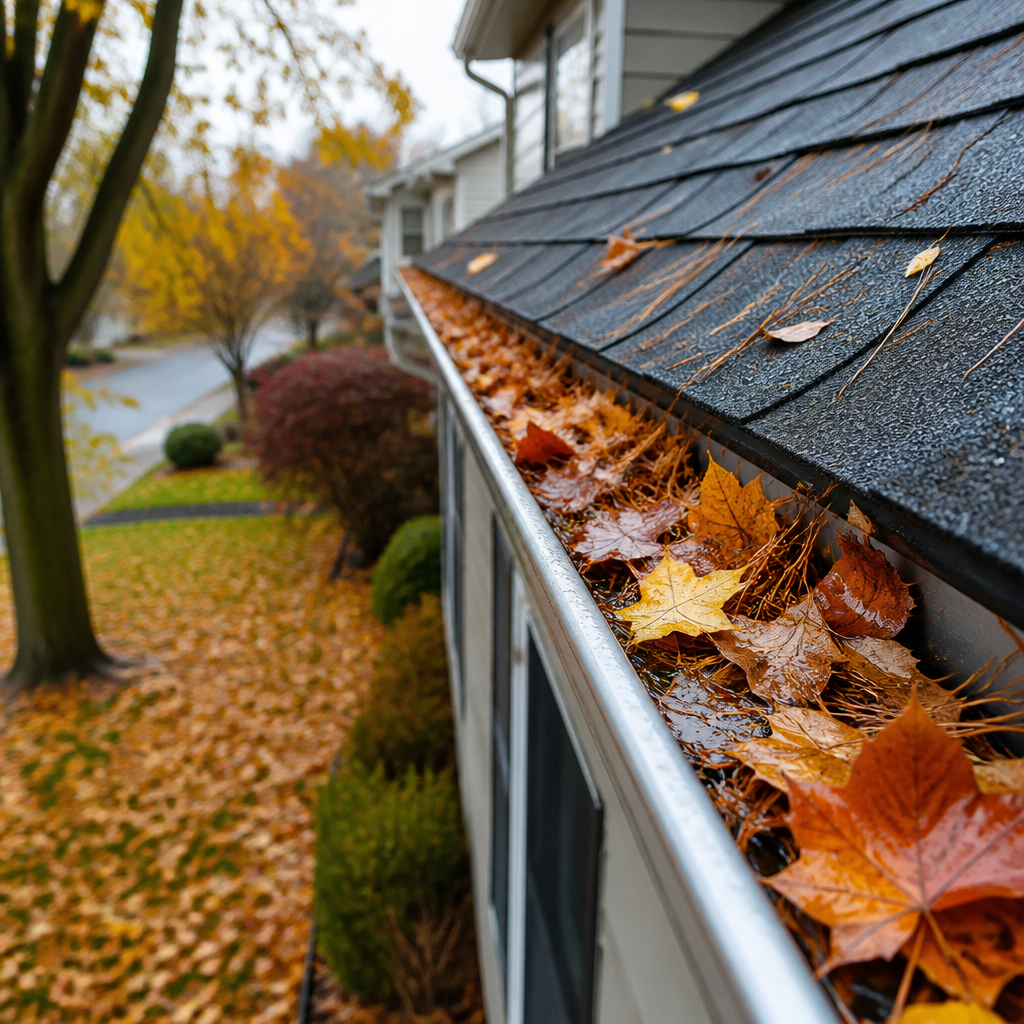
The volume depends on where the tree sits relative to the house. A canopy that reaches over the roof fills the gutter directly, while a tree set back in the yard mostly drops debris onto the shingles. Wind then pushes that debris over the edge over the next few days, so the gutter receives it in batches rather than all at once.
Canopy Position Decides the Load
Check the overlap before you check the gutter. If branches sit close to the roof edge, that side of the house will need more frequent cleaning than the rest. We usually walk the perimeter first and mark the runs under the heaviest canopy, because those are the ones that overflow first.
Why Wind Matters as Much as Tree Count
Two houses on the same street can have very different gutters. The house downwind of a large maple gets most of its debris during autumn windstorms, while the house across the street may stay clean all season. Wind direction tells you more about a gutter’s workload than the number of trees in the yard.
Debris does not land in gutters evenly. It collects where the roofline, the prevailing wind, and the tree line meet, which is why one side of a house usually needs more attention than the other.
How Leaf Debris Forms Clogs
A clog rarely starts with a big obstruction. It starts with a thin mat of wet leaves across the bottom of the trough, which catches the next layer, and the next, until the channel is packed solid. A roofing company’s guide to fall gutter preparation describes the same mechanism, noting that wet leaves compact into dense masses that completely block water flow.
Once the trough holds wet organic matter, that material stays damp against the fascia board for weeks. It breaks down, it draws insects, and it adds weight. Hangers that handled a clean gutter without trouble can start to pull away under a saturated load, especially on older runs.
The Wet Mat Problem
Dry leaves blow out of a clean gutter in a stiff breeze. Wet leaves do not. A cleaning done after a few days of rain tends to hold better than one done in a dry spell, but only if the crew removes the sludge from the bottom of the trough instead of just pulling the top layer.
Sagging Hangers and Fascia Rot
Look at the fascia board directly behind the trough. Dark staining, soft wood, or a gutter line that dips between hangers are signs that debris has sat long enough to cause real damage. Clean the trough, then tighten or replace the hangers before the first cold snap adds ice to the load.
Tree Debris Beyond Leaves
Leaves get most of the attention, but they are not the only thing that ends up in the trough. Pine needles, twigs, seed pods, and acorns travel the same route, and each one behaves differently once it gets wet.
Needles, Grit, and Sediment
Conifer needles knit together into a mat that sheds water poorly. Fine grit from shingles and bark settles into that mat, so a gutter can look half full of needles when it is really packed with a dense layer of sediment underneath.
Samaras, Seed Pods, and Blossoms
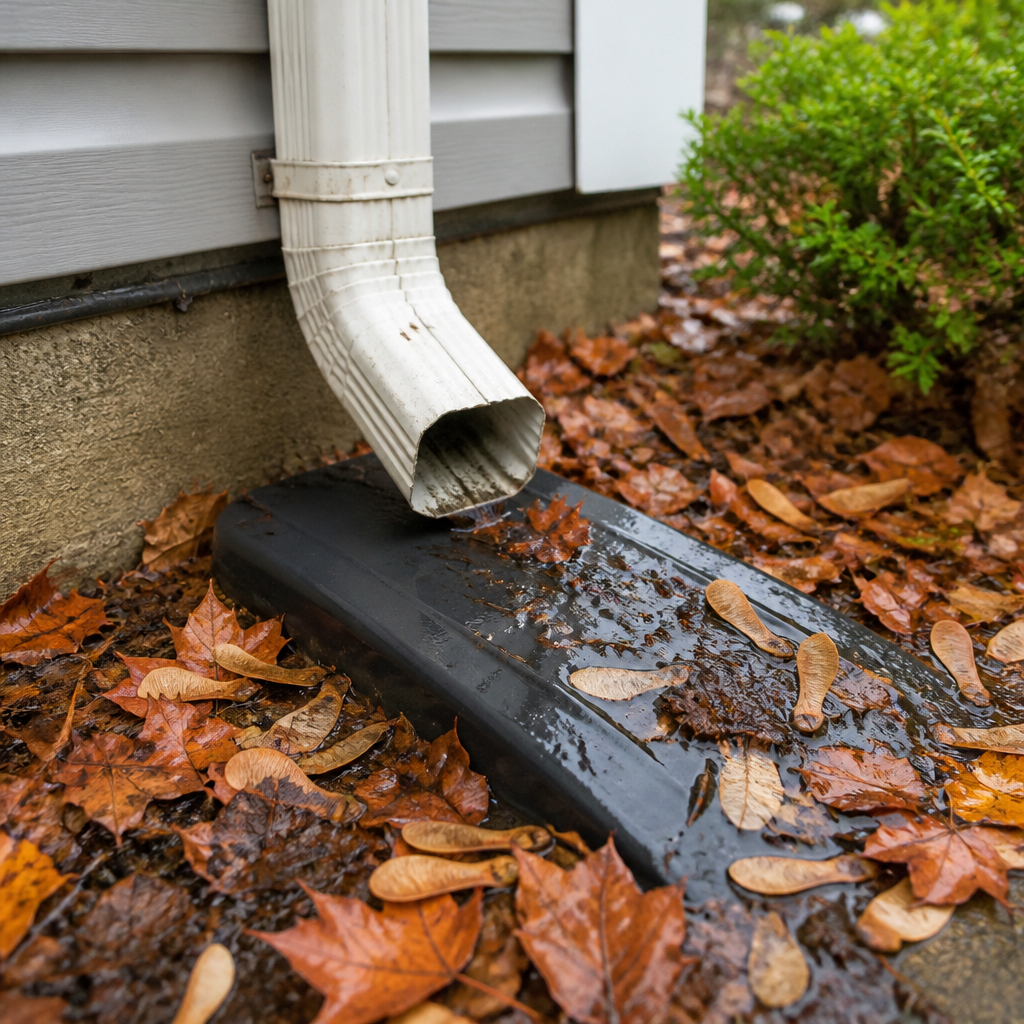
Maple samaras, the winged seeds that spin down like helicopters, slide into the downspout and jam at the first elbow. Scooping from the top does nothing for that. The fix is to clear the downspout from the bottom and confirm water exits the outlet freely.
Pro tip: After cleaning, run a hose into the trough and watch the downspout outlet. If the flow slows to a dribble, or water comes back out at a joint, the blockage sits below the elbow and needs a second pass.
October Timing for Eavestrough Cleaning
With October well underway, most Mississauga lots are somewhere in the middle of their leaf fall. Cleaning too early means the trough refills within weeks. Cleaning too late means the wet mat has already sat against the fascia through several rain events. The sweet spot for a single visit is after the bulk of the leaves are down and before the first hard freeze.
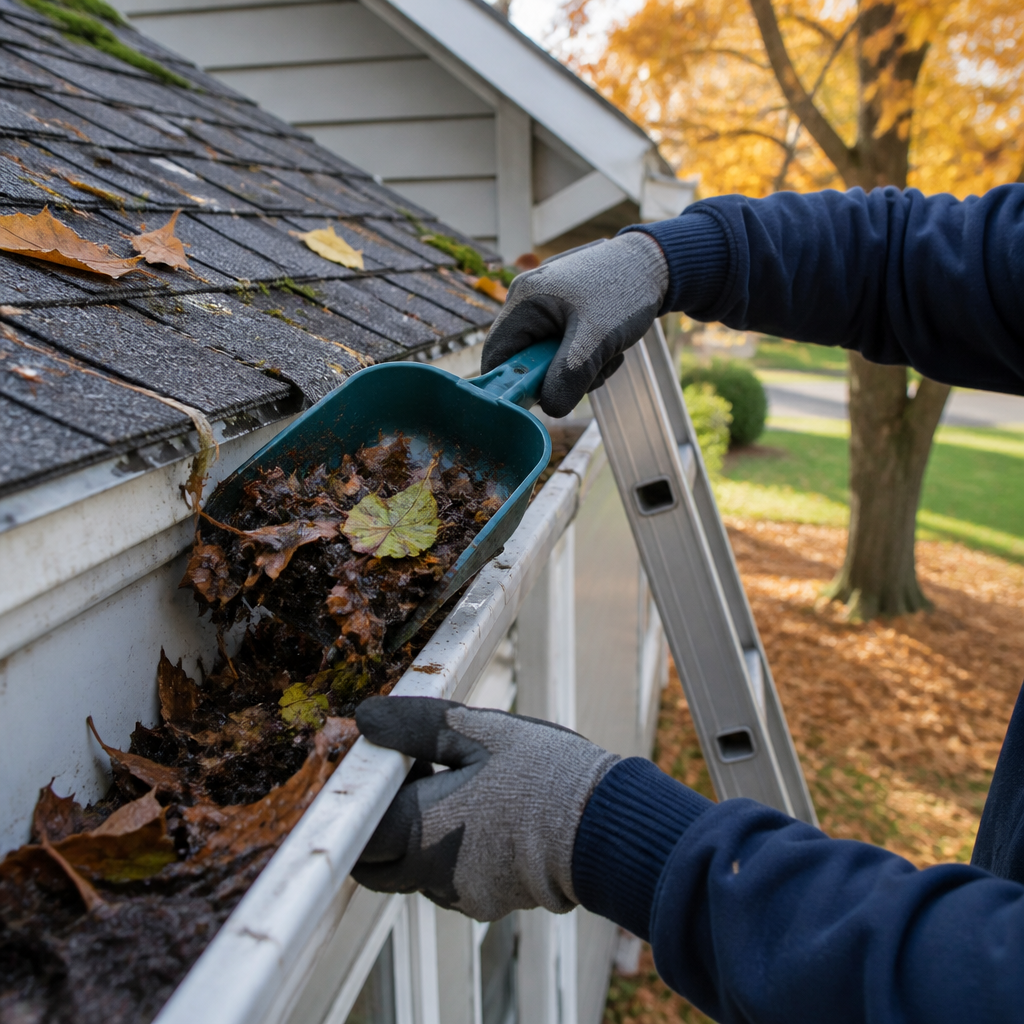
Why Mid-October Often Needs Two Visits
On a tree-heavy property, one cleaning rarely covers the whole season. The first visit clears the main drop, and a second check a few weeks later catches the leaves that were still hanging on the branches. For lots with heavy canopy, booking both visits in the same fall keeps the trough clear through the first winter storms.
Clearing Before the First Hard Freeze
Standing water in a clogged trough freezes at the edge of the roof, and ice then builds up behind the gutter line. The rule we follow is simple: the trough should be clear and the downspouts flowing before the ground stays frozen for more than a day or two. Waiting until after the first big snowfall means clearing ice and wet debris at the same time, which is slower and harder on the gutter.
Pro tip: If you can only book one visit this fall, schedule it after most leaves have dropped, not on the first day the trees change colour. Early cleaning on a tree-heavy lot almost always needs a follow-up.
DIY Versus Professional Eavestrough Cleaning
Many homeowners clean their own gutters, and for a single-storey run with few trees, that can be a reasonable choice. The trouble is that most DIY cleanings stop at the top of the debris pile. The sludge at the bottom of the trough, the packed downspout elbow, and the loose hanger all stay where they are until the next storm.
The table below compares the common approaches we see on residential lots. None of them is useless, but each one leaves something behind.
| Approach | What It Does Well | Where It Falls Short |
|---|---|---|
| Ladder and hand scooping | Low cost and no booking needed | Leaves wet sludge in the trough, rarely clears downspouts, and carries fall risk on wet ground |
| Hose flushing only | Quick, and clears loose debris fast | Pushes wet mat into downspout elbows and can miss packed corners |
| Professional cleaning with hand clearing and flow checks | Removes sludge, confirms downspout flow, and flags loose hangers | Costs more per visit and usually needs booking ahead during peak weeks |
| Gutter guards added after cleaning | Cuts down on re-clogging from needles and seed pods | Does not remove existing debris, and can hide early fascia damage |
If you book a professional visit, ask whether the crew flushes each downspout and checks the outflow. That check tells you more than how clean the trough looks when they leave. You can start planning with our eavestrough cleaning service.
Downspouts and Winter Damage
The downspout is where a gutter problem becomes a foundation problem. A trough can look clean from the ground while the outlet at the bottom dribbles because wet leaves are packed into the elbow. Water that cannot exit the system backs up, spills over the front edge, and runs down the wall toward the foundation.
Where the Water Should End Up
Downspouts should discharge well away from the foundation, onto a surface that carries water away from the house. Extensions that dump water at the base of the wall undo much of the good work from cleaning. Check the extension after every visit, since soil settles and extensions shift over time.
Ice Dams and Freeze-Thaw Cycles
Ontario winters swing above and below freezing repeatedly, and that repeated thaw is what makes ice dams form. Melt water runs down the roof, refreezes at the cold roof edge, and builds a ridge that holds more water back. A clean trough and free-flowing downspouts keep meltwater moving, which is the simplest defence most homes have.
Bugs and Spider Nests in Gutters
Gutters are sheltered, dark, and close to the eaves, which makes them an easy spot for spiders and wasps to set up. Once the trough holds still water, mosquitoes can use it too. Pest activity often shows up in the same weeks as heavy leaf fall, so the two problems usually need to be handled together.
Webs, Nests, and What to Look For
Look along the inside of the trough and under the fascia for web sheeting, paper nests, and egg cases. A gutter with dense webbing usually holds moisture, which keeps the pest cycle going. Removing the webs and debris in one pass is faster than dealing with each problem separately.
Standing Water and Mosquito Control
Still water in a clogged gutter is a breeding site, and the problem gets worse after a long dry spell followed by heavy rain. Clearing the trough and making sure water moves through the downspouts removes that habitat. We also offer tick and mosquito control, but clearing standing water is the first step in cutting down the insects that the gutter attracts.
Frequently Asked Questions
How often should eavestrough be cleaned in Mississauga?
For homes with mature trees nearby, plan on at least two cleanings a year, one in late fall and one in spring. Properties with heavy canopy over the roof may need a mid-season check as well. A house with no trees within reach of the roofline can often go longer between visits.
When is the best time for eavestrough cleaning in Mississauga in the fall?
Aim for the period after most leaves have dropped and before the first hard freeze, which for many lots lands in late October or November. Booking too early means the trough refills before winter. Booking too late means ice and wet debris are mixed together.
Can I clean my gutters myself?
You can, especially on a single-storey run with few trees. Work from a stable ladder, avoid wet ground, and clear the bottom of the trough as well as the top. Flush each downspout and watch the outlet to confirm the water runs freely before you put the ladder away.
Do gutter guards stop tree debris completely?
No. Guards reduce the amount of leaves and needles that enter the trough, but fine grit and seed material can still build up on top of them. Guards also do not remove debris already in the system, so clean the gutters first and then decide whether guards are worth the cost for your property.
Why does one side of my house fill faster than the other?
Canopy position and wind exposure drive most of the difference. The side with branches close to the roof edge, or the side downwind of the largest trees, collects the most debris. Focus your checks on those runs first, especially after windy weeks.
Does eavestrough cleaning also deal with pests?
Cleaning removes the wet debris and standing water that attract spiders, wasps, and mosquitoes, which reduces the habitat. Webs and nests still need to be removed directly. Some providers combine both steps in one visit, which saves time on lots where pest activity appears alongside leaf fall.
Has one side of your home been filling faster than the rest this fall, and what does the tree line look like from your back step?