
Most Niagara Falls homeowners only think about their eavestroughs when water starts pouring over the edge during a storm. By then, the damage has usually started. Leaves, seed pods and grit that settle over the fall turn into a dense, wet mat, and when lake-effect precipitation arrives with little warning, that mat can push water behind the fascia and into the soffit. Eavestrough cleaning in Niagara Falls pays off most in the few weeks before the first heavy rain, while the job is still easy and the results still show. Here is what we check, what we clear, and where people usually go wrong.
Table of Contents
- Quick Takeaways
- Why Fall Is the Right Time to Clean Eavestroughs in Niagara Falls
- How Lake-Effect Weather Exposes Clogged Gutters
- Step-by-Step Eavestrough Cleaning Before the First Heavy Rain
- DIY, Ladder Work, or Professional Service
- Downspouts, Splash Blocks and Grading at the Foundation
- Sealing Small Leaks and Checking Brackets Before Snow
- Fascia, Soffit and Window Sills After Gutter Work
- Frequently Asked Questions
- References
Quick Takeaways
| Key Insight | Explanation |
|---|---|
| Clean before the last leaves fall | A clean system in mid-October handles the first wet weeks far better than a spotless one in late November, and you only climb the ladder once. |
| Partial clogs fail under sudden volume | A trough that drains light rain fine can overflow in an hour when a heavy band of lake-effect precipitation passes through. |
| Test the flow from the top | Running water into the high end shows whether the whole run and downspout are clear. A clear outlet at the bottom alone proves very little. |
| Downspout outlets must clear the foundation | Water dumped right at the wall saturates the soil beside your basement. A downspout extension moves it several feet away. |
| Seal small leaks before the first freeze | Gaps at joints widen with freeze-thaw cycles. A small bead of approved sealant now is far cheaper than replacing a section later. |
| Check brackets for sag | Loose brackets let the trough dip, which pools water and debris in one spot and pulls on the fascia. |
Why Fall Is the Right Time to Clean Eavestroughs in Niagara Falls
Fall is when eavestroughs do the most work and get the least attention. Deciduous trees drop their leaves over a few weeks, and the debris washes into the troughs with every rain. A system that looked clean in August can be packed with wet leaves by mid-October, and wet organic material holds water and gets heavier the longer it sits.
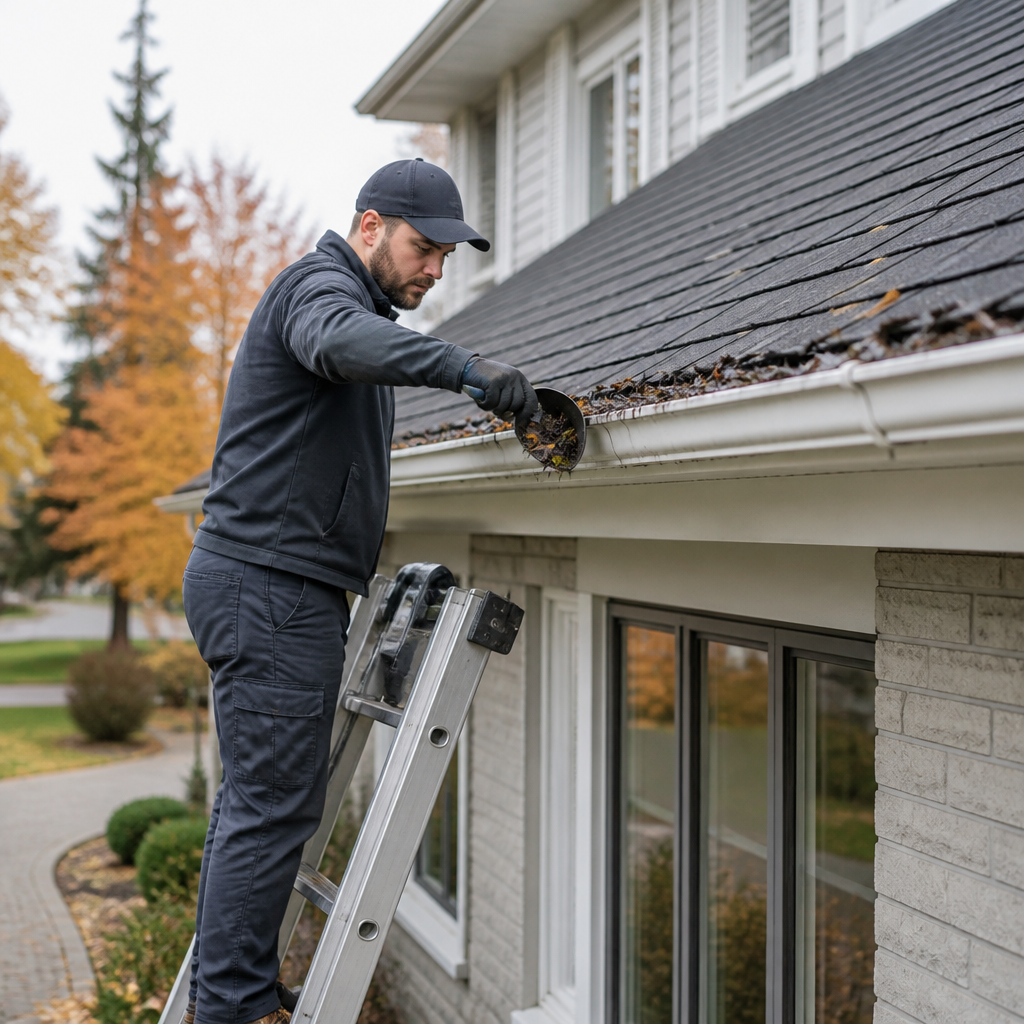
In practice, the problem is rarely visible from the driveway. The front of the trough looks fine, but a closer look at the back section, where the leaves wash to and stall, usually shows a dark, compacted layer of litter. That layer holds moisture against the fascia and gives seedlings a place to take root.
Why Timing Matters More Than Thoroughness
A rushed clean in early October is worth more than a perfect clean in November. The first heavy rains of the season often arrive before the last leaves have come down, so the troughs need to be ready for water while debris is still falling. Waiting for the tree to finish is the most common mistake we see.
Plan on a second pass only if the trees on your lot are heavy. For most residential properties, one thorough clean in the window between the first major leaf drop and the first cold snap covers the job.
What a Typical Trough Collects
Leaves are only part of the load. Seed pods, twigs, shingle grit from the roof, and fine sediment all end up in the same channel. Grit is the sneakiest of these because it looks harmless but packs down into a cement-like layer that water does not move through easily.
How Lake-Effect Weather Exposes Clogged Gutters
Lake-effect precipitation forms when cold air moves across open water, picks up moisture, and drops it on land downwind. The result can be short, intense bursts of rain or snow that are hard to predict in detail. When that happens over Niagara Falls, the practical question for your home is whether your eavestroughs can move the water away fast enough.
A system that copes with steady rain may fail in a burst. Water arrives faster than the downspouts can carry it, the trough fills, and the excess spills over the front lip. Many homeowners mistake this for normal runoff because it happens at the edge of the roof, not inside the house.
Sudden Volume Overwhelms Partial Blockages
A trough with a thin layer of debris can look almost clear from the ground. Under light rain, the water still finds its way to the outlet. Under a heavy burst, the same trough backs up, and the water runs behind the gutter where you cannot see it.
This is why a partial clog is more dangerous than a full one in some ways. A fully blocked trough is obvious. A half-blocked trough behaves perfectly until the weather changes.
Freeze-Thaw Turns Small Problems Into Big Ones
Water that stays in a sagging section freezes, expands, and works joints and seams apart over the winter. A leak that was a few drops in October becomes a steady drip by February. Clearing debris and sealing small gaps before the first freeze keeps this cycle from starting.
Step-by-Step Eavestrough Cleaning Before the First Heavy Rain
Our approach follows a fixed order because each step makes the next one easier. Clear the bulk debris first, then test the flow, then check the outlets. Skipping straight to the hose is the fastest way to create a new clog in a downspout.
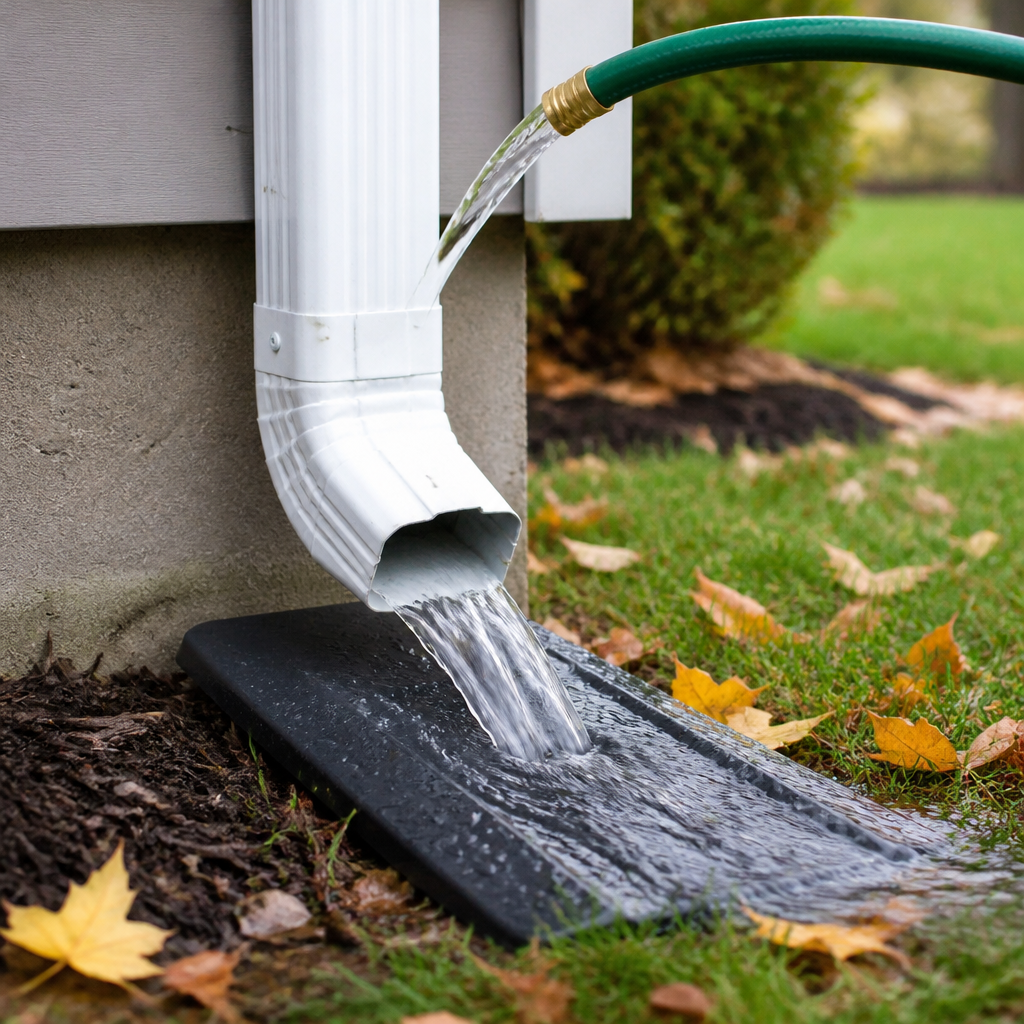
Clear the Debris by Hand First
Start by removing leaves, seed pods and grit with gloves, working from the low end of each run toward the downspout. Scoop the material into a bag or bucket instead of flushing it. Flushing sends loose debris into the downspout, where it wedges at the first elbow.
Pay attention to the corners and the spots directly above downspout openings, since that is where material collects. Gently wipe the inside of the trough once the bulk is gone so the remaining grit does not hold water.
Flush From the Top to Prove the Flow
Once the trough is clear, run a hose from the high end and watch the outlet at the bottom of the downspout. The water should exit in a steady stream without gurgling or backing up. A slow exit or water rising at the elbow means the clog is inside the downspout.
Pro tip: Put the hose in the downspout from the top and watch the outlet. If the water comes out steadily at the bottom, the run is clear. If it gurgles, backs up at the elbow, or takes noticeably longer to exit, the blockage is in the downspout, so the trough cleaning alone will not fix it.
If you book with our gutter and eavestrough cleaning team, this flow test is part of the visit, and any downspout that fails it gets opened and cleared before we leave.
DIY, Ladder Work, or Professional Service
Most homeowners can clean a single-storey trough with a ladder, a scoop and a hose. The question is whether the job is worth the risk, the time, and the follow-up. The table below compares the three approaches we see most often on Niagara Falls homes.
| Approach | Where It Works Well | Where It Falls Short |
|---|---|---|
| DIY with a ladder, scoop and hose | Low, single-storey runs with easy access and a light, recent leaf load. | Two-storey roofs, steep pitches, and any job where you cannot safely reach the back of the trough. Flushing alone often misses the downspout clog. |
| Hose-only flushing | Quick checks between cleanings to confirm the outlets still drain. | Packs debris into downspouts and hides problems in the trough. Does not remove grit or sediment. |
| Professional cleaning with flow testing and inspection | Full clearing by hand, flow test from the top, outlet checks, and a visual inspection of joints and brackets. | Costs more than a single DIY afternoon, and you still need to schedule it ahead of the rain. |
Ladder Safety on Two-Storey Homes
Two-storey homes are where most DIY gutter work goes wrong. A ladder placed on uneven ground, leaned against a trough, or extended without a stable footing is a real fall risk. If the roof is steep or wet, we recommend letting a crew with the right equipment handle it.
Many homeowners also underestimate how much weight a full trough adds to a ladder. Working from the ground with a telescoping tool can reach part of the run, but it rarely clears the back section properly.
When a Quick Check Is Enough
If your home is single-storey, has few trees overhead, and your troughs were cleaned in the spring, a careful DIY clean with a hose-flow test may be enough. The rule we give homeowners is simple: if you cannot see the back of the trough from a safe position, you have not inspected it yet.
Downspouts, Splash Blocks and Grading at the Foundation
A clean trough is only half the job. Once the water reaches the downspout, it has to go somewhere that does not damage your home. Where the water exits matters as much as how fast it moves.
Where Downspout Water Should End Up
Water discharged right at the foundation wall soaks the soil next to the basement. Over a heavy rain, that saturated soil puts pressure on the wall and can find its way through cracks. A downspout extension carries the water several feet away, where it can soak into the lawn instead.
In practice, check where the outlet points after every cleaning. Downspouts that were knocked during a storm or repositioned during a repair often end up aimed back at the wall.
Splash Blocks Versus Extensions
Splash blocks are better than nothing, but many are set too close to the wall. In a heavy burst, the water runs back toward the foundation before it soaks in. A solid extension that discharges well away from the house does the job more reliably.
Where the lot slopes toward the house, no downspout fix will fully solve the problem. In those cases, the grading itself needs attention, and we flag it during the inspection rather than promising a fix we cannot deliver.
Sealing Small Leaks and Checking Brackets Before Snow
Small leaks are the cheapest problems to fix and the easiest to ignore. A seam that drips only during heavy rain looks like a minor annoyance until it has been dripping for a whole winter. Manufacturer guidance on cleaning and post-cleaning care is clear that small leaks should be sealed promptly so they do not expand.
A leak you can cover with your thumb in October is a repair you can finish in an afternoon. The same leak in January often means a section has to come off the wall.
Seal the Leak While It Is Small
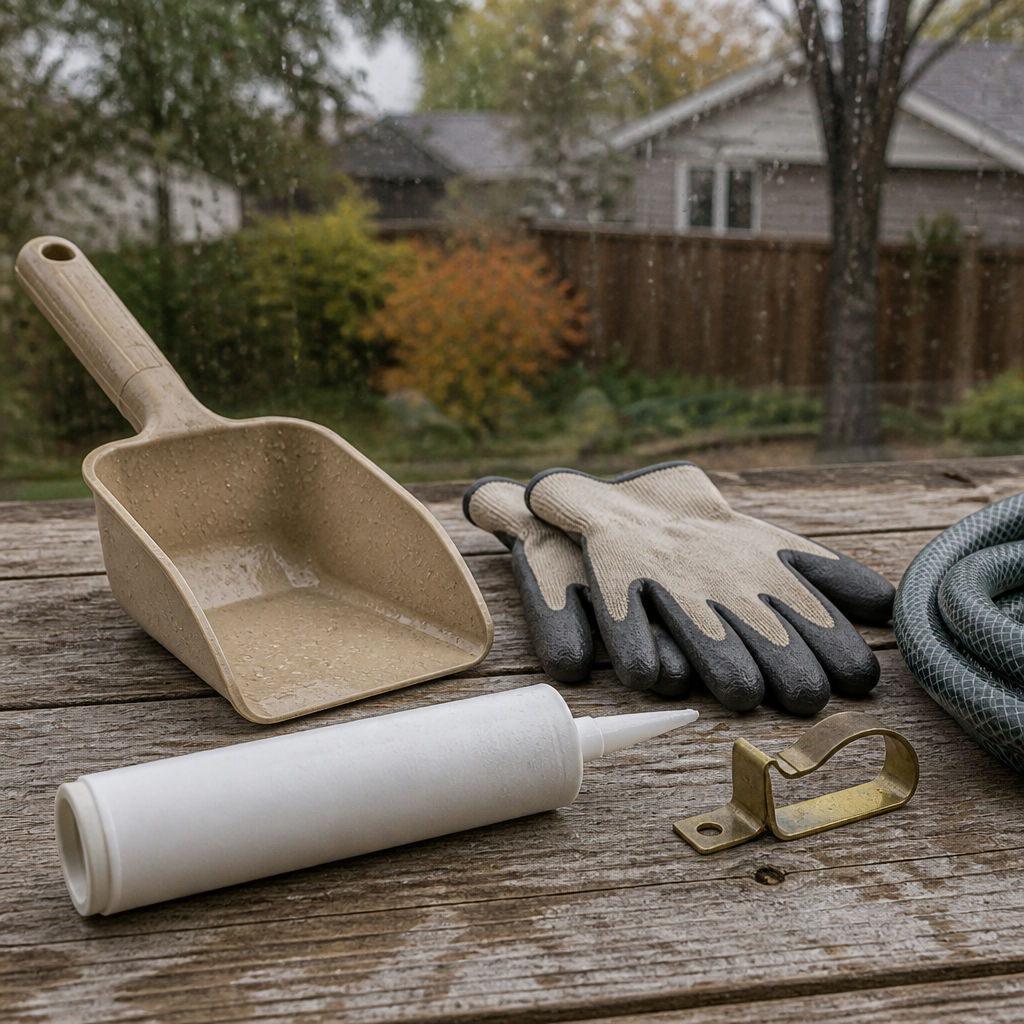
Dry the joint completely before applying any sealant. Wet surfaces cause the bead to fail within a season, and a bead that peels is worse than none because it traps water underneath. Use a gutter sealant approved for the material of your trough, and apply it in a thin, even layer across the seam.
Do not seal over a joint that is actively moving or pulling apart. That usually signals a bracket or support problem, and the sealant will just crack.
Brackets and Sag Checks
Walk along the trough and look for dips, especially between brackets and near downspouts. A sag of even a small amount is enough to hold water in one spot. Loose brackets should be tightened or replaced before the first freeze, when the weight of ice and standing water can pull sections away from the fascia.
Pro tip: Mark any sag with a pencil line on the fascia after cleaning. Recheck it after the first heavy rain. If the water line moves toward the low point, the trough needs a new bracket or a slope correction, not just more sealant.
Fascia, Soffit and Window Sills After Gutter Work
The trough is the most visible part of the system, but the fascia and soffit behind it are where water damage hides. Once you have cleared the gutters, it is worth looking at what was behind them for the last few months.
Fascia Staining as an Early Warning
Dark streaks or soft, flaking paint on the fascia usually mean water has been running down the wall behind the trough. Staining under a joint suggests a leak that has been active for some time. Both are signs that the eavestrough is not carrying water the way it should.
Look for these marks on the same side of the house as your lowest downspout, since water that exits badly tends to show up there first.
Scheduling Gutter Work With Window Cleaning
Debris from the trough often lands on window sills, screens and the lower part of the exterior glass, especially on the side of the house closest to the trees. We often clean sills and screens in the same visit, so the exterior is handled in one pass. It is simpler to do this before the first heavy rain than to scrub mineral and grit stains off the glass afterward.
Frequently Asked Questions
How often should eavestroughs be cleaned in Niagara Falls?
For most homes, a cleaning in the fall and another in the spring covers the seasons that matter. Homes with many trees overhead may need a third visit in late autumn, while homes with few trees may only need the fall clean.
Is gutter cleaning in Niagara Falls worth doing if the troughs look clear?
Yes, because the troughs can look clear from the ground while the back sections and downspouts still hold debris. A flow test from the top is the only reliable way to confirm the system will carry a heavy burst of rain.
Can I clean my eavestroughs myself safely?
You can clean a single-storey trough with a stable ladder, a scoop and a hose if the roof is low and dry. Two-storey homes, steep roofs and wet conditions are better handled by a crew with the right equipment and fall protection.
What is the difference between gutter cleaning and eavestrough cleaning?
The two terms describe the same system in most cases. In our work, eavestrough cleaning includes the trough, the downspouts, the outlets and a check of the brackets and joints, not just the removal of leaves.
Do gutter guards mean I can skip cleaning?
Guards reduce the amount of debris that enters the trough, but they do not eliminate it. Fine grit and seed material can still pass through, and guards can hide a developing sag or leak. Plan on inspection even with guards installed.
Do you check the downspouts and outlets as well as the troughs?
Yes. A clean trough does not guarantee a clear downspout, so every visit includes a flow test from the top and a check of where the outlet discharges. Any problem we find is explained before we leave.
Have you noticed water spilling over your eavestrough during a storm this fall, and what did you see at the corners or downspouts? Share your experience with us so we can learn what other Niagara Falls homeowners are dealing with.