
If you own a home near the Niagara Escarpment in St. Catharines, your eavestroughs are working harder than almost any other gutter system in Ontario. The combination of the Escarpment’s dense forest canopy, the Lake Ontario microclimate, and wind patterns that sweep debris off the ridge and directly into residential gutter runs means that eavestrough cleaning St. Catharines is not a once-a-year task you can schedule and forget. Neighbourhoods along Twelve Mile Creek and the Escarpment brow can see gutters fill completely within days of a single October wind event. Understanding why that happens is the first step to protecting your home before freeze-up.
Table of Contents
- Quick Takeaways
- Why Debris Builds Faster Near the Escarpment
- Tree Species Driving the Problem in St. Catharines
- Neighbourhood Risk Zones: Where Gutters Fill First
- What Clogged Eavestroughs Actually Do to a Home
- Fall Eavestrough Maintenance Schedule for St. Catharines
- Comparison of Cleaning Approaches
- Frequently Asked Questions
- References
Quick Takeaways
| Key Insight | Explanation |
|---|---|
| The Escarpment amplifies debris load | The ridge acts as a barrier that funnels prevailing winds and sheds leaf debris downslope into residential areas below, accelerating eavestrough fill rates compared to flat urban neighbourhoods. |
| Twice-yearly cleaning is the floor, not the ceiling | Homes near the Escarpment forest edge or the Twelve Mile Creek ravine corridor typically need three to four cleanings per year to stay ahead of compacted debris. |
| Sugar maples are the biggest culprit in fall | Ontario’s provincial tree dominates the Escarpment’s mixed forest and produces dense, wet leaf mats that compact into gutters and block downspouts faster than any other common species. |
| Ice dams follow blocked gutters in winter | Debris left in eavestroughs before freeze-up traps water that cannot drain, leading to ice dam formation that forces water back under shingles and into fascia boards. |
| Downspout blockages are the hidden failure point | Flushing the gutter trough is not enough. Downspouts packed with compressed leaf mats from upstream Escarpment debris must be cleared separately to restore proper drainage. |
| Late October to mid-November is the critical window | Cleaning after the bulk of leaves have fallen but before the first hard freeze is the single most valuable maintenance action a St. Catharines homeowner can take each year. |
| Foundation and fascia damage accumulate silently | Overflowing eavestroughs direct water toward the home’s foundation and saturate fascia boards over multiple seasons before visible rot or cracking becomes apparent. |
Why Debris Builds Faster Near the Escarpment
The Niagara Escarpment runs along the Niagara Peninsula hugging close to the Lake Ontario shore, passing directly through St. Catharines. That geological ridge is not just a scenic backdrop. It is a forested wall that intercepts prevailing southwesterly winds, concentrates them, and then releases leaf and twig debris in volume across the residential streets that sit on or below the brow.
In practice, this creates a debris-loading pattern that flat urban properties simply do not experience. When a November wind moves across the Escarpment’s mixed forest canopy, it strips leaves from dozens of mature trees and carries them horizontally. Those leaves do not scatter evenly. They drop and concentrate wherever air slows down, and roof valleys, gutter troughs, and downspout openings are exactly the low-velocity traps where that debris lands and packs.
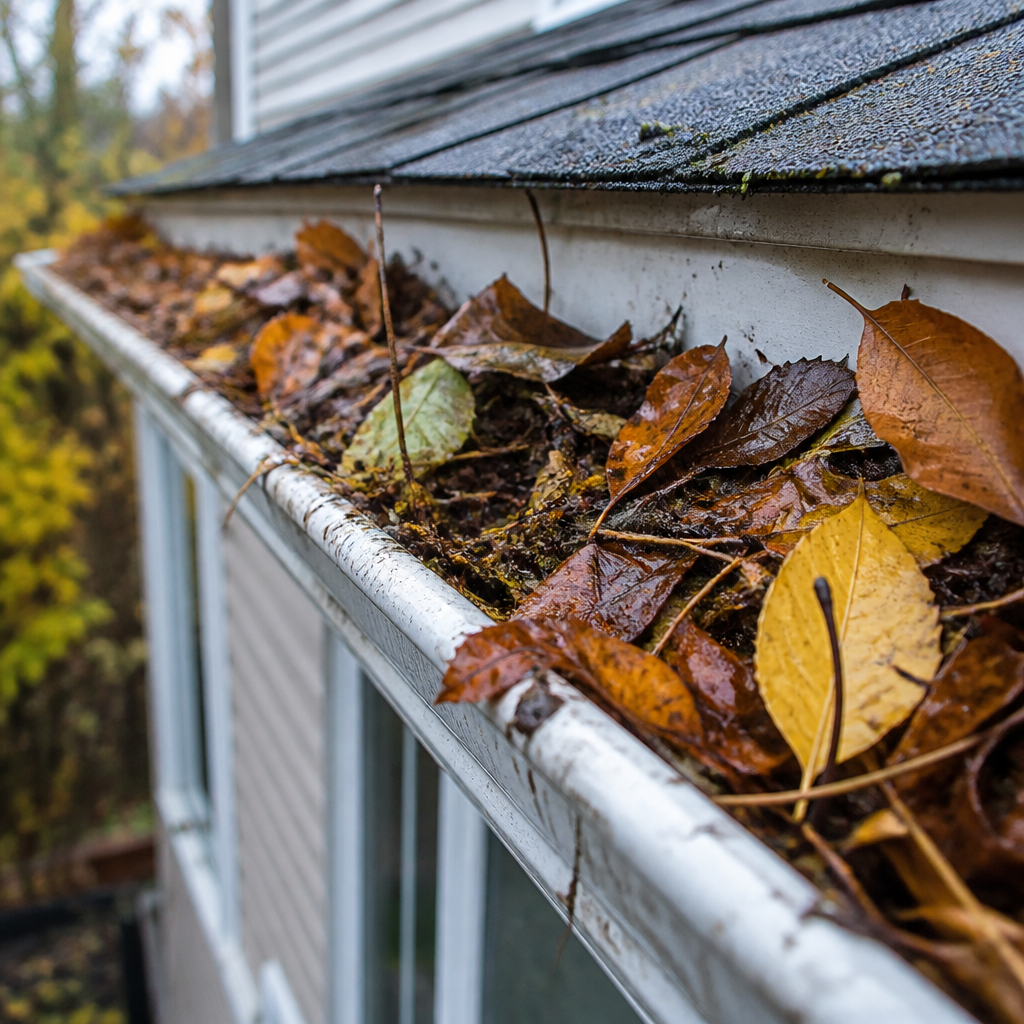
The Lake Ontario influence compounds the issue. The lake moderates temperatures enough that St. Catharines experiences a slightly longer leaf-drop season than inland Ontario communities. Trees hold their leaves later into the season, and when they do shed, the higher moisture content from lake humidity means leaves arrive in eavestroughs already wet and heavy. Wet leaves compact into a dense mat far faster than the dry, crispy leaves typical of drier inland climates. That mat resists flushing and sits against the gutter floor, preventing drainage even before the downspout itself is blocked.
Homes near the Escarpment or under heavy Niagara tree cover may need three to four eavestrough cleanings per year to stay ahead of seasonal debris accumulation.
Pro tip: If you can see plant material or standing water in your eavestroughs from ground level in late September, do not wait until the leaves finish falling. Schedule a preliminary clean now and a final clean in mid-November after peak drop has passed. Two targeted visits prevent the worst compaction.

Tree Species Driving the Problem in St. Catharines
The Niagara Escarpment supports a diverse mixed forest, and the tree species that dominate it each contribute to eavestrough problems in slightly different ways and at different times of the season.
Sugar Maple: The Primary Offender
The sugar maple is the dominant species on the Niagara Escarpment, and it is the tree that causes the most eavestrough grief for St. Catharines homeowners. Large, broad maple leaves arrive in eavestroughs in volume through October, mat down quickly under rain and dew, and form a near-impermeable layer across the gutter floor. A single mature sugar maple over a roofline can deposit enough leaf material in one windstorm to block an entire gutter run.
Silver Maple and Cottonwood: The Year-Round Troublemakers
In lakefront areas like Port Dalhousie, silver maples and cottonwoods create a second debris wave in spring and early summer, filling gutters with seeds and cottony fluff well into July. This means that for many St. Catharines properties, the eavestrough cleaning calendar runs nearly year-round rather than being confined to autumn alone.
Mature Elms, Oaks, and Black Walnuts Along Ravine Corridors
The Twelve Mile Creek ravine corridor through neighbourhoods like Glenridge and Glendale is lined with towering willows, maples, and black walnuts. These species shed after the maples, meaning a property along the ravine edge faces multiple debris waves across October and November rather than a single drop event. By the time the oak leaves come down, the gutters may already be half-packed from earlier species.
Pro tip: If your property backs onto the Twelve Mile Creek corridor or the Escarpment tree line, plan your final fall eavestrough cleaning for after the oak drop is complete, typically late November. Cleaning before the oaks shed and then not returning is one of the most common maintenance mistakes in this area.
Neighbourhood Risk Zones: Where Gutters Fill First
Not every St. Catharines neighbourhood carries the same debris risk. Knowing where your home sits in relation to the Escarpment and the major ravine corridors helps you set the right cleaning frequency and timing.
High-Risk: Merritton, Glenridge, and Western Hill
The older, established neighbourhoods of Merritton sit beneath dense canopies of mature maples, elms, and oaks. Glenridge and Western Hill properties that back onto the Twelve Mile Creek ravine face the heaviest combined leaf loads in the city, from both the ravine trees below and the Escarpment forest above. These are the homes where gutter cleaning St. Catharines professionals typically find the most severe compaction, and where once-yearly cleaning is genuinely inadequate.
Elevated Risk: The North End and Grantham
The North End has a mature urban tree canopy that produces a substantial fall leaf load. The debris is less directly driven by Escarpment wind effects, but the volume from established neighbourhood trees still warrants at minimum two thorough cleanings per year, with a close inspection of downspouts after each major wind event in October.
Moderate Risk: QEW Corridor Subdivisions and Port Dalhousie
Newer subdivisions along the QEW corridor have fast-maturing trees that are beginning to cause gutter problems homeowners did not anticipate when they moved in. Port Dalhousie lakefront properties have a different profile, with the seed and fluff problem from silver maples and cottonwoods creating a spring and summer eavestrough challenge rather than purely a fall one.
What Clogged Eavestroughs Actually Do to a Home
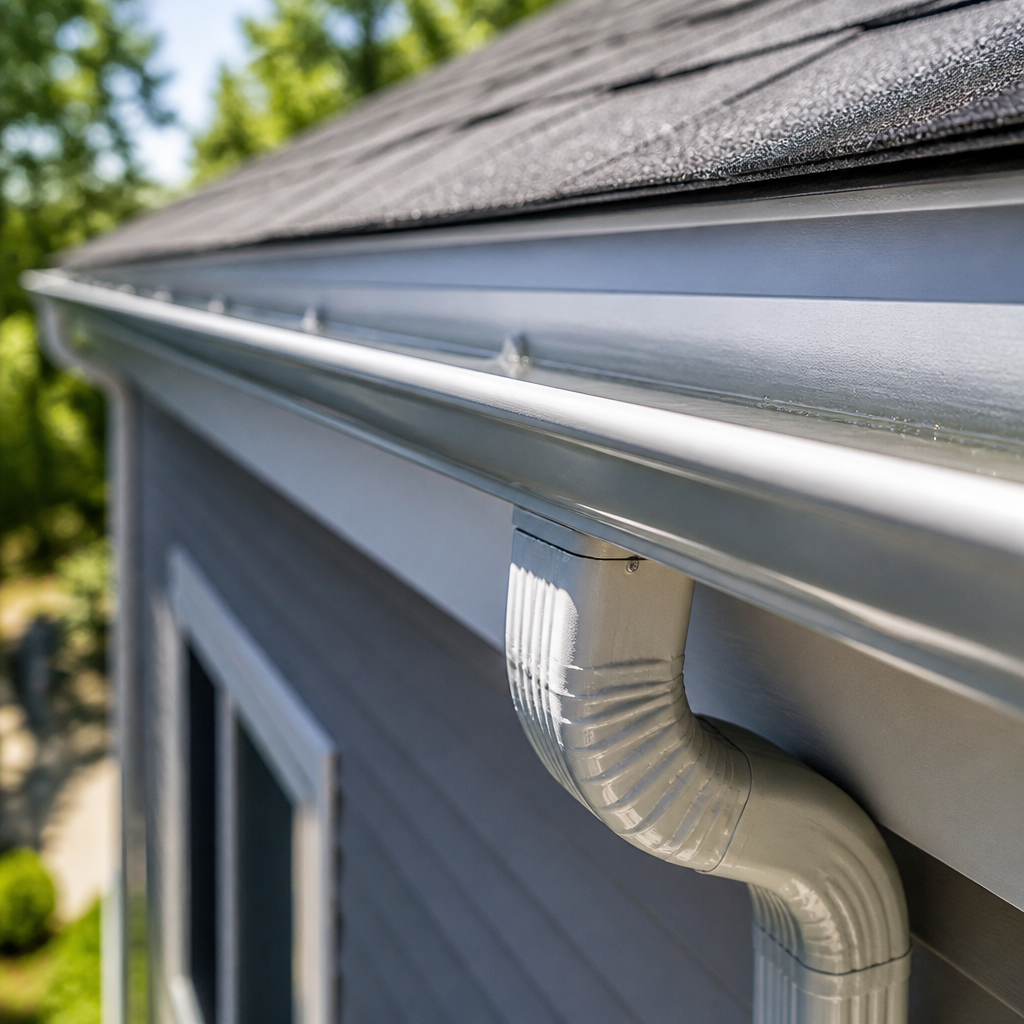
The visible symptom is water spilling over the gutter edge during rain. The real damage happens before and after that visible overflow, in places you cannot see until repair costs are already mounting.
Overflowing eavestroughs direct water toward the home’s foundation. Over multiple seasons, this saturates the soil against foundation walls and creates the conditions for basement water infiltration. The damage accumulates silently. A homeowner may not see a wet basement until years of improper drainage have softened the foundation perimeter.
Fascia boards bear the worst of the rot damage. When eavestroughs overflow or back up, water sits against the fascia continuously rather than draining away. Wood fascia softens, loses structural integrity, and eventually requires full replacement, along with the eavestrough hangers fastened into it. This is expensive work that a consistent cleaning schedule prevents almost entirely.
Ice dams are the winter consequence of fall neglect. Debris left in eavestroughs before freeze-up traps water that cannot drain through blocked downspouts. That standing water freezes and expands, forcing ice under shingles and into the roof deck. When the ice thaws in late winter, the water that was held behind the dam drains directly into the attic or ceiling space. The resulting ceiling stains and insulation damage are among the costlier repairs St. Catharines homeowners face after a hard winter.
Fall eavestrough maintenance Ontario professionals consistently identify ice dam prevention as the single strongest argument for getting gutters professionally cleaned before December. The cost of one cleaning is a small fraction of the cost of replacing ice-damaged shingles and fascia.
Fall Eavestrough Maintenance Schedule for St. Catharines
Based on the Escarpment debris profile and the local tree species mix, here is a practical maintenance schedule that reflects the actual seasonal pattern in St. Catharines rather than generic Ontario advice.
Late September to Early October: Early Inspection
Before peak leaf drop begins, inspect eavestroughs from ground level. If debris from summer seeds, fluff, and wind-carried material has accumulated, clear it now so the trough has full capacity when the heavy fall leaf load arrives. Properties along the Twelve Mile Creek ravine and the Escarpment brow should treat this as a scheduled service call, not an optional check.
Late October to Early November: The Primary Fall Clean
This is the most important single service of the year. Wait until the sugar maple and elm leaf drop is substantially complete, which in St. Catharines typically falls between late October and the first week of November. Then clear all debris from gutter troughs and flush every downspout individually. Do not assume a clear trough means a clear downspout. Compressed leaf material commonly packs into the downspout elbow first and backs the entire system up from below.
Mid to Late November: Oak Leaf Follow-Up
For high-risk properties under heavy oak and black walnut canopy, a second service in mid to late November clears the later-dropping species before freeze-up. Skipping this step after an early-November clean is a common mistake in Glenridge and Merritton where the oak drop extends the debris season by three to four weeks.
Early Spring: Winter Damage Inspection and Clear-Out
Spring cleaning removes any debris that entered during winter, checks for ice dam damage to hangers and fascia, and clears seed and pollen material from silver maples before the spring rain season begins. This clean is most important for lakefront and ravine-adjacent properties.
Comparison of Cleaning Approaches
| Approach | What It Involves | Suitability for Escarpment-Area Homes |
|---|---|---|
| DIY cleaning from a ladder | Homeowner scoops debris by hand and flushes with a garden hose. Typically covers trough surface only. | Poor. Does not reliably clear downspout blockages. Compacted wet leaf mats from Escarpment debris require more than a hand-scoop to fully remove. Safety risk on multi-storey homes with Escarpment-side grade drops. |
| Professional hand-removal with downspout flush | Technician removes all debris by hand into disposal bags, then flushes each downspout and confirms water flows freely at the base. | Best. Manual removal addresses the compacted mat problem. Downspout flushing confirms the system is actually clear, not just surface-clean. This is the standard that high-debris properties near the Escarpment require. |
| Gutter guards as a standalone solution | Physical barrier installed over the trough to reduce debris entry. Various mesh and screen types available. | Partial. Guards reduce frequency of cleaning but do not eliminate it. Fine debris, seeds, and shingle granules pass through most guard types. Properties under heavy Escarpment canopy still require annual professional inspection and cleaning even with guards installed. |
Frequently Asked Questions
How often should I have my eavestroughs cleaned if I live near the Niagara Escarpment in St. Catharines?
Most homes near the Escarpment or along the Twelve Mile Creek ravine corridor need at least two to three professional cleanings per year: one in late fall after peak leaf drop, one in early spring, and a third in late November if your property sits under oak or black walnut canopy. Properties with heavy Escarpment-side tree exposure can justify four cleanings annually. Once-yearly cleaning is not sufficient for these locations.
What is the best time of year to schedule eavestrough cleaning in St. Catharines?
The most important single cleaning window is late October to early November, after the sugar maple and elm leaves have finished dropping but before the first hard freeze. Cleaning in this window clears the heaviest debris load of the year and prevents ice dam formation through the winter. A second key window is early spring, after snow melt, to clear winter accumulation and early seed drop from silver maples.
Can clogged eavestroughs really cause basement flooding?
Yes, and it is one of the most underappreciated causes of foundation moisture problems. When eavestroughs overflow because they are blocked, the water falls directly against the foundation wall instead of being directed away by the downspout. Over multiple seasons, this saturates the soil at the foundation perimeter and creates the conditions for basement water infiltration and efflorescence on foundation walls.
Is it safe to clean my own eavestroughs if my home backs onto the Escarpment?
Grade changes on Escarpment-side properties create a safety hazard that does not exist on flat urban lots. The effective height from which you are working is often significantly greater on the downhill side of the home. A ladder positioned on sloped or uneven ground on the Escarpment side of the property is not a stable work platform. Professional crews use proper equipment and positioning to manage this safely. DIY eavestrough cleaning on these properties is a genuine risk that a professional service visit eliminates.
Do gutter guards eliminate the need for cleaning near the Escarpment?
No. Gutter guards reduce debris entry and can extend the time between cleanings, but they do not eliminate the need for professional inspection and occasional cleaning on high-debris Escarpment properties. Fine debris including shingle granules, pine needles, seed pods, and cottonwood fluff passes through or accumulates on top of most guard systems. An annual professional inspection remains necessary to confirm the guard is performing correctly and to clear any debris that has entered or compacted on the guard surface.
What damage should I look for after a winter of blocked eavestroughs?
In spring, inspect fascia boards for soft spots or discolouration, which indicates water saturation and the beginning of rot. Check the ceiling and attic space below the roof edge for water staining, which is a sign that ice damming forced melt water under shingles. Look at the soil line against the foundation for signs of erosion channels where overflow water ran repeatedly through the season. Catching these early prevents much more expensive structural repairs later.
Have you noticed debris filling your eavestroughs faster than expected near the Escarpment? Share what you have experienced in your neighbourhood and whether your cleaning schedule has kept pace with the fall debris load.
References
- Niagara Escarpment geography and its path through St. Catharines and the Niagara Peninsula
- Tree species of the Niagara Escarpment including sugar maple and mixed forest composition
- Eavestrough cleaning recommendations for St. Catharines homes near the Escarpment
- Gutter debris and ice damming risks in St. Catharines neighbourhoods including Merritton and the North End
- Guide to eavestrough cleaning frequency based on tree cover and Ontario seasonal conditions