
Most homeowners don’t connect a wet basement to what’s happening at the roofline, but the link is direct and well-documented. When eavestroughs fill with leaves, seed pods, compacted debris, and the general grime that accumulates through a Canadian season, water stops flowing where it should and starts pooling where it shouldn’t. That pooling happens directly against your foundation. Eavestrough cleaning is not a cosmetic chore. It is one of the most cost-effective things you can do to prevent basement flooding and protect the structural integrity of your home. If you’ve been putting it off, this article explains exactly why that decision is expensive.
Table of Contents
- Quick Takeaways
- How Clogged Eavestroughs Cause Basement Flooding
- The Chain of Damage: From Roofline to Basement
- Warning Signs Your Eavestroughs Are Already Failing
- Eavestrough Cleaning Frequency: What Actually Works
- DIY vs. Professional Eavestrough Cleaning: A Clear Comparison
- Additional Steps for Basement Flooding Prevention
- Frequently Asked Questions
- References
Quick Takeaways
| Key Insight | Explanation |
|---|---|
| Clogged eavestroughs overflow against your foundation | Water that can’t move through the system spills down your exterior wall and saturates the soil directly beside your foundation, creating the conditions for basement flooding. |
| Saturated soil expands and cracks foundation walls | When water-laden soil freezes or swells, it presses against foundation walls, causing cracks and eventual structural movement that lets water in. |
| Clean twice a year at minimum | Late spring and late fall are the two non-negotiable cleaning windows. Homes surrounded by large trees may need three to four cleanings per year. |
| Downspout extensions matter as much as clean gutters | Even perfectly clean eavestroughs fail at basement flooding prevention if the downspout deposits water within two feet of the foundation. |
| Insurance can deny water damage claims for poor maintenance | If an adjuster determines that a blocked eavestrough system was the preventable root cause, your claim may be rejected outright. |
| Fascia and siding rot is a secondary cost of blocked gutters | Overflowing water that runs behind or alongside the gutter continuously wets fascia boards and siding, leading to rot that is expensive to replace. |
| Professional cleaning includes a system inspection | A trained technician will spot sagging sections, separated joints, and pitch problems that a garden-hose flush will miss entirely. |
How Clogged Eavestroughs Cause Basement Flooding
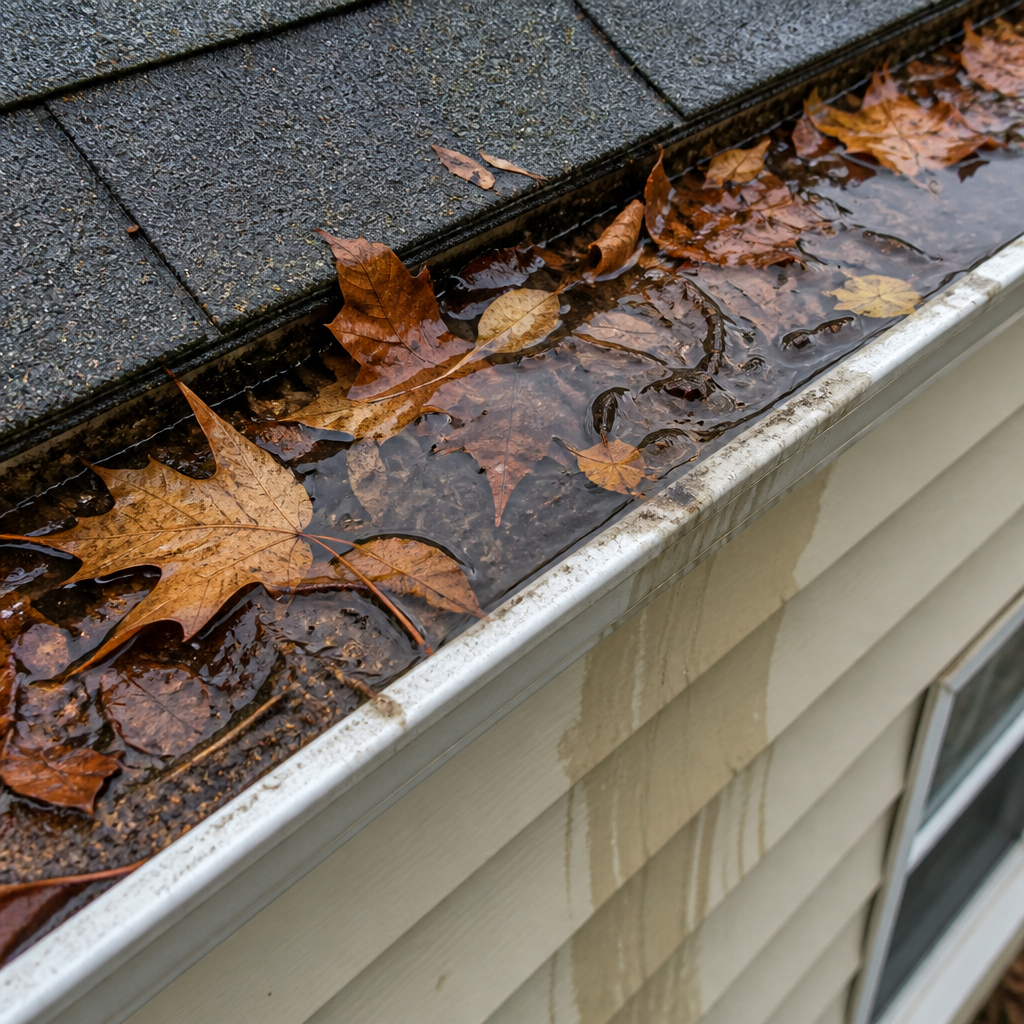
Your eavestrough system exists for one reason: to take the water your roof sheds during rain and snowmelt and carry it away from your home’s foundation. When the system is clear, that water travels along the gutter channel, drops through the downspout, and discharges at a safe distance from the structure. When the system is blocked, the water has nowhere to go except over the edge, and that overflow lands at the base of your exterior walls.
That might sound minor, but consider the volume. A moderate rainfall on an average Canadian home can send hundreds of litres of water across the roof surface. A blocked eavestrough concentrates all of that water at a single point along your foundation perimeter, and it does so every single time it rains.
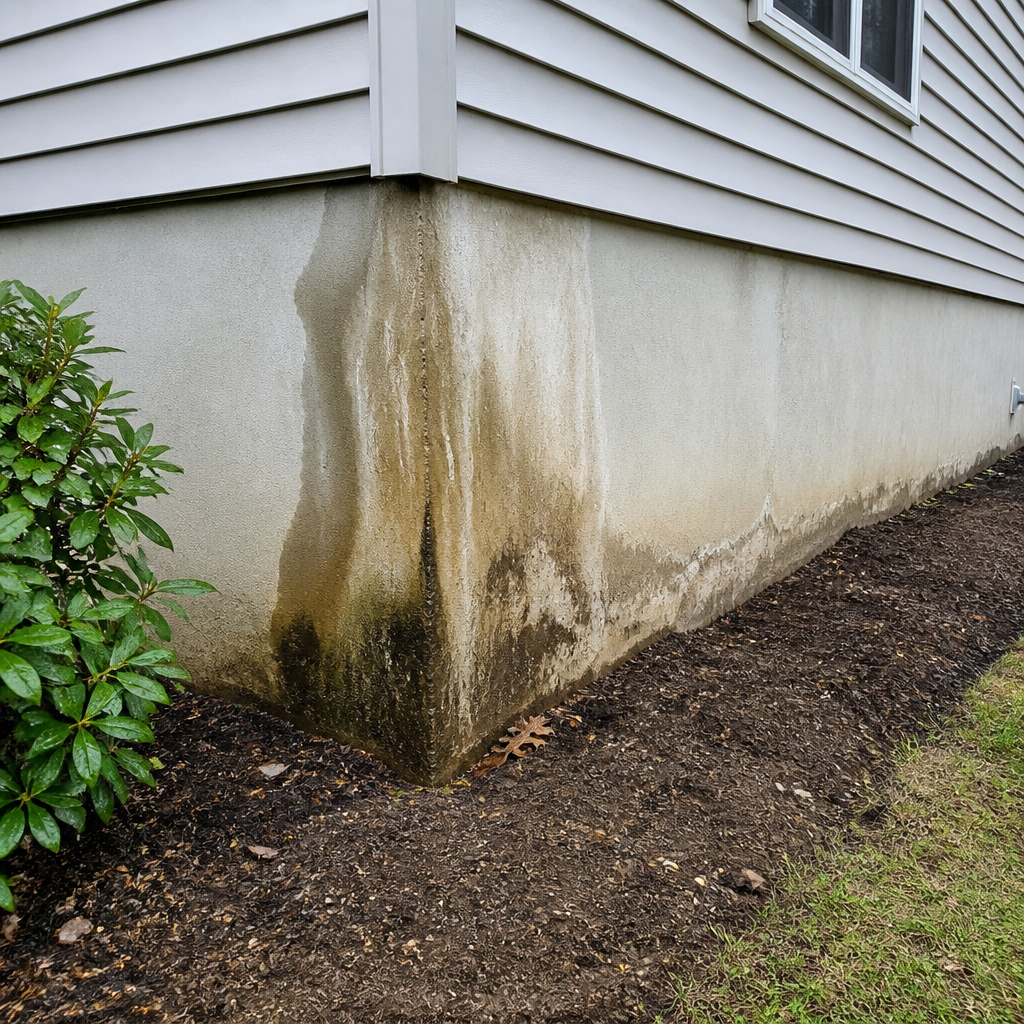
Clogged eavestroughs and downspouts are a significant contributor to foundation failure. The mechanism is straightforward: water spills over the edges of the gutter, heavy amounts of water saturating the soil cause the soil to expand, and that expansion presses against foundation walls causing movement and cracking. Once a crack forms, moisture follows the path of least resistance directly into your basement.
Why the Foundation Connection Is So Direct
Most homeowners think of basement flooding as a drainage or waterproofing problem. It often is, but the source of the water is frequently above ground. When an eavestrough overflows, the water does not spread evenly across the yard. It saturates the soil in a narrow band right against the building’s perimeter, precisely where the backfill around your foundation is softest and most permeable. That water finds every crack, joint, and weak point in the concrete or block.
The formless nature of water means it will search for gaps and fractures to enter the basement, steadily weakening and eroding the foundation over time. A foundation repair job is not a minor expense. Keeping your eavestroughs clear is far cheaper by any comparison.
The Chain of Damage: From Roofline to Basement
Blocked eavestroughs do not only cause basement flooding. The damage chain starts higher up and works its way down, meaning by the time you notice a wet basement, you may already have multiple other problems developing.
Roof and Attic Damage
When water backs up behind a clogged gutter, it pools on the lower edge of the roof deck. In warmer months, this persistent moisture rots the sheathing and invites mold. In winter, it feeds ice dam formation, where the freeze-thaw cycle forces water under shingles. Clogged eavestroughs can also damage your roof structure and make ice dam problems significantly worse during cold weather.
Fascia Board and Siding Rot
Overflow water that runs down the back of the gutter continuously wets the fascia boards and the siding below them. Rotting fascia boards from overflow damage are expensive to replace and noticeably affect your home’s curb appeal. Once the wood softens, it also becomes a nesting site for carpenter ants and other pests, which compounds the repair cost.
Landscape Erosion and Grading Problems
Concentrated overflow from the same gutter section, season after season, carves channels in the soil beside your home. Over time, this erosion can reverse the grading so that the ground actually slopes toward the foundation instead of away from it. At that point, every rain event sends surface water directly toward your basement wall, even if the eavestroughs are later cleaned.
Clean eavestroughs protect far more than just the gutter channel. They protect the roof, the walls, the fascia, the foundation, and ultimately the interior of the home. The cost of neglect accumulates at every level of the structure.
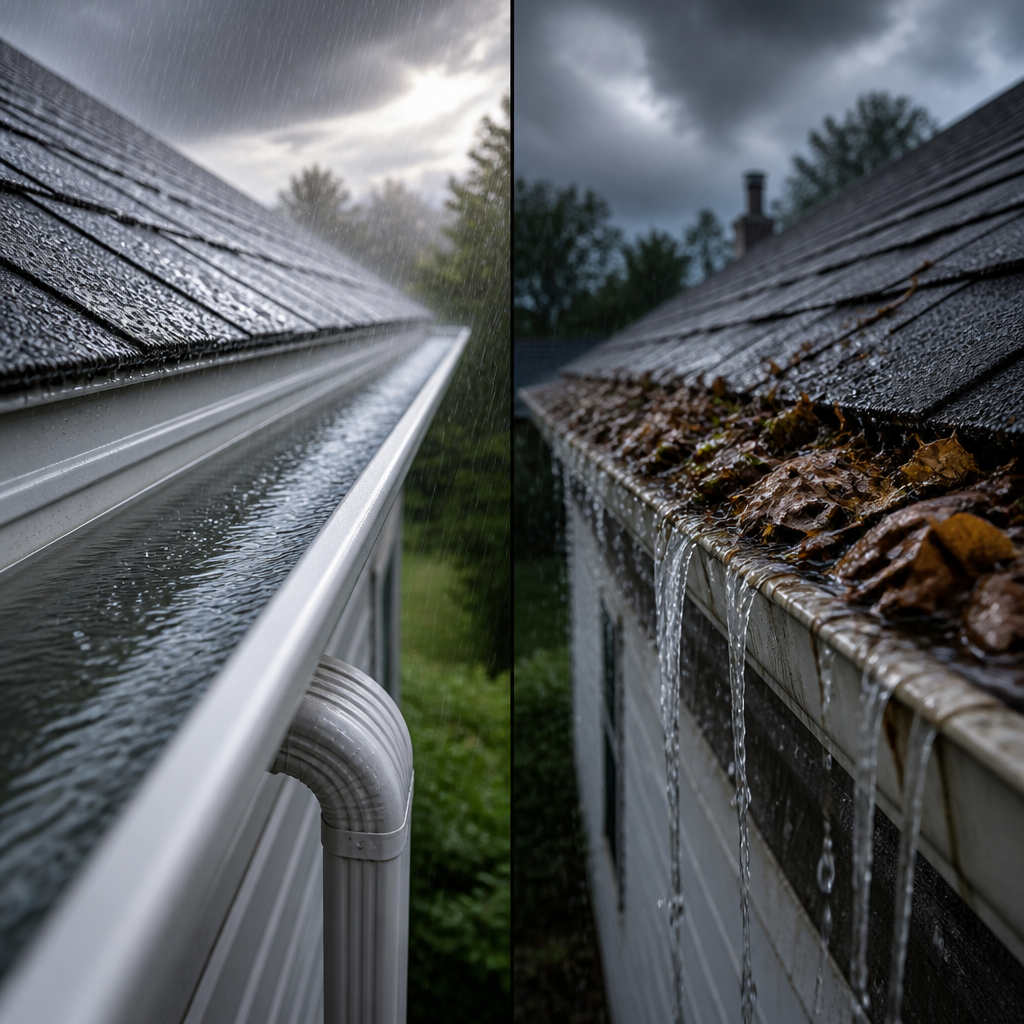
Pro tip: Walk the perimeter of your home during a heavy rain. If you see water sheeting over the edge of the eavestrough rather than flowing toward the downspout, you have a blockage that needs clearing before the next storm.
Warning Signs Your Eavestroughs Are Already Failing
You do not need to climb a ladder to spot a clogged or failing eavestrough system. Several signs are visible from the ground, and a few are obvious from inside the house. Acting on any one of these early costs far less than waiting until basement flooding forces the issue.
Overflow During Rain
Water spilling over the sides of the gutters during a rainfall is the most direct signal of a blockage. In a properly working system, the rain flows toward the downspouts and away from the building. A waterfall of runoff spilling out of the gutters means the system is either clogged or pitched incorrectly.
Visible Plant Growth in the Gutter Channel
Weeds, moss, or small seedlings growing out of the gutter channel confirm that organic debris has accumulated to the point where plants can take root. That level of blockage does not clear itself.
Sagging or Separated Gutter Sections
A gutter full of wet, compacted debris is heavy. Over time, that weight causes fasteners to pull away from the fascia, resulting in sagging sections or gaps between joints. A sagging section cannot drain properly regardless of whether it is clear of debris.
Water Stains on Exterior Walls or Siding
Streaks of discolouration running down the siding below the gutter line indicate overflow that has been happening for some time. You may also notice warping or peeling paint in those areas, which means moisture has been getting behind the finish.
A Wet or Damp Basement After Rain
A wet basement after a rainfall event is a strong indicator that rainwater is not being directed away from the home. Water that pools around the foundation seeps into the basement through cracks and weak points. This is often the last visible sign of a problem that started at the roofline months earlier.
Eavestrough Cleaning Frequency: What Actually Works
The standard advice is to clean eavestroughs twice a year, and it is the right baseline for most homes. The two windows are late spring, after tree pollen and seeds have settled, and late fall, after the leaves have dropped. Those two cleanings address the two largest debris events in a Canadian climate.
For homes surrounded by large deciduous trees, especially maples, which drop both seeds in spring and leaves in fall, two cleanings per year may not be enough. Most Ontario homes need gutter cleaning three to four times per year depending on conditions, with spring and fall being the non-negotiable sessions. If you have heavy tree coverage on your property, add a midsummer inspection and consider a post-storm check after any significant wind event.
Why Timing Matters More Than Frequency Alone
Cleaning in late fall rather than early fall matters. A gutter cleaned in October will fill again when the maples and oaks finish dropping leaves in November. Waiting until leaves are fully down means one cleaning actually covers the season rather than two. Similarly, a spring cleaning done in April, before the seed pods have settled, will need to be repeated in May anyway.
The practical rule: clean after the debris event has finished, not during it.
Pro tip: If you are scheduling just one professional cleaning per year, schedule it in late November or early December, after the leaves are fully down and before any freeze-thaw cycles begin. That single cleaning protects the system through winter and gives it the best chance of draining spring snowmelt cleanly.
DIY vs. Professional Eavestrough Cleaning: A Clear Comparison
Some homeowners clean their own eavestroughs, and it is entirely possible to do so safely on a single-storey home with a stable ladder, gloves, a scoop, and a garden hose. The honest comparison below covers where DIY works and where professional service is worth the investment for basement flooding prevention.
| Factor | DIY Eavestrough Cleaning | Professional Eavestrough Cleaning |
|---|---|---|
| Safety | Risk increases sharply on two-storey homes or steep rooflines. Falls from ladders are a leading cause of home injury. | Trained crews use proper equipment and work at height daily. Liability and insurance are covered. |
| System inspection | Most DIYers clear visible debris but miss pitch problems, hidden joint separations, and downspout blockages deeper in the system. | A professional inspection identifies sagging sections, improper pitch, failing brackets, and underground drain issues before they cause basement flooding. |
| Downspout clearing | A garden hose can flush a light blockage, but compacted debris or a bird nest in the downspout usually requires disassembly to clear properly. | Professionals detach and flush downspouts completely, confirming the full system is open from gutter channel to discharge point. |
| Cost | Minimal direct cost if you own a ladder, but your time and physical effort are real inputs. Any injury changes the calculation immediately. | A professional service typically charges based on home size and linear footage. Compared to a foundation repair or basement water damage claim, the cost is modest. |
| Best suited for | Single-storey homes with accessible eavestroughs, minimal tree coverage, and a homeowner comfortable on a ladder. | Multi-storey homes, homes with heavy tree coverage, properties where the eavestrough system hasn’t been inspected recently, or homeowners who simply want the job done correctly. |
For most Canadian homeowners with multi-level homes or mature trees on the property, a professional eavestrough cleaning service delivers better value than the DIY alternative, not because the task is technically complex, but because the inspection component catches problems that a debris removal alone will miss.
Additional Steps for Basement Flooding Prevention
Keeping eavestroughs clean is the most impactful single action for basement flooding prevention, but it works best as part of a coordinated approach to exterior water management. Each of the following steps directly reduces the risk of water reaching your foundation.
Extend Your Downspouts
A downspout that discharges water within one to two feet of your foundation is barely better than no downspout at all. Downspout extensions carry water away from the home’s foundation to prevent flooding. The standard recommendation is to discharge at least six feet from the foundation wall, and further if your yard’s natural grade slopes back toward the house.
Check and Correct Yard Grading
Your yard should slope away from the foundation on all sides. Grading that has settled flat or reversed over years will route surface runoff toward the building regardless of how clean your eavestroughs are. This is a soil and landscaping fix, not a gutter fix, but it is an essential part of the complete picture.
Inspect Downspouts After Every Major Storm
Heavy rains and storms can flood gutters by blowing debris onto the roof and into the gutter system. After any significant storm, a quick visual check of whether water is discharging from the downspout base during rain confirms the system is still clear. No discharge during rain means a blockage has formed.
Consider a Full Exterior Cleaning Package
Eavestrough blockages don’t happen in isolation. Moss on the roof, algae on siding, and debris on the soffit all contribute to the organic load that ends up in your gutters. A full exterior cleaning that addresses the roof surface, siding, and gutter system together reduces the rate at which eavestroughs re-block between scheduled cleanings. At Performance Window Cleaning, eavestrough and gutter cleaning is part of a broader exterior maintenance offering that includes power washing and home detailing, precisely because the problems interconnect.
Pro tip: When booking a professional eavestrough cleaning, ask the technician to check the downspout discharge location and confirm it is depositing water well away from the foundation. A clean gutter that drains six inches from the wall is still a basement flooding risk.
Frequently Asked Questions
Can clogged eavestroughs really cause basement flooding?
Yes, and this is one of the more common causes that homeowners overlook. When eavestroughs are blocked, water overflows and saturates the soil directly against the foundation. That saturated soil expands, cracks foundation walls, and allows water to seep into the basement. Clogged eavestroughs and downspouts are a documented contributor to foundation failure.
How often should I have my eavestroughs cleaned in Canada?
Twice a year is the minimum for most homes, with cleanings timed for late spring and late fall. Homes with significant tree coverage, particularly maples, may need three to four cleanings per year. The fall cleaning matters most if you can only do one, because it clears the system before winter freeze-thaw cycles begin.
What are the first signs that my eavestroughs are clogged?
The most visible sign is water overflowing the sides of the gutter during rain rather than flowing toward the downspout. Other signals include water stains on exterior walls below the gutter line, visible plant growth in the channel, sagging gutter sections, and, further down the chain of damage, a damp or wet basement after rainfall events.
Will my home insurance cover basement flooding from clogged eavestroughs?
This depends on your specific policy, but insurers can and do deny water damage claims when they determine that poor maintenance was the preventable root cause. A blocked eavestrough system that has been visibly overflowing for a season is difficult to characterize as sudden or accidental. Regular, documented eavestrough cleaning is a reasonable precaution that protects both your home and your insurance position.
Is eavestrough cleaning something I can do myself?
On a single-storey home with stable ground and a solid ladder, most homeowners can safely clear debris from accessible gutters using gloves, a scoop, and a garden hose to flush the system. The limitation of DIY is the inspection. A professional will check pitch, bracket condition, joint integrity, and downspout clearance throughout the system, not just remove visible debris. On multi-storey homes, the safety argument for professional service is straightforward.
How far should a downspout extend from the foundation?
The standard recommendation is a minimum of six feet from the foundation wall. On properties where the grade slopes back toward the home, even more distance is better. Many basement flooding cases involve homes where the eavestrough system was clean but the downspout discharged directly against the foundation, concentrating roof runoff at the worst possible point.
Does power washing or exterior cleaning affect eavestrough performance?
A full exterior cleaning that removes moss, algae, and debris from the roof surface and siding directly reduces how quickly eavestroughs re-block. The organic material that accumulates on roof shingles washes into the gutter channel every time it rains. Addressing the source, not just the gutter, is the more complete approach to keeping the system clear between scheduled cleanings.
Have you dealt with basement water issues that turned out to be connected to your eavestroughs? Share what you found and how you fixed it in the comments below.
References
- How faulty eavestroughs lead to wet basements and foundation damage
- How clogged gutters and downspouts contribute to basement flooding and foundation failure
- Six signs your gutters are clogged and causing damage to your home
- Why eavestrough cleaning twice a year protects Canadian homes from water damage
- How often Canadian homeowners should clean their gutters to prevent basement flooding