
Most Ontario homeowners clean their windows, cut the grass and blow off the porch, then walk past the front door every day without a second thought. The door is one of the most touched and most weathered surfaces on the house. Handprints, road spray, pollen, spider webs and winter salt all end up on the entrance, and a quick wipe rarely removes them. Entrance cleaning is the part of exterior maintenance that gets skipped most often, and it is the part guests and buyers notice first. This guide covers what to clean, how to clean it without damaging the finish, and when a professional visit makes sense.
Table of Contents
- Quick Takeaways
- What Most Homeowners Miss at the Front Door
- Why Entrances Collect More Grime Than the Rest of the House
- Door Detailing Step by Step
- Choosing Cleaners That Will Not Damage Entry Surfaces
- DIY Versus Professional Entrance Cleaning
- Spider Webs, Insects and Ticks at the Entry
- Entrance Cleaning Before You List or Host Guests
- Frequently Asked Questions
- References
Quick Takeaways
| Key Insight | Explanation |
|---|---|
| The entrance is a mix of materials | A door, glass sidelights, hardware, a threshold and steps each need a different cleaner and a different technique. One product rarely works for all of them. |
| Hardware carries the most grime | Handles, deadbolts and mail slots collect skin oil every day. Wipe them weekly with a mild soap solution, not just when they look dirty. |
| Wash from the top down | Dirty water running off the top of the door streaks the lower panels. Start at the top edge and work down, rinsing as you go. |
| Avoid harsh chemicals on painted and fiberglass doors | Strong alkaline or bleach-based cleaners can dull paint and cloud finishes. Stick to pH-neutral soap and soft brushes. |
| Clear webs before they build up | Spider webs and egg sacs around the porch light and door frame return quickly. Brushing them off every few weeks prevents a heavier removal job later. |
| Clean before showings and visitors | The entrance is the first thing buyers, guests and delivery drivers see. A fresh clean costs little and changes how the whole property looks. |
What Most Homeowners Miss at the Front Door
Ask most homeowners what their exterior routine looks like and you will hear about gutters, windows and maybe the driveway. The entrance rarely makes the list. It is a small area, so it seems like it should be easy to keep clean, but it collects more residue than almost any other part of the house.
The problem is that entrance surfaces are a mix of materials and hardware, and each one gets dirty in a different way. A wood or fiberglass door carries fingerprints and sun fade. The glass sidelight shows road spray, and the handle and deadbolt collect skin oils. The threshold holds grit tracked in from the lawn, so a single pass with a glass cleaner leaves most of the problem behind.
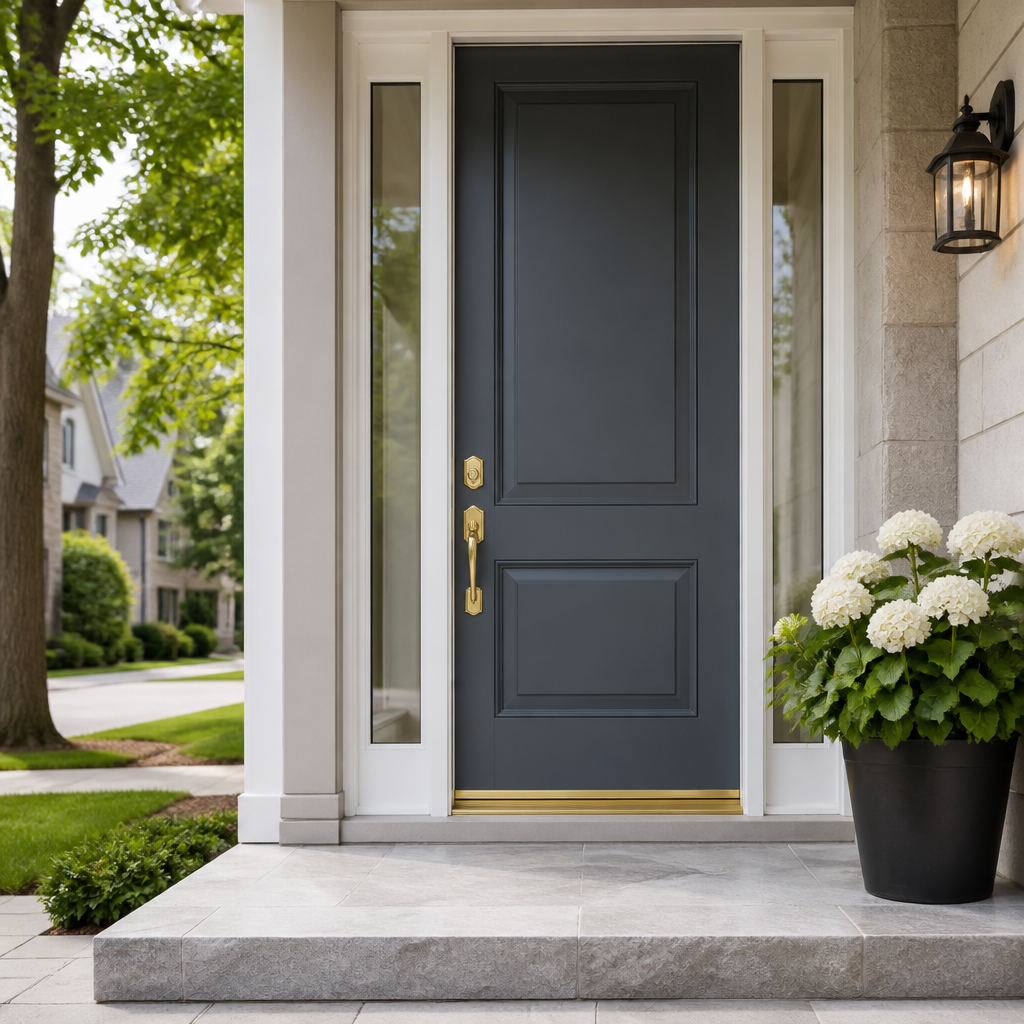
The most common mistake we see is cleaning only the parts you can see from the street. The door face gets attention, but the frame edges, the top of the door where dust settles, and the underside of the porch light stay dirty for years. Those areas show up clearly in photos and in person, and they are exactly where a detailing pass makes the biggest visual difference.
The entrance is the one exterior surface that people touch, look at and judge every day, which is exactly why it gets the least attention.
Pro tip: Walk to the end of your driveway and look back at the front door. Whatever stands out from that angle, such as a grimy frame edge or a cloudy sidelight, is what visitors notice first, so start your clean there.
Why Entrances Collect More Grime Than the Rest of the House
An entrance is a high-contact zone. Every person who comes in or out touches the handle, and most people push the door with their shoulder or a hand that has been on a railing or a grocery bag. Over a season, that contact builds a film that ordinary dusting does not touch.
Hand oil and daily contact on hardware
Skin oil is the main reason handles, deadbolts and doorbell buttons look dull and tacky. The buildup attracts dust, and it can stain brass and satin finishes over time. A weekly wipe with a damp microfiber cloth and a little mild soap keeps the film from setting.
In practice, most homeowners clean hardware only when it looks obviously dirty. By then, the grime has bonded to the finish. A short routine every week is far easier than a deep scrub once a year.
Road salt and winter residue carried to the door
Ontario winters leave a lot of salt and grit on sidewalks, driveways and steps. That residue gets tracked onto the threshold and the lower panels of the door, where it dries into a white haze. Salt left on concrete and masonry can also work into the surface and leave staining that a simple rinse does not remove.
Spring is the best time to deal with winter residue, but waiting until April is a mistake. Fall is a good time to clean the entry before the first freeze, so the surface is clear of salt and grit going into the coldest months.
Spider webs and insects around the porch light
The porch light draws insects at night, and the spiders that follow them build webs in the corners of the frame and the fixture. Within a few weeks, a light fixture can be wrapped in silk and dust. The webs also trap pollen and grit, which makes them harder to remove.
Brushing the fixture and frame corners every few weeks prevents the heavy buildup. A soft brush or a long-handled duster does most of the work, and the area stays presentable without a full detailing visit.
Door Detailing Step by Step
Door detailing is more than a wipe-down. It is a sequence that protects the finish, removes the film that builds up on every surface, and leaves the entrance looking uniform. The steps below are the ones we follow on a standard residential job, and they work for most wood, fiberglass and steel doors.
Prepare the area and protect the surroundings
Start by clearing the mat, planters and any items on the steps. Cover nearby light fixtures and any exposed electrical components with plastic, and tape the edges of the frame if you plan to use a spray. Protecting the surroundings takes a few minutes and prevents drips from ruining the paint on adjacent trim.
Check the door for loose hardware, peeling finish and cracks before you start. A loose strike plate or a cracked glazing bead will look worse after a wash, and it is better to note it now than discover it halfway through.
Wash the door slab from the top down
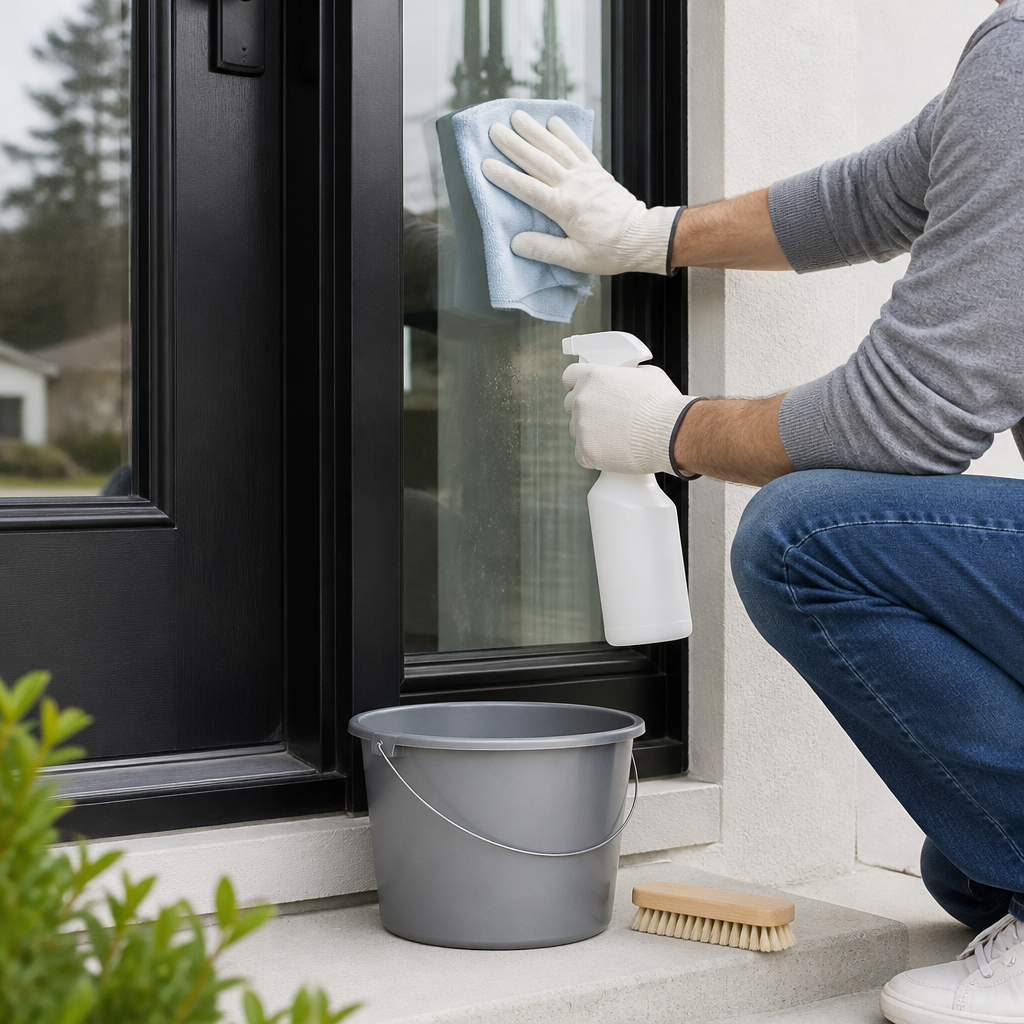
Mix a mild, pH-neutral soap with lukewarm water and work with a soft brush or microfiber mop. Begin at the top edge of the door and work down in vertical strokes. Dirty water runs down the surface, so washing from the bottom up leaves streaks across the lower panels.
Rinse the door with clean water as you go, not only at the end. Letting soap dry on painted or fiberglass surfaces leaves a film that is harder to remove than the original dirt.
Clean hardware, thresholds and the door sweep
Handles, locks, knockers and mail slots need their own pass with a soft cloth. Avoid abrasive pads on brass and satin finishes, because they scratch the coating. Use a cotton swab in the keyhole area and around the escutcheon plate to remove grit.
The threshold and door sweep trap more grit than any other part of the entrance. Brush them out, then wipe the tracks with a damp cloth. A clean sweep also keeps drafts and insects out, which is a benefit that many homeowners do not expect from a cleaning visit.
Finish the glass and the frame edges
Clean the sidelights and glass panels last, using a squeegee and a clean cloth. Work in short overlapping passes and wipe the blade after each stroke. Glass cleaned first gets re-dirtied by the wash water running off the door.
Pro tip: Dry the frame edges and the bottom of the door with a clean microfiber towel before you finish. Water left in those gaps can run back out later and leave drip lines on the paint.
Choosing Cleaners That Will Not Damage Entry Surfaces
The most common reason homeowners damage an entrance is using the wrong cleaner. A strong degreaser that works well on a kitchen range can dull a painted door in a single application. The right choice depends on the material, and the label on the bottle does not always tell you what the surface can handle.
Painted and stained wood doors
Wood doors need gentle handling because water can get into the grain and push up the finish. Use a pH-neutral soap, a soft brush and a little water, and avoid soaking the surface. If the finish is peeling or flaking, cleaning will make it worse, and the door may need refinishing first.
Stained doors show fingerprints more clearly than painted ones. A light buffing with a clean microfiber cloth after the wash removes the haze without stripping the protective coat.
Fiberglass, steel and storm doors
Fiberglass and steel doors handle more scrubbing than wood, but they still scratch and cloud when abrasive pads or harsh alkaline cleaners are used. A soft brush and a mild soap solution clean them well. Storm doors with aluminum frames often collect grime in the tracks, so clean those with a cloth and a little soap rather than a spray.
Aluminum oxidizes if the surface is damaged, so avoid any cleaner that leaves a residue you cannot rinse fully away. Test a small hidden area first if the manufacturer has not published guidance for your door.
Brick, stone and concrete steps
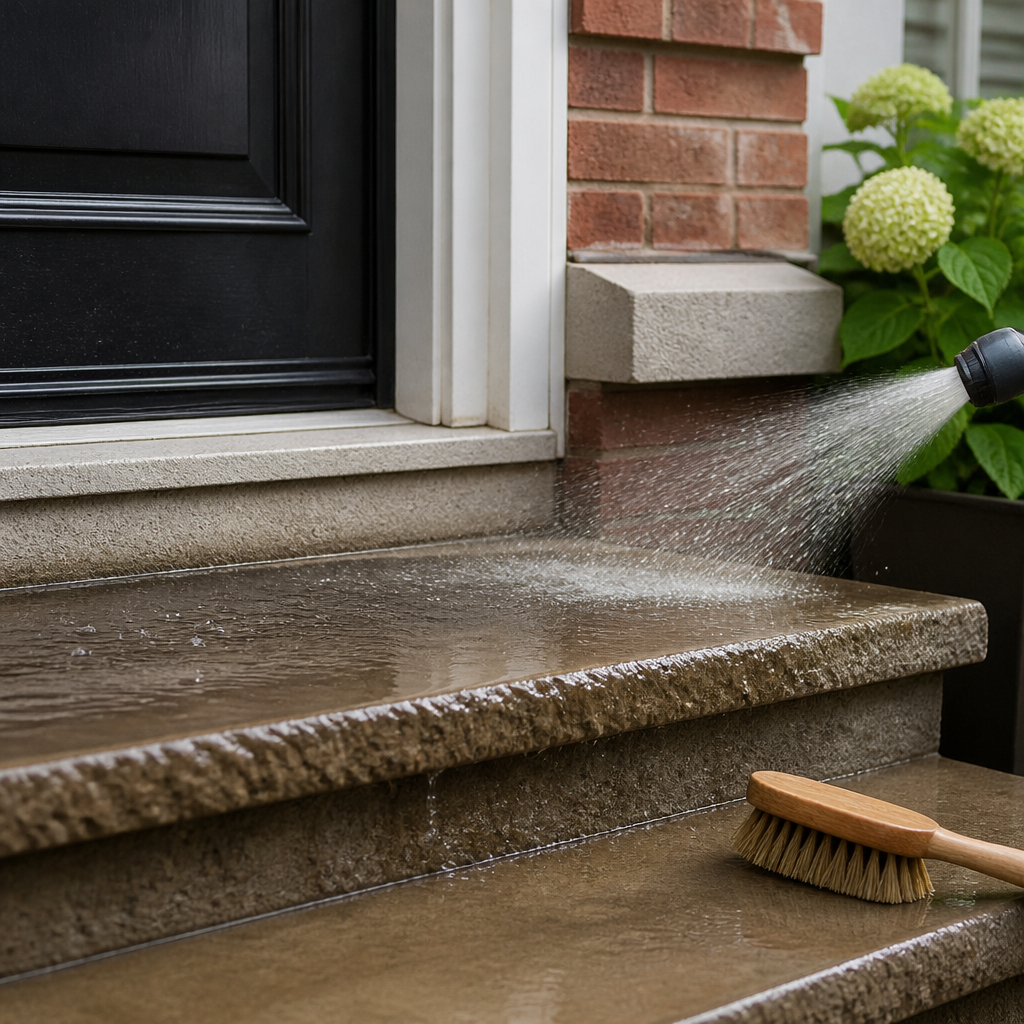
Entry steps made of concrete, brick or stone are often the dirtiest part of the entrance. Oil stains, salt residue and moss can all build up, and a pressure washer can help. Keep the pressure low and keep the nozzle moving, because high pressure can etch concrete and erode mortar joints.
Treat oil spots before you pressure wash. A dedicated degreaser applied and left for a few minutes will lift stains that water alone will only spread around.
DIY Versus Professional Entrance Cleaning
Most homeowners can handle a basic door wipe-down, and that is a reasonable routine between visits. The question is whether a yearly or seasonal full detail is worth paying for. The answer depends on how the entrance has been maintained, the materials involved, and how much time you have.
| Approach | Where It Works | Where It Falls Short |
|---|---|---|
| Household spray and microfiber cloth | Weekly touch-ups on glass, handles and the door face | Does not reach frame edges, sweeps or the top of the door, and can leave residue on painted surfaces |
| Hand-washing with soft brush and pH-neutral soap | Full detail of painted, fiberglass and wood doors, with control over water and pressure | Takes time and needs the right tools, and it is hard to reach high trim without a ladder |
| Pressure washing steps, walkways and porch surfaces | Removing salt, moss and oil stains from concrete, brick and stone | Too aggressive for doors, trim and glass, and can damage mortar and painted surfaces if misused |
Where DIY cleaning stops working
DIY routines tend to focus on what is visible. The door face gets wiped, the glass gets cleaned, and everything else is ignored. The grime that builds up on the top edge, the frame corners and the threshold is out of sight, so it keeps accumulating.
A published cleaning guide makes the same point in general terms: routine cleaning focuses on what is visible, while professional work is designed to find and treat the concealed problem areas. For an entrance, those hidden areas are usually the frame, the sweep and the top of the door.
What a professional visit adds
A professional visit covers the full door, the hardware, the sweep, the glass and the surrounding steps in one pass. The crew also checks for loose hardware, failing finish and drainage problems that a homeowner might miss. The value is less about the single clean and more about catching small issues early.
Pro tip: Ask for the frame edges and the top of the door to be included in the quote. Those are the areas most often skipped, and they make the difference between a door that looks washed and one that looks detailed.
Spider Webs, Insects and Ticks at the Entry
The entrance is one of the most active pest zones on a house. Light draws insects, insects draw spiders, and the shaded corners of the porch give everything a place to settle. Keeping the entry clear is part of detailing, not a separate job.
Why the entry attracts spiders and insects
Spiders build webs where insects fly, and porch lights are a steady source of prey. The recessed corners of door frames, the gap above the door and the underside of light fixtures give spiders protected places to anchor their silk. Once a web is established, the spider often lays egg sacs nearby.
Sealing gaps around the door frame and replacing worn weatherstripping limits how easily insects get inside. A clean, well-sealed entrance gives fewer reasons for pests to settle there.
Spider webs and egg sacs around fixtures
Removing webs is simple, but removing the egg sacs is what stops the problem from returning. Brush the sacs off the frame and fixture, and clean the area with a damp cloth so new silk does not stick to residue. Doing this every few weeks during warm months keeps the entry looking clean.
Spider spraying can help where webs keep returning, but it works best as part of a schedule that includes cleaning and removing harborage. Spraying over heavy webs and dust without cleaning them first wastes product and leaves the mess in place.
Tick and mosquito habitat near entry steps
Ticks and mosquitoes favor damp, shaded areas with dense vegetation. Plant beds right against entry steps, tall grass at the edges of walkways and standing water in planters all create good conditions near the front door. Trimming back vegetation and clearing leaf litter from the steps reduces the places where these pests wait.
Tick and mosquito control is a broader job than a door clean, and results depend on the yard as a whole. At the entrance, keeping plant growth trimmed back and removing standing water is the practical starting point.
Entrance Cleaning Before You List or Host Guests
Buyers form an opinion about a property before they reach the front door, but the entrance confirms or undermines that first impression. A clean door and steps signal that the house has been looked after. A grimy entry raises questions about everything else.
First impressions for listing photos and showings
Listing photos are taken from the street and the front walk, and the entrance is often the focal point. Streaks on the glass, cloudy hardware and dirty steps show clearly in a photo, and they are hard to edit out. A detailed entrance gives the photos a crisp, cared-for look.
Real estate agents often ask for exterior work before a listing, and the entrance is one of the cheapest upgrades to the presentation. A full detail usually takes a short visit, and it shows up in every photo and every showing that follows.
Timing an entrance clean before a showing or event
Schedule the entrance clean for the week before photos or open houses, not months earlier. Entry steps and doors pick up dust and tracked dirt quickly, especially during construction, moving days or wet weather. A clean done too early may look tired by the time buyers arrive.
For a family event, a cleaned entrance sets the tone for the whole visit. Guests notice the door and steps before they notice anything inside, and a clean approach makes the home feel prepared.
Pro tip: Replace or clean the doormat and the porch light cover on the same day as the door detail. Those two items are often the first things buyers and guests see, and they cost little to refresh.
Frequently Asked Questions
How often should I clean my entrance door in Ontario?
A quick wipe of the handles, glass and door face every week keeps the entrance presentable. A full detail is best done twice a year, once in late spring after winter residue is gone and once in fall before the first hard freeze. Homes near busy roads or with heavy tree cover may need more frequent attention.
Can I use a pressure washer on my front door?
Avoid pressure washing doors, trim and glass. High pressure can force water behind the finish, damage weatherstripping and etch glass seals. A pressure washer is better suited to concrete or stone steps and walkways, kept at a low setting and moved steadily.
What is the safest cleaner for painted or fiberglass doors?
A mild, pH-neutral soap mixed with lukewarm water is the safest option for most painted and fiberglass doors. Apply it with a soft brush or microfiber cloth, then rinse thoroughly. Harsh alkaline cleaners, bleach and abrasive pads can dull the finish and should be avoided.
Does entrance cleaning help with spider and insect problems?
Yes, but only as part of a routine. Removing webs and egg sacs, sealing gaps around the frame and trimming vegetation near the steps all reduce the number of pests that settle at the door. Spider spraying works best after the area has been cleaned, not over heavy webs and dust.
Is it worth hiring a professional for entrance cleaning?
For most homeowners, a professional visit is worth it once or twice a year, especially before selling, hosting a major event or dealing with winter salt damage. Professionals reach the frame edges, sweeps and hardware that routine cleaning skips, and they can flag loose or failing finishes early.
Have you noticed a particular part of your entrance that never seems to stay clean, or a cleaner that damaged a door you were trying to protect? Share your experience in the comments so other homeowners can learn from it.