
Saturday, October 31 is the last easy window to get your exterior ready for winter. Once the first hard frost arrives, a job that takes an hour in October can turn into a repair bill in March. Most Ontario homeowners plan Halloween decorations but forget the gutters, glass, and driveway that take the most abuse once the freeze-thaw cycle starts. Treat this as your exterior home checklist for Ontario, covering what to confirm before November 1st and why each item matters more in late fall than it will in spring.
Table of Contents
- Quick Takeaways
- Gutters and Eavestroughs Before the First Freeze
- Window Cleaning Before November
- Power Washing Before Frost
- Spider Web Removal and Pest Control This Fall
- Entrances, Doors, and Siding
- Comparing Late-Fall Options
- Frequently Asked Questions
- References
Quick Takeaways
| Key Insight | Explanation |
|---|---|
| Clean gutters after most leaves drop | Wet leaves packed in the trough freeze into ice dams. Clean them once the bulk of the leaf fall is done, but before the first freeze. |
| Extend downspouts away from the foundation | Meltwater that lands at the base of the wall refreezes on walkways and seeps into the basement. |
| Wash exterior glass on a mild, calm day | Dirt left on glass bonds with winter grime. Streaks dry too fast in cold wind to wipe clean. |
| Power wash only when the forecast stays above freezing | Water left on concrete or wood freezes into slippery patches overnight, so the surface needs a full dry window. |
| Check window seals and caulking now | Fogging between panes and cracked caulk are easier to address before cold air and moisture settle in. |
| Clear webs and egg sacs from entrances and eaves | Webs trap dust and dead insects, which attract more pests. Removing them now leaves fewer waiting in the corners. |
| Use the clock change as your reminder | Daylight saving time ends Sunday, November 1, 2026. Pair the checklist with the time change so it does not get skipped. |
Gutters and Eavestroughs Before the First Freeze
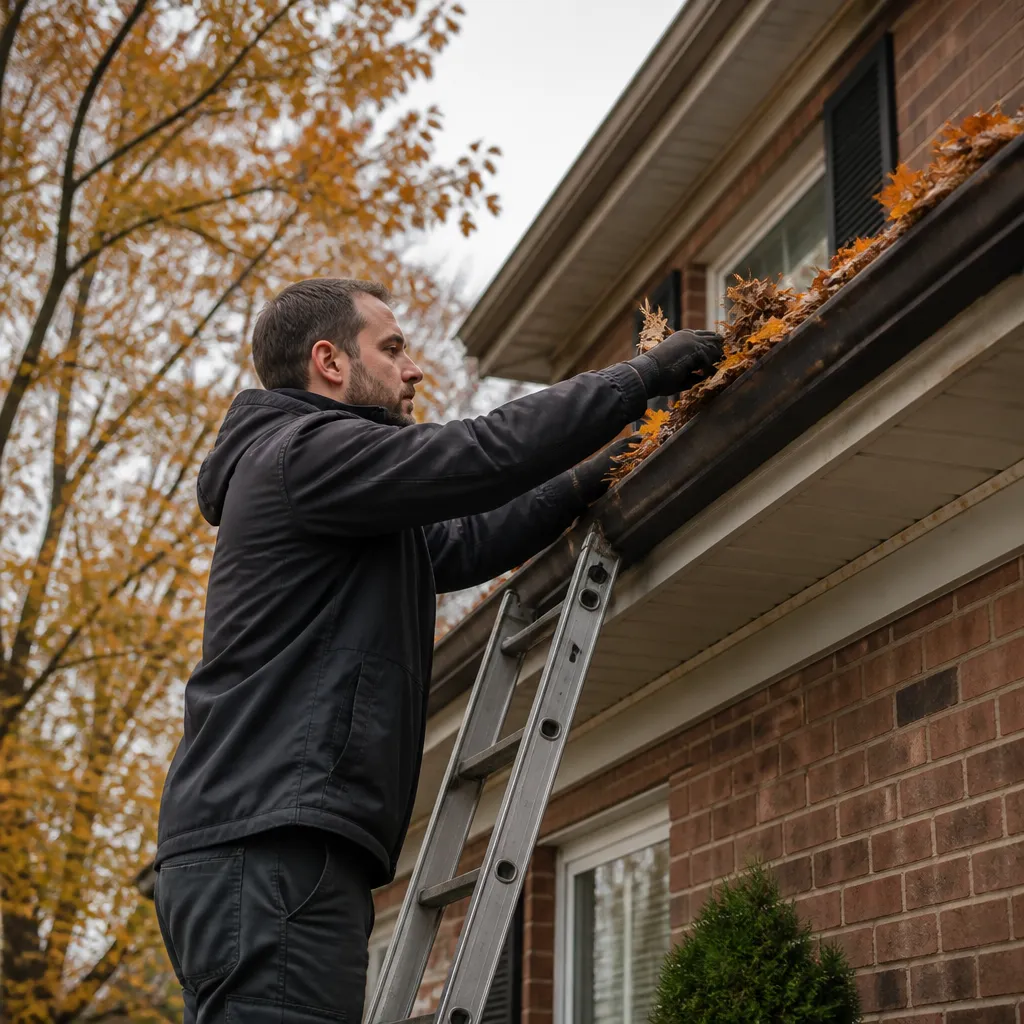
Gutters are the item most homeowners skip and the one that causes the most expensive damage. A roofing manufacturer’s winter gutter guide recommends cleaning gutters twice a year, once in spring and again in late fall, just after the trees have shed their leaves. In Oakville, Burlington, and Mississauga, where many properties have mature trees over the roofline, that second cleaning is the one that prevents trouble.
Why late October beats mid-November
Waiting until the last leaf drop means you clean once instead of twice, which is the right trade if you are careful about timing. Waiting until the first freeze is a different story. Wet debris turns into a solid plug that is far harder to clear, and you may end up on a cold ladder with a scraper. Wet leaf debris scoops out by hand in October, but it chips and smears by December.
What blocked eavestroughs do in a freeze
Meltwater from a sunny afternoon runs into the trough, hits a cold gutter at night, and refreezes at the edge of the roof. That ice dam pushes water up under shingles and into the soffits. Clear gutters let meltwater drain normally, which is the whole point. A blocked trough also overflows onto walkways, where it turns into a slick patch by morning.
A gutter that drains in October costs you one cleaning. A gutter that freezes solid in January can cost you a roof repair.
Downspouts and splash-out points
Check that every downspout discharges at least a short distance from the foundation and that the extension is not sitting in a low spot where water pools. Splash blocks that shifted over the summer send water back toward the wall. After cleaning, run a hose into each downspout and watch the outlet, which tells you more about the job than a visual check.
Pro tip: Run a hose into the top of each downspout and watch the outlet. If water backs up or sprays from a seam, the blockage sits below the gutter and needs a flexible auger or professional clearing, not more water.
Window Cleaning Before November
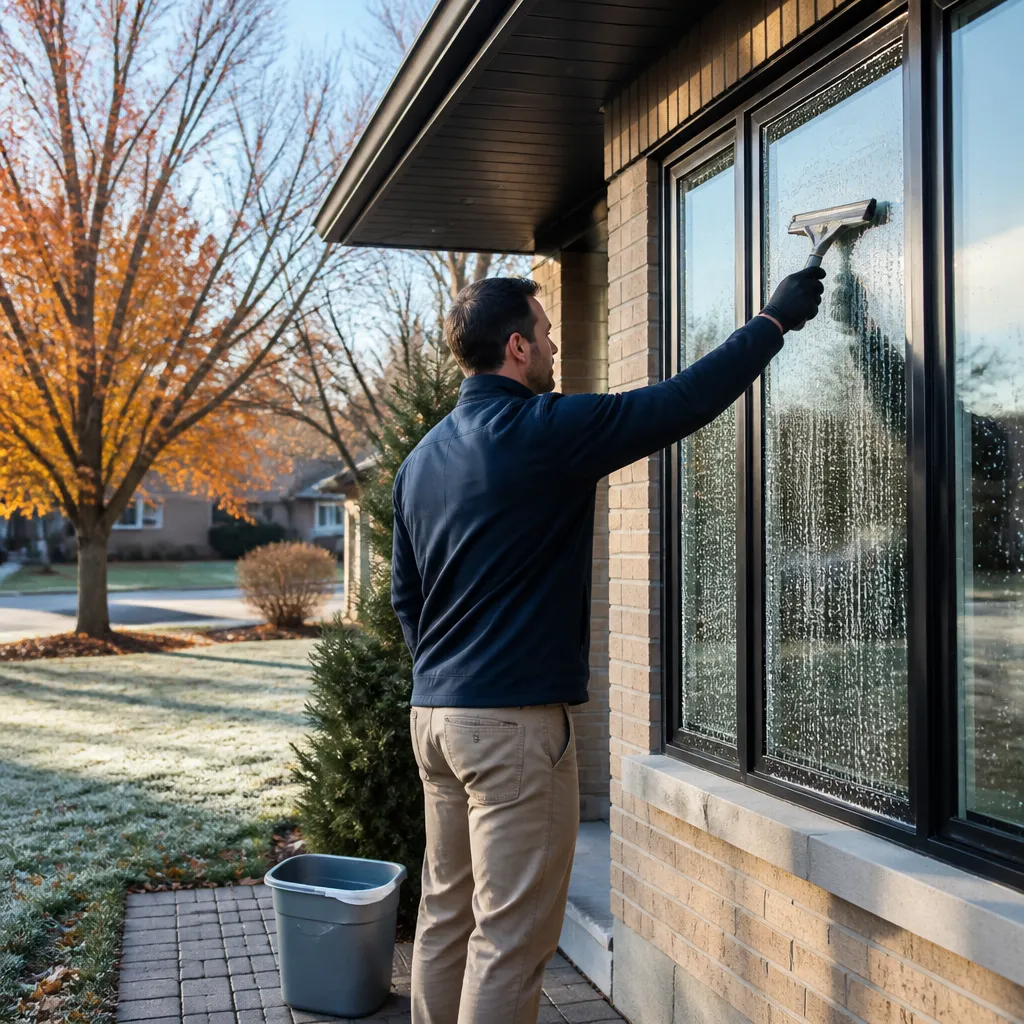
Exterior glass collects a season of pollen, tree sap, and road spray. Cleaned in October, it stays clearer through the dark months. Left until spring, the film is harder to lift and the sills show every bit of it. Plan exterior glass for a dry, mild day, because streaks dry fast in cold wind and leave you wiping the same pane twice.
Exterior glass and sills
Wash the glass from the top down with a squeegee, then wipe the sill and frame. Sills are where grit and dead insects collect and where moisture stays longest after rain. A sill left dirty through winter tends to stain, and the stain is much harder to lift in spring than a simple October wipe-down.
Tracks and screens
Tracks hold grit that wears down sliding windows over time. Vacuum them, wipe them dry, and check each screen for tears before you store it. Screens pulled off for the season should go somewhere dry, not onto a damp deck where they grow mildew.
Seals, fogging, and caulk
Look for condensation or fog between the panes, best viewed at a low angle in morning light. Fogged units are a warranty or replacement conversation, not a cleaning job. A fall home maintenance checklist from Ontario West Insurance also lists sealing windows and doors to keep heat in, and that matches what we see on properties every October. Cracked caulk around frames lets cold air and water into the wall, so re-caulk while the temperature is still mild enough for the product to cure.
Pro tip: Check a suspect window at a low angle in daylight. A fogged seal shows up as a faint haze that no cleaning product will remove, which tells you the problem is the unit itself.
Power Washing Before Frost
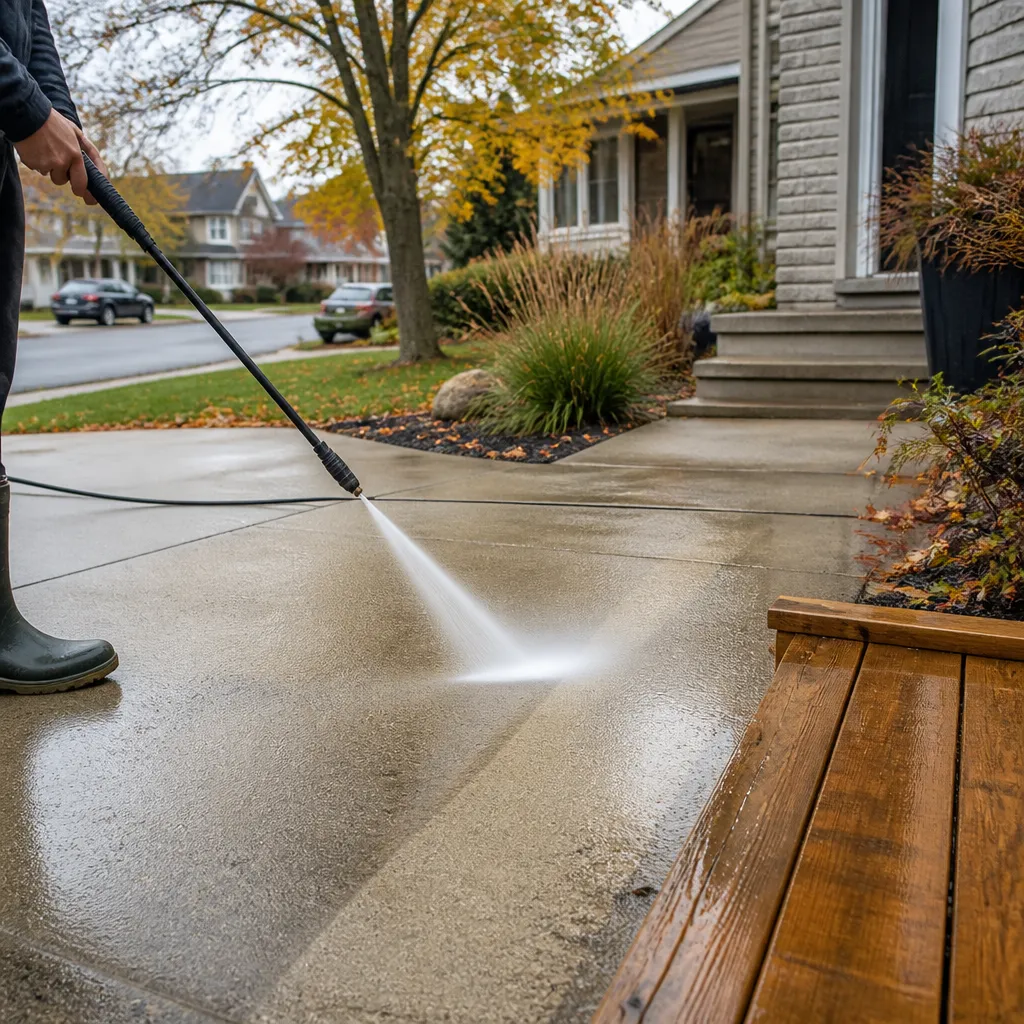
Power washing is the one exterior task where timing matters more than technique. Water that sits on concrete or wood freezes into ice, and a wet surface that refreezes overnight is a fall risk on a walkway. Schedule driveways, decks, and walkways for a day when the forecast stays above freezing long enough for the surface to dry completely.
Driveways and walkways
Concrete and interlock hold grime, oil stains, and the salt residue from last winter. Cleaning them in October means less salt bonds to the surface when the next snowfall arrives. Pressure settings matter here. A wide fan tip works on concrete, while pavers need a lower setting so joint sand is not blasted out and edges are not etched.
Decks and wood siding
Wood must dry completely before any sealing or staining. A deck washed too late in the fall stays damp under cold conditions, and stain applied to damp wood flakes within a season. Siding is a different job. Use a cleaning solution and a lower pressure setting instead of forcing dirt off with a high-pressure jet, and keep the wand moving to avoid cutting into the surface.
What to leave alone in late fall
Skip damaged mortar, loose caulk, and window seals entirely. High pressure aimed at a crack forces water deeper into the joint, which is exactly what you want to avoid before a freeze. Older vinyl siding is a similar case. It can crack or push water behind the panel, so soft wash it or leave it for spring.
Pro tip: Finish power washing at least a full day before the overnight low is forecast to drop below freezing. If you cannot find that window, move the job to spring rather than risk an icy driveway.
Spider Web Removal and Pest Control This Fall
Fall is when spiders move toward shelter, and webs build up under eaves, around entrances, and in window corners. Webs trap dust and dead insects, which draw more pests to the same spot. Clearing them in late October means fewer spiders are waiting in the corners when the weather turns and the house gets sealed up for the season.
Entrances, eaves, and light fixtures
Webs collect most on porch ceilings, the gap between the eave and the siding, and around exterior lights where insects gather. Sweeping the visible strands is a start, but the sticky residue left behind attracts the next web. Work from the top down so debris falls onto ground you have not cleaned yet, then wipe the surfaces the web was attached to.
Ticks and mosquitoes in the yard
Tick and mosquito control is a separate question from web removal. Tall grass, leaf litter piles, and the wooded edge of a property are where ticks hide, and they remain active on mild fall days. Clearing leaves from the lawn perimeter and beds reduces that habitat. For heavily wooded lots, our bug and spider removal work can be scheduled around the same visit as your other exterior tasks.
Timing a spray treatment
Spraying right before rain is wasted money, because rain washes the product off before it dries onto the surface. Pick a calm, dry day with a reasonable window before the next forecast shower. Keep kids and pets off treated areas until the surface has dried, and follow the product label for any reentry guidance.
Pro tip: Knock webs down with a soft broom from the top of the eave before any spray goes on. Leftover silk gives the next spider a ready-made anchor point, so remove it along with the web itself.
Entrances, Doors, and Siding
Entrances take the heaviest foot traffic and the most salt in winter. Cleaning door frames, thresholds, and the steps before the first snow lets you spot cracked trim and loose hardware while there is still time to fix them. Entrance details are cheap to address in late October and expensive to chase in January.
Doors and thresholds
Wipe door frames and thresholds with a mild cleaner and check the weatherstripping. Close the door on a dollar bill. If the bill slides out with no resistance, the seal has failed and cold air is getting in. Replacing weatherstripping is a small job that most homeowners can handle before the heating season starts.
Hand washing siding around the entry
Hand washing siding near the entry and garden beds removes splashed soil and grime that a pressure washer can drive into seams. Use a soft brush and rinse from the bottom up to avoid streaks. Finish early enough in the day that the siding is dry before dusk, since damp siding overnight is exactly what you are trying to avoid.
Low-cost fall items people skip
Check outdoor light fixtures, house numbers, and caulk lines around door trim. Caulk that peels in late fall should be replaced before ice gets under it and widens the gap. The same Ontario West Insurance checklist also recommends servicing your furnace and checking smoke alarms. Those tasks happen indoors, but they belong on the same weekend as your exterior walk-around.
Pro tip: Photograph your entry door frame, siding, and eaves before you start cleaning. Those photos give you a dated baseline if you ever need to compare conditions in spring or document a claim.
Comparing Late-Fall Options
Most homeowners choose between doing the work themselves with a ladder or rented equipment, or hiring a crew. The table below shows where each approach makes sense on a late-October schedule, and where it causes problems.
| Approach | Best For | Main Risk |
|---|---|---|
| DIY gutter cleaning with a ladder | Single-storey homes with level, firm ground and easy access | Ladder falls on wet or uneven ground, and downspout clogs are often missed |
| Professional gutter and eavestrough cleaning | Two-storey homes, steep roofs, and properties with heavy leaf loads | Scheduling can be tight in late October, and cost is higher than a yard-only job |
| Rented pressure washer | Small patios and short walkways | Too much pressure etches concrete and damages wood or vinyl, and leftover water can freeze |
Our view is simple. A ladder is a reasonable choice for gutters on a single-storey home with firm footing. Two-storey homes, steep roofs, and anything that requires working over a porch roof belong with a crew that has proper access and fall protection. Rented pressure washers cause more damage than they prevent when used on siding.
Frequently Asked Questions
When is the right time to clean gutters in Ontario?
Clean them after most of the leaves have dropped but before the first freeze. For many properties that means late October or the first half of November, depending on how long the trees hold their leaves. Waiting too long turns wet debris into a frozen mass that is much harder to clear.
Can I power wash in November in Ontario?
Only on a day that stays above freezing long enough for the surface to dry, and only if no overnight freeze is forecast soon after. Wet concrete and wood that freeze overnight are a slip hazard, and wood that stays damp can be damaged by stain applied too early.
Is spider web removal necessary before winter?
It is not required for the structure of your home, but clearing webs from entrances, eaves, and light fixtures keeps dust and dead insects from building up. It also makes spring cleaning much faster and removes the anchor points spiders reuse.
Should I check window seals before winter?
Yes. Look for fog between the panes in low-angle daylight, and check caulking around the frames for cracks. A fogged seal needs a replacement, while cracked caulk is a simple repair you can make before the weather is consistently cold.
What is the difference between spider removal and tick control?
Spider removal targets webs and spiders on the building itself, such as eaves, entrances, and window corners. Tick control targets the yard where ticks live, including tall grass, leaf litter, and wooded edges. Clearing leaves and trimming the lawn edge helps homeowners, but yard treatments should be handled by someone who knows the product rules and timing.
Which item on this list do you usually skip, and what did it cost you the last time you put it off?