
Ontario homeowners have a narrow window every fall, roughly early September through late October, to get their exterior surfaces ready before freeze-thaw cycles take over. Miss that window and what looked like surface grime in October can quietly become cracked siding, rotted trim, or a buckled entryway threshold by March. Fall home detailing Ontario is not optional maintenance for a well-kept home. It is the one service that separates houses that survive winter intact from houses that spend spring dealing with water damage, mould, and costly repairs that could have been prevented for a fraction of the price.
Table of Contents
- Why Fall Detailing Matters More Than Spring Cleaning
- Siding Protection Before Winter: What Actually Works
- Entryway Cleaning Fall Maintenance: Doors, Thresholds, and Surrounds
- Hand Washing vs. Power Washing: Choosing the Right Method
- The Gutter and Eavestrough Connection to Siding Health
- Spider Webs, Insects, and Why Fall Is the Time to Deal With Them
- Ontario Timing and Scheduling: When to Book, When It Is Too Late
- Frequently Asked Questions
- References
Why Fall Detailing Matters More Than Spring Cleaning
Most homeowners think of exterior cleaning as a spring ritual. That instinct is backwards. Spring cleaning removes what winter already deposited. Fall detailing prevents winter from doing damage in the first place. The distinction matters enormously for siding, entryways, and any exterior surface that faces Ontario’s freeze-thaw conditions.
Freeze-thaw cycles are the core problem. Water trapped in microscopic surface cracks expands when it freezes, forcing those cracks open wider. By the time temperatures hold above zero consistently, what was a hairline gap in October has become a visible split. Cleaning surfaces before winter removes the organic matter, grime, and moisture-retaining biofilm that make freeze-thaw damage so much worse. A clean, dry surface handles temperature cycling far better than one coated in a season’s worth of algae, leaf tannins, and road dust.
For Ontario communities like Oakville, Burlington, Mississauga, Hamilton, St. Catharines, Niagara Falls, and Fenwick, the shoulder season between fall and winter is short and variable. You cannot count on having November to catch up. Book fall detailing in September or October and treat it as a non-negotiable part of your annual home care routine.
| Key Insight | Explanation |
|---|---|
| Timing is everything in Ontario | The ideal window for fall exterior home prep runs from early September through late October, before ground freeze makes surface work impractical. |
| Dirt traps moisture against siding | Grime, mildew, and leaf debris hold moisture against siding surfaces for weeks, accelerating freeze-thaw damage through winter. |
| Entryways are high-traffic damage zones | Doors, thresholds, sills, and surrounding trim take the most foot traffic and weather exposure of any exterior surface, making fall cleaning and inspection essential. |
| Hand washing beats pressure washing on delicate surfaces | Aggressive pressure washing can strip protective finishes from vinyl and painted wood. Low-pressure hand washing or soft washing cleans without causing damage. |
| Clogged gutters damage siding directly | Overflowing eavestroughs direct water down the face of siding rather than away from the home, causing rot, mould, and staining that accelerates winter deterioration. |
| Gaps and corners need debris cleared, not just surfaces wiped | Tight spaces between siding panels, around window frames, and at door surrounds collect leaves and organic debris that hold moisture pressed against the structure all winter. |
| Fall spider web removal protects surfaces and air quality | Spider nests and insect debris create organic buildup on siding and entryways that stains and traps moisture. Removing them in fall prevents them from being sealed in by frost. |
Siding Protection Before Winter: What Actually Works
Siding protection before winter starts with honest inspection, not a sales pitch for new materials. In most cases, the siding on an Ontario home is structurally sound. What is failing is the maintenance layer: the surface cleanliness, the caulking at joints, the condition of paint or protective coatings, and the debris packed into every gap the wind has found over the past eight months.
The Inspection Step Most Homeowners Skip
Walk the entire perimeter of your home and look at the siding from ten feet back before you touch it. You are looking for peeling paint, discoloration, visible cracks or splits, and any spots where siding panels are separating from each other or from trim. Paint that is lifting means water has already gotten underneath. If that situation goes into winter unaddressed, the freeze-thaw cycle will force siding to expand and contract, creating larger cracks that let in more water, which causes more expansion. The cycle compounds quickly.
Dirt and mildew cling to siding surfaces far more stubbornly than most people expect. Once winter settles in, everything sticks tighter. Cleaning before freeze-up gives the surface a chance to dry properly and eliminates the organic layer that holds moisture against the structure through months of cold weather. It also removes the visual camouflage that hides real damage underneath.
What Hand Washing Siding Actually Accomplishes
Professional hand washing of siding, the kind offered as part of a proper home detailing service, does more than improve appearance. It removes algae, mildew colonies, insect debris, tree sap, and the fine grit that acts as an abrasive against paint and coatings every time wind moves across the surface. A clean siding surface handles moisture better and does not trap grime under layers of frost. It also reveals the true condition of caulk lines, trim joints, and panel edges that may need attention before temperatures drop.
The method matters. Vinyl siding should never be blasted at close range with a pressure washer set for concrete cleaning. The same goes for painted wood and engineered wood products. Use a soft washing technique with appropriate cleaning solutions and low-pressure rinsing to clean without stripping protective finishes.

Caulking and Gap Inspection After Cleaning
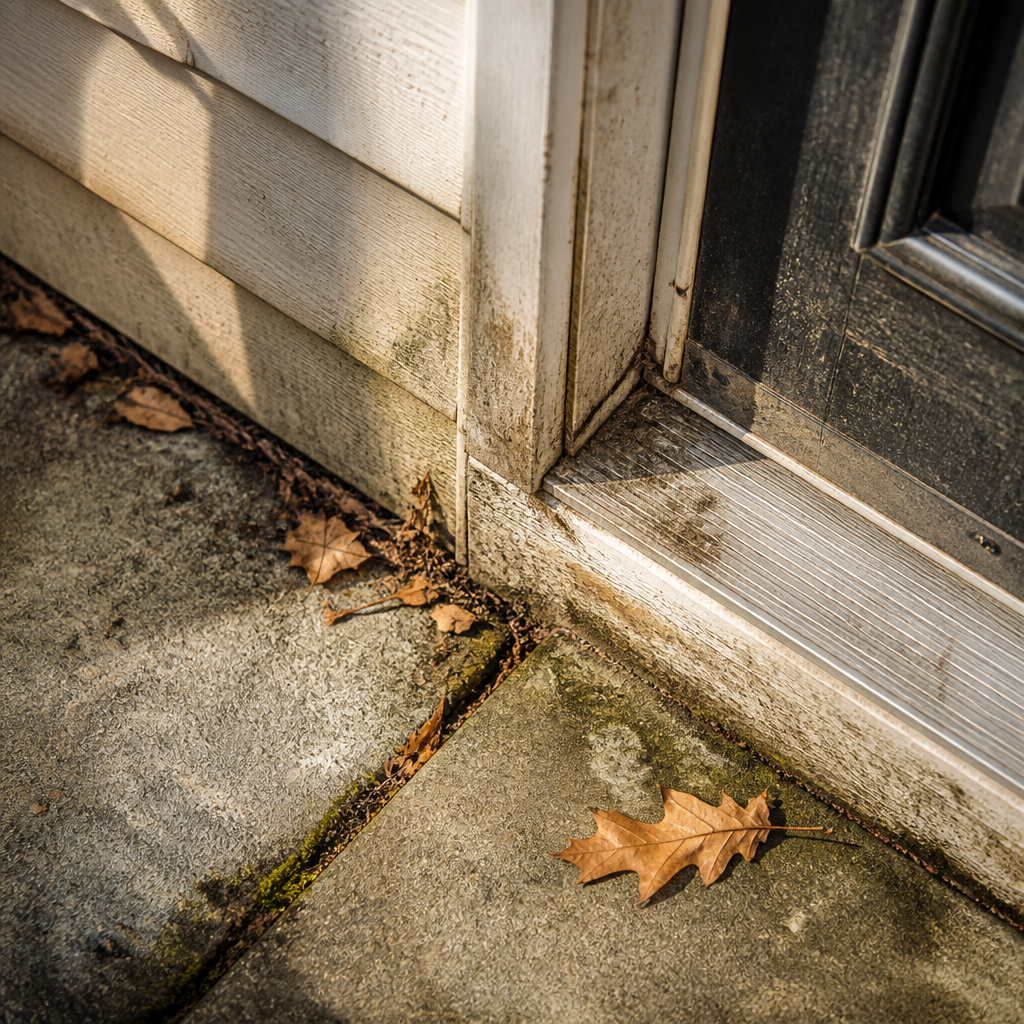
Once the surface is clean, check every joint where siding meets window frames, door frames, trim boards, and foundation. Cracked or missing caulk is the primary water entry point on most homes. Failed caulk allows cold air and moisture inside, which leads to rot, mould, and structural damage that is far more expensive to address than a tube of exterior sealant applied in October.
Clearing debris from gaps and corners is equally important. Those tight spaces tend to gather leaves, twigs, and organic material. When that debris absorbs melting snow, it keeps moisture pressed against your siding for weeks at a time, exactly the condition that turns minor surface imperfections into serious structural problems.
Pro tip: After cleaning siding, run a gloved hand along the base of every panel row and every corner trim piece. If you pull out wet leaves or compacted debris, that pocket of moisture was working against your siding all summer and would have continued all winter. Clearing it takes two minutes and prevents weeks of moisture contact.
Entryway Cleaning Fall Maintenance: Doors, Thresholds, and Surrounds
The entryway is the exterior surface that takes the most combined abuse of any part of your home. It handles high foot traffic, repeated door opening and closing that drives drafts against the frame, and direct exposure to rain, wind, and the debris that collects wherever air slows down at a building corner. Entryway cleaning as part of fall maintenance is not cosmetic. It is structural care for the most-used functional part of your exterior.
What Falls Apart When Entryways Are Neglected
Door surrounds accumulate more spider webs, wasp nests, and insect debris than almost anywhere else on the house because they offer sheltered corners and a warm surface near the door frame. That organic buildup stains painted wood and composites, traps moisture against caulk lines, and creates the exact conditions that allow mould to establish itself before winter drives it deeper into surface cracks.
Thresholds and sills are a separate concern. These horizontal surfaces collect water and debris simultaneously. When that debris freezes into the threshold joint or underneath the door sweep, it degrades weatherstripping faster and allows drafts to develop through the winter that make your heating system work harder. Cleaning the threshold area thoroughly in fall, including underneath the sweep and along the sill edges, extends weatherstripping life and keeps the seal intact through months of cold.
The Door Itself: Painted and Stained Surfaces
Front doors take direct ultraviolet and weather exposure all summer. By October, the surface has accumulated dust, insect residue, and in many cases the beginning of paint chalk or finish oxidation. Hand washing the door with appropriate cleaning solutions removes that layer before it has a chance to trap moisture under frost. Check the condition of any painted or stained finish at the same time. Any peeling or cracking finish on a door should be addressed before temperatures drop below the point where adhesion chemistry works properly.
The door surround, including the casing, sill, and any decorative trim, should be cleaned with the same attention. Pay particular attention to horizontal surfaces where water can pool, and to any area where wood meets masonry or concrete, which are common spots for caulk failure and moisture infiltration.
Pro tip: When cleaning an entryway in fall, start at the top of the door surround and work down. Wasp nests and spider webs at the soffit line drop debris onto surfaces below as you dislodge them. Cleaning top-to-bottom means you are not re-contaminating surfaces you already cleaned.
Winter does not forgive neglect. Small problems that seem cosmetic in September can become structural or costly by February. The fall cleaning window is your last practical opportunity to address them before freeze-up locks everything in place.
Hand Washing vs. Power Washing: Choosing the Right Method
Both hand washing and power washing have legitimate roles in fall home detailing. The mistake is treating them as interchangeable or defaulting to pressure washing because it feels more thorough. High pressure is not the same as thorough, and on the wrong surfaces, it causes damage that then needs its own repair before winter.
| Method | Best Surface Applications | Key Limitations |
|---|---|---|
| Hand Washing / Soft Washing | Vinyl siding, painted wood, door surrounds, window frames, entryway trim, any surface with a painted or coated finish | Slower process; requires appropriate cleaning solutions; not suited for heavy concrete staining or large paved areas |
| Power Washing (Low-Medium Pressure) | Concrete driveways, paved walkways, brick surfaces, decks with solid finishes, general path cleaning | Can strip paint or damage vinyl if pressure is too high; requires experienced operator; not appropriate for siding or detailed trim work |
| Combination Approach | Full exterior detail: hand wash siding and entryways, power wash hardscape surfaces such as driveways and walkways | Requires more time; most effective overall approach for a complete fall exterior preparation |
In practice, the combination approach is the right answer for most Ontario homes doing a complete fall exterior detail. Hand wash the siding, door surrounds, window frames, and any painted or coated surfaces. Power wash the driveway, walkways, and deck at appropriate pressure for those materials. The result is a fully prepared exterior without the risk of pressure damage to surfaces that need a more careful touch.
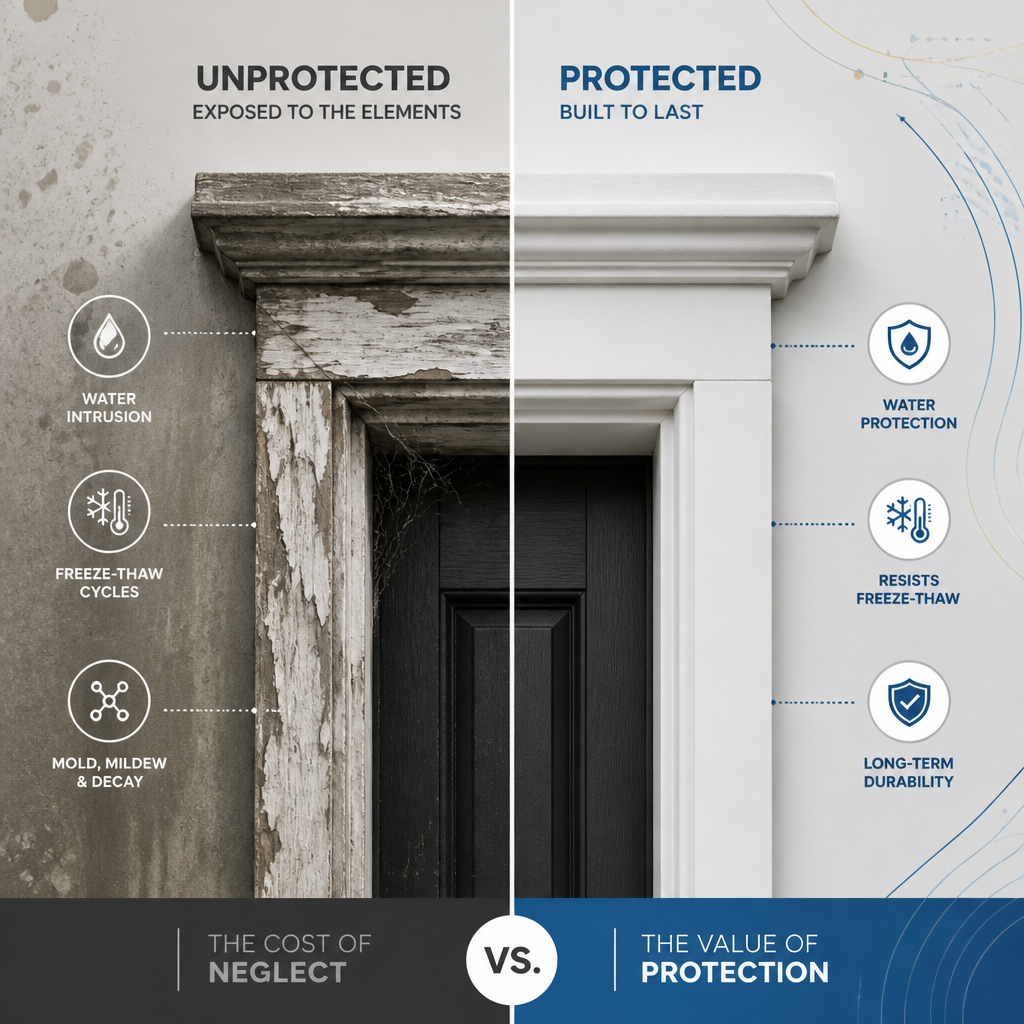
A common mistake is using a pressure washer on vinyl siding from too close a range. Vinyl contracts and expands significantly with temperature changes and must be installed loosely to allow for movement. Forcing water behind loose panels or stripping surface texture with high pressure creates new problems rather than solving old ones. Use gentle cleaning solutions and low-pressure rinsing to clean vinyl without causing harm.
The Gutter and Eavestrough Connection to Siding Health
There is a direct physical relationship between gutter performance and siding condition that many homeowners miss when they think about fall maintenance as a series of separate tasks. When eavestroughs are clogged, water overflows the edge and runs directly down the face of the siding rather than being channelled away from the house. That overflow pattern stains siding, drives moisture into caulk joints, and in winter creates ice buildup along roof edges that adds additional stress to the entire system.
Falling leaves quickly clog gutters, causing water overflow that can damage siding and foundation walls. Cleaning gutters in fall, ideally after the majority of leaves have fallen in your area, keeps water moving where it belongs: away from the house. For Ontario homes surrounded by mature trees, this may mean scheduling gutter cleaning in late October rather than early September to catch the bulk of the leaf fall.
Blocked downspouts are a separate and often overlooked problem. Water that cannot exit through the downspout backs up into the gutter, increases ice dam risk along the roofline, and eventually finds the path of least resistance, which is usually through fascia and soffit and down the wall behind the siding. Clean gutters are not just about water management. They are directly connected to the long-term condition of your siding, entryway surrounds, and foundation.
For homeowners in Oakville, Burlington, Hamilton, Mississauga, St. Catharines, Niagara Falls, Fenwick, and surrounding areas served by Performance Window Cleaning, professional eavestrough and gutter cleaning is best scheduled as part of a complete fall exterior package alongside home detailing, so that siding and entryway work is not undermined by gutter overflow the first time it rains hard after the service.
Spider Webs, Insects, and Why Fall Is the Time to Deal With Them
Spider webs and insect nests on siding and around entryways are more than an aesthetic problem. The organic debris from insect activity, including egg sacs, web material, wasp nest pulp, and the bodies of insects that have died against the surface, creates a layer that retains moisture and stains surfaces over time. Left in place through winter, this material gets sealed against painted and coated surfaces by frost and ice, making it harder to remove in spring without risking surface damage.
Fall is the right time to address this because spider and wasp populations are at their most active in late summer and early fall. Removing webs and nests in October, before the first hard frost, eliminates the problem before it becomes a frozen, compacted residue. It also removes any overwintering egg sacs before they hatch in spring and re-establish colonies on the same surfaces.
For homeowners dealing with ongoing spider activity around the foundation, eaves, and entryway, combining physical removal with a professional spider and insect control treatment makes the effect last significantly longer than cleaning alone. Spider and pest removal services that include web removal plus a barrier treatment address both the current population and the conditions that attract new colonies. This is particularly relevant for homes near green spaces in areas like Fenwick, Niagara Falls, and the Hamilton escarpment communities where ground-level spider activity is heavy in fall.
Ontario Timing and Scheduling: When to Book, When It Is Too Late
In most of Ontario, the practical window for exterior detailing and siding protection runs from early September through late October. That is the range where temperatures are consistently above freezing through the day, surfaces dry properly after washing, and any follow-up caulking or minor repair work can be completed with adhesion chemistry that functions correctly.
What Happens When You Wait Too Long
Once overnight temperatures consistently drop below 10 degrees Celsius in mid to late October, exterior cleaning and preparation becomes progressively less effective. Wet surfaces take longer to dry, cleaning solutions behave differently in cold conditions, and any caulking or sealant applied in cold weather risks poor adhesion and premature failure. Waiting until November in Ontario, particularly in inland areas like Hamilton, Burlington, or Niagara Falls where hard frosts arrive earlier, often means the window is already closed.
Scheduling Strategy for Ontario Homeowners
Book fall exterior detailing no later than the first week of October. Professional services book up quickly in September and October because homeowners with established maintenance routines lock in their spots early. If you are scheduling for the first time, contact service providers in late August to understand their availability and avoid being pushed past the safe working window.
If you have large deciduous trees on your property, your scheduling may need to split into two stages: an early October exterior detail that covers siding and entryways before the trees are bare, followed by a late October gutter and eavestrough cleaning after the bulk of leaves have fallen. This two-stage approach is more thorough than a single visit and ensures gutter cleaning is not immediately undone by another week of heavy leaf fall.
For homeowners across the communities served by Performance Window Cleaning, including Oakville, Burlington, Mississauga, Hamilton, St. Catharines, Niagara Falls, Fenwick, and surrounding areas, a full fall exterior package covering home detailing, gutter cleaning, window cleaning, and power washing delivers the most complete preparation with the least logistical friction.
Frequently Asked Questions
What is included in fall home detailing for an Ontario home?
A thorough fall home detailing covers hand washing of all siding surfaces to remove dirt, mildew, algae, and debris; cleaning of all entryway surfaces including doors, frames, sills, and surrounding trim; removal of spider webs and insect debris from eaves, corners, and entryways; cleaning of window frames and sills; and where appropriate, power washing of driveways, walkways, and deck surfaces. It is a comprehensive exterior surface reset before winter conditions begin.
Why is hand washing better than pressure washing for siding?
Pressure washing at high intensity can strip paint from wood siding, force water behind vinyl panels, and damage protective coatings on any siding material. Hand washing or soft washing uses appropriate cleaning solutions at low pressure to remove organic buildup and grime without risking surface damage. For painted surfaces, door surrounds, window frames, and vinyl siding, gentle methods produce a better result and leave the surface intact.
How does siding cleaning prevent winter damage?
Dirt, mildew, and organic debris hold moisture against siding surfaces. When that moisture-saturated layer freezes, it expands against the siding and any existing cracks or gaps, forcing them wider. A clean, dry surface handles the freeze-thaw cycle far better. Cleaning also makes it easier to identify cracks, failed caulking, and peeling paint that need to be addressed before freeze-up.
When should I schedule fall home detailing in Ontario?
The practical window is early September through late October, with the sweet spot in mid-September to early October. Once overnight temperatures consistently drop below 10 degrees Celsius, cleaning effectiveness drops and any subsequent caulking or sealant work becomes unreliable. In inland Ontario communities, hard frosts can arrive earlier than expected, so earlier scheduling gives you a reliable buffer.
Do I need to clean my entryway separately from the rest of the siding?
Entryways warrant dedicated attention beyond the general siding wash because they accumulate more insect debris, spider webs, and organic material in sheltered corners, and because the threshold and door sweep area requires hands-on inspection that a siding wash alone does not cover. A proper entryway cleaning also checks the condition of caulking around the door frame and the integrity of weatherstripping, both of which are critical for winter energy efficiency.
Should gutter cleaning happen before or after siding cleaning?
In most cases, gutter cleaning should follow siding and entryway cleaning, or be scheduled as a separate later visit. Gutter cleaning dislodges debris that can land on freshly cleaned surfaces below, and the ideal timing for gutter cleaning in Ontario is late October, after most leaves have fallen. If you schedule both services simultaneously, ensure gutters are cleaned first so that any debris falls onto surfaces that will then be cleaned afterward.
What are the signs that my siding needs professional cleaning before winter?
Look for visible dark streaks or green tinge on the surface, which indicates algae or mildew; paint that appears chalky or is lifting at the edges; heavy spider web or wasp debris around upper panels and eave lines; and debris packed into gaps between panels or at the base of corner trim. Any of these conditions means moisture is already being trapped against the surface, and cleaning before freeze-up is the right call.
Have you already scheduled your fall exterior detailing this year, or are you still figuring out which services to prioritize? Share what has worked for you in the comments.
References
- Fall exterior home prep guide for Canadian homeowners covering siding, gutters, and timing
- How fall eavestrough maintenance protects Ontario homes from freeze-thaw water damage
- Winter siding preparation and exterior maintenance tips from a siding manufacturer
- Preventing winter damage to siding through fall cleaning and inspection
- Seasonal exterior home maintenance checklist for Ontario homeowners