
Most homeowners think about their gutters twice a year, if at all. The problem is that thinking about them and actually cleaning them on the right schedule are two very different things, and the gap between the two is where expensive water damage quietly starts. Gutter cleaning frequency is not a one-size-fits-all answer. The right schedule depends on your tree coverage, your local climate, and what season it is right now. This guide breaks down exactly how often you should clean your gutters, what to watch for between cleanings, and how to build a maintenance routine that protects your home year-round.
Table of Contents
- Quick Takeaways
- The Baseline Rule for Gutter Cleaning Frequency
- Seasonal Gutter Maintenance: A Month-by-Month Breakdown
- What Drives Your Cleaning Schedule: The Real Variables
- How to Spot Gutters That Need Cleaning Right Now
- Gutter Cleaning Approaches Compared
- Frequently Asked Questions
- References
Quick Takeaways
| Key Insight | Explanation |
|---|---|
| Minimum twice a year | Most homes without heavy tree coverage need at least a late-spring and a late-fall cleaning to stay clear of debris and blockages. |
| Heavy tree coverage means 3-6 cleanings | Homes surrounded by pine, oak, or maple trees can see debris accumulate fast enough to require cleaning every 2-3 months during active drop seasons. |
| Fall is the most important season | Leaves drop faster than most homeowners expect in autumn. Waiting until late November often means compacted, heavy debris that stresses the gutter system. |
| Spring cleaning removes winter residue | Shingle grit, frozen debris, and loosened joints left over from winter need to be cleared before spring rain puts your gutters to work. |
| Gutter guards reduce, not eliminate, cleaning | Guards extend the time between cleanings but do not replace regular maintenance. Fine particles, seeds, and pine needles can still bypass most guard types. |
| Clogged gutters damage more than just gutters | Overflow from blocked gutters can damage fascia boards, siding, foundations, and even interior walls, making regular cleaning far cheaper than reactive repairs. |
| After major storms, inspect immediately | Wind events and heavy rain push debris into the system out of schedule. A visual check after any major storm is part of good seasonal gutter maintenance. |
The Baseline Rule for Gutter Cleaning Frequency
The standard starting point for gutter cleaning frequency is twice a year: once in late spring and once in late fall. This two-cleaning baseline exists because those are the two periods when the most debris enters the system. Late fall clears leaves before winter freezes set in. Late spring clears the pollen, seed pods, and shingle grit that accumulate after winter thaw.
That said, twice a year is a minimum for homes in relatively open lots with limited tree canopy above the roofline. For most homes in the Greater Toronto Area and surrounding communities that Performance Window Cleaning serves, including properties in Oakville, Burlington, and Mississauga, the actual requirement is closer to three or four times per year. The mature urban tree canopy in these neighbourhoods means debris volumes are higher than the national baseline suggests.
Pro tip: Do not schedule your fall cleaning too early. Cleaning while leaves are still actively falling wastes the service. Aim for late October through mid-November, after the bulk of leaf drop has finished, so one cleaning handles the full season’s worth of debris.

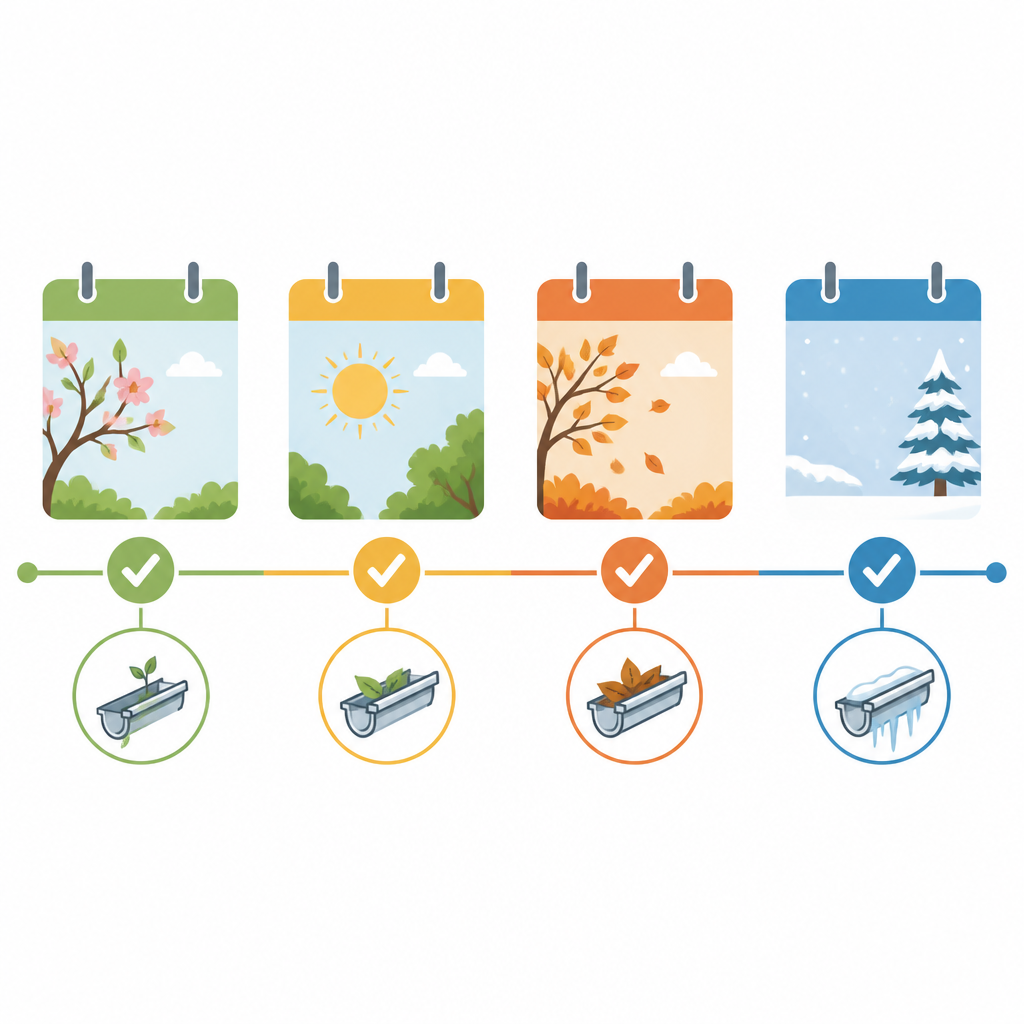
Seasonal Gutter Maintenance: A Month-by-Month Breakdown
Understanding seasonal gutter maintenance means treating each season as its own chapter rather than thinking of it as one annual chore. Each season places different demands on your gutter system, and each cleaning has a different purpose.
Spring: March to May
Winter is harder on gutters than most people realize. Frozen debris thaws and loosens, shingle grit washes down into the channels, and ice expansion can separate gutter sections from the fascia. A spring cleaning in March or April, before the heavy rain season begins, clears this residue and gives you a chance to inspect for any damage that winter caused.
In May, a second look is often worthwhile. Maple trees release their helicopter seeds (samaras) in enormous quantities in late April and May. These seeds are exactly the right size and shape to wedge into downspout outlets and gutter seams, creating blockages that look minor from the ground but completely stop water flow. If you have maples anywhere near your roofline, a May spot-check is not optional.
Summer: June to August
Summer is typically the lowest-maintenance period for gutters, but it is not maintenance-free. Pollen and fine organic matter build up slowly and invisibly. If your area has storm activity in July or August, wind can push significant debris into the system between scheduled cleanings. A quick visual check after any major wind or rain event costs nothing and can catch a problem before it becomes a blocked downspout during the next heavy rain.
Fall: September to November
This is the critical window. Leaf drop is faster and heavier than most homeowners anticipate, and waiting until all the leaves are down often means the gutters have already been overflowing for weeks. For homes with heavy tree coverage, consider scheduling an early-fall cleaning in late September or early October to reduce the load before peak drop, followed by a final cleaning in late October or early November.
Compacted wet leaves are significantly heavier than dry ones, and that added weight stresses the hangers and fasteners that hold gutters to the fascia. Gutters that overflow in fall also create ice dams when temperatures drop, which compounds the damage into winter.
Winter: December to February
In most Canadian climates, active gutter cleaning during winter is not practical or safe. The goal is to enter winter with gutters that are already clear. If you missed the late-fall cleaning, any debris left in the system will freeze, expand, and potentially damage the gutters structurally. Ice and frozen leaves combined can be heavy enough to pull gutters loose from the fascia entirely.
Gutters do one job: move water away from your home. When they are clogged, the damage shows up in places you do not expect, including your foundation, your fascia, your roofline, and your interior walls.
What Drives Your Cleaning Schedule: The Real Variables
The two-times-a-year baseline assumes a fairly average situation. Several factors push that number higher, and knowing which ones apply to your property lets you build a schedule that actually fits your home rather than a generic recommendation.
Tree Species and Proximity
Tree coverage is the single biggest variable in determining how often you need to clean your gutters. Not all trees shed the same way. Pine trees drop needles continuously through late summer and fall, and those needles slip past most gutter guards and form dense, hard-to-clear mats inside the channel. Oak trees produce both spring catkins and fall leaves, meaning they create two distinct debris seasons. Maple trees drop their samaras in spring and their leaves in fall, also creating two problem windows.
Homes with mature trees overhanging or within close range of the roofline typically need three to four cleanings per year. Properties in heavily wooded areas may need more. If you are unsure how close is too close, a general working rule is that any tree with branches extending over or near the roofline will contribute meaningfully to gutter debris volumes.
Roof Pitch and Design Complexity
Steep roofs tend to shed debris more quickly into the gutters. Homes with multiple roof valleys, dormers, or complex rooflines have more collection points where debris concentrates. These properties often need more frequent attention at specific sections even if the overall roof area is not especially large.
Local Climate and Rainfall Patterns
Properties in areas with frequent rain and wind experience faster debris accumulation and put more continuous stress on their gutter systems. Heavy rainfall through spring and early fall means gutters are actually doing their job most of the time, which makes keeping them clear even more important during those periods.
Pro tip: If your home has eavestrough downspouts that drain near the foundation, a blocked gutter in a heavy rain event is not just a gutter problem. Overflow that pools against the foundation can create basement moisture issues that are far more expensive to fix than a regular cleaning schedule.

How to Spot Gutters That Need Cleaning Right Now
A scheduled cleaning program is the right approach, but there are also clear signs that tell you the gutters need attention regardless of where you are in the calendar. Catching these early saves money and prevents the kind of secondary damage that makes clogged gutters so costly.
Water Overflowing During Rain
If you see water spilling over the sides of your gutters during rainfall, rather than flowing through the downspouts, that is the most direct sign of a blockage. It means the channel is full of debris and water has nowhere to go except over the edge and down the siding.
Visible Plants or Debris at the Roofline
Gutters with enough organic material to grow moss or small plants have been overdue for cleaning for a long time. This level of debris accumulation means water has been pooling in the channel, which also increases the risk of rust and corrosion in metal gutters.
Water Stains on Siding or Fascia
Dark streaks or water stains running down the siding directly below the gutter line are a reliable indicator of chronic overflow. This kind of staining means debris has been causing overflow long enough to leave a visible mark, and it often coincides with fascia board damage that is harder to see from the ground.
Pest Activity Near the Roofline
Clogged gutters with standing water attract mosquitoes and other insects. If you notice unusual pest activity near the roofline or eaves, a blocked, water-holding gutter section is a likely cause. Performance Window Cleaning’s spider and pest removal services often work best when paired with a gutter cleaning, since debris-filled gutters are a prime habitat for insects and spiders looking for shelter.
Sagging or Separated Gutter Sections
Gutters that are pulling away from the fascia or visibly sagging between hangers are carrying too much weight, usually a combination of debris and standing water. This is a structural warning sign that the cleaning is overdue, and it should be addressed before the next heavy rain event adds more load to an already stressed system.
Gutter Cleaning Approaches Compared
Homeowners have three realistic options when it comes to managing gutter cleaning: handling it themselves, installing gutter guards and hoping that reduces the workload, or scheduling regular professional cleanings. Each approach has real trade-offs, and the right choice depends on your property, your schedule, and your risk tolerance.
| Approach | Best For | Key Limitations |
|---|---|---|
| DIY Cleaning | Single-storey homes with minimal tree coverage and homeowners comfortable on a ladder | Safety risk on multi-storey homes; easy to miss downspout blockages; no inspection for structural damage |
| Gutter Guards Installed | Homes wanting to reduce cleaning frequency; useful during heavy leaf seasons | Fine particles, pine needles, and seeds can still get through most guard types; guards still require periodic cleaning; not a full replacement for professional service |
| Professional Gutter Cleaning | Multi-storey homes, heavy tree coverage, homes where full downspout clearing and inspection are needed | Requires scheduling; recurring cost; but cost is consistently lower than water damage repairs caused by neglect |
In practice, the homes that end up with the most expensive damage are those that installed gutter guards, assumed the problem was solved, and then went years without a professional inspection. Guards are useful, but they are a supplement to regular cleaning, not a replacement for it.
For homeowners in the GTA and surrounding areas, professional eavestrough and gutter cleaning from a company with established local knowledge, like Performance Window Cleaning, provides the most reliable protection. The service includes clearing downspouts, checking for joint separation, and spotting early signs of structural wear that a homeowner on a ladder will typically miss.
Frequently Asked Questions
How often should gutters be cleaned if I have no trees near my house?
For homes with minimal tree coverage, twice a year is usually sufficient. Schedule one cleaning in late spring to clear winter residue and pollen, and one in late fall after leaf drop is complete. Even without trees, wind carries debris, and shingle granules wash into gutters over time, so skipping both cleanings entirely is not a good idea.
Is fall or spring more important for gutter cleaning?
Fall is generally the more critical of the two. The volume of leaves dropping in a short window can overwhelm gutters quickly, and debris left in the system over winter freezes, expands, and can cause structural damage. Spring is important for clearing what winter left behind, but fall cleaning has the higher stakes if only one cleaning is possible.
Can I clean gutters myself or should I always hire a professional?
For single-storey homes with accessible rooflines, careful DIY cleaning is possible. For anything above one storey, or for homes where downspouts need full clearing and the system needs a structural inspection, professional cleaning is the safer and more thorough option. The risk of ladder injuries on multi-storey properties is real, and the cost of a professional service is consistently lower than a hospital visit or water damage repair.
Do gutter guards mean I can clean less often?
Gutter guards reduce how often you need to clean, but they do not eliminate the need. Fine debris, pine needles, and small seeds bypass most guard types, and organic material builds up on top of screen-style guards over time. Plan for at least one professional inspection and cleaning per year even with guards installed, and more frequently if you have pine or oak trees nearby.
What happens if I skip gutter cleaning for a full year?
Skipping a full year of cleaning allows debris to compact, which adds significant weight to the gutter system and stresses the hangers and fascia. Standing water in blocked gutters attracts pests, promotes mold growth on the siding and fascia, and can overflow near the foundation during heavy rain. Over a Canadian winter, that same compacted debris freezes, expands, and can separate gutter sections from the roofline entirely.
How do I know if my downspouts are blocked, not just my gutters?
The clearest sign of a downspout blockage is water backing up and overflowing the gutter at the point where the downspout attaches, even when the visible gutter channel looks relatively clear. During rain, check whether water is actually exiting at the base of the downspout. If nothing comes out during a heavy rain, there is almost certainly a blockage inside the spout that a garden hose flush or professional cleaning tool can clear.
Should I pair gutter cleaning with other exterior maintenance tasks?
Yes, and this is one of the most practical things a homeowner can do to save time and money. Gutter cleaning pairs naturally with window cleaning, power washing of siding, and pest control treatments. Performance Window Cleaning offers all of these services as part of a coordinated home detailing package, which means your gutters, windows, and exterior surfaces can all be addressed in a single visit rather than four separate bookings.
What does your current gutter maintenance schedule look like, and has a clogged gutter ever caused unexpected damage to your home? Share your experience in the comments.
References
- Gutter cleaning frequency guide covering tree coverage, seasonal factors, and recommended cleaning schedules by home type
- How often gutters should be cleaned, including the role of gutter guards, tree coverage, and seasonal maintenance planning
- Seasonal gutter maintenance advice covering climate, tree species, and how cleaning frequency connects to roof health
- Best times of year to clean gutters with a breakdown of spring and fall maintenance requirements
- Signs your gutters need cleaning, including overflow indicators, pest activity, and foundation damage risks from clogged gutters