
Most Mississauga homeowners think about their gutters exactly twice a year: once when leaves are falling in October and once when a rainstorm sends water sheeting down the side of their house in the middle of spring. What they rarely think about is the repair bill that follows when a clogged eavestrough does its quiet, invisible damage over weeks and months. Gutter cleaning in Mississauga is one of the cheapest maintenance tasks you can schedule, yet skipping it routinely leads to foundation repairs, basement flooding, fascia rot, and ice dam damage that can cost tens of thousands of dollars combined. This guide breaks down exactly where that money goes and how to stop it leaving your wallet.
Table of Contents
- Why Mississauga Is Especially Hard on Gutters
- Quick Takeaways
- Foundation Damage: The Most Expensive Consequence
- Basement Flooding Prevention in Mississauga
- Fascia Rot and Roof Damage
- Ice Dams: Mississauga’s Winter Threat
- Pest Infestations from Standing Water and Debris
- Cost Comparison: Cleaning vs. Repairs
- How Often Should You Clean Your Gutters in Mississauga?
- Frequently Asked Questions
- References
Why Mississauga Is Especially Hard on Gutters
Mississauga’s geography creates a near-perfect storm of conditions that accelerate gutter problems. The city sits close to Lake Ontario, which means heavier moisture, faster debris decomposition, and more aggressive freeze-thaw cycling through winter and early spring. Heavy spring rainfall and repeated freeze-thaw cycles place ongoing stress on residential drainage systems that many homeowners underestimate.
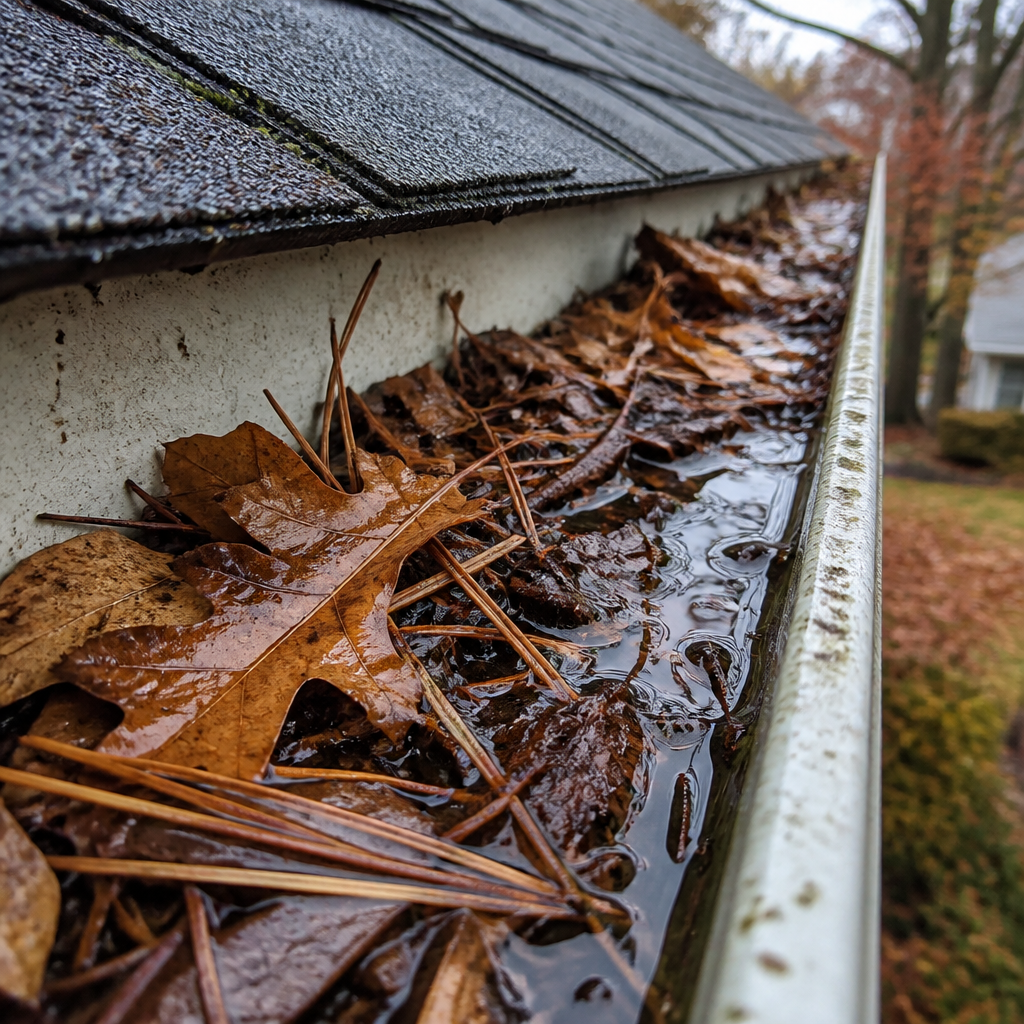
Add to that the urban tree canopy: maples, oaks, willows, and cottonwoods line streets across Lorne Park, Mineola, Streetsville, and Erin Mills, shedding leaves from September through November and releasing massive fluff and seed clouds in spring that clog downspouts almost instantly. The combination of lake moisture, heavy seasonal rainfall, and dense tree cover makes Mississauga one of the harder environments in the GTA for keeping eavestroughs clear and functional.
This is not a problem that idles quietly. When gutters stop draining properly, water does not simply spill over the edge and disappear. It finds every weak point in your home’s exterior and works inward.
Quick Takeaways
| Key Insight | Explanation |
|---|---|
| Foundation repair is the costliest outcome | Water pooling at the base of your home from overflowing gutters can cause foundation cracking, settling, and heaving, with repair costs ranging from several thousand to over $15,000 depending on severity. |
| Basement flooding is preventable | The City of Mississauga advises that downspouts should direct water at least one metre away from foundation walls. Blocked eavestroughs are a leading cause of avoidable basement water entry. |
| Fascia rot is invisible until it’s expensive | Standing water in gutters wicks into fascia boards, softening and rotting them over time. Replacement in Ontario runs roughly $15 to $40 per linear foot, and a typical roofline can cost $1,500 to $4,000 to restore. |
| Ice dams form because of blocked gutters | Mississauga’s freeze-thaw cycles mean debris-packed gutters freeze solid in winter, backing water under shingles and into attic spaces. Interior water damage from ice dams can run $2,000 to $8,000. |
| Cleaning costs a fraction of the repair bill | Professional eavestrough cleaning in the Mississauga area typically costs far less than any single repair triggered by clogged gutters. The math strongly favours prevention. |
| Pest infestations follow standing water | Stagnant water in gutters breeds mosquitoes, while debris buildup attracts birds and rodents that nest in the gutter troughs and on your roof. |
| Twice-yearly cleaning is the minimum standard | In Mississauga, once after the fall leaf drop and once in late spring after cottonwood and maple seed season is the baseline. Homes near dense tree cover may need a third clean. |
Foundation Damage: The Most Expensive Consequence
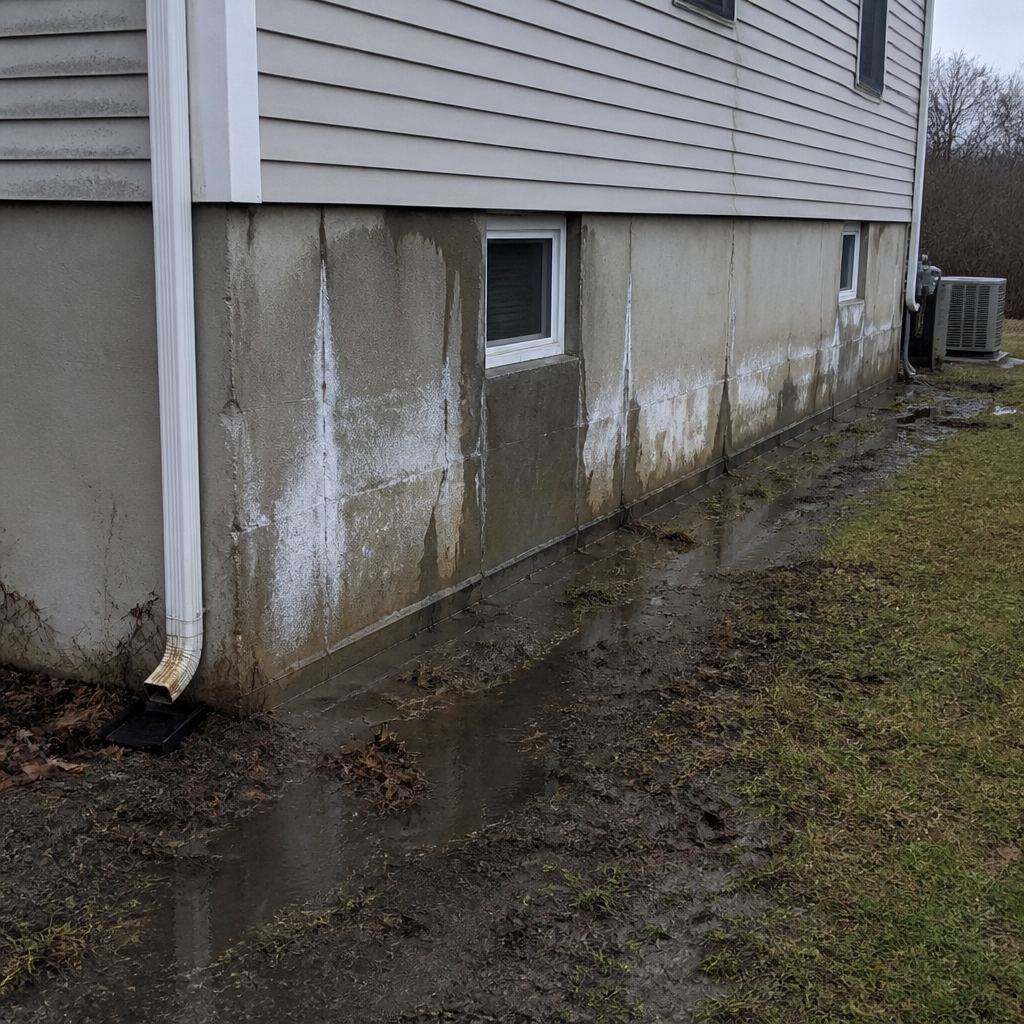
Of all the damage clogged gutters can cause, foundation problems are the most financially devastating and the most difficult to reverse. When eavestroughs overflow, water cascades down the exterior wall and pools directly against your foundation. The soil around the perimeter becomes saturated. Through repeated cycles of soaking and drying, that soil expands, contracts, and shifts, putting lateral pressure on the foundation walls.
The warning signs are rarely dramatic at first. Doors and windows that stick slightly, hairline cracks appearing in drywall, or a faint musty smell in the basement. By the time you notice them, the water damage has usually been working for months. Foundation damage is among the most serious and expensive home repairs a homeowner can face, with minor crack repairs costing several thousand dollars and full foundation stabilisation reaching well into the tens of thousands.
What the Water Actually Does
The mechanism matters, because understanding it helps you act earlier. Water that pools at the base of a foundation wall does not stay on the surface. In Mississauga’s clay-heavy soils, saturation causes the ground to swell toward the foundation wall when wet and pull away when dry. This repeated movement is what causes cracking and uneven settling, not a single catastrophic flood event.
In practice, the damage from one blocked eavestrough above the northwest corner of a house can produce a crack pattern that runs diagonally from that corner’s window down to the foundation within two or three wet seasons. Homeowners who trace that crack back to its cause are almost always surprised by how straightforward the connection is.
Pro tip: Walk the perimeter of your home after a heavy rain and look at where the water is going. If it is running down the exterior wall rather than away from the house in a downspout, your gutters are either blocked or your downspout extensions are missing or too short. The City of Mississauga recommends directing downspout discharge at least one metre away from any basement foundation.
Basement Flooding Prevention in Mississauga
Basement flooding prevention in Mississauga starts at the roofline, not at the sump pump. That is the part most homeowners miss. The sump pump is a backup system. The first line of defence is ensuring that roof drainage is directed properly away from your foundation in the first place.
The City of Mississauga’s own guidance is clear on this point: eavestroughs, downspouts, and storm drains must be kept free of debris and obstructions to ensure water flows freely. The city also advises that water from downspouts should be directed at least three feet, or one metre, away from basement foundations. When debris blocks the trough, that system fails entirely and every drop of roof runoff lands at the foundation wall.
The Grading and Downspout Connection
Blocked gutters are not the only factor, but they are the most controllable one. Even homes with good lot grading and functioning sump pumps experience basement water intrusion when eavestroughs are overflowing, because the volume of water discharged directly against the wall overwhelms the drainage capacity of even well-sloped ground.
In older Mississauga neighbourhoods, many homes have downspouts connected to underground pipes that may themselves be partially blocked or broken. The City of Mississauga advises homeowners to check whether downspouts feed into underground systems and to ensure those connections are clear. Disconnecting downspouts from underground pipes and adding above-ground extensions is often the most reliable long-term solution for keeping basement walls dry.
Pro tip: If your property ground has settled and is now sloping toward your foundation rather than away from it, adding clay soil to re-establish positive grade is a key step the City of Mississauga recommends. Clean gutters alone cannot overcome a grading problem, but blocked gutters can overwhelm even perfect grading during a heavy storm.
Fascia Rot and Roof Damage
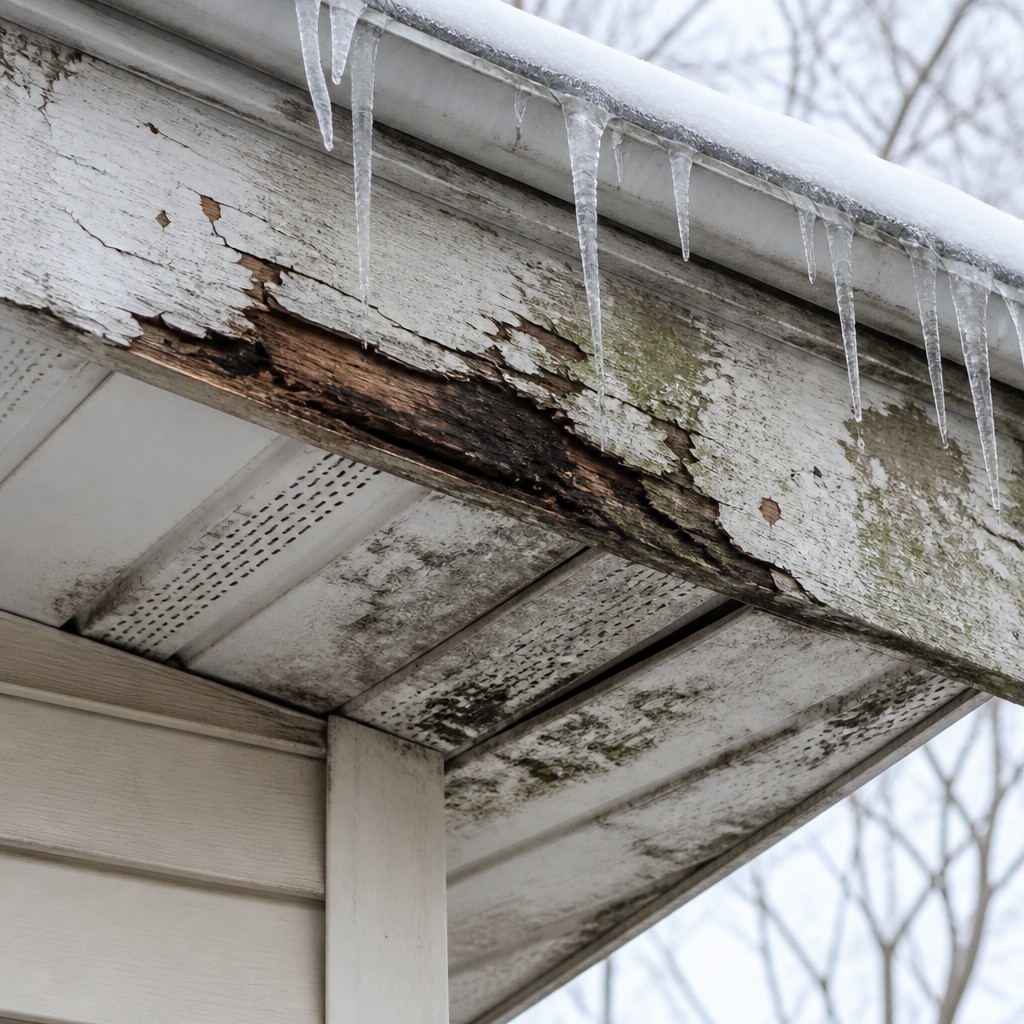
The fascia board is the horizontal band of wood that runs along the bottom edge of your roofline and holds the gutters in place. It is also the first structural component to suffer when gutters are neglected. Standing water in a clogged trough sits in direct contact with the top edge of the fascia board. Wood absorbs that moisture steadily, softens, and begins to rot from the inside out.
The insidious part is that early-stage fascia rot is completely invisible from the ground. By the time paint is bubbling or the wood looks discoloured, the deterioration has already progressed significantly. Fascia board replacement in Ontario typically costs $15 to $40 per linear foot for materials and labour. A typical home with around 30 metres of roofline fascia could be looking at $1,500 to $4,000 in repair costs once moderate-to-significant damage has set in.
When the Gutter Pulls Away from the House
Rotten fascia cannot hold the gutter mounting hardware securely. As the wood softens, screws and spikes lose their grip, and the gutter begins to pull away from the roofline. Once that happens, the trough no longer captures roof runoff at all, rendering it completely useless. The repair at that point is not just fascia replacement but also complete gutter remounting, which adds to the bill.
In severe cases, moisture that soaks through rotten fascia can wick into the roof deck itself, creating a path for interior leaking and attic mold. What started as a $200 gutter cleaning call becomes a $4,000 combined fascia-and-roof repair.
Cleaning eavestroughs twice a year costs a fraction of what it costs to replace a full fascia run on a two-storey home. The difference in outcome, and in cost, speaks for itself.
Ice Dams: Mississauga’s Winter Threat
Mississauga’s proximity to Lake Ontario creates more frequent freeze-thaw cycling than inland areas of Ontario experience. Temperatures hover around the freezing point repeatedly through December, January, and February, which is precisely the condition that produces ice dams. A gutter that is already packed with compacted wet leaves and debris going into winter will freeze solid with the first hard frost.
When that frozen mass blocks the trough, meltwater from the roof above has nowhere to go. It backs up under the lowest shingles, travels across the roof deck, and enters the attic or top-floor interior. Interior water damage from ice dams, including ceiling staining, attic insulation saturation, and mold, can run from $2,000 to $8,000 to remediate properly, depending on how far the moisture has spread.
Why Clean Gutters Prevent Ice Dams
The prevention is straightforward: a clear, unobstructed gutter allows meltwater to flow freely through the downspout rather than backing up. It does not eliminate ice formation entirely, but it removes the single most controllable variable that turns minor freeze events into damaging ice dams. Cleaning in late November, after the last major leaf fall but before the first sustained freeze, is the most important single cleaning of the year for ice dam prevention in Mississauga.
The City of Mississauga explicitly advises homeowners to regularly check the structural integrity of eavestroughs and gutters to prevent ice dam formation and the water damage that follows. This is not general advice, it is specific guidance from the municipality based on local weather patterns.
Pest Infestations from Standing Water and Debris
A clogged gutter filled with decomposing leaves and standing water is habitat. Mosquitoes breed in any stagnant water source and a single blocked downspout section creates enough standing water to support breeding through an entire summer. Birds are drawn to debris-filled troughs as nesting sites, and the nest material they pack in only deepens the blockage. Rodents, particularly squirrels and mice, use debris-packed gutters as a staging ground to access soffit gaps and enter the attic.
None of these infestations are cheap to resolve after the fact. Pest removal, attic remediation, and the repairs required after rodent access through the soffit add costs that have nothing obvious to do with gutters until you trace the entry point back to the roofline.
Performance Window Cleaning’s pest removal service addresses the spider and insect infestations that come with exterior neglect, but the underlying condition that draws pests to the roofline in the first place is almost always debris and moisture in blocked eavestroughs. Treating the symptom without fixing the gutter is a temporary solution at best.
Cost Comparison: Cleaning vs. Repairs
The numbers are not subtle. A single professional eavestrough cleaning costs a fraction of any one of the repair scenarios it prevents. The table below uses figures grounded in Ontario market data and municipal guidance to illustrate the difference clearly.
| Scenario | Approximate Cost Range (CAD) | Notes |
|---|---|---|
| Professional gutter cleaning (annual, Mississauga) | $150 – $350 per year (two cleans) | Varies by home size, storey count, and tree coverage |
| Foundation repair (water infiltration damage) | $5,000 – $15,000+ | Minor crack repair to full stabilisation; severity determines cost |
| Basement flooding cleanup and restoration | $3,000 – $10,000 per incident | Includes water removal, drying, drywall, and flooring repair |
| Fascia and soffit rot repair (Ontario) | $1,500 – $4,000 | Based on $15-$40 per linear foot for a typical roofline |
| Ice dam interior water damage repair | $2,000 – $8,000 | Ceiling, insulation, mold remediation depending on spread |
The preventive cost is $150 to $350 per year. The consequence costs start at $1,500 for minor fascia work and can stack to well over $30,000 when multiple problems develop simultaneously, which they often do, because a blocked gutter damages multiple systems at once.
How Often Should You Clean Your Gutters in Mississauga?
The baseline answer is twice a year: once in late spring after maple key and cottonwood season, and once in late fall after the leaves have dropped but before the ground freezes hard. For Mississauga specifically, the fall clean is the more critical of the two, because debris that freezes in place over winter is the primary driver of ice dam formation and fascia moisture damage.
Homes with significant tree coverage, particularly properties backing onto ravines, parks, or streets lined with mature maples, should consider a third clean in mid-autumn before the main leaf fall to keep downspouts clear during the heaviest rainfall months. Depending on the trees on your property and their proximity to your home, the cleaning frequency needs to reflect that reality rather than a generic schedule.
Signs Your Gutters Need Attention Now
You do not always need to wait for a scheduled cleaning date. These are the signs that indicate your eavestroughs need clearing immediately: water spilling over the sides during any rain event, visible plants or moss growing in the trough, gutters sagging or pulling away from the fascia, water stains on the siding directly below a gutter section, and any pooling at the foundation line after rainfall.
In practice, if you see any of those signs and it has been more than six months since your last clean, the debris load is almost certainly significant enough to be causing damage right now, not at some future point.
Frequently Asked Questions
How much does gutter cleaning cost in Mississauga?
Professional eavestrough cleaning in Mississauga typically ranges depending on home size, the number of storeys, and how much tree cover surrounds the property. Two professional cleans per year, which is the recommended minimum, generally costs less than a single visit from a fascia repair contractor. Getting a quote from a local exterior cleaning company like Performance Window Cleaning will give you an accurate figure for your specific home.
Can clogged gutters really cause basement flooding?
Yes, and it is one of the most direct connections in home maintenance. When eavestroughs overflow, all of the roof runoff discharges at the foundation wall rather than being carried away by the downspout system. The City of Mississauga specifically advises homeowners to keep eavestroughs and downspouts clear of debris and to ensure downspout discharge is directed at least one metre away from the foundation to reduce the risk of basement flooding.
What is the best time of year to clean gutters in Mississauga?
Late fall, after the leaves have dropped but before the ground freezes, is the single most important cleaning of the year. This removes the debris that would otherwise freeze in place and create ice dams over winter. A second clean in late spring, after cottonwood and maple seed season, clears the material that accumulates through the growing season. Homes near heavy tree coverage should consider a third clean in mid-autumn.
Can I clean my gutters myself?
Technically yes, but ladder safety is a serious concern, particularly on two-storey homes. Ladder falls are a leading cause of serious homeowner injuries. Beyond the safety issue, professional cleaners identify problems you would likely miss from the top of a ladder: early fascia rot, loose gutter mounting hardware, cracked downspout sections, and improper discharge angles. The inspection value alone often justifies the cost of hiring a professional for this task.
Does homeowner’s insurance cover gutter-related damage?
Most standard homeowner’s insurance policies in Canada treat gradual water damage from clogged or poorly maintained gutters as a maintenance issue rather than an insurable event. This means foundation cracking, basement seepage, and fascia rot caused by neglected eavestroughs are typically not covered. Sudden events, like a storm that physically tears a gutter away, may be covered. The burden of regular maintenance, and the financial consequence of skipping it, sits with the homeowner.
What services does Performance Window Cleaning offer beyond gutter cleaning?
Performance Window Cleaning offers a full range of exterior maintenance services for Mississauga homes and businesses, including professional window cleaning (interior and exterior), power washing, hand-washing of siding and eaves, and pest removal including spider spraying. Their customized cleaning packages allow homeowners and property managers to bundle services and keep the entire exterior of a property maintained on a consistent schedule.
Have you dealt with gutter-related damage on your Mississauga home? Share what happened and what it cost you in the comments below, your experience could help another homeowner act before the problem starts.
References
- City of Mississauga guidance on maintaining drains and reducing basement flooding risk through proper downspout management
- City of Mississauga winter weather advisory on eavestrough integrity and ice dam prevention
- Detailed breakdown of how clogged gutters cause fascia damage and Ontario repair cost estimates
- GTA homeowner guide to gutter cleaning costs and the financial consequences of skipping maintenance
- City of Mississauga stormwater management advice for homeowners on grading, downspouts, and flood prevention