
If you have owned a Mississauga home for more than fifteen years, you have probably seen it: the gutters look fine from the driveway, then water pours over the front edge during the first heavy rain of spring. Gutter cleaning Mississauga homeowners need is rarely just about how many leaves fall. In older neighbourhoods, mature trees, aging eavestrough profiles and freeze-thaw winters combine into a blockage risk that many newer streets face less often. This article explains why, and what that means for how often you should clear your system.
Table of Contents
- Quick Takeaways
- Why Older Mississauga Streets Clog Faster
- Mature Trees Drop More Than Leaves
- Aging Eavestrough Profiles and Downspout Sizing
- Fall Leaves and Freeze-Thaw Cycles in Ontario
- Cleaning Schedules for Mature Neighbourhoods
- Gutter Guards in Older Homes: Helpful but Not Maintenance-Free
- What a Proper Cleaning Visit Covers on Older Homes
- Frequently Asked Questions
- References
Quick Takeaways
| Key Insight | Explanation |
|---|---|
| A single overhanging limb matters more than distance | Branches that reach over the roofline drop debris straight into the trough. One limb above the eave can cause more blockage than several trees set back from the house. |
| Standing water is a warning sign | If water still sits in a section of trough a day after rain, that run is sagging. Sediment collects in the low spot and speeds up the next clog. |
| Downspouts block at the lowest bend | Sharp elbows near the wall slow flow first. When a downspout overflows at the bottom, check that bend before you assume the problem is at the top. |
| Finish the fall clean before mid-November | Wet leaves left in the trough freeze at the roof edge during the first hard cold snaps. An early fall visit gives the system a dry run before winter. |
| Mature lots need at least two visits a year | Plan a spring visit and a late fall visit as a minimum, then add a check after major wind or rain events on heavily treed properties. |
| Guards reduce cleaning but do not end it | Gutter guards slow the build-up of large debris, but fine grit and pine needles still collect on top. Plan an annual surface check even with guards installed. |
Why Older Mississauga Streets Clog Faster
Older gutter systems rarely fail all at once. A gutter that drains well for a decade can start overflowing after a few more seasons of seed pods and fine grit settle into the trough. In practice, that slow build-up is why many calls from older neighbourhoods come in during a storm rather than during a scheduled visit.

Blockage risk usually comes from three things that stack up on older properties: tree canopies that have grown over the roofline, eavestrough systems installed before modern debris loads were common, and aging asphalt shingles that shed granules onto the roof edge. Any one of these is manageable on its own. Together, they shorten the gap between cleanings.
Tree canopies that have closed over the roofline
Many older lots were planted when the house was new and the trees were still saplings. Decades later, those maples and oaks reach past the eaves, and every branch over the roof becomes a delivery route for leaves, twigs and seed pods. Gutters under a closed canopy often fill from the top down, so the first sign is frequently water running over the front edge rather than a visible pile.
The fix is not always removing the tree. Trimming branches back so they do not touch the roof often cuts the debris load significantly, and it is worth discussing with a certified arborist before you assume the tree has to come down.
Eavestroughs installed before modern debris loads
Older eavestrough runs were often sized for rain and light litter. Older profiles also tend to be shallower, and their hangers loosen over time, so a run can sag a few millimetres and hold water in its low spots. Standing water turns into a sediment bed, and that sediment is what turns a light clog into a dense one within a single season.
Mature Trees Drop More Than Leaves
Leaves get all the attention, but the debris list on a mature Mississauga lot is longer. Maple samaras, elm seeds, crab apple fruit, cottonwood fluff and conifer needles all reach the trough at different times of year. Each type behaves differently, and that difference decides how often someone needs to get up there.
Seed pods, catkins and needles
Samaras and seed pods are the worst offenders in late spring. They are light, flat and easy to drift into a downspout opening. Conifer needles work differently. Gutter guidance from Homegenius notes that pine needles fall year-round and compact into dense mats that block downspouts faster than broadleaf debris, so a single large pine can demand more attention than a street full of deciduous trees.
Why debris packs instead of washing out
Debris does not stay where it lands. Wet leaves form a mat that holds water, and that mat traps the next layer of grit. Once a downspout is packed, water backs up into the trough and the gutter starts overflowing at the seams, even though the trough looks clear from the ground.
Most gutter failures are not caused by one bad storm. They are caused by the fourth or fifth storm arriving before anyone cleared the layer left by the last one.
That is why a gutter that was spotless on the first of October can overflow by early November on a heavily treed lot. The clean was not wrong. The schedule simply did not match the tree load.
Aging Eavestrough Profiles and Downspout Sizing
Older eavestrough is a different product from what most homeowners see on new builds. Shallower channels, older hangers and smaller downspouts were common in earlier decades, and they leave very little margin once debris starts to accumulate. Before you increase cleaning frequency, check whether the system is still working as designed.
Shallow profiles and sagging runs
Run a hand along the trough after a rain. If water sits in the same spot for hours, you have a sag, and every cleaning will leave a little sediment in that low point. Re-hanging or re-pitching a run is a small job compared with repairing fascia that has been wet for years.
Pro tip: After cleaning, run a hose into the far end of the trough and watch the flow. Standing water at any joint or hanger means that section needs attention before the next storm.
Undersized downspouts and sharp bends
Downspouts clog at the elbows first. A sharp 90 degree bend where a downspout meets the wall slows flow enough that leaves and grit collect there. When we see a downspout overflowing at the bottom, the blockage is usually at the lowest bend, not at the top.
If a downspout consistently backs up in heavy rain, add a second outlet or move to a larger size rather than cleaning it more often. More cleanings only mask a design problem, and the same overflow will come back next season.
Fall Leaves and Freeze-Thaw Cycles in Ontario
Late fall is the most important window for a Mississauga home. Leaves that drop after the last cleaning, combined with the wet, cold weather that arrives in November, can turn a manageable trough into a frozen one by winter. The timing matters as much as the number of visits.
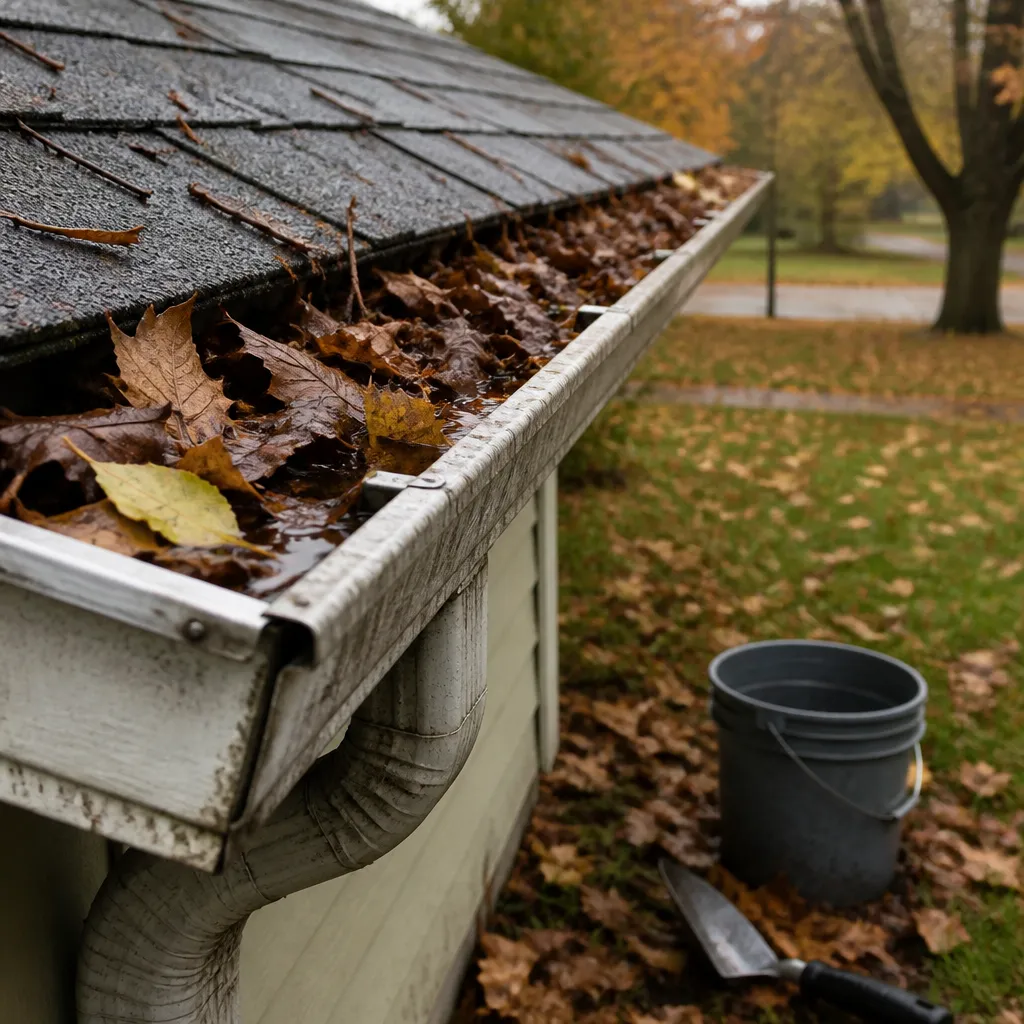
Once water freezes at the roof edge, it can be forced under shingles and into the roof deck before any stain appears indoors. The damage often happens in stages, so a home can look fine in November and show problems after a thaw in January.
Why late fall is the critical window
Aim to finish your fall clean before mid-November. That gives the system a dry run before the first hard freeze. Waiting until the first snow usually means cleaning around ice, which is slower, less safe and often incomplete.
Late-season leaves are the hardest to clear because they are wet and matted. Schedule the visit when most trees are bare but the ground has not frozen, since that window gives the crew better access and a more thorough result.
Ice at the roof edge
Ice build-up usually starts where the trough is still holding water from a blocked downspout. Look for icicles forming in one section of the eave while the rest stays clear. That pattern tells you the blockage is local, and you can often find it before it becomes a roof problem.
During a winter thaw, the same water refreezes overnight. A few days of that cycle is enough to lift shingle edges on an older roof, which is why we tell clients to treat the first warm spell after a hard freeze as a reason to check the gutters.
Cleaning Schedules for Mature Neighbourhoods
A one-size schedule does not fit a mature lot. A property with a closed canopy and older eavestroughs needs a different rhythm from a newer home with no trees over the roof. Use the comparison below to choose the approach that matches your property, not the one that looks cheapest on paper.
Twice a year or three times a year
For most mature Mississauga lots, twice a year is the baseline: once in late spring after seed pods finish falling, and once in late fall before the freeze. A heavy canopy, a large conifer, or a downspout that already overflows pushes that to three visits. On those properties, three visits is not overkill. It is the real maintenance load.
Pro tip: Record the date of each cleaning in your phone. If the gap between cleanings keeps shrinking year over year, your trees or your eavestrough design are changing the risk, and the schedule needs to change with them.
Comparing common cleaning approaches
| Approach | What It Covers | Where It Falls Short |
|---|---|---|
| Homeowner ladder cleaning, twice a year | Removes visible debris from the trough and the top of downspouts | Rarely reaches the lowest bend, and seldom includes a flow test or hanger check |
| Professional cleaning, spring and late fall | Full trough clear, downspout flush, and a visual check of hangers and joints | A heavy storm between visits can still cause overflow on a dense canopy |
| Professional cleaning plus post-storm inspection | Everything above, plus an inspection after major wind or rain events | Costs more, and pays off mainly on properties with heavy tree cover or known problem spots |
Choosing the right approach for your lot
Ladder cleaning can work for a single-storey home with a light canopy and easy access. It becomes risky and incomplete once the trough is high, the eaves are crowded by branches, or the downspouts need flushing. Be honest about your comfort on a ladder, because rushed fall cleans are where most avoidable falls happen.
Professional service makes the most sense when the problem sits at the downspouts, the trough sags, or you cannot see the back of the system from the ground. Our gutter and eavestrough cleaning service includes that full check on each visit.
Gutter Guards in Older Homes: Helpful but Not Maintenance-Free
Gutter guards get recommended to almost every older home, and they do help. They do not remove the need for maintenance, though. Guards reduce how often the trough fills with large debris, which is valuable under a closed canopy. They do not stop fine grit, shingle granules or pine needles from building up on top of the guard.
Where guards help most
Guards work best on lots with broadleaf trees that drop large debris, such as maple leaves and seed pods, because those pieces sit on the surface rather than falling through. On these properties, guards can extend the time between cleanings noticeably. The screen does its job only when the trough underneath is level and draining properly.
Guards also make the annual check easier. Plan one surface inspection a year, even with guards in place, to clear grit from the top and confirm the downspout outlets are moving water.
Where guards cause trouble
Cheap guards can sag, trap moisture under the edge of the shingle, and make it harder to see whether water is going over the front. A guard can hide the problem. When one is installed over a sagging run, the water still pools in the low spots, now out of sight.
Our advice is to clean the trough and correct the pitch before installing any guard, then decide. A guard on a dirty, sagging system seals in problems that could have been fixed for a few hours of work.
What a Proper Cleaning Visit Covers on Older Homes
A proper visit on an older home takes longer than a quick scoop of leaves. The goal is to restore full flow, not simply to empty the trough. Ask any provider what they check beyond visible debris, because the answer tells you a lot about the quality of the work.
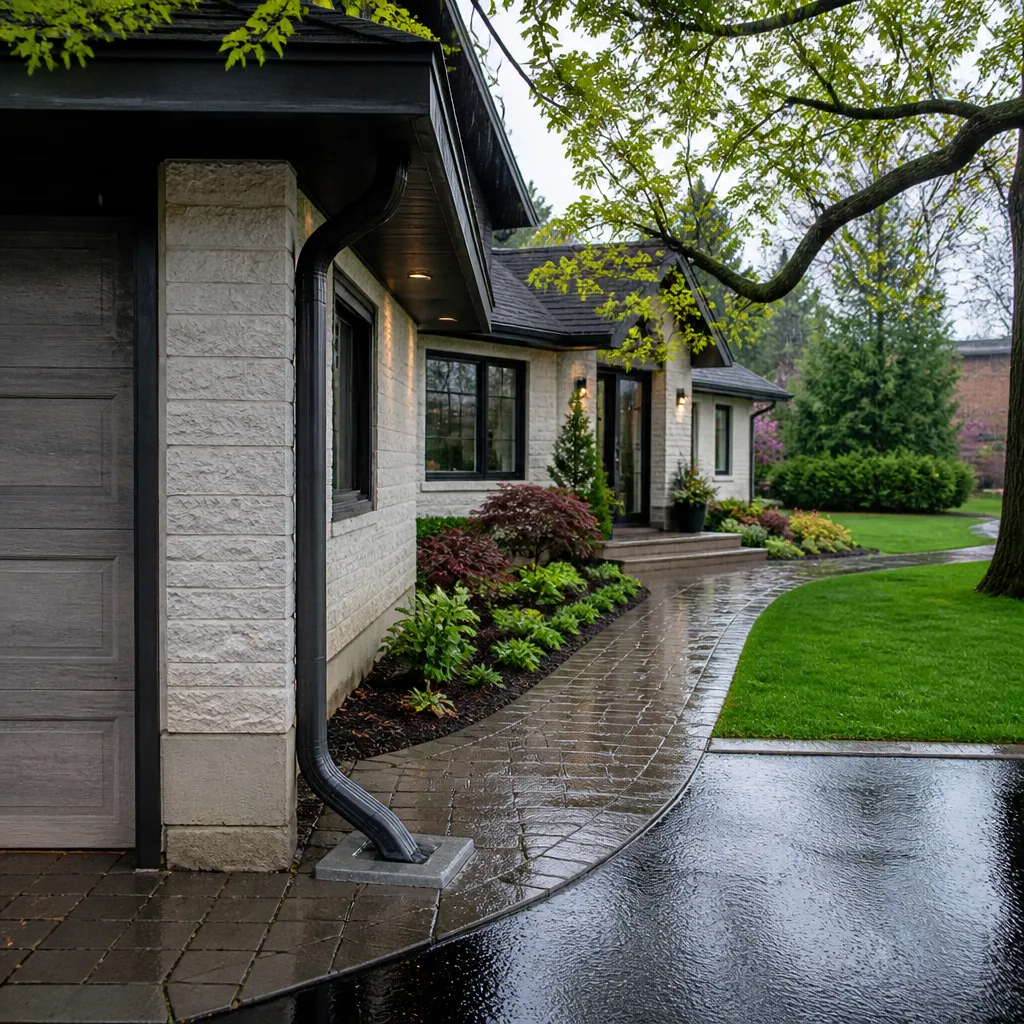
A thorough visit covers the trough, the joints, the hangers, the downspouts and the outlets, in that order. Skipping any one of those steps leaves a blockage risk that tends to show up in the next heavy rain.
Hand clearing versus flushing
Hand clearing removes the solid debris and the grit that has settled in the trough. Flushing with water then shows whether the downspouts and outlets are moving water. Both steps matter, and skipping the flush is one of the most common reasons a gutter looks clean but still overflows at the next storm.
On older systems, flushing can also reveal a loose joint or a sag that was hidden under debris. Note those locations and fix them before the next rain.
Downspout checks and outlet clearing
Check each downspout at the top, at the elbow and at the outlet near grade. A blockage at the outlet means water is backing up into the lower trough, and it is often the easiest problem to miss from the ground.
Look for downspouts that discharge right against the foundation. Water that exits at the wall can soak the soil around older footings, especially where the grade slopes toward the house. Redirecting the outlet with an extension is an inexpensive fix that prevents years of moisture damage.
Frequently Asked Questions
How often should gutters on older Mississauga homes be cleaned?
Most homes with moderate tree cover need two visits a year, one in late spring and one in late fall before the freeze. Properties with a closed canopy, large conifers or downspouts that already overflow usually need three visits or a post-storm check.
Why do gutters on older homes clog faster than newer ones?
Older homes often have trees that have grown over the roofline, shallower eavestroughs that sag and hold sediment, and undersized downspouts that block at the bends. Each factor shortens the time between cleanings.
Is eavestrough cleaning different from gutter cleaning?
In Mississauga, people use both terms for the same system that carries rainwater off the roof. What matters is whether the service checks the trough, the downspouts and the hangers, not which word the provider uses.
Do gutter guards mean I can stop cleaning my gutters?
No. Guards reduce how often many lots need cleaning, but they still need an annual check of the surface and the downspout outlets. Fine grit and pine needles can build up on top of a guard over time.
What are the signs my gutters are blocked before winter?
Look for water pouring over the front edge during rain, staining on the fascia, or ice forming in one section of the eave while the rest stays clear. Any of those signs means the system needs a clean and a flow test.
Should I check my gutters after a storm?
Yes, if a storm brought heavy wind or a large amount of debris onto the roof. A post-storm check catches blockages before they freeze in place or overflow near the foundation. For lots with heavy tree cover, it is one of the most useful habits you can build.
We would love to hear how your gutters have changed as the trees on your street have matured, so tell us what you have noticed and what you did about it.
We would love your feedback and any insights you would share with others. What perspective would you add?