
October is the month most Niagara Falls homeowners think about their gutters, and it is also the month most of them wait too long. Leaves from the maple and oak trees around the property drop in waves, the rain that follows packs that debris into the eavestrough, and the system is full of wet, matted muck before the first real cold snap arrives. Fall gutter cleaning in Niagara Falls is not a nice-to-have. It is the cheapest protection you will buy this season, and it is the one most people skip.
Table of Contents
- Quick Takeaways
- Why October Rain Exposes Clogged Gutters
- Timing Your Fall Gutter Cleaning
- Eavestrough Versus Gutter Cleaning
- Downspouts and Drainage After Rain
- DIY Versus Professional Gutter Cleaning
- Ice Damming and Early Winter Damage
- Pests and Standing Water in Gutters
- Frequently Asked Questions
- References
Quick Takeaways
| Key Insight | Explanation |
|---|---|
| Book the first clean after most leaves have dropped | Cleaning in early October on a tree-lined lot usually means a second mess within weeks. Look up at your own trees before you book. |
| Plan a second visit if large trees sit close to the roof | Wooded lots and properties with big trees over the eaves often need a late-November pass, especially after a wet stretch. |
| Check the downspouts, not just the troughs | A trough can look clear while the downspout below it is packed at the elbow. Run water from a hose to confirm flow. |
| Finish before the first hard freeze | Meltwater trapped in a blocked system expands as it refreezes, which splits seams and pulls brackets loose from the fascia. |
| Watch for sagging sections and standing water after rain | Sagging usually means a failing hanger or a trough full of weight. Standing water in the low spots invites mosquitoes. |
| Inspect the fascia and roof edge while the system is open | Staining on the fascia and soffit shows where water has been escaping, and it is far cheaper to fix in October than in February. |
Why October Rain Exposes Clogged Gutters
Gutters do one job, and they only do it when water moves through them freely. In October that job gets harder for three reasons. The leaves are coming down in volume, the rain keeps the debris wet and heavy, and the days are short enough that a clogged system can sit full for weeks before anyone notices the overflow.
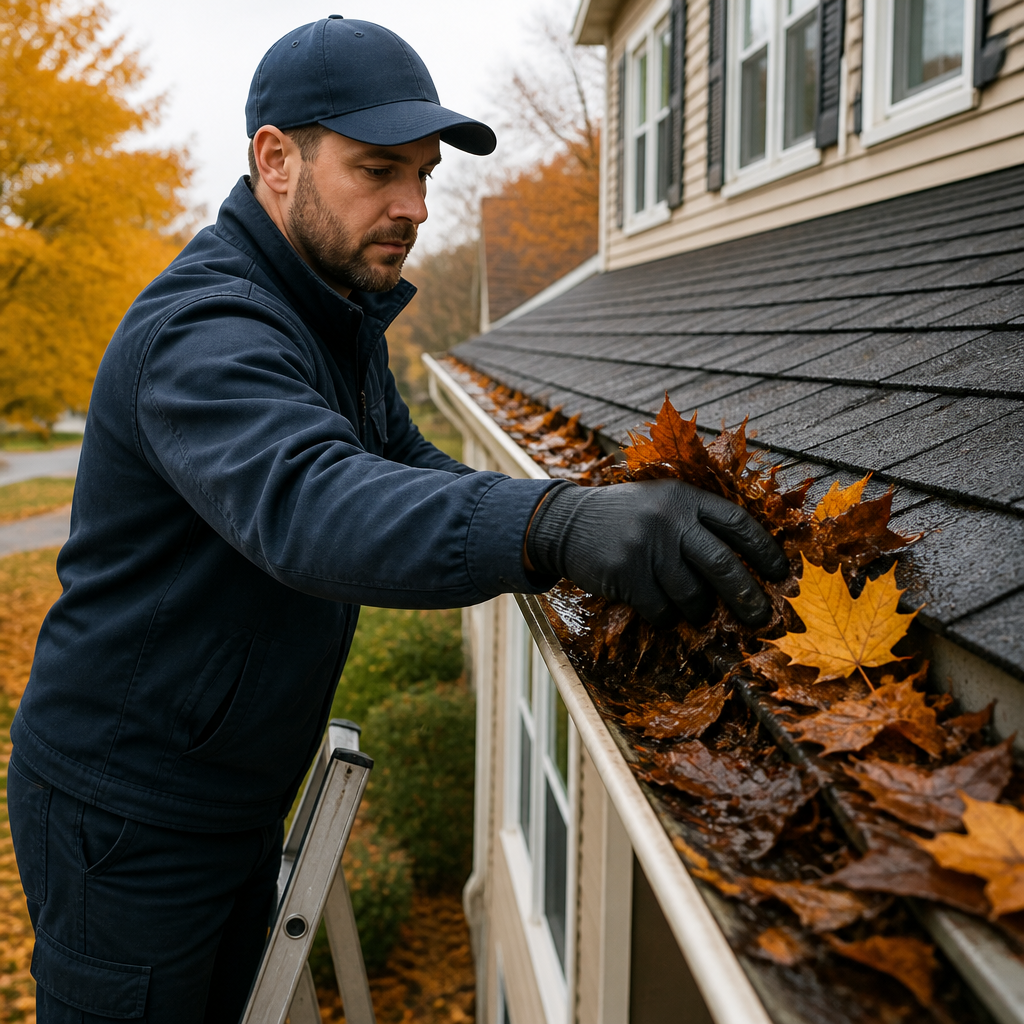
Why wet leaves are the real problem
Dry leaves blow out of a trough on a windy afternoon, but leaves soaked by a few days of rain compact into a dense mat that holds water and seeds. Grit from roof shingles mixes in and turns the mat into a sludge that a garden hose cannot move. Wet debris is what makes October different from the rest of the fall.
Signs the system is already overflowing
The first sign is rarely a full gutter. It is a dark streak on the fascia board under the trough, a sheet of water running down the siding during a storm, or a patch of lawn beside the downspout that stays soft for days. Each of those symptoms means water is going somewhere it should not.
A gutter that is full of wet leaves on the first cold morning has already failed, even if it still looks fine from the driveway.
Timing Your Fall Gutter Cleaning
The safest rule is to clean after most of the leaves have come down and before the first serious winter storm. Clean too early and you pay twice, because the trees keep dropping for weeks. Clean too late and you risk the scenario that turns a maintenance visit into a repair bill.
The first clean for most Niagara Falls homes
For a typical property with a few trees set back from the house, the first pass usually lands in late October or early November, once the bulk of the leaves are on the ground. That is when the trough holds mostly dry, loose debris that comes out easily. If the trees still hold most of their leaves in mid-October, wait a few more weeks.
The second pass for wooded lots
Homes on wooded lots, or with large trees hanging over the roof, need a second visit. The first clean handles the early drop, and a final clean in mid to late December clears what came down during November rain. On heavily treed properties, three visits in one season is not unusual.
Pro tip: Walk the property after the first heavy rain and look at the trough from the ground. If you see leaves stuck in the gutter or water spilling over the front edge at the corners, the timing is already off and the next visit should come sooner.
What the calendar does not tell you
A wet November can change the plan entirely. Rain pushes debris into the system in ways no calendar predicts, and a mild, wet autumn often means leaves stay on the trees longer than usual. Treat the dates as a starting point and let what you see at the eavestrough decide the next booking.
Eavestrough Versus Gutter Cleaning
Across Ontario, most people say eavestrough. Across much of the rest of North America, people say gutter. The system is the same: the horizontal trough along the roof edge, the downspouts that carry water down the wall, and the outlet hoods where the two meet. Whichever term you search, you are looking for the same service, and a good provider should clean all of it.
What a complete eavestrough cleaning includes
A complete job clears debris from every section of trough, flushes the downspouts from the top, and checks that each outlet is seated and points away from the foundation. Rinsing from ground level leaves packed material in place. That is why a system can look fine from the yard and still overflow in the next storm.
Questions to ask before you book
Ask whether the downspouts are flushed or whether the troughs are only scooped. Ask whether the debris is removed from the property or dumped against the foundation. Ask whether the technician checks the fascia and roof edge while the system is open. Straight answers to those three questions separate a thorough visit from a quick rinse.
Downspouts and Drainage After Rain
Downspouts are where most fall problems start, and they are the part of the system people check least. Leaves and grit collect at the elbow where the vertical pipe meets the horizontal run, and a single packed elbow can stop the whole run. Water then backs up into the trough and spills over the front, which is when the staining and sagging begin.
The City of Niagara Falls Property Standards By-law lists drainage systems under outdoor maintenance, and it states that property owners must maintain their property to those standards. Keeping downspouts clear is part of that responsibility, not just a matter of tidiness.
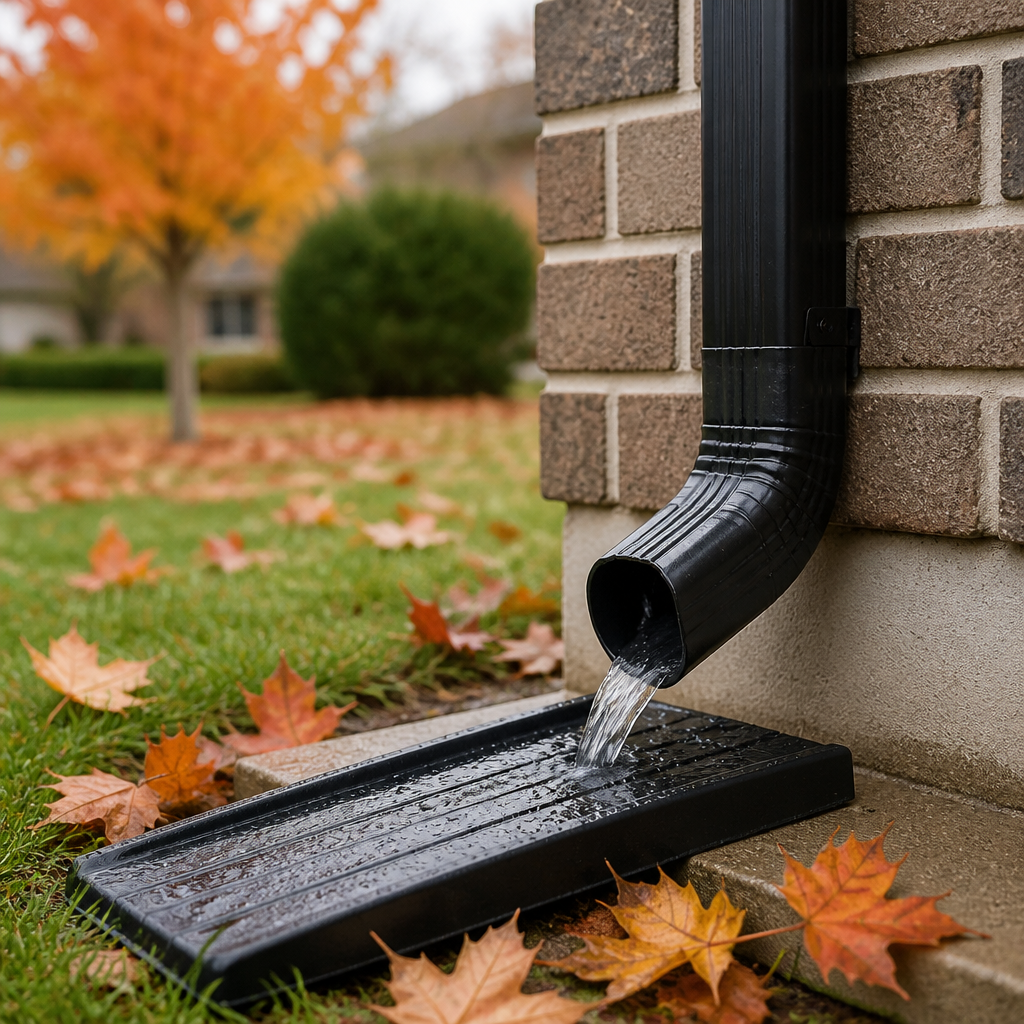
Testing flow with a hose
A useful test takes five minutes. Run a garden hose into the top of each downspout and watch the bottom. Water should exit steadily within seconds. If it backs up at the top or trickles out after a long pause, there is a blockage in the run, and the trough above it will overflow at the next heavy rain.
Where the water should land
Downspout outlets should discharge well away from the foundation, and the ground below should slope away from the house. A downspout that empties onto a flat patch beside the wall can saturate the soil against the basement. An extension knocked loose in a fall windstorm often goes unnoticed until the basement floor is damp, so check extensions while you are up there.
Pro tip: Photograph each downspout outlet after cleaning. Next October, you will be able to see whether an extension has shifted or a seam has split since your last visit.
DIY Versus Professional Gutter Cleaning
Many homeowners can clear a single-storey trough with a scoop and a bucket. The trouble starts on taller roof lines, steep pitches, and wet leaves in late October, when the ladder becomes the most dangerous part of the job. Wet roof edges are slippery, and a fall from a ladder is a serious injury risk.
Where DIY makes sense
A DIY clean works when the house is one storey, the ladder sits on firm ground, and the debris is dry. Even then, you will rarely flush the downspouts fully, so plan on a hose test afterward. Keep both feet on the rungs and never lean outward past your belt.
What a professional visit should include
A professional visit should cover the troughs, downspouts, outlets, and a visual check of the fascia and roof edge. It should also finish with the property clear of debris rather than piles left against the siding. Compare that scope against a quick ground-level rinse before you accept any price difference.
| Approach | What It Covers | Where It Falls Short |
|---|---|---|
| Homeowner ladder clean with scoop and bucket | Loose leaves in the trough and visible debris at the surface | Rarely clears downspout elbows, carries fall risk on taller or steep roofs, and often leaves wet sludge behind |
| Professional cleaning with downspout flushing | Troughs, downspouts, outlets, and a visual check of fascia and roof edge | Heavy-tree properties need a repeat visit, so the schedule has to be planned in advance |
| Gutter guards installed over the trough | Reduces how much debris enters the trough and slows the buildup | Does not remove debris already inside, can clog at the surface with fine grit, and still needs periodic checks |
Guards are not a replacement for inspection. In practice they reduce how often a system needs cleaning, which is worth considering on properties that already need several visits a season.
Ice Damming and Early Winter Damage
A clogged gutter is an annoyance in October, but it becomes a structural problem by December. When snow and ice on the roof melt, the water has to drain through the gutters and downspouts. If the system is blocked, the meltwater sits in the trough and refreezes at the roof edge.
How meltwater gets trapped
Water that cannot drain works its way back under the shingles and builds ice dams at the eave. Each freeze and thaw pushes more water further up the roof. The result is staining on soffits, damp insulation near the eaves, and leaks that show up during the first warm spell. Clearing the system before the first hard freeze keeps meltwater moving where it belongs.
Ice damage in spring is usually the bill for a gutter that was not cleaned in October.
Downspouts that split at freeze
Trapped water expands as it freezes, and downspouts are the weak point. The pressure often splits the seam, and a split section can pull its bracket out of the fascia. Replacing a downspout section in spring costs far less than repairing fascia and soffit after water has been working behind them all winter.
Pests and Standing Water in Gutters
Gutters are an overlooked habitat. Trapped leaves hold moisture, spiders build webs in the corners where the trough meets the fascia, and standing water in a clogged trough is a breeding site for mosquitoes. Fall is when these problems peak, because insects are looking for shelter and the debris stays wet.
Spiders and webs at the trough
Spiders and their webs settle into trough corners, outlet hoods, and the gaps behind downspout brackets. A regular clean removes most of the webbing, but egg sacs and nests tucked into brackets need targeted removal. Our bug and spider removal service covers exactly these exterior details, which are hard to do properly from a ladder alone.
Mosquitoes in standing water
Any low spot in a trough that holds water for more than a few days can produce mosquitoes. Check the troughs after a storm and look for water that does not drain from the corners or the bottoms of sagging sections. Fixing the slope or replacing a hanger usually solves the problem faster than any treatment.
Pro tip: Carry a flashlight on your post-storm check. Low light shows standing water and sagging runs that look fine in daylight.
Frequently Asked Questions
When should I book fall gutter cleaning in Niagara Falls?
For most homes, the best window is late October into early November, after the majority of leaves have fallen and before the first major winter storm. Properties with large trees near the roof often need a second visit in late November or December.
Is eavestrough cleaning the same as gutter cleaning?
Yes. Eavestrough is the common term in Ontario for the same troughs, downspouts, and outlets that many people call gutters. When you book, ask for a service that includes downspout flushing, not just a surface scoop.
Do gutter guards mean I can skip fall cleaning?
Not entirely. Guards reduce how much debris enters the trough, but fine grit and seed material can still build up on the surface, and downspouts can clog beneath the guard. Plan on at least a periodic check each fall.
How can I tell if my downspouts are clogged without a full inspection?
Watch the downspout outlet during or just after a steady rain. If the trough overflows at the corners while the outlet barely runs, the blockage is likely above it in the downspout run.
What happens if I skip fall gutter cleaning in Niagara Falls?
Water overflows and runs down the siding, soaks the fascia, and can pool against the foundation. Ice damming and split downspouts often follow in early winter, and the repairs usually cost more than the cleaning itself.
Tell us about your own fall experience, especially if an October storm caught you with an overflowing eavestrough, because real examples from Niagara Falls homes are the best guide for everyone planning this season.
We would love your feedback and any insights you would share with others. What perspective would you add?