
Gutter cleaning in St. Catharines is usually scheduled once a year, in spring, and most homeowners assume that takes care of it. The problem is that a large share of the leaf fall lands after that visit. Debris left in eavestroughs through October and November turns into a wet, packed mess by the first hard freeze. A post-leaf-drop final flush, done once the trees are mostly bare, clears what autumn left behind and shows you whether the system drains properly before winter water has nowhere to go. Here is how we approach it at Performance Window Cleaning, what we check, and where people usually go wrong.
Table of Contents
- Quick Takeaways
- Why the Post-Leaf-Drop Flush Matters
- When to Schedule the Final Flush
- What a Proper Final Flush Involves
- Common Mistakes That Cause Winter Damage
- Gutter Cleaning Versus Other Options
- Eavestrough, Gutter Guards and What They Can and Cannot Do
- Pairing Gutter Work With Other Fall Maintenance
- Frequently Asked Questions
- References
Quick Takeaways
| Key Insight | Explanation |
|---|---|
| Time the flush after the trees are bare | Booking during peak leaf fall means paying for a second visit. Wait until most of the canopy over your home has let go. |
| Test drainage before you call it done | Run a hose into the far end of each run. Water that pools, stalls, or spills over the front lip points to a slope problem or a hidden blockage. |
| Flush from the far end, never the downspout | Flushing toward the outlet packs sludge into the downspout, creating a plug you cannot see from the ground. |
| Read the granules in the trough | A heavy build-up of shingle granules can signal aging roofing, not just dirty gutters, so it is worth a closer look. |
| Tighten sagging hangers before freeze | Water frozen in a low section pulls brackets loose and warps the profile. A quick fix in November is far cheaper than a re-hang in January. |
| Extend downspouts away from the foundation | A clean gutter that dumps water against the wall still feeds basement seepage. Aim water at least a few feet out from the house. |
Why the Post-Leaf-Drop Flush Matters
The spring cleaning catches debris left over from last year and the early pollen. It does not catch the second wave. Once the maples, oaks, and poplars on a St. Catharines lot let go of most of their leaves, a large amount of material lands in the eavestroughs over a few weeks, and most of it arrives after the spring visit is a distant memory.
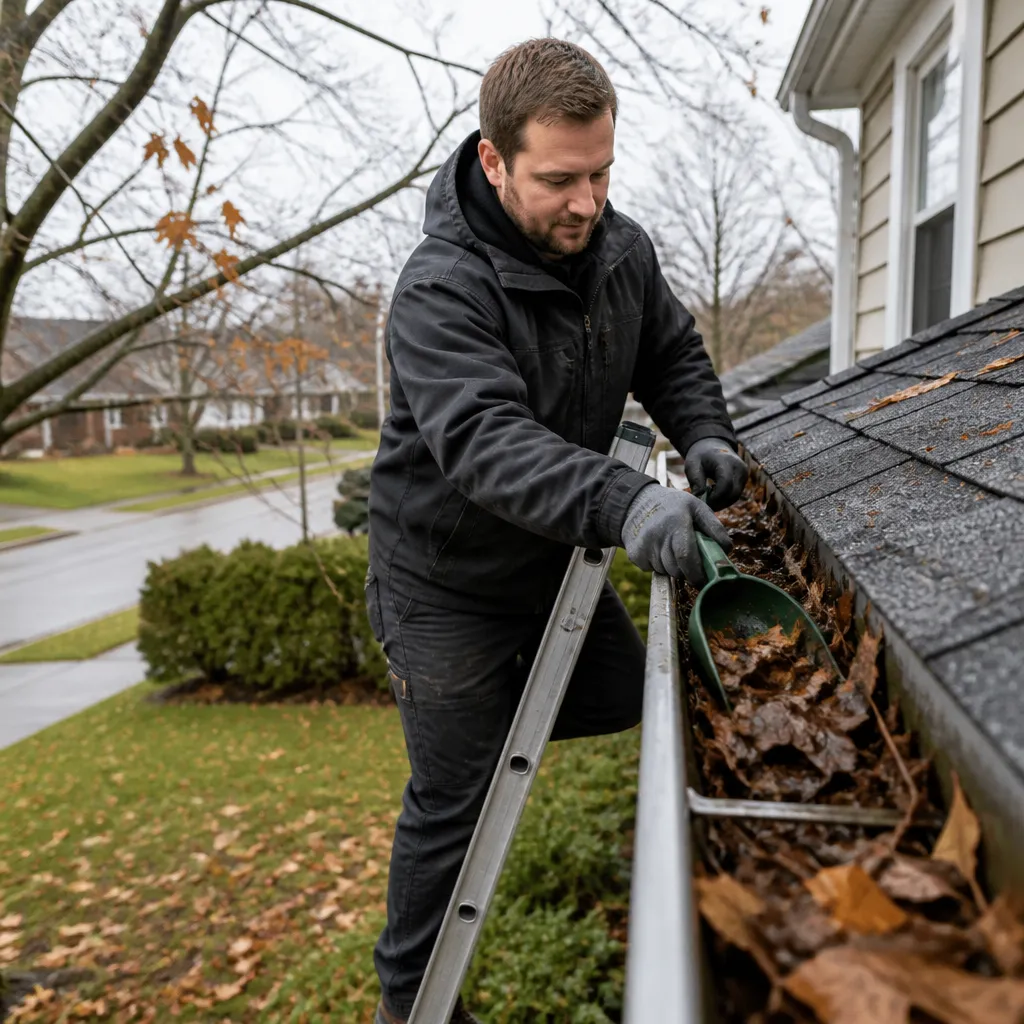
Wet leaves are the real problem. A dry leaf slides through a downspout, but a leaf soaked by autumn rain packs into a paste that clings to the bottom of the trough. That paste holds moisture, seeds sprout in it, and the eavestrough starts holding water instead of moving it. When temperatures drop below freezing, the trapped water expands and pushes against seams and hangers.
What the first cleaning misses
A spring cleaning removes what is sitting loose in the trough. It rarely touches the fine grit that washes off the roof and bonds to the bottom seam, or the seed pods that drop from maples after the leaves are gone. We often find downspouts that look clear from the top but are packed for the first two feet, because debris that got past the strainer has been sitting there since September.
Why ice is the cost that shows up later
Most of the damage from a clogged system does not show until February. Water that backs up behind a blockage can get under the first row of shingles, soak the fascia board, and freeze into ice that pushes the eavestrough away from the house. A few hours of work in November is far cheaper than replacing a rotted fascia board or re-hanging a section that pulled off the wall.
When to Schedule the Final Flush
Timing matters more than most people expect. Booking too early means a second visit once the rest of the leaves come down. Booking too late means the first freeze arrives with a full trough. The window we aim for falls after most of the deciduous trees on a property are bare and before the ground freezes hard enough that water backs up behind every blockage.
Reading the trees, not the calendar
A calendar date is a poor guide. A sheltered yard with a large silver maple can hold leaves well into November, while an open lot empties in October. Walk the property and look up. If you can still see a lot of green or yellow overhead, wait. If the crowns are mostly bare and the trough still fills faster than you would expect, the flush is overdue.
Booking before the first hard freeze
Get the flush on the calendar before the first cold snap that keeps temperatures below freezing for a full day. Once the gutters ice over, the work becomes slower and more dangerous, and a frozen sludge plug cannot be cleared with a hose. For most homes, a mid-autumn visit followed by a quick check after the season’s biggest windstorm is a sensible approach.
Pro tip: Note where leaves pile up on your roof and in the trough. Those spots are the first to overflow, so start your inspection there.
What a Proper Final Flush Involves
A proper final flush is more than a hose and a ladder. The goal is to remove debris, confirm the system drains, and find problems while there is still time to fix them. Each step builds on the one before it, and skipping the inspection is how a gutter that looks clean in November still fails in January.
Hand clearing the trough
Start by removing large debris by hand or with a plastic scoop. Wet leaves and seed clusters should go into a bag or bin, not down the downspout, because that only moves the problem. Pay close attention to corners, the sections below roof valleys, and every joint where two lengths of trough meet, since those are where material settles first.
Flushing from the far end
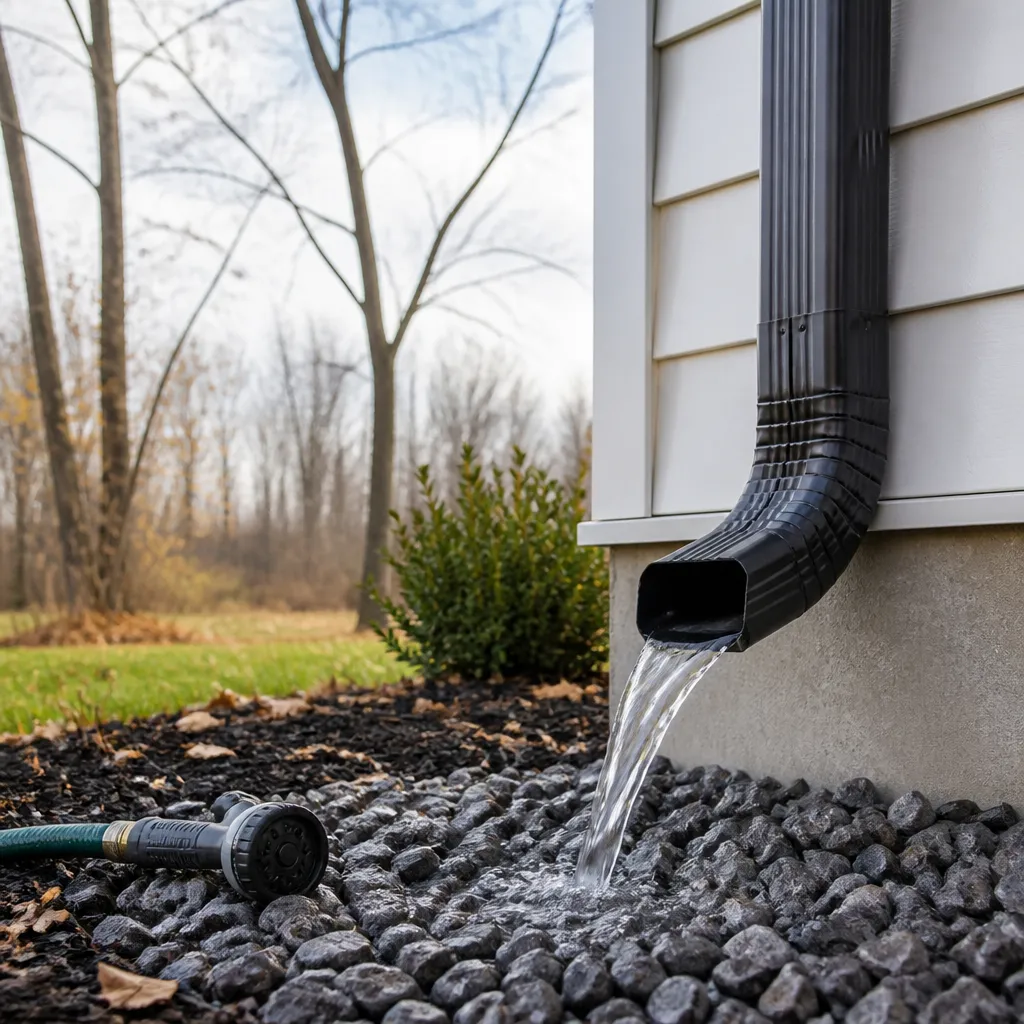
Once the trough is clear, run a garden hose into the far end of each run, the end farthest from the downspout. Water should move steadily toward the outlet and exit cleanly. If it stalls, pools, or spills over the front lip, the trough has a slope problem or a blockage that hand clearing missed.
Gutters rarely fail because of one storm. They fail because a small, fixable blockage sat there through six weeks of rain.
Checking downspouts and outlets
Downspouts need the same attention as the trough. Remove the bottom elbow if you can, and run water through the pipe to confirm it clears. Check that the splash block or extension carries water well away from the foundation. A downspout that empties against the wall is a common cause of basement seepage, and it is easy to fix before the ground freezes.
Pro tip: Keep a second person at the base of the ladder whenever you work above chest height, and never lean sideways to reach a run. Move the ladder often instead.
Common Mistakes That Cause Winter Damage
Most of the damage we repair after a hard winter started with a well-meaning fix. Homeowners who try to be thorough sometimes do more harm than a missed cleaning would have. The three mistakes below come up again and again, and each one is avoidable.
Using a pressure washer on old eavestroughs
A pressure washer aimed at a gutter can crack older vinyl, bend aluminum profiles, and blow sealant out of joints. The force also drives grit into seams that were watertight before. A garden hose on a moderate setting, combined with hand clearing, does the job without the risk. Save the pressure washer for driveways and walkways, where it is effective and does not threaten the eavestrough.
Working off wet ladders and roofs
Autumn mornings are damp, and the debris in the trough is heavy and slick. The most dangerous moment is when someone leans sideways from the ladder, one hand on the trough, to reach leaves in a corner. Set the ladder on firm ground, keep your hips inside the rails, and move the ladder often instead of stretching.
Ignoring the downspout extension
A clean gutter with a downspout that dumps water at the foundation still fails. The water soaks into the soil, settles against the basement wall, and finds cracks that stayed dry all summer. Extending the downspout is one of the cheapest maintenance steps a homeowner can take, and it is often the difference between a dry basement and a wet one.
Gutter Cleaning Versus Other Options
Homeowners usually choose between three paths: doing the job themselves, hiring a professional for a clearing and flush, or investing in guards and cleaning less often. Each makes sense in some situations and fails in others. The table below compares them based on what we see on the job.
| Approach | What It Covers | Where It Falls Short |
|---|---|---|
| DIY with a ladder and garden hose | Low cost, full control over timing, workable on single-storey homes with firm ground | Ladder injuries are the main risk, and most DIY flushes skip slope checks and hanger inspection |
| Professional hand clearing with a far-end flush | Removes debris, tests drainage, flags loose hangers and downspout problems | Needs booking before freeze, and cannot fix a design problem such as a run with no fall to the outlet |
| Guards plus an annual professional check | Reduces debris volume and the frequency of hand clearing | Fine grit and seeds still collect on top, and guards hide sagging runs and loose hangers from view |
For most homes in St. Catharines, we recommend a professional clearing and flush once a year, with guards added only if overhanging trees drop debris constantly. Guards are a supplement to inspection, not a replacement for it. A home with a few maples over the roof usually gets more value from the annual visit than from any product on the shelf.
Eavestrough, Gutter Guards and What They Can and Cannot Do
Gutter guards are a useful tool, but they are often sold as a replacement for cleaning. In practice they reduce how much debris reaches the trough and change how that debris behaves. They do not remove the need for an annual check, and some designs make the inspection harder.
Mesh and micro-mesh guards
Fine mesh keeps out most leaves and needles, but the surface can collect a thin film of grit and shed seeds that sprout on top. Over time that film can narrow the water path and cause overflow at the front edge. If you have guards, plan to lift the cover once a year and check the trough underneath, especially at corners and joints.
Sagging runs and loose hangers
A run that sags even slightly holds water at the low point, and that water freezes into a weight the hangers were never designed to carry. Check each hanger by pushing up on the trough with your palm. If the section moves or the screws spin, tighten or replace the hanger before winter. These repairs are quick in November and much harder once ice has formed along the trough.
Why guards still need an annual look
A guard hides the trough, and that is exactly why problems go unnoticed. Loose hangers, a sagging section, or a downspout that has come unseated can sit under a guard for an entire season. A visual check of the whole system each fall costs far less than repairing rot that started behind a fascia board.
Pairing Gutter Work With Other Fall Maintenance
The final flush is the right time to handle other exterior tasks, because the same access, ladder setup, and weather window can cover several jobs. Homeowners who book these together usually spend less than they would on separate visits. Our crews often address window tracks, screens, and exterior surfaces during the same visit when the schedule allows.
Window tracks and screens after leaf drop
Leaves and grit collect in window tracks and on screens once the trees come down, and that debris grinds against sliding parts all winter. Clear tracks with a vacuum and a soft brush, then rinse screens and let them dry before reinstalling. This takes a few minutes per window and prevents sticking once the house is closed up for the season.
Power washing driveways and walkways
Wet leaves stain concrete and pavers with tannins, and the brown marks set if they sit through several rain cycles. Power washing driveways, decks, and walkways removes staining before it bonds. Keep the wand moving and a safe distance from siding and eavestrough, since that is where the damage risk is greatest.
Spider webs and eave pests in fall
As temperatures drop, spiders move toward sheltered spots such as eaves, soffits, and window frames, and their webs gather in the same places gutter debris does. Removing webs during the flush keeps the eaves clean and cuts down on insects moving indoors. We also offer spider and bug control, including tick and mosquito control, for homeowners who want a longer-term plan. You can learn more at Performance Window Cleaning.
Frequently Asked Questions
How often should gutters in St. Catharines be cleaned?
Once a year is the baseline for most homes, and the post-leaf-drop flush is the visit that matters most. Homes under heavy tree cover may need a spring visit too. Homes with guards usually need less hand clearing but still need an annual inspection.
How much does professional gutter cleaning cost?
Prices vary with home size, height, and access. One national cost guide puts typical professional jobs roughly between $119 and $234, with per-foot rates around $0.95 to $2.25, though local quotes can differ. Ask whether the quote includes a far-end flush and a drainage check, not just debris removal.
Can I clean my gutters myself?
Yes, if the home is single-storey, the ground is firm, and you can work safely on a stable ladder. Multi-storey homes, steep roofs, and wet conditions are where injuries happen, so a professional is usually the better choice in those cases.
Do gutter guards mean I never need cleaning?
No. Guards reduce debris, but fine grit and seeds still collect on top, and a guard hides sagging runs and loose hangers. Plan on an annual inspection regardless of what covers the trough.
What if water still overflows after the gutters are cleaned?
Overflow after a clean usually points to a slope problem, a blockage in the downspout, or a sagging section. Check whether the trough drains toward the outlet, and have the hangers and downspout reviewed before winter. Overflow that persists after a proper flush is a repair issue, not a cleaning issue.
Should I clean gutters before or after the leaves finish falling?
Wait until most of the trees over the home are bare, then clean. Cleaning too early means the trough fills again within weeks, and you pay for a second visit that could have been avoided.
What did your eavestroughs look like after the leaves came down last fall, and what fixed the problem for you?