
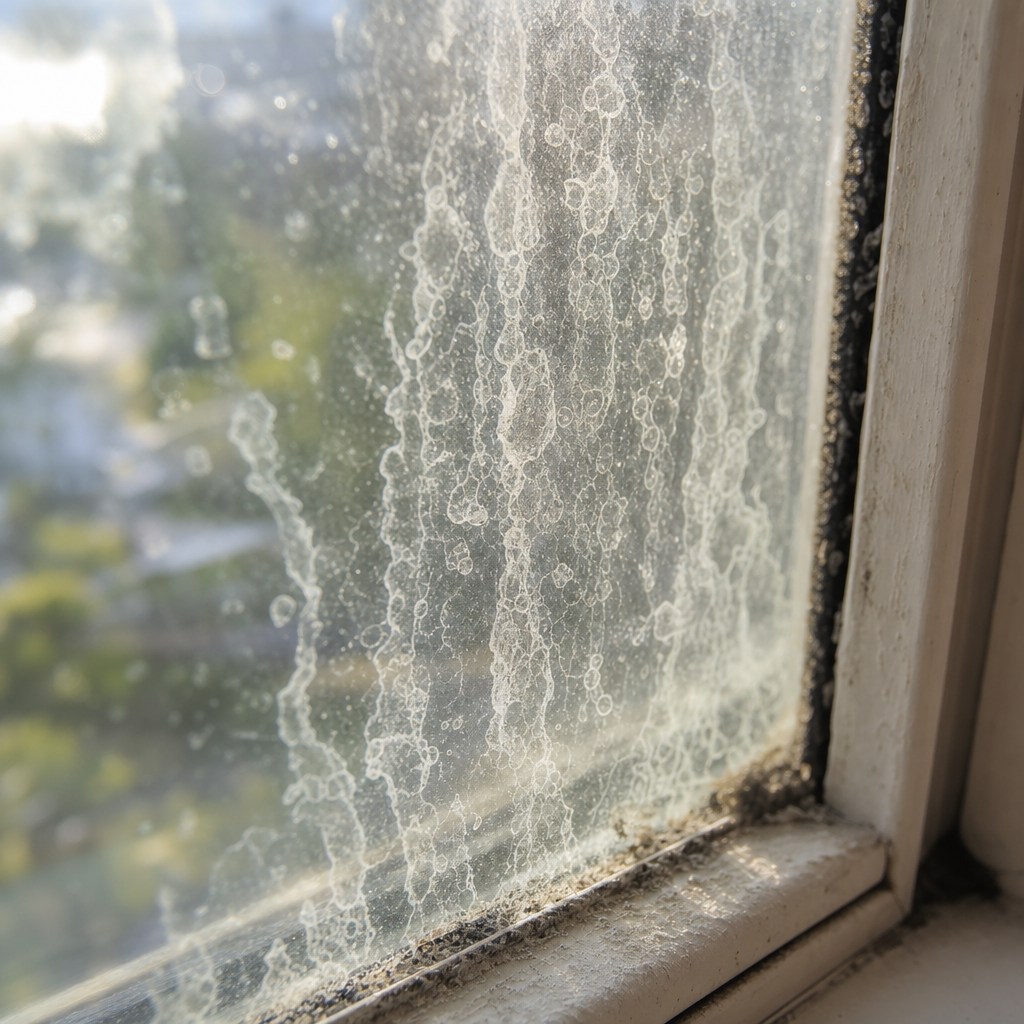
Hard water stains on windows are one of the most stubborn problems homeowners face, and most DIY attempts make them worse. The white, chalky mineral deposits left behind by calcium and magnesium in tap water or sprinkler systems bond to glass at a molecular level. According to the United States Geological Survey, approximately 85% of North American homes receive hard water, which means the odds are high your windows are already suffering. If you have ever scrubbed a window only to watch a hazy film return within days, this guide explains exactly why that happens and what actually works.
Table of Contents
- Quick Takeaways
- What Causes Hard Water Stains on Windows
- DIY Removal Methods That Actually Work
- Tools and Products Compared
- Mistakes That Permanently Damage Glass
- When to Call a Professional Window Cleaner
- Preventing Hard Water Stains from Coming Back
- Frequently Asked Questions
- References
Quick Takeaways
| Key Insight | Explanation |
|---|---|
| Acid breaks down mineral deposits | White vinegar and citric acid dissolve calcium carbonate effectively. Alkaline cleaners do not work on hard water stains and can make them worse. |
| Contact time matters more than scrubbing pressure | Leaving an acidic solution on glass for 5 to 10 minutes loosens deposits better than aggressive scrubbing, which risks scratching the surface. |
| Stage 3 and 4 stains require professional tools | Deeply etched mineral deposits have penetrated the glass surface and cannot be removed with household products. A professional with a fine-grit polishing compound is the correct solution. |
| Sprinkler overspray is the leading cause | Irrigation systems that hit windows daily are more damaging than rain. Redirecting sprinkler heads prevents most recurring stain problems. |
| Never use steel wool on glass | Even fine-grade steel wool leaves micro-scratches that trap future mineral deposits and create permanent haze on the glass surface. |
| Squeegee technique affects the final result | A proper single-pass squeegee stroke with a clean rubber blade removes residue without re-depositing dissolved minerals back onto the glass. |
| Sealing glass after cleaning extends results | A hydrophobic glass sealant applied after stain removal repels water and slows future mineral bonding, reducing cleaning frequency significantly. |
What Causes Hard Water Stains on Windows
Hard water stains form when water evaporates and leaves behind dissolved minerals, primarily calcium carbonate and magnesium silicate. The glass surface is not perfectly smooth at a microscopic level, and mineral particles settle into those tiny pores as the water dries. Over repeated cycles of wetting and drying, the deposits build up and chemically bond to the silica in the glass itself.
The two most common sources of hard water contact on windows are irrigation sprinklers and municipal tap water used during exterior cleaning. Rain rarely causes hard water staining because rainwater is naturally soft. Sprinkler systems are the real culprit in most residential cases, especially when heads are angled toward the building facade.
The longer mineral deposits sit on glass, the deeper they etch. A fresh deposit from last week responds to a basic vinegar solution. A deposit from two seasons ago has likely penetrated the outer silica layer and requires mechanical polishing to remove. This is why timing matters as much as technique.
DIY Removal Methods That Actually Work
In practice, four DIY approaches produce reliable results on light to moderate hard water stains. Each works through a different chemical mechanism, and choosing the right one depends on how long the stains have been present and how heavy the mineral buildup is.
White Vinegar Solution
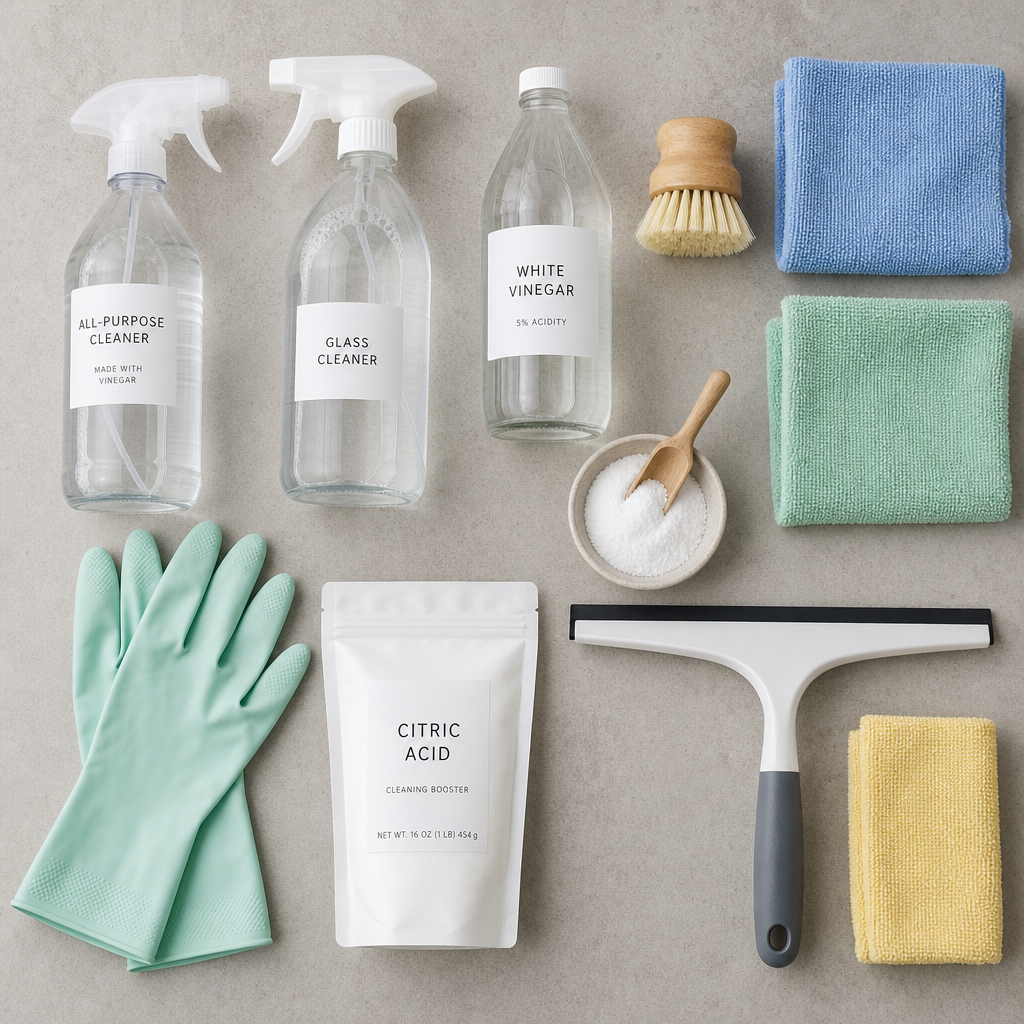
White vinegar contains acetic acid at roughly 5% concentration. This is enough to dissolve fresh calcium carbonate deposits without etching the glass. Mix equal parts white vinegar and distilled water in a spray bottle, apply generously, and allow it to sit for at least 5 minutes before wiping. Do not use tap water to dilute the solution because you would be adding more minerals to the mix.
Pro tip: Soak a microfiber cloth in undiluted white vinegar and press it flat against the stained area for 10 minutes. This direct-contact method outperforms spraying alone on stains that have been present for one to three months.
Citric Acid Paste
Citric acid powder, available at most grocery stores and pharmacies, works significantly better than vinegar on moderate stains because it reaches a lower pH and maintains contact with the surface more effectively. Mix two tablespoons of citric acid powder with enough water to form a thick paste. Apply it directly to the stained glass, leave it for 10 minutes, and rinse thoroughly with distilled water.
The citric acid method is the most effective DIY option available for stains that have been on the glass for three to twelve months. Beyond that window, you are looking at professional intervention.
Commercial Mineral Deposit Removers
Products like CLR (Calcium, Lime and Rust Remover) and Bar Keepers Friend contain stronger acids and abrasives that address more stubborn deposits. CLR should be applied with a cloth, not sprayed directly onto window frames or seals, because it can damage rubber gaskets and aluminum tracks. Always rinse completely and follow with a clean water wipe-down.
A common mistake is leaving CLR on the glass too long. The manufacturer recommends a maximum of two minutes of contact time on glass surfaces. Exceeding this increases the risk of surface etching, especially on older or coated glass.
Tools and Products Compared
Choosing the right tool for window stain removal is as important as choosing the right cleaning agent. Using the wrong applicator can drive mineral particles across the glass surface and create scratches that are impossible to reverse without professional polishing.
| Method | Best For | Key Limitation |
|---|---|---|
| White vinegar and microfiber cloth | Fresh deposits, light haze, regular maintenance cleaning | Ineffective on stains older than 3 months. Requires multiple applications for moderate buildup. |
| Citric acid paste with soft brush | Moderate mineral buildup, stains from 3 to 12 months old | Can damage window seals and painted frames if not carefully applied. Requires thorough rinsing. |
| Professional polishing compound with rotary buffer | Deep etching, long-standing mineral deposits, glass restoration | Requires professional equipment and skill. DIY attempts with wrong grit can permanently scratch glass. |
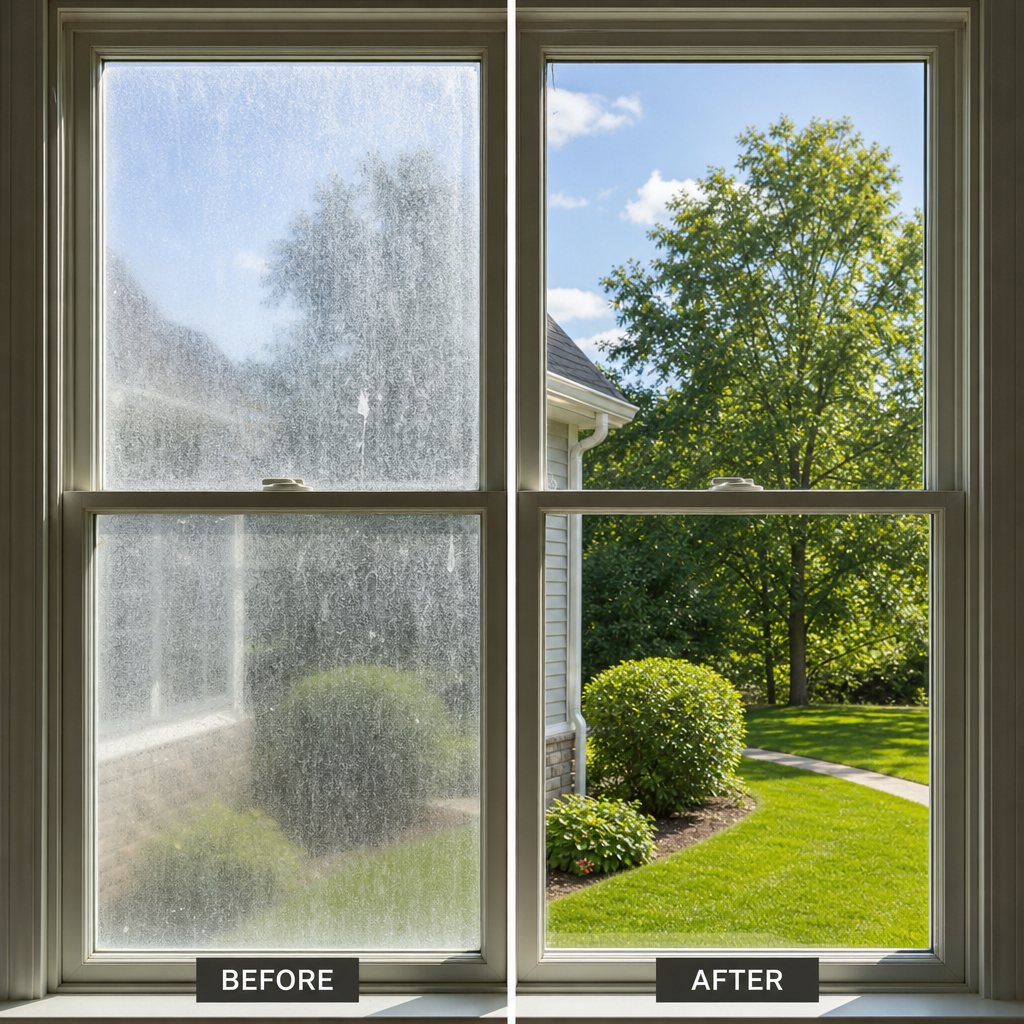
The data consistently shows that homeowners who attempt mechanical polishing without proper training cause more damage than the original staining. A fine-grit cerium oxide compound applied incorrectly leaves circular scratches visible in direct sunlight. This is a repair job that costs significantly more than a professional cleaning would have.
Mistakes That Permanently Damage Glass
Most of the irreversible window damage seen in professional window cleaning happens because homeowners use the wrong tools with good intentions. Understanding what not to do is genuinely as important as knowing the correct technique.
Using Abrasive Scrubbing Pads
Scotch-Brite pads, steel wool, and rough sponge surfaces all create micro-scratches in glass. These scratches are not always visible immediately, but they become obvious under raking light or direct sun. Scratched glass also accumulates new mineral deposits faster because the damaged surface provides more bonding area. Always use microfiber cloths or professional-grade glass cleaning pads.
Applying Cleaners in Direct Sunlight
Cleaning windows in full sun causes the cleaning solution to evaporate before you finish wiping, leaving a new residue layer on top of the existing stain. This compounds the problem rather than solving it. Early morning or overcast conditions are optimal for any professional window cleaning work, including stain removal.
Using Newspaper Instead of a Squeegee
The newspaper trick is outdated. Modern newspaper inks smear and the paper itself can scratch soft-coated glass. A quality squeegee with a fresh rubber blade, pulled in a single overlapping stroke, is the correct finishing tool after stain removal treatment.
“Hard water etching on glass is a chemical process, not just a surface deposit. Once minerals have penetrated the outer silica layer, cleaning products alone cannot restore clarity. Mechanical restoration is the only option.” Source: Glass Association of North America technical guidance on glass surface maintenance.
When to Call a Professional Window Cleaner
There is a clear threshold where DIY methods stop being cost-effective. If you have applied vinegar, citric acid, and a commercial mineral remover in sequence and the haze remains, the stain has etched below the surface. At that point, continued home treatment will not solve the problem and may make it worse.
A professional service like Performance Window Cleaning brings commercial-grade cleaning agents, proper squeegee technique, and the diagnostic experience to identify whether glass is restorable or needs replacement. The cost of a professional cleaning is almost always lower than the cost of replacing a stained window pane.
Specific situations that require professional attention include: glass that has had staining for more than two years, windows on upper floors where safe access requires ladder or lift equipment, commercial storefronts with large glass panels, and any glass with a factory-applied low-E coating, which requires specific cleaning products to avoid stripping the coating.
Pro tip: When requesting a professional window cleaning quote, ask specifically whether the technician can assess stain depth before cleaning begins. A professional who inspects first and sets accurate expectations is demonstrating genuine expertise, not just selling a service.
Preventing Hard Water Stains from Coming Back
Prevention is substantially easier than removal. Once you have clean glass, two habits will keep it that way: adjusting water sources that contact the glass, and applying a protective hydrophobic coating.
Redirecting Sprinkler Heads
Walk the perimeter of your home during an irrigation cycle and identify any heads that spray onto window glass or the building facade within two feet of windows. Adjusting the arc of those heads to point away from the structure eliminates the most common cause of recurring staining. This takes 20 minutes and requires only a flathead screwdriver for most residential systems.
Applying a Hydrophobic Glass Sealant
Products like Rain-X or professional-grade ceramic glass coatings create a hydrophobic barrier that causes water to bead and roll off rather than sitting on the surface and evaporating. Applied to clean, dry glass, a quality sealant reduces mineral deposit formation by causing the water droplet to carry most of its dissolved minerals away as it slides off the glass.
The realistic expectation for consumer-grade hydrophobic coatings is approximately three to six months of protection under normal conditions. Professional ceramic coatings applied by a trained technician last significantly longer, often 12 to 24 months. The tradeoff between cost and durability is worth calculating based on how often your windows are exposed to hard water sources.
Scheduling Regular Professional Cleaning
Mineral deposits that are cleaned off every two to three months never have time to etch into the glass. A regular professional window cleaning schedule is genuinely the most cost-effective prevention strategy available, particularly for homes in areas with known hard water supply. It costs less to maintain clean glass than to restore stained glass.
Frequently Asked Questions
Can hard water stains permanently damage window glass?
Yes. When mineral deposits are left on glass long enough, calcium and magnesium ions chemically react with the silica in the glass surface. This creates etching that is below the surface and cannot be removed with cleaning products alone. It requires mechanical polishing with a cerium oxide compound or, in severe cases, glass panel replacement.
Does white vinegar remove all hard water stains from windows?
White vinegar works reliably on fresh mineral deposits, typically those that have been on the glass for less than three months. For older or heavier buildup, undiluted vinegar applied with extended contact time is worth trying, but stains older than six months often require a stronger acid like citric acid or a commercial calcium remover such as CLR.
What is the fastest way to remove hard water stains from windows?
The fastest effective method is a citric acid paste applied directly to the stained area and left for 10 minutes before rinsing. For very fresh deposits, a vinegar soak with a microfiber cloth achieves results in under 15 minutes. Neither method is faster than a professional cleaning for extensive or severe staining across multiple windows.
Is it safe to use a razor blade on windows to remove mineral deposits?
A new, single-edge razor blade held at a very shallow angle (approximately 15 to 20 degrees) can safely remove surface deposits from standard annealed glass. However, this method should never be used on tempered glass, coated glass, or any glass with visible factory markings indicating a surface treatment. Using a dull blade or incorrect angle risks scoring the glass permanently.
How often should I have my windows professionally cleaned to prevent hard water stains?
For homes with sprinkler systems or those located in areas with very hard municipal water, professional cleaning every two to three months prevents mineral deposits from bonding permanently. For properties without regular water exposure to glass, twice per year is generally sufficient. A professional assessment of your specific property is the most accurate guide.
Will power washing remove hard water stains from windows?
Power washing alone does not remove mineral deposits because it uses water pressure, not chemical action. If the water used in power washing is hard, it can actually leave new deposits after the wash. Effective removal requires an acidic cleaning agent applied to the glass surface with adequate contact time, followed by a thorough rinse with distilled or filtered water.
If you have dealt with stubborn hard water stains on your own windows, share what worked for you in the comments or reach out to let us know what challenges you ran into during the process.
We would love your feedback and any insights you would share with others. What perspective would you add?
References
- United States Geological Survey: national data and research on hard water prevalence and mineral content in municipal water supplies across North America
- United States Environmental Protection Agency: guidelines on drinking water quality, mineral content standards, and water hardness classifications for residential use
- Consumer Reports: independent testing and ratings of household cleaning products including mineral deposit removers and glass cleaning solutions
- Forbes Home: expert reviews and cost comparisons for professional home maintenance services including window cleaning and exterior care
- Family Handyman: practitioner-written guides on DIY home maintenance techniques, including window cleaning and glass care best practices