
Most home detailing in Oakville happens in spring, when the windows are sparkling and the eavestroughs are clear. The siding usually gets ignored until a gray or green film shows up in May. By then, the damage started months earlier. Dirt, mildew spores, pollen, and road grime that sit on siding through autumn set into the surface as temperatures drop. Hand-washing your siding before the first hard freeze is the cheapest way to break that cycle, and it takes less time than most homeowners expect.
Table of Contents
- Quick Takeaways
- Why Siding Needs Attention Before Winter
- Hand-Washing vs Pressure Washing for Siding
- Step-by-Step Hand-Washing Before Winter
- Spring Damage That Winter Washing Prevents
- Cleaning Methods by Siding Material
- Timing Your Oakville Winter Prep
- Frequently Asked Questions
- References
Quick Takeaways
| Key Insight | Explanation |
|---|---|
| Wash before the first hard freeze | Grime left on siding through October gets locked in once temperatures fall. Aim for a dry, mild day in late October or early November. |
| Hand-washing beats high pressure on most siding | High pressure can force water behind lap joints and under trim, and it can etch painted surfaces or loosen older vinyl. |
| Use a soft brush and a mild detergent | Routine dirt, pollen, and dust come off with soap and light agitation. Save stronger products for confirmed mildew. |
| Wash the bottom sections first | Working bottom to top keeps dirty runoff from streaking clean surfaces below. Rinse top to bottom so each section finishes clean. |
| Clear salt and ground-level grime near entrances | Residue on the lowest courses of siding feeds staining and attracts more dirt through winter, especially along walkways and driveways. |
| Treat mildew before it sets | Mildew left through winter usually returns as dark streaks in spring. A thorough autumn wash cuts the scrubbing you would otherwise face in April. |
Autumn is when the siding has been collecting debris for months, and the cold has not yet arrived to make stains harder to remove. The goal of a pre-winter wash is simple: leave the exterior clean, dry, and free of anything that will feed growth or staining until spring. That is a different job from a spring makeover, and it requires a different approach.
Why Siding Needs Attention Before Winter
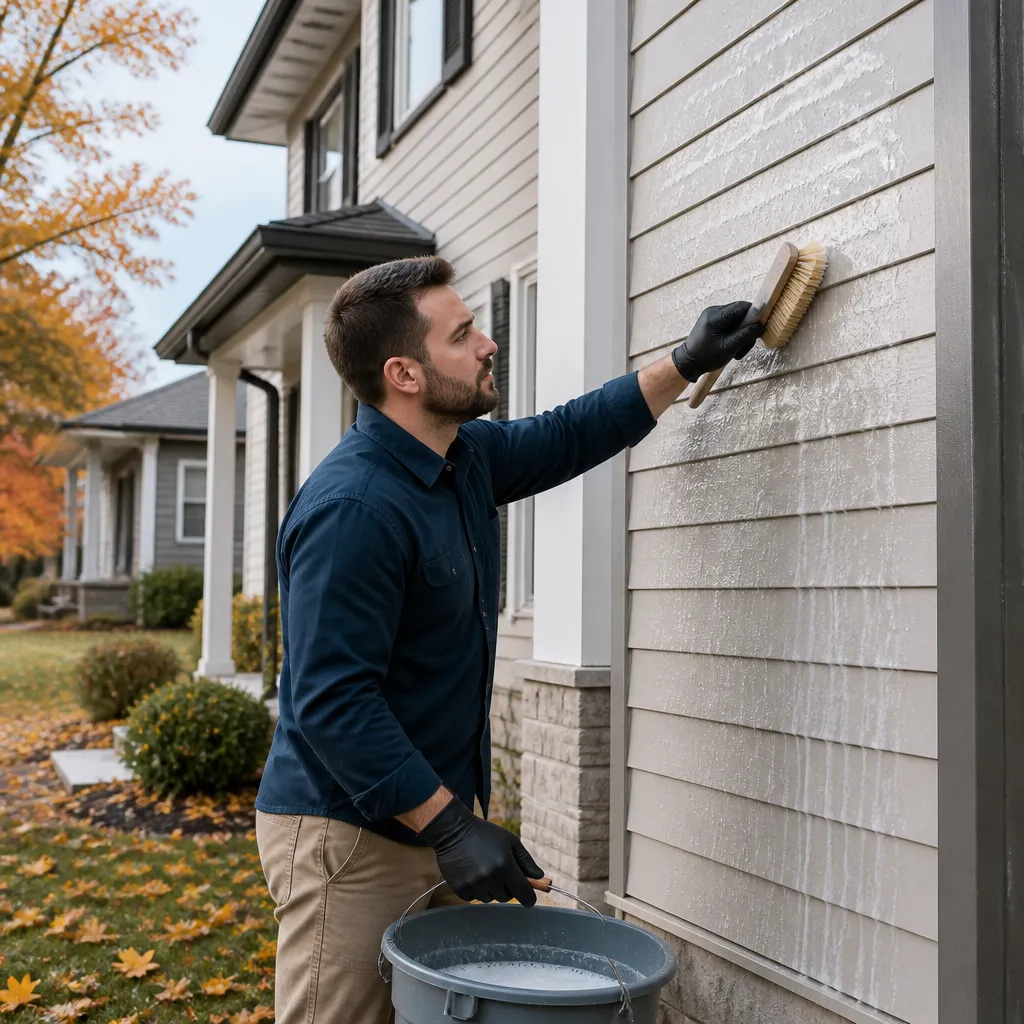
Siding takes a beating every season, but autumn is the stretch when small problems quietly become permanent. Leaves break down against the lower courses, pollen and dust settle in the grooves of textured panels, and mildew spores find a damp, shaded wall to colonize. None of this looks urgent in October. It becomes a problem in March, when the film has had five months to bond with the surface.
What Collects on Siding Through Autumn
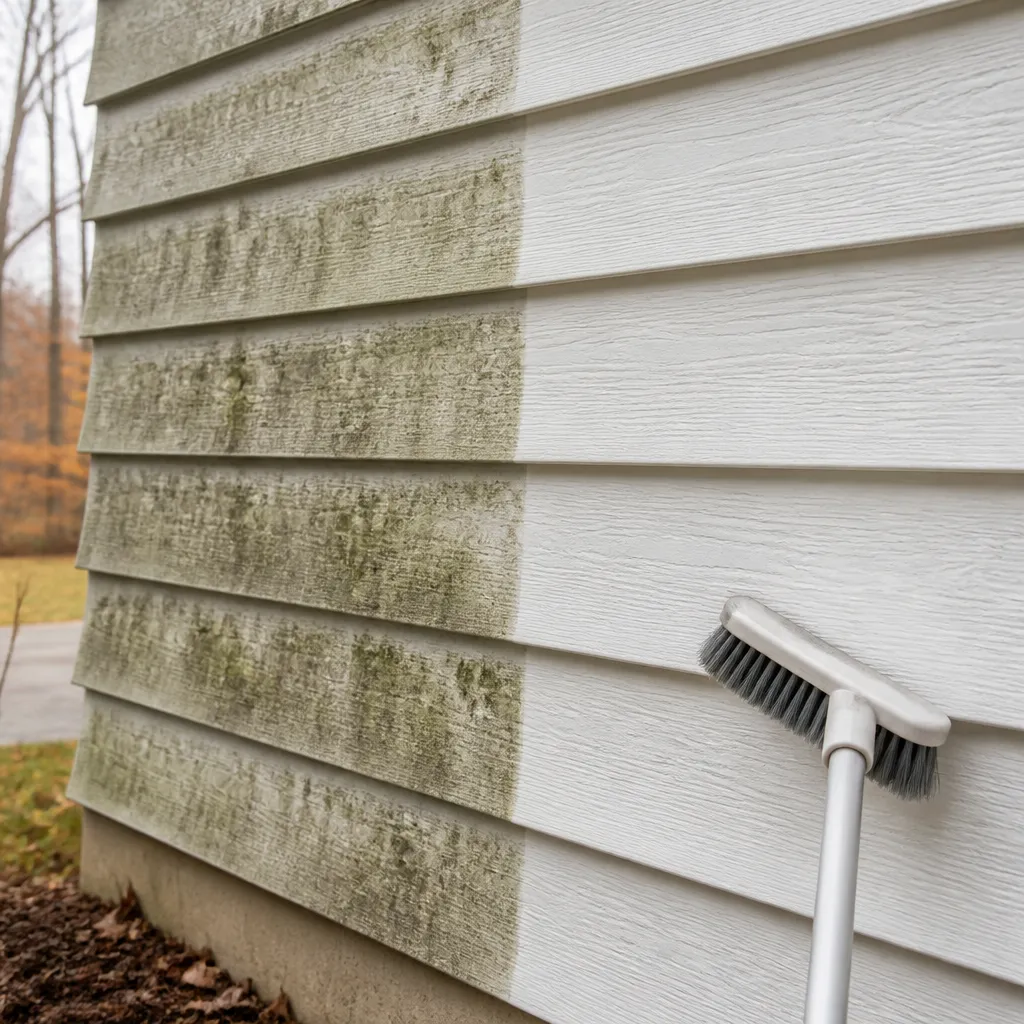
In practice, the buildup on Oakville exteriors comes from a mix of sources. Tree debris and leaf tannins leave brown tea-colored stains below downspouts and along soffit lines. Dust and road film gather on the lower third of the wall, while mildew and algae start in the shaded north and east-facing areas where the sun takes longer to dry the surface. Each of these needs a slightly different cleaning approach, which is why a single pass with a pressure washer rarely does the whole job.
A useful way to think about it is that siding does not need to look filthy to need a wash. The mrhandyman guide on cleaning siding without damaging it lists common warning signs, including dark streaks from mildew, green patches from algae, and a chalky white film on vinyl caused by oxidation. A dull appearance that rain does not wash away is another signal. If you see any of these before the first freeze, the surface is ready for hand-washing.
How Winter Locks In Stains
Cold does not create stains, but it makes existing ones harder to remove. Moisture trapped under dirt freezes and thaws repeatedly, and that movement helps residue bond to the surface. A film that would have rinsed off in September can need a scrub brush and a second pass by March. The cost of waiting is not just cosmetic, because organic growth that survives winter tends to return faster the following year.
Dirt is the first problem, moisture is the second, and the two together create the conditions for long-term staining. That is the core reason a pre-winter wash is worth scheduling even when the siding looks acceptable from the sidewalk.
Hand-Washing vs Pressure Washing for Siding
Many homeowners reach for a pressure washer first because it is fast and dramatic. On siding, speed is often the problem. A high-pressure stream can push water behind overlapping panels, lift the edge of a course, or strip paint from a softer surface. Pressure washing has its place on brick, concrete, and sturdy masonry, but it is the wrong default for most residential siding. The table below compares the three approaches we see most often.
| Method | Best For | Main Risk |
|---|---|---|
| Hand-washing with a soft brush, mild detergent, and a garden hose | Vinyl, painted wood, fiber cement, and delicate trim | Slower on upper levels, and it needs careful ladder work |
| Pressure washing at a controlled setting | Brick, concrete, and heavy grime on sturdy surfaces | Forces water behind laps, etches paint, and can crack older vinyl |
| Soft washing with a low-pressure applicator and a cleaning solution | Mildew and algae on most siding types | Chemical handling and plant protection require planning |
Why Pressure Is the Wrong Tool for Most Siding
The honest answer is that pressure does not remove the biofilm that feeds mildew. It knocks off loose dirt and leaves the root growth behind, which then returns in a few weeks. A hand wash with the right detergent often does a better job on the same surface, and it leaves the joints intact. For most Oakville homes with vinyl or painted wood, we would rather spend an extra hour with a brush than risk water intrusion behind the panels.
Pressure is not the same as cleaning power. Adjusting the nozzle distance and angle matters more than the PSI number printed on the machine, and that level of control is hard to maintain across a whole wall.
When Soft Washing Makes Sense
Soft washing uses a low-pressure applicator to deliver a cleaning solution that sits on the surface and works on organic growth. It is the better choice when you can see mildew or algae in several places, especially on north-facing walls where the surface stays damp. The trade-off is that the solution has to be handled carefully, and nearby plants, shrubs, and garden beds need to be covered or rinsed thoroughly. Soft washing is a specialist step, not a substitute for a general wash.
Step-by-Step Hand-Washing Before Winter
A good hand wash is mostly preparation and patience. The work itself is not complicated, but the order of operations determines whether you finish with a clean wall or a set of streaks. The steps below reflect how we approach a typical Oakville two-storey home, though the same sequence applies to bungalows and split-levels.
Prepare the Area and Protect Plants
Start by moving patio furniture, grills, and potted plants away from the walls. Rinse the foundation and the lower courses with clean water so loose soil does not splash back onto the siding as you work. Cover delicate shrubs with a breathable cloth if you plan to use any detergent. Doing this first saves you from having to re-wash the garden later.
Check the siding for loose trim, cracked caulk, and damaged panels while the surface is still dry. Mark anything that needs repair so you can address it before the cold sets in. A small crack filled in October is far cheaper than water damage found in February.
Wash in Sections From Bottom to Top
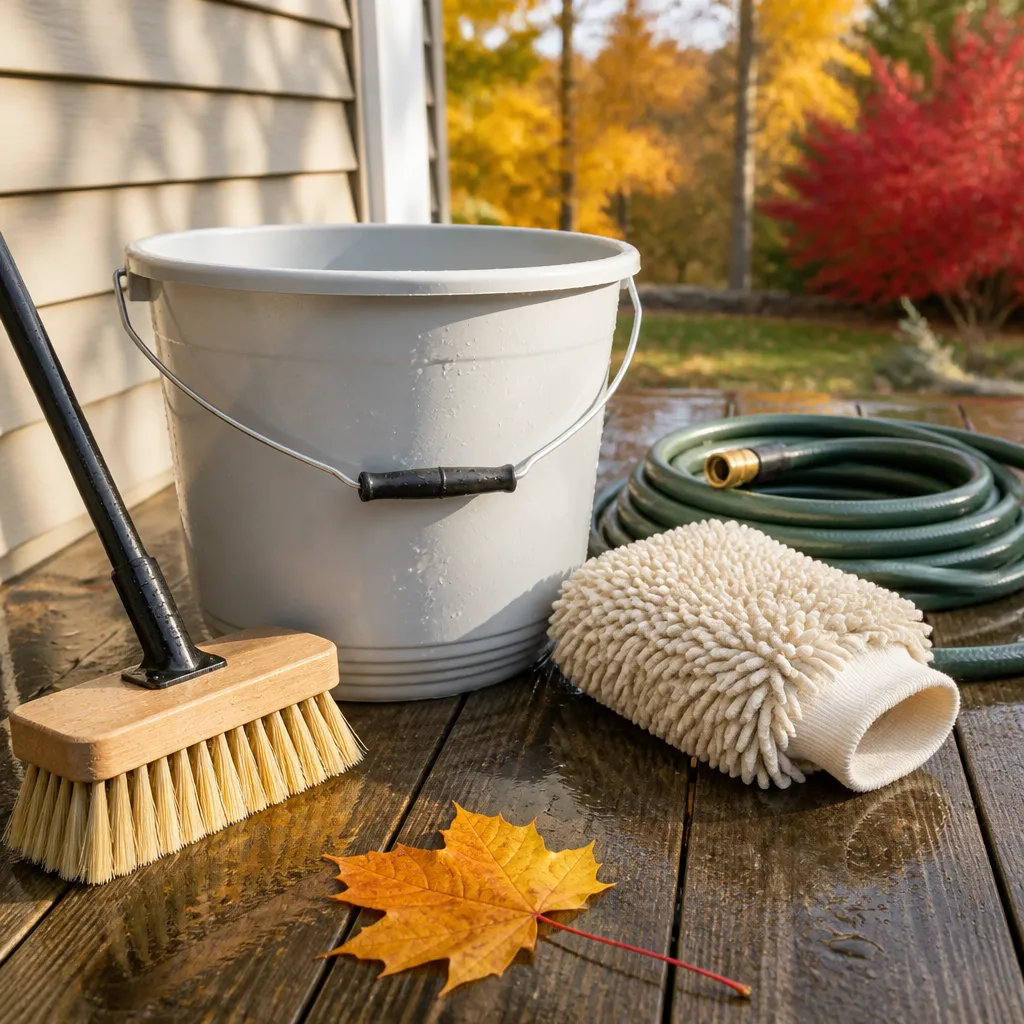
Mix a mild detergent designed for exterior surfaces with lukewarm water in a bucket. Use a soft brush or a microfiber wash mitt, and work in sections roughly the height of your reach. Starting at the bottom keeps dirty runoff from streaking the clean surface beneath it. Avoid harsh household cleaners, and never use a wire brush on painted or vinyl siding.
Pay extra attention to the lower two feet of the wall, where splash-back from rain and sidewalk grime concentrate. That band often needs a second pass because it carries the most residue from salt, soil, and road spray. Treat any visible mildew spot directly with a targeted solution, then let it dwell briefly before brushing.
Rinse Top to Bottom and Inspect
Rinse each section from the top down with a garden hose at a gentle flow, so detergent and loosened dirt drain away from the work you have already completed. Make sure no soap remains in the crevices around windows and doors, because dried residue can leave its own streaks. Once the wall is rinsed, look for any spots that still hold dirt and do a light second pass.
Give the siding a full day to dry before temperatures drop. Trapped moisture in seams and under trim is the main reason a wash done too late in the season causes problems.
Pro tip: Wash on a morning with warm enough air to let the siding dry by evening. If the forecast suggests a freeze overnight, postpone the job, because water left in joints can refreeze and widen small gaps.
Spring Damage That Winter Washing Prevents
The most useful way to judge a pre-winter wash is to look at what happens in spring when you skip it. In our experience, the damage homeowners complain about in April was set in place the previous autumn. The stains are not new. They are dirt and growth that had all winter to bond with the surface.
Most spring siding stains are not new. They are autumn grime that had all winter to set.
Mildew Streaks That Return Every Year
Dark streaks that reappear on the same panels each spring are a classic sign of mildew that was never fully removed. Surface-level scrubbing can make the wall look clean for a few weeks, but the root growth remains and regrows as soon as humidity returns. Targeting those areas during the autumn wash, with a solution formulated for organic growth, breaks the cycle more effectively than repeated spring cleaning.
Look for patterns. Streaks that run down from a gutter seam or under a window sill usually indicate water is running over the same path repeatedly. Cleaning those lines in the fall gives you a clear view of whether the source needs a repair.
Dull Paint and Chalky Vinyl
Vinyl siding that has gone chalky is a sign of oxidation from years of UV exposure, and a chalky white residue will rub off on a dark shirt. A hand wash with a mild detergent removes the loose chalk and restores some of the surface sheen. Painted wood and fiber cement can dull in a similar way when a film of dirt sits on the surface through the cold months. Clearing that film in autumn helps the finish look more even when spring arrives.
Avoid scrubbing chalky vinyl hard, because aggressive brushing can leave visible marks on the panel. A gentle, repeated wash works better than a single hard pass.
Hidden Moisture Problems at Caulk and Trim
Caulk around windows, doors, and trim is one of the first places water finds a way in. Hand-washing lets you see the seams up close, and that is the moment to notice cracks, peeling sealant, or dark staining that points to a leak. Catching those problems before freeze-thaw cycles widen them is far cheaper than repairing rot or insulation damage later.
Keep a simple list of anything that needs attention, such as a loose corner trim piece or a failing sealant bead. Address the small items in autumn when the weather is still cooperative for repairs.
Cleaning Methods by Siding Material
Not every siding material responds the same way to water or cleaning products. The right method starts with knowing what your home is clad in and what it can tolerate. The general guidance from the mrhandyman siding guide is that vinyl and brick can handle moderate pressure, while wood, stucco, and fiber cement usually need soft washing or gentle hand cleaning to avoid moisture damage, cracking, or paint failure. That split shapes how we plan every job.
Vinyl Siding
Vinyl is forgiving when it is washed with a mild detergent and a soft brush. It is less forgiving when high pressure forces water behind the panel locks or when a harsh product dulls the surface. Work from the bottom up, rinse thoroughly, and avoid spraying directly into the seams at a steep angle. Many Oakville homes built with vinyl only need a hand wash each autumn to stay in good shape.
Painted Wood and Fiber Cement
Painted wood and fiber cement are the materials where pressure does the most damage. A high-pressure stream can strip paint from the edges of boards and expose the substrate to moisture. Use a soft brush, keep the rinse gentle, and inspect the paint for blistering or peeling after the wash. If the paint is already failing, the autumn wash is a good time to plan repairs for the following spring.
Brick and Stone Accents
Brick and stone accents can usually handle more aggressive cleaning than siding, which is why many homes have a mixed approach. Keep the pressure moderate and check mortar joints for loose or crumbling sections. If you wash brick and siding in the same session, switch tools as you move between materials so you do not carry a harsh product onto the painted surfaces.
Timing Your Oakville Winter Prep
Timing is where most pre-winter washes succeed or fail. Wash too early and the siding gets dirty again before the first freeze. Wash too late and the air is too cold for the surface to dry properly. The sweet spot for most Oakville homes is the period after the last major leaf drop and before the first sustained period of freezing overnight temperatures.
Choosing the Right Window in Autumn
We schedule most pre-winter washes in late October or early November, once the trees have dropped most of their leaves and the siding has collected a full season of debris. That timing lets you catch the buildup without having to wash again after the next storm. If your property has large trees near the house, you may need a second, lighter pass after the final leaf drop.
Jameshardie’s guidance on preparing a home for winter includes washing the siding thoroughly to remove dirt and mildew, which supports the same timing logic. The point is to finish the job before the weather makes it harder to do well.
Checking Temperatures and Drying Time
Water that sits on siding overnight can freeze in seams and joints, so plan the wash for a day with comfortable daytime temperatures and enough sunlight to dry the wall before evening. Check the overnight forecast before you start, and do not rely on the afternoon high alone. A cold, damp evening is the most common reason a fall wash leaves residue behind.
Dry time matters as much as wash time. If the north-facing wall stays damp into the evening, leave it for a warmer day rather than rushing the rinse.
Pro tip: Keep a short autumn checklist on your phone with the date of your last wash, any caulk repairs needed, and any spots that need a second pass. Comparing that list each spring makes it easy to see which areas need more attention next year.
Frequently Asked Questions
Is hand-washing siding really better than pressure washing?
For most residential siding, yes. Hand-washing with a soft brush and mild detergent removes dirt and growth without forcing water into seams or stripping paint. Pressure washing can still be the right tool for brick, concrete, and heavy grime on sturdy surfaces, but it is rarely the best first choice for vinyl, wood, or fiber cement.
When is the best time to wash siding before winter in Oakville?
Late October or early November is the usual window, after most leaves have fallen and before sustained freezing temperatures. Choose a day warm enough for the siding to dry by evening, and check the overnight forecast before you start.
Can I use bleach to clean mildew off my siding?
Bleach can be used on some materials, but it is not a good default. It can damage paint and harm nearby plants, and it does not always remove the root growth that causes recurring streaks. A solution made for exterior organic growth, applied carefully and rinsed well, is usually the safer choice. Follow the siding manufacturer’s cleaning guidance for your specific product.
Do I need to wash siding if it looks clean from the sidewalk?
Yes, in many cases. The buildup that causes spring damage often sits on the lower courses, in the grooves of textured panels, and in shaded areas where you may not notice it from the ground. A closer look while you wash also reveals early signs of caulk failure or moisture.
Can I wash siding myself, or should I hire a professional?
A homeowner can handle a single-storey home with vinyl siding and a garden hose. Multi-storey homes, painted wood, fiber cement, and any surface with visible mildew or failing paint are better left to someone experienced with the materials and the safe use of ladders and cleaning products.
What should I do if mildew returns quickly after cleaning?
Recurring mildew usually means moisture is staying on the surface longer than it should. Look for shaded areas, blocked gutters, or water running from the same spot. Fixing the moisture source is often more important than repeating the wash, and the autumn inspection is the best time to find it.
If you have noticed patterns on your own home, such as streaks that return each spring or caulk that cracks every winter, I would like to hear what your siding has shown you. Share your experience in the comments or send a note, and we can compare what has worked on similar properties.
We would love your feedback and any insights you would share with others. What perspective would you add?