
Most GTA homeowners think about window cleaning twice: once when they notice the streaks in May, and once when they realize they forgot to do it in October. That reactive approach costs more in the long run than any cleaning schedule ever would. Mineral deposits from hard water, road salt, and acid rain do not just sit on the surface of your glass – they bond to it. Left long enough, that bonding becomes permanent etching, and no amount of professional cleaning will reverse it. So when people search for how often window cleaning GTA homes actually need, the honest answer is: more often than you think, and more specifically than “twice a year.”
Table of Contents
- Quick Takeaways
- Why GTA Conditions Change Everything
- Recommended Frequency by Property Type
- Seasonal Breakdown: What Each Season Does to Your Glass
- Factors That Push Your Schedule Higher
- Interior vs. Exterior Windows: Different Rules
- Cleaning Frequency Comparison by Approach
- Frequently Asked Questions
- References
Quick Takeaways
| Key Insight | Explanation |
|---|---|
| Spring cleaning is non-negotiable | A GTA winter deposits road salt, mineral-heavy condensation, and airborne grit on every exterior window. Spring cleaning removes this before it etches the glass permanently. |
| Most residential homes need 2-3 cleanings per year | Exterior windows take the brunt of pollen, pollution, and weather. Two cleanings per year is a minimum; three is ideal for homes on busy roads or under heavy tree cover. |
| Commercial properties generally need quarterly cleaning | High foot traffic, tenant expectations, and curb appeal requirements push most GTA commercial buildings to a four-times-per-year schedule at minimum. |
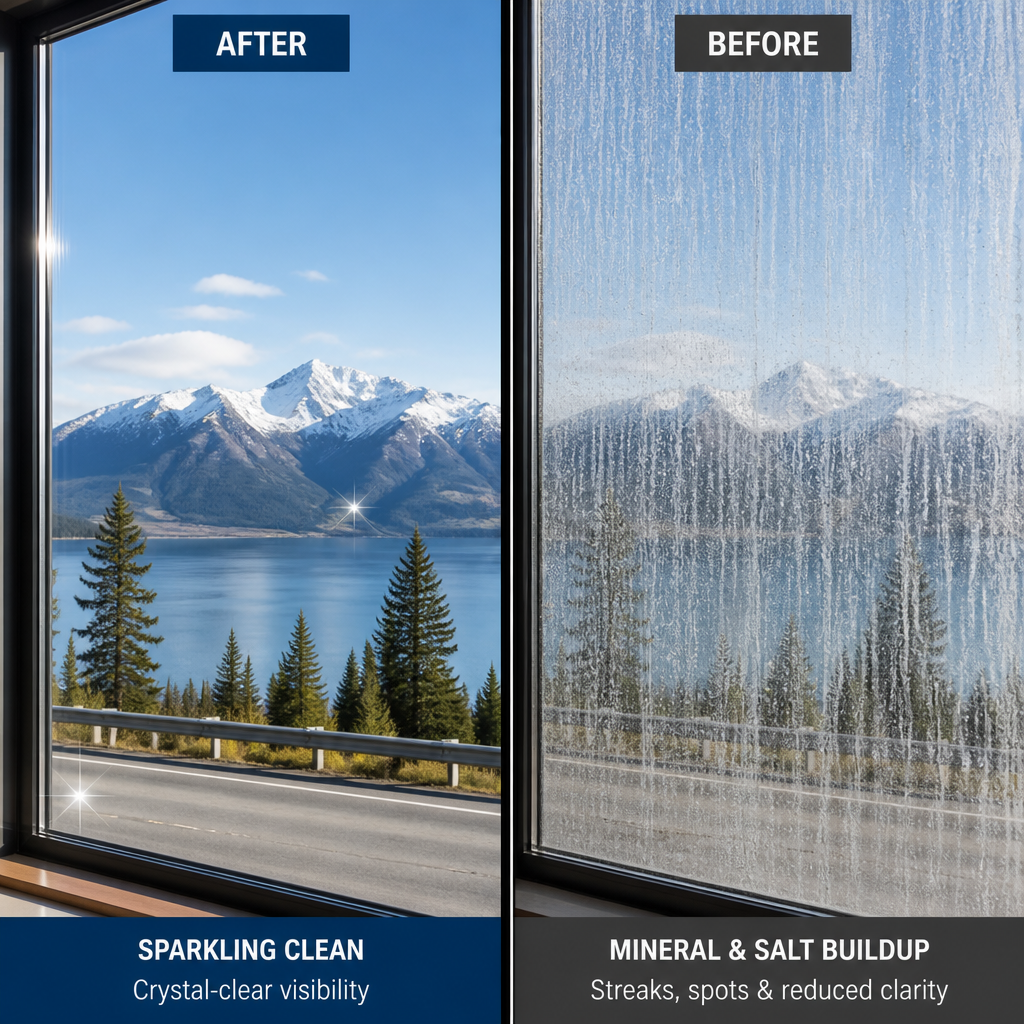
| Mineral deposits etch glass permanently within 1-2 years | Hard water, acid rain, and road salt do not just cloud glass – they chemically bond to it. Regular cleaning is the only way to prevent irreversible haze. |
| North-facing windows need more frequent attention | Less sun exposure means more moisture retention, which increases the risk of mold and algae forming on frames and seals. Three cleanings per year is the right target. |
| Proximity to construction adds a cleaning cycle | GTA has active development across many neighbourhoods. Concrete and drywall dust from nearby sites is alkaline and bonds to glass fast – add one extra cleaning per year while work is ongoing. |
| Interior windows need less frequent cleaning, but not zero | Interior glass accumulates dust, cooking vapors, and fingerprints. One to two professional cleanings per year keeps interior surfaces clear and protects indoor air quality. |
Why GTA Conditions Change Everything
Generic window cleaning advice does not account for what actually happens to glass in the Greater Toronto Area. The GTA’s seasonal cycle is more aggressive than most Canadian markets when it comes to exterior glass accumulation. It is not just dirt.
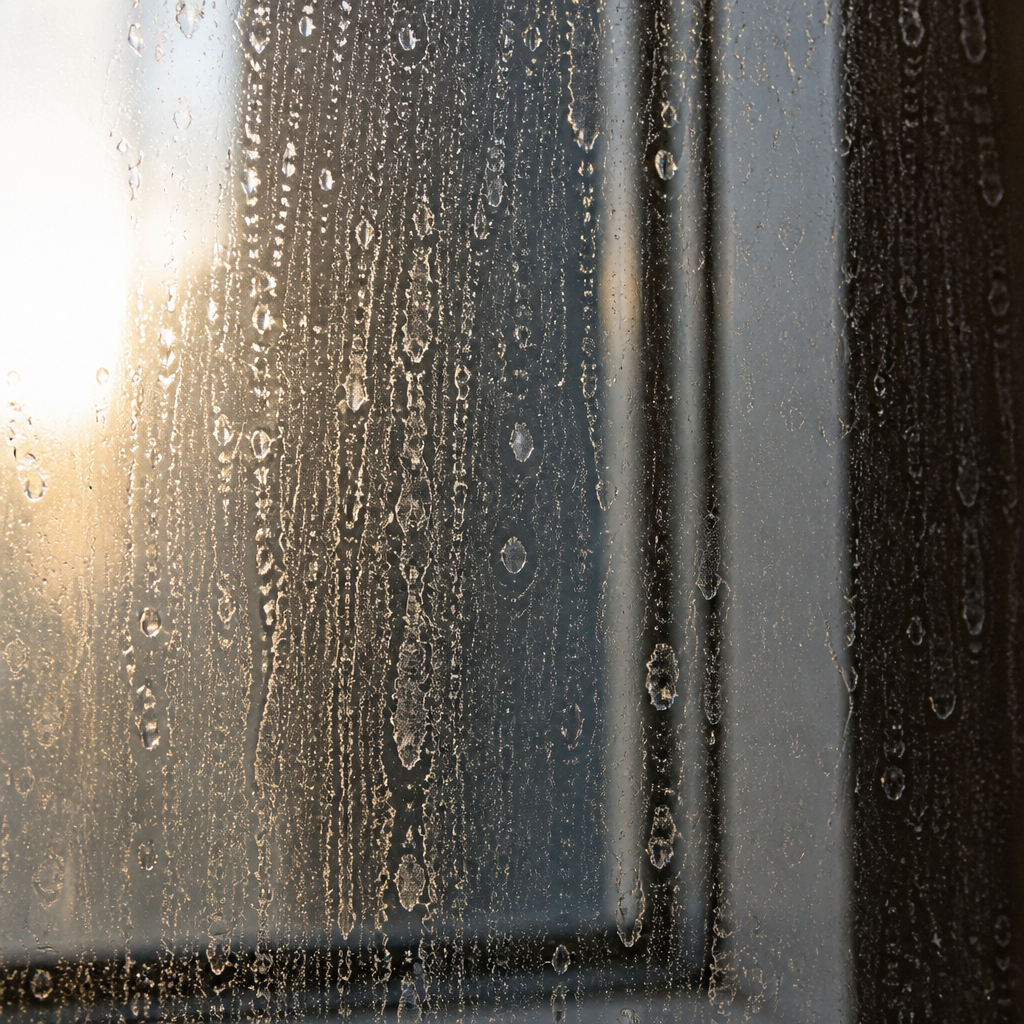
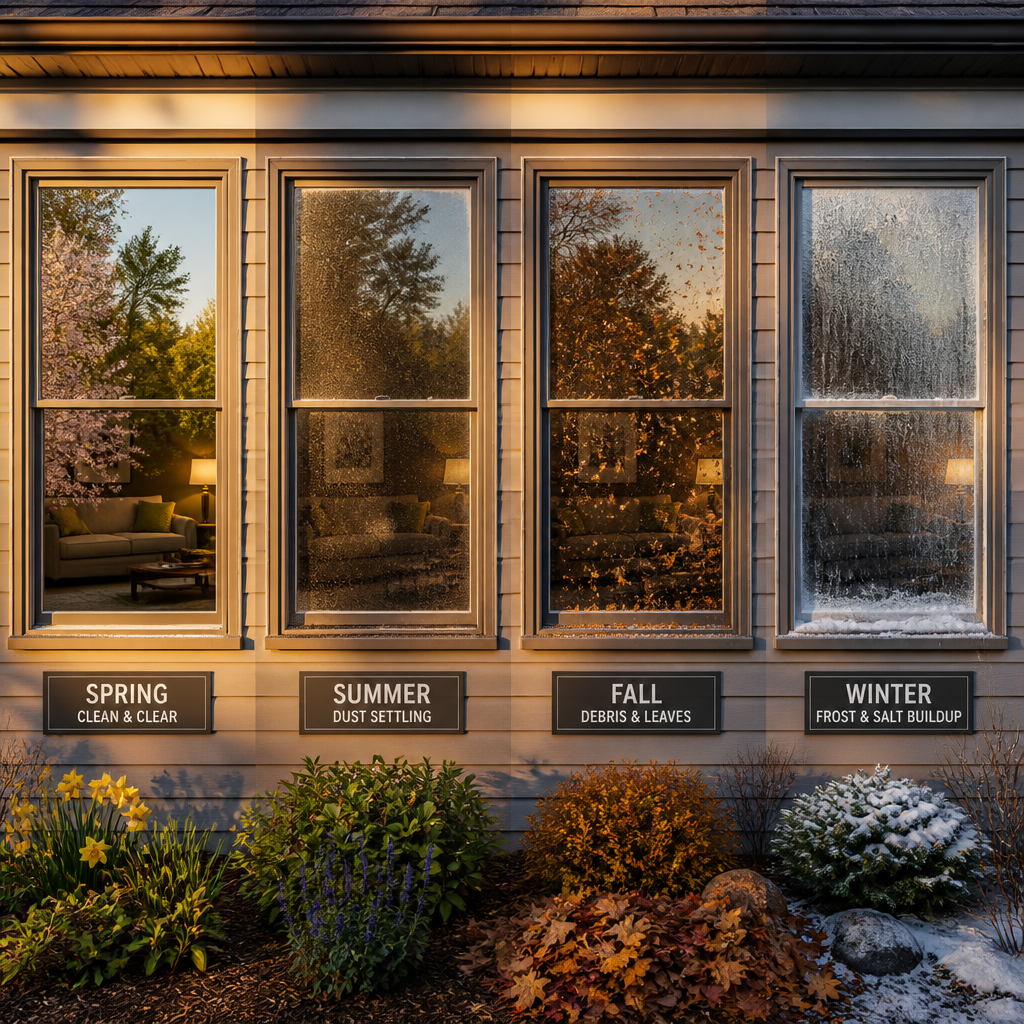
In winter, road crews apply salt and sand across the road network. That salt spray coats lower-floor windows in a fine mist that, as temperatures fluctuate through freeze-thaw cycles, gets baked into the glass surface. In spring, snowmelt carries mineral deposits and algae up through rainwater runoff. Summer brings pollen, tree sap, bird droppings, and construction dust. Fall adds tannin stains from leaf debris and another round of airborne particulates before the cycle starts again.
The cumulative effect matters. Each season’s residue builds on the last if cleaning is skipped. A window that went uncleaned for two years does not just look dirty – it may show permanent haze from mineral etching that no squeegee will fix. That is why professional window cleaning frequency is not a luxury question for GTA homeowners. It is a glass preservation question.
The window cleaning schedule that works in a mild coastal climate will underperform in the GTA. Hard water, road salt, and four genuine seasons mean GTA glass needs a plan that matches the environment it lives in, not a generic rule of thumb.
Recommended Frequency by Property Type
Property type is the single clearest predictor of how often professional cleaning is needed. The demands on a downtown retail storefront and a suburban bungalow are completely different, even if both sit in the same region.
Residential Homes: 2-3 Times Per Year
For most residential properties across the GTA, exterior windows benefit from professional cleaning two to three times per year. The standard schedule is spring and fall, but homes on busy arterial roads, near mature tree canopies, or next to active construction sites should add a third visit in early summer. Interior windows for most households are well-served by one to two professional cleanings per year.
Window orientation also matters. North-facing windows retain more moisture and are at higher risk for mold and algae growth on frames, making three cleanings per year the right call. South-facing windows get more sun exposure, which helps mineral deposits dry faster but also makes hard water spotting more visible – two cleanings per year is typically sufficient for these. East-facing windows deal with morning dew combined with direct sun, a combination that accelerates water spot buildup and warrants at least three annual visits.
Pro tip: If you only have budget for one professional window cleaning per year, always make it spring. After a full GTA winter, your exterior glass is at its worst, and clearing that accumulated salt, grit, and mineral residue in April or May gives you the longest stretch of clean windows through the best months of the year.
Commercial Properties: 4 Times Per Year (Minimum)
Commercial buildings in the GTA – office towers, retail storefronts, restaurants, medical clinics – operate under a different standard than residential homes. Curb appeal directly affects customer perception, tenant satisfaction, and brand presentation. Most well-maintained commercial properties in the GTA schedule exterior window cleaning quarterly.
Class A office buildings and premium retail locations often go further, with monthly or bimonthly cleaning to maintain the appearance tenants and clients expect. Property managers responsible for multi-unit residential buildings generally follow the commercial model, cleaning common-area glass quarterly and scheduling full building exterior cleaning twice a year at minimum.
High-Rise and Condo Buildings: Specialist Scheduling Required
High-rise exterior cleaning in the GTA involves rope access, working-at-heights certification, and WSIB clearance – not just a bucket and a squeegee. Most mid-rise and high-rise residential buildings in the GTA clean exterior glass twice a year as a baseline, with premium towers often increasing that to quarterly for upper-floor suites that are most exposed to wind-driven particulates and rainfall residue.
Seasonal Breakdown: What Each Season Does to Your Glass
Understanding what each season deposits on your windows makes the cleaning schedule obvious rather than arbitrary. Here is what actually happens, season by season, in the GTA.
Winter: Road Salt and Freeze-Thaw Mineral Bonding
Winter is the most damaging season for exterior glass in the GTA. Road crews apply salt across the city’s road network, and that salt spray reaches ground-level and lower-floor windows in a fine mist. Freeze-thaw cycles – which are frequent across GTA winters – cause these mineral deposits to expand and contract into the glass surface. By March, ground-floor windows on properties near any paved road carry a film of salt, sand, and mineral residue that has been months in the making.
Spring: Pollen, Algae, and Runoff Deposits
Spring brings pollen season, and in neighbourhoods with mature tree canopy – common across older areas of the GTA – pollen coats windows in a yellow-green film within days of trees flowering. Snowmelt runoff also carries mineral deposits and, in some cases, algae spores that leave organic staining on glass and frames if not cleared quickly. Spring is the right time for a thorough professional clean that addresses everything winter left behind.
Summer: Tree Sap, Bird Droppings, and Construction Dust
Summer is the most variable season for window contamination. Homes under or near deciduous trees accumulate sap and tannin residue. Bird droppings – acidic and fast-acting on glass coatings – are most frequent in warmer months. And with ongoing construction across many GTA communities, fine concrete and drywall dust settles on glass surfaces and, when wet by rain, forms an alkaline film that ordinary rain will not remove.
Fall: Leaf Debris, Tannins, and Pre-Winter Prep
Fall cleaning is the most strategically important cleaning after spring. Leaf tannins stain glass and frames when wet leaves sit against them for weeks. A fall cleaning in September or October removes summer’s accumulated grime and gives your windows the best possible condition heading into a GTA winter. Windows that go into winter already coated in organic debris and pollution are at higher risk for etching damage as cold weather sets in.
Pro tip: Schedule your fall window cleaning before the leaves have fully dropped in your neighbourhood – not after. Waiting until November means you are cleaning around falling debris and often working in conditions too cold for optimal results.
Factors That Push Your Schedule Higher
The baseline schedules above assume average exposure. Several specific factors mean your windows need more frequent professional attention than the standard recommendation. If any of these apply to your property, add at least one cleaning cycle to whatever baseline frequency you start with.
Proximity to Major Roads and Highways
Homes and businesses near major GTA arterials – or near highway on-ramps and off-ramps – experience continuous exposure to vehicle exhaust, tire particulates, and in winter, road salt spray at a much higher volume than quieter residential streets. These properties should plan for three to four exterior cleanings per year as a minimum.
Heavy Tree Canopy Coverage
Mature trees are a selling point in many GTA neighbourhoods, but they are hard on windows. A property shaded by large deciduous trees will accumulate pollen in spring, sap in summer, and tannin staining from leaf debris in fall. Three to four cleanings per year is the right schedule for heavily treed lots.
Active Nearby Construction
The GTA is one of the most actively developed urban regions in North America. If your property is near a condo development, road reconstruction project, or commercial build, the fine concrete and drywall dust generated by that work settles on glass continuously. This dust is alkaline and bonds to glass surfaces quickly when exposed to rain. Add one extra cleaning per year for as long as nearby construction is active.
Older Single-Pane Windows
Older homes across the GTA – particularly properties from the 1950s through 1970s in areas like Scarborough, Etobicoke, and North York – often retain original or early-replacement single-pane glass. This glass is thinner and less treated than modern double or triple-pane installations, making it more susceptible to mineral etching. Regular cleaning for these windows is maintenance, not just cosmetic upkeep.
Interior vs. Exterior Windows: Different Rules
Interior and exterior windows operate on separate schedules for a straightforward reason: they face different environments. Exterior glass takes the full impact of weather, pollution, and seasonal contamination. Interior glass accumulates dust, cooking vapors, condensation from HVAC systems, and in households with children or pets, fingerprints and smudges at a consistent rate.
For most GTA homes, exterior windows need professional cleaning two to three times per year. Interior windows are well-maintained with one to two professional visits per year. The two schedules do not need to be aligned – some homeowners book a full interior and exterior clean in spring and an exterior-only clean in fall, which covers both surfaces adequately through the year.
For commercial properties, interior common-area glass – lobby windows, corridor partitions, elevator doors – generally requires more frequent attention than residential interiors, because it is subject to heavy daily traffic. Monthly or quarterly professional cleaning for commercial interior glass is standard practice in well-managed GTA buildings.
A professional service like Performance Window Cleaning can assess your specific property – orientation, tree coverage, road proximity, and property type – and recommend a customized cleaning schedule that makes sense for your situation rather than a one-size-fits-all answer. Their services extend beyond windows to include gutter and eavestrough cleaning, power washing, and exterior hand-washing of siding and eaves, which means a single visit can address multiple maintenance needs at once.
Cleaning Frequency Comparison by Approach
Not all approaches to window cleaning frequency deliver the same results. Here is how three common scheduling approaches compare for a typical GTA residential property.
| Approach | Schedule | Outcome for GTA Properties |
|---|---|---|
| Reactive Cleaning (clean when visibly dirty) | Once every 12-18 months on average | Mineral deposits and road salt accumulate beyond surface level. Risk of permanent glass etching is high. Cleaning is more labor-intensive and costly when finally done. |
| Standard Bi-Annual Schedule (spring and fall) | 2 times per year | Adequate for low-exposure properties: south-facing windows, homes on quiet residential streets, minimal tree coverage. Does not fully address GTA’s harder conditions for high-exposure properties. |
| Customized Frequency Schedule (property-specific) | 3-4 times per year based on orientation, road proximity, tree coverage | Best outcome for glass longevity and appearance. Prevents buildup from advancing to etching stage. Most cost-effective long-term because it avoids restoration-level cleaning or premature window replacement. |
The reactive approach feels cheaper in the moment but consistently costs more over a window’s lifespan. Restoration cleaning for etched or heavily stained glass costs significantly more than routine maintenance visits. For properties where windows are a meaningful part of curb appeal – and in the GTA, that includes virtually all residential and commercial real estate – a proper schedule pays for itself.
Frequently Asked Questions
How often should a typical GTA home get professional window cleaning?
Most GTA homes benefit from exterior window cleaning two to three times per year, with spring and fall as the minimum baseline. Homes near busy roads, under heavy tree coverage, or near active construction sites should aim for three to four cleanings per year. Interior windows can be maintained with one to two professional visits annually.
Is spring really the most important time to clean windows in the GTA?
Yes. After a full GTA winter, exterior glass carries accumulated road salt, mineral deposits from freeze-thaw cycles, and airborne grit that has been bonding to the surface for months. Spring cleaning removes all of this before it can cause permanent etching, and it sets your windows up for the longest stretch of clean, clear glass through summer.
Can I skip fall window cleaning if my windows look fine?
Skipping fall cleaning is a common mistake. Windows may not look dramatically dirty in October, but leaf tannins, summer’s accumulated pollution, and organic debris from trees are sitting on the glass. Going into a GTA winter with that residue already present increases the risk of mineral and organic compounds bonding further into the glass surface when cold weather arrives. Fall cleaning is preventive maintenance, not cosmetic luxury.
Do commercial properties in the GTA need more frequent cleaning than residential homes?
Yes, in almost every case. Commercial buildings – offices, retail locations, restaurants, medical facilities – have curb appeal and tenant expectations that require a higher baseline of appearance maintenance. Quarterly cleaning is the standard for most commercial GTA properties, with high-traffic or premium locations often scheduling monthly exterior cleaning. Property managers for multi-unit residential buildings typically follow a similar model.
What happens if GTA windows go too long without professional cleaning?
Hard water minerals, road salt, and acid rain residue etch into glass chemically over time. This process can begin within one to two years of consistent neglect and creates a permanent haze on the glass surface that no routine cleaning will reverse. Beyond glass damage, dirty windows reduce natural light transmission into your home or business, and on commercial properties, they directly affect the impression you make on visitors and customers.
Does window orientation affect how often I need professional cleaning?
It does, meaningfully. North-facing windows retain more moisture and have less sun exposure, which increases the risk of mold and algae forming on frames and seals – these windows need three cleanings per year. South-facing windows get the most sun, which helps mineral deposits dry faster but makes hard water spotting more visible. East-facing windows deal with a morning dew and direct sun combination that accelerates water spot buildup. Orientation is one of the clearest guides to setting a property-specific schedule.
Should I combine window cleaning with other exterior maintenance?
Combining services is the most efficient and cost-effective approach for most GTA homeowners. Scheduling professional window cleaning at the same time as gutter cleaning, eavestrough clearing, power washing, or exterior siding cleaning means fewer service visits, better overall curb appeal, and coordinated maintenance that addresses the whole exterior rather than isolated problems. Spring and fall are natural anchor points for this kind of bundled maintenance approach.
If you manage a property in the GTA, we would love to hear what window cleaning schedule has worked best for you – share your experience in the comments below.
We would love your feedback and any insights you would share with others. What perspective would you add?
References
- GTA window cleaning frequency guide based on neighbourhood, tree coverage, and road proximity
- Commercial window cleaning scheduling and scope guide for Toronto buildings
- Data-based guide to how often Toronto windows should be cleaned
- Professional window cleaning services and seasonal cleaning recommendations for Toronto homeowners
- Toronto window cleaning frequency explained for residential and commercial properties