
Most homeowners clean their windows when they notice the grime, which is usually far too late. By the time streaks and buildup are obvious from inside your home, mineral deposits and oxidation may already be doing slow damage to your glass and frames. Knowing how often to clean windows is not about aesthetics alone. It is about protecting a significant investment in your home. At Performance Window Cleaning, we have been maintaining residential and commercial properties since 2008, and the single most common mistake we see is homeowners waiting 12 to 18 months between cleanings.
Table of Contents
- Quick Takeaways
- Why Window Cleaning Frequency Actually Matters
- The Recommended Window Cleaning Schedule for Homeowners
- Factors That Change Your Cleaning Schedule
- Interior vs. Exterior Windows: Different Timelines
- Comparison of Window Cleaning Approaches
- Signs You Are Overdue for a Window Cleaning
- Frequently Asked Questions
- References
Quick Takeaways
| Key Insight | Explanation |
|---|---|
| Twice a year is the baseline for most homes | Spring and fall cleanings catch seasonal buildup and prepare your windows for weather extremes. |
| High-exposure homes need quarterly cleaning | Properties near roads, trees, or coastal areas accumulate dirt, pollen, and salt spray far faster than sheltered homes. |
| Interior windows need cleaning at least once a year | Indoor condensation, cooking grease, and dust film reduce light transmission even when exterior glass looks clean. |
| Waiting too long causes permanent damage | Mineral deposits from hard water and acid rain etch glass over time, creating haziness that cannot be removed by standard cleaning. |
| Combining services saves time and money | Scheduling window cleaning alongside gutter cleaning or power washing during the same visit reduces cost per service and protects the home systematically. |
| Commercial properties require more frequent cleaning | Business storefronts and office buildings benefit from monthly or bi-monthly cleaning to maintain professional appearance and client impressions. |
| Professional cleaning outperforms DIY for exterior glass | Professional-grade squeegees, extension poles, and purified water systems eliminate streaks that consumer tools and tap water consistently leave behind. |
Why Window Cleaning Frequency Actually Matters
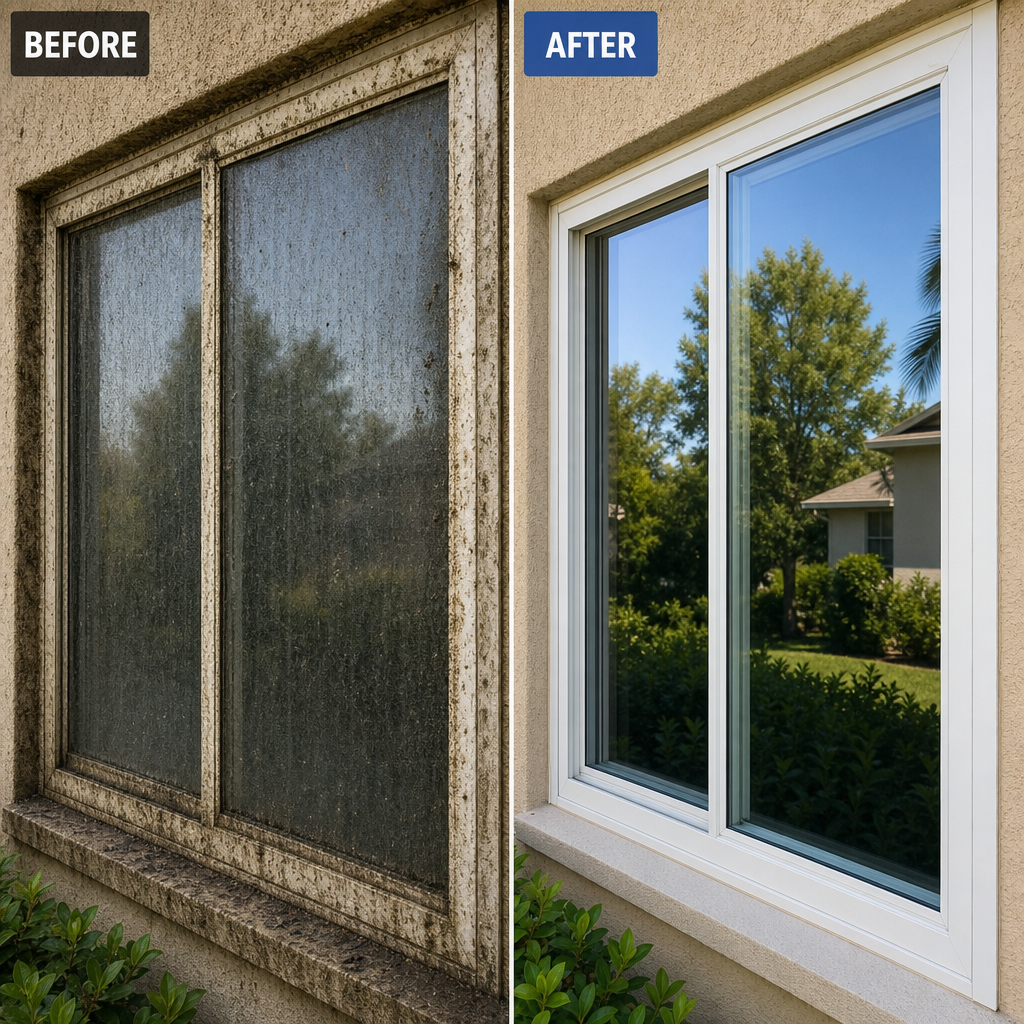
Glass is not as inert as it looks. Window surfaces are mildly porous and attract contaminants including pollen, bird droppings, hard water mineral deposits, and pollution particles. Over time, these substances bond chemically with the glass surface rather than sitting loosely on top of it. Once that bonding occurs, standard cleaning cannot reverse the damage.
According to the Glass Association of North America, mineral deposits left on glass for more than two years can permanently etch the surface, reducing clarity and requiring costly restoration or replacement. A consistent window cleaning schedule is the simplest way to avoid that outcome entirely.
In practice, the homes we service that maintain a twice-yearly schedule show dramatically less glass degradation than those cleaned sporadically. The difference in long-term glass health is not marginal. It is significant enough to extend the functional lifespan of a window by years.
The Recommended Window Cleaning Schedule for Homeowners
There is a clear, defensible answer to how often you should clean your windows: twice per year for most residential properties, with spring and fall being the optimal timing. This is not a vague recommendation. It is grounded in how seasonal conditions affect glass accumulation and what home exteriors actually endure across a full calendar year.
Spring Cleaning: April to May
Spring cleaning targets the buildup from winter. Salt spray from road treatments, ice melt residue, and condensation staining all accumulate between November and March. Cleaning in April or May removes these contaminants before warmer months when dried deposits become harder to remove. Spring is also peak pollen season, so timing your cleaning slightly after local pollen counts peak gives you a longer window of clarity before the next round of residue sets in.
Fall Cleaning: September to October
Fall cleaning prepares your windows for winter. Removing accumulated summer grime, insect residue, and oxidation before temperatures drop is important because cold temperatures make cleaning harder and allow some contaminants to freeze-bond to glass. A clean window heading into winter also allows more natural light into your home during the darker months, which has a meaningful effect on interior warmth and mood.
When Quarterly Cleaning Makes Sense
Homes located near busy roads, industrial areas, wooded lots with heavy sap drip, or properties with irrigation systems that splash mineral-rich water onto glass should move to a quarterly residential window cleaning schedule. Every three months keeps deposits manageable and prevents the etching cycle from starting. This is also the recommended schedule for homes with young children or pets where interior glass takes heavy daily contact.
Pro tip: If you have a sprinkler system that hits your windows regularly, you need professional cleaning at least every three months. Hard water overspray is one of the fastest ways to permanently damage glass, and no amount of consumer-grade glass cleaner will remove mineralization once it has set.
Factors That Change Your Cleaning Schedule
Your neighbours may have very different cleaning needs than you do, even on the same street. The correct window cleaning schedule for your home depends on several specific variables that shift the baseline recommendation up or down.
Proximity to Trees and Vegetation
Tree sap, leaf tannins, bird droppings, and airborne pollen all concentrate near homes with mature tree cover. If you have trees overhanging or within 10 feet of your windows, expect to need cleaning three to four times per year. Sap in particular becomes extremely difficult to remove once it cures in direct sunlight.
Traffic and Air Quality
Homes on busy streets accumulate exhaust particulates and road dust at a rate two to three times higher than homes on quiet residential streets. This is observable in practice. We regularly service homes on arterial roads where the film of pollution on glass after six months looks equivalent to what a rural home might accumulate over two years.
Construction Nearby
Active construction within a few blocks generates concrete dust, drywall particles, and equipment exhaust that settles on glass quickly. During active construction phases, monthly or bi-monthly cleaning may be warranted to prevent abrasive particle bonding with your glass surface.
Local Climate and Rainfall
Contrary to popular belief, rainfall does not clean your windows. Rain water carries dissolved minerals and picks up airborne pollutants as it falls. When rain dries on glass, it leaves behind those minerals as white haze. Regions with frequent light rain actually experience faster glass contamination than regions with heavy, occasional downpours that flush surfaces more thoroughly.
“Hard water staining is responsible for more permanent window damage than any other single factor we see in residential properties. It is preventable with consistent cleaning, but irreversible once it has had enough time to etch the glass.” – Performance Window Cleaning, field assessment notes, 2023 service season.
Interior vs. Exterior Windows: Different Timelines
Exterior and interior glass do not need cleaning at the same frequency, and conflating the two leads to either over-spending on interior cleaning or neglecting exterior glass until damage sets in. These are distinct surfaces with distinct contamination patterns.
Exterior Glass: The Higher Priority
Exterior windows face direct weather, UV exposure, pollution, and biological matter. They are the primary concern for your cleaning schedule. The twice-yearly minimum applies specifically to exterior glass. Skipping exterior cleaning is where permanent damage originates.
Interior Glass: Once to Twice Per Year
Interior windows accumulate condensation residue, cooking grease (especially in kitchens), fingerprints, pet nose prints, and general dust film. In practice, interior glass in most homes needs professional attention once per year, with spot cleaning in between. Kitchens and bathrooms are the exception and benefit from quarterly interior attention due to steam and grease exposure.
Pro tip: When you book a professional exterior cleaning in spring, add an interior cleaning to the same visit. The labour cost per window drops when both sides are done in one appointment, and your natural light improvement is dramatically more noticeable when both surfaces are clean at the same time.

Comparison of Window Cleaning Approaches
Homeowners regularly ask whether professional cleaning is worth it compared to doing it themselves or hiring a general handyman. The answer depends on your window type, height, and how much you value finish quality. Here is an honest comparison.
| Approach | Best For | Key Limitations |
|---|---|---|
| DIY cleaning with store-bought tools | Ground-floor interior glass, spot cleaning between professional visits | Tap water leaves mineral streaks; squeegee technique takes practice; upper floors are unsafe without ladders; no access to water-fed pole systems for streak-free results |
| General handyman or maintenance service | Basic surface wipe-downs on accessible windows | Typically lacks specialized squeegee technique and purified water equipment; often misses frames, tracks, and sills; no trained eye for early glass damage signs |
| Dedicated professional window cleaning company | Full exterior and interior residential cleaning, multi-storey homes, commercial properties, and homes with specialty glass | Higher per-visit cost than DIY, though cost per clean window over time is comparable when glass longevity is factored in; scheduling required in advance during peak seasons |
The data is clear for homes over one storey: professional cleaning is not a luxury, it is a safety and quality issue. Consumer ladder use for window cleaning is a leading cause of residential fall injuries, and no streak-free result from a ladder justifies that risk.
Signs You Are Overdue for a Window Cleaning
If you are unsure whether your current schedule is adequate, there are reliable indicators that your windows need professional attention now regardless of when they were last cleaned.
The most obvious sign is visible haze or film that does not wipe away with a dry cloth. This indicates mineral or organic bonding that requires professional-grade cleaning solutions and technique. A second clear indicator is white spotting or streaking on the lower half of exterior glass, which signals hard water overspray from irrigation or rain runoff from dirty eaves above.
If you notice that rooms feel darker than they used to despite unchanged natural light conditions, your windows are almost certainly overdue. Research from Lawrence Berkeley National Laboratory found that dirty windows can reduce visible light transmission by 20 to 40 percent, meaningfully increasing your artificial lighting costs and reducing the sense of openness in interior spaces.
Spider webs and insect nests in window corners are another sign. At Performance Window Cleaning, our pest removal service targets exactly this problem as part of a comprehensive exterior maintenance visit, because spiders and insects are attracted to the warmth and insect activity near glass and eaves. Letting these go unaddressed means organic matter and moisture accumulate at the glass perimeter, accelerating frame deterioration alongside glass contamination.
A common mistake is assuming that recently replaced windows are immune to cleaning schedules. New glass is actually more vulnerable to early mineral bonding because the surface coating has not yet developed the micro-protection that comes from proper maintenance history. New windows should be professionally cleaned within the first three to four months of installation and maintained on schedule from that point forward.
Frequently Asked Questions
How often should you clean windows on a house with vinyl frames?
Vinyl-framed windows should be cleaned at the same frequency as the glass itself, at minimum twice per year. Vinyl is susceptible to oxidation and UV yellowing, and accumulated grime accelerates that process. Including frame cleaning in your professional service appointment keeps vinyl looking newer for longer and prevents the frame deterioration that leads to seal failure.
Is twice a year enough for residential window cleaning?
For most homes in suburban or low-traffic areas without significant tree cover or hard water irrigation exposure, twice per year is sufficient. The spring and fall timing targets the two major accumulation periods. If your home has any of the high-exposure factors covered above, such as road proximity, trees, or irrigation spray, move to quarterly cleaning without hesitation.
Can I clean my own windows between professional visits?
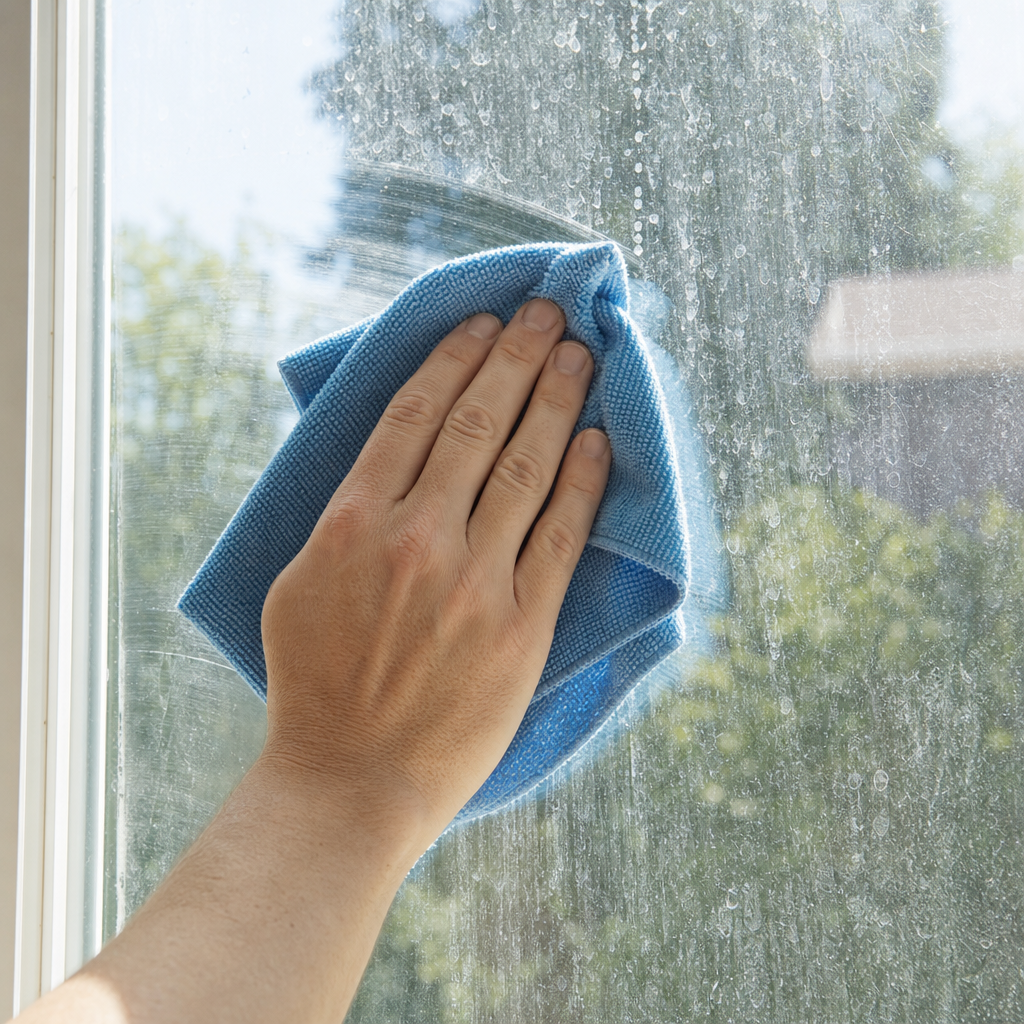
Yes, spot cleaning between professional visits is practical and encouraged. Use distilled water rather than tap water to avoid adding mineral deposits, and a microfibre cloth for interior surfaces. Avoid using commercial glass sprays on exterior glass because many contain ammonia that can deteriorate window seals over time. Professional visits handle the deep cleaning and hard-to-reach areas that DIY spot work cannot address.
Does cleaning gutters and eavestroughs affect how often I need window cleaning?
Directly, yes. Clogged gutters overflow and direct dirty water down your siding and across your window glass. Homes with unmaintained gutters consistently show faster glass contamination than homes where gutters are cleaned regularly. Scheduling gutter cleaning and window cleaning together, as Performance Window Cleaning offers in combined exterior maintenance packages, reduces the rate at which clean windows get recontaminated by overflow and splash-back.
What time of year is best to schedule professional window cleaning?
April through May and September through October are the optimal windows for most Canadian homeowners. Spring appointments remove winter accumulation and set glass up for the high-visibility summer months. Fall appointments clear summer buildup and prepare glass for winter. Booking in advance is strongly recommended because these months are peak season for professional cleaning companies and appointment availability fills quickly.
Do commercial properties need more frequent window cleaning than residential?
Yes, significantly more frequent. Storefront glass, office building windows, and commercial entrances benefit from monthly or bi-monthly professional cleaning. First impressions for clients and customers are directly tied to the cleanliness of visible glass surfaces, and commercial properties face higher foot traffic, door contact, and pollution exposure than residential glass. Many businesses schedule recurring contracts for this reason rather than booking on-demand.
What does your current window cleaning routine look like, and has this schedule helped you rethink when your home is actually due for its next professional visit?
References
- U.S. Department of Energy: research on window performance, light transmission, and home energy efficiency
- Lawrence Berkeley National Laboratory: building science research including the impact of window clarity on interior light and energy use
- Statista: home maintenance and professional cleaning services market data for North America
- Forbes Home: expert guidance on residential maintenance schedules and home value preservation
- U.S. Environmental Protection Agency: indoor air quality and the role of window maintenance in managing condensation and mould risk