
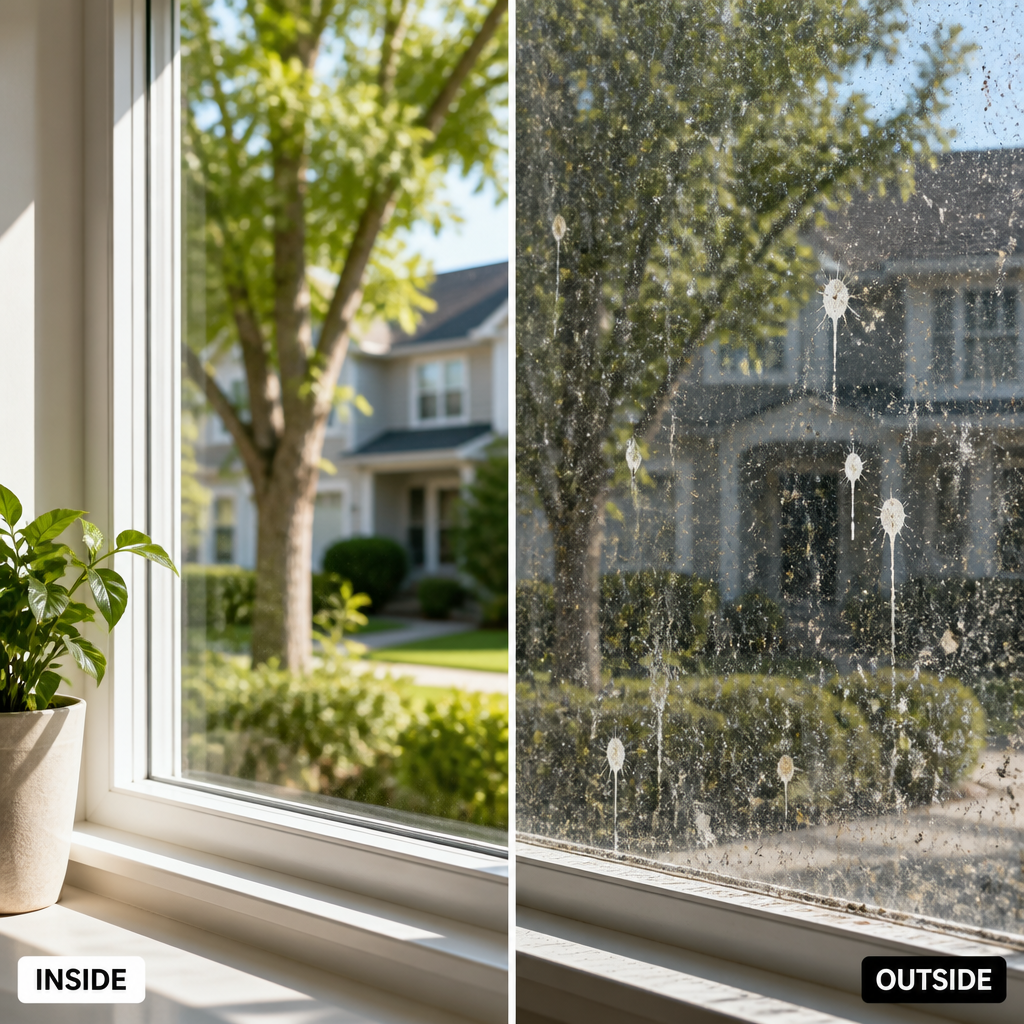
Most homeowners who call Performance Window Cleaning start the conversation the same way: “Can you just do the outsides?” It makes sense on the surface. Exterior windows are the ones the neighbours see, the ones that catch pollen and bird droppings and tree sap. But here is the reality that becomes obvious the moment a professional finishes cleaning only one side: a perfectly clean exterior pane behind a film-coated interior surface still looks dirty. Inside window cleaning and outside window cleaning solve completely different problems, and skipping either one means the job is only half done.
Table of Contents
- What Makes Interior and Exterior Dirt Different
- Inside Window Cleaning: The Challenges Professionals Tackle
- Outside Window Cleaning: Tougher Than It Looks
- Interior vs. Exterior Window Cleaning: A Side-by-Side Comparison
- How Often Do You Actually Need Both Sides Cleaned?
- Why Doing One Without the Other Wastes Your Money
- What a Professional Full-Service Clean Looks Like
- Frequently Asked Questions
- References
What Makes Interior and Exterior Dirt Different
The dirt on your interior windows and the grime on your exterior windows are not the same substance, and they do not respond to the same treatment. Understanding the difference is the foundation of any effective interior exterior window cleaning approach.
Inside, the enemies are everyday human activity: fingerprints, smudges, pet nose prints, cooking grease vapour, and the fine dust carried by forced-air heating and cooling systems. This layer is typically thin but clingy. It does not take much to put it there, and it does not take much to remove it, but it is remarkably good at creating a diffuse haze that softens the light coming through and makes a room feel duller than it should.
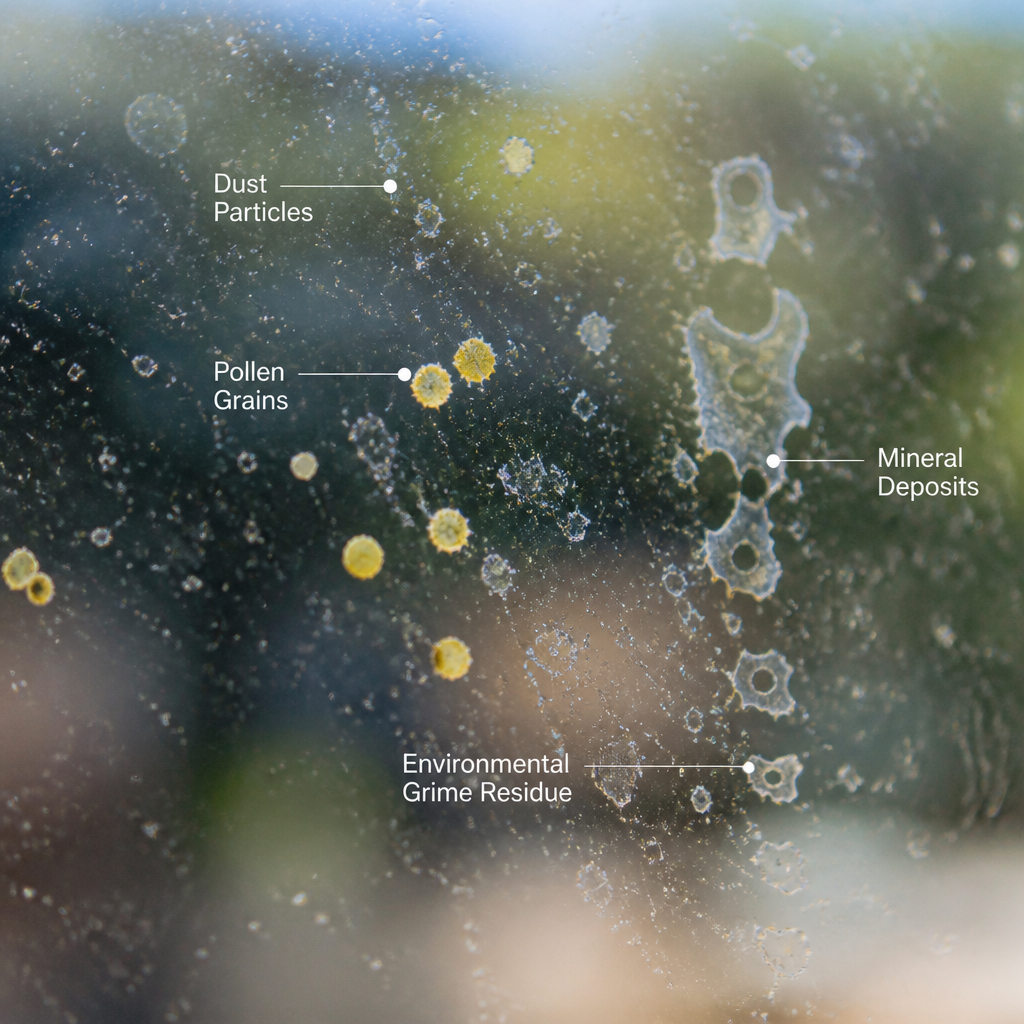
Outside is a different story entirely. Exterior surfaces are constantly exposed to rain, sprinklers, pollen, tree sap, and other environmental elements, which can leave behind calcium, lime, and rust deposits over time. That is not just surface dust you can wipe away. It is a layered accumulation of organic material, mineral deposits, and oxidized particles that bond to the glass the longer they sit. In some cases, the sun’s heat bakes these deposits directly into the surface, making them far harder to lift.
Pro tip: Inspect your exterior windows in direct sunlight rather than overcast conditions. Mineral stains, hard water streaks, and residue are significantly more visible when light reflects off the glass at an angle, helping you assess what needs professional attention.
Inside Window Cleaning: The Challenges Professionals Tackle
Interior window cleaning looks simple. In practice, it requires more precision than most people expect, and the margin for error is low because the consequences of a mistake show up immediately in the room you live in.
Streak Prevention Comes First
The most common complaint after a DIY attempt at inside window cleaning is streaks. Ironically, the streaks are often caused by the cleaning solution itself, not the dirt. Too much product, the wrong dilution ratio, or a cloth that leaves lint behind will all produce a hazy finish that looks worse under artificial lighting than the original smudge did. Professional cleaners use a controlled application, a light mist rather than heavy saturation, and remove solution with a clean squeegee blade or a lint-free microfiber cloth worked from top to bottom so residue never drips onto an already-clean section.
Protecting the Interior Environment
A professional doing inside window cleaning on your home is working inside your living space. Furniture, carpet, electronics, and window treatments all need to be protected. This is part of why professional interior window cleaning takes longer per pane than exterior work. The care and precision required around the home environment are as important as the actual glass cleaning itself. A good technician will dust frames and tracks before touching the glass so that loosened debris does not smear across a freshly cleaned pane.
Pro tip: Always dust window frames, sills, and tracks before applying any solution to the glass. Skipping this step is the single most common reason interior windows look streaky immediately after cleaning.
Air Quality Is a Hidden Benefit
Regular inside window cleaning does more than improve visibility. Dander, pollen, hair, and dust accumulate on windowsills and interior surfaces, and consistent cleaning can meaningfully reduce allergen load in the home. For households with allergy sufferers or pets, this is a practical benefit, not a marketing claim.
Outside Window Cleaning: Tougher Than It Looks
Exterior window cleaning demands more physical effort, more specialized equipment, and a deeper understanding of the type of contamination present. It is also the side of the window that defines how your home or business looks from the street.
Environmental Buildup Is Cumulative
Hard water spots are a perfect example of why exterior cleaning cannot be treated casually. Hard water spots on exterior windows form when water evaporates and leaves behind mineral deposits like calcium and magnesium, creating a chalky white residue on your glass. These spots do not respond to a standard glass cleaner. Once they are embedded, they require an acid-based solution designed to dissolve mineral deposits, applied carefully to avoid damaging frames and surrounding surfaces. Left too long, they can etch the glass itself.
Pollen, tree sap, bird droppings, exhaust film, and oxidation from UV exposure all compound on the exterior surface over time. Areas near sprinklers or with runoff from gutters often show accelerated hard water buildup because those surfaces are repeatedly wetted and dried. The same applies to homes near heavy tree coverage, where organic debris and bird activity are constant.
Safety and Access Are Real Constraints
Upper-floor exterior windows require ladders, extended poles, or water-fed systems. This is not a task for a stepladder and a spray bottle. A professional outside window cleaning service brings the right tools for safe access: extension poles with proper squeegee attachments, and for multi-storey properties, the equipment and training to work at height without risk. This is one of the clearest reasons to hire a professional rather than attempt exterior cleaning yourself.

Seasonal Factors Change What You Are Cleaning
Spring brings pollen. Summer brings irrigation overspray and dust baked into the glass. Fall brings organic debris from trees. Winter in a Canadian climate like the one Performance Window Cleaning operates in adds road salt and moisture cycling that deposits mineral residue even on windows that seem protected. Each season presents a slightly different contamination profile on the exterior surface, which is why the cleaning approach needs to account for what has accumulated, not just apply the same routine every time.
Interior vs. Exterior Window Cleaning: A Side-by-Side Comparison
The table below outlines the key differences between the two types of cleaning so you can understand what each involves and why neither is a substitute for the other.
| Feature | Inside Window Cleaning | Outside Window Cleaning |
|---|---|---|
| Primary contaminants | Fingerprints, dust, grease film, pet smudges, HVAC particles | Pollen, bird droppings, tree sap, hard water mineral deposits, oxidation |
| Cleaning method | Controlled spray, microfiber or squeegee, top-to-bottom wipe | Rinse, scrub with strip applicator, squeegee, acid treatment for mineral stains |
| Tools required | Squeegee, lint-free microfiber cloths, mild cleaning solution | Extension poles, water-fed systems, scrapers, mineral deposit removers |
| Safety considerations | Protecting interior furniture, flooring, and electronics from moisture | Safe ladder use, working at height, avoiding damage to frames and seals |
| Recommended frequency | Every one to three months, or when smudges are noticeable | Minimum twice per year (spring and fall); more often near trees or high traffic |
| Impact if skipped | Hazy interior, reduced natural light, allergen accumulation | Mineral etching, permanent staining, degraded curb appeal |
How Often Do You Actually Need Both Sides Cleaned?
Frequency recommendations vary depending on your property’s environment. The general guidance from professional cleaning services is clear: clean interior windows monthly or when they become smudged, while exterior windows should receive a thorough cleaning twice yearly in spring and fall to maintain appearance and protect the glass surface over time.
That said, there are situations that shift this baseline significantly. Homes near heavy tree coverage, coastal areas, construction zones, or high-pollution corridors may need exterior cleaning three or more times per year. If your property has sprinklers that hit the windows or downspouts that deposit runoff onto glass, hard water buildup can accumulate much faster than the twice-yearly standard would address.
Living in a polluted or construction-heavy area increases the frequency of window dirt buildup. In such cases, scheduling window cleaning every three to four months may be more suitable.
For interior cleaning, the practical trigger is usually visibility. If you notice a haze reducing the quality of natural light in a room, or if fingerprints are accumulating in high-touch areas like ground floor windows or doors, it is time. For households with children, pets, or allergy concerns, monthly interior cleaning is a reasonable baseline rather than an optional upgrade.
Performance Window Cleaning offers flexible scheduling and customized packages that account for exactly these variables, so you are not locked into a one-size approach that does not match your property’s actual needs.
Why Doing One Without the Other Wastes Your Money
Here is the argument for full interior exterior window cleaning in one sentence: every benefit of clean windows, from improved natural light to better curb appeal to a healthier indoor environment, requires both surfaces to be clean. Cleaning only one side is like washing only the outside of a drinking glass. It addresses appearance from one angle while leaving the actual problem half-solved.
Natural light quality is the most immediate effect. Keeping windows free of hard water, smoke film buildup, oxidation, and dirt particles allows the maximum amount of light into a space. A dirty interior surface diffuses and absorbs light in ways that dull a room even when the exterior glass is spotless. The reverse is also true: a pristine interior pane still limits light if the exterior is coated in pollen film and mineral deposits.
There is also a glass longevity argument. Regular cleaning on both sides prevents damage, maintains proper operation of window hardware, and extends the lifespan of your windows. Mineral deposits on exterior glass that are left untreated can eventually etch the surface, causing permanent cloudiness that no cleaning can reverse. That means replacement costs, not cleaning costs.
For homeowners thinking about resale value, clean windows, both inside and out, contribute directly to curb appeal and the impression a home makes during showings. Real estate professionals consistently note that first impressions are set before a buyer steps inside, and the condition of windows is one of the first things prospective buyers notice.
Pro tip: If you are preparing your home for sale, book a full interior and exterior window clean at least a week before photography and showings. Windows need time after a cleaning to settle, and any post-clean smudges from handling or re-installation of screens should be addressed the day before.
What a Professional Full-Service Clean Looks Like
When Performance Window Cleaning handles a full interior exterior window cleaning job, the process is systematic. It is not a single person with a bottle of Windex moving from room to room. There is a sequence designed to avoid recontaminating surfaces that have already been cleaned, protect the home environment, and ensure both sides of every pane are addressed with the right tools and solutions.
The Order of Operations Matters
Professionals always start with frames, sills, and tracks before touching the glass. Dislodged debris from a dirty frame will immediately contaminate a freshly cleaned pane, making the sequence non-negotiable. Exterior work typically follows the same logic: rinse to loosen surface contamination, apply solution, work with a strip applicator to lift embedded dirt, then squeegee from top to bottom. Any residual mineral staining is treated separately before the final pass.
Screens, Tracks, and Frames Are Part of the Job
A complete professional clean accounts for more than just the glass. Dirty window screens significantly reduce the amount of light that passes through a window, and they recontaminate clean glass every time the window is opened. Performance Window Cleaning’s full-service approach includes attention to these elements as part of its exterior maintenance solutions, because clean glass surrounded by dirty frames and clogged tracks is not a finished job.
What You Can Expect From a Reputable Service
A professional window cleaning service operating since 2008, like Performance Window Cleaning, brings tested processes, appropriate equipment for every window type and height, and the accountability that comes with an established business. That means no improvised techniques on upper-floor windows, no cleaning solutions that damage your Low-E coatings or frame finishes, and no missed sections because a technician could not reach them safely. Interior and exterior window cleaning packages can be tailored to your property’s size, window type, and frequency needs, which is worth asking about directly when you book.
Frequently Asked Questions
Is inside window cleaning or outside window cleaning more important?
Neither is more important than the other, but they fail for different reasons when neglected. Interior window cleaning primarily affects your indoor light quality, air quality, and daily comfort. Exterior cleaning affects curb appeal, glass longevity, and protection against permanent mineral etching. Skipping either one means you are only addressing part of the problem, and the uncleaned side will always undermine the work done on the other.
Can I clean inside windows without a professional?
Yes, interior windows are accessible and generally safe to clean yourself with the right materials. A light mist of diluted solution and a clean lint-free microfiber cloth or squeegee will handle fingerprints and dust effectively. The most common DIY mistake is using too much solution, which causes streaking. That said, if you have large windows, tall ceilings, or a significant buildup of grease film or smoke residue, a professional service will produce a noticeably better result in less time.
How long do hard water stains take to become permanent on exterior windows?
This depends on the mineral concentration in your local water supply, how frequently the glass is wetted and dried, and how much sun exposure the surface gets. In general, hard water deposits that are addressed within a few months can typically be removed with a proper mineral treatment. Deposits left for a year or more in high-exposure conditions can begin to etch the glass surface permanently. The safest approach is scheduling exterior cleaning before mineral staining becomes entrenched.
Does cleaning windows really improve natural light indoors?
Yes, measurably so. Accumulated dirt, grease film, and mineral deposits on both interior and exterior surfaces scatter and absorb incoming light rather than transmitting it cleanly through the pane. A full interior exterior window clean consistently produces a noticeable improvement in how bright and open rooms feel, particularly in spaces that rely on natural light during the day. This is one of the most immediate and practical benefits homeowners report after a professional service.
How do I know if my exterior windows have mineral deposits or just surface dirt?
Surface dirt typically appears as a uniform film or splatter patterns and comes away with standard cleaning solution. Mineral deposits look like cloudy white or hazy patches that do not respond to regular glass cleaner. Inspect your windows in direct sunlight: mineral stains and hard water residue are more visible when light reflects off the glass at an angle. If the cloudiness remains after a normal wipe-down, mineral treatment is needed, and that is best handled by a professional to avoid frame or seal damage.
What is the best time of year to schedule a full interior and exterior window cleaning?
Spring and fall are the most practical times for exterior cleaning. Spring removes the pollen, salt residue, and winter grime that accumulates over the colder months. Fall prepares windows before winter conditions worsen buildup and makes it harder to clean effectively in cold temperatures. Interior cleaning can be scheduled at any time of year. Many homeowners who book with Performance Window Cleaning opt for a spring full-service clean covering both sides, then a fall exterior-only service, adjusted based on how their property performs through the year.
Have you noticed a difference in your home after getting both the inside and outside of your windows cleaned professionally? Share your experience in the comments below.
References
- Comparing interior and exterior window cleaning techniques: methods, tools, and challenges
- Five key benefits of regular window cleaning for home performance and longevity
- How to identify and treat mineral deposits, hard water stains, and buildup on exterior glass
- How often interior and exterior windows should be cleaned based on environment and use
- Why window cleaning matters for allergen reduction, light quality, and home maintenance