
Most Ontario homeowners do not think about their gutters until water is already pouring down the siding or staining the ceiling inside. By then, the damage from leaf buildup in gutters and roof damage is well underway, and what started as a free maintenance task has turned into a repair bill that could have been avoided entirely. Ontario’s mix of mature maples, oaks, and elms means gutters fill fast every fall, and the freeze-thaw cycles that follow make every blocked downspout a liability. This guide walks through exactly how that buildup escalates, what it costs you structurally, and what a proper fall gutter cleaning schedule looks like for homes in Oakville, Burlington, Hamilton, Niagara Falls, Mississauga, St. Catharines, Fenwick, and surrounding Ontario communities.
Table of Contents
- Quick Takeaways
- How Leaf Buildup Blocks Gutters and Why It Happens Fast in Ontario
- The Damage Chain: From Clogged Eavestrough to Rotted Roof Structure
- Ice Dams: The Winter Consequence Ontario Homeowners Underestimate
- The Right Fall Gutter Cleaning Schedule for Ontario Homes
- DIY vs. Professional Gutter Cleaning: A Direct Comparison
- Warning Signs Your Gutters Are Already Causing Roof Damage
- Frequently Asked Questions
- References
Quick Takeaways
| Key Insight | Explanation |
|---|---|
| Wet leaves accelerate shingle decay | Wet leaves hold moisture directly against asphalt shingle granules, stripping the protective coating and shortening shingle lifespan. |
| Blocked gutters cause fascia rot before you see a leak | Standing water overflows onto the fascia board first. Wood rot sets in silently, long before interior water stains appear. |
| Ice dams are a gutter problem, not just a roofing problem | Debris-filled eavestroughs trap water that freezes and expands, forcing ice under shingles and cracking the roof edge. |
| Ontario homes under deciduous trees need cleaning 3-4 times per year | Maples, oaks, and elms shed heavily. Two cleanings per year is a baseline; heavy canopy coverage demands more. |
| Late fall timing is non-negotiable | Cleaning must happen after leaves have fully dropped but before the first hard freeze to prevent ice dam formation. |
| Decomposing leaves feed mold and mildew growth | As leaves break down, they release nutrients that encourage mold colonies directly on your roof surface and inside the gutter channel. |
| Gutter weight from packed leaves can pull brackets off fascia | Saturated leaf debris is heavy. Overfull gutters sag, pull away from the roofline, and leave the roof edge completely unprotected. |
How Leaf Buildup Blocks Gutters and Why It Happens Fast in Ontario
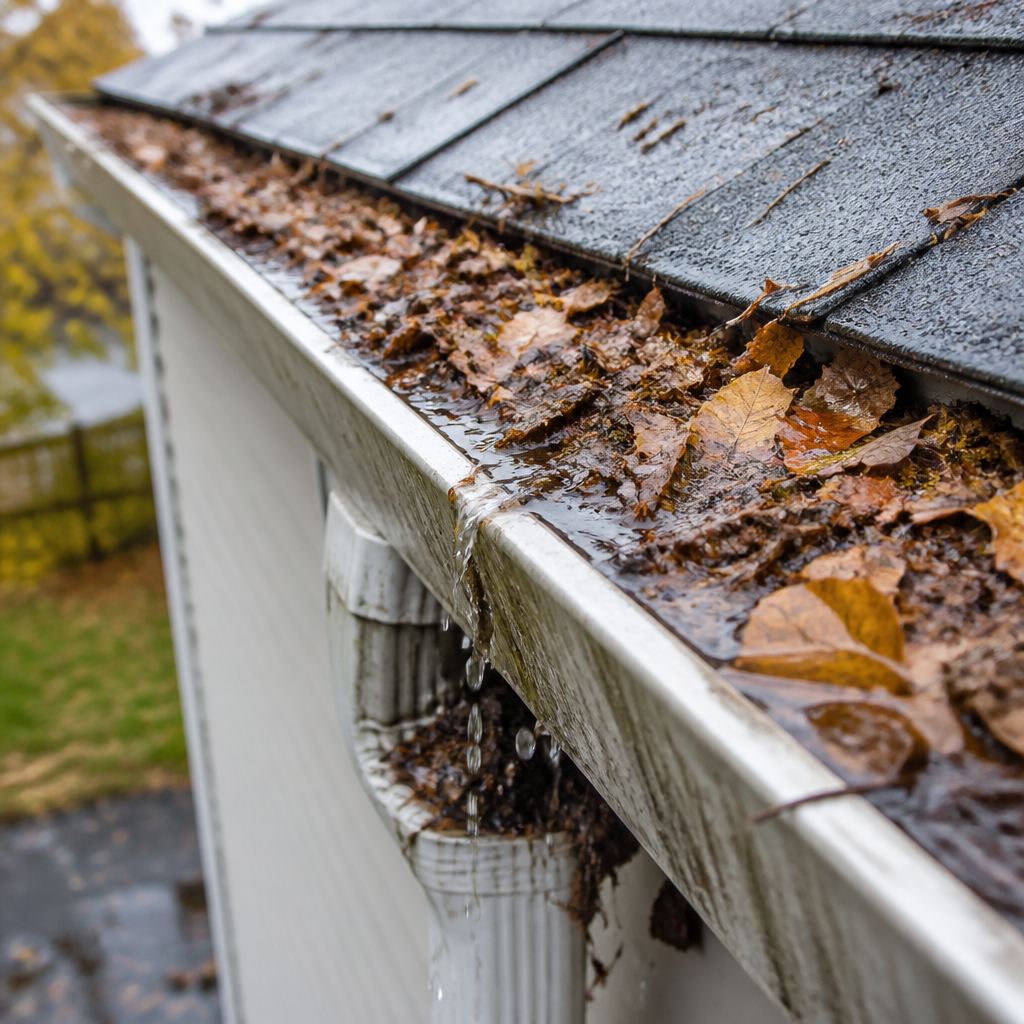
Ontario’s residential streets are lined with deciduous trees, and that is not just a visual characteristic of fall in Oakville or Burlington. It is a structural problem for every home on those streets. Maple leaves, oak leaves, and elm seeds are large, wet, and dense. They mat together inside gutters within days of a rainstorm, forming a plug that water cannot move through.
The process is faster than most homeowners expect. A single weekend of heavy leaf fall in late October can take a functional eavestrough from clear to fully blocked. Once leaves are wet, they compress and pack tightly, especially at downspout openings where the channel narrows. Twigs and seed pods from nearby trees add a frame that holds the leaf mass in place.
Decomposing leaves make the problem worse over time. As organic material breaks down inside the gutter, it releases nutrients that encourage mold and mildew growth directly on your roof surface and along the gutter walls. This biological layer is not just cosmetic. It eats at aluminum gutter coatings, softens the wood behind the fascia, and creates a persistent moisture environment that does not dry out even on warm days.
Pro tip: If you have large trees within 10 metres of your roofline, walk around your house after the first major leaf drop and look straight up at the gutters. If you can see leaf material piled above the gutter lip, water is already being redirected behind the gutter, not through it.
The Damage Chain: From Clogged Eavestrough to Rotted Roof Structure
Leaf buildup in gutters does not cause roof damage all at once. It works through a sequence of failures, each one making the next more severe. Understanding this chain is what separates homeowners who catch the problem early from those who end up replacing entire roof sections.
Stage 1: Water Backs Up Along the Roof Edge
When the gutter cannot drain, rainwater pools along the lowest point of the roofline. That pooling water does not just sit in the gutter channel. It contacts the first few rows of shingles directly. Shingles are designed to shed water flowing downward, not to repel water pushing upward from a backed-up channel below. Capillary action pulls water underneath those bottom shingles, saturating the roof decking beneath.
Stage 2: Fascia and Soffit Begin to Rot
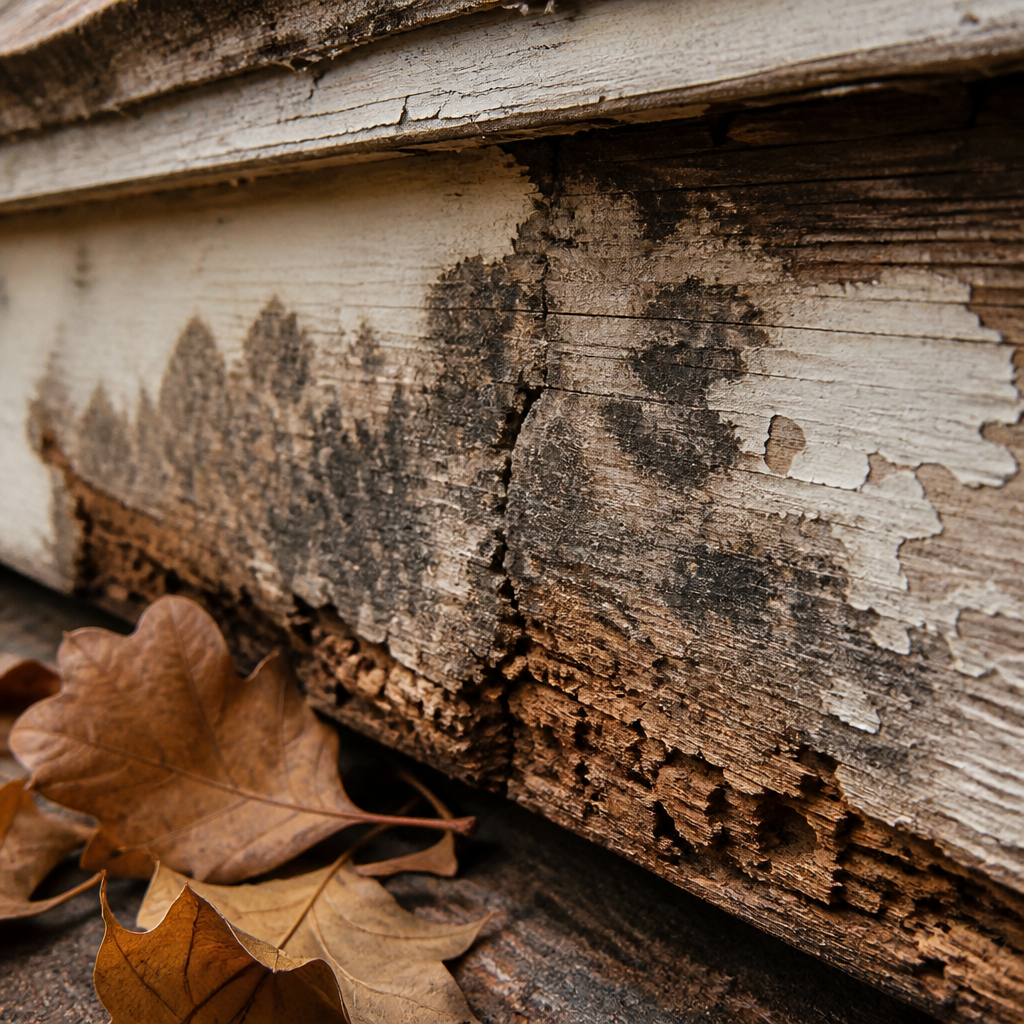
The fascia board is the flat board the gutter is physically attached to. The soffit is the underside of the roof overhang. These are often made from wood or wood composites, and they are the first structural components to absorb overflow from a clogged eavestrough. Once saturated, they begin to soften and rot, sometimes within a single season of repeated overflow events. By the time a homeowner notices paint peeling off the fascia, the wood behind it may already be structurally compromised.
Stage 3: Roof Decking and Attic Intrusion
Water that has worked under shingles reaches the roof decking, the plywood or OSB layer that the shingles are nailed to. Saturated decking swells, warps, and eventually develops mold. If the intrusion continues unchecked, it penetrates into attic insulation and ceiling drywall. At this stage, what began as a gutter cleaning job has become a roofing and interior repair project.
A common mistake is assuming that because there are no interior water stains, the gutters are fine. Roof decking can absorb significant moisture and begin to rot well before a ceiling stain appears. By the time you see it inside, the damage is already deep.
Clogged gutters cannot properly drain water. When gutters become clogged with debris, water can back up on the roof and seep under shingles, leading to roof leaks. If the blockage causes the gutters to overflow, it can lead to foundation issues, basement flooding, and landscape erosion.
Stage 4: Gutter Separation from the Roofline
Saturated leaf and debris buildup adds significant weight to the gutter channel. Waterlogged debris and pooled water can exert enough force to bend gutters outward or pull the mounting brackets directly out of the fascia. Once the gutter separates from the roofline, the roof edge is completely exposed to rainfall with no drainage management at all.
Ice Dams: The Winter Consequence Ontario Homeowners Underestimate
Roof damage from blocked gutters does not stop when leaves stop falling. In Ontario’s climate, the damage accelerates through winter because of ice dams, and leaf buildup in fall is the primary cause of the conditions that create them.
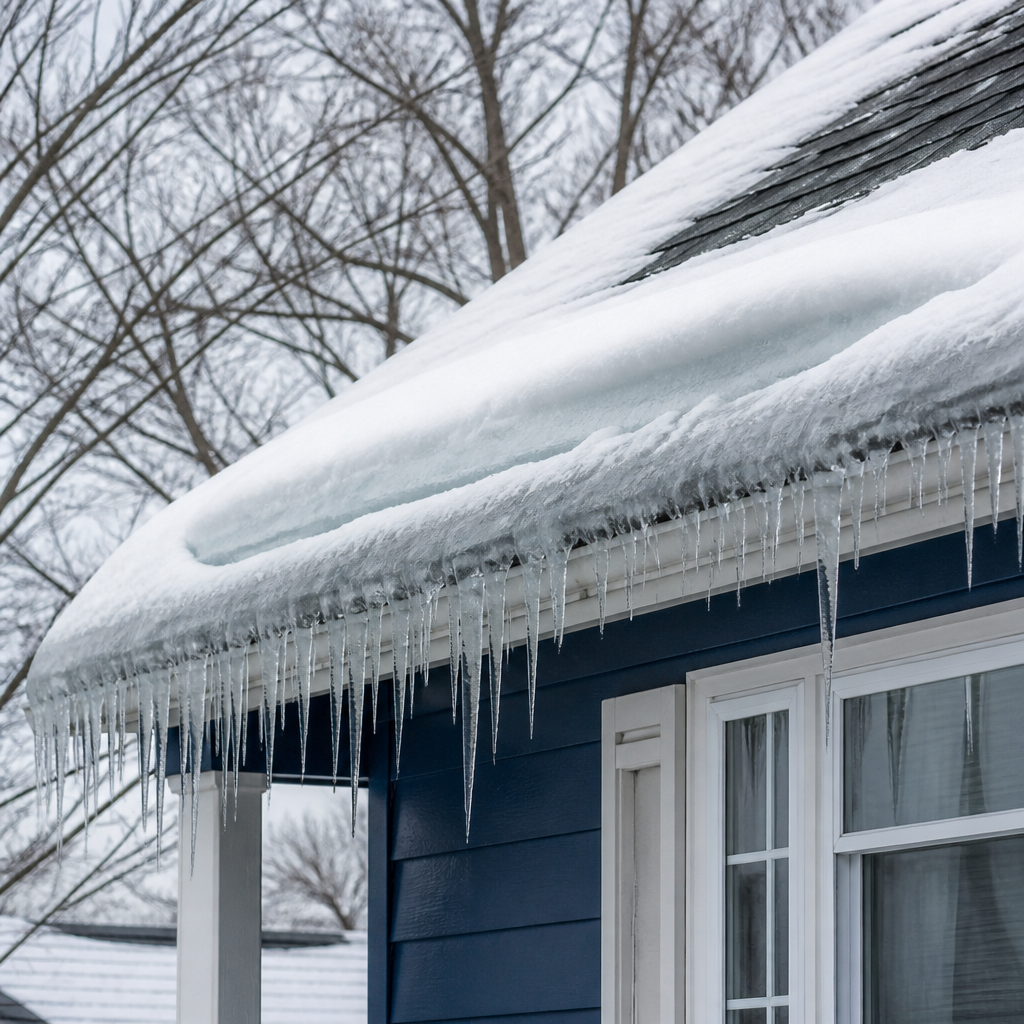
The mechanism is straightforward. Water that has pooled in a debris-blocked eavestrough does not drain when temperatures drop below freezing. It freezes in place, and as it expands, it forces ice under the first course of shingles. Ontario winters include multiple freeze-thaw cycles, meaning this expansion and contraction happens repeatedly throughout the season. Each cycle widens the gap under the shingles and deepens water intrusion into the roof assembly.
The weight of accumulated ice adds a separate structural risk. It places enormous stress on gutter systems and frequently tears gutters away from fascia boards entirely, leaving the roof edge exposed for the remainder of the winter. The ice that forms inside a debris-clogged eavestrough also cracks the eavestrough channel itself, a repair that cannot be addressed until the thaw.
Pro tip: A clean eavestrough before the first freeze is the single most effective step you can take to prevent ice dam formation. There is no attic ventilation fix or insulation upgrade that compensates for a gutter packed with leaves going into November.
The Right Fall Gutter Cleaning Schedule for Ontario Homes
Two cleanings per year is the standard recommendation for Ontario homes: once in late spring after trees finish blooming, and once in late fall after leaves have fully dropped. The late fall clean is the more important of the two, because it determines whether your gutters enter the freeze season clear or packed with wet debris.
For homes in Oakville, Burlington, Hamilton, and Niagara Falls where mature maples and oaks are common, two cleanings per year is a minimum, not a full schedule. Homes under heavy deciduous canopy may need three or four cleanings annually. This is not an upsell. It reflects how quickly leaf volume fills a standard residential eavestrough in southern Ontario.
Timing the Fall Clean Correctly
The most common mistake Ontario homeowners make is cleaning gutters too early in fall. Cleaning in late September or early October, while trees are still actively shedding, means the gutters will be blocked again within weeks. The effective window is after the main leaf drop is complete, typically late October to mid-November depending on the specific tree species on your property, and before the first sustained freeze. In communities like Fenwick or St. Catharines where freezes can arrive earlier than in urban Hamilton, the timing pressure is tighter.
What a Proper Clean Includes
A gutter cleaning that only scoops out visible leaf debris is not complete. The downspouts must be flushed to confirm they are clear all the way to the discharge point at ground level. Downspout blockages are the most common reason gutters that look empty still overflow, because water cannot exit even when the channel appears open. A thorough fall clean also checks for gutter sag, loose brackets, and any separation from the fascia that may have developed since the last service.
DIY vs. Professional Gutter Cleaning: A Direct Comparison
Some homeowners clean their own gutters. Many find after doing it once that the time, equipment, and risk involved make professional service a straightforward value proposition. Here is a direct comparison of the two approaches for an Ontario residential property.
| Factor | DIY Gutter Cleaning | Professional Gutter Cleaning |
|---|---|---|
| Equipment needed | Extension ladder, gloves, bucket, garden hose. Ladder must safely reach second-storey fascia. | Professional-grade tools, proper ladder standoffs, and experience with multi-storey rooflines. |
| Downspout flushing | Often skipped or incomplete. Most DIY cleans miss internal downspout blockages that cause overflow. | Included in a thorough professional service. Confirmed clear at ground discharge point. |
| Safety risk | Falls from ladders are among the most common residential injuries. Risk increases significantly on wet leaves or sloped ground. | Trained crews with proper fall-arrest protocols. Safety equipment used on every job. |
| Damage identification | Most homeowners do not know what to look for. Loose brackets, gutter sag, and fascia rot are frequently missed. | An experienced technician will flag early signs of fascia damage, gutter separation, and shingle deterioration. |
| Time investment | 2 to 4 hours for an average two-storey home, including setup and cleanup. | Typically completed in under an hour per visit. No equipment setup or disposal required on the homeowner’s part. |
In practice, the homeowners most likely to skip a gutter cleaning are the same ones who found the DIY version more involved than expected the first time. Professional cleaning removes that friction from the equation entirely.
Warning Signs Your Gutters Are Already Causing Roof Damage
Most leaf-and-gutter damage is invisible from ground level until it has progressed significantly. Knowing what to look for makes it possible to intervene before the repair scope expands.
Visible gutter overflow during rain. If water is pouring over the side of the gutter channel instead of exiting through downspouts during a rainstorm, the system is blocked. This is the clearest real-time indicator of a problem.
Paint peeling on fascia boards. Peeling or bubbling paint on the fascia directly behind and below the gutters indicates persistent moisture. The wood underneath is likely already softened. This is a pre-rot signal that is easy to spot on a walk around the house.
Gutter sag or visible separation from the roofline. If any section of the eavestrough has pulled away from the fascia or visibly droops, the bracket has either failed or the fascia wood it is anchored to has rotted enough that it can no longer hold the fastener.
Staining on siding below the gutter line. Vertical water stains running down the siding from the gutter line indicate chronic overflow. In brick or stone homes this appears as efflorescence. In vinyl or wood siding it appears as dark vertical streaks.
Mold or mildew on exterior walls near the roofline. Mold colonies on siding near the gutter level are a sign that water has been redirecting behind or over the eavestrough regularly, creating a sustained wet surface that biological growth can colonize.
Ceiling stains or attic moisture in late winter. If interior staining appears after a cold period followed by a thaw, ice dam formation from a blocked eavestrough is the likely cause. This is the stage where the damage has already crossed from the exterior assembly into the living space.
Performance Window Cleaning provides gutter and eavestrough cleaning services throughout Oakville, Burlington, Hamilton, Niagara Falls, Mississauga, St. Catharines, Fenwick, and surrounding Ontario communities. A fall clean scheduled at the right time in the season is the most direct investment you can make in your roof’s long-term condition. Their team also offers home detailing and power washing services that address the broader buildup of organic debris on your home’s exterior before winter arrives.
Frequently Asked Questions
How often should Ontario homeowners clean their gutters?
The standard recommendation for Ontario homes is twice per year: once in late spring after trees finish blooming and once in late fall after leaves have fully dropped. Homes under large deciduous trees such as maples, oaks, or elms may need three or four cleanings annually because the leaf volume fills gutters significantly faster than average.
Can clogged gutters actually damage my roof shingles?
Yes, directly. When water backs up in a blocked eavestrough, it contacts the bottom rows of shingles from below. Shingles are designed to shed water flowing downward, not to resist water pushed upward by a pooling channel. Wet leaves held against shingle granules also accelerate granule loss, stripping the UV-protective coating and shortening the shingle’s service life.
What is an ice dam and how do clogged gutters cause it?
An ice dam is a ridge of ice that forms at the roof edge when water from melting snow cannot drain through a blocked eavestrough. The water freezes in place, expands, and forces ice under the first course of shingles. Ontario’s freeze-thaw cycles repeat this expansion and contraction multiple times throughout winter, widening the gap under shingles and driving moisture deeper into the roof assembly with each cycle. Clearing the gutters before the first freeze removes the condition that causes ice dams to form.
When is the best time for fall gutter cleaning in Ontario?
The most effective window is after the majority of leaves have dropped from the trees on your property but before the first sustained ground freeze, which typically means late October to mid-November in southern Ontario communities like Oakville, Burlington, and Hamilton. Cleaning too early, in September or early October, leaves the gutters vulnerable to refilling before winter. Cleaning after a hard freeze is more difficult and may miss debris that has already frozen into the channel.
What damage does gutter overflow cause to fascia boards?
Fascia boards are the flat wooden boards the gutters are physically mounted to. When overflow from a clogged eavestrough runs continuously over the back edge of the gutter, the fascia absorbs that moisture directly. The wood softens and begins to rot, often before any visual sign is apparent on the painted surface. Once the fascia is structurally compromised, the gutter brackets lose their anchor and the eavestrough can pull free from the roofline entirely, leaving the roof edge completely unprotected.
Does gutter cleaning actually prevent roof damage, or is it mostly for water runoff?
Gutter cleaning prevents roof damage directly, not just as a side benefit. Clear eavestroughs stop water from backing up under shingles, prevent ice dam formation, protect fascia and soffit from rot, and maintain the drainage path that keeps water away from your foundation. The roof, the fascia, the soffit, and the foundation are all part of one drainage system. A blocked eavestrough is a single point of failure that compromises all of them simultaneously.
Can I clean my gutters myself, or should I hire a professional?
DIY gutter cleaning is possible but carries real risks, including ladder falls and incomplete downspout flushing that leaves blockages in place. A professional service includes proper downspout flushing, inspection for early damage signs, and safe access to second-storey gutters. For most homeowners in Ontario, the time, equipment cost, and fall risk make professional cleaning a straightforward choice, particularly for two-storey homes or properties with complex rooflines.
If you have dealt with gutter blockages or leaf-related roof damage at your Ontario home, share what you found and what finally prompted you to act, your experience may help a neighbor catch the same problem earlier.
We would love your feedback and any insights you would share with others. What perspective would you add?
References
- How clogged gutters and debris buildup contribute to ice dam formation and roof damage
- What happens when Canadian homeowners skip gutter cleaning before winter
- Ontario eavestrough cleaning costs and recommended maintenance frequency
- How clogged gutters cause fascia rot, shingle damage, and foundation problems
- How leaves damage roof shingles, gutters, and siding through moisture and mold