Your driveway handles Burlington winters, road salt, tire tracks, and spring mud season every single year. Your patio takes on mildew, algae, and ground-in grime from one end of summer to the other. By the time most homeowners notice the buildup, it has already worked its way into the surface. Power washing Burlington properties is not a luxury touch-up. It is a practical maintenance step that protects concrete, interlocking stone, and paving from long-term deterioration. If you have never booked a professional pressure wash or you are wondering what the process actually involves, this guide walks you through every stage, from surface prep to what to do after the crew packs up.
Table of Contents
- Why Burlington Surfaces Need Regular Power Washing
- Quick Takeaways
- What Happens Before the Pressure Washer Turns On
- Driveway Cleaning Burlington: What the Process Looks Like
- Patio Pressure Washing GTA: Surfaces and Settings
- Common Mistakes That Damage Driveways and Patios
- How Often Should You Power Wash in Burlington?
- After the Wash: Sealing and Protection
- Frequently Asked Questions
- References
Why Burlington Surfaces Need Regular Power Washing
Burlington sits in a climate zone that delivers genuine freeze-thaw cycles every winter. Water seeps into micro-cracks, freezes, expands, and widens those cracks. Salt and sand from road maintenance add to the chemical erosion. Organic growth, specifically algae and mildew, accelerates in the humid stretch from late spring through summer, making patios and walkways slippery and visually dark.
Beyond safety, there is a curb appeal argument that matters whether you are staying in your home or listing it. A driveway stained with oil drips, tire marks, and winter salt looks neglected even when the rest of the property is immaculate. Power washing removes what scrubbing with a brush simply cannot.
For Burlington homeowners, the best window for an annual wash is after the last frost, typically late April through May, before outdoor living season begins. A second pass in early fall makes sense for properties with heavy tree cover or driveways that take a lot of vehicle traffic.
Quick Takeaways
| Key Insight | Explanation |
|---|---|
| Pressure settings vary by surface | Concrete driveways tolerate higher pressure than interlocking pavers or natural stone patios. Wrong settings cause pitting and joint erosion. |
| Pre-treatment matters for deep stains | Oil, rust, and mildew stains need a surface-appropriate detergent applied before the wash, not after. Skipping this step leaves ghost stains behind. |
| Burlington’s freeze-thaw cycles accelerate surface damage | Dirt and organic growth hold moisture against the surface, making freeze-thaw cracking worse over time. Regular washing reduces this risk. |
| Nozzle distance controls the result | Holding the nozzle too close strips surface material. The recommended working distance is roughly 12 to 18 inches from most hard surfaces. |
| Professional equipment outperforms consumer units on large surfaces | Commercial-grade washers move through a full driveway far faster and more evenly than the typical box-store unit, avoiding streaking. |
| Sealing after washing extends the result | Applying a penetrating sealer after a thorough clean locks out moisture and staining agents, stretching the time between necessary washes. |
| Scheduling matters for drying | A washed surface needs several hours to dry before foot traffic and longer before vehicle traffic. Plan around Burlington’s typical afternoon weather patterns. |
What Happens Before the Pressure Washer Turns On
Preparation is where the quality of a power washing job is actually decided. A professional crew arriving at your Burlington property will not simply unroll a hose and start spraying. The first step is clearing the work area completely, including patio furniture, planters, garden ornaments, and vehicles. Any object left on the surface either gets damaged or creates a shadow of uncleaned surface underneath it.
Next comes a dry sweep. Removing loose leaves, pine needles, and debris before applying water prevents organic material from being pushed into cracks or drains during the wash. For driveways, this is also the moment to identify oil stains, rust patches, or mildew zones that need pre-treatment.
Inspecting for Existing Damage Before Starting
Any competent technician checks the surface for cracks, spalling, loose pavers, or missing joint sand before starting. High-pressure water directed at a damaged crack will widen it. If there are compromised areas, those need to be flagged and either worked around at reduced pressure or addressed with repairs before a full wash.
This inspection step is something a homeowner renting a pressure washer often skips, which is one of the most common reasons DIY washes result in surface damage that requires a repair bill larger than the cost of a professional service.
Pro tip: Before your scheduled power wash, move all vehicles from the driveway and clear the patio completely the night before. Technicians arriving to a clear surface can start immediately and spend their time cleaning, not waiting for you to reorganize outdoor furniture.
Driveway Cleaning Burlington: What the Process Looks Like
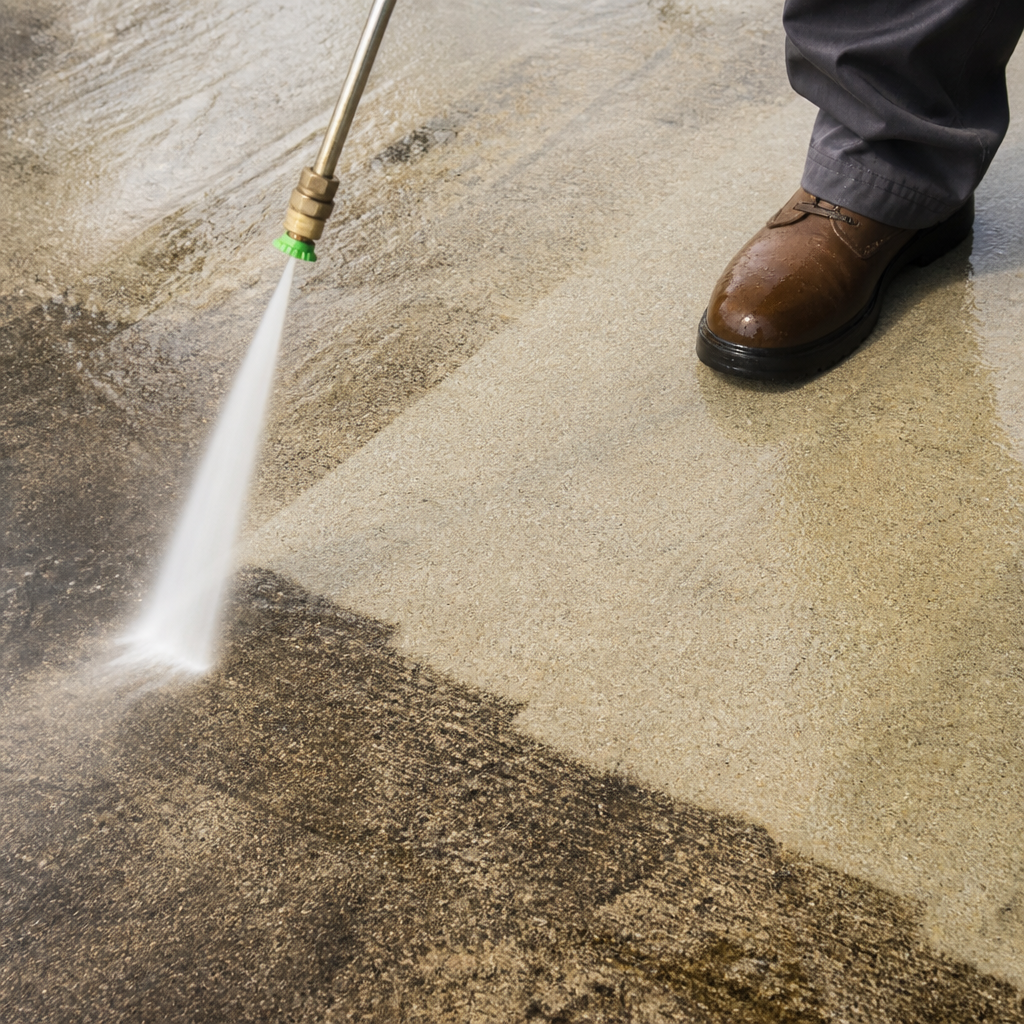
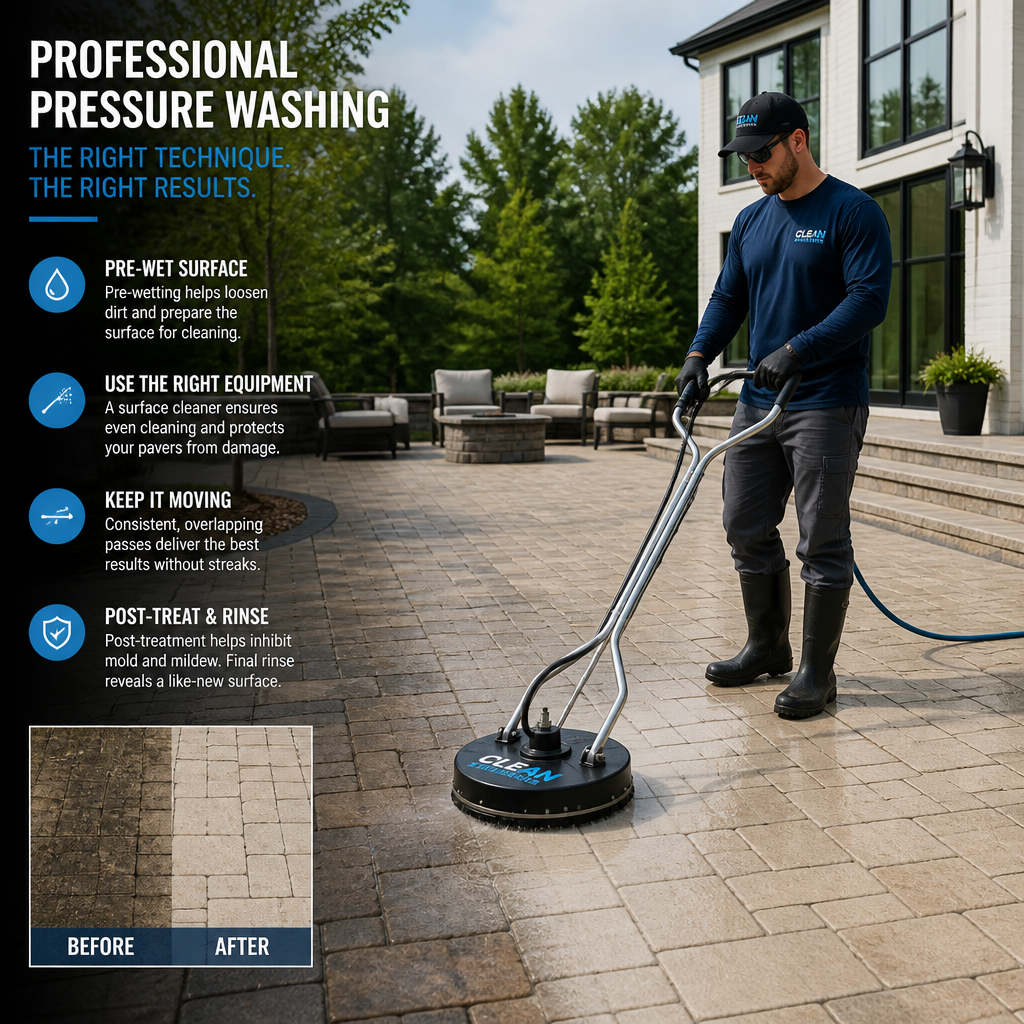
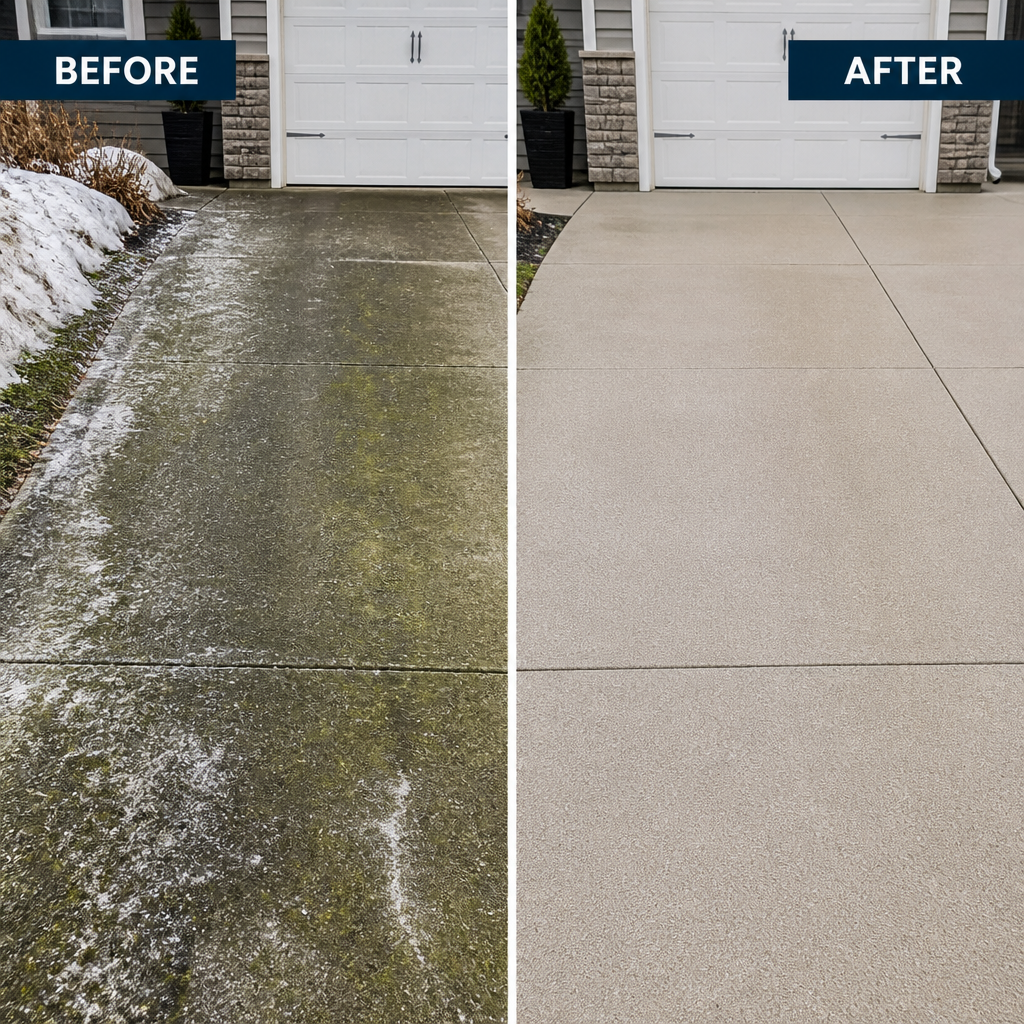
A typical driveway cleaning Burlington job on a standard residential property follows a clear sequence. After prep, the technician applies a degreaser or concrete detergent to the full surface and allows it to dwell, usually ten to fifteen minutes. This loosens oil, tire rubber transfer, and biological staining at the molecular level before any pressure is applied.
The wash itself starts at the far end of the driveway and works toward the street, keeping dirty runoff moving away from already-cleaned sections. The nozzle stays in consistent motion, never hovering in one spot, which prevents the circular etching marks that show up on driveways where the operator paused too long.
Concrete vs. Interlocking Driveway Surfaces
Poured concrete and asphalt driveways can handle higher water pressure than interlocking brick or natural stone. The difference matters in practice. Interlocking driveways have joint sand between the pavers that holds the entire surface together. Excessive pressure blasts that sand out, leaving loose pavers that shift under vehicle weight. A professional adjusts the pressure setting and nozzle angle to clean the paver face without disturbing the joints.
After washing an interlocking driveway, re-sanding the joints is often part of the service or at minimum a recommendation. This is not an upsell. It is a necessary step to keep the surface structurally sound.
Pro tip: If your Burlington driveway has oil stains from a parked vehicle, mention this when booking. A quality exterior cleaning company like Performance Window Cleaning can pre-treat those spots specifically rather than treating the entire surface with a general detergent and hoping for the best.
Patio Pressure Washing GTA: Surfaces and Settings
Patio surfaces across Burlington and the wider GTA range from poured concrete slabs to natural flagstone, clay brick, composite decking, and interlocking pavers. Each one has a different threshold for pressure, and the cleaning approach changes accordingly. This is where patio pressure washing GTA jobs go wrong most often when handled without experience.
Natural stone, including limestone, flagstone, and slate, is softer than concrete and can be etched or surface-stripped by aggressive pressure settings. Stone patios benefit from a lower pressure wash combined with a stone-safe cleaner, applied with dwell time before the rinse. The goal is to lift algae, mildew, and grime without scoring the surface.
Dealing with Algae and Mildew on Burlington Patios
Shaded patios in Burlington accumulate algae and mildew faster than sunny surfaces, particularly in the spring after a wet winter. The dark, slippery film is more than cosmetic. Algae on a patio surface is a fall hazard, especially on steps and near pool surrounds.
Treating algae properly requires a biocidal detergent, not just high pressure. Pressure alone blasts the visible growth away but leaves spores embedded in the surface pores, which means the problem returns faster than it should. A proper treatment kills the organism at the root and slows regrowth significantly.
Removing mold and slippery algae from driveways and patios is not just about appearance. It directly increases the safety of your property’s walkable surfaces for everyone who uses them.
Comparing Surface Types and Recommended Approaches
| Surface Type | Recommended Approach | Key Watch-Out |
|---|---|---|
| Poured Concrete (driveway or patio) | High pressure with degreaser pre-treatment. Keep nozzle moving at a consistent 12 to 18 inch distance. | Hovering the nozzle causes circular etching marks that are permanent. |
| Interlocking Pavers (brick or concrete) | Medium pressure, wide fan nozzle, shallow angle to protect joint sand. Re-sand joints after washing. | Aggressive pressure strips joint sand and destabilizes the surface structure. |
| Natural Stone (flagstone, limestone, slate) | Low to medium pressure with a stone-safe cleaner and full dwell time before rinsing. | High pressure etches soft stone. Acid-based cleaners stain or dissolve certain stone types. |
Common Mistakes That Damage Driveways and Patios
The most common mistake homeowners make when renting a pressure washer is starting with maximum pressure and a zero-degree nozzle on a surface that cannot handle it. Zero-degree nozzles concentrate water into a single point. They are useful for stripping paint or clearing a clogged drain opening, not for cleaning a patio. The result on interlocking stone is chipped edges and blasted-out joint material. On concrete, it leaves pitting.
A second frequent error is washing in one direction only. Dirt gets pushed rather than lifted when you do not vary the angle and direction of the spray. Working in overlapping passes at slightly different angles breaks the dirt free more completely and produces a more even result.
Using the Wrong Detergent for the Surface
Not all cleaning detergents are surface-neutral. Acid-based cleaners, sometimes marketed for concrete cleaning, will damage certain natural stone and can discolor interlocking brick. Bleach-heavy solutions kill plants if runoff reaches garden beds. A professional knows which product to apply where. If you are managing the job yourself, read the detergent label carefully and test on a small, low-visibility area before treating the full surface.
Skipping the post-rinse is another overlooked error. Detergent left on a surface dries into a white residue that is difficult to remove and can attract dirt faster than the original surface would have. Every cleaning solution needs a thorough final rinse with clean water.
How Often Should You Power Wash in Burlington?
The honest answer is once per year for most Burlington residential properties, with the timing weighted toward late spring. That cadence addresses salt and sand accumulation from winter, organic growth that develops through the wet early months, and general road grime from the previous season.
Properties with heavy tree cover, shaded north-facing patios, or high vehicle traffic on the driveway benefit from a second wash in early fall. Organic material from falling leaves and seeds that sits on a damp surface through winter becomes significantly harder to remove by spring.
Commercial properties and multi-unit residential buildings typically need more frequent attention because the volume of foot and vehicle traffic is higher. For those clients, a scheduled maintenance agreement with a professional exterior cleaning company makes more sense than booking one-off services reactively.
After the Wash: Sealing and Protection
A freshly washed driveway or patio is at its most porous immediately after cleaning. The surface is open and ready to absorb either a protective sealer or whatever contaminants arrive next. This is the ideal moment to apply a penetrating concrete or paver sealer if you have not done so recently.
Sealing does several things at once. It reduces water absorption, which means freeze-thaw damage happens more slowly. It creates a barrier against oil, rust, and organic staining. And it makes the next annual wash faster and more effective because contaminants sit on the sealed surface rather than embedding into the material.
Timing the Sealer Application After Power Washing
Concrete and stone need to be completely dry before a sealer goes on. In Burlington’s climate, that typically means waiting at least 24 to 48 hours after washing, depending on temperature and humidity. Applying sealer to a still-damp surface traps moisture underneath, which creates a white haze effect and can eventually peel or flake. If the forecast shows rain within 24 hours of your wash date, push the sealer application to a dry window.
Performance Window Cleaning offers power washing as part of a broader exterior cleaning package that covers everything from driveways and patios to siding, eaves, and building entrances. Combining services in a single visit is almost always more efficient than booking separate appointments for each surface.
Frequently Asked Questions
How long does it take to power wash a residential driveway in Burlington?
A standard double-car driveway takes roughly one to two hours for a professional crew, including prep, pre-treatment, washing, and final rinse. Larger driveways, heavily stained surfaces, or interlocking stone that requires careful joint protection will take longer. Factor in drying time of at least several hours before allowing vehicle traffic back on the surface.
Will power washing damage my interlocking paver driveway?
It can, if done incorrectly. The risk is not the pressure itself but the joint sand that holds the pavers together. A professional uses a fan-pattern nozzle, correct pressure settings, and a shallow spray angle to clean the paver faces without stripping the joint material. Always ask your service provider specifically about their approach to interlocking surfaces before they start.
Is it worth power washing a patio before sealing it?
Yes, without exception. Sealing over a dirty surface locks the contaminants in rather than protecting the stone or concrete. The sealer bonds to whatever is on top of the surface at application time. Washing first and allowing the surface to fully dry gives the sealer a clean, open substrate to penetrate, which produces a longer-lasting result.
Can power washing remove old oil stains from a concrete driveway?
It can significantly reduce them and in many cases remove them entirely, but this depends on how long the stain has been present and how deeply it has penetrated. Fresh oil stains respond very well to degreaser pre-treatment followed by pressure washing. Stains that have cured into the concrete for years may lighten substantially without fully disappearing. A professional can assess the stain and set realistic expectations before starting.
What is the best time of year to book power washing in Burlington?
Late April through May is the most practical window for most Burlington homeowners. The frost risk is past, the accumulated salt, sand, and mildew from winter is visible and ready to be removed, and you get the clean surface in place before outdoor entertaining season. Fall booking, typically September or October, works well as a second pass for properties with heavy organic load from trees or high driveway traffic.
Do I need to be home when the power washing is done?
Not necessarily, but access to water at the property is required. A professional exterior cleaning company can often work independently once access and setup details are confirmed in advance. Clear communication about which surfaces are being washed, any areas to avoid, and gate access or water source location is enough to allow the job to proceed without you needing to be present the entire time.
Have you had your driveway or patio power washed this season? Share what your experience was like or drop any questions below, because real feedback from Burlington homeowners helps everyone make better decisions about exterior maintenance.