
Every fall, Ontario homeowners in Oakville, Burlington, Hamilton, and St. Catharines face the same question: does the driveway actually need a professional wash before winter sets in, or is that just extra spending? The answer is yes, it needs attention, but the power washing concrete Ontario approach is not the same as the one you use on interlock pavers, and confusing the two causes real, expensive damage. Concrete tolerates high pressure. Interlock does not. Get that distinction wrong once, and you spend next spring re-sanding joint material or watching pavers shift under ice. This guide lays out exactly what each surface needs, why fall is the right window to act, and where most people go wrong.
Table of Contents
- Quick Takeaways
- Why Fall Is the Right Time for Driveway Washing in Ontario
- Power Washing Concrete in Ontario: What the Surface Can Handle
- Interlock Pressure Washing: Where Most People Make Costly Mistakes
- Concrete vs. Interlock vs. Asphalt: A Practical Comparison
- After Washing: What Comes Next for Each Surface
- DIY vs. Professional Power Washing for Ontario Driveways
- Frequently Asked Questions
- References
Quick Takeaways
| Key Insight | Explanation |
|---|---|
| Concrete tolerates high pressure; interlock does not | Concrete driveways can handle 2,500 to 4,000 PSI. Interlock pavers should be washed at 1,200 to 1,500 PSI maximum to avoid blasting out joint sand. |
| Fall washing prevents freeze-thaw damage | Organic buildup, algae, and leaf tannins trapped on surfaces hold moisture. That moisture expands in freeze-thaw cycles and accelerates cracking or paver shifting. |
| Re-sanding interlock is not optional after washing | Even careful pressure washing displaces some polymeric sand from joints. If those joints go into winter unfilled, water pools and freezes inside them, widening gaps and destabilizing the surface. |
| Concrete should be sealed within 24-48 hours of washing | A penetrating sealer applied to clean, dry concrete blocks winter road salt and water from entering the slab and triggering spalling or surface scaling. |
| Nozzle angle matters on interlock | Always wash at a 45-degree angle and keep the nozzle 12 to 18 inches from the surface. A direct 90-degree blast at close range will excavate joint sand in seconds. |
| October is the deadline, not the start point | Once temperatures drop below 10°C consistently, sealers cannot cure properly. Aim to wash and seal concrete by early October in most Ontario communities. |
| Wet leaves on interlock are a winter liability | Tannins from leaves stain pavers and decomposing organic matter feeds weed growth in joints. Clearing leaves before washing is not cosmetic, it is structural maintenance. |
Why Fall Is the Right Time for Driveway Washing in Ontario
Ontario’s freeze-thaw cycle is one of the harshest stress tests any hardscape surface faces. Temperatures in communities like Hamilton, Mississauga, and Niagara Falls regularly swing above and below freezing from November through March, sometimes multiple times in a single week. Any water that has soaked into a porous surface, whether concrete, interlock joints, or the gravel base beneath pavers, expands when it freezes and contracts when it thaws. Do that hundreds of times over a winter and the surface starts to fail.
Fall washing removes the material that traps moisture against the surface. Late summer deposits pollen, leaf tannins, algae colonies, and tire marks. Left in place over winter, that organic layer holds water against the surface like a wet sponge against stone. Cleaning in September or October removes it and gives the surface a chance to dry before the first hard freeze.
Driveway washing fall Ontario also gives you the last viable window to inspect for existing damage and apply protective sealers before cold temperatures make curing impossible. Once the ambient temperature is consistently below about 10 degrees Celsius, most sealers will not bond correctly.
The surface you send into winter is the surface you will deal with in spring. Organic buildup, open joints, and unsealed concrete do not improve under snow and ice. They deteriorate, and the repair cost almost always exceeds what the fall service would have cost.
Power Washing Concrete in Ontario: What the Surface Can Handle
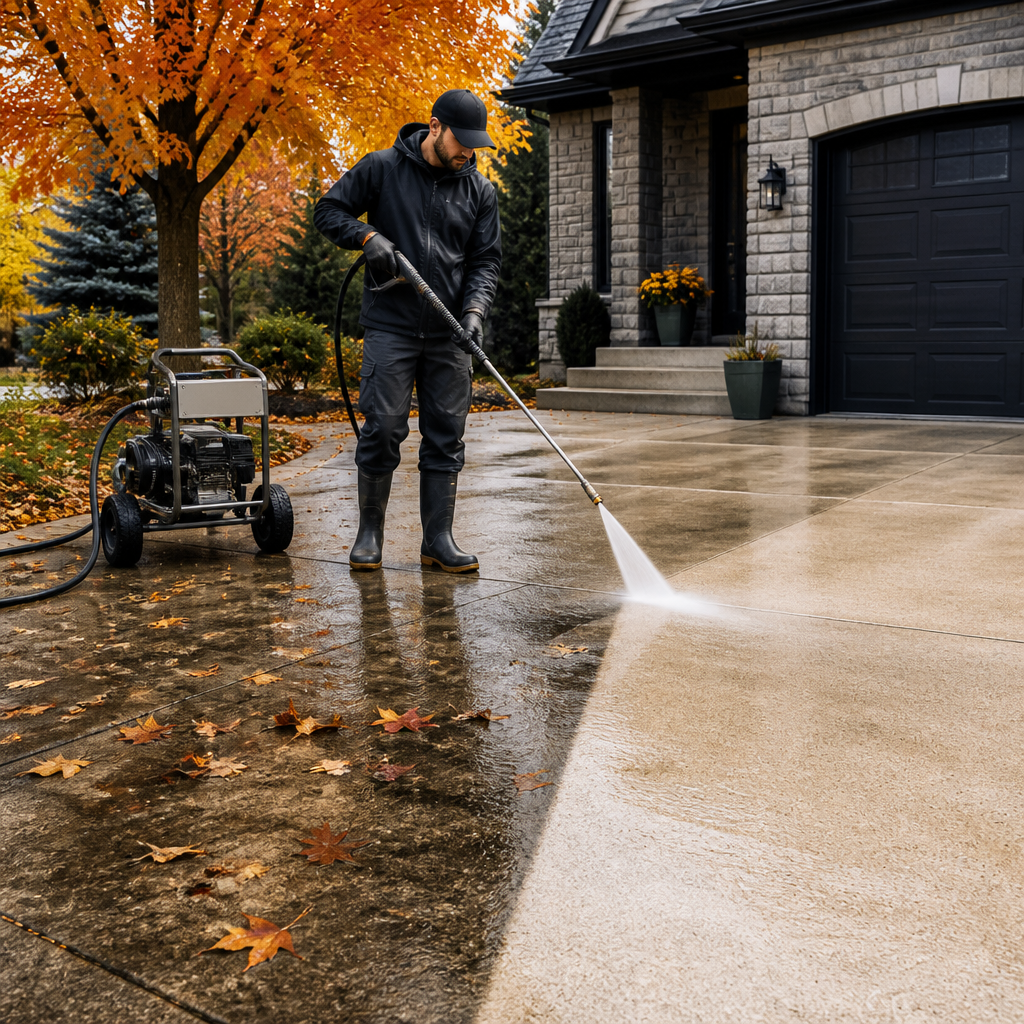
Concrete is the most forgiving driveway surface when it comes to pressure washing. A standard residential concrete slab can handle between 2,500 and 4,000 PSI without surface damage, provided the nozzle is kept moving and not held in one spot at close range. Higher pressure cleans faster and removes deeply embedded oil stains, tire marks, and algae more effectively than lower settings.
PSI, Nozzle Choice, and Technique for Concrete
For most Ontario residential concrete driveways, a 3,000 PSI machine with a surface cleaner attachment produces the most consistent result. The spinning disc of a surface cleaner eliminates the streaky wand marks that a single-nozzle approach leaves on concrete. Use a 25-degree nozzle if working with a wand directly, and keep the tip at least 6 to 8 inches from the surface.
A common mistake is holding the wand at 90 degrees directly over a crack or control joint. High-pressure water forced straight into a hairline crack widens it. Keep the wand at a slight angle and work past cracks rather than into them.
What Fall Washing Reveals on Concrete
A thorough fall wash on concrete is also a diagnostic. Once the surface is clean, you can see spalling (surface flaking), existing cracks that have widened over summer, efflorescence (white salt deposits blooming through the surface), and areas where de-icing salt from the previous winter has already started to break down the paste that holds the aggregate together. Identifying these issues in October gives you time to address them before another winter compounds the damage.
Pro tip: Pre-treat oil stains on concrete with a concrete-safe degreaser and let it dwell for 10 to 15 minutes before pressure washing. Pressure alone will not fully remove embedded oil, and a sealed surface with an oil stain underneath will trap the stain permanently.
Interlock Pressure Washing: Where Most People Make Costly Mistakes
Interlock pressure washing is a completely different operation from washing concrete, even though both surfaces look like hardscape from the street. The stones themselves are durable. The vulnerability is the joint sand between them, and that joint sand is what holds the entire system stable.
Safe PSI for Interlock Pavers
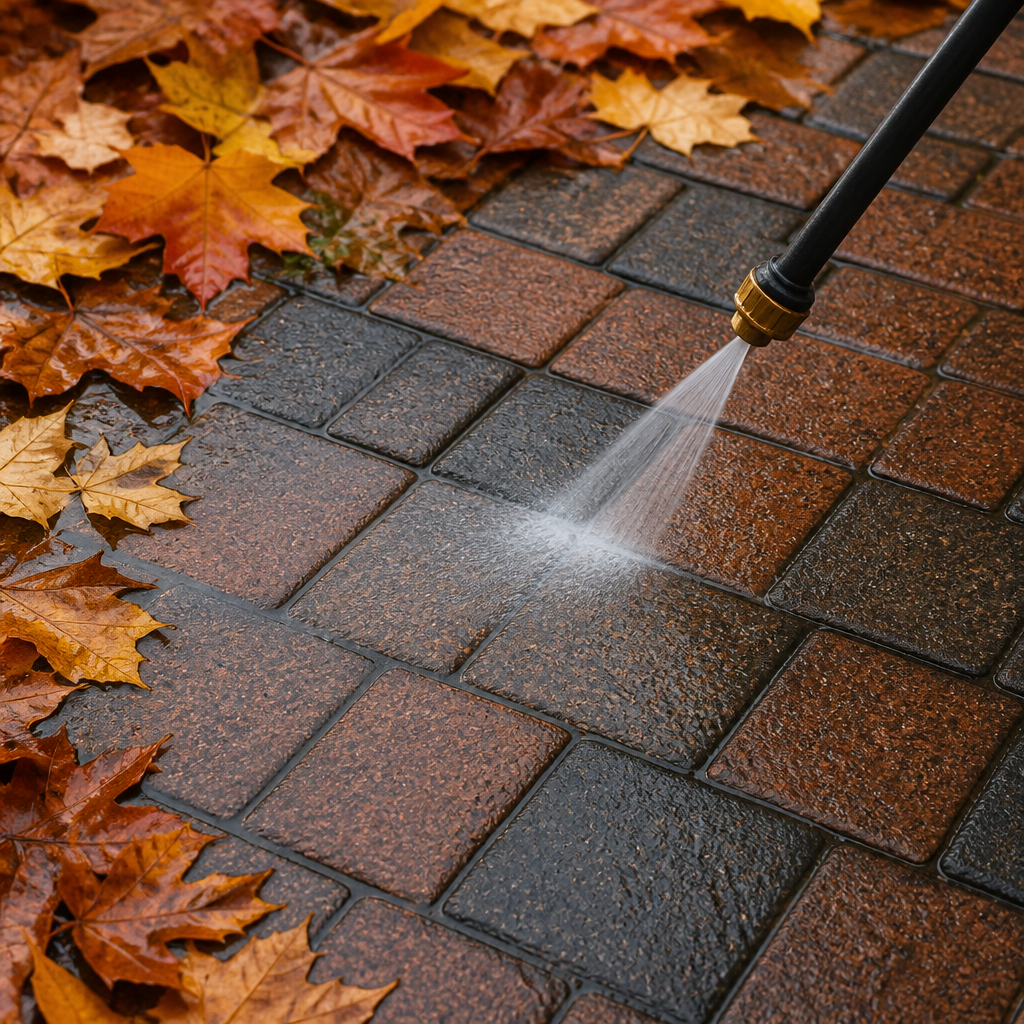
For standard concrete pavers, the maximum safe washing pressure is 1,200 to 1,500 PSI. For softer clay pavers, drop further to 800 to 1,000 PSI. A 25-degree or 40-degree nozzle tip is appropriate. Never use a 0-degree or 15-degree tip on interlock, under any circumstances. Keep the nozzle 12 to 18 inches from the surface and work at a 45-degree angle, never straight down.
Using concrete-level pressure, around 3,000 PSI, on an interlock surface will excavate the joint sand in a single pass. Once that sand is gone, the pavers have nothing locking them in place. They shift, create uneven surfaces where water pools, and edges chip and break under traffic and snowplow contact.
The Organic Buildup Problem on Interlock
Interlock has more surface area in contact with organic material than a poured concrete slab does, because the joints themselves collect debris. Wet leaves decompose in the joints and feed weed growth. Root systems from those weeds push pavers apart. In Ontario communities with mature tree canopies, like residential streets in Oakville and Burlington, this is a real maintenance issue, not a cosmetic one.
Fall washing on interlock should always begin with clearing all leaf debris first. Washing over wet leaves simply grinds tannins into the paver surface and worsens staining.
Pro tip: After pressure washing interlock, inspect every joint for depth. If you can see more than a few millimetres of gap, those joints need to be re-filled with polymeric sand before winter. Unfilled joints allow water to reach the gravel base, and that water freezes, heaves individual stones, and turns a maintenance visit into a repair job.
Concrete vs. Interlock vs. Asphalt: A Practical Comparison
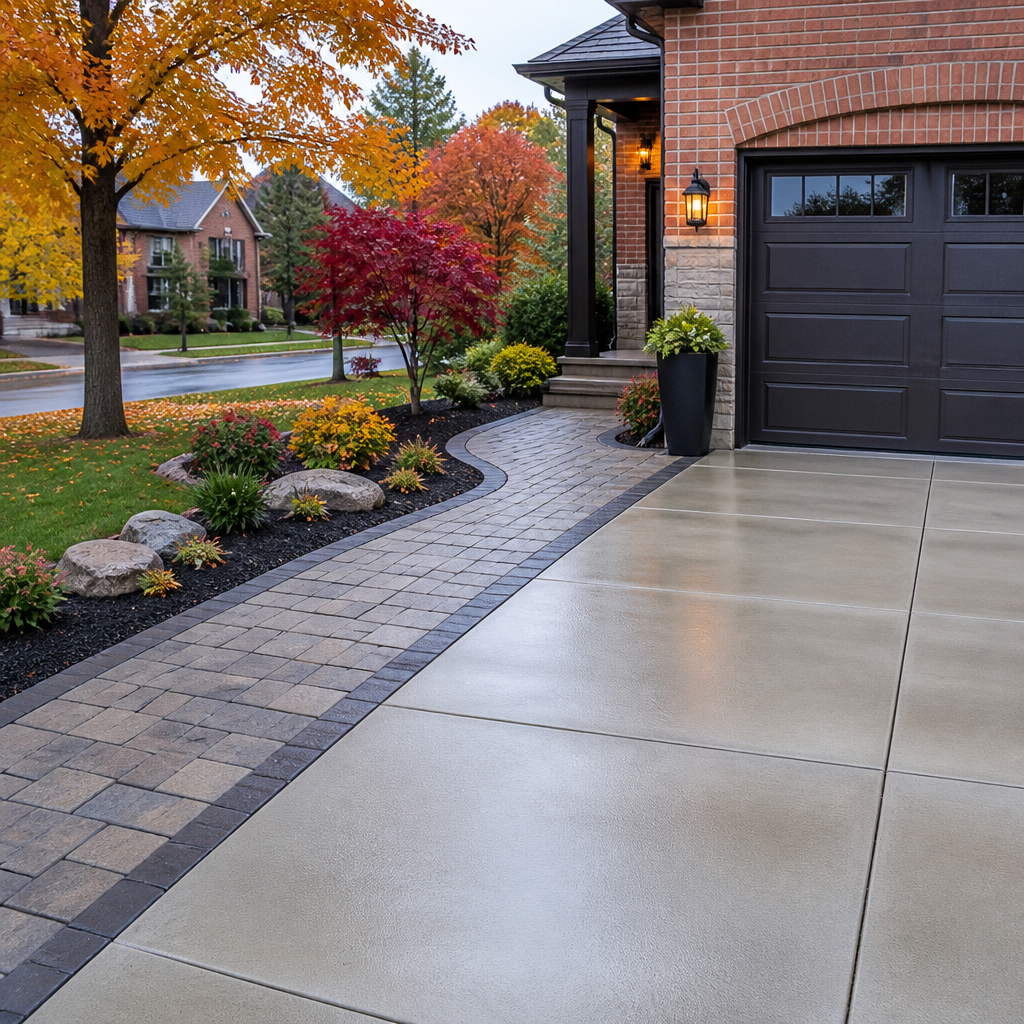
These three surfaces behave very differently under pressure washing and have different winter preparation requirements. Understanding which category your driveway falls into determines what equipment, pressure settings, and follow-up steps are appropriate.
| Surface Type | Safe Washing PSI Range | Key Fall Preparation Step |
|---|---|---|
| Poured Concrete | 2,500 to 4,000 PSI (residential slab) | Apply penetrating concrete sealer within 24 to 48 hours of washing, before temperatures drop below 10°C |
| Interlock / Concrete Pavers | 1,200 to 1,500 PSI maximum; 800 to 1,000 PSI for clay pavers | Re-fill displaced joints with polymeric sand immediately after washing and before first freeze |
| Asphalt | 2,000 to 2,500 PSI; avoid direct contact with the surface edge | Apply asphalt crack filler on any visible cracks; asphalt sealer extends surface life and blocks salt intrusion |
After Washing: What Comes Next for Each Surface
The wash itself is only half the job. What you do in the 24 to 48 hours after washing determines whether the cleaning actually protects the surface over winter or just makes it look temporarily clean.
Concrete: Dry Time and Sealing
Concrete needs 24 to 48 hours to dry completely after pressure washing before any sealer is applied. Moisture trapped under a sealer causes adhesion failure, bubbling, and premature peeling. If rain is forecast within that window, defer the sealing to the next dry stretch. A penetrating sealer (silane or siloxane-based) is more durable for Ontario winters than a topical film sealer, because it works inside the concrete rather than sitting on top where traffic and snowplow blades will wear it away.
Sealing blocks water absorption, which prevents the expansion and contraction cycle that leads to cracks. It also blocks road salt from entering the slab and reacting with the concrete paste, which is the primary cause of surface scaling on Ontario driveways.
Interlock: Re-Sanding Joints
After washing interlock, replace any displaced joint sand before the surface sees rain or frost. Polymeric sand is the right material for this, since it hardens after watering and resists erosion, weed germination, and ant burrowing. Modern cement-enhanced polymeric sand formulas are more durable under pressure washing than older products and hold up better through Ontario freeze-thaw cycles.
Re-sanding is not optional. An interlock surface with depleted joints going into winter is structurally vulnerable. Water enters the open joints, reaches the gravel base, freezes, and heaves individual stones out of plane. What started as a $300 maintenance service becomes a $1,500 or higher repair to reset and re-level the affected area.
DIY vs. Professional Power Washing for Ontario Driveways
The honest answer is that concrete washing is the surface most homeowners can manage competently with a rented or owned consumer-grade pressure washer, provided they use the correct settings and a surface cleaner attachment. The results may take longer than a professional service, but the risk of damage to concrete is relatively low if basic technique is followed.
Interlock is different. The margin for error on joint sand is narrow, the correct PSI range is low enough that most consumer gas-powered pressure washers need to be throttled carefully, and the follow-up re-sanding step requires knowing how to properly activate polymeric sand (which involves precise watering and allowing full curing time before rain). Doing it wrong produces joints that feel powdery, fail to harden, or wash out in the first heavy rain. Most homeowners who call for interlock repair after a DIY wash were not careless, they just did not know the follow-up steps.
A professional exterior cleaning service handling both the washing and the post-wash steps, sealing for concrete, re-sanding for interlock, will also spot issues that are easy to miss while you are focused on operating equipment: early signs of base settlement under interlock, concrete control joints that have widened enough to need caulking, or edge restraints that have shifted. Catching those in October is far less expensive than addressing them after a full Ontario winter.
For homeowners in Oakville, Burlington, Mississauga, Hamilton, St. Catharines, Niagara Falls, Fenwick, or the surrounding communities, Performance Window Cleaning’s power washing service handles driveways, decks, walkways, and exterior surfaces with the right equipment and pressure settings for each surface type. The same visit can also include eavestrough and gutter cleaning, which is equally important before Ontario winters to prevent ice damming and overflow damage.
Frequently Asked Questions
Can I power wash my concrete driveway in October in Ontario?
Yes, October is one of the last viable windows for fall driveway washing in Ontario. The key constraint is sealing afterward. Concrete sealers require ambient temperatures above roughly 10°C to cure properly. If you are washing in early to mid-October and the forecast shows above that threshold for 48 hours after washing, you can wash and seal. Late October into November carries real risk of a failed seal cure. Washing without sealing in late October is still worthwhile to remove organic material, but understand the sealing step will need to wait until spring in that case.
What PSI is safe for interlock pressure washing?
For standard concrete pavers, stay between 1,200 and 1,500 PSI. For softer clay or natural stone pavers, use 800 to 1,000 PSI. Always use a 25-degree or 40-degree nozzle tip, keep the nozzle 12 to 18 inches from the surface, and work at a 45-degree angle rather than straight down. These constraints exist to protect the joint sand, not the stones themselves. The stones can handle more pressure, but the system cannot.
Do I need to re-sand interlock joints every time I pressure wash?
Not always, but you need to check every time and re-sand whenever joints are depleted. Run your finger along a joint after washing. If you can feel a gap deeper than a few millimetres, or if you can see the base material, those joints need fresh polymeric sand before winter. Joints that are still well-filled and firm do not need re-sanding. The cleaning itself is what determines how much sand displacement occurs, which is why correct low-PSI technique matters so much on interlock.
Why does concrete crack after winters in Ontario even when it looks fine in fall?
Most often, water entered micro-cracks or porous areas in the surface during fall or winter and then froze. Freezing water expands, widening the crack slightly each cycle. Over a winter with repeated freeze-thaw events, a hairline crack becomes a visible one. This is why fall sealing matters: a penetrating sealer blocks water entry into those micro-cracks and slows the expansion process dramatically. De-icing salts also react chemically with the concrete paste and accelerate surface scaling, which is separate from but often occurs alongside freeze-thaw cracking.
Is interlock actually harder to maintain than concrete before winter?
Yes, interlock requires more precise attention before winter than concrete does. Concrete needs washing and sealing. Interlock needs washing at carefully controlled pressure, immediate joint inspection, polymeric sand re-filling where needed, and ideally a paver-specific sealer to lock in the new joint sand and enhance the surface colour. Each step has a consequence if skipped. That said, interlock is more forgiving of freeze-thaw movement than concrete because the pavers flex as a system rather than cracking as a rigid slab. The trade-off is that interlock demands more active maintenance to perform that way.
How does fall power washing protect against ice damage on walkways and decks?
Algae and moss on walkways and decks become extremely slippery when wet or frozen. Pressure washing removes those colonies before winter, which directly reduces slip hazard. Beyond safety, those organisms hold moisture against the surface and, on wood decks, accelerate rot. On concrete or stone walkways, algae and moss patches trap water in the same way that leaf buildup does on driveways. Removing them in fall and applying the appropriate surface treatment gives the surface the best chance of coming through winter without significant biological regrowth or freeze-thaw damage.
Have you noticed a difference in how your driveway or interlock held up after a professional fall wash compared to skipping it? Share your experience in the comments below.
References
- How often to power wash a driveway in Canada, including seasonal timing guidance for fall and spring
- Ontario interlock patio maintenance guide covering safe PSI ranges, polymeric sand repairs, and winter preparation
- How to clean interlock paving stones safely, with detail on joint sand displacement and replacement steps
- Driveway washing and sealing process in Ontario, including dry time requirements and what sealing protects against
- Interlock weed prevention and seasonal maintenance guide with fall-specific cleaning steps for Ontario