Your home’s exterior takes a beating every single year. Mold, algae, road grime, and oxidized paint residue build up layer by layer until your property looks decades older than it actually is. The good news is that power washing can reverse years of that buildup in a single afternoon. According to HomeLight’s 2023 survey of real estate agents, improving curb appeal before a sale can add between 5% and 11% to a home’s perceived value. That is not a minor cosmetic upgrade. For homeowners in the Performance Window Cleaning service area, regular exterior washing is one of the highest-return maintenance decisions you can make.
Table of Contents
- Quick Takeaways
- What Power Washing Actually Does to a Surface
- The Real Curb Appeal Impact: Numbers That Matter
- Surfaces That Respond Best to Power Washing
- DIY vs. Professional Pressure Washing Service
- Comparison of Exterior Cleaning Approaches
- Common Mistakes That Damage Your Exterior
- Pairing Power Washing With Other Exterior Services
- Frequently Asked Questions
- References
Quick Takeaways
| Key Insight | Explanation |
|---|---|
| Curb appeal adds measurable value | Real estate professionals consistently report that a clean exterior can increase a home’s perceived sale price by 5 to 11 percent, making power washing one of the cheapest value-adds available. |
| Algae and mold are structural risks, not just cosmetic | Left untreated, biological growth penetrates porous surfaces like concrete, brick, and wood siding, accelerating deterioration and leading to costly repairs. |
| PSI matters by surface type | Concrete driveways handle 3,000 PSI well. Wood siding and painted surfaces require soft-wash techniques at 500 to 1,200 PSI to avoid damage. |
| Professional results differ from rental equipment | Consumer-grade pressure washers lack the hot water capability and chemical injection systems that professional rigs use to remove oxidation and biofilm effectively. |
| Annual washing prevents compounding decay | A single annual pressure washing service costs a fraction of what siding replacement or driveway resurfacing runs. Prevention is structurally cheaper than repair. |
| Driveways and walkways are the first thing visitors see | Oil stains, tire marks, and embedded dirt on concrete create a strong negative first impression. Power washing concrete is one of the fastest visual transformations possible. |
| Soft washing suits delicate surfaces | Roofing materials, stucco, and older painted wood require low-pressure chemical application rather than high-pressure blasting to avoid surface erosion or paint stripping. |
What Power Washing Actually Does to a Surface
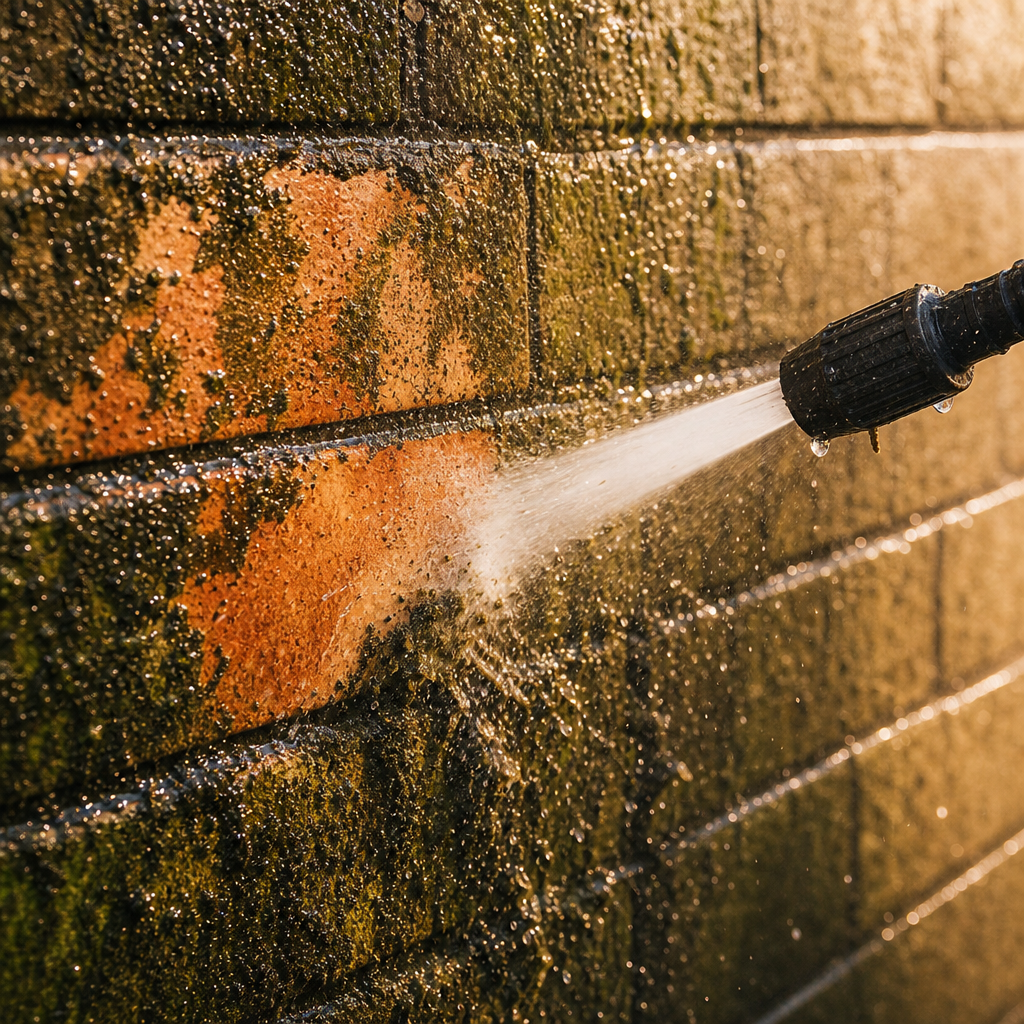
Power washing is not just spraying water at a wall. The combination of high pressure, water temperature, and cleaning agents physically breaks the bond between contaminants and the substrate beneath them. That means grime does not just get rinsed off the surface, it gets extracted from micro-pores in concrete and masonry where a garden hose cannot reach.
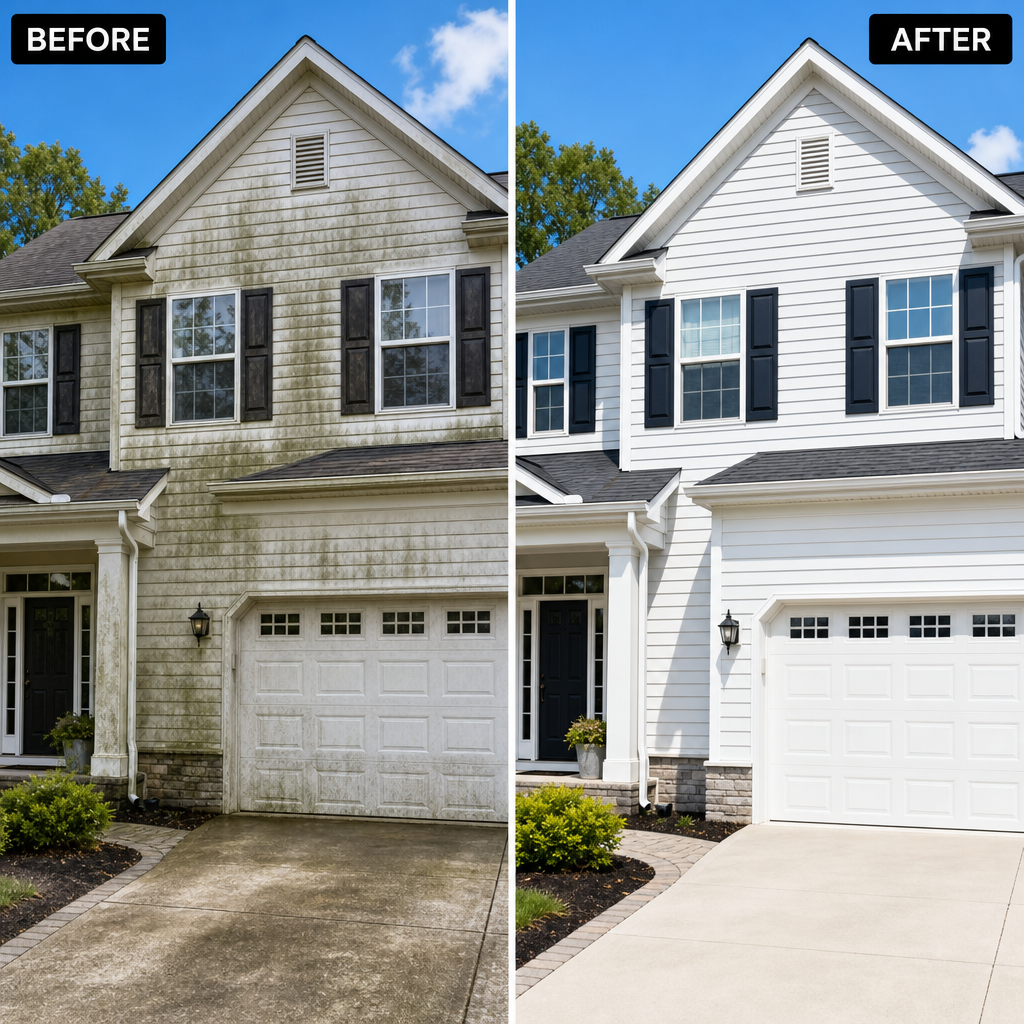
In practice, the most dramatic results come from surfaces that have years of biological growth: green algae streaks on siding, black mold on concrete, and lichen patches on brick. These organisms hold moisture against surfaces, and removing them stops ongoing surface degradation. A clean surface is not just prettier; it is structurally healthier.
Temperature matters as much as pressure. Hot water power washing, which uses water heated to 180 to 200 degrees Fahrenheit, dissolves grease, oil, and oxidized residue that cold-water rigs cannot touch. This is why a professional pressure washing service delivers results that DIY equipment simply cannot replicate on heavily soiled surfaces like garage floors, commercial entryways, and oil-stained driveways.
The Real Curb Appeal Impact: Numbers That Matter
Curb appeal is not a soft concept. Buyers and visitors form a visual judgment about a property within seconds of seeing it, and that judgment is difficult to reverse once made. A dirty, stained exterior communicates neglect even when the interior of the home is immaculate.
According to the National Association of Realtors, exterior improvements consistently rank among the highest-ROI projects a homeowner can undertake before listing. Power washing costs a fraction of painting, landscaping, or hardscaping, yet delivers one of the most immediate visual payoffs of any maintenance activity. The math is straightforward: a professional pressure washing service for an average residential property runs between $200 and $500. The perceived value improvement on a $700,000 home at even the low end of the 5% estimate represents $35,000 in buyer perception.
“First impressions in real estate are formed at the curb. A pressure-washed driveway and siding can make a $600,000 home look like a $700,000 home before anyone steps through the front door.” – HomeLight Real Estate Trends Report, 2023
Even for homeowners not selling, the psychological return is real. A clean exterior improves how you feel about coming home, how your neighbors perceive your property, and how potential visitors or clients assess your attention to maintenance. For business owners, a clean building exterior signals professionalism before anyone reads your signage.
Pro tip: Schedule power washing in early spring to remove winter salt deposits and biological growth that accumulated over fall and winter. This timing gives your exterior the longest period of looking its best through the high-traffic summer months when visitors and buyers are most active.
Surfaces That Respond Best to Power Washing
Not every surface responds the same way, and knowing which surfaces will give you the biggest visual return helps you prioritize your investment. In practice, concrete and brick deliver the most dramatic before-and-after results because they are porous and accumulate years of embedded staining.
Concrete Driveways and Walkways
Concrete is the highest-impact surface to wash. Oil drips, tire rubber transfer, algae growth, and general grime make concrete look perpetually dirty. At 2,500 to 3,500 PSI with a surface cleaner attachment, a professional can restore concrete to near-original color in a single pass. The difference is visually striking and immediately noticeable from the street.
Vinyl, Wood, and Fiber Cement Siding
Siding accumulates mold and algae at the waterline and in shaded areas where moisture lingers. Soft washing at lower pressure with a biodegradable cleaning solution removes biological growth without damaging the paint or material surface. Left untreated, this growth causes discoloration that painting alone will not permanently fix because the mold grows back through the paint layer.
Decks, Patios, and Fences
Wood and composite decking turns gray and slippery as algae and oxidation build up. Power washing restores the original color and removes the slip hazard that wet algae creates. For wood decks specifically, washing is the required first step before any staining or sealing treatment can be properly applied.
Brick and Stone
Efflorescence (the white mineral deposits that leach out of brick) and biological staining on stone respond well to low-pressure chemical treatments. High-pressure blasting on older brick can erode mortar joints, so technique and PSI calibration are critical on this surface type.
DIY vs. Professional Pressure Washing Service
The honest answer is that rental equipment and consumer-grade pressure washers are adequate for basic maintenance on robust surfaces like concrete. They are not adequate for most siding, painted surfaces, older materials, or anything that requires chemical application alongside water pressure.
A common mistake is setting the pressure too high on vinyl siding. Consumer washers often run at a fixed 2,000 to 2,500 PSI with no way to adjust the chemical mix ratio. This damages paint, forces water behind siding panels, and can void manufacturer warranties. Professional rigs have variable pressure settings, hot water capability, and downstream chemical injectors that apply the right cleaning solution at the correct dilution for each surface type.
The time equation also matters. A professional team with commercial equipment will complete a full exterior wash in two to four hours. The same job with rental equipment, setup time, learning curve, and trips to adjust technique typically takes a full day for a homeowner with no prior experience.
Pro tip: If you are weighing the DIY route, start with just the concrete driveway on your first attempt. Flat concrete is the most forgiving surface for high pressure, and it gives you a feel for handling the equipment before you point it at your siding or painted fence.
Comparison of Exterior Cleaning Approaches
Understanding the practical difference between cleaning methods helps homeowners make the right call for their specific surfaces and goals. The three primary approaches used in residential exterior cleaning are traditional power washing, soft washing, and chemical-only treatments.
| Cleaning Method | Best Suited For | Key Limitation |
|---|---|---|
| Power Washing (High Pressure) | Concrete driveways, brick patios, stone walkways, commercial hard surfaces | Can damage soft surfaces, painted wood, and older mortar joints if PSI is not properly calibrated |
| Soft Washing (Low Pressure + Chemical) | Vinyl siding, stucco, painted surfaces, roofing, wood fences | Requires proper chemical handling and rinsing; not effective for heavy physical debris like dried mud or paint overspray |
| Hand Washing (Manual Scrub + Rinse) | Delicate surfaces, detailed trim work, areas near plants or vehicles where runoff control is critical | Labor-intensive and less effective at removing embedded biological growth without chemical pre-treatment |
Performance Window Cleaning uses a combination of these methods depending on the surface being treated, which is why their exterior cleaning results look different from a single-method DIY approach. The right tool for each surface is what separates a professional outcome from a mediocre one.
Common Mistakes That Damage Your Exterior
In practice, the mistakes that cause the most damage are not from people who skip washing entirely. They come from homeowners who attempt the work with incorrect equipment or technique. The data consistently shows that pressure washer damage is among the most common unintentional home exterior repairs.
Using a Single Nozzle for Every Surface
The zero-degree nozzle on a pressure washer concentrates the full water force into a pinpoint stream. It will etch soft wood, strip paint, and cut through caulking. Each surface requires a different nozzle angle, with most siding and painted surfaces requiring a 25 to 40-degree fan nozzle at reduced pressure.
Washing Without Pre-Treating Biological Growth
Algae and mold do not come off with water pressure alone. The mycelium (root structure) of mold embeds into the surface substrate. Without a biocide or surfactant pre-treatment that kills the organism before washing, you will remove the visible surface layer but leave the root structure intact, and the growth will return within weeks.
Skipping the Downstream Surfaces
A common oversight is washing siding and driveways but ignoring fences, eaves, and entryways. When visitors approach your home, they walk past the fence, under the eaves, and through the entrance before they ever see your clean siding. Partial washing leaves the high-contact zones visually inconsistent with the rest of the exterior.
Pairing Power Washing With Other Exterior Services
Power washing delivers its best results when combined with complementary exterior maintenance. The reason is sequencing: washing first removes the dirt and organic material that would otherwise interfere with window cleaning, gutter inspection, and sealing work.
Gutter cleaning should always follow exterior washing because the washing process dislodges debris that can resettle in gutters and downspouts. Similarly, window cleaning after power washing makes sense because overspray and detergent residue from the washing process will leave mineral deposits on glass if the windows are not cleaned afterward.
Spider spraying, which Performance Window Cleaning offers alongside exterior cleaning services, is another natural pairing. Power washing removes existing webs and egg sacs, and applying a spider deterrent treatment immediately after washing to a clean surface dramatically improves how long the treatment remains effective. Spiders return to surfaces because their anchor points and pheromone trails survive a basic rinse. Washing properly removes those traces before the deterrent is applied.
For property managers and real estate agents preparing a home for listing or tenant turnover, the most efficient approach is a full-service exterior package: power washing all hard surfaces and siding, window cleaning inside and out, gutter cleaning, and a spider spray treatment. This combination addresses every visible exterior element in a single scheduled visit rather than coordinating multiple service providers.
Pro tip: Ask your exterior cleaning provider to complete the power washing before window cleaning on the same visit. Washing first and then cleaning windows in the same appointment eliminates the problem of detergent overspray drying on freshly cleaned glass.
Frequently Asked Questions
How often should I schedule power washing for my home’s exterior?
For most residential properties, once per year is the baseline recommendation. Homes in shaded areas, those near trees, or properties in high-humidity regions accumulate biological growth faster and benefit from twice-yearly washing. Commercial properties with high foot traffic around entrances and parking areas typically need quarterly service on high-traffic surfaces.
Will power washing damage my vinyl siding?
High-pressure washing at incorrect angles can force water behind vinyl panels and damage paint on trim. A professional pressure washing service uses soft-wash techniques on vinyl, applying cleaning solution at low pressure and rinsing carefully to avoid panel penetration. The risk of damage comes almost entirely from improper DIY technique, not from professional soft-wash application.
Does power washing actually improve home sale price, or is that just marketing?
The improvement is in perceived value and first impressions, which directly affect buyer offer prices and time on market. The National Association of Realtors and HomeLight both document curb appeal as a consistent factor in buyer decision-making. A professionally cleaned exterior tells buyers the home has been maintained, which reduces their mental estimate of deferred maintenance costs and increases their willingness to offer closer to asking price.
What is the difference between power washing and pressure washing?
Power washing uses heated water, typically between 140 and 200 degrees Fahrenheit, combined with high pressure. Pressure washing uses cold water at high pressure. The heat in power washing is more effective at cutting through grease, oil, and heavy biological buildup. Cold-water pressure washing handles general grime and organic surface staining well. Both methods are commonly called pressure washing by homeowners, but professionals distinguish between them based on surface requirements.
Can I have my windows cleaned on the same day as power washing?
Yes, and it is actually the preferred scheduling approach. Power washing should be completed first, followed by window cleaning. This sequence ensures that detergent overspray and mineral deposits from the washing process are cleaned off the glass rather than being left to dry. Performance Window Cleaning can coordinate both services in a single visit for exactly this reason.
What surfaces should never be power washed at high pressure?
Asphalt shingle roofing, older brick with deteriorating mortar, painted wood trim, stucco, and any surface with peeling paint should never receive high-pressure treatment. These surfaces require soft-wash methods with appropriate chemical agents at low pressure. Using high pressure on these materials causes surface erosion, strips coatings, and can introduce water infiltration into the structure beneath.
Have you noticed a specific surface around your home that power washing dramatically transformed? Share your experience or ask a question in the comments below.
References
- National Association of Realtors research and statistics on home improvement ROI and curb appeal impact on sale prices
- Forbes coverage of home maintenance costs, exterior cleaning ROI, and property value improvement strategies
- U.S. Environmental Protection Agency guidance on mold prevention, biological growth on building exteriors, and safe cleaning practices
- Statista data on the U.S. residential cleaning services market size, growth trends, and consumer spending patterns
- HomeLight real estate agent survey data on curb appeal improvements and their effect on home sale outcomes