
Most Oakville homeowners who skip fall interlock maintenance discover the cost in spring. They lift their patio furniture after a long winter and find cracked pavers, heaved stones, open joints stuffed with weeds, and surfaces stained by road salt that had months to work into the stone. The fix is never cheap. The truth is that power washing interlock in Oakville before the ground freezes is not optional maintenance. It is the single most effective thing you can do to protect your investment through a hard Ontario winter, and the window to do it right closes faster than most people realize.
Table of Contents
- Quick Takeaways
- Why Fall Timing Matters Specifically in Oakville
- What Fall Power Washing Actually Does for Interlock
- The Right Way to Pressure Wash Patio Stones
- Polymeric Sand: The Step Most Homeowners Skip
- Sealing Interlock Before Winter: What You Need to Know
- Comparison: Fall Treatment Approaches
- Common Mistakes That Cost Oakville Homeowners
- Frequently Asked Questions
- References
Quick Takeaways
| Key Insight | Explanation |
|---|---|
| Fall is the right season to power wash interlock | Cleaning in October removes organic matter, algae, and road salt residue before freeze-thaw cycles grind them into the surface all winter. |
| PSI matters more than most people know | Interlock should be cleaned at 1,200 to 1,500 PSI maximum. Higher pressure blasts out joint sand, which directly causes pavers to shift and weeds to return the following spring. |
| Polymeric sand replacement is not optional after cleaning | Power washing displaces joint sand. If you clean without re-sanding, you leave stones loose heading into winter, which accelerates heaving and cracking. |
| Sealing locks in your cleaning investment | A quality paver sealer applied after cleaning protects against freeze-thaw moisture infiltration, salt damage, and UV fading over winter and into the following year. |
| Road salt from Oakville streets is a specific threat | Salt migration from roads into interlock joints chemically attacks the sand binder and paver surface, especially through repeated freeze-thaw cycling in Halton Region winters. |
| Organic debris left on stones traps moisture | Fallen leaves, moss, and algae left on patio stones hold water against the surface. When that moisture freezes, it expands and forces pavers apart from below. |
| Sealer must cure before the first frost | Most paver sealers need 24 to 48 hours at above-freezing temperatures to cure properly. Miss this window and the sealer will not bond, leaving stones unprotected. |
Why Fall Timing Matters Specifically in Oakville
Oakville sits on the north shore of Lake Ontario in Halton Region, and its winters run hard. Temperatures routinely cycle above and below freezing through November, December, and into March. That freeze-thaw pattern is one of the most damaging forces any hardscape faces. Water expands by roughly nine percent when it freezes. Any water trapped inside interlock joints, beneath loose stones, or in surface cracks will expand and contract with every cycle, forcing pavers apart and gradually destroying the base.
Fall is the window to stop that process before it starts. The goal is simple: arrive at winter with clean, re-sanded, and sealed pavers that give moisture nowhere to penetrate and nothing to react with. That means completing your patio stone cleaning in Oakville before the first hard frost, which typically arrives in late October or early November in this part of Ontario.
Road salt is a second specific threat in this area. Salt spread on Oakville’s residential streets migrates onto driveways and interlock surfaces through snowmelt and foot traffic. Left in contact with paver surfaces and joint sand over winter, it causes surface spalling and degrades the sand binder that holds stones in place. Cleaning that salt residue off in fall, before it has months of freeze-thaw cycles to work with, is the most cost-effective maintenance step available.
What Fall Power Washing Actually Does for Interlock
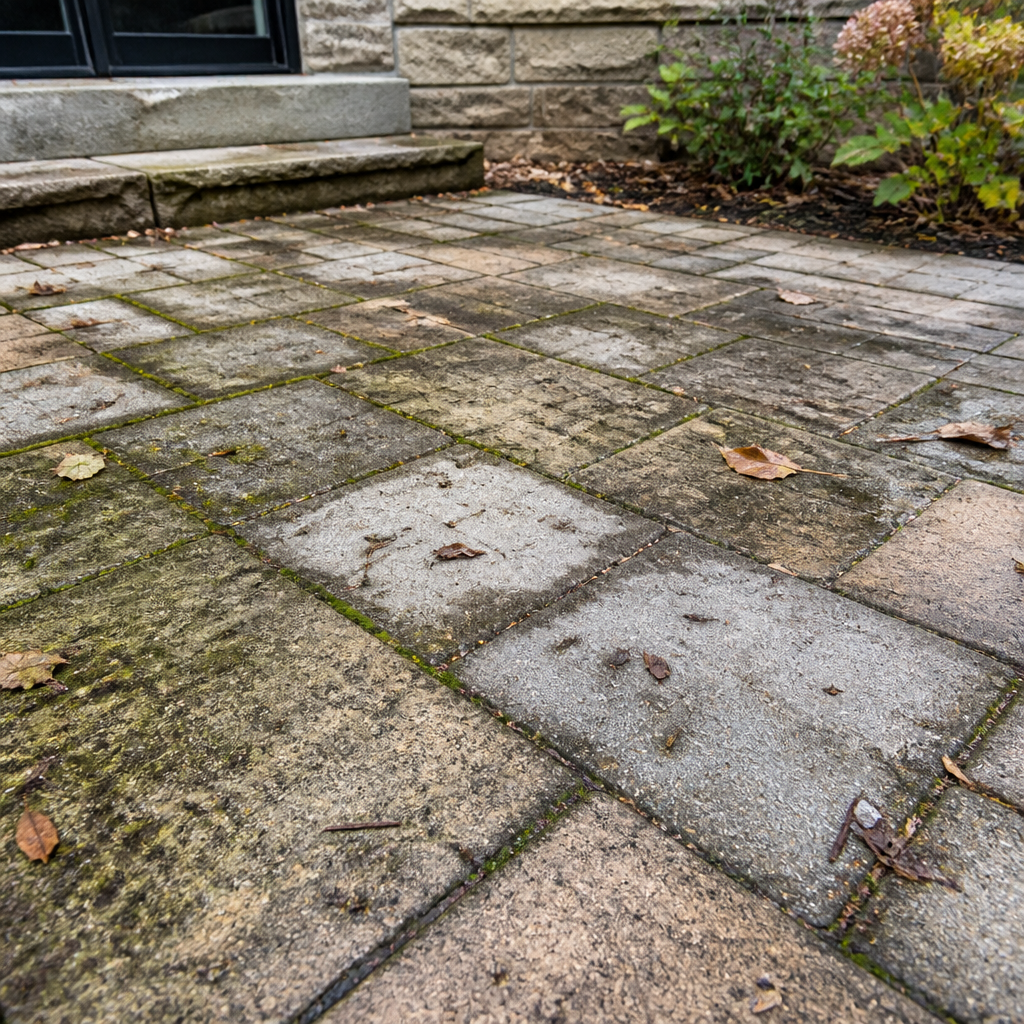
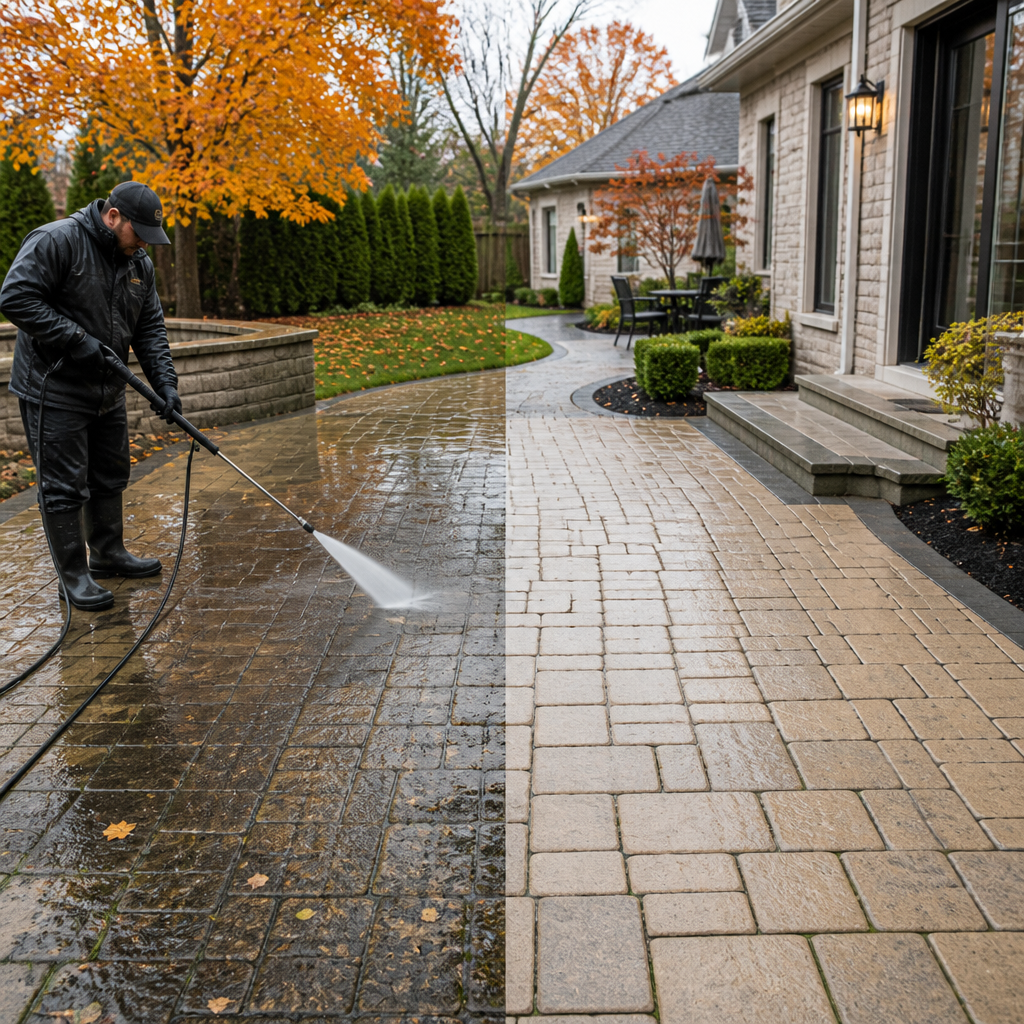
Power washing is not just cosmetic. On interlock and patio stones, it removes the specific substances that cause winter damage: algae, moss, organic staining from leaves, and accumulated road salt. Each of these holds moisture against the surface and, in the case of algae and moss, can chemically degrade the stone itself. Removing them in fall eliminates the damage vector entirely.
A proper fall clean also gives you a clear view of the surface condition. Cracks, sunken stones, wide joints, and eroded sand are all visible once the grime is gone. Fall is the right time to address those issues because the ground is not yet frozen and repairs are still practical. Finding a cracked paver in October and having it replaced costs a fraction of what a full section repair costs after a winter of further deterioration.
For patio stones specifically, including natural flagstone, exposed aggregate, and concrete pavers, a fall wash removes the leaf tannin staining that develops through September and October. Those stains bond more deeply to porous stone surfaces the longer they sit. Washing them off in fall is far easier than dealing with them after a winter of freeze-thaw work has pushed them further into the surface.
Trapped moisture in interlock pavers expands and contracts through freeze-thaw cycles, causing pavers to lift, crack, or shift out of place. Cleaning and sealing before winter is the most direct way to prevent that movement from happening.
The Right Way to Pressure Wash Patio Stones
The biggest mistake homeowners make when renting a pressure washer is setting it too high. More pressure does not mean a better clean on interlock. It means blasted-out joint sand, loose stones, and a patio that looks clean but is structurally compromised before winter even starts.
PSI, Tip, and Distance: The Three Variables That Determine Outcome
The correct pressure range for interlock paving stones is 1,200 to 1,500 PSI. A 40-degree fan spray tip spreads the water load evenly across the surface rather than concentrating it into joints. The wand should be held 12 to 18 inches from the surface and kept moving. Pausing in one spot at even moderate pressure will scour out joint sand in seconds.
Avoid directing the spray directly into joints at any angle. The goal is surface cleaning, not joint excavation. Work in passes parallel to the joint lines rather than across them, which minimizes the amount of sand displacement even at correct pressure settings.
Surface Cleaners vs. Wand Work
A rotary surface cleaner attachment is the most effective tool for large interlock areas. It maintains consistent distance and pressure across the surface, eliminates the streaking that wand work often leaves on light-coloured pavers, and moves faster across a large patio or driveway. For detailed work around edges, steps, and narrow walkways, a wand with the correct tip is appropriate. The key in either case is maintaining consistent technique and never stopping the water flow in one spot.
Pro tip: Pre-treat areas with visible algae or moss with a diluted paver cleaner solution and allow it to dwell for 10 to 15 minutes before pressure washing. This loosens the growth at the root level and means you can clean it off at lower pressure, protecting your joint sand while still getting a thorough result.
Polymeric Sand: The Step Most Homeowners Skip
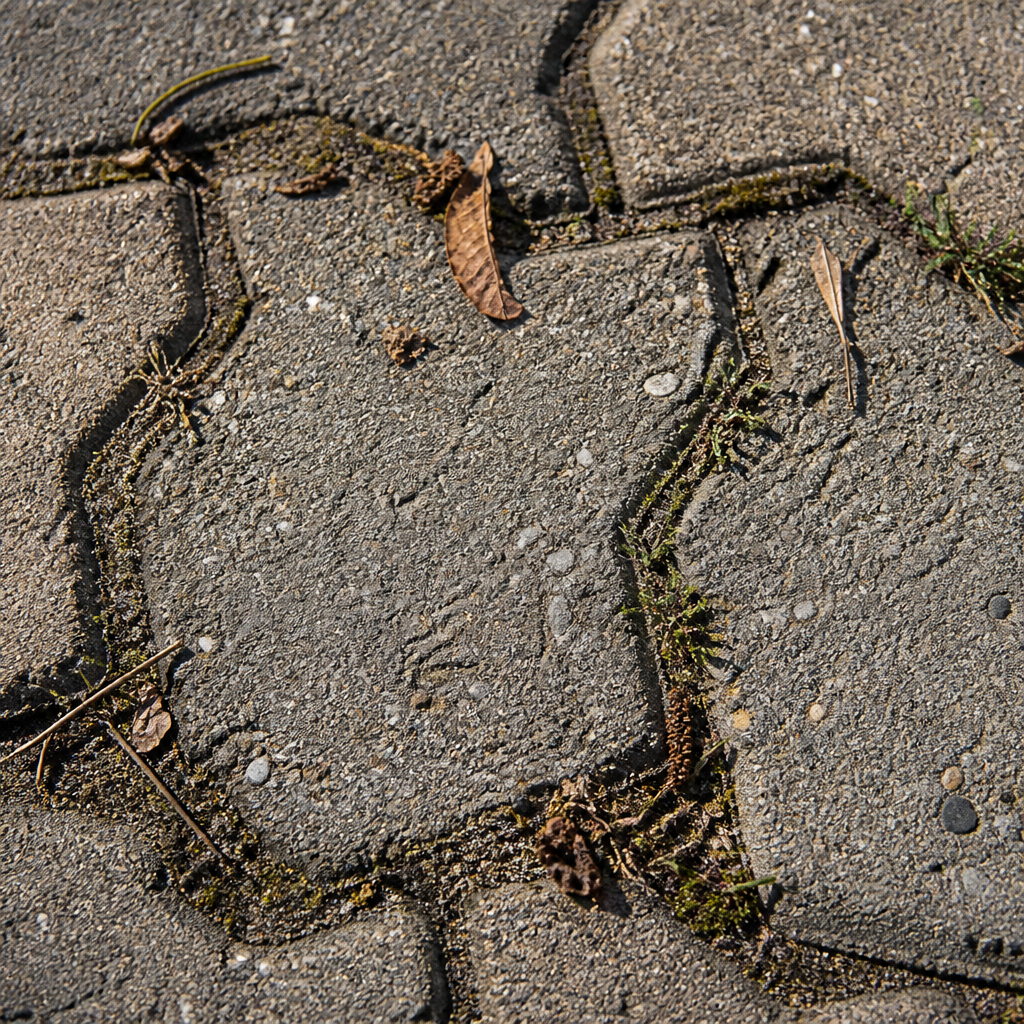
This is the step that separates a thorough fall treatment from one that looks good but provides no real protection. Power washing displaces joint sand. Even careful, low-pressure technique removes some sand from joints. Going into winter with depleted joints means stones have room to move under freeze-thaw pressure, and open joints provide direct pathways for water to reach the base layer.
Re-sanding with polymeric sand after power washing is not optional if you want to preserve your interlock through a Canadian winter. Polymeric sand contains binders that harden when activated with water, creating a firm, weed-resistant joint fill that resists erosion from rainfall and snowmelt. Standard kiln-dried sand lacks these binders and will wash out of joints again through the first few winter rain and snowmelt events.
The process involves sweeping dry polymeric sand into all joints until they are filled to within a quarter inch of the paver surface, compacting it with a plate compactor or hand tamper, sweeping off excess, and then activating with a light misting of water. The sand must be fully dry before the activation step or the binders will set prematurely on the surface rather than in the joint.
Pro tip: Do not re-sand on a day when rain is forecast within 24 hours. Premature wetting before the sand is properly settled in joints will wash it out of place and ruin the joint fill. In Oakville’s fall weather, check the forecast carefully and choose a dry two-day window.
Sealing Interlock Before Winter: What You Need to Know
Sealing is the final layer of protection in a complete fall treatment. A quality paver sealer penetrates the stone and creates a surface barrier that resists moisture infiltration, salt migration, UV fading, and oil staining. Applied after a thorough clean and re-sanding, it locks in the work you have done and protects the surface through winter and well into the following season.
Temperature Window Is Non-Negotiable
Most paver sealers require surface and air temperatures above 10 degrees Celsius to apply and a minimum of 24 to 48 hours of dry, above-freezing conditions to cure. In Oakville, that window typically runs from mid-September through mid-October. Trying to seal after the first frost is a waste of product. Sealer that freezes before curing will not bond correctly and will either peel or provide no meaningful protection.
This is why fall scheduling matters. The complete sequence, power washing, inspection, re-sanding, and sealing, needs to be completed in one coordinated window while temperatures cooperate. Waiting until late October in Oakville is a gamble you will sometimes lose.
Wet-Look vs. Natural-Finish Sealers
Wet-look sealers enhance the colour of interlock and patio stones, giving them a richer appearance similar to how natural stone looks when wet. They work well on concrete pavers, brick, and many types of natural stone. Natural-finish sealers provide the same moisture and salt protection without altering the surface appearance. Both types offer comparable protection for Ontario winters. The choice comes down to the look of the surface and the homeowner’s preference. What matters functionally is penetrating depth and breathability. A sealer that traps moisture below the surface rather than letting the stone breathe will cause more damage than it prevents.
Comparison: Fall Treatment Approaches
| Approach | What It Does | Winter Protection Level |
|---|---|---|
| Power Wash Only | Removes surface grime, algae, salt, and organic staining. Leaves joints potentially depleted of sand. | Moderate. Removes damage vectors but leaves joints vulnerable to moisture and freeze-thaw movement if not re-sanded. |
| Power Wash + Polymeric Sand | Cleans surface and refills joints with hardened, weed-resistant sand that stabilizes stones and blocks moisture ingress. | Good. Stones are stable, joints are protected, and surface is clean. Moisture can still penetrate the paver face without sealing. |
| Power Wash + Polymeric Sand + Sealing | Complete fall treatment: surface cleaned, joints stabilized, stone face sealed against moisture, salt, and freeze-thaw infiltration. | Best. Full surface and joint protection through the Ontario winter with the least likelihood of cracking, heaving, or staining by spring. |
Common Mistakes That Cost Oakville Homeowners
The most expensive mistake is treating fall interlock maintenance as a single step. Many homeowners rent a pressure washer, blast the patio, and call it done. The result is cleaner-looking stones sitting in loose, sand-depleted joints heading into a winter of freeze-thaw cycles. Come spring, the stones have shifted, weeds have colonized the open joints, and in some cases, pavers have cracked where unsupported movement concentrated stress.
A second common mistake is choosing the wrong equipment. Consumer pressure washers often exceed 2,000 PSI even on moderate settings. Used directly on interlock, especially with a zero-degree or pencil-jet nozzle, they hollow out joints in a single pass. The homeowner sees clean stones, does not look at the joints, and does not realize the problem until the following spring when the patio begins to wobble underfoot.
Timing errors are also costly. Many Oakville homeowners plan to seal their pavers in the fall but delay until November. By then, overnight temperatures are routinely below freezing, the sealer cannot cure, and the window is gone. Booking pressure washing interlock services for Oakville fall work in September or early October is the reliable approach. That provides time for both cleaning and sealing within the temperature window.
Finally, skipping the inspection step wastes the opportunity. A clean patio reveals problems that a dirty one hides. Finding a cracked paver, a sunken section, or a compromised edge restraint in October allows you to address it before winter. The same problem found in April has had months of freeze-thaw damage to compound the repair cost.
Pro tip: After power washing and before re-sanding, walk every square foot of your interlock with purpose. Press down on any stone that looks slightly lower than its neighbours. A stone that flexes under foot pressure has a compromised base and needs to be addressed before re-sanding and sealing locks it in place.
Frequently Asked Questions
What is the best time of year to power wash interlock in Oakville?
Late September through mid-October is the optimal window for most Oakville properties. The surface is dry enough for proper cleaning, temperatures are still above 10 degrees Celsius for sealer application, and you have time to complete the full treatment sequence before the first hard frost. Waiting until November means risking the sealing step, which requires sustained above-freezing temperatures to cure correctly.
Will power washing damage my interlock or patio stones?
Power washing will damage interlock if done incorrectly. The main risk is using too much pressure. Interlock should be cleaned at 1,200 to 1,500 PSI using a 40-degree fan tip and kept 12 to 18 inches from the surface. At those settings, a professional can clean thoroughly without displacing significant joint sand. The problem arises when consumer equipment is used at full pressure or when any equipment is pointed directly into joints. A professional service with experience on interlock surfaces will calibrate equipment and technique for the specific surface type.
How often should patio stones and interlock be power washed?
For Oakville properties, a complete fall treatment every year is the standard for driveways and high-traffic walkways. For patios with less vehicle traffic and salt exposure, a thorough annual clean combined with sealing every two to three years is reasonable. The actual condition of the surface matters more than a rigid schedule. If you see algae growth, staining, visible salt residue, or open joints in October, those are the indicators that a full treatment is due regardless of when you last did one.
Do I need to resand after every power wash?
Not always after every light cleaning, but a full fall pressure washing that cleans joints thoroughly will displace enough sand that re-sanding is warranted before heading into winter. Inspect the joints after washing. If you can see gaps at the surface or sand levels have dropped noticeably, the joints need refilling. Skipping this step because it adds cost and time is the most common reason interlock patios shift and develop weed problems the following spring.
Can I power wash patio stones myself, or should I hire a professional?
The cleaning itself is technically within reach for a capable homeowner with the right equipment and discipline to use correct pressure settings. The risk is using consumer equipment that exceeds safe PSI or losing patience and moving the wand too fast or too close. Where professional service pays off most clearly is in the complete sequence: cleaning at the right pressure, post-wash inspection, polymeric sand installation done correctly, and sealer application under the right conditions. Each of those steps done incorrectly creates a problem. Done as a complete system by someone with experience on Ontario interlock surfaces, the result lasts.
What happens to interlock that is not cleaned and sealed before a hard Ontario winter?
The progression is predictable. Organic debris and salt left on the surface hold moisture against the stone face. Freeze-thaw cycles force moisture into any micro-cracks, expanding them. Open or sand-depleted joints allow stones to flex under freeze-thaw pressure, which leads to heaving, misalignment, and cracking. By spring, what appeared to be a cosmetic maintenance skip has produced structural damage to the paving, and the repair cost is almost always greater than a fall treatment would have been.
Have you done fall interlock maintenance on your Oakville home? Share what worked or what you wish you had done differently.
References
- How to protect pavers from winter freeze-thaw damage and salt
- Winter maintenance guide for interlocking pavers in Oakville
- Correct pressure settings and technique for cleaning interlock paving stones
- Can power washing damage interlocking pavers and how to avoid it
- How to pressure wash pavers without losing polymeric joint sand