
Most homeowners in Oakville think about power washing in spring, then discover that winter has already baked the grime into their siding and paving. Timing matters for any power washing Oakville fall project, because a wash done before the cold arrives protects the surfaces you care about most. Fall also brings its own problems: wet leaves that stain light concrete, algae that freezes into porous materials, and grit that grinds into driveways under snow. The real challenge is matching the pressure to the material. A single afternoon with the wrong nozzle can etch concrete, strip paint from trim, or chew up soft cedar. Here is how we decide what gets high pressure, what gets low pressure, and when to book the job.
Table of Contents
- Quick Takeaways
- Why Fall Is the Right Season for Power Washing in Oakville
- Surfaces That Can Take High Pressure
- Surfaces That Need Low Pressure
- Pavers, Asphalt, and Mortar Joints
- Comparing Three Washing Approaches for Oakville Homes
- Fall Timing, Leaves, and Tannin Stains
- Pairing Power Washing With Gutter and Eavestrough Cleaning
- Common Mistakes That Damage Oakville Surfaces
- Frequently Asked Questions
- References
Quick Takeaways
| Key Insight | Explanation |
|---|---|
| Fall is often the best window for exterior cleaning in Oakville | Summer growth and grime have had months to settle, and a fall wash clears them before snow and freeze-thaw cycles set in. |
| Match the pressure to the material before you touch the trigger | Poured concrete and asphalt tolerate far more force than vinyl, painted trim, or cedar. Check the material first, then choose the tip. |
| Only wash when temperatures stay above freezing | Water left on siding, decks, and paving can freeze, and frozen water can lift paint or crack sealed surfaces. Book dry days with no hard freeze in the forecast. |
| Clear fallen leaves before you start | Wet leaves release tannins that leave brown marks on light concrete and deck boards. Removing them first keeps those stains from forming. |
| Clean the eavestroughs before you wash the driveway | Gutter debris washes down onto walkways and driveways. Doing the gutters first means you only wash the ground once. |
| Never start on the highest setting | Begin with a wide tip from a safe distance, then move closer only if the stain does not lift. Most residential surfaces need less force than people expect. |
Why Fall Is the Right Season for Power Washing in Oakville
Spring gets the attention because it feels like a fresh start. In practice, fall is when a house needs protection more. A thorough wash before winter removes the organic film, grit, and algae that work their way into siding and paving and then freeze there. One comparison of spring and fall power washing describes spring as a fresh reset and fall as protection and preparation, and that matches what we see on our jobs.
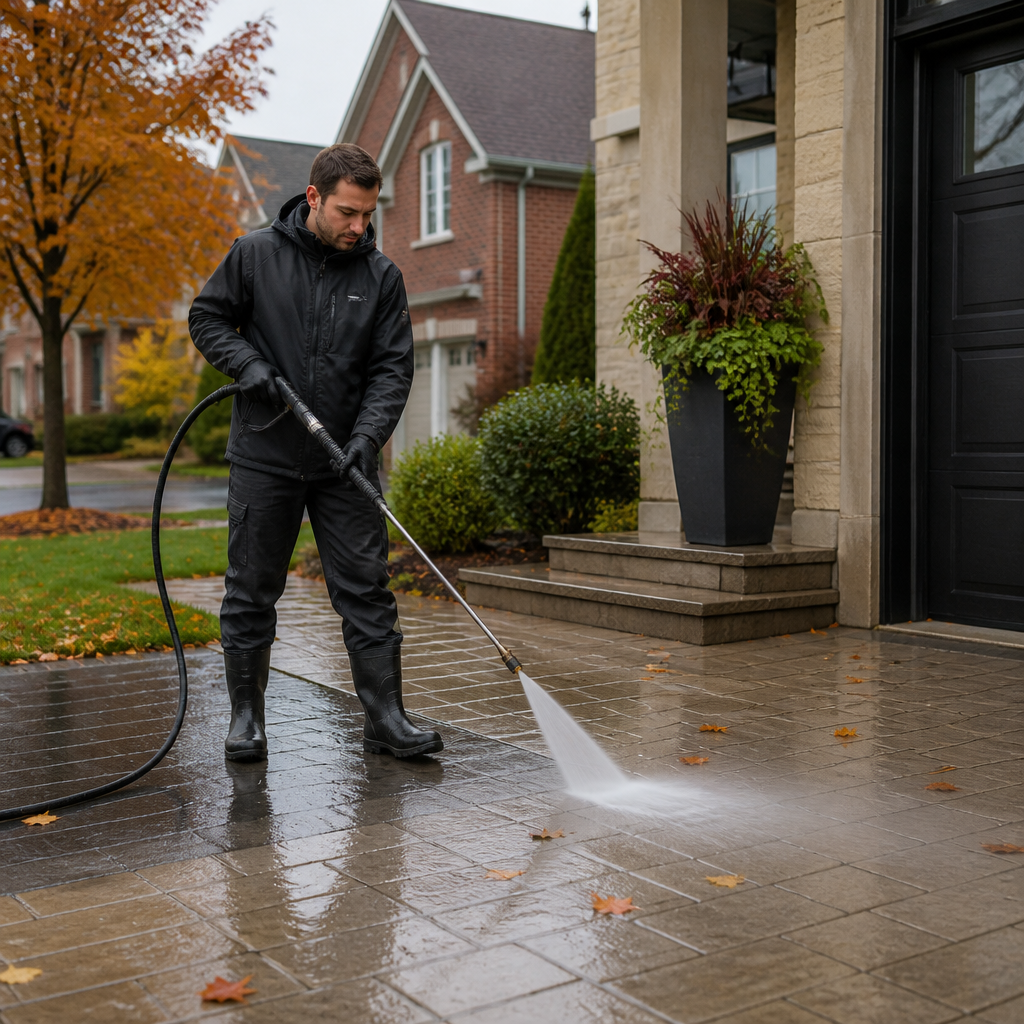
Fall work has a practical advantage over spring. By late September, the grime from a full summer has had months to set, so a wash removes more of it in one pass than most people expect. The downside is scheduling. Good weekends fill up quickly in October, so book in September and confirm a dry forecast a few days before the job.
The right time to wash is the last dry, mild stretch before your surfaces have to survive the cold, not the first warm week of the year.
Think of a fall wash as insurance on your investment. Clean siding is easier to maintain next season, and clean paving gives salt less to bond to once winter arrives. Homeowners who skip fall often end up paying for a harder, longer job in spring, when the stains have had a full winter to settle in.
Surfaces That Can Take High Pressure
Not everything around your house is delicate. Some surfaces are tough enough that a stubborn stain needs more force than a gentle rinse, and treating them too gently wastes time and leaves residue behind. The key is knowing which materials can handle a stronger spray and which ones will be damaged by it.
Poured concrete driveways and garage floors
Poured concrete is the surface most people think of first, and it tolerates more than almost anything else on a residential property. It handles a rotary or fan tip at moderate pressure well, especially for oil spots, tire marks, and the white residue left by winter salt. Work in overlapping passes and keep the tip moving so the surface does not etch in one spot.
Concrete is also the most forgiving place to test your technique. Pick a hidden corner, start with a wide fan tip, and check the result before working across the whole driveway. If the stain lifts without effort, you have the right balance. If it barely changes, the answer is usually more dwell time with cleaner, not a tip closer to the ground.
Brick and masonry walls
Brick is durable, but the mortar between the bricks is softer than the units themselves. A wash that is too strong can erode mortar joints over time, which is the type of damage that shows up years later as crumbling or water intrusion. Keep the pressure moderate, aim the spray at an angle, and avoid blasting directly into the joints.
Brick walls near garden beds also need care with runoff. Strong spray pushes dirt and cleaner into soil and against plant stems, so rinse slowly and direct water away from plants. In practice, a brick wall often looks cleaner from a gentler wash than from a hard blast that scars the surface.
Surfaces That Need Low Pressure
Some surfaces look tough but break easily under a high-pressure spray. Vinyl, painted trim, soft wood, and older stucco can all be stripped, dented, or driven under the surface if the spray is too strong. For these materials, a low-pressure soft wash with a suitable cleaner does more good than a fast blast with plain water.
Vinyl siding and aluminum trim
Vinyl siding and aluminum trim are common on Oakville homes, and both need restraint. One widely cited pressure washing guide recommends a range of 1,000 to 1,500 PSI for surfaces like painted finishes, soft-grain wood, traditional stucco, and aluminum siding. That range is well below what most people reach for by default, which is why so many siding jobs end up with streaks, scratches, or lifted edges.
Use a wide fan tip, keep the wand at a safe distance, and work from the bottom of the wall upward. Working upward lets the rinse water carry the cleaner down and away, which prevents the streaks that show up when you spray from the top down. A good siding job looks even from ground level, with no bright patches or dull streaks.
Wood decks and painted surfaces
Wood decks are where we see the most damage from people who assume more pressure equals better results. Soft-grain wood raises its fibres under a hard spray, leaving a fuzzy surface that holds dirt and then weathers unevenly. Cedar and pine boards are especially vulnerable, so use the lowest effective setting and follow the grain at all times.
Painted surfaces such as fences, trim, and railings follow the same rule. A strong spray can strip paint from the edges first, and those chipped edges become entry points for moisture. In practice, a low-pressure wash with a mild cleaner removes the grime without taking the paint with it.
Pavers, Asphalt, and Mortar Joints
Paving is where homeowners most often make expensive mistakes, because the surfaces look similar from a distance but respond very differently to the same spray. Interlocking pavers, asphalt, and the mortar joints in stone walkways each need their own approach. Getting these right protects the structure underneath as well as the look on top.
Interlocking pavers and sand joints
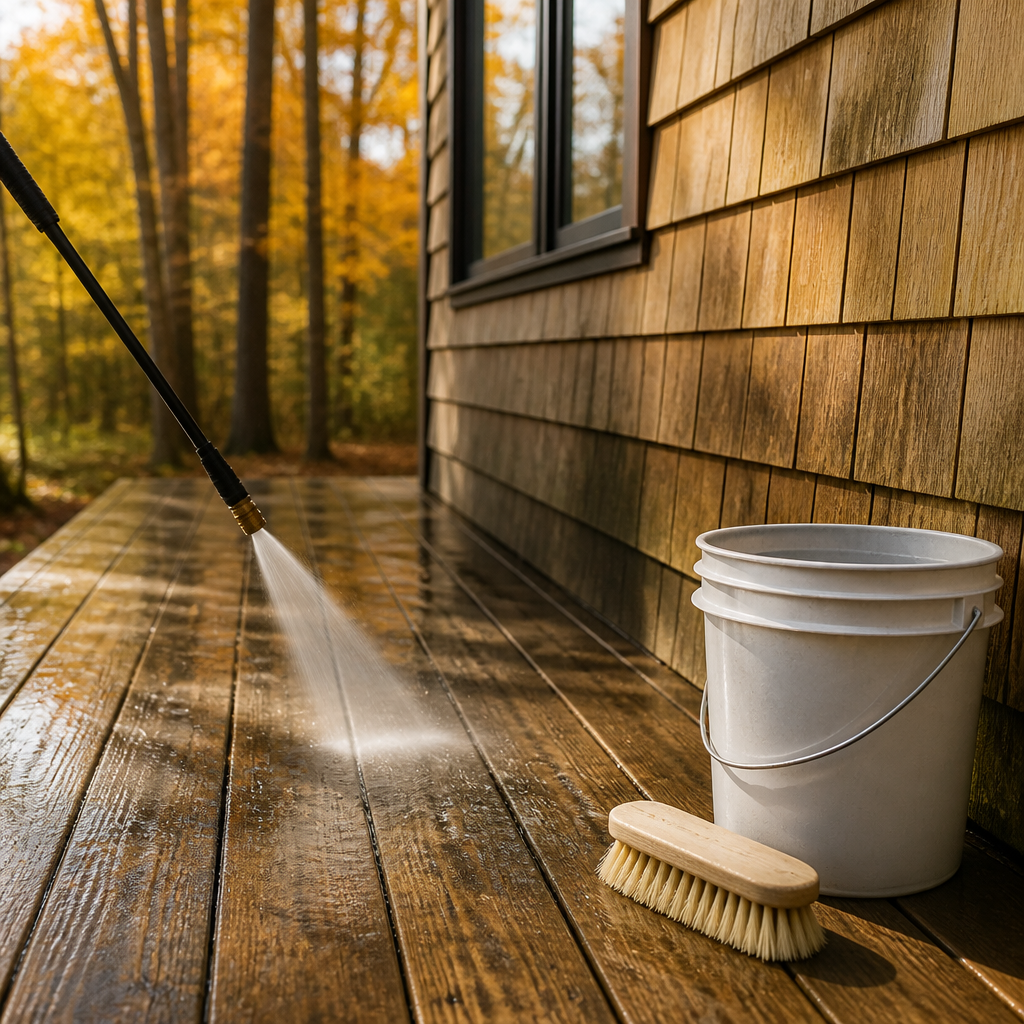
Interlocking pavers depend on the sand between them to stay locked in place. A strong spray aimed directly into the joints can wash that sand out, which lets the pavers shift and sink over time. Keep the spray angled across the joints rather than straight down into them, and use a moderate setting that cleans the surface without digging into the gaps.
After the wash, check the joints. If the sand has been displaced, top up with fresh joint sand and sweep it in before the next rain. Skipping this step is a common reason pavers look uneven a season later, even though the surface itself was cleaned properly.
Asphalt driveways
Asphalt is softer than concrete, especially on warm days or when the surface is newer. High pressure can wear the top layer, expose aggregate, and leave a rough patch that collects dirt faster. Use a wide tip, a lower setting, and a little patience with oil stains, which often need a degreaser and dwell time more than force.
Asphalt also benefits from being washed before sealing, not after. A clean, dry surface takes a sealer evenly, so schedule the wash early enough in fall to let the driveway dry fully. If you plan to seal in the same season, leave a few dry days between the wash and the sealer.
Comparing Three Washing Approaches for Oakville Homes
Most exterior jobs use one of three approaches, and the right one depends on the material and how delicate the surrounding area is. The table below compares the methods we use most often, along with the main risk of each. Choosing the wrong one is usually the reason a job looks worse afterward.
| Approach | Best For | Main Risk |
|---|---|---|
| Rotary or fan tip at moderate pressure | Poured concrete driveways, garage floors, and brick walls | Etching, streaking, and mortar erosion if the wand is held too close or too long in one spot |
| Low-pressure soft wash with a suitable cleaner | Vinyl siding, painted trim, stucco, and wood decks | Cleaner residue on plants if not rinsed well, and slower results on heavy algae unless the cleaner has time to work |
| Hand washing with a soft brush | Front doors, entrances, delicate siding sections, and detailing work | Slow and labour-intensive, so it is not practical for large areas, and it can miss grime in corners |
In practice, most of our exterior jobs combine two of these methods. A driveway might get a fan tip while the siding gets a soft wash, and the entrance gets a hand wash so the door finish is not affected. Matching the method to each surface is what separates a clean result from a damaged one.
The comparison also shows why one-setting-fits-all machines and quick rental jobs often disappoint. A single pressure setting cannot protect vinyl and clear a concrete driveway at the same time. Plan the job surface by surface, and move between methods as the material changes.
Fall Timing, Leaves, and Tannin Stains
Fall brings a specific problem that spring rarely does: leaves. Wet leaves on a driveway, deck, or walkway release tannins, which leave brown marks that look like stains but behave differently from oil or dirt. Getting ahead of this is one of the simplest ways to protect your fall wash.
Why leaves stain before you notice
Leaves that sit on concrete or deck boards for a few days can leave tannin marks as they break down. These marks are most visible on light-coloured concrete and pale wood, and they often appear after a damp spell rather than right away. Once they set, they can take several passes to remove, and sometimes they do not fully lift.
The fix is simple: clear the leaves before you wash, then rinse the surface with a light pass to pick up what is left. A leaf blower or stiff broom does most of the work, and the wash handles the rest. Doing the clearing first saves you from spending extra time chasing faint marks that should never have formed.
Working backward from the first hard freeze
The most useful planning tool for a fall wash is the first hard freeze, not the calendar. Book the job for a dry day with a stretch of mild weather ahead, and avoid any day when overnight lows are forecast below freezing. Water left on surfaces can turn to ice, and that ice can lift paint, crack sealed concrete, or make a walkway dangerous.
Work backward from that freeze date. Aim to finish the wash at least a few days before the first hard frost, so surfaces have time to dry completely. Wet siding and paving going into a cold night is one of the easiest ways to create damage that you will only see in spring.
Pro tip: Check the overnight forecast for the three nights after your scheduled wash, not just the day itself. A dry afternoon followed by a hard freeze can undo the whole job, especially on sealed concrete and painted trim.
Pairing Power Washing With Gutter and Eavestrough Cleaning
Gutters and eavestroughs are the most overlooked part of a fall exterior job, and they are the first thing to handle. Leaves, seeds, and grit collect in the eavestroughs and then wash down the walls and onto the ground during the next rain or wash. Cleaning them first means the ground and siding only get washed once.
Clean the eavestroughs first
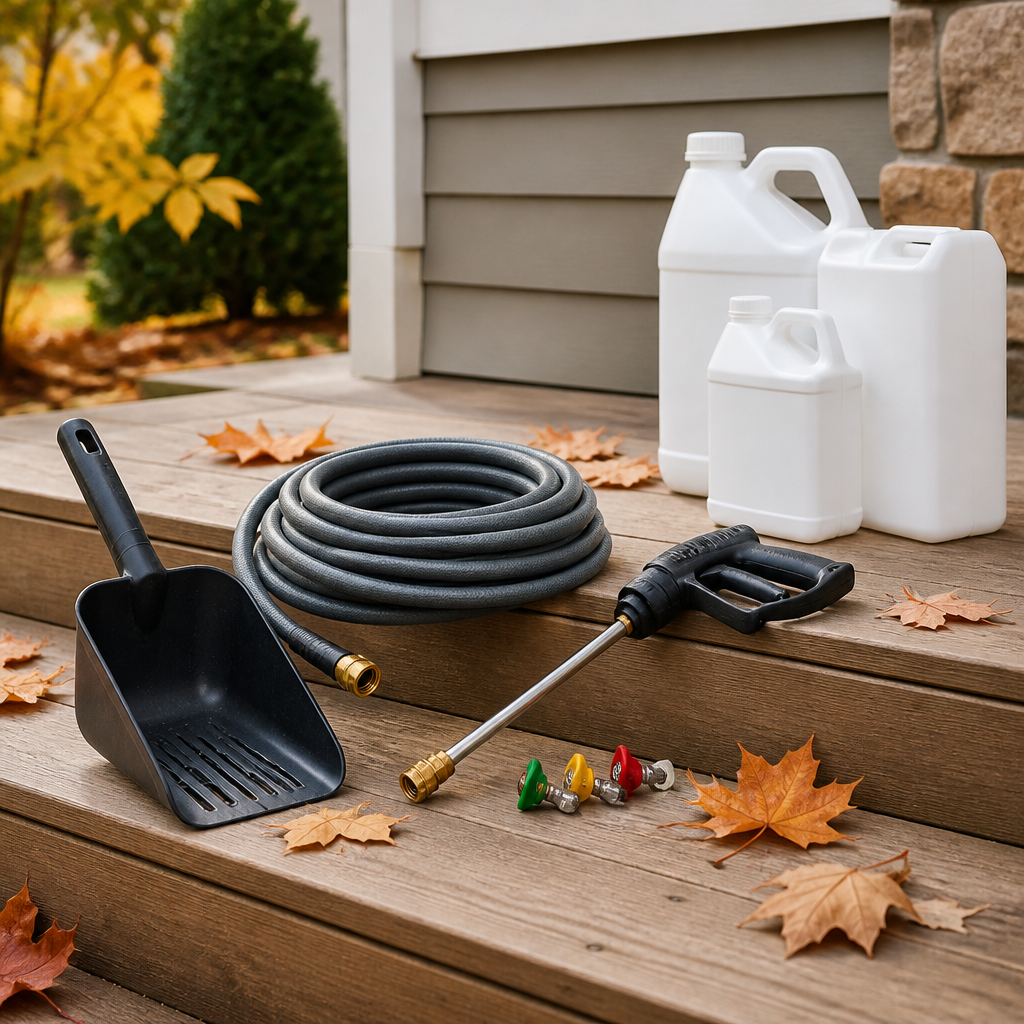
Start with the eavestroughs, then move to the downspouts, and finish with the walls and ground below. If you wash the siding before clearing the gutters, the debris from the eavestroughs runs down the wall you just cleaned, and you end up with fresh streaks. The order matters more than most people realize.
Check the downspouts after clearing. A clogged downspout can send water back toward the foundation during the first heavy rain, and that is a bigger problem than a little leaf debris on the driveway. Running water through the downspout during the job confirms that it drains freely.
Protecting plants and landscaping
Before any wash, move lawn furniture, toys, and potted plants away from the work area. This is a basic step, but it is easy to skip when a job feels routine. A spray can knock over a potted plant, scatter small items, or drive grit into the soil around new planting beds.
Cover delicate shrubs near walls with a light sheet, and rinse plant beds with clean water after the wash. Cleaner residue left on leaves can scorch them, so a final rinse matters. These small steps keep a fall wash from turning into a spring repair job for your garden.
Pro tip: Clear the eavestroughs and downspouts a day before the wash, then run a hose through them during the job. If the water backs up anywhere, you have a blockage to fix before winter, not after.
Common Mistakes That Damage Oakville Surfaces
Most damage we see on jobs done by homeowners, or by crews who rushed, comes from a short list of mistakes. None of them are hard to avoid once you know what to look for. Each one comes down to using more force, more cleaner, or more water than the surface actually needs.
Starting on the highest setting
The most common mistake is starting on the highest setting because it feels faster. In our experience, the highest setting is rarely needed on a residential surface, and one of the sources we checked notes that its author does not even use their machine’s top setting. Begin with the widest tip and the lowest effective pressure, then increase only if the stain does not lift.
Speed also causes problems. Moving too slowly with a narrow tip can cut into the surface, while moving too quickly leaves dirt behind. Work at a steady pace, and watch the surface as you go rather than focusing only on the spray.
Skipping the prep work
Prep is the part of the job that clients are most likely to skip and the part that prevents the most damage. Move furniture, cover outlets and light fixtures, and check that doors and windows are closed. Dry shrubs and open vents can also trap water and cleaner in places you do not want them.
Prep also means testing your cleaner on a small hidden area first. Some cleaners react badly with painted trim, aluminum, or older sealers, and a quick test takes a few minutes. Skipping it is the difference between a clean siding wall and a streaked one.
Frequently Asked Questions
Is fall really better than spring for power washing in Oakville?
For most homes, fall is the better choice if you can only do one major wash each year. A fall wash removes the grime that built up over summer and protects surfaces before winter moisture and freezing temperatures arrive. Spring still matters for pollen and early growth, but it does not replace a pre-winter clean.
Can I power wash my driveway after the leaves start falling?
Yes, but clear the leaves first. Wet leaves on concrete can leave tannin stains that are much harder to remove after a few days, so sweep or blow them off before the wash begins. Then use a wide tip and check the surface on a hidden corner before washing the whole driveway.
What pressure should I use on vinyl siding?
Vinyl siding should be washed at low pressure with a wide fan tip and a suitable cleaner. One widely cited guide puts a 1,000 to 1,500 PSI range on surfaces like painted finishes and aluminum siding, and the same restraint applies to vinyl. Work from the bottom up and rinse thoroughly to avoid streaks.
Do I need to power wash before winter salt season?
A clean surface resists salt better, because residue and grime give salt something to hold onto. A wash before the cold arrives removes that layer and makes the next season easier to manage. It also gives you a chance to spot cracks or loose mortar before they worsen under ice and snow.
Should I book gutter cleaning at the same time as power washing?
Yes, and it is more efficient to do them together. Clearing the eavestroughs first keeps debris from running down freshly washed siding and paving. Booking both at once also means you only pay for one visit, and the ground only gets washed once.
What surface on your Oakville property looks worst by spring, and have you found a cleaning approach that actually worked for it?
References
- Beginner guide to setting up and using an electric pressure washer
- Power washing guide covering recommended PSI ranges by surface
- Pressure washing guide on preparing surfaces before cleaning
- Comparison of spring and fall power washing for home protection