
Most homeowners in the Greater Toronto Area spend more time debating paint colours than they do thinking about how their siding, brick, and concrete actually get clean. That oversight is expensive. A 2023 survey by the National Association of Realtors found that poor exterior maintenance reduces perceived home value by up to 10%. When you search for power washing GTA services, you will find dozens of options, but very few providers clearly explain when pressure equipment does the job best and when careful hand washing is the smarter, safer call. This guide cuts through the noise with real-world experience from over 15 years of residential and commercial exterior cleaning work.
Table of Contents
- Quick Takeaways
- What Is Power Washing and How Does It Work?
- What Is Hand Washing for Home Exteriors?
- Surface-by-Surface Breakdown: Which Method Fits Which Material
- Power Washing vs. Hand Washing vs. Soft Washing: Side-by-Side Comparison
- GTA-Specific Factors That Change the Decision
- Common Mistakes Homeowners Make When Choosing a Cleaning Method
- When to Hire a Professional Exterior Cleaning Service
- Frequently Asked Questions
- References
Quick Takeaways
| Key Insight | Explanation |
|---|---|
| Power washing is not universally better | High PSI equipment strips paint, damages wood fibers, and forces water behind siding. It is the right tool for concrete and brick, not cedar or vinyl in poor condition. |
| Hand washing protects delicate surfaces | Soft bristle brush work combined with biodegradable cleaning solutions removes organic growth on wood siding, stucco, and painted surfaces without structural risk. |
| GTA freeze-thaw cycles increase surface vulnerability | Water forced into micro-cracks by high-pressure washing expands in winter and accelerates cracking in brick and mortar, a problem specific to Ontario’s climate. |
| Soft washing bridges the gap | Low-pressure delivery combined with specialized detergents kills mould and mildew at the root. It is more effective than power washing for biological contamination on siding. |
| Gutter and eave cleaning requires both methods | Flushing downspouts uses moderate water pressure while the trough surface and fascia boards are better scrubbed by hand to avoid warping or seal damage. |
| Frequency matters as much as method | A home cleaned annually with the right method maintains its finish longer than one blasted with a pressure washer every few years in a catch-up effort. |
| Professional assessment prevents costly mistakes | An experienced technician identifies surface condition, paint adhesion, and caulk integrity before choosing PSI settings or cleaning solutions, protecting your investment. |
What Is Power Washing and How Does It Work?
Power washing uses heated water delivered at high pressure, typically between 1,500 and 4,000 PSI, to blast contaminants off hard surfaces. The heat is the key differentiator from basic pressure washing. Hot water dissolves grease, oil, and organic matter faster than cold water alone, making it particularly effective on driveways, commercial loading docks, and concrete walkways.
In practice, most residential jobs in the GTA do not actually need water above 2,000 PSI. Consumer-grade pressure washers sold at hardware stores often sit between 1,600 and 2,000 PSI, which is enough to strip loose paint, gouge soft wood, and force water under siding overlaps. Professionals calibrate PSI to the specific surface, a step that do-it-yourself operators routinely skip.
The biggest advantage of power washing is speed and mechanical cleaning power on dense, non-porous surfaces. A professional can clean a 500-square-foot concrete driveway in under an hour. The biggest risk is operator error: holding the nozzle too close, using a zero-degree tip on painted wood, or washing at an upward angle that drives water behind cladding.
What Is Hand Washing for Home Exteriors?
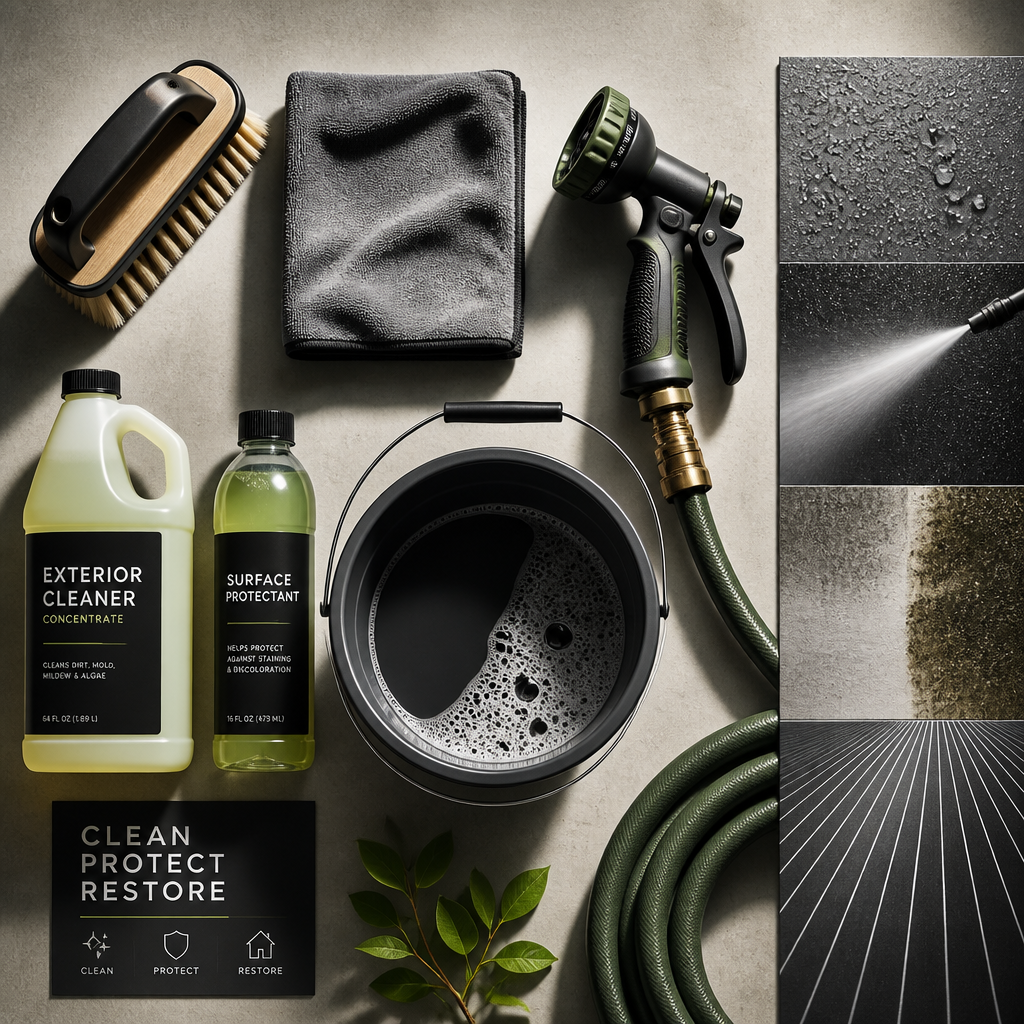
Hand washing, in the context of home exterior cleaning, means applying cleaning solution with low-pressure equipment or brush applicators and physically agitating the surface with soft-bristle tools before rinsing with controlled, low-pressure water. It is slower and more labour-intensive, which is exactly why it delivers better results on surfaces that cannot tolerate mechanical force.
At Performance Window Cleaning, hand washing is the default method used on painted wood siding, older vinyl that has become brittle, stucco, EIFS cladding, and around window frames and sealed joints. The process typically involves a biodegradable degreaser or mould-inhibiting solution, a dwell time of five to ten minutes, manual agitation, and a gentle rinse. This approach removes biological growth without driving moisture into the substrate.
Hand washing is not a lesser option. It is the correct option for a specific category of surfaces, and choosing it protects your home from water intrusion, paint failure, and premature cladding replacement. A common mistake is assuming that the most forceful method is the most thorough one.
Surface-by-Surface Breakdown: Which Method Fits Which Material
The material your home is clad in, and its current condition, is the single most important variable in choosing a cleaning method. Here is how the decision plays out across the most common exterior surfaces found on GTA residential properties.
Concrete Driveways, Sidewalks, and Patios
Power washing is the right call here, full stop. Concrete is dense enough to handle 2,500 to 3,000 PSI when applied correctly. Oil stains, tire marks, and algae embedded in the surface pores need mechanical cleaning force to lift properly. A surface cleaner attachment that distributes pressure evenly prevents the streaky zebra-stripe pattern that an open wand creates.
The exception is stamped or decorative concrete with a sealer coat. Aggressive pressure washing strips that sealer, leaving the surface vulnerable to staining. In those cases, soft washing with a concrete-safe detergent is the smarter approach.
Brick and Mortar
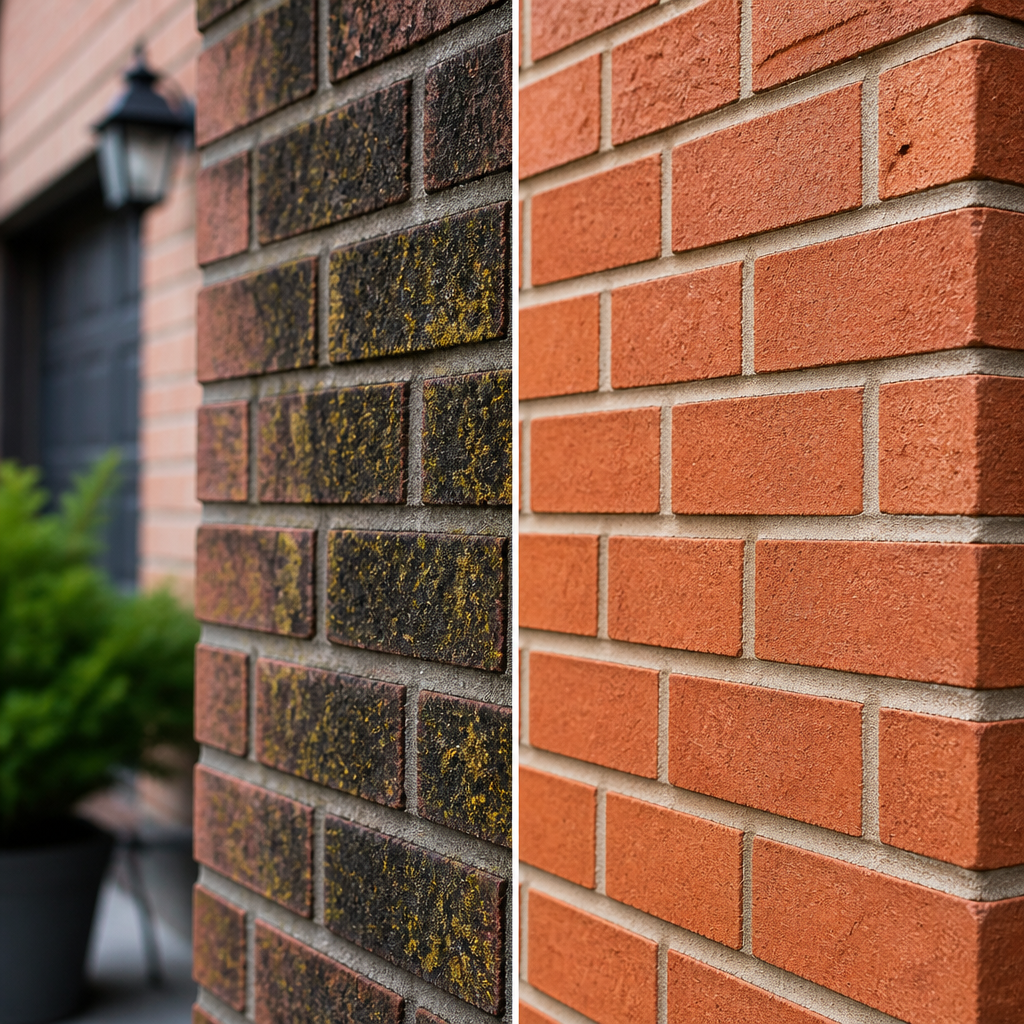
Brick presents a nuanced situation specific to older GTA homes. Brick manufactured before the 1980s is often softer and more porous than modern brick. Directing 3,000 PSI at soft mortar joints erodes them. The Ontario Building Code does not specify a cleaning PSI for masonry, but conservation guidelines from Heritage Toronto recommend low-pressure washing below 700 PSI for heritage brick, combined with appropriate masonry cleaning solutions.
For standard modern brick in good condition, pressure washing between 1,200 and 1,500 PSI with a 25-degree nozzle tip is safe and effective. Anything higher risks surface spalling that lets freeze-thaw water in.
Vinyl and Aluminum Siding
Soft washing or hand washing is the professional standard for vinyl and aluminum siding. High pressure forces water up behind the overlapping panels, directly into wall cavities, insulation, and potentially toward your interior wall sheathing. This is not a hypothetical risk. The Insurance Bureau of Canada reports that water damage from improper exterior washing is a documented source of property claims.
Low-pressure application of a siding-specific surfactant, followed by soft brush agitation and a controlled rinse angled downward, removes mould, oxidation, and road grime without any moisture intrusion risk.
Wood Siding, Decks, and Cedar Shingles
Hand washing is non-negotiable for raw or painted wood. Power washing at even moderate PSI raises wood grain, splinters fiber bundles, and opens micro-cracks where moisture enters and rot begins. Deck restoration contractors who follow up power washing with sanding are essentially correcting the surface damage the pressure washer created in the first place.
The correct approach for wood is a low-pressure oxygen bleach or oxalic acid solution appropriate to the finish, applied with a brush or pump sprayer, agitated gently, and rinsed with a garden hose or low-pressure rinse below 400 PSI.
Windows, Frames, and Eaves
Windows and their surrounding trim are hand-wash territory exclusively. Pressure washing glass at close range risks cracking older single-pane units, and the real danger is around the frame, where high-pressure water blows out caulk beads and weather stripping. Once that seal fails, water migrates into the rough opening on every rainfall. Professional window cleaning using purified water-fed pole systems or traditional squeegee methods delivers a streak-free result that pressure equipment simply cannot match around frames and mullions.
Pro tip: Ask your cleaning technician to check caulk integrity around every window frame during an exterior cleaning visit. Replacing a failed caulk bead costs under $50 per window. Repairing water damage to the surrounding framing costs thousands.
Power Washing vs. Hand Washing vs. Soft Washing: Side-by-Side Comparison
Understanding where each method excels prevents both over-cleaning and under-cleaning. The table below reflects real-world application across residential properties in the Greater Toronto Area.
| Factor | Power Washing (High PSI, Heated) | Hand Washing (Manual Agitation, Low Pressure) | Soft Washing (Chemical-Led, Low PSI) |
|---|---|---|---|
| Best surfaces | Concrete, brick (modern), asphalt, commercial equipment | Wood siding, windows, painted surfaces, trim, cedar | Vinyl siding, stucco, roof shingles, EIFS, algae-heavy surfaces |
| Mould and mildew removal | Removes visually but does not kill spores at root | Effective with appropriate cleaning solutions | Most effective, kills biological growth at source |
| Risk of surface damage | High on soft or aged materials | Very low when proper tools are used | Low to moderate depending on chemical concentration |
| Water consumption | High (5-8 gallons per minute at professional grade) | Low to moderate | Low (chemical dwell reduces rinse water needed) |
| Speed on large surfaces | Fastest | Slowest | Moderate |
| Risk of water intrusion | High if angle or PSI is incorrect | Minimal | Low |
| Typical GTA residential use case | Driveways, walkways, commercial patios | Window frames, wood decks, trim details, siding handwash | Full vinyl siding treatment, roof algae, stucco facades |
GTA-Specific Factors That Change the Decision
Exterior cleaning recommendations written for a humid subtropical climate do not apply to the Greater Toronto Area. Ontario’s climate introduces variables that directly affect both method choice and cleaning frequency.
Freeze-Thaw Cycling and Masonry Vulnerability
The GTA averages between 40 and 60 freeze-thaw cycles per year, according to Environment and Climate Change Canada. Each cycle expands water in surface micro-cracks by approximately 9%. Power washing that forces water into mortar joints or brick pores in late October sets up accelerated spalling and cracking by March. This is a real and recurring cost for homeowners who use aggressive pressure washing on brick without considering the seasonal context.
Road Salt and De-Icing Chemical Buildup
Toronto and surrounding municipalities apply hundreds of thousands of tonnes of road salt each winter. That salt migrates onto driveways, front steps, and lower siding courses via tire spray and foot traffic. Efflorescence, the white powdery salt staining on concrete and brick, requires specific cleaning chemistry to neutralize rather than just mechanical pressure to remove. Power washing alone spreads the problem. Proper treatment uses a pH-balanced efflorescence remover followed by a controlled rinse.
Urban Tree Canopy and Organic Debris
Many established GTA neighbourhoods, particularly in Etobicoke, North York, and Oakville, have mature tree canopy that deposits heavy organic loads on roofs, gutters, and siding year-round. Tannin staining from wet leaves on painted wood siding requires chemical pre-treatment, not pressure. Without pre-treatment, power washing simply spreads tannin laterally across the surface rather than lifting it.
Pro tip: Schedule your exterior cleaning in early May after the final frost risk and again in late September before leaf fall peaks. This two-visit cadence fits GTA seasonal patterns and prevents organic matter from sitting on surfaces through winter.

Common Mistakes Homeowners Make When Choosing a Cleaning Method
After years of assessing homes before and after DIY cleaning attempts, certain patterns of damage appear repeatedly. These are not edge cases. They are predictable outcomes of a few specific errors.
Renting a Pressure Washer and Using Maximum PSI
Hardware store rentals typically output between 2,000 and 3,500 PSI with no regulation guidance. Most homeowners set the pressure to maximum and start from the top of the house, working down. This approach strips paint from trim, blows caulk beads out of joints, and drives water up under siding overlaps. A professional technician adjusts PSI per surface and keeps the nozzle at a consistent working distance, usually 12 to 18 inches for most siding types.
Using a Zero-Degree Nozzle on Anything Other Than a Drain
The zero-degree red-tip nozzle concentrates full pressure into a pencil-point stream. It is appropriate for clearing a clogged drain or cleaning industrial equipment. It has no place on residential siding, decks, or painted surfaces. A common mistake is using it to try to remove a stubborn stain from a single spot, which results in a visibly gouged surface surrounding a clean center point.
Skipping Chemical Pre-Treatment on Biological Contamination
Mould, algae, and lichen are living organisms anchored to surfaces. Power washing knocks off the visible growth but leaves behind spores and root systems embedded in porous materials. Without a biocidal cleaning agent applied before rinsing, regrowth appears within two to four months. The data consistently shows that soft-wash treatments with a proper biocide extend clean periods to 12-18 months compared to 4-6 months for pressure-only cleaning.
Washing Windows with Pressure Equipment
This is the single most frequently requested repair situation Performance Window Cleaning encounters during post-DIY assessments. Failed window caulk after pressure washing leads to interior water infiltration, damaged window sills, and in some cases, mould growth inside wall cavities. Proper exterior window cleaning uses purified water or professional glass cleaning solutions applied by hand with appropriate tools, never a pressure nozzle aimed at frame joints.
When to Hire a Professional Exterior Cleaning Service
There is a clear threshold where DIY becomes a liability. If your home has any combination of the following, professional assessment and service is the right investment, not an optional upgrade.
“Pressure washing done incorrectly is one of the leading causes of avoidable water damage claims on residential properties in Ontario. The equipment is available to anyone, but the knowledge of when and how to use it safely is not.” – Ontario Home Builders’ Association, Homeowner Maintenance Guidance
Hire a professional when your home has wood or cedar siding, when mould or algae covers more than a small patch, when your home is more than two stories and requires working at height, when caulk around windows or doors shows any signs of cracking or separation, or when you are preparing for a home sale and curb appeal matters to your listing price.
Performance Window Cleaning has offered customized exterior cleaning packages since 2008, covering window cleaning, gutter and eavestrough cleaning, pressure washing on appropriate surfaces, hand washing of siding and eaves, and spider spraying for pest removal. The assessment before any job determines which method applies to each surface, which prevents damage and delivers results that hold up through an Ontario winter.
Residential property managers and real estate agents in particular benefit from scheduled maintenance contracts that keep properties consistently clean without last-minute scrambles before inspection dates or showings. A home that has been maintained annually requires less aggressive intervention than one that has gone several years between cleanings, and that difference shows in both the result and the cost.
Frequently Asked Questions
Is power washing safe for all types of siding in the GTA?
No. Power washing is safe for dense, non-porous surfaces like concrete and modern brick. It is not appropriate for wood siding, cedar shingles, stucco, EIFS, or aged vinyl. In the GTA specifically, many homes built before the 1990s have older siding materials that cannot withstand modern pressure washing equipment without surface damage or water intrusion risk.
How often should I have my home’s exterior cleaned?
Most GTA homes benefit from a professional exterior cleaning once or twice per year. A spring cleaning after winter road salt exposure and organic debris accumulation, and an optional fall cleaning before leaf-fall deposits sit on surfaces through winter. Homes with significant tree canopy coverage or those facing north with reduced sun exposure may need more frequent attention due to accelerated biological growth.
Can I pressure wash my driveway myself or should I hire a professional?
A standard concrete driveway in good condition is one of the more manageable DIY pressure washing tasks, provided you use a surface cleaner attachment, a 25-degree nozzle, and stay below 3,000 PSI. However, if your driveway has efflorescence staining, oil stains, or is made of interlocking brick or stamped concrete, professional service with appropriate pre-treatment chemistry will deliver a significantly better result without risking surface or seal damage.
What is soft washing and how is it different from pressure washing?
Soft washing delivers cleaning solution at very low pressure, typically below 500 PSI, and relies on chemical action rather than mechanical force to clean the surface. Biocidal detergents kill mould, algae, and lichen at the root. The result lasts longer than pressure washing because the biological contamination is killed rather than just displaced. Soft washing is the professional standard for vinyl siding, stucco, and roof cleaning.
Will power washing damage my window seals or caulking?
Yes, if directed at frame joints, caulk beads, or glass edges at close range. Window frames and surrounding caulk should never be hit with pressure equipment. Professional window cleaning services use water-fed pole systems with purified water or traditional hand-cleaning methods that clean the glass and frames safely without compromising the weather seals that keep your home dry.
How do I know if my home needs hand washing, power washing, or soft washing?
The surface material and contamination type determine the method. Concrete with physical dirt and algae needs power washing. Siding with mould or oxidation needs soft washing. Painted trim, wood surfaces, and window frames need hand washing. A professional exterior cleaning assessment, which reputable companies like Performance Window Cleaning provide before any job, identifies the correct method for each surface and prevents costly mistakes.
What method has worked best for your home’s exterior, and have you had any experiences with damage from the wrong cleaning approach? Share your story in the comments below.
References
- Environment and Climate Change Canada: climate data and seasonal temperature records for Ontario
- National Association of Realtors: research reports on home maintenance, curb appeal, and property value impact
- Insurance Bureau of Canada: property insurance claims data and homeowner maintenance guidance
- Forbes Home: cost and contractor guidance for exterior home maintenance and pressure washing services
- Statista: residential property maintenance industry statistics and homeowner spending trends