
Most homeowners assume power washing is always the right call for a dirty exterior. Point it at the siding, pull the trigger, done. The reality is that the wrong method on the wrong surface causes damage that costs far more to fix than the original cleaning would have saved. Cracked paint, water forced behind vinyl panels, stripped mortar, and blown window seals are all real consequences of misapplied pressure. Before you book a service or pick up a nozzle, it is worth understanding exactly where power washing earns its keep and where hand washing or soft washing is the smarter approach for your home.
Table of Contents
- What Is Power Washing and How Does It Differ from Pressure Washing?
- What Is Exterior Hand Washing and Soft Washing?
- Quick Takeaways
- When Power Washing Is the Right Choice
- When Hand Washing Is the Right Choice
- A Surface-by-Surface Guide to Choosing Your Method
- Method Comparison: Power Washing, Soft Washing, and Hand Washing
- Common Mistakes That Lead to Expensive Damage
- Why a Full Home Detailing Approach Combines Both Methods
- Frequently Asked Questions
- References
What Is Power Washing and How Does It Differ from Pressure Washing?
The terms power washing and pressure washing are used interchangeably by most homeowners, but there is one meaningful difference. Power washing uses heated water, while pressure washing uses cold water at high force. Both methods propel water at pressures ranging from roughly 1,300 PSI on the low end up to 3,000 PSI or more for heavy-duty applications. The heat in power washing makes it especially effective at cutting through grease, oil stains, and stubborn biological growth.
For most residential exterior work, the practical difference between the two is minor. What matters far more is the PSI setting, the nozzle angle, and the distance from the surface. A 0-degree nozzle at close range will gouge wood. A 40-degree nozzle at three feet is far gentler. The machine type is secondary to how it is used.
What Is Exterior Hand Washing and Soft Washing?
Hand washing an exterior means physically scrubbing surfaces with brushes, sponges, or cloths, typically combined with a cleaning solution formulated for the specific surface. Soft washing is a related method that uses very low water pressure paired with a biodegradable cleaning solution to dissolve organic matter such as algae, mould, mildew, and lichen without relying on force at all.
Both approaches are slower than power washing, but that slower pace is the point. On surfaces where high pressure can drive water behind cladding, crack paint, or damage seals, the gentler methods deliver a thorough clean without opening up pathways for moisture intrusion. The cleaning solution does the heavy lifting, not the water pressure.
Quick Takeaways
| Key Insight | Explanation |
|---|---|
| Power washing suits hard, non-porous surfaces | Concrete driveways, brick patios, stone pathways, and steel siding handle high PSI without damage and benefit from the force to remove embedded grime. |
| Hand washing protects painted and delicate surfaces | Painted wood trim, stucco, aluminum siding, and fiber cement siding can all be cracked, stripped, or gouged by high pressure. Hand washing removes grime safely. |
| High pressure can force water behind siding | Water that gets behind vinyl or wood cladding creates conditions for mould growth and rot, turning a cleaning job into a costly repair. |
| Soft washing results last longer on organic growth | Biodegradable cleaning solutions kill algae, mould, and mildew at the root, so regrowth takes months longer compared to blasting the surface with pressure alone. |
| Not all siding types have the same pressure tolerance | Vinyl and brick siding can tolerate medium-high pressure (2,500 to 3,000 PSI), while painted surfaces, soft wood, and stucco need 1,000 to 1,500 PSI at most. |
| Nozzle angle and standoff distance matter as much as PSI | A 15- or 25-degree nozzle kept at least three feet from the siding reduces the risk of splashback and physical damage, regardless of machine power. |
| A combined approach is usually best for full home detailing | Professional exterior cleaning services typically power wash concrete and masonry surfaces, then hand wash or soft wash siding, eaves, window frames, and trim. |
When Power Washing Is the Right Choice
Power washing earns its reputation on the right surfaces. Concrete driveways, brick walkways, stone patios, unsealed masonry walls, and steel siding are genuinely well-suited to high-pressure cleaning because the material is dense enough to resist the force without cracking or absorbing water in destructive ways. For these surfaces, pressure is efficient and effective, cutting through years of embedded grime, oil stains, and biological growth far faster than any manual scrubbing.
Vinyl siding falls into a middle category. It can tolerate medium-to-high pressure in the range of 2,500 to 3,000 PSI when the technician maintains proper distance and uses an appropriate nozzle angle. The risk is not the vinyl panel itself cracking, but rather water being driven into seams, gaps, and behind the cladding if the angle or distance is wrong. A professional who knows what they are doing can power wash vinyl siding safely. A homeowner who has never used the equipment before should be cautious.
Driveways, Walkways, and Patios
These are the surfaces where power washing is unambiguously the correct tool. Concrete is dense and porous in a way that traps dirt, algae, and moss deep into the surface texture. High-pressure water dislodges that embedded material in a way that brushing simply cannot match. If you have oil stains on a concrete driveway or years of moss growth on a brick path, power washing will restore the surface more completely than any alternative.
Pro tip: For concrete surfaces, a surface cleaner attachment that diffuses pressure through two rotating nozzles produces a more even result than a single wand nozzle, and it avoids the streaking that comes from uneven pressure distribution.
Preparation Before Repainting
Power washing is the standard preparation step before repainting an exterior wall or deck. It removes loose paint, dirt, and chalky oxidation that would otherwise prevent the new paint from bonding properly. In this application, the mild surface abrasion that would be a liability in a routine cleaning is actually an asset. The surface comes away clean, slightly etched, and ready to accept primer.
When Hand Washing Is the Right Choice
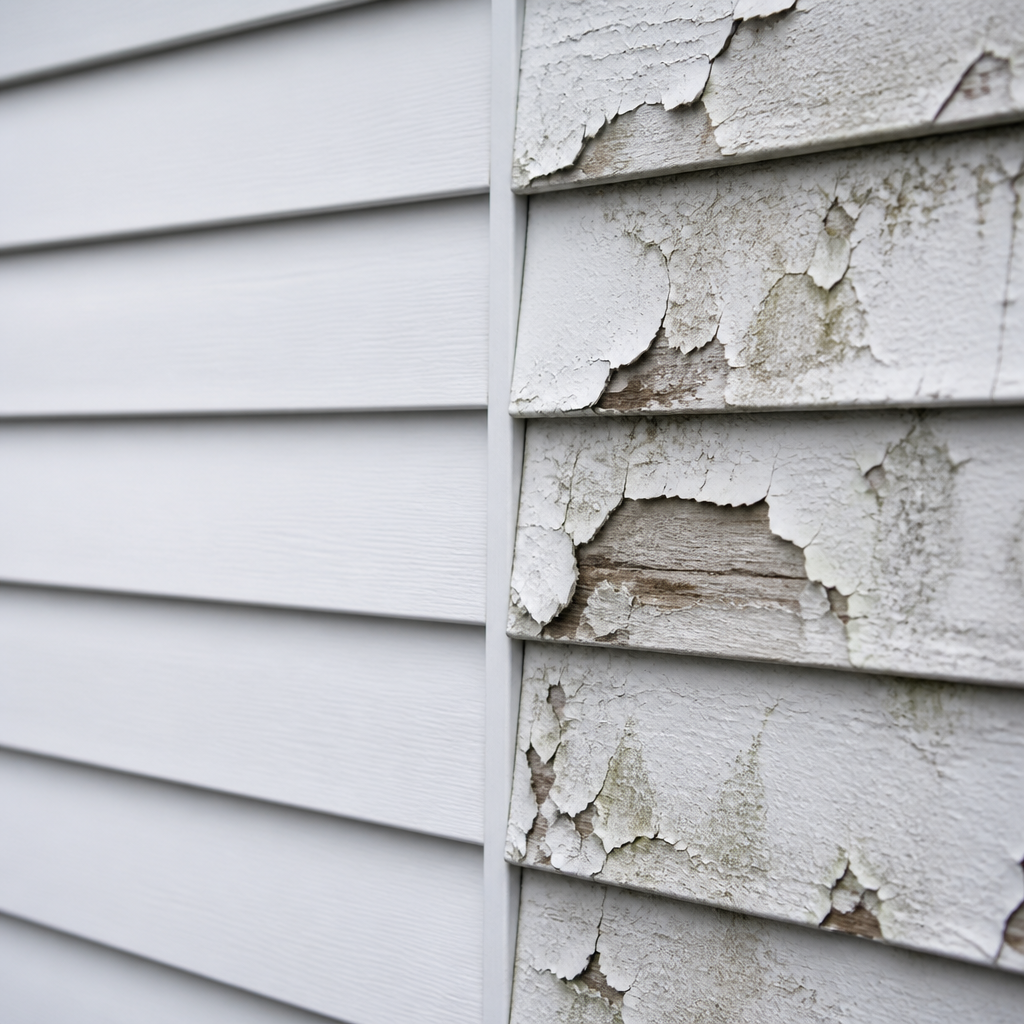
The argument for hand washing is straightforward: some surfaces simply cannot tolerate the force of a pressure washer, and forcing the issue causes damage that outlasts any cleaning benefit. High-pressure water can drive moisture behind siding, crack paint, etch concrete at the wrong angle, strip roof shingles, and weaken the seals around windows and doors. The cost of repairing those outcomes is always higher than the cost of hand washing from the start.
Surfaces that require hand washing or soft washing include painted wood, fiber cement siding, older stucco (both traditional and aggregate finishes like pebble dash), aluminum siding, and any surface with lead paint. Windows themselves should never be pressure washed directly, particularly older single-pane windows or any window with a compromised seal. The window cleaning component of any exterior service should always involve manual cleaning.
Older Homes with Original Wood or Masonry
Older homes present the highest risk of pressure damage. Original wood trim, heritage brick, and aged mortar joints are all more fragile than their modern equivalents. High-pressure water can eat mortar out of brick joints or splinter soft-grain wood that has weathered over decades. For homes built before modern siding materials became standard, hand washing with appropriate cleaning solutions is the right approach for the exterior walls, even if the driveway and walkways can still be power washed.
Pro tip: On a mixed exterior, identify your surface types before deciding on a cleaning method. A professional exterior cleaning team will assess each surface individually and apply the right method to each zone, rather than using one approach across the whole property.
Eaves, Soffits, and Window Frames
Eaves and soffits are built to shed water downward, not to withstand water being driven upward at pressure. Forcing water upward into the soffit cavity is a fast way to introduce moisture into your roof structure. Window frames, particularly the seal between the frame and the wall, are vulnerable in the same way. These areas belong in the hand-wash category regardless of the material they are made from.

A Surface-by-Surface Guide to Choosing Your Method
The fastest way to make this decision is to work surface by surface rather than choosing one method for the whole house. Most homes have at least two or three different exterior surface types, and matching the method to each surface produces a better result with less risk of damage.
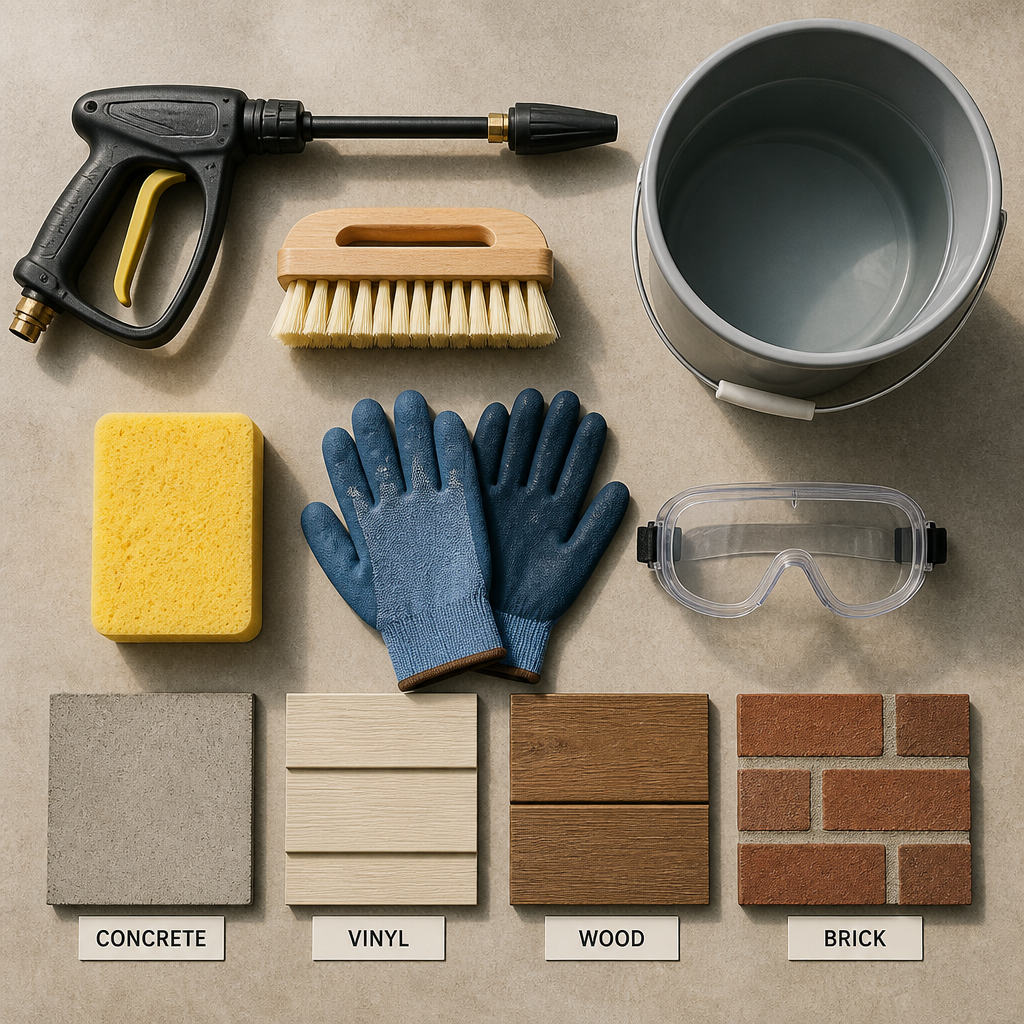
Vinyl siding in good condition with no gaps or lifted panels can be handled with low-to-medium pressure or with a soft wash approach, both of which work well. Wood siding, whether painted or stained, is better served by soft washing or hand washing. Brick walls in good condition can tolerate medium-high pressure, but mortar that is already cracking or crumbling should be hand washed until the mortar is repaired. Stucco is one of the highest-risk surfaces for pressure washing and almost always does better with hand washing or very low-pressure soft washing. Concrete and stone hardscaping are the clearest candidates for power washing at full working pressure.
Method Comparison: Power Washing, Soft Washing, and Hand Washing
| Method | Best Surfaces | Key Limitations |
|---|---|---|
| Power Washing / Pressure Washing | Concrete driveways, brick patios, stone paths, steel siding, vinyl siding (by a professional), preparation before repainting | Can damage painted surfaces, stucco, wood trim, fiber cement siding, and window seals. Can drive moisture behind cladding if angle or distance is wrong. Requires experience to use safely. |
| Soft Washing | Roofs, most siding types, painted surfaces, stucco, screens, fences, and surfaces with heavy algae or mould growth | Slower than power washing. Requires the right biodegradable cleaning solution for each surface type. Not effective for embedded grime in concrete without additional scrubbing. |
| Hand Washing (Exterior Wall Hand Washing) | Window frames, eaves, soffits, wood trim, heritage masonry, aged stucco, fiber cement siding, any surface near windows or doors | Most time-intensive method. Requires appropriate cleaning solution and the right brush or applicator for each surface. Not practical for large flat concrete areas. |
Common Mistakes That Lead to Expensive Damage
The most common mistake in DIY power washing is using a narrow-angle nozzle too close to the surface. A zero-degree or 15-degree nozzle held within a foot of vinyl, wood, or stucco will gouge the material. The safe rule for siding is a 15- or 25-degree nozzle at a minimum of three feet from the surface. Many first-time users also make the mistake of directing water upward into gaps, overlaps, and channels in the siding, which forces water into wall cavities where it cannot escape.
A second common mistake is treating every surface on a home as if it has the same tolerance for pressure. The driveway can handle what the window frames absolutely cannot. Applying a single pressure setting across the whole property without adjusting for surface type is how shutters get stripped, caulk lines get blown out, and window seals get compromised in a single afternoon.
Biological Growth Regrows Faster After Pressure Washing Alone
Pressure washing removes the visible surface layer of algae, mould, and mildew, but it does not address the root system embedded in porous surfaces. Without a cleaning solution that kills the organism at the root, regrowth begins quickly. Soft washing with a targeted cleaning solution keeps surfaces cleaner for significantly longer, because the cause of the growth is treated, not just the symptom. For siding washing on homes with persistent algae or mildew problems, soft washing consistently produces longer-lasting results than pressure washing alone.
Why a Full Home Detailing Approach Combines Both Methods
Professional home detailing services do not treat the exterior as a single uniform surface. A thorough exterior cleaning service uses power washing for the right surfaces and hand washing or soft washing for the rest, all within the same visit. The driveway and walkways get the high-pressure treatment. The siding and trim get hand washed with appropriate cleaning solutions. The eaves, window frames, and entrance areas are cleaned by hand with attention to detail in areas that a pressure wand cannot reach safely.
This combined approach is what separates a professional exterior cleaning service from a one-size-fits-all pressure wash. It also produces a noticeably more complete result. High-pressure water on a driveway lifts the surface grime efficiently. Careful hand washing on the fascia boards and entry pillars gets into corners, crevices, and detailed surfaces where a pressure nozzle would either miss the dirt or damage the material trying to reach it.
The most important question before any exterior cleaning job is not which machine to use. It is which method each specific surface on that property can safely tolerate. Getting that answer wrong costs far more than getting the cleaning done properly the first time.
At Performance Window Cleaning, the exterior cleaning process covers siding washing, eaves cleaning, entrance hand washing, and pest removal alongside the standard window and gutter work. That full-home approach reflects exactly this principle: matching the method to the surface rather than defaulting to one tool for the whole property. If you are unsure which surfaces on your home need power washing versus careful hand washing, an assessment from a professional exterior cleaning team is the right starting point before any work begins.
Frequently Asked Questions
Is power washing safe for all types of siding?
No. Vinyl and brick siding can generally tolerate medium-high pressure when the technician uses the correct nozzle and standoff distance. Painted wood, fiber cement, stucco, and aluminum siding are more vulnerable. These surfaces are better served by soft washing or hand washing to avoid cracking paint, gouging the surface, or driving water into the wall cavity. Always assess the siding type before applying pressure.
What is the difference between power washing and pressure washing?
Power washing uses heated water while pressure washing uses cold water at high pressure. Both methods can range from roughly 1,300 PSI to over 3,000 PSI. For most residential exterior cleaning, the practical difference is small. What matters more is the PSI setting used, the nozzle angle, and the distance maintained from the surface being cleaned.
How often should I have the exterior of my home hand washed or power washed?
An annual exterior cleaning is a reasonable baseline for most homes. Homes in areas with heavy tree cover, north-facing or shaded walls, or high humidity may benefit from more frequent cleaning because those conditions encourage algae and mildew to establish more quickly. Properties that receive annual professional cleaning tend to maintain better surface condition and require fewer costly repairs over time.
Can I pressure wash my windows?
No. Windows, particularly older single-pane windows or any window with an existing seal compromise, should not be pressure washed directly. High-pressure water can shatter glass, blow out the seal between pane and frame, and force water into the wall cavity around the frame. Window cleaning should always be done manually, using appropriate cleaning solutions and tools designed for glass surfaces.
What surfaces absolutely should not be pressure washed?
Surfaces that should not be pressure washed include windows, fiber cement siding, aggregate stucco (such as pebble dash or bottle dash), surfaces with lead paint, roof shingles, and any surface where the caulking or mortar is already cracked or crumbling. Attempting to pressure wash these surfaces risks structural damage, water intrusion, and costly repairs that far exceed the cost of professional hand washing.
What is soft washing and when is it better than hand washing?
Soft washing uses very low water pressure combined with a biodegradable cleaning solution to dissolve organic growth like algae, mould, and mildew. It is especially useful on roofs, siding with persistent biological growth, and large painted surfaces where manual scrubbing would be impractical. The cleaning solution treats the root cause of the growth, so results last longer than either pressure washing or hand washing without a chemical component. Hand washing with brushes remains the best choice for detailed areas like window frames, soffits, entrance pillars, and eaves where precision matters more than speed.
Does power washing remove mould from exterior walls permanently?
Power washing removes visible mould from the surface but does not kill the organism embedded in porous materials. Without a cleaning solution that addresses the biological growth, mould and algae regrow relatively quickly. Soft washing with a targeted treatment kills the growth at the source and significantly extends the time before regrowth appears. For persistent mould problems on siding or exterior walls, combining a cleaning solution with low-pressure washing produces a much longer-lasting result than power washing alone.
Have you had to choose between power washing and hand washing for your own exterior? Share what worked for your home in the comments below.
References
- Angi guide to pressure washing siding: when it is safe and when it causes damage
- Power washing 101: recommended PSI levels and surfaces to avoid by surface type
- Soft washing vs. pressure washing: which method protects your home’s exterior
- Angi comparison of soft washing versus pressure washing for residential exteriors
- Does pressure washing damage vinyl siding: risks and best practices explained