
Most homeowners in Oakville, Burlington, Mississauga and Hamilton wait until spring to deal with dirty walkways, then find the grime has bonded to the concrete over winter. Power washing walkways in Ontario is one of the few exterior jobs where timing matters more than equipment. Wash too late and freezing water finds the cracks you missed. Wash at the right point in the fall and your walkways and entryways go into winter clean, dry and far less likely to turn into an ice rink on the first cold morning.
Table of Contents
- Quick Takeaways
- Why Frost Makes Walkway Cleaning Urgent
- Timing Your Final Wash
- Choosing Pressure and Detergent
- Entryway Cleaning Steps
- Preventing Ice After Washing
- Equipment Care in Cold Weather
- Comparing Cleaning Methods
- Frequently Asked Questions
- References
Quick Takeaways
| Key Insight | Explanation |
|---|---|
| Book the final walkway wash while the weather is still mild | Early booking leaves room to reschedule around rain, which is the most common reason a fall wash slips into the cold. |
| Pick a stretch with at least two dry days ahead | A walkway that stays damp overnight can freeze before it dries, so look for daytime highs above freezing and no rain in the forecast. |
| Stop once overnight lows approach freezing | Water trapped in joints and cracks expands as it freezes, which lifts pavers and widens small cracks in concrete. |
| Keep the wand moving and sweep runoff toward the lawn | Standing water on a sloped approach is where black ice forms first, usually on the first cold morning. |
| Clean thresholds and door sills by hand | Pressure can push water under weatherstripping and into the door frame, where it causes staining and rot. |
| Drain the machine and store it somewhere heated | Frozen water in a pump expands and cracks housings, which turns a routine wash into an expensive repair. |
| Avoid salting a surface that is still damp from washing | Salt on a wet surface mixes with runoff and creates a slick layer that is harder to spot than snow. |
Why Frost Makes Walkway Cleaning Urgent
Walkways and entryways take the worst of the season. Tracked-in mud, leaf tannins, algae in shaded corners and road salt from boot traffic all settle into the pores of concrete and pavers. By the time the ground freezes, that layer has had months to bond.
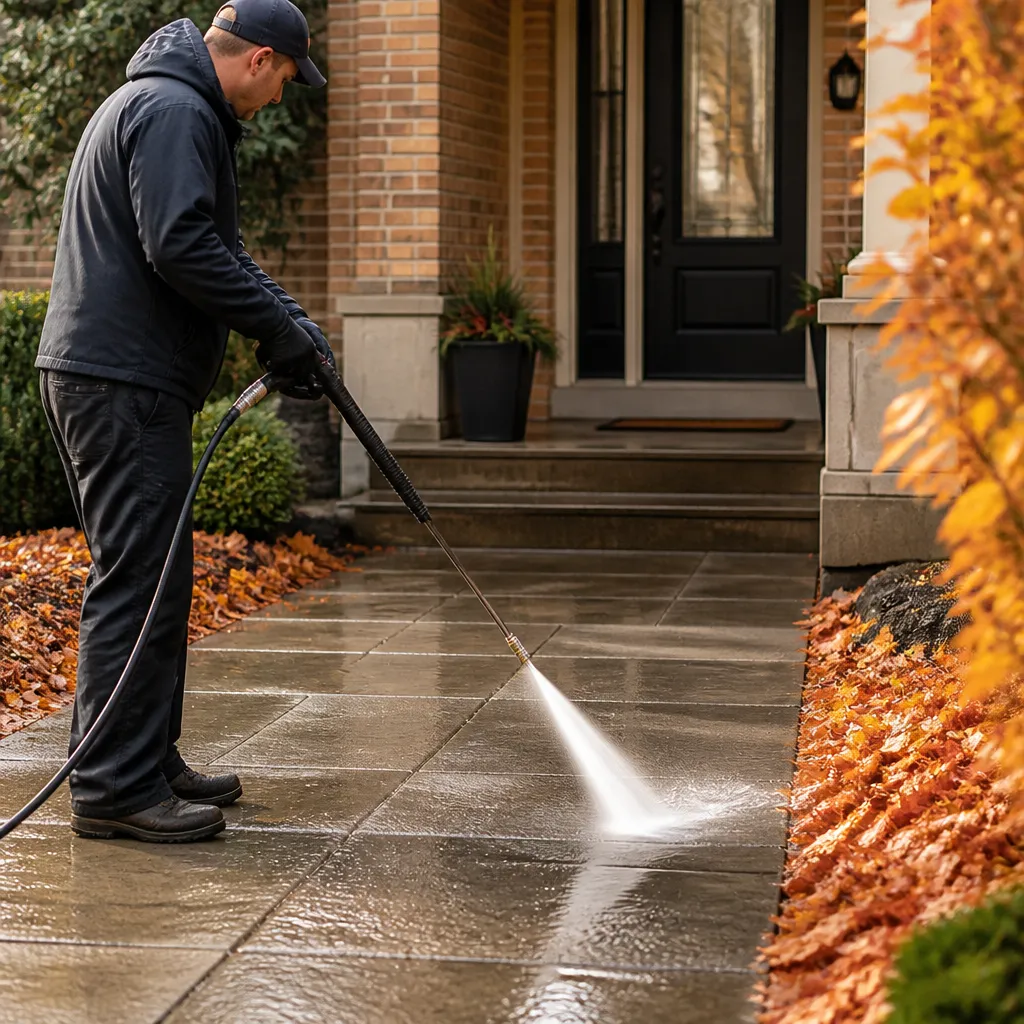
What Freezing Water Does to Concrete and Pavers
Water that soaks into a joint or hairline crack does not stay liquid for long once temperatures fall. As it freezes, it expands and pushes the surrounding material outward. Repeated freeze and thaw cycles through the winter turn a small crack into a trip hazard.
Road salt makes this worse. Salt lowers the freezing point of water, so a salted walkway can stay wet and slick at temperatures where a clean one would already be frozen solid. That is why a walkway covered in winter grime often feels more dangerous than one that is simply dirty.
Dirt left on a walkway in October rarely washes off in March. It gets ground in by traffic and freeze-thaw cycles until it takes a much harder wash to remove.
Why Entryways Get Dirty Faster Than Driveways
Entryways see more foot traffic per square metre than most driveways, and the traffic is concentrated in one spot. Doormats hold moisture, and the area right under an overhang often stays damp while the rest of the yard dries. In practice, the stain line at the front step is usually the first thing a homeowner notices in spring.
Timing Your Final Wash
The best time to power wash a walkway is the last stretch of mild weather before the first hard frost. That window is shorter than most people expect, and it closes faster once overnight lows start hovering near freezing. A wash that is done a week too late can cost more in repairs than the wash itself.
Reading the Forecast for a Reliable Drying Window
Look for at least two days with daytime temperatures above freezing and no rain. The wash needs time to dry completely, and the second day matters as much as the first. A surface that looks dry at noon can still hold water in the joints overnight if the air is cold and damp.
Check the overnight low, not just the daytime high. A walkway that is warm at 2 p.m. can still freeze at 2 a.m. if the wash was done late in the afternoon. In practice, I would rather lose one nice afternoon than risk a sheet of ice on the front path.
Why Late October Usually Beats Late November
Leaves, wet soil and organic staining become harder to lift the longer they sit on concrete. A fall wash done in October removes the bulk of the buildup before it sets. A wash pushed into November often has to deal with the same stains plus a shorter, colder drying window.
Pro tip: Photograph the walkway and entryway before you book. Dark stains, cracks and loose pavers are easier to plan around when you can see them clearly, and it helps you decide whether a repair should come before the final wash.
Choosing Pressure and Detergent
Many homeowners assume more pressure always means a better result. On walkways, that assumption causes etching, chipped pavers and damaged mortar joints. The goal is to lift the grime and leave the surface intact, which usually means using a wider fan tip and keeping the wand at a steady distance.
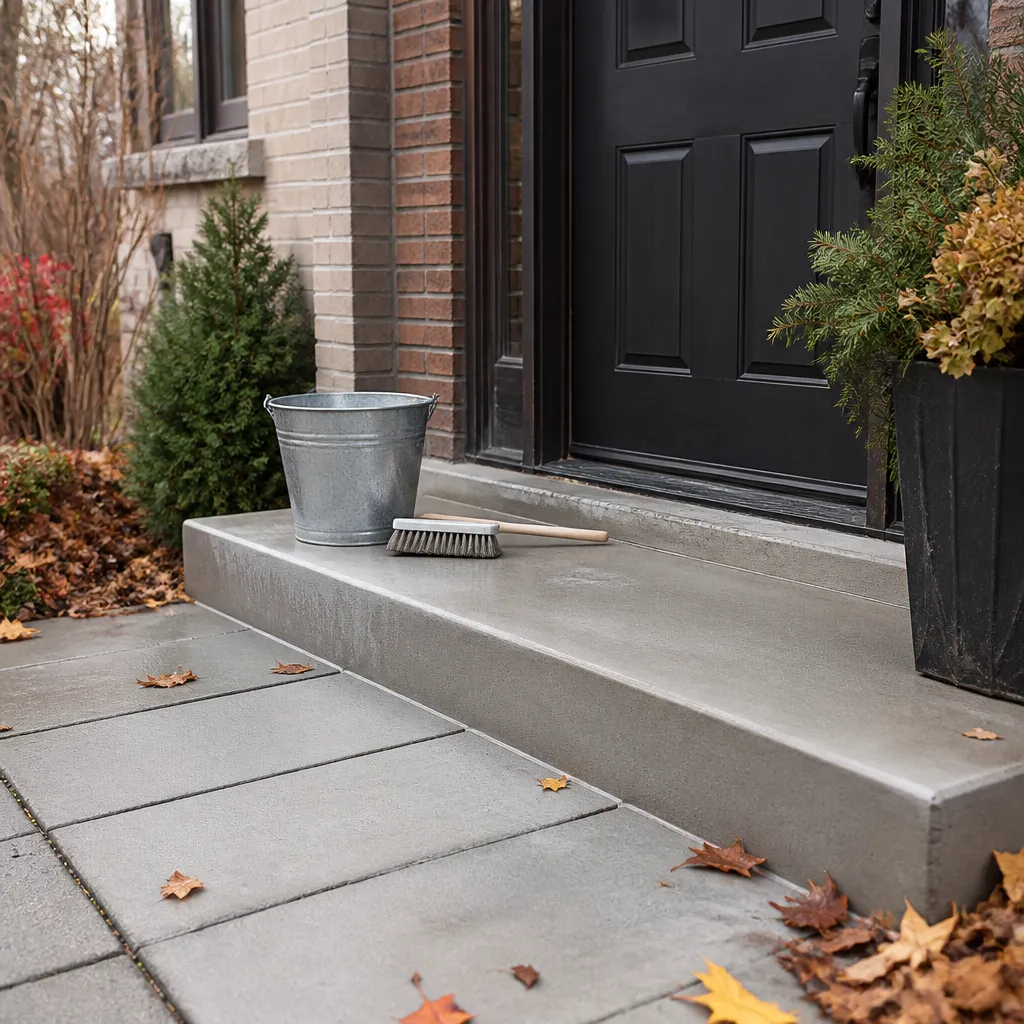
Pressure Settings for Concrete, Pavers and Stone
For poured concrete, a wide fan tip held at a consistent distance is usually enough to remove tracked-in dirt. Pavers need more care because the sand joints can wash out if you hold the spray too close. Natural stone can etch, so test a small area in a low corner before you work across the full path.
Work in long, even passes rather than fixed circles. Circular motions in one spot leave tracks and uneven color on concrete, and they can blast sand out of paver joints faster than you can replace it.
Detergents That Hold Up in Cool Weather
Many standard cleaning solutions lose effectiveness in cold conditions, so the same product can work well in July and barely touch the grime in October. Choose a detergent labeled for cold-weather use, and follow the label on dilution. A stronger mix does not make up for poor temperature conditions, and it leaves residue that attracts more dirt.
Warm water helps with oily stains from cars and grills that have dripped onto the approach. If you have access to a hot water unit, use it, since heated water both cleans better and reduces the chance of freezing on the surface. Most homeowners do not own one, so a standard cold unit works if you move quickly and avoid washing in the late afternoon.
Entryway Cleaning Steps
Entryways need a different approach than the main walkway. The surfaces are smaller, the detail work is heavier, and the transitions into the house are where water is most likely to cause damage. A careful sequence makes the job faster and protects the interior.
Thresholds, Door Sills and Weatherstripping
Clean thresholds and moldings by hand with warm water and a mild detergent, using an old toothbrush or small brush for tight corners and crevices. Pressure can force water under the door and behind weatherstripping, so keep the spray well away from the seal. Dry the threshold with a towel before you close the door for the day.
Check the door sweep and the bottom of the frame after the wash. If you notice water tracking inside during the next rain, the seal needs replacing before winter, not after the first leak.
Entry Steps, Stoops and Stair Nosings
Entry steps need a light touch on the edges, where the concrete is often thinnest. Work from the top down so runoff does not wash dirt back onto steps you have already cleaned. Stair nosings and metal edging can show rust if you leave water sitting on them, so wipe them dry once the wash is complete.
Pro tip: Set a mat at the entrance and keep it dry for the first week after washing. A damp mat can leave a new stain on freshly cleaned concrete, and it is the fastest way to undo the work you just finished.
Preventing Ice After Washing
Cleaning a walkway is only half the job. The other half is making sure the surface drains properly and dries before the temperature drops. Most winter slips on residential walks happen on surfaces that were washed but never fully dried.
Managing Runoff and Slope
Water should flow away from the house and off the walkway, not pool in a low spot where it will freeze. Aim the spray so the water moves toward the lawn or a drain, and avoid pushing it onto the sidewalk or driveway where it can refreeze. Pay attention to the low corner near the step, since that is where standing water collects first.
If a section of the walkway has a permanent dip, mark it and check it after the wash. Standing water in that spot will freeze before the rest of the path, and a single patch of ice is enough to cause a fall.
Drying Time Before the Evening Drop
Bright sun speeds up drying and makes the surface easier to clean, so schedule the wash for the warmest part of the day. Aim to finish early enough that the walkway has several hours of sun before the temperature starts to fall. A wash that finishes at four in the afternoon in late fall often stays damp until the next morning.
Shade is the enemy of a fast dry. A walkway under a large tree or the north side of a house may need a longer window, so plan the entryway and the shaded sections first and leave the sunny parts for the end.
Equipment Care in Cold Weather
A pressure washer that works well in October can crack by January if it is left outside with water in the pump. Equipment care is not optional once the nights start dropping below freezing. A few minutes of cleanup after the final wash prevents most of the expensive damage.
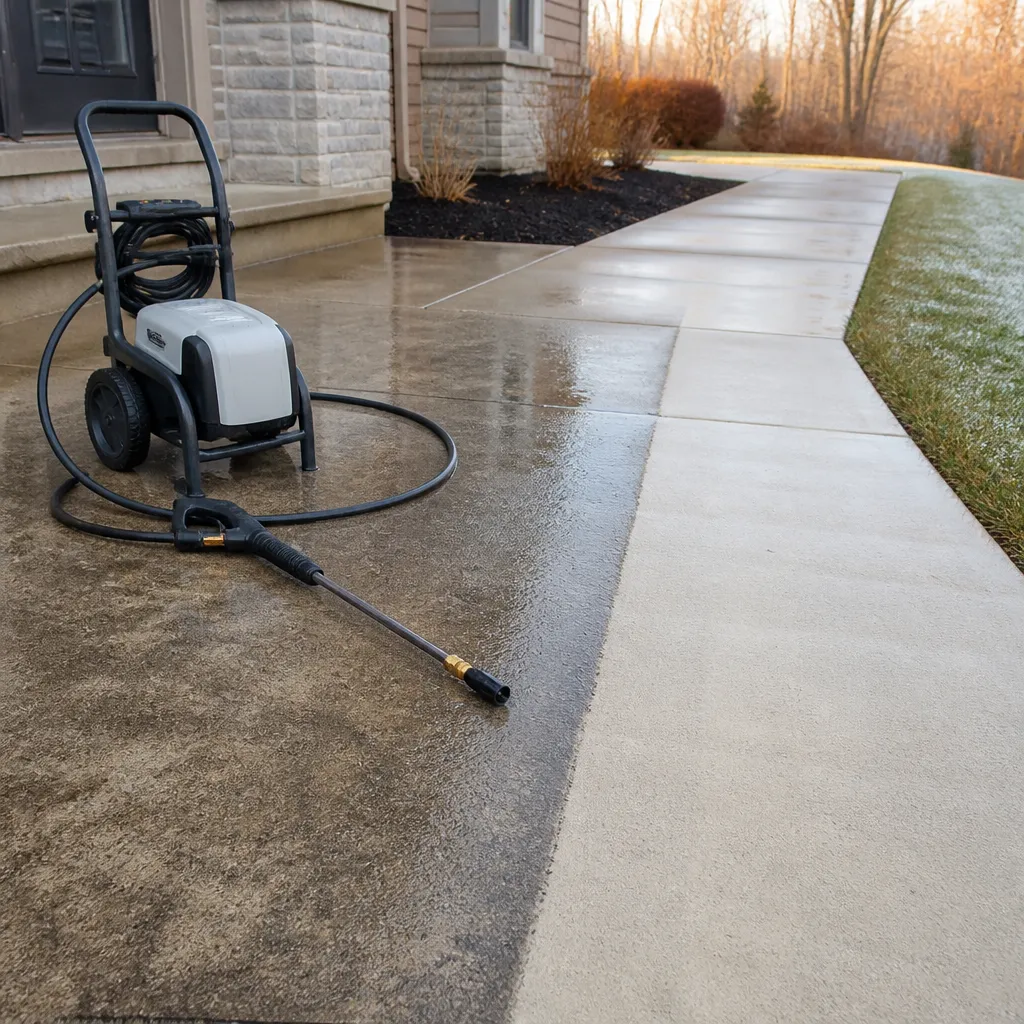
Draining and Storing the Machine
Drain the pump, hoses and wand after every cold-weather job. Run the engine or pump briefly with antifreeze or a winterization product if your model calls for it. Store the machine in a warm, dry space, since frozen water in a pump expands and can split the housing.
Do not leave the unit in an unheated shed or on a cold porch overnight. Even a short cold spell can cause problems if water is still sitting in the lines.
Hose, Gun and Pump Protection
Inspect hoses for cracks and weak fittings before the final wash. Cold weather makes weak components fail faster, and a split hose at the wrong moment can leave you with a mess and no way to finish the job. Keep the trigger gun and wand free of water when you are not using them, and wipe down the fittings before storage.
Dress for the conditions too. Sub-freezing temperatures can cause real discomfort, so layer up and take breaks indoors if your hands start to lose feeling.
Comparing Cleaning Methods
Not every walkway needs a pressure washer, and not every entryway should get one. The right method depends on the surface, the stain and how much time you have before the weather turns. The table below compares three approaches we see most often in fall work.
| Method | Best Use on Walkways and Entryways | Cold Weather Trade-off |
|---|---|---|
| Pressure washing with a cold unit and cold-weather detergent | Full walkways, driveways and concrete approaches with heavy tracked-in dirt | Fast and effective, but needs careful drying time and drainage planning |
| Hot water pressure washing | Oily stains, grime in shaded corners and heavy algae on stone | Cleans better in cool air and reduces surface freezing, but equipment is less common |
| Hand scrubbing with a brush and mild detergent | Thresholds, door sills, stair nosings and areas near windows and trim | Gentle and precise, but slower and harder to finish on large areas |
In practice, most fall jobs combine the first and third methods. Pressure handles the open concrete, and hand scrubbing handles the detail work at the door. Trying to use pressure alone on thresholds is where most of the avoidable damage happens.
Frequently Asked Questions
Can I power wash walkways in November in Ontario?
Yes, as long as daytime temperatures stay above freezing, the forecast shows at least two dry days, and overnight lows are not expected to drop near freezing right after the wash. If the forecast turns cold before the surface is fully dry, postpone the job.
Will pressure washing damage my concrete or pavers?
It can, if the pressure is too high, the tip is too narrow or the wand is held too close for too long. Use a wide fan tip, keep the wand moving and test a hidden corner first. Pavers need extra caution because the sand in the joints can wash out.
Should I put de-icer down right after washing?
Wait until the surface is completely dry before applying any de-icer. Salt on a damp walkway mixes with runoff and creates a slick film that is hard to see. Once the walkway is dry, a light application is more effective than heavy amounts on a wet surface.
How do I clean an entryway without pushing water inside?
Clean the thresholds and door sills by hand rather than with pressure, and keep the spray well away from the door seal. Dry the threshold with a towel and check the door sweep afterward. Work from the top of the entry down so runoff does not wash dirt back onto cleaned surfaces.
Can spider webs and bug nests be removed on the same visit?
Yes. Spider webs and nests around entryway lights, door frames and eaves are usually removed during the same visit because the surfaces are already being cleaned. Doing it at the same time saves a second trip and leaves the entry clear for the winter months.
What has your experience been washing walkways or entryways before winter, and what would you change next fall?