
Most Ontario homeowners think about their driveway twice a year: when it looks embarrassing, and after something goes wrong. If you wait until spring to deal with fall grime, you have already let a full winter’s worth of freeze-thaw cycles work against a surface that was already compromised. Power washing your driveway before winter is not a cosmetic chore. It is a structural one. Dirty, porous concrete absorbs moisture faster, cracks sooner, and costs far more to repair than a driveway that went into winter clean and sealed. The question is not whether to do it. It is whether you do it early enough to matter.
Table of Contents
- Why Timing Matters for Fall Driveway Cleaning
- Quick Takeaways
- What a Summer of Use Leaves Behind
- The Freeze-Thaw Problem Explained
- The Right Temperature Window for Power Washing
- Driveway Surfaces Compared: Concrete vs. Asphalt vs. Interlocking
- What to Do After You Power Wash
- Driveway Cleaning for Ontario Homeowners in Specific Areas
- Frequently Asked Questions
- References
Why Timing Matters for Fall Driveway Cleaning
The fall cleaning window for Ontario driveways is real and it is narrow. You need temperatures consistently above 5°C at the time of washing and for at least 24 to 48 hours afterward, because water left in surface pores after a wash can freeze before the concrete fully dries out. Wash too late and you have created the very problem you were trying to prevent.
The practical target in southern Ontario, across areas like Oakville, Burlington, Mississauga, Hamilton, and St. Catharines, is September through mid-October. That range gives you enough drying time and warm enough conditions to also apply a sealer if the surface needs one. Push it into late October or November and you are gambling on the weather.
Pro tip: Book your fall power washing appointment before Thanksgiving weekend. By late October, daily temperatures in Hamilton and Niagara Falls regularly dip close to 5°C overnight, and a professional crew needs the surface temperature, not just the air temperature, to be safely above that threshold.
Quick Takeaways
| Key Insight | Explanation |
|---|---|
| The fall cleaning window closes fast | In Ontario, shoot for September to mid-October. Surface and air temperatures need to stay above 5°C for at least 24-48 hours after washing so pores dry out before any freeze. |
| Dirty concrete absorbs more moisture | Organic debris, algae, and embedded grime keep the surface wet longer and act as a moisture reservoir that accelerates freeze-thaw cracking. |
| Cleaning is a prerequisite for sealing | Applying sealer over a dirty surface traps contaminants under the coating, causing poor adhesion and premature failure. Always clean first. |
| Hairline cracks are the real danger | Even small cracks that look cosmetic can fill with water, freeze, expand, and widen dramatically over a single Ontario winter. Clean the surface so you can actually see and repair them. |
| Pressure settings matter as much as timing | For residential concrete driveways, 2,500 to 3,500 PSI is the appropriate range. Too much pressure on already-weakened surfaces causes more damage than it fixes. |
| Oil stains need hot water, not just high pressure | Cold water pressure washing lightens oil stains but rarely removes them fully. Hot water power washing with a degreaser is significantly more effective for embedded grease. |
| One clean in fall saves money in spring | Road salt and sand that overwintered on an already-dirty surface compound surface scaling and pitting. A clean driveway going into winter means less damage to repair when it comes out. |
What a Summer of Use Leaves Behind
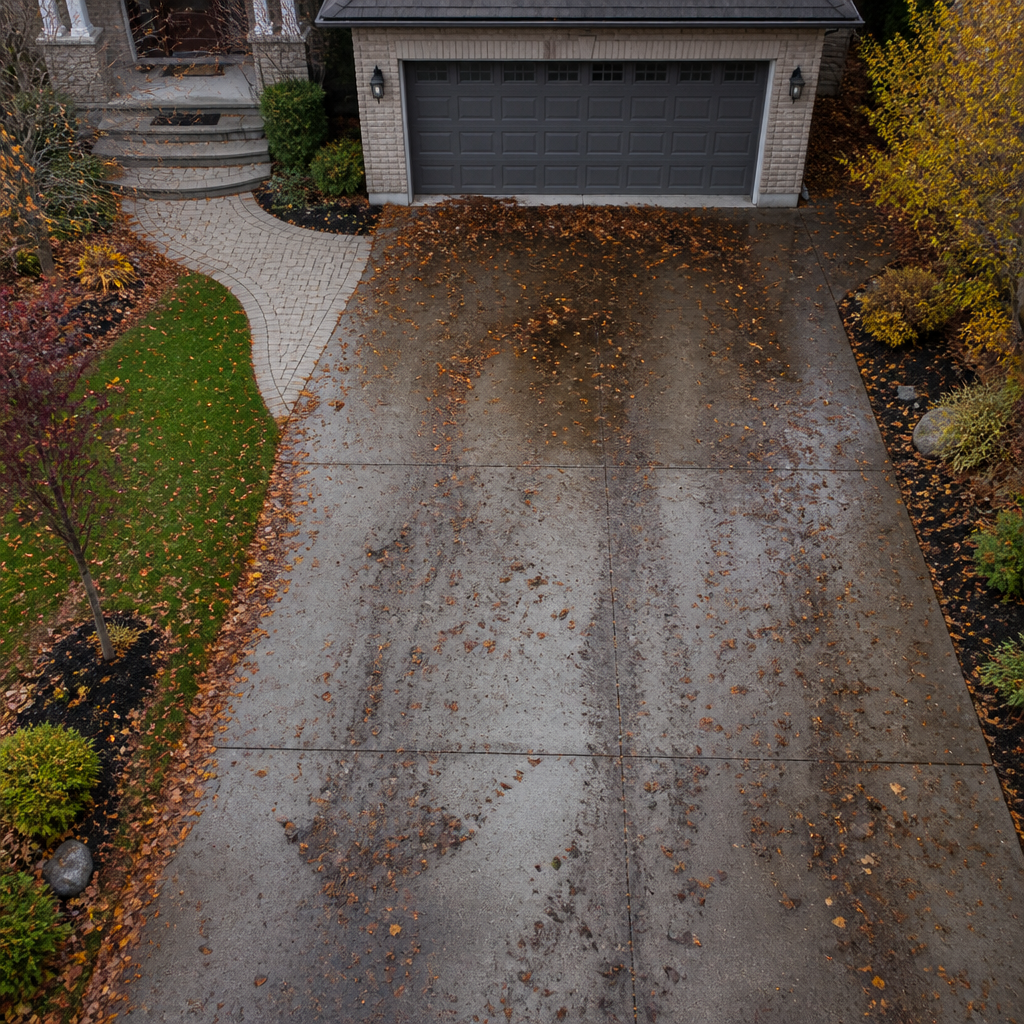
By September, a typical Ontario driveway has accumulated several months of layered grime: tire marks, oil drips, pollen deposits, algae and mildew growth from wet summer periods, and embedded dust. None of it is purely cosmetic.
Algae and biological growth are the biggest structural concern because they retain moisture. A patch of green or black algae on a concrete driveway does not just look bad. It keeps that section of concrete wet for longer periods, which means that section is primed for deeper moisture penetration before the first hard frost arrives.
Oil staining is similarly problematic. Motor oil weakens the binder in concrete over time and creates a surface that is harder to seal effectively. If you are planning to apply a sealer as part of your pre-winter prep, an untreated oil stain beneath the sealer will cause that section to fail early.
The Freeze-Thaw Problem Explained
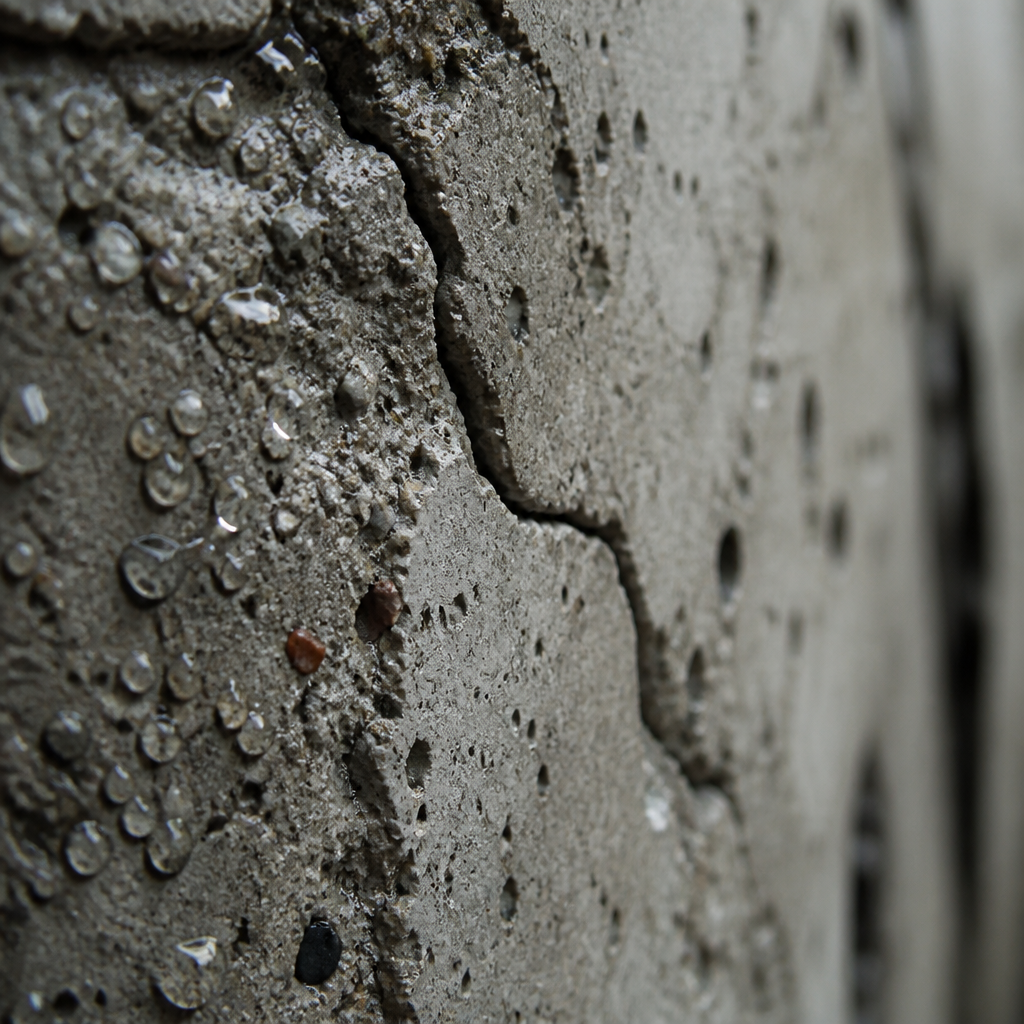
Concrete is porous. That is not a defect. It is simply how the material works. The problem arises when those pores are filled with moisture-retaining debris when temperatures drop below zero.
When temperatures fall below zero, moisture in concrete pores freezes, expands, and causes freeze-thaw damage. Over time this leads to uneven surfaces, trip hazards, and significant structural deterioration.
Each freeze-thaw cycle expands existing micro-cracks slightly. Over a single Ontario winter, a driveway typically goes through dozens of these cycles. A surface that enters winter clean and sealed absorbs far less moisture, which means far less expansion, which means far less cracking by spring.
The common mistake homeowners make is thinking that because cracks are small in fall, they can wait until spring to deal with them. That is backwards. Hairline cracks visible after a fall cleaning are the right size to fill and seal. The same cracks after a winter of freeze-thaw cycling are wider, deeper, and harder to repair properly.
De-icing chemicals add a second layer of damage on top of freeze-thaw stress. Rock salt, calcium chloride, and ammonium sulfates all weaken concrete surfaces over time. A driveway that went into winter clean and sealed is considerably more resistant to the corrosive effects of de-icers than one that did not.
Pro tip: After power washing and before applying sealer, walk your driveway slowly with the sun at a low angle. The raking light makes hairline cracks far more visible than they are in direct overhead light. Mark anything you find with chalk and fill those cracks before the temperature drops.
The Right Temperature Window for Power Washing
The rule that professionals follow is straightforward: do not pressure wash when temperatures are at or below 5°C. Below that threshold, water does not dry from the surface quickly enough, and any residual moisture left in pores or joints can freeze before the concrete has a chance to shed it.
This rule applies to the surface temperature, not just the air temperature. On a cold clear day in October, concrete that is shaded by a fence or garage can be several degrees colder than the air. A professional crew accounts for this. A homeowner with a rented machine often does not.
For sealer application after washing, the temperature requirement is stricter. Most concrete sealers require a minimum of around 10°C (roughly 50°F) for proper curing. Apply below that and the sealer will not bond correctly, leaving the surface unprotected regardless of the effort put in.
What Happens If You Miss the Window
If your driveway does not get washed in fall, it is not a disaster. Spring cleaning is your next best option, and it does real work: it removes the road salt and sand accumulation from the winter just passed. But you will have let one full winter cycle run against a dirtier, more permeable surface than was necessary. Over several years, that compounds into noticeably more scaling, pitting, and cracking.
Why Fall Cleaning Beats Spring Cleaning for Long-Term Protection
Spring cleaning is reactive. It addresses damage that has already happened. Fall cleaning is preventive. It removes the conditions that cause damage before the worst season arrives. Both matter, but if you can only do one, fall is the better choice for driveway cleaning in Ontario because it interrupts the damage cycle at the most consequential point.

Driveway Surfaces Compared: Concrete vs. Asphalt vs. Interlocking
Not every driveway in Oakville, Burlington, or Mississauga is the same material, and the approach to fall power washing varies by surface type. Here is how the three most common residential driveway surfaces in Ontario compare for pre-winter cleaning.
| Driveway Surface | Recommended PSI Range | Pre-Winter Priority and Notes |
|---|---|---|
| Concrete | 2,500 to 3,500 PSI | Highest priority for pre-winter cleaning. Most susceptible to freeze-thaw damage due to porosity. Clean, inspect for cracks, fill and seal before temperatures drop. Penetrating silane or siloxane sealers are the most effective protection. |
| Asphalt | 1,500 to 2,500 PSI | Use lower pressure to avoid dislodging aggregate. Fall cleaning removes debris from joints and edges. Crack filling and sealing are equally important before winter. Do not use a turbo nozzle directly on asphalt. |
| Interlocking Brick or Pavers | 1,200 to 2,000 PSI | Focus on joint maintenance as well as surface cleaning. Organic growth in joints traps moisture and accelerates joint sand erosion. After washing, inspect joint sand levels and top up before freeze-thaw cycles begin. |
In practice, concrete driveways in Ontario require the most consistent pre-winter attention because they are the most structurally sensitive to moisture-driven freeze-thaw damage. Asphalt is somewhat more flexible and forgiving in the short term, but it is not immune, and neglected asphalt deteriorates quickly once edge cracking begins.
What to Do After You Power Wash
Power washing is the first step, not the last. A clean surface is what makes everything that follows actually work.
Inspect Before You Seal
With the surface clean and dry, inspect it thoroughly. Look for hairline cracks, map cracking (the interconnected fine-line pattern that indicates internal stress), surface scaling, and any sections that look darker or more porous than the surrounding area. Those darker patches absorb moisture faster and are the first places that will show damage in spring.
Fill Cracks and Allow Full Cure Time
Even small cracks should be filled with a concrete-safe crack filler before sealing. Skipping this step and sealing over open cracks does not seal them. It bridges them. Water still gets in from the edges, freezes, and widens the crack underneath an intact-looking surface.
Sealing the Surface
A high-quality penetrating sealer forms a barrier against moisture absorption, de-icing chemicals, and general surface wear. Allow the driveway to dry fully for at least 24 to 48 hours after washing before applying any sealer. Sealing too soon traps moisture beneath the coating and defeats the purpose entirely. In Ontario’s fall weather, 48 hours of dry time is the safer target, not the shorter one.
Penetrating silane or siloxane sealers are widely recommended for Ontario concrete because they allow the concrete to breathe while blocking water absorption, which is the exact balance needed in a climate with significant freeze-thaw cycling.
Driveway Cleaning for Ontario Homeowners in Specific Areas
Ontario is a large province and conditions vary, but for homeowners in the areas Performance Window Cleaning serves, including Oakville, Burlington, Mississauga, Hamilton, Niagara Falls, St. Catharines, and Fenwick, the fall cleaning window and the freeze-thaw risks are broadly consistent.
Areas closer to Lake Ontario and Lake Erie tend to see more temperature fluctuation in late fall and early spring, which means more freeze-thaw cycles per season. That makes pre-winter preparation more valuable, not less. Niagara Falls and St. Catharines are well within that lake-effect zone. Hamilton sits at the western end of Lake Ontario with its own microclimate patterns.
Edmonton, Alberta, has a significantly colder and longer winter season than Ontario, which makes the fall cleaning window there even shorter. Homeowners in Edmonton should target September for professional driveway cleaning, not October.
The consistent recommendation across all these areas is the same: clean the driveway while temperatures allow, inspect and repair what you find, and seal before the first sustained frost. That sequence, done in fall, is measurably better than reactive spring repair.
Pro tip: If you are also scheduling gutter and eavestrough cleaning before winter, which you should be, coordinate it with your driveway power washing appointment. Overflowing gutters deposit water directly onto driveways and walkways, which undoes the benefit of a clean surface and accelerates exactly the freeze-thaw damage you are trying to prevent. Performance Window Cleaning handles both services and can combine them in a single visit.
Frequently Asked Questions
Is it too late to power wash a driveway in October in Ontario?
It depends on the temperatures at the time. The practical rule is that both the air and surface temperature need to be above 5°C at the time of washing and for at least 24 to 48 hours afterward. Early October is usually fine across southern Ontario. Late October is a gamble. If overnight temperatures are already dipping close to or below 5°C, it is safer to wait until spring rather than risk washing water freezing in surface pores.
What PSI is appropriate for pressure washing a residential concrete driveway?
For residential concrete driveways in good to moderate condition, 2,500 to 3,500 PSI is the appropriate range. Staying within that range cleans effectively without risking surface damage. Using higher pressure on a concrete surface that already has micro-cracks or surface scaling can accelerate deterioration rather than fix it. A professional will adjust the setting based on the actual condition of your specific driveway.
Do I need to seal my driveway after power washing it in fall?
Sealing is strongly recommended if you are washing in fall, because the whole point of fall cleaning is to prepare the surface for winter. A clean unsealed surface is still more permeable than a clean sealed one. That said, sealing only works when applied to a completely dry surface at temperatures above roughly 10°C. If you miss the temperature window for sealing, at minimum clean the surface and fill any visible cracks, and plan to seal in early spring when conditions allow.
How often should a driveway in Ontario be power washed?
The general recommendation for Canadian climates is once or twice per year. The most beneficial schedule is a fall wash before freeze-thaw season and a spring wash to remove the road salt, sand, and calcium residue left by winter maintenance. Driveways with heavy vehicle traffic, overhanging trees, or visible oil staining benefit from more frequent attention, potentially every three to six months.
Can power washing damage a concrete driveway?
At appropriate pressure settings and with correct technique, power washing is safe and beneficial for concrete. Damage occurs when pressure is too high for the surface condition, when the nozzle is held too close to the surface, or when a concrete surface that is already severely deteriorated receives high-pressure treatment. A professional operator assesses the surface condition first and adjusts accordingly. The risk of damage from a properly conducted professional wash is low. The risk of damage from skipping fall cleaning and going into winter with a dirty, unsealed surface is considerably higher.
Should I clean my driveway myself or hire a professional?
Renting a machine and washing the driveway yourself is possible, but there are real limitations. Rented equipment often lacks the hot water capability needed to remove oil stains properly, the PSI may not be optimal for your specific surface, and surface temperature assessment before and after washing is a step most homeowners skip entirely. A professional crew brings calibrated equipment, handles pre-treatment of stains, and will identify crack or joint issues while on site. For a fall pre-winter wash where the goal is genuine surface protection, professional service gives you a better result and reduces the risk of doing more harm than good.
Have you noticed your driveway surface deteriorating faster than expected after winter? Share what you have observed and we will help you figure out whether your pre-winter cleaning routine is the missing piece.
References
- How often Canadian driveways should be pressure washed and why seasonal timing matters
- How to prepare a concrete driveway for Ontario winter including pressure washing, crack repair, and sealing
- How freeze-thaw cycles damage concrete in Ontario and what steps protect against it
- Step-by-step guide to pressure washing a residential driveway including PSI ranges and sealer application
- Seasonal pressure washing timing and temperature guidelines for Ontario driveways