
Most homeowners pick a cleaning method based on what looks most powerful, and that instinct leads to expensive mistakes. Pressure washing at the wrong PSI can strip paint, crack mortar, and force water behind vinyl siding, creating moisture problems that take years to surface. Hand washing, on the other hand, can leave grime embedded in textured surfaces that a brush simply cannot reach. The pressure washing vs hand washing decision is not a matter of preference. It is a matter of matching the method to the material, the contamination level, and the condition of your exterior surfaces.
Table of Contents
- Quick Takeaways
- What Each Method Actually Does
- Which Surfaces Need Pressure Washing
- When Hand Washing Is the Right Call
- Exterior Cleaning Methods Comparison
- Siding Washing: The Details That Matter
- The Soft Washing Middle Ground
- Cost and Practical Considerations
- Frequently Asked Questions
- References
Quick Takeaways
| Key Insight | Explanation |
|---|---|
| PSI matters more than most people realize | Residential siding typically tolerates 1,200 to 1,500 PSI maximum. Anything above that on vinyl or painted wood risks surface damage and water intrusion. |
| Hand washing is superior for delicate or older surfaces | Pre-1980s homes with painted wood, cedar shakes, or stucco benefit significantly from controlled hand washing that preserves coatings and surface integrity. |
| Pressure washing excels on concrete, brick, and asphalt | Driveways, sidewalks, and masonry can safely handle 2,000 to 3,000 PSI, where hand washing would be ineffective against embedded oil and algae. |
| Soft washing splits the difference effectively | Low-pressure application combined with biodegradable detergents kills mold and algae at the source rather than just blasting off the visible layer. |
| Gutter and eave cleaning almost always requires hand methods | Directing high-pressure water at gutters and eave joints can dislodge seals and fasteners, creating leak points that weren’t there before cleaning. |
| Spider webs and pest debris need targeted removal | Pressure washing disperses spider nests rather than removing them. Hand-based pest debris removal with appropriate tools eliminates the problem at the source. |
| Professional assessment prevents costly errors | A trained exterior cleaning technician can identify cracked caulking, failing paint, or compromised siding before any water touches the surface. |
What Each Method Actually Does
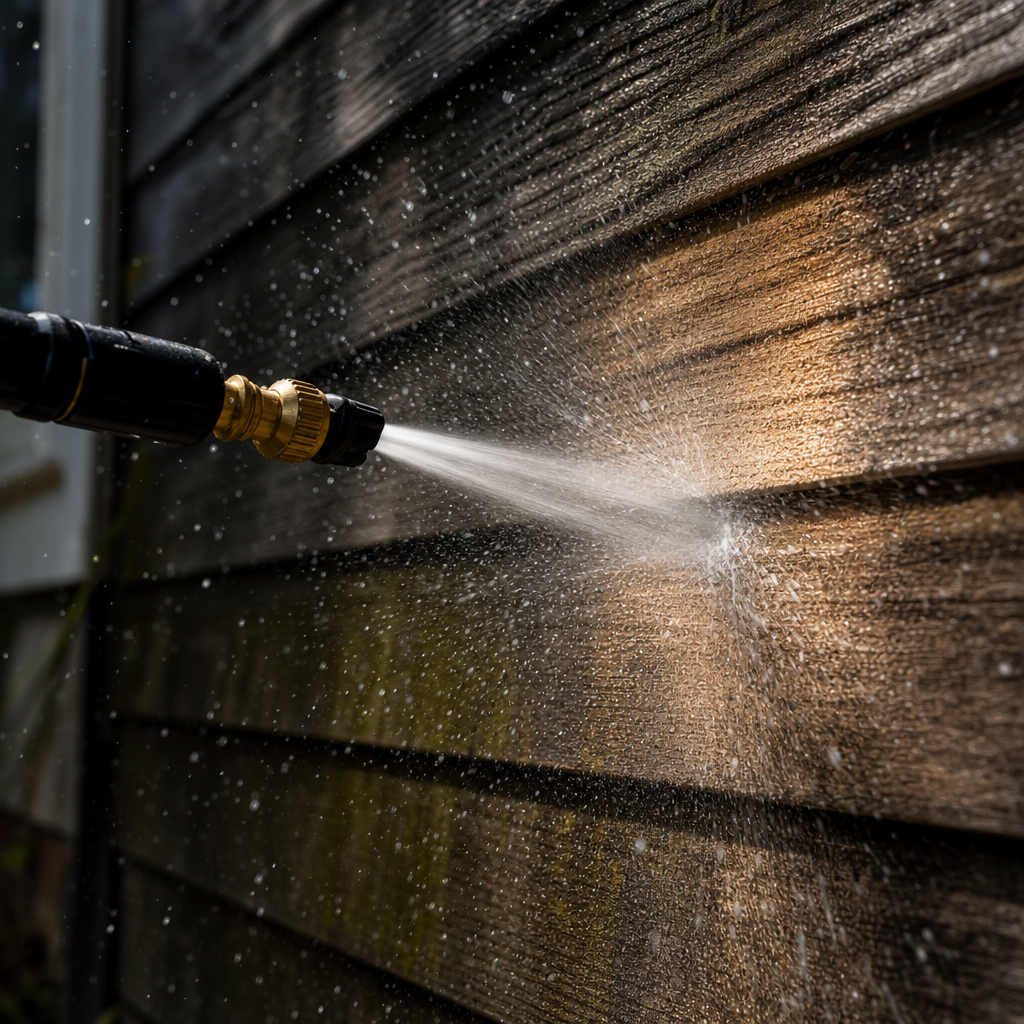
Pressure washing uses a motorized pump to force water through a nozzle at high velocity, typically between 1,000 and 4,000 PSI depending on the machine and nozzle angle. The mechanical force of the water does the primary cleaning work, dislodging dirt, algae, mildew, and loose paint through sheer impact. It is fast, effective on hard surfaces, and requires considerably less labor than manual scrubbing.
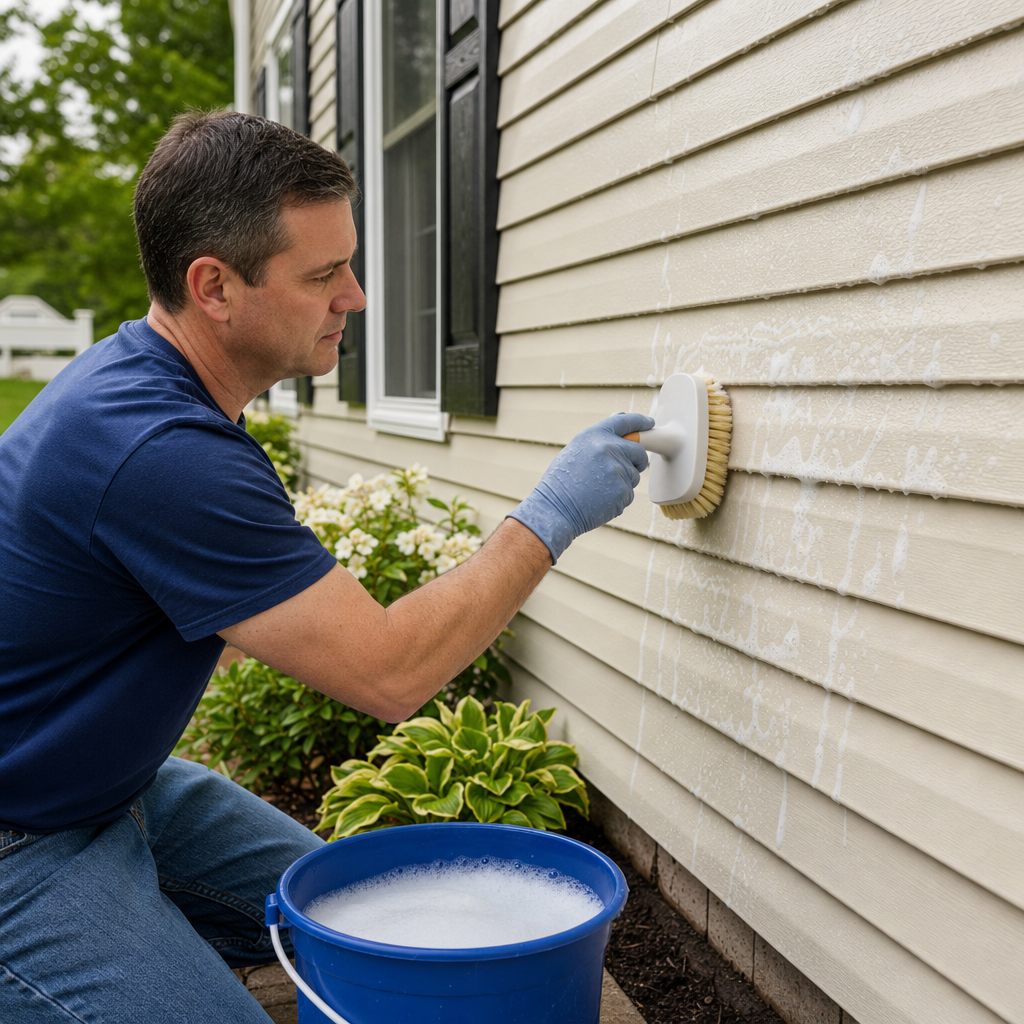
Hand washing, by contrast, relies on agitation from brushes, sponges, or microfiber tools combined with cleaning solutions to break down and remove surface contamination. The water pressure is low, typically garden-hose level at 40 to 70 PSI, meaning the chemistry of the cleaning product does most of the work. This approach is inherently gentler and allows the technician to feel resistance and adjust technique in real time.
In practice, the most effective exterior cleaning methods for residential properties are not binary choices. Professional companies like Performance Window Cleaning use a combination of both approaches on the same property, matching the method to each specific surface rather than applying one technique across the entire home.
Which Surfaces Need Pressure Washing
Concrete driveways, poured concrete walkways, brick patios, and asphalt surfaces are the clear winners for pressure washing. These materials are dense, non-porous at the surface, and accumulate the kind of embedded contamination, motor oil, algae, moss, and mineral staining, that cannot be removed with a brush and bucket.
Concrete and Masonry
A 2,500 PSI machine with a 25-degree nozzle is the standard starting point for concrete cleaning. The contamination level dictates whether a degreaser pre-treatment is needed before the pressure rinse. Skipping the pre-treatment on oil stains is a common mistake that leaves ghosting even after thorough pressure washing.
Brick responds well to pressure washing at 1,500 to 2,000 PSI provided the mortar joints are intact. Cracked or deteriorating mortar is a stop sign. Directing high-pressure water into failing mortar accelerates erosion and can shift bricks over time. A visual inspection before any work begins is non-negotiable.
Fences and Decking
Treated wood decking can handle 1,200 to 1,500 PSI with a wide fan nozzle, always moving with the grain to avoid raising the wood fibers. Composite decking manufacturers like Trex recommend a maximum of 1,500 PSI and specifically warn against zero-degree nozzles, which concentrate force to a damaging point.
Pro tip: Always test pressure on an inconspicuous section of any fence or deck board before cleaning the full surface. Weathered or UV-damaged wood can splinter under pressure that looks harmless on a fresh board.
When Hand Washing Is the Right Call
The instinct to reach for the most powerful tool available is understandable but frequently wrong when it comes to siding and windows. Hand washing consistently outperforms pressure washing on painted surfaces, older homes, and any area where water intrusion is a credible risk.
Painted Wood and Cedar Siding
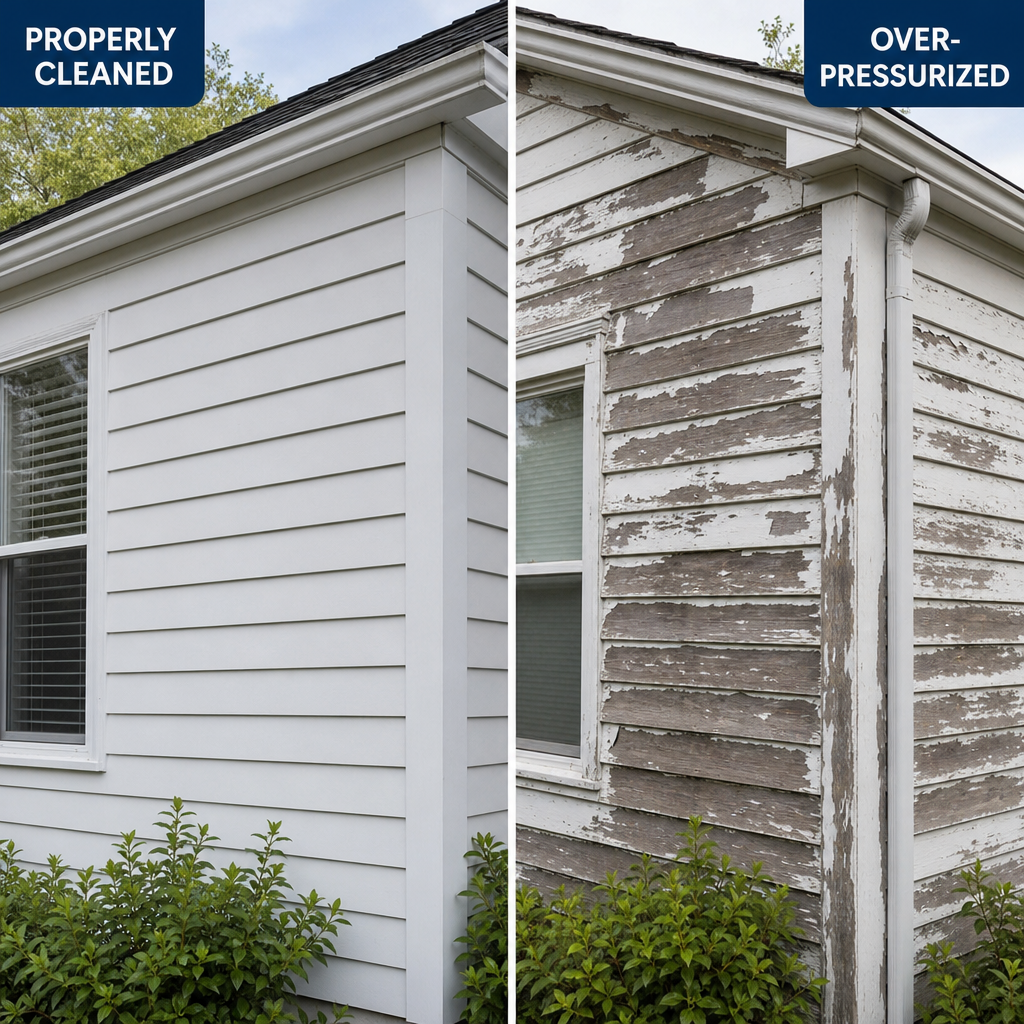
Painted wood siding absorbs water through any breach in the paint film. Pressure washing at anything above 800 PSI on older painted wood is genuinely risky because the force can peel back paint edges, allowing water to migrate behind the siding. Once moisture is trapped behind wood siding, rot follows within a season or two depending on climate.
Cedar shakes and shingles are particularly sensitive. The grain of cedar can be raised and split by high-pressure water, destroying the natural texture that gives the material its appeal and weather resistance. Hand washing with a soft-bristle brush and a diluted oxygen bleach solution removes biological growth without damaging the wood surface.
Windows and Glass Surfaces
Professional window cleaning is always a hand-washing process, regardless of what some machine-based services advertise. Pressure washing windows risks cracking seals on double-pane glass, scratching soft-coat glass coatings, and driving water into window frame joints. The streak-free results that define quality window cleaning come from the controlled application of a squeegee, not from water pressure.
At Performance Window Cleaning, technicians who have been doing this work since 2008 approach every window on a property individually, adjusting technique based on the frame material, the glass coating, and the level of contamination. That level of judgment cannot be replicated by a pressure washer on a pole.
Eaves, Soffits, and Painted Trim
Eaves and soffits are vented in most residential construction, meaning they have intentional gaps that allow high-pressure water to enter the attic cavity. Hand washing with appropriate brushes and extension poles keeps these surfaces clean without the moisture risk. Painted trim benefits from the same approach, preserving the paint life and avoiding the edge-lifting that pressure washing causes on older coatings.
Exterior Cleaning Methods Comparison
Choosing the right approach requires understanding exactly what each method costs you in time, risk, and results across common residential surfaces. The table below compares the three primary exterior cleaning methods used by professional services today.
| Method | Best For | Risk Level and Limitations |
|---|---|---|
| Pressure Washing (1,500 to 3,500 PSI) | Concrete driveways, brick patios, asphalt, treated wood decks, stone pathways | High risk on painted wood, stucco, older siding, and vented surfaces. Requires operator skill to manage PSI and nozzle angle correctly. |
| Soft Washing (under 500 PSI with detergent) | Vinyl siding, roof surfaces, painted surfaces, stucco, older homes | Low physical risk but chemical selection is critical. Bleach-based solutions require careful rinse protocols to protect landscaping. |
| Hand Washing (brush and solution agitation) | Windows, painted trim, eaves, soffits, cedar siding, gutters, pest debris removal | Lowest risk of all methods. Labor-intensive and slower, but provides the most control and the safest outcome on delicate surfaces. |
Siding Washing: The Details That Matter
Siding washing is where the pressure washing vs hand washing debate becomes most consequential for homeowners. Siding covers the majority of your home’s exterior surface area, and getting the method wrong affects curb appeal, structural integrity, and maintenance costs for years afterward.
Vinyl Siding: Where Soft Washing Wins
Vinyl siding is the most common siding material on Canadian residential properties, and it is also the most frequently damaged by incorrect pressure washing. The interlocking panels have overlapping seams specifically designed to shed water moving downward. A pressure washer directed upward at those seams forces water behind the siding and against the house wrap or sheathing beneath.
The correct approach for vinyl siding is soft washing: low pressure combined with a surfactant solution that breaks down algae, mold, and atmospheric grime. The solution dwells on the surface for several minutes, then rinses off with a gentle spray. Results are cleaner than straight pressure washing because biological growth is killed at the root rather than blasted to another surface.
Fiber Cement and Engineered Wood Siding
Products like James Hardie fiber cement siding can tolerate pressure washing at 1,500 PSI with a 25-degree nozzle, provided the paint is in good condition and the caulking at joints is intact. Any caulking failure around windows or trim is an entry point for water under pressure. In practice, a pre-cleaning inspection that identifies failing caulk saves homeowners from water damage claims.
Engineered wood siding, including LP SmartSide, should be treated more cautiously. The manufacturer recommends cleaning with a garden hose and soft brush rather than a pressure washer, specifically because the textured surface can trap moisture if the factory coating is compromised by high-pressure water.
“The leading cause of premature siding failure is moisture intrusion, and improper cleaning is one of the most common pathways for that intrusion to begin.” — Building Science Corporation, a research organization focused on residential building performance and moisture management.
The Soft Washing Middle Ground
Soft washing deserves its own category because it is neither pressure washing nor traditional hand washing, and it frequently outperforms both on certain surfaces. The method uses a dedicated low-pressure pump to apply a cleaning solution, typically a sodium hypochlorite blend with surfactants, at pressures below 500 PSI. The chemistry does the cleaning; the water merely carries and rinses it.
For roof surfaces with algae staining, soft washing is the industry-recognized best practice. The Asphalt Roofing Manufacturers Association explicitly states that pressure washing voids manufacturer warranties on asphalt shingles. Soft washing removes the Gloeocapsa magma algae that causes black streaking without disturbing the granule surface of the shingle.
On residential exteriors handled by Performance Window Cleaning, soft washing is often the preferred method for full-house siding washes because it addresses the biological contamination that returns quickly when only physical cleaning is performed. Killing the mold and algae spores means the surface stays cleaner longer between service visits.
Pro tip: When hiring an exterior cleaning company, ask specifically whether they use dedicated soft wash equipment or whether they are simply reducing the pressure on a standard pressure washer. These are not the same thing. Dedicated soft wash systems deliver consistent low pressure and are designed to handle chemical solutions safely.
Cost and Practical Considerations
Pressure washing a driveway or concrete patio is typically the most cost-effective exterior cleaning task because the method is fast, the surface is forgiving, and the results are immediately visible. Expect professional concrete pressure washing to run between $0.10 and $0.25 per square foot in most Canadian markets, depending on contamination level and accessibility.
Full-house siding washing using soft wash or hand methods is more labor-intensive and reflects that in pricing, typically between $300 and $600 for an average-sized residential property. The price difference compared to a basic pressure rinse is justified by the reduced risk of surface damage and the longer-lasting result from chemical treatment of biological growth.
The real cost variable that homeowners often overlook is the cost of getting it wrong. A pressure washing error on painted siding can require repainting an entire elevation, a cost that runs $2,000 to $5,000 depending on the size and height of the wall. That context makes the decision to hire a knowledgeable professional service, rather than renting equipment and doing it yourself, financially rational rather than a luxury.
Performance Window Cleaning has been delivering customized exterior cleaning packages since 2008, which means the technicians on your property have seen nearly every siding type, contamination scenario, and surface condition that exists in the local market. That experience translates directly into fewer surprises and better outcomes for homeowners who want their property maintained without unintended damage.
Frequently Asked Questions
Can I pressure wash my vinyl siding safely?
Vinyl siding can be cleaned with a pressure washer, but only at low pressure (under 1,500 PSI) with a wide fan nozzle (40 degrees or wider) and with the spray directed downward at the siding, never upward into the panel seams. In most cases, soft washing with a low-pressure chemical application is a safer and more effective choice for vinyl because it kills the biological growth rather than just displacing it.
What is the difference between soft washing and pressure washing?
Pressure washing uses high-velocity water (1,000 to 4,000 PSI) to physically remove surface contamination through mechanical force. Soft washing uses water at or below 500 PSI combined with a cleaning solution, typically containing sodium hypochlorite and a surfactant, that chemically breaks down and kills mold, algae, and biological staining. Soft washing is safer for painted, aged, or delicate surfaces and produces longer-lasting results on biological contamination.
Will pressure washing damage my home’s paint?
Yes, if applied incorrectly. Pressure washing at 1,500 PSI or higher on painted surfaces can lift paint edges, peel failing coatings, and force water behind the paint film. On surfaces where the paint is already chalking, cracking, or peeling, pressure washing will accelerate the deterioration significantly. Hand washing or soft washing is the appropriate method for painted surfaces in anything less than excellent condition.
How often should I have my home’s exterior professionally cleaned?
Most residential exteriors benefit from a full exterior cleaning once per year. Properties surrounded by trees, in humid climates, or with north-facing walls that receive little direct sunlight may develop biological growth faster and benefit from twice-yearly cleaning. Windows typically require cleaning two to four times per year depending on local conditions and personal preference.
Is hand washing windows better than using a pressure washer on them?
Hand washing is unambiguously the correct method for windows. Pressure washing windows risks cracking thermal seals on insulated glass units, damaging soft-coat low-E coatings, and forcing water into window frame joints and wall cavities. Professional window cleaning with a squeegee and appropriate cleaning solution delivers results that pressure washing physically cannot achieve, including streak-free glass and preserved seals.
Can power washing remove spider webs and pest nests from my eaves?
Pressure washing can dislodge spider webs, but it disperses rather than removes them and can push debris into vented soffits. Hand-based pest debris removal using brushes and targeted tools is more effective because it physically removes the nesting material and egg sacs rather than scattering them. For recurring spider problems, a follow-up spider spraying treatment is the appropriate next step after the webs are manually cleared.
If you have had a specific experience with pressure washing or hand washing on your home’s exterior, share what worked or what you wish you had done differently. Your insight helps other homeowners make a more informed decision.
We would love your feedback and any insights you would share with others. What perspective would you add?
References
- United States Environmental Protection Agency resources on water use, runoff, and exterior cleaning chemical impacts on residential properties
- U.S. Department of Energy guidance on building envelope moisture management and how improper exterior cleaning can compromise insulation and wall systems
- Forbes coverage of home maintenance costs, exterior cleaning service pricing benchmarks, and ROI of professional property upkeep
- Statista data on the pressure washing and exterior cleaning services industry, market size, and residential service demand trends
- The Family Handyman technical guidance on exterior cleaning methods, PSI recommendations by surface type, and siding maintenance best practices