Most homeowners assume pressure washing is always the right call for a dirty exterior. Point the nozzle, pull the trigger, and watch years of grime disappear in minutes. But that assumption has cost a lot of people an expensive repainting job, a cracked stucco wall, or water forced behind their siding where it quietly feeds mold for months. The truth is that pressure washing and hand washing are not interchangeable, and choosing the wrong method for your surface type can cause more damage than the original buildup ever would. Here is a practical, no-fluff breakdown of both methods so you can make the right call for your home.
Table of Contents
- What Is Pressure Washing?
- What Is Hand Washing Siding?
- Quick Takeaways
- When Pressure Washing Is the Right Choice
- When Hand Washing Siding Is the Right Choice
- The Risks of Using the Wrong Method
- Exterior Home Cleaning Methods Compared
- How a Professional Decides Which Method to Use
- Frequently Asked Questions
- References
What Is Pressure Washing?
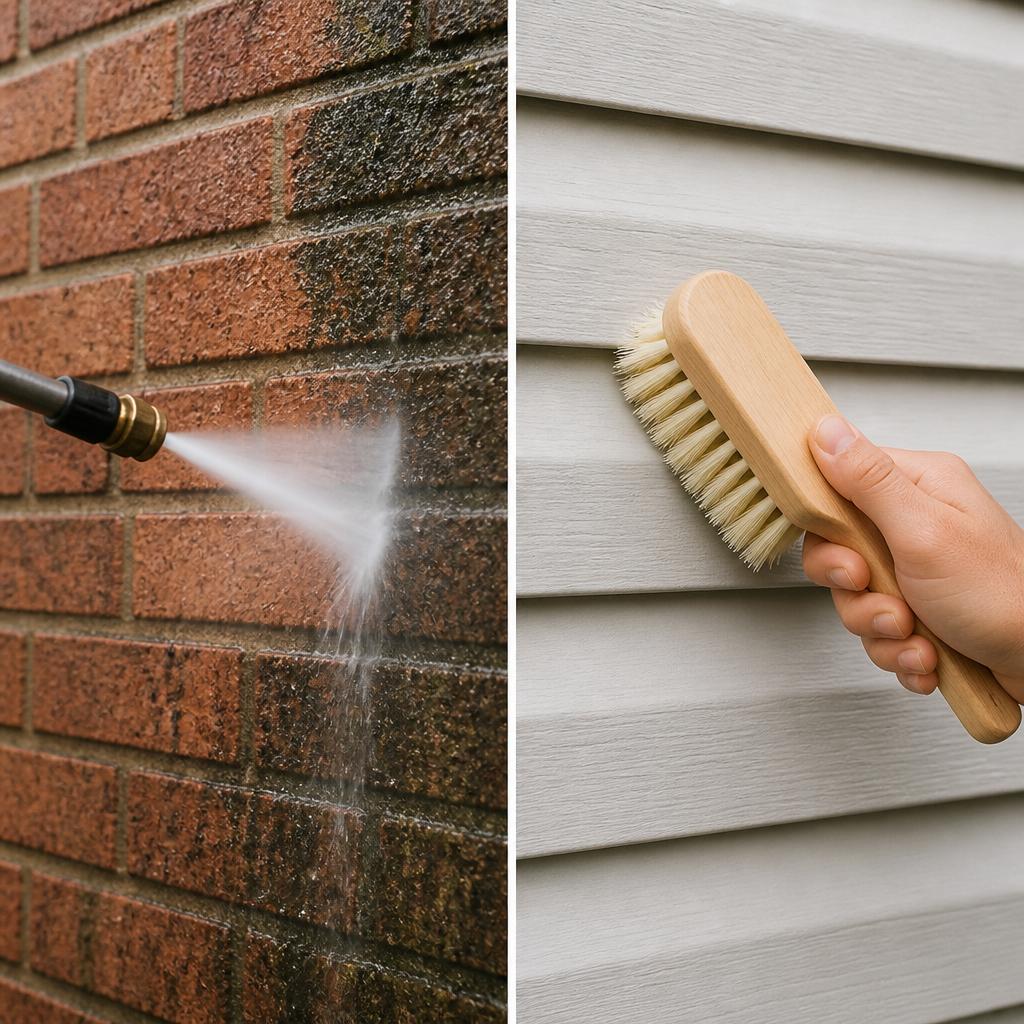
Pressure washing uses a motorized pump to force water through a narrow nozzle at high velocity. Residential units typically operate somewhere between 1,500 and 3,000 PSI, while commercial-grade equipment can exceed that range significantly. The force strips away dirt, mildew, algae, loose paint, and biological growth from hard surfaces without requiring much scrubbing. It covers large areas quickly, which is why it remains the go-to method for driveways, concrete walkways, patios, and heavy-use decking.
The speed advantage is real. A concrete driveway that would take hours to scrub by hand can be cleaned in a fraction of the time with a pressure washer. But speed creates its own risks when the operator applies the same approach to surfaces that were never designed to take that kind of force.
What Is Hand Washing Siding?
Hand washing siding means cleaning exterior surfaces using soft-bristle brushes, long-handled scrubbers, sponges, and a controlled flow of water, usually combined with a mild cleaning solution. The operator controls the pressure entirely, adjusting the scrub intensity based on what the surface needs. It is inherently slower than pressure washing, but that slower pace is also what makes it safe for surfaces that would be damaged by high-pressure water.
At Performance Window Cleaning, hand washing is the preferred method for siding, eaves, painted surfaces, and entrances where precision and material care matter more than raw speed. The result is a thorough clean that does not compromise the integrity of the surface underneath.
Quick Takeaways
| Key Insight | Explanation |
|---|---|
| Pressure washing is surface-specific | High-PSI water is safe for concrete, brick, and stone but can crack stucco, strip paint, and force water behind vinyl or wood siding. |
| Hand washing gives you control | Using brushes and mild solutions lets the cleaner adjust pressure and agitation surface by surface, reducing the risk of damage to delicate materials. |
| Wrong method means real repair costs | Pressure washing painted wood or stucco can lead to repainting, resealing, or mold remediation costs that far exceed the cleaning bill. |
| Most homes need both methods | A typical property has surfaces suited to pressure washing (driveway, walkways) and others that require hand washing (siding, fascia, window frames). |
| Frequency matters as much as method | Cleaning your home’s exterior every one to two years prevents buildup that eventually requires more aggressive cleaning to remove. |
| Soft washing is a middle-ground option | Low-pressure water combined with biodegradable cleaning solutions cleans siding, algae, and mildew effectively without the force risks of pressure washing. |
| Professional assessment prevents costly mistakes | A trained exterior cleaning crew identifies surface material, existing damage, and the right method before a single drop of water is applied. |
When Pressure Washing Is the Right Choice
Pressure washing earns its place on a job site when the surface is dense, non-porous, and structurally solid enough to handle the force without absorbing water or losing its finish. If you are cleaning concrete, exposed aggregate driveways, paved walkways, patio slabs, or certain types of brick, pressure washing is not just acceptable, it is the most effective option available.
These surfaces accumulate tire marks, oil stains, moss, algae, and embedded grit that hand scrubbing cannot fully remove without enormous effort. High-pressure water blasts those contaminants free in a fraction of the time. The surface is dense enough that forced water does not penetrate or cause structural damage.
Best surfaces for pressure washing
Concrete driveways, interlocking brick or paver patios, poured concrete steps, and some exterior walls made from dense masonry respond well to pressure washing. These materials were designed to bear weight and resist the elements, so controlled high-pressure water does not compromise them when used correctly.
Pro tip: Always test a small, inconspicuous area before running a pressure washer across your entire driveway or patio. Older mortar joints between bricks can be softer than they appear, and a focused nozzle held too close can erode them quickly.
What pressure washing removes efficiently
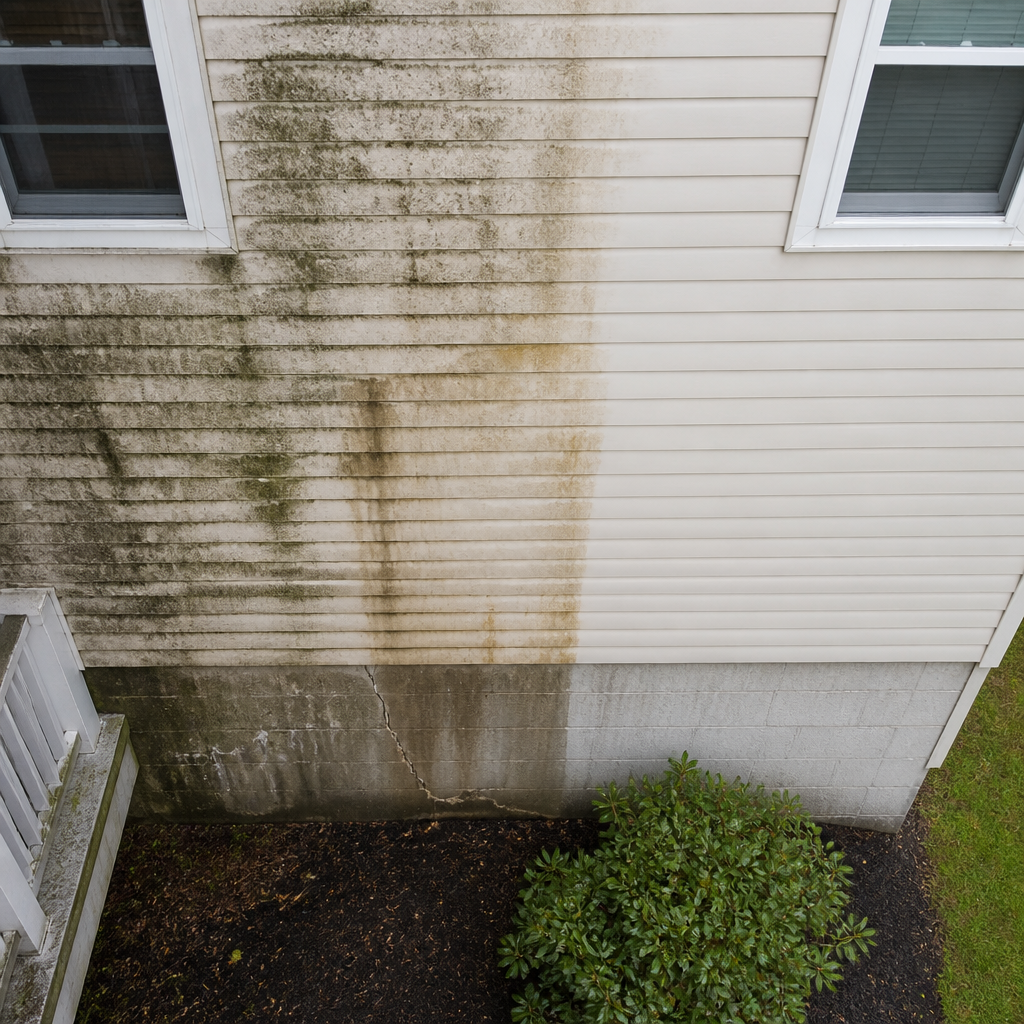
Algae, moss, mildew, and heavy organic staining respond particularly well to pressure washing on appropriate surfaces. Black streaking on a concrete driveway from organic growth, embedded mud, and road salt residue on walkways are all examples of buildup that pressure washing removes without requiring chemical soaking time. The mechanical force does the work.
When Hand Washing Siding Is the Right Choice
Hand washing is not the slow or inferior option. It is the correct option when the surface you are cleaning cannot safely absorb the mechanical force of a pressure washer. Stucco, cedar shake, painted wood siding, vinyl, aluminum, EIFS, and older masonry all fall into this category. Using high-pressure water on any of these surfaces risks cracking, stripping paint, forcing water behind panels, and creating entry points for moisture that leads to rot and mold.
Not all surfaces are created equal, and some are unable to withstand the intense strain pressure washing can cause. Stucco exteriors, cedar shake, wood siding, and painted surfaces require a gentler approach to avoid unnecessary damage.
Why siding needs a careful touch
Vinyl siding may look tough, but it has seams, overlaps, and gaps designed to allow for thermal expansion, not to block a high-pressure water jet. Force water behind those panels and you create a hidden moisture problem that shows up months later as mold inside your wall cavity. Wood and painted surfaces face an even more immediate problem: pressure washing strips the finish, leaving bare material exposed to weathering and requiring a repaint before the season is out.
Pro tip: When hand washing siding, always work from the top down, rinsing as you go. This prevents dirty runoff from streaking surfaces you have already cleaned and reduces the risk of cleaning solutions drying on the siding before they can be rinsed away.
The hand washing process for home exteriors
A proper hand wash uses a mild cleaning solution matched to the surface material, a soft-bristle brush or long-handled scrubber, and a controlled rinse. For mildew or algae on siding, a diluted cleaning solution is applied, allowed to work for a short dwell time, then scrubbed and rinsed without the force that would push contaminants deeper or damage the surface. The result is a genuinely clean surface with the finish left intact.
Performance Window Cleaning’s hand washing service for siding, eaves, and entrances follows exactly this process. The attention to surface material and technique is what separates a professional clean from a DIY job that ends in a warranty claim.
The Risks of Using the Wrong Method
The most common mistake homeowners make is applying pressure washing to surfaces that cannot handle it, because the method looks fast and effective on the surface. The damage often is not immediately visible, which makes it worse. Water forced behind vinyl or wood siding sits in the wall cavity, feeding mold growth and wood rot for months before it becomes apparent. By then, the remediation cost is significantly higher than the cleaning job ever was.
Stucco and mortar are especially vulnerable. High-pressure jets can cause crumbling, cracking, and surface flaking that may go unnoticed until water damage develops inside the wall. On oxidized vinyl siding, pressure washing can create chalky streaks and discoloration that look worse than the original dirty surface.
Common pressure washing mistakes on residential exteriors
Holding the nozzle too close to the surface concentrates force beyond what even appropriate materials can handle. Using a zero-degree nozzle on anything other than heavy concrete work is almost always a mistake. Spraying upward at an angle toward window seals, door frames, or siding overlaps forces water into spaces where it has no place to drain. And skipping a surface assessment entirely, just pointing and spraying without knowing what the material is, produces the most expensive outcomes.
Exterior Home Cleaning Methods Compared
The table below lays out how the three main exterior home cleaning methods compare across the criteria that actually matter for a homeowner making a decision.
| Factor | Pressure Washing | Hand Washing | Soft Washing |
|---|---|---|---|
| Best surfaces | Concrete, pavers, dense masonry, some brick | Wood siding, painted surfaces, cedar shake, stucco, fascia, eaves | Vinyl siding, algae-covered surfaces, rooflines, older masonry |
| Risk of surface damage | High on delicate materials if misapplied | Very low with proper technique and mild solutions | Low, uses biodegradable solutions at low pressure |
| Speed and coverage | Fast over large areas | Slower, requires physical effort | Moderate; dwell time needed for solutions to work |
| Effectiveness on organic growth | Strong mechanical removal, but does not neutralize spores | Good with the right cleaning solution applied directly | Excellent, cleaning agents neutralize spores at the source |
| Risk of water intrusion | High if directed at seams, window frames, or siding overlaps | Low with controlled rinse technique | Low, solution applied gently and rinsed at low pressure |
| Equipment required | Pressure washer, correct nozzle set, water source | Brushes, scrubbers, cleaning solutions, hose | Soft wash system, biodegradable solutions, low-pressure nozzles |
How a Professional Decides Which Method to Use
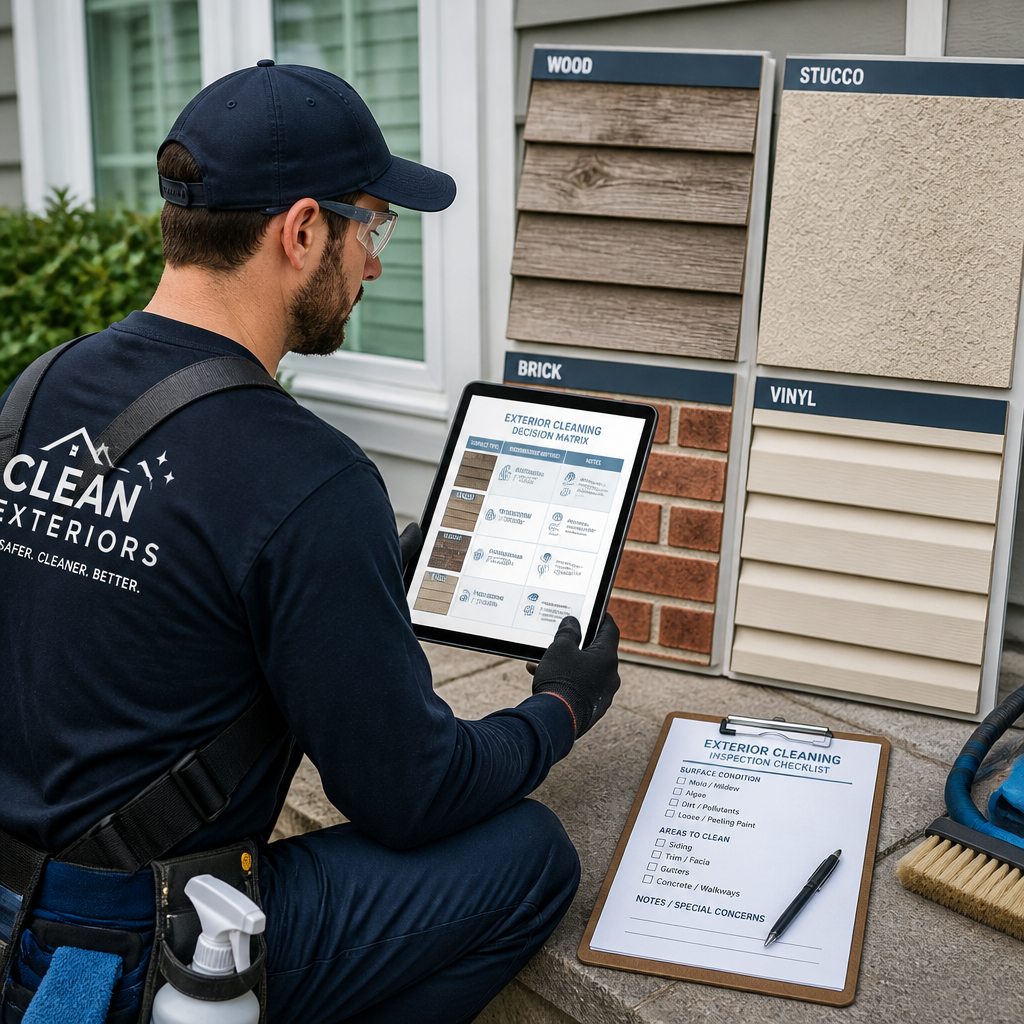
A trained exterior cleaning crew does not arrive at a property with a predetermined plan. They assess the siding material, look for existing cracks or peeling paint, check the age and condition of window and door seals, and identify any areas where water intrusion is already a concern. That assessment drives the method selection, not habit or speed preference.
In practice, most residential properties require a combination of methods. The driveway and walkways get pressure washed. The siding, eaves, fascia boards, and window frames get hand washed or soft washed. The gutters get a dedicated cleaning treatment. Applying one uniform approach to every surface on a property is how damage happens, and it is a sign that the crew skipped the assessment step entirely.
What to look for in an exterior cleaning company
Ask directly: do they use the same method on every surface, or do they assess the material and condition first? A company that answers “we pressure wash everything” is telling you that their process prioritizes speed over your siding. A professional service explains what method they will use on each surface and why. Performance Window Cleaning has been taking this surface-specific approach since 2008, which is why our clients in the residential and commercial space keep scheduling regular maintenance rather than calling for damage control after a DIY attempt or a one-method-fits-all contractor visit.
Regular exterior maintenance also reduces how much cleaning effort is needed each time. A home cleaned consistently every year or two does not accumulate the kind of embedded biological growth that tempts someone to reach for a pressure washer on surfaces that do not need it.
Frequently Asked Questions
Can I pressure wash vinyl siding safely?
Vinyl siding can be cleaned with low-pressure water, but using a high-PSI pressure washer on vinyl is genuinely risky. Too much pressure can crack panels, force water behind the siding, and create conditions for hidden mold growth. If you want to use a pressure washer, keep the PSI low, use a wide-angle nozzle, and never spray upward into the siding seams. In most cases, a soft wash or professional hand wash is the safer, more reliable choice for vinyl.
How often should I clean my home’s exterior?
Cleaning your home’s exterior every one to two years is a reasonable general baseline. Homes in areas with heavy tree canopy, high humidity, north-facing walls with limited sun exposure, or proximity to busy roads may need more frequent attention. The goal is to prevent biological growth like algae, moss, and mildew from establishing deep roots in your siding or getting into your eavestroughs and causing blockages.
Is hand washing siding effective enough to remove mildew and algae?
Yes, when done with the right cleaning solution, hand washing removes mildew and algae from siding very effectively. The key is using a cleaning agent designed for exterior surfaces and allowing it to dwell before scrubbing, so the chemistry does the work of breaking down the organic growth rather than relying entirely on physical scrubbing force. Professional exterior cleaning services use formulations matched to the specific surface material and type of contamination.
What surfaces should never be pressure washed?
Stucco, EIFS, cedar shake, painted wood siding, aluminum siding, and any surface with compromised seals or existing cracks should not be pressure washed at high PSI. Stucco and mortar are particularly vulnerable to crumbling or cracking under high-pressure water jets. Painted wood can lose its finish entirely. Older masonry with softened mortar joints can be eroded significantly. When in doubt, hand washing or soft washing is the safer choice for these materials.
Does pressure washing use more water than hand washing?
Counterintuitively, pressure washing can use less total water than hand washing because the high velocity gets the job done faster. However, pressure washing generates more runoff in a shorter period, which can carry detergents, dirt, and contaminants into storm drains. Using biodegradable cleaning solutions and proper containment techniques helps reduce the environmental impact regardless of which method you choose.
Can I combine pressure washing and hand washing in one exterior cleaning job?
Absolutely, and for most homes that is the correct approach. Driveways, paved patios, and concrete paths are good candidates for pressure washing. Siding, eaves, fascia, window frames, and entrances are better suited to hand washing or soft washing. A professional exterior cleaning service will assess each surface and apply the right method to each area, rather than defaulting to a single tool for the entire property.
If you have had your siding hand washed, pressure washed, or soft washed recently, share what method worked best for your home in the comments. Your experience might help another homeowner make the right call.
References
- Pressure washing vs. hand washing: how to decide what is best for your home exterior
- Comparing pressure washing and hand washing for residential home exteriors
- Hand washing vs. pressure washing: pros, cons, and surface considerations
- Why soft washing is safer than pressure washing for home siding
- Will pressure washing damage your siding: soft wash versus pressure wash explained