
Managing a multi-unit building means juggling dozens of maintenance priorities at once, and window cleaning almost always falls to the bottom of the list until a tenant complains or a prospective renter walks away unimpressed. The research on first impressions in property management is consistent: curb appeal directly affects occupancy rates. Yet most property managers either call a single-operator cleaner who can’t handle scale, or they let months pass between cleanings. Property manager window cleaning at the multi-unit level requires a completely different approach than residential service, and getting it wrong costs more than dirty glass.
Table of Contents
- Quick Takeaways
- Why Clean Windows Matter for Multi-Unit Buildings
- The Real Scope of Multi-Unit Building Cleaning
- How to Schedule Window Cleaning Across Large Properties
- Choosing the Right Commercial Exterior Cleaning Provider
- Comparing Cleaning Service Approaches for Property Managers
- Common Mistakes Property Managers Make with Exterior Cleaning
- Bundling Services to Reduce Cost and Disruption
- Frequently Asked Questions
- References
Quick Takeaways
| Key Insight | Explanation |
|---|---|
| Frequency drives results, not intensity | Cleaning windows every 3-4 months on a schedule outperforms one deep clean per year. Mineral deposits and oxidation compound over time. |
| Exterior cleaning is a package, not a single service | Windows cleaned while gutters overflow with debris defeats the purpose. Combining window cleaning with gutter and eaves cleaning produces lasting results. |
| Tenant communication reduces friction | Pre-announcing cleaning visits for multi-unit buildings prevents complaints and no-access situations that cost extra trip charges. |
| Not all providers can handle multi-unit scale | A solo operator with a ladder is not equipped for a 40-unit strata. Verify crew size, equipment, and insurance before signing any contract. |
| Spider and pest removal belongs in your cleaning contract | Webs and wasp nests around entrance ways create liability and poor first impressions. Pest-deterrent spraying is a standard add-on for professional providers. |
| Power washing protects building materials | Algae, mildew, and pollution buildup on siding and walkways accelerate material degradation. Pressure washing is preventive maintenance, not cosmetic cleanup. |
| Documentation protects property managers | Before-and-after photos from each cleaning visit create a maintenance record useful for insurance claims, audits, and strata reporting. |
Why Clean Windows Matter for Multi-Unit Buildings
Dirty windows on a multi-unit building are not just an aesthetic problem. They signal to prospective tenants that maintenance is an afterthought. Buildings with consistently clean exteriors lease faster and retain tenants longer, because people associate visual upkeep with how well a property is managed overall. That connection is not anecdotal. According to the National Apartment Association, curb appeal and building presentation consistently rank among the top three factors tenants cite when renewing or not renewing a lease.
In practice, property managers who defer exterior cleaning often face a compounding problem. Mineral deposits from hard water, pollution film, and organic growth like algae do not just sit on glass. They etch into it. After 12 to 18 months without professional cleaning, some windows require restoration rather than standard cleaning, which costs three to five times more per pane.
The business case for routine property manager window cleaning is straightforward: a quarterly cleaning contract costs a fraction of what reactive restoration or tenant-driven complaints cost in management time and repair bills.

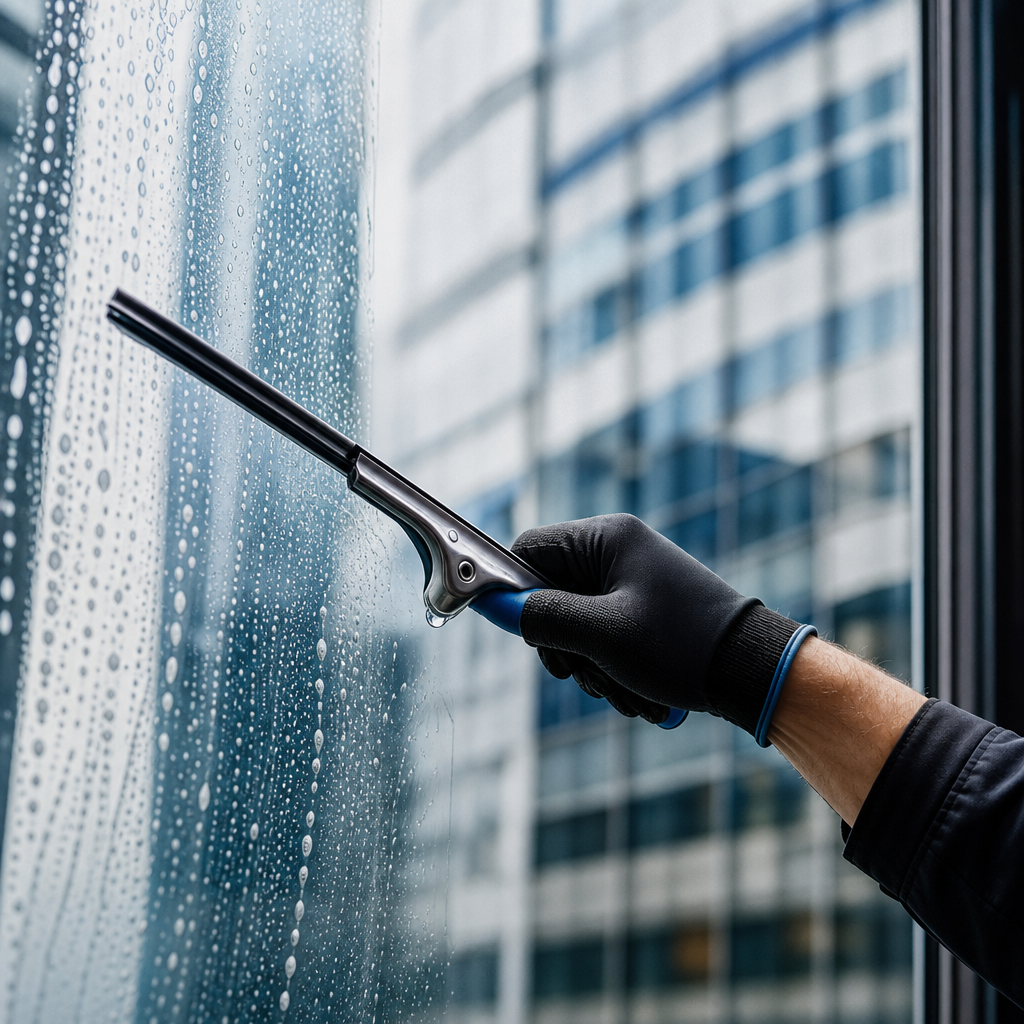
The Real Scope of Multi-Unit Building Cleaning
Property managers often underestimate what thorough multi-unit building cleaning actually covers. Windows are the most visible element, but they are one part of a broader exterior maintenance picture. A building that has spotless windows but debris-clogged gutters, spider-web-covered entrance lights, and stained walkways still looks poorly maintained.
Windows, Screens, and Tracks
Standard window cleaning for multi-unit buildings includes exterior glass, screens, and frames. Tracks accumulate dirt and moisture that creates mold if ignored. A professional crew treats all three as a unit, not separately. Screens left uncleaned after glass washing simply redeposit dust the next time a window opens.
Gutters and Eavestroughs
Blocked gutters cause water to overflow along building facades, leaving streaks and accelerating siding stain. On multi-unit properties, gutters run longer distances and collect debris faster, especially near trees. Cleaning eavestroughs at least twice a year, in spring and fall, is the minimum standard for any building over four units.
Siding, Entrances, and Common Area Surfaces
Hand-washing siding removes algae, oxidation, and pollution buildup that pressure washing alone can miss on delicate materials like stucco or wood. Common area entrances, lobby glass, and stairwell windows need attention on the same cycle as suite windows. These are the surfaces tenants and visitors see first and most frequently.
Spider and Pest Deterrent Spraying
On multi-unit properties, spider webs cluster around exterior light fixtures, eaves corners, and mailbox areas. A spider and pest deterrent spray applied after each exterior cleaning prevents rapid re-infestation and keeps those high-visibility areas clean between scheduled visits.
How to Schedule Window Cleaning Across Large Properties
Scheduling is where most property managers make avoidable errors. The default approach is to call a cleaner when someone complains. That is reactive management, and it guarantees you will always be behind. The better approach is a fixed annual schedule with two or three defined cleaning cycles, negotiated upfront with a provider who documents each visit.
For most Canadian climates, a standard schedule for multi-unit residential buildings works as follows. Spring cleaning in April or May removes winter grime, salt residue, and debris accumulated under snow and ice. A second visit in late summer handles the pollen, pollution, and insect accumulation from the warm months. A third visit in October or November clears gutters of fall leaves and prepares the building exterior before freeze season. That three-visit cycle, combined with gutter cleaning on two of those visits, covers the realistic maintenance needs of most 10 to 80 unit properties.
Pro tip: When negotiating a multi-unit cleaning contract, ask for a fixed per-visit rate that does not change regardless of seasonal conditions. Variable pricing creates budget uncertainty and discourages you from booking visits when pricing spikes in peak demand periods.
Tenant communication on a property this size requires a written notice system. Posting 48-hour notices on common area boards and emailing or texting tenants through your property management platform prevents the frustrating situation where a crew arrives and cannot access balconies or street-level windows because tenants have cars parked in the way or furniture blocking interior access points.
Choosing the Right Commercial Exterior Cleaning Provider
The differences between a qualified commercial exterior cleaning provider and a general handyman with a pressure washer are significant. Property managers who choose the cheaper option often end up paying twice when they need to fix water damage from improper pressure washing or repair windows scratched by abrasive cleaning tools.
Crew Size and Equipment Capacity
A provider capable of servicing multi-unit buildings will have a dedicated crew of at least two to three trained technicians and equipment designed for multi-story access. Water-fed pole systems allow exterior window cleaning without ladders on many low to mid-rise buildings, which is both faster and safer than traditional ladder access.
Insurance and Liability Coverage
This is non-negotiable. Any provider working on a multi-unit property must carry commercial general liability insurance with limits appropriate for the building size, plus WorkSafeBC or provincial equivalent coverage for all workers on site. Ask for a certificate of insurance before any work begins and verify the certificate is current. This protects the property owner and the property manager personally if an incident occurs on site.
Track Record with Similar Properties
A company that has been operating since 2008, like Performance Window Cleaning, brings nearly two decades of experience handling exactly the kind of scheduling, access, and logistics challenges that come with multi-unit and commercial properties. Ask potential providers for references from strata corporations, property management companies, or commercial clients, not just residential homeowners.
“The cost of maintaining a clean, well-presented property is consistently lower than the cost of recovering a neglected one. Property managers who treat exterior cleaning as preventive maintenance rather than a reactive expense report fewer tenant complaints and higher lease renewal rates.” – National Apartment Association, 2023 State of the Industry Report
Customized Service Packages
Generic pricing is a red flag. A qualified provider should assess the property, understand the materials, the number of units, the access challenges, and the cleaning frequency needed before quoting. Flat-rate pricing applied without a site assessment usually means the provider has not thought through the job.
Comparing Cleaning Service Approaches for Property Managers
Property managers evaluating their options typically face three realistic choices: a contracted full-service exterior cleaning company, individual trade-specific vendors for each service, or in-house maintenance staff handling cleaning tasks. Here is how those approaches compare on the metrics that matter most to property operations.
| Approach | Best For | Key Limitations |
|---|---|---|
| Full-Service Exterior Cleaning Contract (e.g., Performance Window Cleaning) | Multi-unit residential and commercial properties needing scheduled, documented, bundled service covering windows, gutters, pressure washing, and pest spraying | Requires upfront contract negotiation and scheduling coordination; higher per-visit cost than single-service vendors, offset by bundled savings |
| Multiple Single-Service Vendors | Properties with highly specialized cleaning needs, or managers who prefer vendor separation for billing purposes | Coordination burden falls on the property manager; inconsistent scheduling, more administrative overhead, higher risk of gaps between services |
| In-House Maintenance Staff | Very large institutional properties with dedicated facilities teams and proper equipment budgets | Equipment cost and maintenance, training requirements, liability exposure, and staff availability make this impractical for most multi-unit residential properties under 100 units |
In practice, the full-service contract model produces the most consistent results for residential property managers in the 10 to 80 unit range. The coordination savings alone justify the approach, even before accounting for the quality consistency that comes from a single trained crew that knows the property.
Common Mistakes Property Managers Make with Exterior Cleaning
A common mistake is treating window cleaning as a single-service problem. Property managers book a window cleaning crew, the windows look great for two weeks, and then debris from uncleaned gutters washes streaks back down the glass with the first rainfall. The result is wasted money and frustrated tenants. Exterior cleaning services must be coordinated, not ordered individually without regard for sequence.
Another frequent error is ignoring interior common area glass. Lobby doors, stairwell windows, and hallway glass collect fingerprints, smudges, and condensation buildup that makes a building feel poorly kept regardless of how clean the exterior glass is. Interior common area glass should be included in any multi-unit cleaning contract as a standard line item, not an afterthought.
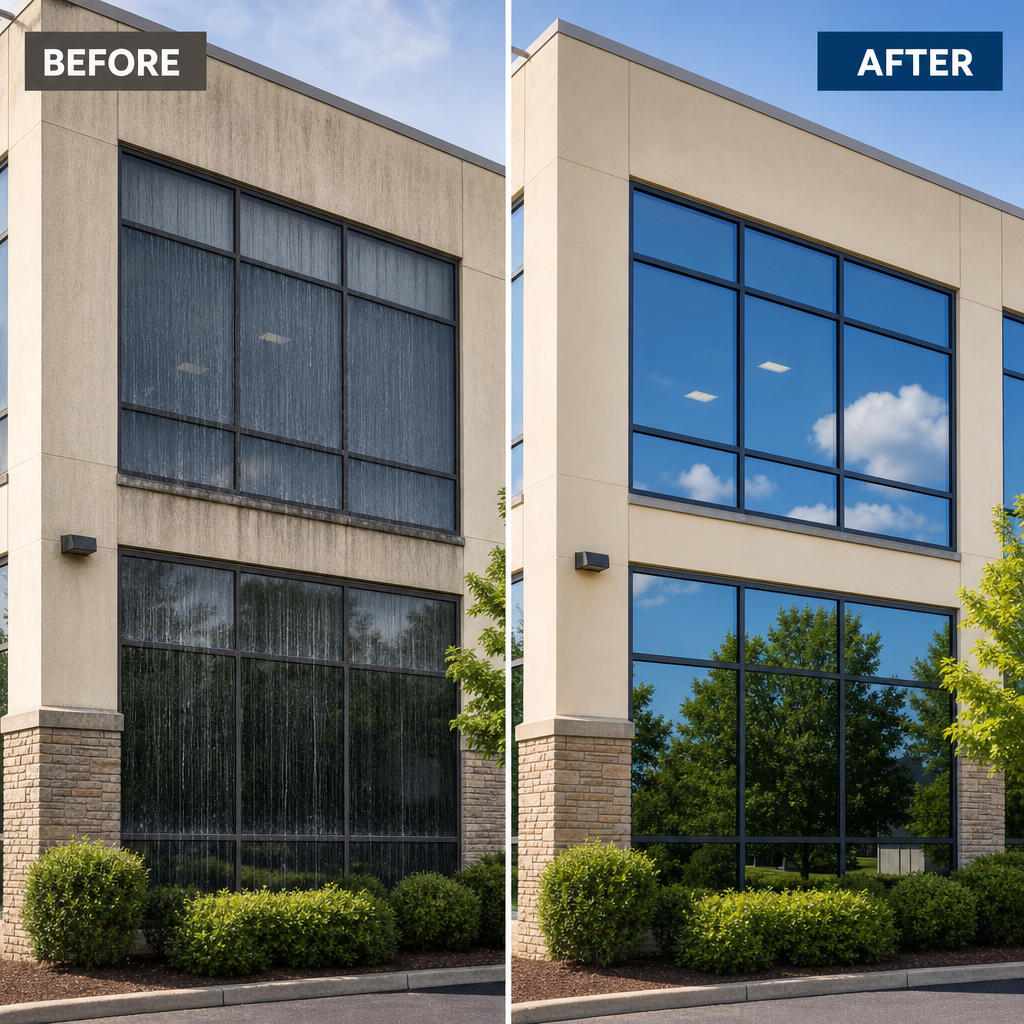
Property managers also underestimate the value of documentation. Before-and-after photos from each cleaning visit serve multiple purposes: they confirm work was completed, they support insurance documentation, and they provide evidence for strata meetings or owner reporting. Any professional exterior cleaning company should provide this as a standard part of the service, and if they do not, ask for it explicitly.
Pro tip: Never sign a window cleaning contract for a multi-unit property without a clear access protocol clause. This should specify who provides access, what happens when access is denied, and whether trip charges apply. Ambiguity here creates disputes and extra costs.
Bundling Services to Reduce Cost and Disruption
The most cost-effective approach to exterior maintenance for multi-unit buildings is bundling related services into single visit cycles. When a crew is already on-site cleaning windows, adding gutter cleaning, pressure washing walkways, and spider spraying adds minimal mobilization cost while maximizing the output of that visit. Compare that to scheduling each service separately, which means four sets of tenant disruption notices, four mobilization charges, and four separate coordination points for the property manager.
Performance Window Cleaning structures its residential and commercial packages exactly this way, offering customized bundles that combine window cleaning, gutter and eavestrough cleaning, power washing, hand-washing of siding and eaves, and pest spraying into scheduled visit cycles. For a property manager overseeing multiple buildings, this kind of bundled approach can also be extended across a portfolio, with a single provider managing cleaning schedules for multiple addresses under one service agreement.
The data consistently shows that property managers who bundle services report lower per-unit cleaning costs and fewer reactive maintenance calls compared to those who purchase services individually. The reason is simple: coordinated maintenance prevents the failure cascades where one neglected system damages another, like gutters overflowing onto freshly cleaned siding or wasp nests building in eaves that have not been inspected since the previous season.
Real estate agents who use multi-unit buildings for client showings or who manage strata properties for resale are another segment that benefits directly from this approach. A building that has a documented, consistent exterior maintenance history commands stronger valuations and sells faster. Buyers and their inspectors notice the difference between a building that has been maintained quarterly and one that was hastily cleaned before listing.
Frequently Asked Questions
How often should a multi-unit building have its windows professionally cleaned?
For most multi-unit residential buildings in Canada, three times per year is the practical standard: once in spring after winter, once in late summer, and once in fall before freeze conditions. Buildings in high-traffic urban areas or near construction sites may need quarterly service. Annual cleaning is not enough to prevent mineral etching and organic buildup on glass.
What should a property manager look for in a commercial exterior cleaning contract?
The contract should specify the exact scope of each visit, the crew size, the equipment to be used, the insurance coverage in place, the access protocol, documentation requirements like before-and-after photos, and a fixed pricing structure for the contract term. Any contract that lacks clear scope language creates room for disputes about what was and was not included in a given visit.
Is pressure washing safe for all building materials on multi-unit properties?
No. Pressure settings must be adjusted based on the material being cleaned. High-pressure washing is appropriate for concrete, brick, and sealed pavement. Softer materials like stucco, wood siding, and certain cladding systems require low-pressure or soft-washing techniques. A professional exterior cleaning company will assess materials before selecting equipment settings. Always ask about the approach before work begins on a building with mixed exterior materials.
Can spider spraying be included in a regular exterior cleaning contract?
Yes, and it should be. Spider deterrent spraying is a standard add-on offered by full-service exterior cleaning companies and is most effective when applied immediately after a cleaning visit while all surfaces are free of existing webs and debris. On multi-unit buildings, entrance areas, lighting fixtures, and eave corners are the primary treatment zones. A single spider spray treatment typically provides six to eight weeks of deterrent effect.
How does window cleaning affect property insurance or strata reporting?
Documented exterior maintenance, including professional window and gutter cleaning, can support insurance claims where water damage is involved by demonstrating that the property manager followed a reasonable maintenance standard. Some strata corporations require documented maintenance records as part of annual reporting or depreciation report updates. A cleaning company that provides written service records and photos after each visit makes this documentation straightforward.
What is the difference between residential and commercial window cleaning for billing purposes?
Commercial and multi-unit residential window cleaning is typically priced per pane, per unit, or as a project rate based on square footage and access complexity. Residential single-home pricing models do not scale to multi-unit properties. Providers who quote commercial-scale jobs should conduct a site assessment first, not apply a per-window rate from a residential price sheet. The mobilization, crew size, and safety equipment requirements are fundamentally different.
If you manage a multi-unit property or a portfolio of buildings, share your experience with scheduling exterior cleaning services below. What has worked, and what has caused problems with your current provider?
References
- Statista: Building maintenance and facilities management industry data and market statistics
- Forbes: Property management trends, operational cost analysis, and real estate investment insights
- National Apartment Association: Research and benchmarking data on tenant retention, lease renewal factors, and property management standards
- U.S. Environmental Protection Agency: Guidelines on exterior building maintenance, mold prevention, and water runoff management
- Institute of Real Estate Management: Professional standards and best practices for residential and commercial property management operations