
Remembrance Day, observed each year on November 11, marks the point where the outdoor season quietly winds down across Ontario. Leaves are mostly down, lawns have slowed, and the grime you ignored in September has settled on siding, sills and glass. A proper exterior home cleaning Ontario homeowners plan before the first hard freeze protects the surfaces that take the most abuse and keeps the house looking cared for. This guide covers what to clean this month, what can wait for spring, and where a common DIY shortcut causes more damage than it prevents.
Table of Contents
- Quick Takeaways
- Why November Matters for Exterior Cleaning
- Start With a Walk-Around Inspection
- Windows, Screens and Tracks
- Gutters and Eavestroughs Before the Freeze
- Soft Washing Versus Power Washing
- Spider Webs, Ticks and Mosquitoes
- Entrances, Doors and Lighting
- DIY or Hire a Crew
- Frequently Asked Questions
- References
Quick Takeaways
| Key Insight | Explanation |
|---|---|
| Clear eavestroughs before the ground freezes | Wet leaves packed into troughs freeze into ice that pushes water toward the fascia and foundation. Do it on a dry day while you can still work safely on a ladder. |
| Skip the high-pressure wand on siding | Vinyl, painted wood and most stucco respond better to a low-pressure soft wash. High pressure can force water behind lap siding and etch paint. |
| Wash glass on mild afternoons only | Cold water can film over the pane before it dries, and low sun dries soap into streaks. Pick a day comfortably above freezing and stop early. |
| Remove spider webs and egg sacs in fall | Webs on entrances and screens are most visible in low November light, and egg sacs tucked into eaves and corners sit through winter. |
| Treat entrances as the showcase | Doors, thresholds and porch lights are what people see first after dark. A clean door and a fresh bulb cost far less than a repaint. |
| Book before the calendar fills | Late-fall schedules tighten around the holidays. Ask whether the quote includes debris removal and downspout flushing before you agree to a date. |
Why November Matters for Exterior Cleaning
November is an awkward month for outdoor work. The warm weather that made it easy to hose down a deck is gone, but the mess it left behind stays put, and whatever sits on a surface through winter tends to bond with it.

Remembrance Day works well as a checkpoint. By mid-November, most leaf drop is finished on a typical Ontario lot, the ground is still workable, and you can see which surfaces took the summer’s abuse. Use the week around the holiday to plan the outdoor jobs that cannot wait for spring.
Treating the house as something worth maintaining is practical, not sentimental. Clean exteriors show wear early, when a fix is still a caulking job rather than a rebuild. In practice, the homes with the worst spring surprises are usually the ones nobody looked at after summer.
A clean exterior is the cheapest inspection you will do all year. Grime hides hairline cracks, soft caulking and early rot, and it is often the first place a problem shows itself.
Ontario winters are hard on anything that holds water. Dirt and organic debris trap moisture against siding, sills and the bottom of downspouts, and that moisture is what freezes, expands and works into small gaps. A few hours of cleaning now costs less than the trim, caulking and gutter repairs that often follow a wet winter.
We serve homeowners in Oakville, Burlington, Mississauga, Niagara Falls, Hamilton, Fenwick and St. Catharines, and the timing question is much the same in each community. The houses that come through winter in good shape are the ones that got a proper pass in November.
Start With a Walk-Around Inspection
Before you touch a hose, walk the full perimeter and look for problems. Start low, at the foundation, the grade and the bottom of the siding, where splash-back from rain and sprinklers does the most damage. Then work up to the eaves and roof edge.
Check the Soffits and Fascia
Dark streaks on shingles and soffits can look like dirt but often mean mould or algae, which hold moisture against the material. Wipe a small patch with a damp cloth. If the streak smears, it is grime. If it stays put, it is growth, and a pressure wash will only drive it deeper into the surface.
Look at Caulking and Paint Along Trim
Peeling paint and cracked caulk around windows, doors and corner boards are early signs that water is getting behind the cladding. Press a screwdriver into any suspect wood. Solid wood resists, while soft or spongy wood needs attention before the freeze, not after. A clean surface is easier to judge, so do this check after the first rinse.
Make a short list as you go. Note loose siding, missing caulk, stained soffits and any sagging runs, then decide which items you can handle yourself and which need a contractor before winter sets in.
Windows, Screens and Tracks
Window cleaning in late fall tends to go wrong for two reasons: cold water flashes to a film on the glass, and low sun dries soap into streaks. Choose a dry afternoon when the temperature is comfortably above freezing, and clean the shaded sides of the house first if you can. Stop early enough that frames are dry before evening.
Exterior Glass Without Streaks
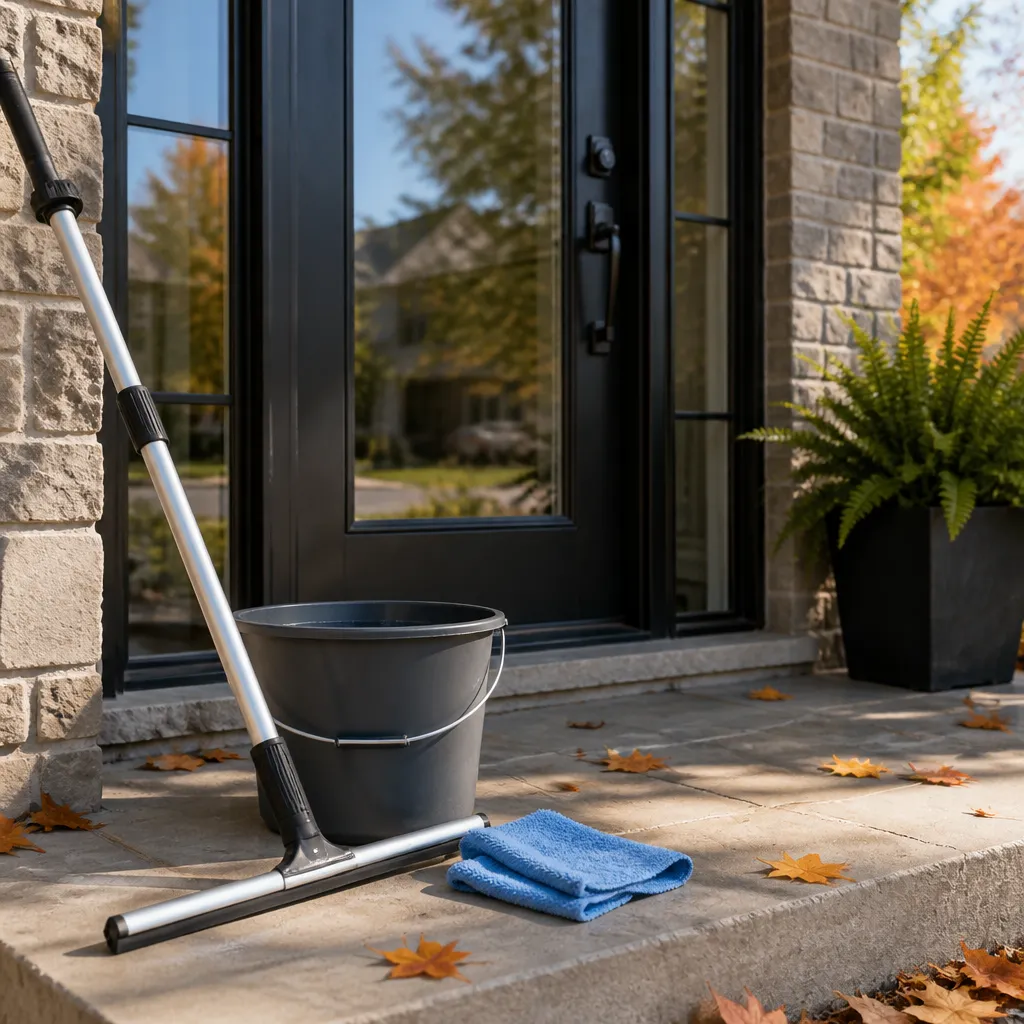
Use a mild detergent solution, a soft scrubber for corners and a squeegee with a clean rubber blade. Wipe the blade after every pass, and pull each stroke from the top edge down, finishing with a towel on the bottom edge. A dirty blade leaves the same lines you were trying to remove.
Screens and Tracks Collect the Winter Grit
Screens should come out, get rinsed with a soft brush, and dry fully before they go into storage or back into the frame. Sliding window tracks hold sand, grit and dead insects that grind into the rollers all winter. Vacuum the track, wipe it with a damp cloth, and avoid flooding it, since water can work into the mechanism.
Interior glass is worth doing on the same visit because the ladder and squeegee are already out. Give it its own bucket, though, so interior residue does not end up on the exterior sills you just finished.
Gutters and Eavestroughs Before the Freeze
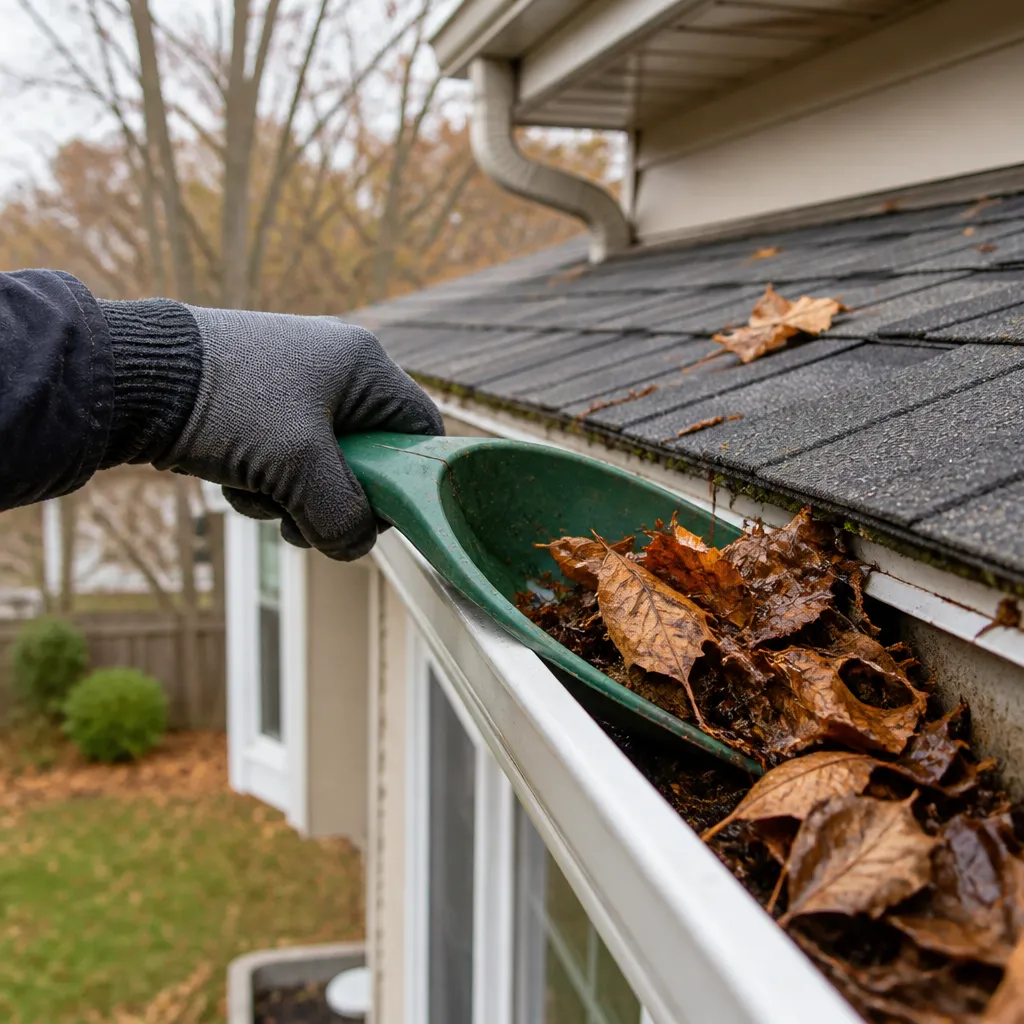
Gutters are the exterior job most often postponed and most likely to cause damage when it is. Leaves and shingle grit form a packed layer that holds water after rain. When that water freezes, the eavestrough cannot shed meltwater, and it backs up under the shingles and into the fascia.
Clearing debris before the ground freezes is the cheapest protection a homeowner can buy. A trough that drains freely through winter is a trough you will not be prying off the fascia in March.
If routine cleaning uncovers loose brackets, sagging runs or cracked joints, note them now. Eavestrough replacement is usually a spring job, but you want to know the scope before the first snow arrives.
Why Full Eavestroughs Cause Ice Problems
When a trough stays full, water spills over the front edge onto the fascia and wicks into the wood. In cold weather the overflow forms icicles that pull on the hangers. Over one winter, that weight can drag a run away from the fascia, which is a much bigger repair than a scoop and a hose.
Flushing Downspouts Instead of Just Scooping
Scooping the top of the trough moves debris around but does not clear the path. Run a hose into the downspout from the top and watch the outlet at the bottom. If water backs up at the joints, there is a blockage you have not reached yet, and a flexible plumber’s snake or a short disconnected section will clear it.
Pro tip: Flush downspouts after you scoop out the troughs, not before. Otherwise the loose debris you removed washes straight back into the section you just cleared, and you end up doing the job twice.
Soft Washing Versus Power Washing
Most exterior mistakes come from using the wrong pressure on the wrong material. Soft washing uses low pressure with a cleaning solution that works on growth and grime, and it is the safer choice for most homes. Power washing uses high pressure with water alone, and it suits hard, durable surfaces that can take it.
Soft Washing for Siding and Painted Trim
Vinyl siding, painted wood, stucco and older paint films respond well to a soft wash. Apply the solution from the bottom up, let it dwell for the time the product label gives, then rinse from the top down. Test a small patch first, especially on dark paint, because some solutions can lighten it.
Power Washing for Concrete, Brick and Driveways
Concrete driveways, walkways and most brick take a power wash well. Keep the nozzle moving at a consistent distance and never hold it on one spot. Oil stains on concrete may need a degreaser before the rinse, and mortar joints can wash out if you blast them too closely.
| Approach | Best Use on a Typical Ontario Home | Common Mistake |
|---|---|---|
| Soft washing with a cleaning solution | Vinyl siding, painted trim, stucco and mould on shaded walls | Skipping the dwell time, or rinsing before the solution has done its work |
| High-pressure power washing | Concrete driveways, brick walkways and sealed patios | Holding the wand too close to wood, mortar or window seals |
| Hose and soft brush only | Light pollen, dust and decks in good condition | Assuming it kills growth, when it mostly moves surface grime around |
Ask any crew how they plan to handle your siding before they start. A clear answer about pressure, solution and rinse order tells you more about the finished job than the price on the quote.
Spider Webs, Ticks and Mosquitoes
Spider webs look harmless until they gather dust and collect on entrances, porch lights and screens. In November the low light makes every strand visible, and bare eaves and corners reveal the egg sacs that were hidden under summer foliage.
Egg sacs left in place can sit through the winter and hatch in spring, so the fall clean-up is the cheapest time to deal with them. Work from the top down so loosened debris falls onto ground you have not yet cleaned.
Where Webs Hide and How to Clear Them
Remove webs with a long-handled soft brush or a low-pressure rinse. Check the corners of entrances, the underside of eaves, the frames of storm doors and the edges of window wells. Clear window wells of leaves while you are there, since dust and spiders settle in them over the fall.
Ticks and Mosquito Control in the Yard
Mosquito and tick treatments work best when they are scheduled for the active season, so late fall is more about removing what feeds pests than spraying. Rake leaf litter from along the property edge, cut back tall grass that was missed, and empty standing water from tarps, planters and buckets. Ticks can stay active on mild autumn days, so leaf litter along fence lines and wooded edges still matters.
Entrances, Doors and Lighting
Front entrances get the most attention from visitors, so they deserve a dedicated pass. Doors pick up handprints, grime at the base and road salt from winter boots soon after the first frost. Clean them with a mild detergent, then rinse and dry the threshold so moisture does not sit under the weatherstripping.
Doors, Thresholds and Hardware
Wipe door hardware with a damp cloth and a small amount of mild soap. Check the threshold for cracks or lifted weatherstripping, since a gap there lets cold air and water in all winter. Brass and bronze hardware left wet through the season can tarnish, so dry it thoroughly after cleaning.
Light Fixtures and Bulb Checks
Once the days get short, the porch light is the feature people notice most. Clean the glass shades, replace any dead bulbs and consider warm-toned bulbs for the front and side entrances. A pathway light is worth adding if the walk is dark after dusk, because it helps people avoid slippery steps in winter.
Pro tip: Wash entrance glass and light fixtures on the same visit, but use a separate bucket for the glass. Soap residue from door panels will streak the lenses if the same water goes on both.
DIY or Hire a Crew
Some exterior jobs are reasonable weekend work, and others carry risks that outweigh the savings. Ground-level rinsing, deck brushing and cleaning ground-floor windows are manageable on your own. Anything that needs a tall ladder, work near the roof edge or a high-pressure wand on a second storey is a different calculation.
The biggest DIY risk is the ladder. Set it on firm, level ground, keep three points of contact and never reach far enough that your weight shifts outside the rails. If you cannot clear the eavestroughs safely from the ground, a professional crew usually finishes faster and with less risk.
Questions to Ask a Crew Before Booking
Ask which pressure settings they use on siding, whether the price includes debris removal from eavestroughs and driveways, and whether they flush downspouts as part of the job. A company that cannot answer those questions clearly is unlikely to match your expectations in the finished work.
Pro tip: Ask for a walk-around of the property at completion and note any damage on the spot. A scuff or cracked caulk is much harder to link to the cleaning once you have left the site.
Frequently Asked Questions
When is the best time to clean the outside of my home in Ontario?
Late fall and early spring are the most practical windows for most Ontario homes. In late fall you can clear debris before freezing weather sets in, and in spring you can address winter grime and salt. Choose a mild, dry day above freezing for any washing.
Is pressure washing safe for vinyl siding?
It can be, but only at low pressure with a wide nozzle and a cleaning solution. High pressure can force water behind lap siding, lift the edges and etch paint, so soft washing is the safer default for most siding.
Should I clean my eavestroughs before or after Remembrance Day?
Do it in November once most of the leaves have dropped and before the first sustained freeze. Waiting until the trough is frozen makes the debris much harder to remove and can damage the gutter as you pry it loose.
Do I need to remove spider webs from the outside of my house?
Yes, especially around entrances, screens and the underside of eaves. Removing webs and egg sacs in fall keeps the spots where spiders settle clear and makes entrances look maintained through the cold months.
Can I clean exterior windows in cold weather?
You can, on a dry day when the temperature is comfortably above freezing. Avoid washing when glass or frames could ice over before they dry, and avoid direct low sun that dries soap into streaks.
How do I choose a company for exterior home cleaning in Ontario?
Ask what methods and pressure settings they use on your siding, whether they remove debris from eavestroughs and driveways, and how they handle any damage claims. Clear answers on those points matter more than a low price.
What exterior job made the biggest difference on your home this fall, and what would you skip next year?
References
- Essential exterior cleaning tips for homeowners and what to inspect first
- Winter curb appeal tips for keeping a home’s exterior presentable
- Best practices for soft washing and pressure washing exterior surfaces
- How to pressure wash a home exterior without causing damage