
Most Burlington homeowners assume that a pressure washer is the fastest path to clean siding, and that faster means better. That assumption has cost some of them thousands of dollars in hidden moisture damage that showed up months after the cleaning was done. Siding cleaning in Burlington is not a one-size-fits-all job. The method you choose matters more than how hard you scrub, and getting it wrong is not always obvious until the wall cavity is already wet, the insulation is holding moisture, and the mold has had a season to establish itself. This article breaks down exactly what each method does, where each one belongs, and what Burlington homes need given their specific climate and common siding materials.
Table of Contents
- Quick Takeaways
- Why Burlington Siding Gets Dirty Faster Than You Think
- What Hand Washing Siding Actually Means
- Where Pressure Washing Belongs and Where It Does Not
- The Hidden Damage Nobody Talks About
- Method Comparison: Hand Washing vs. Pressure Washing
- Which Siding Material Needs Which Method
- Frequently Asked Questions
- References
Quick Takeaways
| Key Insight | Explanation |
|---|---|
| Hand washing is the safer default for most residential siding | It eliminates the risk of water intrusion behind panels, cracking, denting, and stripping paint or oxidation from the surface. |
| Spraying upward with a pressure washer causes hidden moisture damage | Water forced under vinyl or aluminum panels traps moisture inside the wall cavity, promoting mold and rot that you will not see until the damage is severe. |
| Burlington’s climate is a direct contributor to siding buildup | Humid summers, wet falls, and shaded yards create ideal conditions for algae, mold, and mildew on exterior siding surfaces. |
| Pressure washing is appropriate for hard, non-porous surfaces | Concrete driveways, masonry, and brick walkways can handle high PSI. Painted wood, older vinyl, and stucco generally cannot. |
| Nozzle angle is as important as PSI when using a pressure washer | A downward angle at roughly 45 degrees reduces the risk of water infiltration. A straight-on or upward angle concentrates force and drives water into seams. |
| Some stains require physical scrubbing that no pressure washer can replicate | Mildew along seams, bird droppings, and oxidation buildup respond better to a brush and mild detergent than to water pressure alone. |
| Professional hand washing protects siding warranties | Many siding manufacturers specify low-pressure or hand-wash methods to maintain material warranties. High-pressure cleaning can void those protections. |
Why Burlington Siding Gets Dirty Faster Than You Think
Burlington sits along the western shore of Lake Ontario, which means persistent humidity through the summer and wet conditions well into the fall. That combination of moisture and shade from mature trees creates exactly the environment where algae, mold, and mildew thrive on exterior siding. Many homeowners notice green or black streaking and assume it is just dirt. In most cases, it is biological growth, and it responds differently to cleaning than ordinary surface grime.
Ontario’s climate is particularly demanding on home exteriors. The freeze-thaw cycle through winter works microscopic moisture into small cracks and seams. By spring, the surface is already compromised in ways that are not visible to the naked eye. Add the summer humidity, and biological growth on siding is almost unavoidable without regular, careful cleaning. This is not a cosmetic issue only. Algae and mold that sit on siding long enough will start breaking down the surface material beneath them.
Exterior siding cleaning in Ontario is not a once-a-decade task. On shaded north-facing walls in particular, annual or biannual cleaning is what keeps biological growth from becoming structural damage. The question is not whether to clean, but how to do it without creating new problems in the process.

What Hand Washing Siding Actually Means
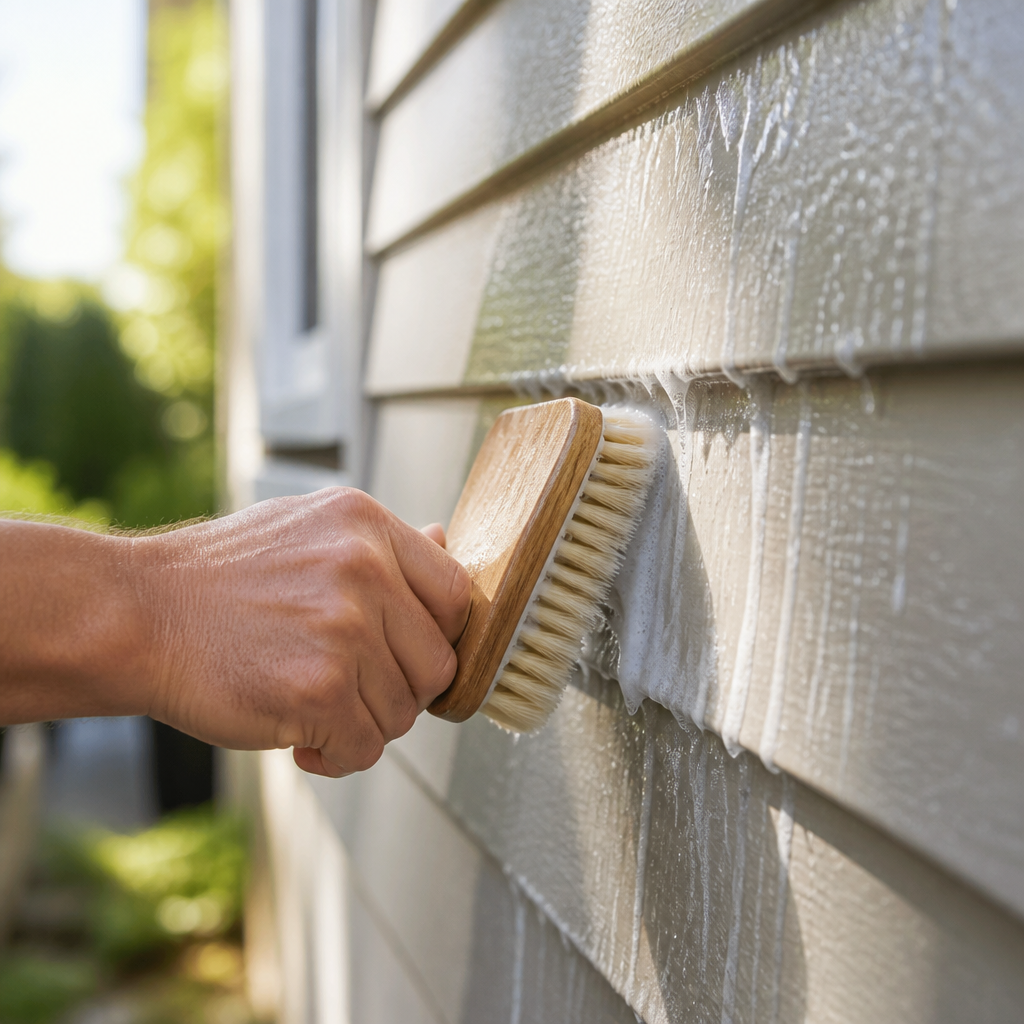
Hand washing siding is not the slow, impractical alternative that many homeowners imagine it to be. Done by a professional, it means applying a mild cleaning solution to the surface, working it into the material with a soft-bristle brush or cloth, and rinsing with low-pressure water from top to bottom. The physical agitation of the brush does the work that water pressure would otherwise try to force through impact alone.
Why Physical Agitation Outperforms Water Force on Siding
A pressure washer blasts dirt off by sheer force. A brush dislodges it by contact. The difference matters because biological growth like algae and mildew is not just sitting on the surface. It adheres to it. High pressure can scatter the visible growth without actually removing the root structure embedded in the material. A brush with the right cleaning solution breaks that bond at the surface level.
This is why hand washing consistently outperforms pressure washing for siding covered in mildew, oxidation, or algae. The cleaning solution does the chemical work, the brush does the mechanical work, and the rinse removes the residue. No water is driven behind panels. No seams are forced open. The surface is cleaned without being stressed.
Pro tip: On vinyl siding with oxidation buildup, a soft cloth with a mild all-purpose cleaner applied in small circular sections will restore surface colour more effectively than any pressure setting on a washer. Pressure removes the top layer of oxidation unevenly, leaving a blotchy finish that looks worse than the original buildup.
What a Professional Hand Wash Covers
When Performance Window Cleaning performs home detailing, hand washing covers the full siding surface, entrance areas, and doors. That includes the detail work around window frames, trim, and corners where grime concentrates most heavily. These are also the spots most likely to be damaged by a pressure washer nozzle held too close or aimed at the wrong angle.
Where Pressure Washing Belongs and Where It Does Not
Pressure washing has a legitimate and highly effective role in exterior home cleaning. The key is matching the tool to the surface. High-pressure water at 1,300 to 3,100 PSI is appropriate for concrete driveways, brick walkways, masonry retaining walls, and wooden decks that have been built to handle direct water exposure. These are surfaces where force is the point, and where the risk of water infiltration behind a finish material is not a factor.
Where pressure washing goes wrong is when it is applied to surfaces that are not engineered for that kind of impact. Vinyl siding can crack, warp, or dent when hit with excessive force. Older painted wood siding will lose paint and potentially splinter. Stucco is highly vulnerable to high-pressure water penetrating its surface and destabilizing the substrate beneath. Aluminum siding can dent on lower pressure settings than most homeowners expect.
Pro tip: If you are considering pressure washing your siding and are unsure about the PSI rating, start at the lowest available setting from a distance of at least 12 to 18 inches. If the surface shows any sign of discolouration, paint lifting, or material displacement, stop and switch to a hand-wash method. The damage from one pass at too-high pressure is often permanent.
For Burlington homeowners, power washing services are best directed at driveways, concrete walkways, decks, and patio surfaces. These are the areas where the method delivers its strongest results without risk to the building envelope. Performance Window Cleaning offers power washing for exactly these surface types, keeping the high-pressure work where it belongs and the gentle work where it is needed.
The Hidden Damage Nobody Talks About
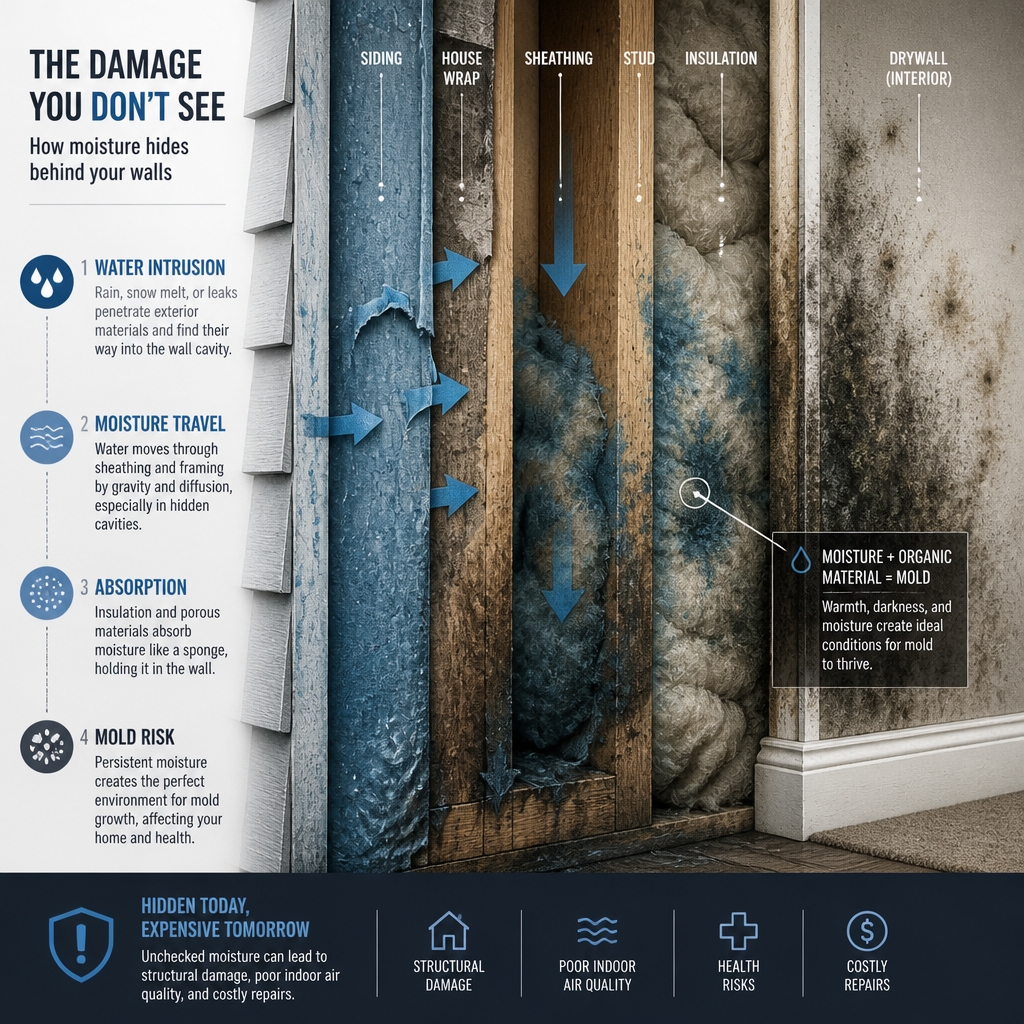
The most serious argument against pressure washing residential siding is not visible damage. It is the damage you cannot see until it has already become expensive. When water is driven at high pressure into the seams and lap joints of vinyl or aluminum siding, it gets behind the panels. Once there, it does not drain easily. It saturates the wall sheathing, soaks into insulation, and creates the wet, dark environment that mold needs to grow inside the wall cavity.
When water gets behind vinyl siding through upward pressure washing or cleaning solution forced into lap joints, you will not see the damage immediately. The wall sheathing absorbs moisture slowly. By the time you notice soft spots or a musty smell inside the house, the repair is substantial.
This sequence is common enough that it should be considered the predictable outcome of careless pressure washing, not a rare worst-case scenario. The angle of the spray is a major factor. Spraying upward forces water directly under overlapping panels where it cannot escape. Spraying straight on concentrates force against seams. Only a downward angle at roughly 45 degrees reduces this risk, and even then, it does not eliminate it on older siding with existing gaps.
The irony is that homeowners who pressure wash their own siding to save money on a cleaning bill often end up with a mold remediation or siding replacement cost that dwarfs what the professional cleaning would have been. This is not a theoretical risk. Contractors working on home renovations in Burlington and across Ontario regularly find moisture damage inside wall cavities that traces back to improper exterior cleaning.
Method Comparison: Hand Washing vs. Pressure Washing
| Factor | Hand Washing Siding | Pressure Washing Siding |
|---|---|---|
| Risk of water infiltration behind panels | Very low. Low-pressure rinse does not force water into seams. | Moderate to high, especially if spray is directed upward or straight-on. |
| Effectiveness on algae and mildew | High. Cleaning solution breaks down biological growth at surface level. | Moderate. Removes visible growth but may leave root structure on surface. |
| Risk of surface damage | Very low when a soft brush and appropriate solution are used. | Moderate to high on vinyl, painted wood, stucco, and aluminum. |
| Impact on siding warranties | Safe. Consistent with most manufacturer cleaning guidelines. | Can void warranties if high PSI is used or damage results. |
| Best suited for | All residential siding types, painted surfaces, trim, and doors. | Concrete, masonry, brick, wooden decks, and hardscaping surfaces. |
| Speed | Slower, but thoroughness compensates for time. | Faster on open surfaces, but not suitable for all areas. |
Which Siding Material Needs Which Method
Not every Burlington home has the same exterior. The method you use should follow the material, not the other way around. Here is a direct breakdown of what each common siding type requires.
Vinyl Siding
Vinyl is the most common residential siding material in Ontario, and it is also the one most often damaged by improper pressure washing. While vinyl is durable under normal weather conditions, it can crack, dent, or warp under concentrated water pressure. More importantly, the lap-joint design of vinyl panels creates a natural path for pressurized water to travel behind the wall. Hand washing with a soft brush and mild detergent is the right method for vinyl. For heavier algae or mold, a low-pressure rinse after the cleaning solution has had time to work is appropriate, but never a straight high-pressure blast aimed at the panels.
Wood Siding and Older Painted Surfaces
Wood siding is the most sensitive of the common options. High-pressure water will strip paint, splinter the wood grain, and drive moisture into the material itself. This is an area where hand washing is not just preferable, it is the only responsible method. Wood that has been pressure washed incorrectly may look clean immediately afterward and show paint failure and raised grain within a season.
Fiber Cement and Aluminum Siding
Fiber cement siding handles moderate pressure better than vinyl or wood, but it is not immune to damage. Low-pressure washing or hand washing remains the safer choice, particularly around seams and painted surfaces. Aluminum siding can dent at lower PSI settings than most people expect, which makes starting at the lowest possible setting a necessary precaution. If there is any doubt, hand washing is the default.
Stucco and Brick
Stucco should never be pressure washed at high settings. The surface is porous, and high-pressure water can penetrate it and damage the substrate. Gentle washing is always safer. Brick can handle higher pressure than stucco, but older mortar joints are vulnerable to erosion. A professional assessment before any pressure washing on brick is the right move, especially on homes built before the 1980s.
Pro tip: When in doubt about what your siding can handle, look for the manufacturer’s care and cleaning guide for your specific product. Most major vinyl and fiber cement manufacturers publish PSI limits and approved cleaning methods. Exceeding those limits can invalidate product warranties, which matters when you are planning to sell or file a claim.
Frequently Asked Questions
Is hand washing or pressure washing better for siding cleaning in Burlington?
Hand washing is the safer and more effective choice for most residential siding in Burlington. It removes biological growth at the surface level, eliminates the risk of water infiltration behind panels, and does not risk cracking, denting, or stripping the surface material. Pressure washing belongs on hard surfaces like driveways and concrete walkways, not on siding panels, painted trim, or wood surfaces.
How often should Burlington homeowners clean their exterior siding?
Given Burlington’s humid summers and wet falls, most homes benefit from exterior siding cleaning once a year. Shaded north-facing walls and homes near mature trees may need attention twice a year because reduced sunlight and leaf debris accelerate algae and mold growth. Regular cleaning prevents biological growth from becoming embedded in the surface material, which is much harder to remove once it has had multiple seasons to establish.
Can pressure washing void a vinyl siding warranty?
Yes. Many vinyl siding manufacturers specify low-pressure or hand-wash cleaning methods as a condition of maintaining the material warranty. Using a high-PSI pressure washer on vinyl siding can cause cracking, denting, or surface damage that the manufacturer will attribute to improper maintenance. Before pressure washing any siding product, check the manufacturer’s published care guidelines for the specific PSI limits and approved methods.
What causes the green and black streaking on Burlington home siding?
Green streaking is almost always algae. Black streaking is typically mold or mildew. Both thrive in Ontario’s humid climate, particularly on surfaces that receive limited direct sunlight. North-facing walls, areas near dense tree cover, and surfaces below overflowing gutters are the most common locations. Cleaning these stains requires a cleaning solution that breaks down biological growth, not just water pressure, which is why hand washing with the right product outperforms pressure washing for this specific type of contamination.
What is the difference between power washing and hand washing siding for home detailing?
Power washing uses high-pressure water to remove surface contaminants by force. Hand washing uses physical agitation from a brush or cloth combined with a cleaning solution to dissolve and lift contaminants from the surface. For siding, the hand-wash method is gentler, more precise, and better suited to removing the biological growth and grime that accumulates on residential exteriors. Power washing is most effective on hard surfaces like driveways, decks, and concrete, where high pressure is an asset rather than a risk. Performance Window Cleaning’s home detailing service uses the hand-wash approach for siding specifically because of these distinctions.
Does cleaning siding also help with spider web and bug buildup on the exterior?
Yes. A thorough hand wash of the siding surface removes spider webs, egg sacs, and the debris that attracts insects. However, for active infestations or recurring pest pressure, cleaning alone is not enough. Performance Window Cleaning offers dedicated bug and spider web removal services, including tick and mosquito control, that address pest activity at the source rather than just removing the visible signs. Combining a siding cleaning with pest control treatment produces longer-lasting results on both fronts.
Have you had a siding cleaning done in Burlington or elsewhere in Ontario, and did the method make a visible difference? Share your experience in the comments below.
References
- How pressure washing can damage vinyl siding: risks, angles, and wall cavity moisture
- Soft washing vs. pressure washing: PSI ranges, costs, and which surfaces each method suits
- Removing algae from siding in Ontario: causes, safe methods, and prevention
- Pressure washing siding risks: why spray angle and direction determine damage outcomes
- How to clean vinyl siding without damaging it: moisture infiltration, angles, and safe techniques