
Most homeowners assume that blasting siding with a pressure washer is the fastest and most effective way to get it clean. In practice, that assumption costs people thousands of dollars in damaged paint, warped panels, and voided manufacturer warranties every year. Siding washing is not a one-size-fits-all task. Vinyl, cedar, stucco, and fiber cement each behave differently under pressure, and what works on concrete will tear apart a wood-grain panel in seconds. Understanding why hand washing siding is the smarter choice for delicate surfaces is not just useful knowledge. It is the difference between a clean home and a repair bill.
Table of Contents
- Quick Takeaways
- Why Pressure Washing Fails Delicate Siding
- What Hand Washing Siding Actually Means
- Siding Types and Which Method Fits Each
- Method Comparison: Hand Washing vs. Power Washing vs. Soft Washing
- The Real Cost of Getting This Wrong
- What Professional Exterior Wall Cleaning Looks Like
- Frequently Asked Questions
- References
Quick Takeaways
| Key Insight | Explanation |
|---|---|
| Pressure washing can void siding warranties | Many vinyl and fiber cement manufacturers specify maximum PSI levels in their warranty terms. Exceeding these levels, even once, can void coverage for cracking and delamination. |
| Hand washing removes biological growth more thoroughly | Mold, algae, and lichen require direct agitation with appropriate cleaning solutions, not just water pressure. A soft brush applied by hand ensures the cleaning agent contacts the surface long enough to work. |
| Water intrusion is the top risk with pressure washing on wood siding | High-pressure water forces moisture behind lap joints and into the wall cavity, leading to rot, mold growth inside walls, and insulation damage that is invisible until it becomes severe. |
| Stucco and painted surfaces need low-agitation exterior wall cleaning | Stucco is porous and soft. Pressure washing pits the surface, strips paint, and accelerates cracking. Hand washing preserves the finish while still removing dirt, spider webs, and oxidation. |
| Hand washing allows for spot treatment of problem areas | A professional using hand methods can apply targeted solutions to rust stains, bird dropping deposits, or heavily mildewed corners without saturating the entire wall in harsh chemicals. |
| Pest and spider web removal requires physical contact | Spider webs, wasp nests, and mud dauber deposits cling to surfaces and cannot be dislodged cleanly by water pressure alone. Hand tools remove these without scattering debris across clean areas. |
| Professional hand washing is faster than most homeowners expect | An experienced crew using the right brushes, telescoping poles, and cleaning solutions can complete the exterior of a typical two-storey home in a single visit without equipment setup delays. |
Why Pressure Washing Fails Delicate Siding
A standard residential pressure washer operates between 1,500 and 3,000 PSI. That is roughly the same force used to strip old paint from concrete driveways. Pointing that at cedar lap siding, painted hardboard, or a stucco exterior is not cleaning. It is controlled demolition.
The failure mode is predictable. Water at high pressure does not just remove surface dirt. It follows the path of least resistance, which on siding means gaps at laps, around window trim, and at the bottom edges of panels. Once water is inside the wall assembly, it has nowhere obvious to go. The result is trapped moisture, which feeds mold colonies and accelerates wood rot from the inside out.
A common mistake is assuming that a wider spray angle reduces risk. Dropping from a 15-degree to a 40-degree nozzle lowers the impact force somewhat, but the volume of water being delivered stays the same. On wood or fiber cement, volume is just as dangerous as force because it extends the saturation window long enough to drive moisture deep into the substrate.
“Water intrusion caused by improper cleaning methods is one of the most underreported sources of residential wall damage. By the time homeowners notice interior signs of moisture, the structural damage is already months old.” – Building Science Corporation, research on moisture dynamics in wall assemblies
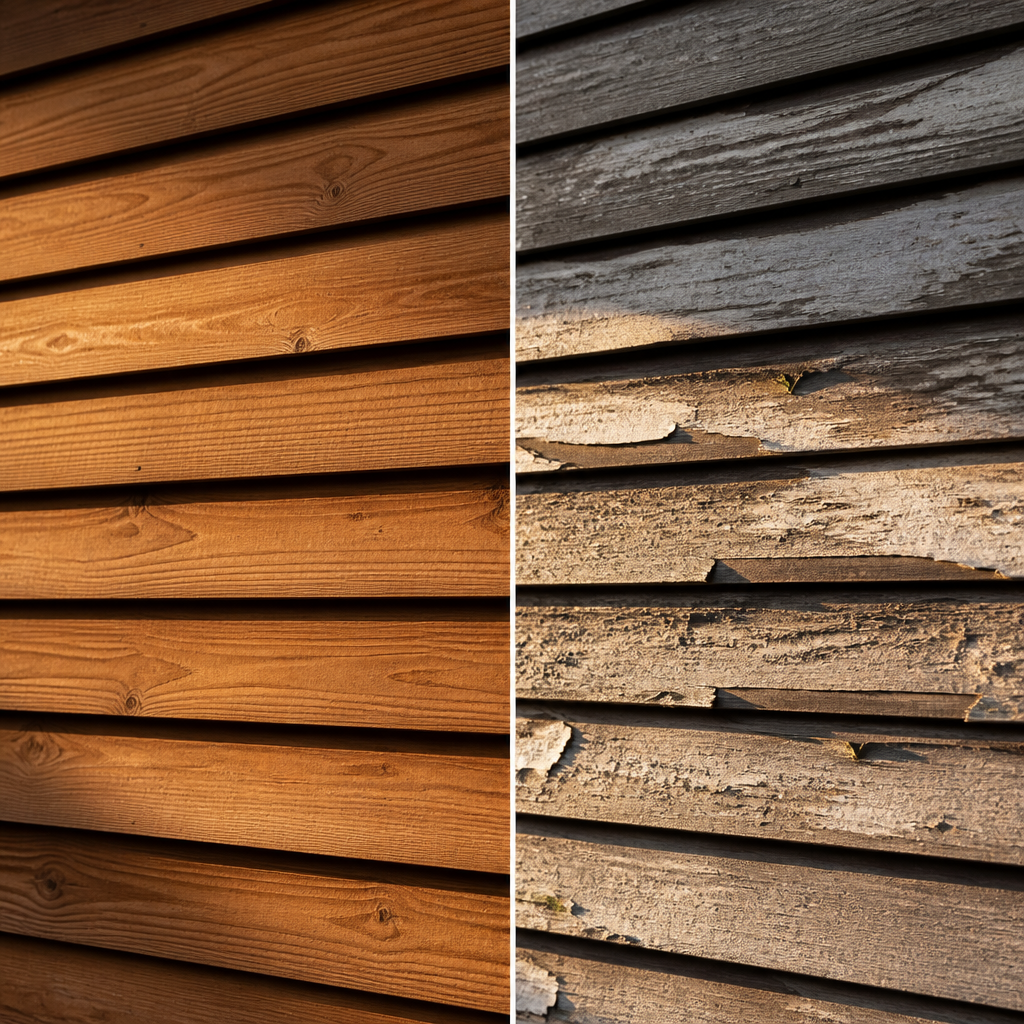
Pro tip: If you see paint bubbling or peeling on siding within a week of pressure washing, that is almost always a sign that water got behind the paint film. The fix is not a repaint. It is identifying and addressing the moisture source first.
What Hand Washing Siding Actually Means
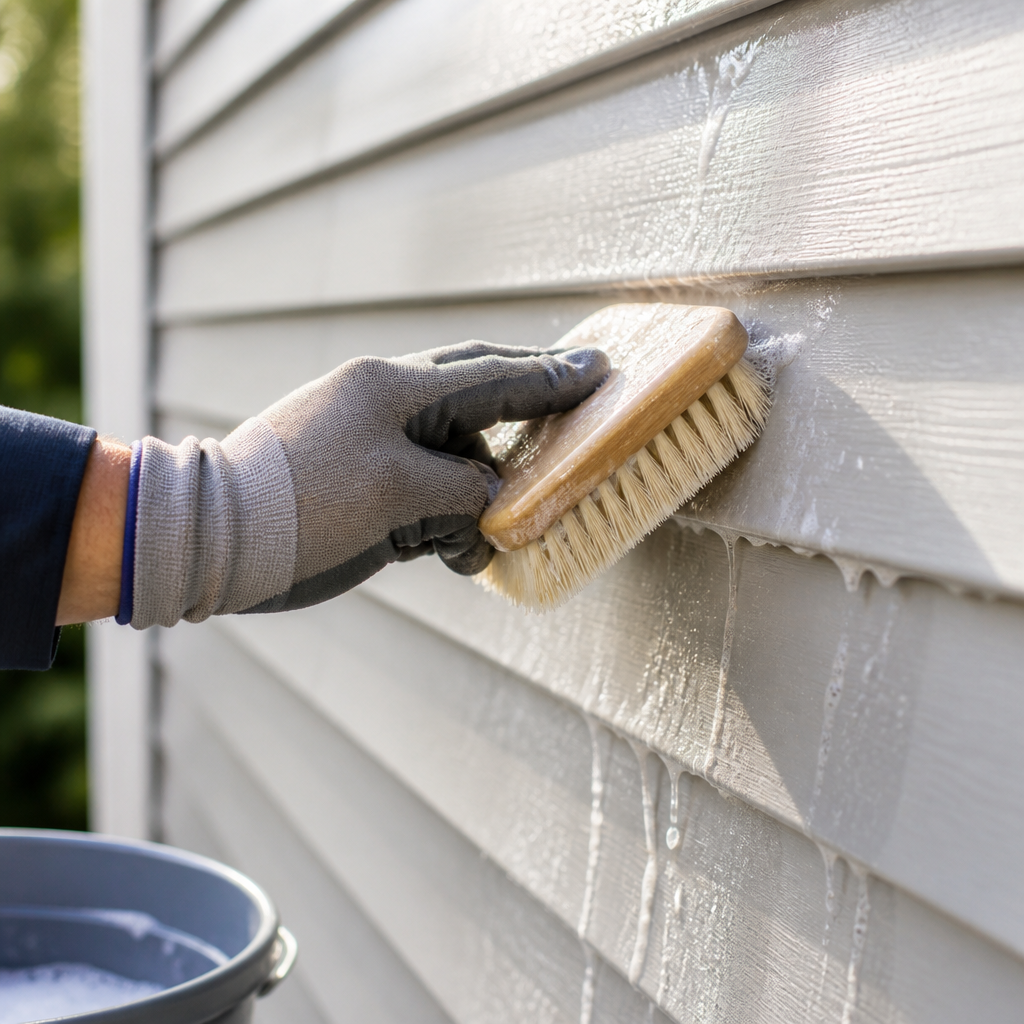
Hand washing siding does not mean a person standing on a ladder with a bucket and a sponge. In a professional context, it means applying cleaning solutions directly to the surface and agitating with brushes, soft-bristle tools, or microfiber pads before rinsing with low-pressure water. The process is controlled at every stage.
The Role of the Cleaning Solution
The chemical side of the process does most of the heavy lifting. A properly formulated exterior cleaner breaks down oxidation, biological growth, and traffic film at the molecular level before any physical scrubbing begins. This means the brush is removing loosened material, not grinding embedded grime into the surface.
For homes with significant mold or algae growth, a sodium hypochlorite solution diluted to between 1% and 3% is standard practice for siding. This concentration is effective against biological growth without bleaching pigmented surfaces or killing surrounding landscaping when applied and rinsed correctly.
How Rinse Pressure Differs from Wash Pressure
Rinsing after hand washing is done at low pressure, typically below 500 PSI, using a wide fan nozzle. The goal is to flush loosened material off the surface, not to add any additional cleaning force. This distinction matters because it is where many DIY attempts go wrong. People rinse with the same pressure they would use on a driveway, undoing the benefits of the careful wash step.
At Performance Window Cleaning, the hand washing process used on residential siding in the Lower Mainland is designed around this principle. The wash step handles the chemistry and agitation. The rinse step handles the removal. Neither step substitutes for the other.
Pro tip: When requesting a siding cleaning quote, ask the company specifically whether they hand wash or pressure wash. If the answer is pressure wash only, ask what PSI they use and whether their process is appropriate for your specific siding material. A company that cannot answer that question clearly is not the right fit for delicate surfaces.
Siding Types and Which Method Fits Each
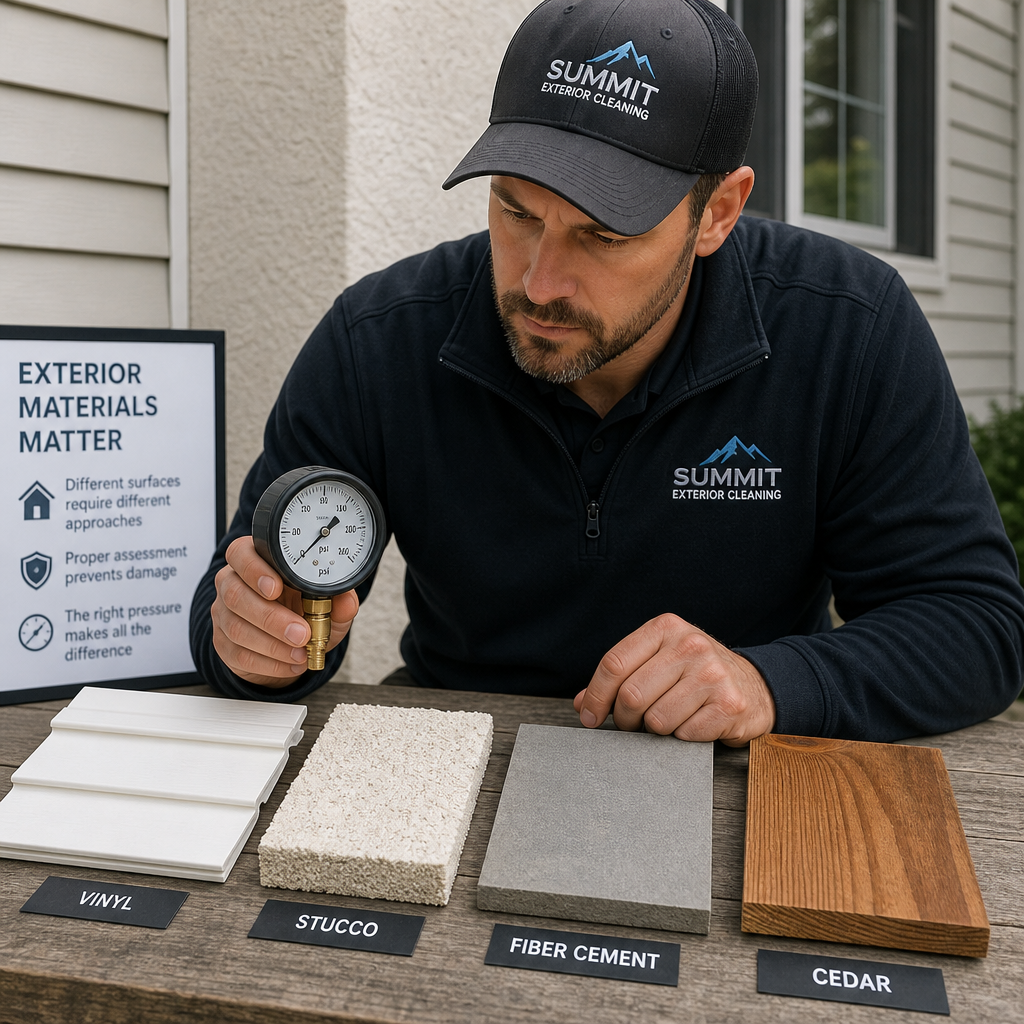
Not every surface has the same vulnerability, and treating them identically is a practical error. Here is how different siding materials respond to cleaning methods based on their physical properties.
Vinyl Siding
Vinyl is forgiving up to a point. Below 1,500 PSI with a wide nozzle, pressure washing vinyl is generally acceptable. The problem is that most consumer-grade washers run hotter than that, and operators rarely maintain safe distances consistently. Vinyl also fades and becomes brittle with age, which means a surface that handled 1,200 PSI five years ago may crack under the same pressure today. Hand washing vinyl with a soft brush eliminates this variable entirely and is recommended for any vinyl siding older than 10 years.
Wood and Cedar Siding
Wood siding and pressure washing are a genuinely bad combination. Wood grain opens under high pressure and absorbs water at an accelerated rate. Cedar is particularly vulnerable because its natural oils, which provide some protection against moisture, are stripped by the combination of force and chemical cleaners used in many pressure washing setups. Hand washing with a wood-safe cleaner and gentle agitation preserves the grain structure and the oil content while still removing dirt, mildew, and discoloration effectively.
Stucco
Stucco is porous by design. It is meant to breathe, releasing moisture absorbed from rain gradually over time. Pressure washing forces water into the pores faster than stucco can expel it, which leads to efflorescence, spalling, and in freeze-thaw climates, cracking. Exterior wall cleaning on stucco should always be low-pressure or hand-based, with particular care around cracks and control joints where water intrusion risk is highest.
Fiber Cement (HardiePlank)
Fiber cement is more durable than wood but still vulnerable to moisture at the cut edges and seams. James Hardie, the dominant manufacturer, recommends cleaning their products with a garden hose and soft brush, explicitly warning against pressure washing in their product care documentation. This is not a conservative manufacturer recommendation. It reflects the actual failure modes the company observed in warranty claims.
Method Comparison: Hand Washing vs. Power Washing vs. Soft Washing
There are three distinct approaches used in residential exterior wall cleaning. Each has a legitimate use case, but they are not interchangeable. Understanding the differences helps homeowners make an informed decision when hiring a service provider.
| Method | Best For | Risk on Delicate Surfaces |
|---|---|---|
| Hand Washing Siding | Wood, cedar, stucco, fiber cement, painted surfaces, older vinyl, homes near gardens or sensitive landscaping | Very low. No risk of water intrusion, surface damage, or stripping. Safest option for most residential siding. |
| Power Washing (High Pressure) | Concrete driveways, brick walkways, unpainted masonry, metal surfaces | High on wood, stucco, and fiber cement. Moderate on vinyl. Not recommended for residential siding on most home types. |
| Soft Washing | Roofs, algae-heavy vinyl, large surface areas where chemical dwell time is the primary cleaning mechanism | Low pressure but chemical-intensive. Risk shifts to plant damage and surface staining if solutions are not properly diluted and rinsed. Best left to experienced professionals. |
In practice, a professional exterior cleaning company will use a combination of these methods depending on the specific surfaces present on a property. A home with a concrete driveway, vinyl siding, and cedar trim may require all three approaches applied to different areas in the same visit. The key is that the method is chosen based on the surface, not based on what equipment the crew happens to have loaded on the truck.
The Real Cost of Getting This Wrong
The financial argument for hand washing siding over pressure washing is straightforward when you price out the alternatives. Repainting a standard two-storey home exterior in British Columbia runs between $4,000 and $10,000 depending on surface prep requirements. Replacing damaged sections of wood or fiber cement siding adds labor and material costs on top of that.
Water damage remediation inside a wall cavity is in a different category entirely. According to the Insurance Bureau of Canada, water damage is one of the top causes of residential insurance claims, and damage originating from improper maintenance is frequently excluded from coverage. A claim that originates from a homeowner pressure washing their own cedar siding is not a guaranteed payout. It is a documentation and causation argument with an adjuster.
The cost of professional hand washing for a typical residential exterior, including siding, eaves, entrances, and pest removal, is a fraction of any one of those repair scenarios. Performance Window Cleaning has offered customized exterior cleaning packages since 2008, and the consistent feedback from clients is that regular professional hand washing extends the repaint cycle significantly, often by several years, which compounds into meaningful savings over the life of ownership.
Pro tip: Schedule siding washing annually rather than waiting until visible soiling appears. Biological growth like algae and lichen causes surface degradation at the microscopic level long before it becomes visible to the eye. By the time you can see it clearly, it has already been feeding on your paint or sealant for a season or more.
What Professional Exterior Wall Cleaning Looks Like
A professional exterior wall cleaning visit from Performance Window Cleaning is structured around a surface assessment before any water or solution is applied. The crew identifies the siding material, notes any existing cracks, soft spots, or areas of previous damage, and selects the appropriate cleaning method and solution concentration for each zone of the home.
For the hand washing portions of the job, the process follows a top-down sequence. Eaves and soffits are cleaned first, pushing debris downward. Siding panels are then worked in sections, with cleaning solution applied, agitated with soft brushes, and rinsed before moving to the next section. This prevents dried solution from leaving streaks and ensures that every panel receives consistent dwell time for the cleaner to work.
Spider web removal and pest deterrent treatment are included as part of the exterior cleaning service. This matters because spider webs accumulate at eaves, window corners, and light fixtures at rates that make annual cleaning genuinely necessary in the Lower Mainland climate. Removing them physically during a hand wash visit is more effective than spraying alone because the physical substrate the web is anchored to is removed along with it.
The finished result of a professional hand wash is visually distinct from a pressure washed surface. There is no streaking from uneven pressure coverage, no visible damage to paint edges around trim, and no residue from chemical overspray on windows and surrounding landscaping. The surface looks clean because it was cleaned methodically, not blasted.
Frequently Asked Questions
Is hand washing siding actually effective at removing heavy mold and mildew?
Yes, and in many cases it is more effective than pressure washing for biological growth. The reason is that mold and mildew require contact with a cleaning solution for a specific dwell time to be fully killed and removed. Hand application ensures the solution stays on the surface long enough to work. Pressure washing often blasts surface-level growth away without killing the root structure embedded in the material, which means regrowth happens faster. A proper hand wash with an appropriate antimicrobial solution treats the problem at its source.
Can I hand wash my own siding as a DIY project?
For single-storey homes with accessible vinyl siding, a careful DIY hand wash is reasonable. The risks increase significantly with height, older or damaged siding, wood or stucco surfaces, and any area near electrical fixtures or HVAC intakes. Using the wrong cleaning solution concentration is also a common DIY error that causes paint fading, plant damage, and surface etching. For two-storey homes or any delicate surface material, professional service is the lower-risk and more cost-effective choice in the long run.
How often should exterior siding be professionally washed?
Annual washing is the standard recommendation for most residential properties in the Lower Mainland. Homes surrounded by trees, near water, or in shaded areas where moisture accumulates may benefit from twice-yearly cleaning. The primary driver is biological growth. Algae, lichen, and mold establish themselves within a single growing season under the right conditions, and allowing them to go unchecked accelerates surface degradation faster than dirt alone.
Does hand washing siding take longer than pressure washing?
For a typical home, an experienced professional crew hand washing with proper equipment and solutions takes roughly the same time as a pressure washing crew on the same property. The difference is that the hand washing crew is not spending time on post-cleaning damage assessment or dealing with areas that need additional attention because the pressure blew through paint or forced water behind panels. Setup time for hand washing is also lower because it does not require the same heavy equipment logistics.
What is the difference between siding washing and power washing for a home with mixed siding materials?
Mixed siding homes, which commonly have vinyl on the main walls and wood or fiber cement on accent areas, require a split approach. The durable vinyl sections can tolerate moderate pressure if needed, but the wood trim, painted fiber cement accents, and stucco foundation areas must be hand washed or soft washed at low pressure. A professional crew assesses each surface type individually and applies the method appropriate to that material rather than using a single approach across the entire exterior.
Will hand washing siding disturb spider nests and pest activity?
Physical hand washing is actually the most effective approach for spider web and pest nest removal because it allows for direct contact with every surface, including recessed areas under eaves and around window frames where webs concentrate. Water pressure alone scatters web material without removing the anchor points, which means new webs are rebuilt faster. Hand washing removes the entire structure. Performance Window Cleaning includes spider web and pest deterrent removal as part of its standard exterior cleaning service.
What has your experience been with siding washing at your home? We would like to hear whether you have tried both approaches and what results you noticed.
References
- Government of Canada resources on residential maintenance standards and worker safety for exterior cleaning services
- Building Science Corporation research library covering moisture dynamics, wall assembly performance, and the effects of water intrusion on residential structures
- United States Environmental Protection Agency guidance on mold prevention, moisture control in buildings, and recommended cleaning agents for biological growth on exterior surfaces
- HomeAdvisor national cost data for exterior siding repair, repainting, and professional cleaning services useful for benchmarking service value
- Insurance Bureau of Canada information on water damage claims, coverage exclusions related to improper home maintenance, and prevention resources for homeowners