
Most Ontario homeowners think about windows, gutters and maybe the driveway before the snow arrives. The soffit and fascia, the boards under the roofline you pass every time you walk to the door, usually get ignored until something goes wrong. By the time a wasp nest is packed into a vent or a dark stain runs down the fascia, the cheap fix is gone. Soffit cleaning in Ontario is one of the most overlooked jobs on the pre-winter list, and it takes less time than most people expect. This guide covers what these parts do, what builds up on them, how to clean them without causing damage, and the mistakes we see most often in the weeks before freeze-up.
Table of Contents
- Quick Takeaways
- What Soffit and Fascia Do for Your Home
- Why Debris Builds Up Before Winter
- How to Clean Soffits and Fascia Without Damaging Them
- Comparison of Cleaning Approaches
- Common Mistakes Ontario Homeowners Make
- Timing Your Pre-Winter Exterior Cleaning
- Frequently Asked Questions
- References
Quick Takeaways
| Key Insight | Explanation |
|---|---|
| Clean soffits and fascia before the first hard freeze | Wet debris freezes onto surfaces, which makes the job slower, messier and harder on the paint. |
| Clear the vent openings first | Blocked vents reduce attic airflow, and poor attic airflow is linked to ice damming in the Ontario winter. |
| Clean the fascia behind every gutter | Overflow streaks the fascia, and cleaning the gutter alone leaves that residue in place to return each spring. |
| Start with a dry brush-out | Removing leaves and nests before any water touches the surface stops debris from turning into a wet paste. |
| Keep pressure low or skip it | High-pressure spray forces water behind trim, lifts paint and can damage vent screens. |
| Leave active wasp nests alone | Disturbing an active nest creates a stinging risk. Wait until the nest is clearly inactive or call a pest control professional. |
| Book a spring check | A quick look in April or May shows whether the paint, vents and seams held through the winter. |
What Soffit and Fascia Do for Your Home
The fascia is the vertical board that runs along the outer edge of the roof, where the shingles or metal end. The soffit is the panel tucked underneath the overhang, connecting the bottom of the fascia to the exterior wall. Together they close the gap between the roof and the house, keeping insects, animals and wind-driven rain out of the attic and wall cavity.
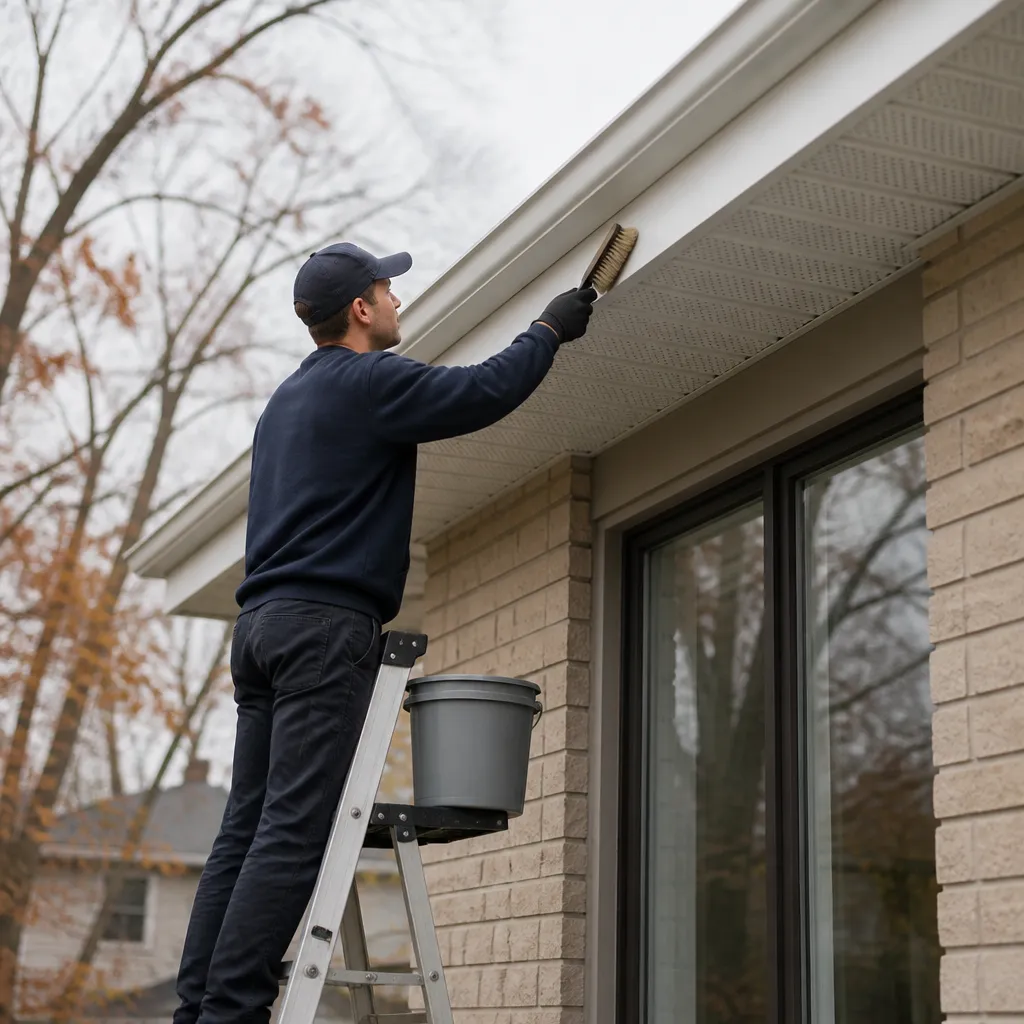
Where the soffit ends and the fascia begins
Homeowners often use these two words interchangeably, and that causes confusion when you ask for a quote. The fascia is the board your gutters attach to. The soffit is the horizontal surface above your head when you stand under the eave. When you request soffit cleaning, confirm whether you want the underside only or the fascia too, because the fascia collects most of the splash and grime from the gutter line.
Why the vents in the soffit matter
Many soffits have perforated panels or continuous vents that let air move into the attic. That airflow keeps the attic cooler in winter and drier all year. When those openings are packed with debris, the attic loses that movement and moisture has nowhere to go. The Make It Right winter home maintenance tip sheet makes the same point: attic spaces need to be sealed, ventilated and insulated, or you risk heat loss and ice damming. A blocked soffit is not just a cosmetic problem.
Why Debris Builds Up Before Winter
Autumn is when the soffit takes its worst beating. Leaves blow up against the roofline, seed heads drift into the gap, and gutters overflow onto the fascia. A few weeks of damp October weather turns that mix into a surface that looks clean from the driveway but is holding a lot of organic material.
Wasp nests and spider webs in the vent openings
Wasps like the protected corners under the eaves, and paper nests can grow to full size before anyone notices them. Spider webs thicken into dust-catching sheets in the same spots. Once temperatures drop, many nests are no longer active, so autumn is a practical time to remove them. Never disturb a nest that still has activity around it. If you are unsure, call a pest control professional first.
Leaf litter and gutter overflow
When gutters back up, water runs down the fascia and leaves a dark streak in the paint. That streak is usually organic residue that has been soaked and dried several times. Cleaning the gutter without cleaning the fascia behind it leaves the streak in place, so it comes back every spring. Anyone who has seen a stripe under a gutter knows the problem is rarely the gutter itself.
Algae and mildew on shaded sides
Shaded sides of the house stay damp longer, especially where the sun reaches the eaves for only part of the day. Algae and mildew grow in that film, and from a distance it can look like dirt until it is wet. Clean these deposits before the first freeze. Wet grime that freezes onto a surface is much harder to remove, and it can hold moisture against the paint through the coldest months.
How to Clean Soffits and Fascia Without Damaging Them
Most of the damage we see on soffits and fascia comes from the cleaning, not from the dirt. Aggressive spray on aged paint, a nozzle held too close, or a rushed job that drives water into the vent openings causes more trouble than the grime ever did. The goal is to remove what has built up while leaving the finish and the structure intact.
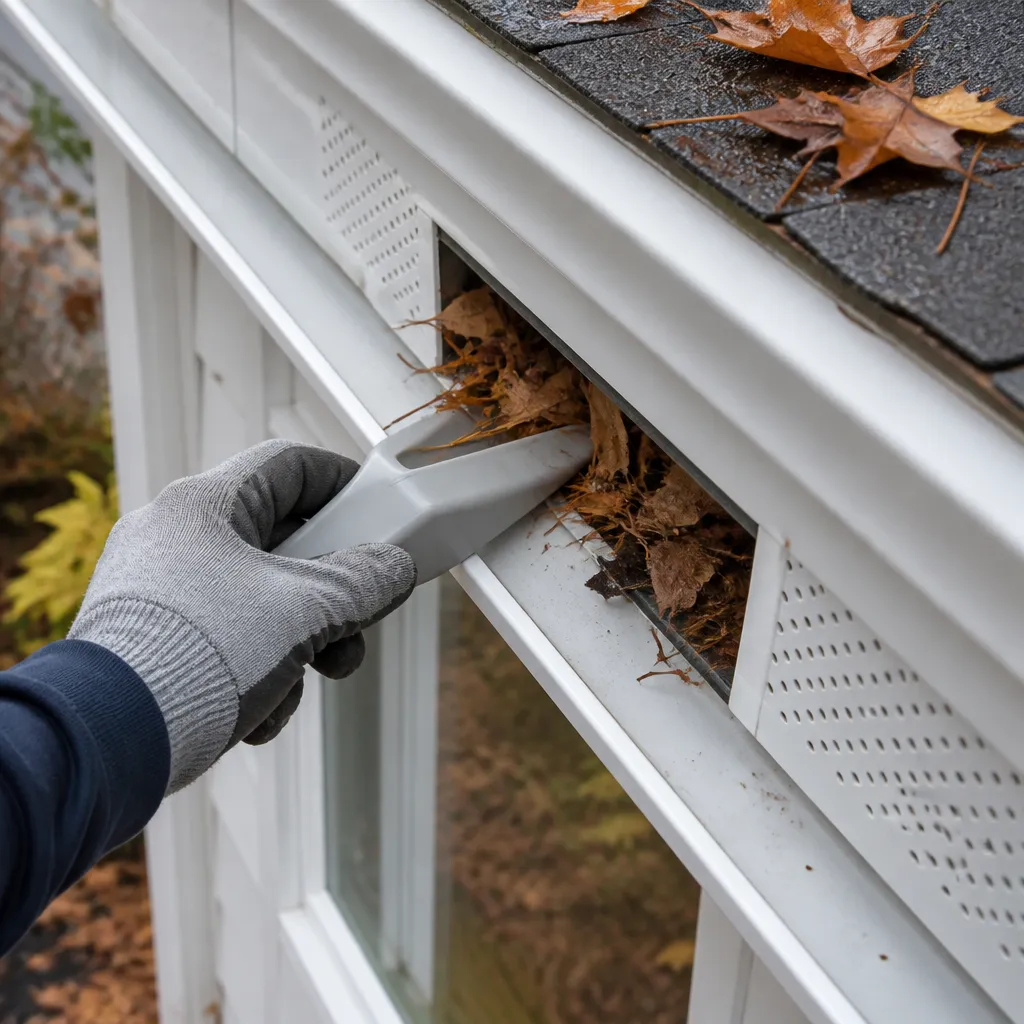
Start with a dry clear-out
Before any water touches the surface, brush out loose leaves, nests and debris with a soft brush on an extension pole. Work from the top down so the material falls to the ground rather than onto a section you have already cleaned. Check the vent openings and clear them gently with a soft probe. This step removes most of the weight that would otherwise turn into a wet paste.
Use a mild detergent and a soft brush
For painted surfaces, a mild detergent solution applied with a soft brush and then rinsed is usually enough. Scrub the underside of the soffit where mildew sits, and work in short sections so the solution does not dry and streak. Rinse with a gentle flow, moving from the top of each section downward, so runoff does not push water back under the shingles.
When power washing makes sense and when it does not
A low-pressure rinse can work on sound, well-sealed fascia and metal soffit. Power washing is a different tool. Use a wide fan tip, keep the wand moving and stay at a safe distance. Never point a concentrated stream into a vent, at the joint where the fascia meets the siding, or at paint that is already peeling. Those are the places where water gets behind the trim and starts rot.
Pro tip: Test a small section first, low on the fascia where you can check the result easily. If the paint lifts or the wood fibres start to fuzz, drop to a gentler method and skip the rest of the house with that setting.
Comparison of Cleaning Approaches
Three approaches come up most often for this job. Each has a place, but they are not interchangeable, and the wrong pick causes most of the repair bills homeowners end up paying.
| Approach | Best For | Main Risk |
|---|---|---|
| Soft brush on an extension pole with mild detergent | Painted soffits and fascia with light to moderate buildup | Slower on heavy mildew and needs safe ladder access |
| Low-pressure rinse with a wide fan tip | Sound vinyl or metal soffit with dust and pollen | Leaves organic film and nest residue behind if used alone |
| High-pressure power wash | Heavy buildup on durable, well-sealed surfaces only | Forces water behind trim, lifts paint and can damage vent screens |
Matching the method to the material
Painted wood fascia is the most fragile of the three common surfaces, so it gets the brush and detergent by default. Vinyl soffit can usually handle a low-pressure rinse, but it is still worth checking the seams for old debris before you start. Metal soffit with a sound finish is the most forgiving, although the vent screens still need a light touch. For most residential jobs we start with the brush and only step up when the surface clearly tolerates it. We would rather finish a little slower than pay to repair a lifted fascia board in spring.
Common Mistakes Ontario Homeowners Make
The costly problems we see tend to come from a handful of repeat errors. None of them are hard to avoid, but they all show up the same way: a surprise repair the following spring.

Cleaning the gutter and skipping the fascia behind it
A freshly cleaned gutter can still leave a dark stripe on the fascia below it. Gutter cleaning removes the source, but the residue already soaked into the board needs its own pass. Include the fascia in every eavestrough visit, and look closely at the joint where the gutter hangs for staining.
Painting over stains or mildew
Painting over a mildew stain without cleaning and drying it first traps the growth under the new coat. The stain tends to return within a season or two, usually as a faint halo around the old spot. Clean the surface, let it dry completely, then prime and paint if the finish has already failed.
Waiting for the first hard freeze
A surprising number of homeowners wait until the first snowfall to think about the eaves. By then, wet debris has frozen onto the surfaces, and the window for a dry cleaning in mild temperatures has closed. Water does not drain well at low temperatures, and the job takes longer when everything is iced up.
Pre-winter soffit work is less about cleaning a surface and more about making sure water and air can move through the roofline the way it was designed to.
Pro tip: Set a reminder for the second half of October to check the soffit vents from the ground, using binoculars if needed. Grey staining or a nest sitting at a vent is your signal to book the work before the cold sets in.
Timing Your Pre-Winter Exterior Cleaning
If you are reading this in early November, you still have a workable window, but it is narrowing. Exterior cleaning depends on temperature, so the goal is to finish before surfaces are regularly below freezing and before the last leaves come down.
Pick a dry day above freezing
Soffits and fascia need time to dry after cleaning, and wet wood or painted surfaces can freeze overnight. Choose a day when the forecast stays above freezing and the surfaces can dry before evening. Avoid working in the deep shade of the house, where the air and surfaces stay colder for longer.
Bundle the work with other pre-winter tasks
Soffit and fascia cleaning fits naturally alongside gutter and eavestrough cleaning, window cleaning, and a check of window sills and screens. Doing them in one visit lowers the setup cost and lets the crew catch problems on the same surfaces. Ask for the sequence to be gutters first, then fascia, so the same board does not get washed twice. If you want help with the full list, you can read about our exterior services at Performance Window Cleaning.
Schedule a second look in spring
After the first winter, look at the soffits again in April or May. Check the paint, the vents and any new staining. A quick check at that point shows whether the cleaning and paint work held up, and it gives you time to fix small issues before summer.
Frequently Asked Questions
How often should soffits and fascia be cleaned in Ontario?
Once a year is a practical baseline for most homes, and the pre-winter visit is the best time for it. Homes under heavy tree cover or near busy roads may need a spring check as well.
Can I clean my own soffits?
Yes, if you can reach them safely. Use a stable ladder on level ground, a soft brush on an extension pole and a mild detergent. Skip the pressure washer unless you know the surface can handle it.
Is power washing soffits safe?
It can be on sound surfaces, with a wide fan tip and a low setting. On older paint, around vent screens, or at the joint where the fascia meets the siding, it often causes damage that costs more to repair than the cleaning was worth.
Does soffit cleaning prevent ice dams?
Cleaning alone does not stop ice damming. Ice dams are driven mainly by attic heat loss and poor ventilation. Clear vents help the attic breathe, and clean gutters help water drain, so the two jobs work best alongside proper insulation and sealing.
Should soffit cleaning be done with gutter cleaning?
Usually, yes. Gutter work exposes the fascia behind the gutter line, and staining and nests are easier to spot once the eaves are clear. Doing both in one visit saves time and reduces the chance of missing the same board.
What should I do if I find an active wasp nest?
Do not disturb it. Keep children and pets away from the area and call a pest control professional. Once the nest is clearly inactive after cold weather, it can be removed safely.
What did you find under your eaves the last time you cleaned them, and would you do anything differently next fall?